
Flow of Vibrational Energy in Polyatomic Molecules Using
Flow of Vibrational Energy in Polyatomic Molecules: Using Acetylenic Anharmonic Couplings to Follow Vibrational Dynamics Steven T. Shipman and Brooks H. Pate Department of Chemistry University of Virginia
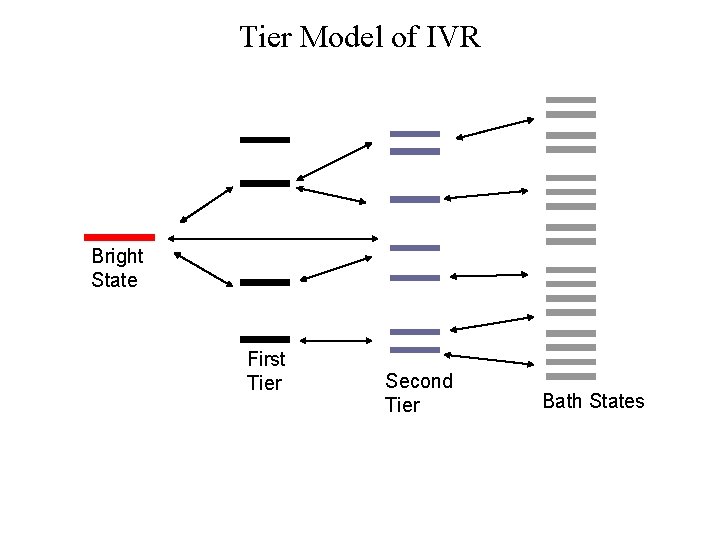
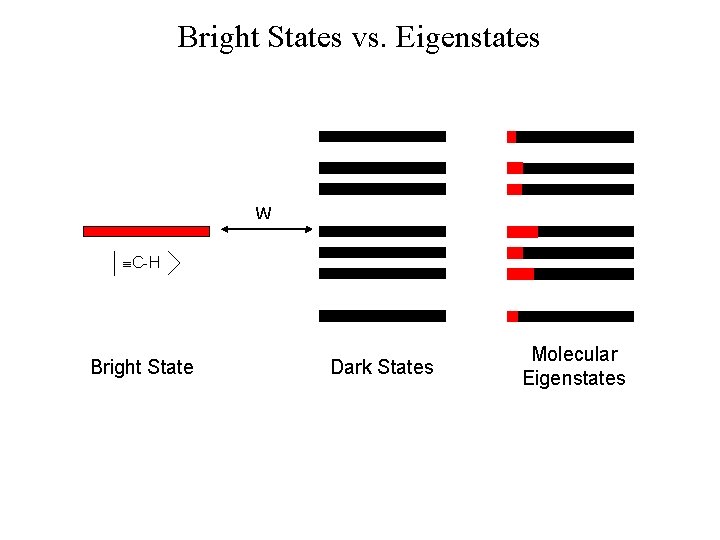
Tier Model of IVR Bright State First Tier Second Tier Bath States
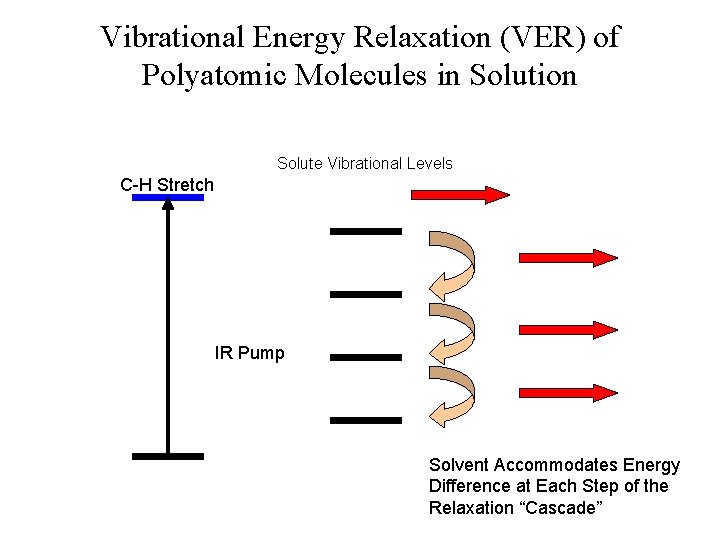
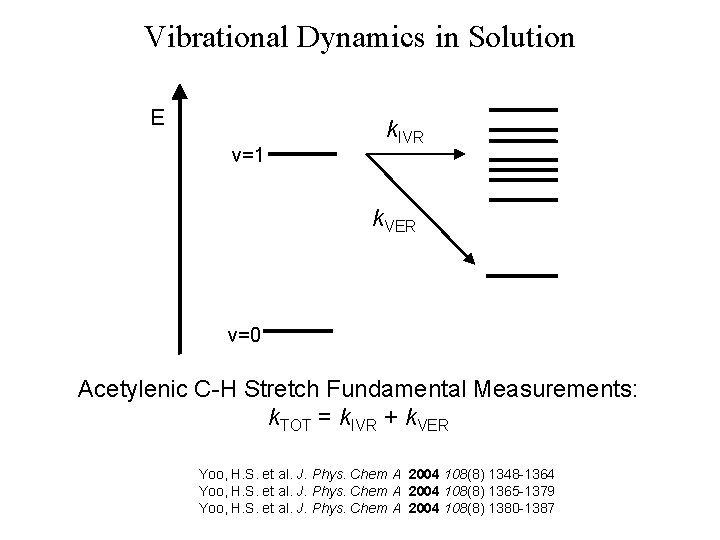
Vibrational Energy Relaxation (VER) of Polyatomic Molecules in Solution Solute Vibrational Levels C-H Stretch IR Pump Solvent Accommodates Energy Difference at Each Step of the Relaxation “Cascade”
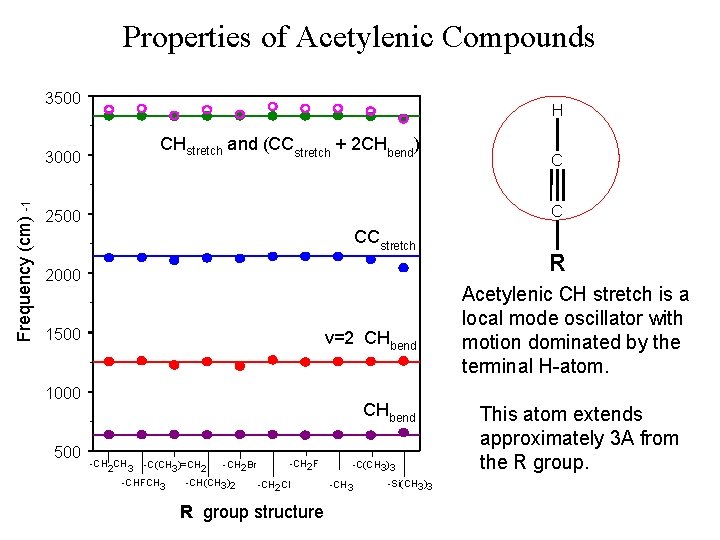
Watching Localized Energy Transport Many IVR studies follow the departure of energy from an initially prepared state rather than the arrival of energy elsewhere in the molecule. Exceptions: Time-Resolved IR-Raman (Dlott) IR pump - UV probe (Crim, Abel) A few difficulties: most low-frequency modes are delocalized across the entire molecule and are hard to directly monitor. Terminal acetylenes have several nice features: C C-H bend is at low frequency (625 cm-1) but localized Stretch-bend coupling larger than linewidths in RT sol’n phase C C-H stretch is very intense
Using Anharmonic Couplings to Follow Dynamics Following late-stage relaxation dynamics is hindered because directly probing low-frequency modes is difficult. So let’s indirectly probe them… E(v 1, v 2, v 3, …) = ∑ wi (vi + 1/2) + ∑ ∑ xij (vi + 1/2) (vj + 1/2) + … i i j≥i Anharmonic interaction between acetylenic C–H stretch (3330 cm-1) and acetylenic C–H bend (600 cm-1) is -20 cm-1. The transient absorption signal at 3330, 3310, and 3290 cm-1 allows us to extract the dynamics of the low-frequency bending mode.
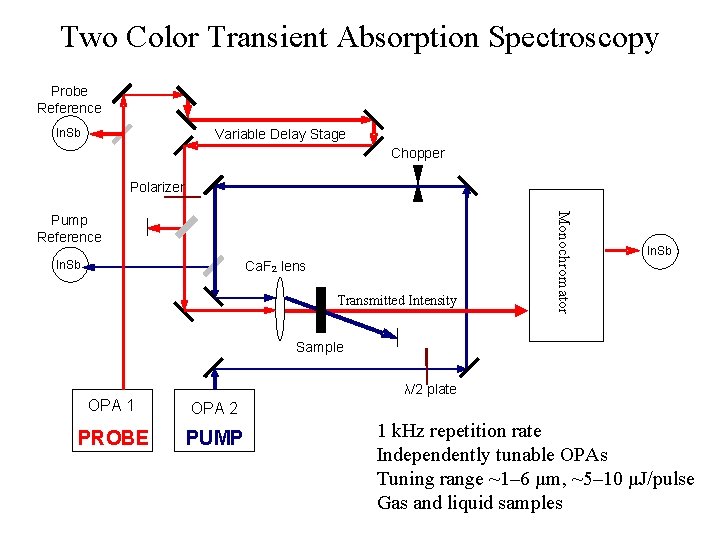
Two Color Transient Absorption Spectroscopy Probe Reference In. Sb Variable Delay Stage Chopper Polarizer Ca. F 2 lens In. Sb Transmitted Intensity Monochromator Pump Reference In. Sb Sample OPA 1 OPA 2 PROBE PUMP λ/2 plate 1 k. Hz repetition rate Independently tunable OPAs Tuning range ~1– 6 µm, ~5– 10 µJ/pulse Gas and liquid samples
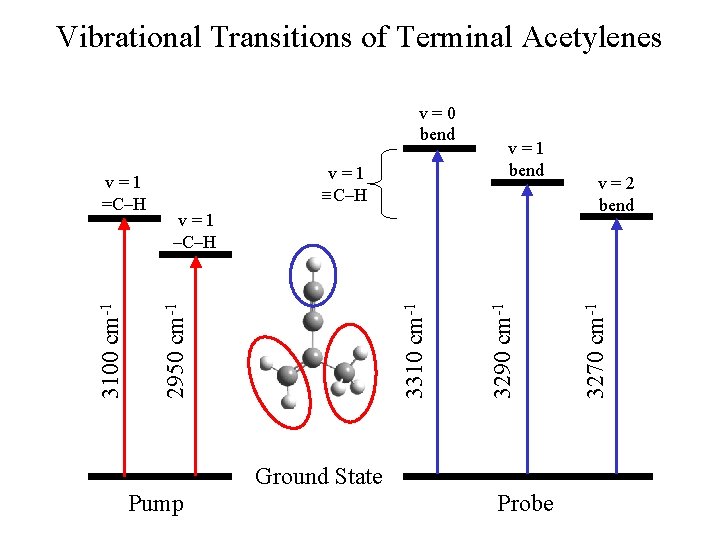
Vibrational Transitions of Terminal Acetylenes v=1 ≡C–H Pump Ground State 3290 cm-1 3310 cm-1 v=1 –C–H 2950 cm-1 3100 cm-1 v=1 =C–H v=1 bend Probe v=2 bend 3270 cm-1 v=0 bend
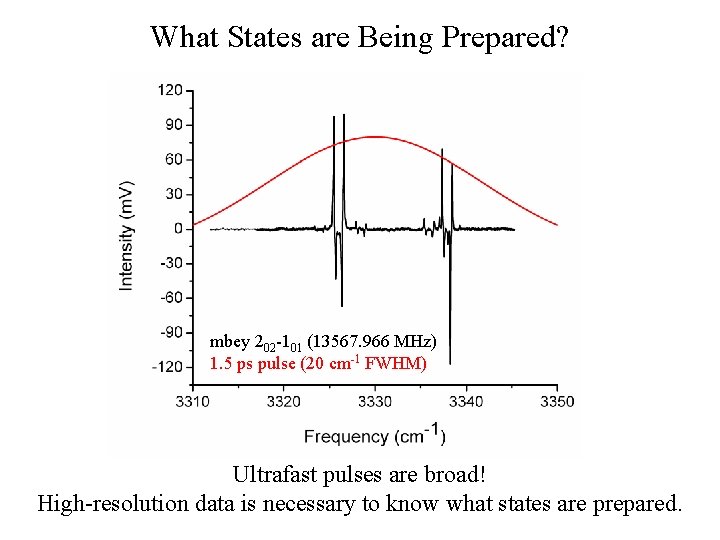
What States are Being Prepared? mbey 202 -101 (13567. 966 MHz) 1. 5 ps pulse (20 cm-1 FWHM) Ultrafast pulses are broad! High-resolution data is necessary to know what states are prepared.
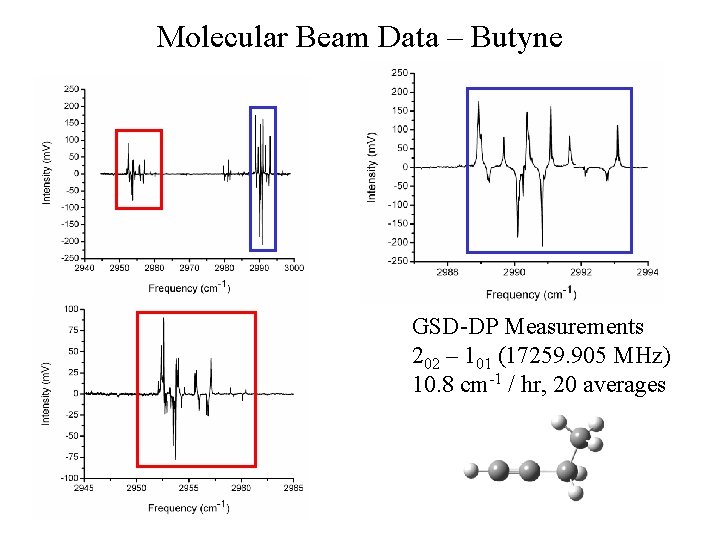
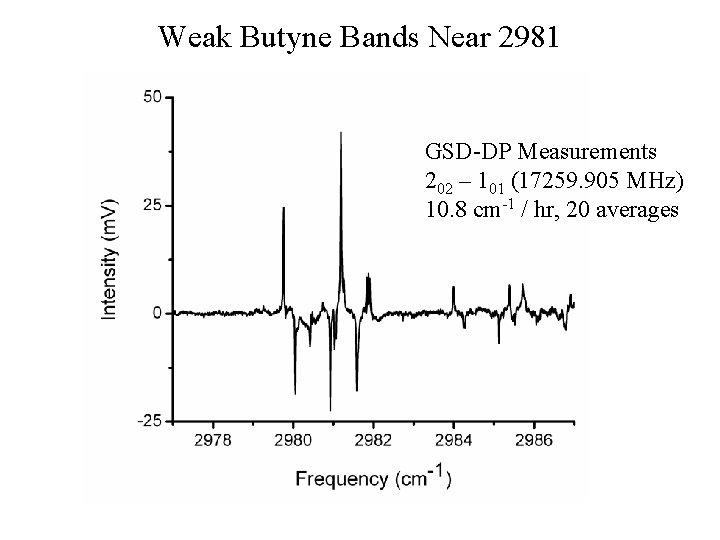
Molecular Beam Data – Butyne GSD-DP Measurements 202 – 101 (17259. 905 MHz) 10. 8 cm-1 / hr, 20 averages
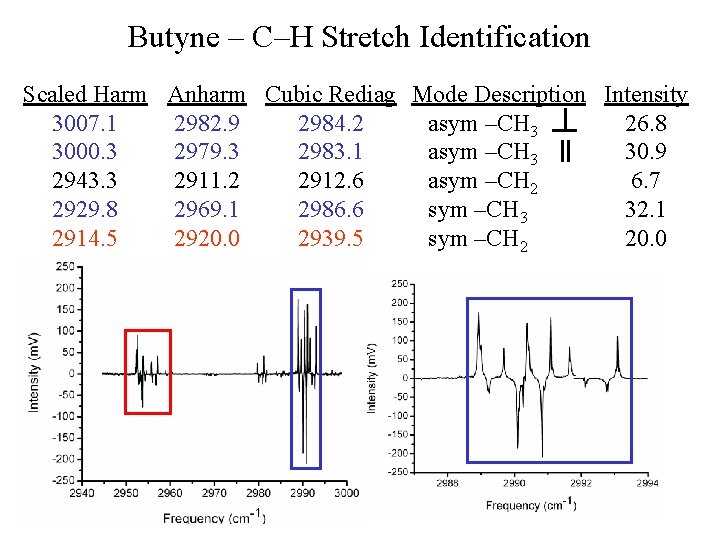
Butyne – C–H Stretch Identification Scaled Harm Anharm Cubic Rediag Mode Description Intensity 2984. 2 asym –CH 3 26. 8 3007. 1 2982. 9 2983. 1 asym –CH 3 30. 9 3000. 3 2979. 3 2912. 6 asym –CH 2 6. 7 2943. 3 2911. 2 2986. 6 sym –CH 3 32. 1 2929. 8 2969. 1 2939. 5 sym –CH 2 20. 0 2914. 5 2920. 0
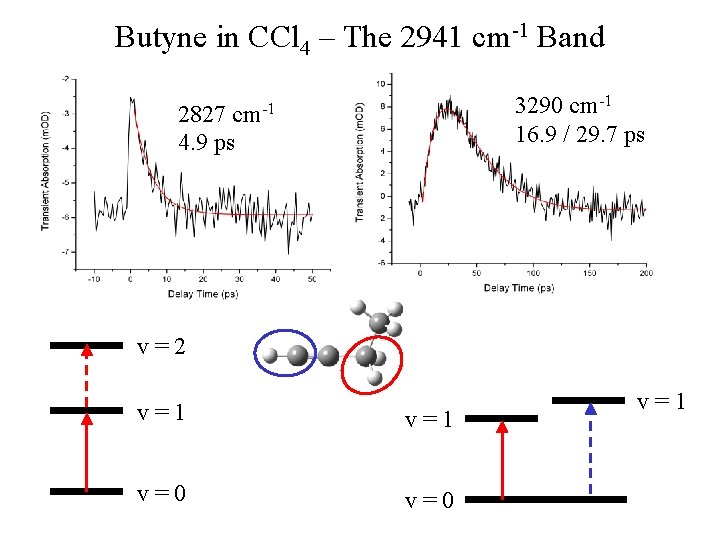
Butyne in CCl 4 – The 2941 cm-1 Band 3290 cm-1 16. 9 / 29. 7 ps cm-1 2827 4. 9 ps v=2 v=1 v=0 v=1
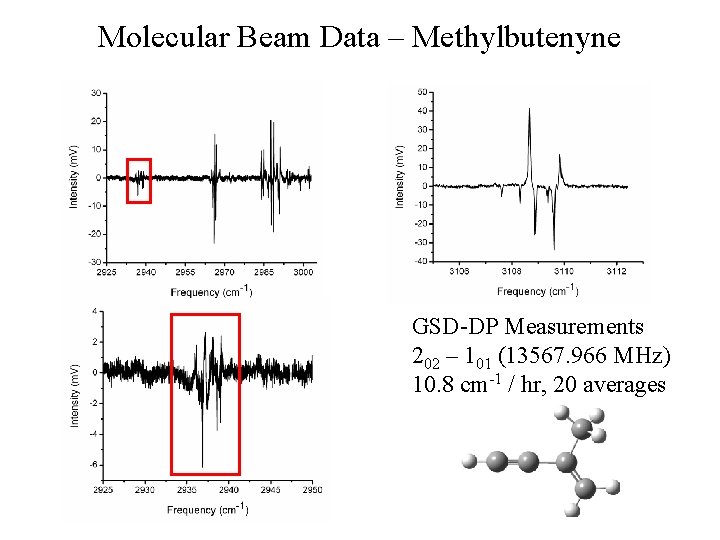
Molecular Beam Data – Methylbutenyne GSD-DP Measurements 202 – 101 (13567. 966 MHz) 10. 8 cm-1 / hr, 20 averages
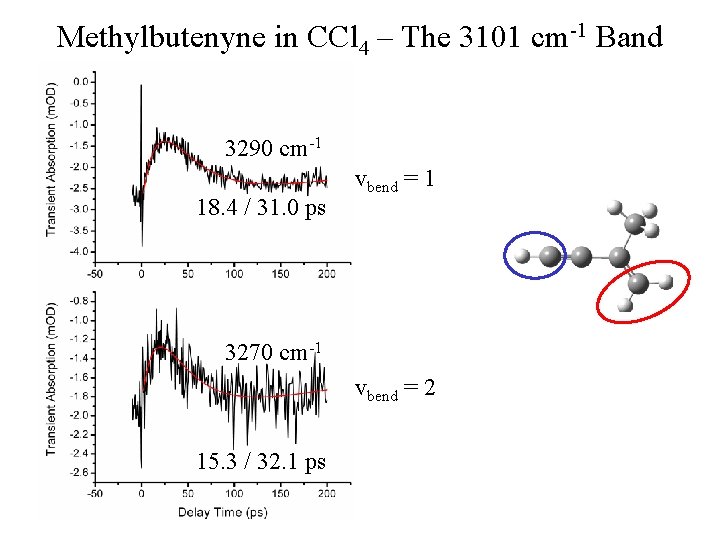
Methylbutenyne in CCl 4 – The 3101 cm-1 Band 3290 cm-1 18. 4 / 31. 0 ps vbend = 1 3270 cm-1 vbend = 2 15. 3 / 32. 1 ps
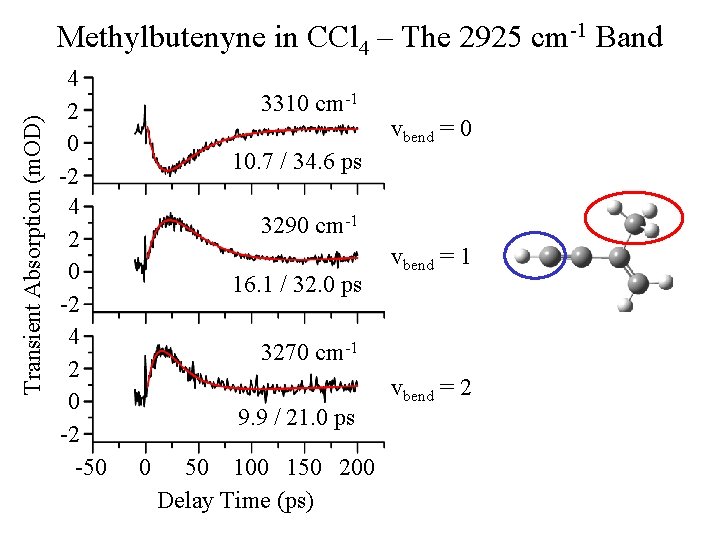
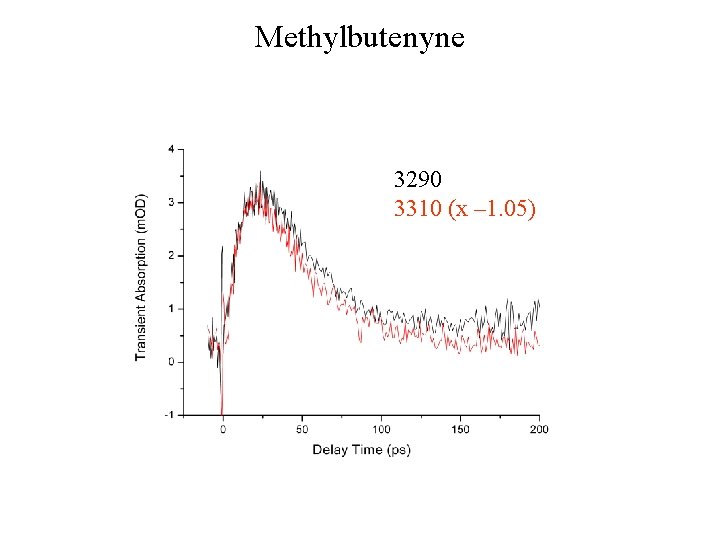
Transient Absorption (m. OD) Methylbutenyne in CCl 4 – The 2925 cm-1 Band 4 2 0 -2 -50 3310 cm-1 vbend = 0 10. 7 / 34. 6 ps 3290 cm-1 16. 1 / 32. 0 ps vbend = 1 3270 cm-1 9. 9 / 21. 0 ps 0 50 100 150 200 Delay Time (ps) vbend = 2
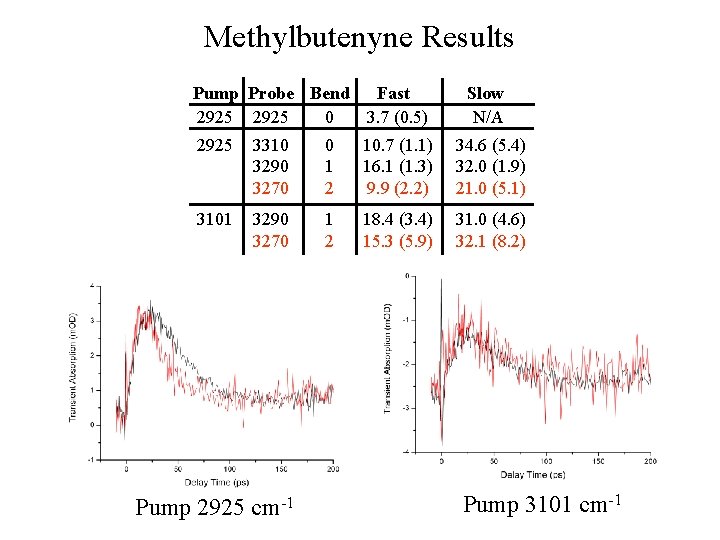
Methylbutenyne Results Pump Probe Bend Fast 2925 0 3. 7 (0. 5) Slow N/A 2925 3310 3290 3270 0 1 2 10. 7 (1. 1) 16. 1 (1. 3) 9. 9 (2. 2) 34. 6 (5. 4) 32. 0 (1. 9) 21. 0 (5. 1) 3101 3290 3270 1 2 18. 4 (3. 4) 15. 3 (5. 9) 31. 0 (4. 6) 32. 1 (8. 2) Pump 2925 cm-1 Pump 3101 cm-1
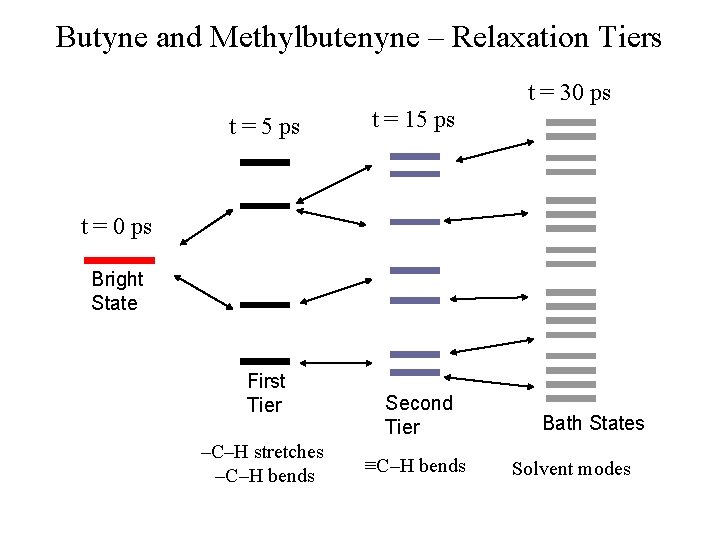
Butyne and Methylbutenyne – Relaxation Tiers t = 30 ps t = 5 ps t = 15 ps t = 0 ps Bright State First Tier –C–H stretches –C–H bends Second Tier ≡C–H bends Bath States Solvent modes
Summary The strong stretch-bend coupling of the acetylenic C–H stretch can be exploited to probe late stages of the vibrational relaxation process. In methylbutenyne, a comparison of the dynamics of states with vbend = 1 and vbend = 2 indicates that the methylic and ethylenic stretches explore qualitatively different relaxation pathways. Gas phase measurements need to be made for comparison, but the solvent contribution to the relaxation is no faster than 30 ps.
Acknowledgements Current and former Pate Lab members NSF - Chemistry

Weak Butyne Bands Near 2981 GSD-DP Measurements 202 – 101 (17259. 905 MHz) 10. 8 cm-1 / hr, 20 averages
Methylbutenyne 3290 3310 (x – 1. 05)
Butyne one-color measurement 1. 4 (0. 4) ps recovery pump 2941 probe 2941 One-color measurements hindered by stimulated emission.
Vibrational Dynamics in Solution E v=1 k. IVR k. VER v=0 Acetylenic C-H Stretch Fundamental Measurements: k. TOT = k. IVR + k. VER Yoo, H. S. et al. J. Phys. Chem A 2004 108(8) 1348 -1364 Yoo, H. S. et al. J. Phys. Chem A 2004 108(8) 1365 -1379 Yoo, H. S. et al. J. Phys. Chem A 2004 108(8) 1380 -1387
Properties of Acetylenic Compounds 3500 Frequency (cm) -1 3000 H CHstretch and (CCstretch + 2 CHbend) C 2500 CCstretch 2000 1500 v=2 CHbend 1000 500 C CHbend -CH 2 F -CH 2 CH 3 -C(CH 3)=CH 2 -CH 2 Br -CHFCH 3 -CH(CH 3)2 -CH 2 Cl R group structure -C(CH 3)3 -CH 3 -Si(CH 3)3 R Acetylenic CH stretch is a local mode oscillator with motion dominated by the terminal H-atom. This atom extends approximately 3 A from the R group.
Bright States vs. Eigenstates W C-H Bright State Dark States Molecular Eigenstates
Pulsed-IR FTMW Detector Pulsed IR Nd: YAG Laser OPO/OPA 0. 02 cm-1 bandwidth 10 Hz repetition rate Tuning range ~1 – 4 µm, ~5 – 10 m. J/pulse Molecular Beam Samples – No Hot Bands!
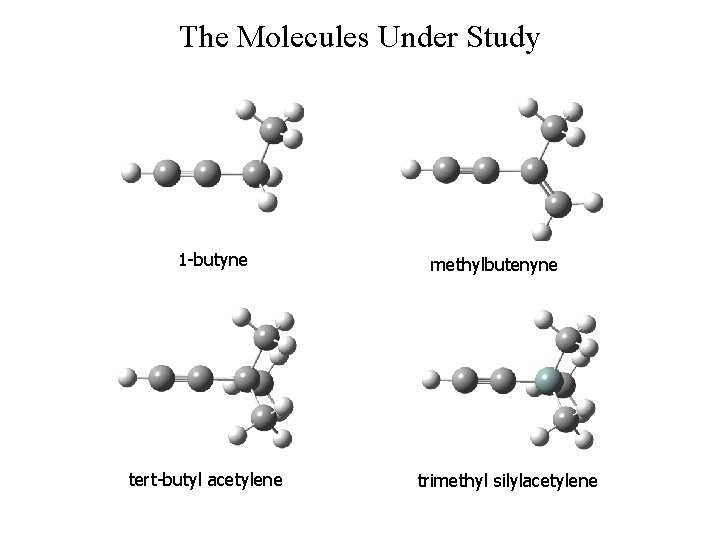
The Molecules Under Study 1 -butyne tert-butyl acetylene methylbutenyne trimethyl silylacetylene
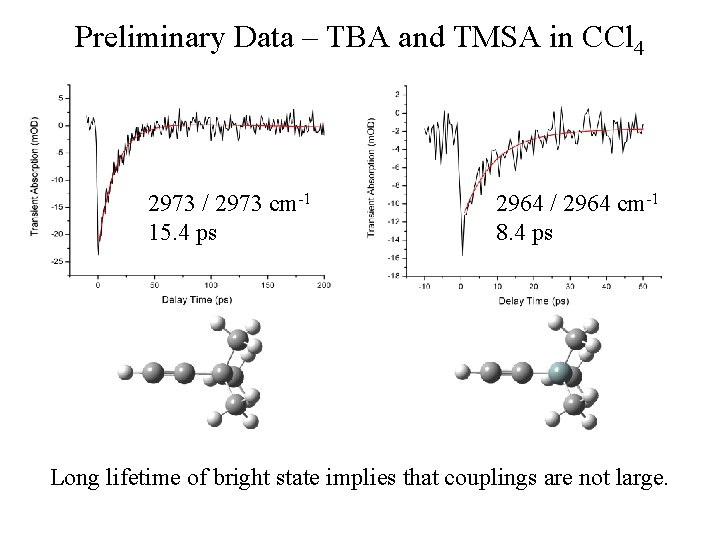
Preliminary Data – TBA and TMSA in CCl 4 2973 / 2973 cm-1 15. 4 ps 2964 / 2964 cm-1 8. 4 ps Long lifetime of bright state implies that couplings are not large.
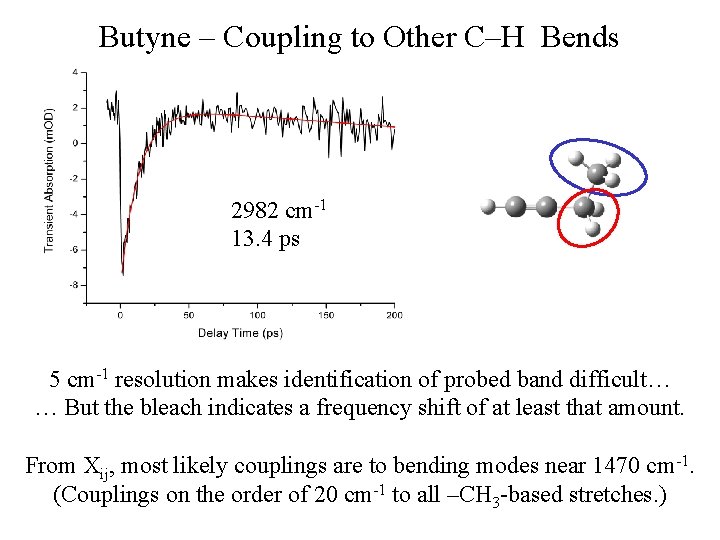
Butyne – Coupling to Other C–H Bends 2982 cm-1 13. 4 ps 5 cm-1 resolution makes identification of probed band difficult… … But the bleach indicates a frequency shift of at least that amount. From Xij, most likely couplings are to bending modes near 1470 cm-1. (Couplings on the order of 20 cm-1 to all –CH 3 -based stretches. )
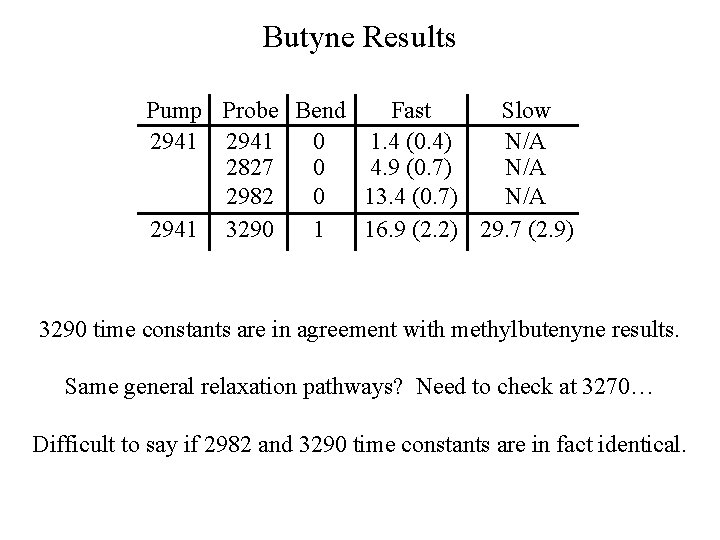
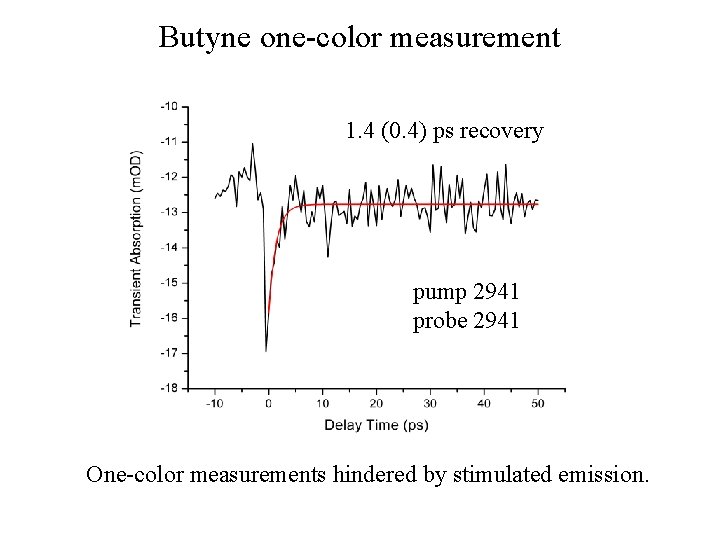
Butyne Results Pump Probe Bend Fast Slow 0 1. 4 (0. 4) N/A 2941 2827 0 4. 9 (0. 7) N/A 2982 0 13. 4 (0. 7) N/A 2941 3290 1 16. 9 (2. 2) 29. 7 (2. 9) 3290 time constants are in agreement with methylbutenyne results. Same general relaxation pathways? Need to check at 3270… Difficult to say if 2982 and 3290 time constants are in fact identical.
- Slides: 30