
FLOW OF NUTRIENTS THROUGH ECOSYSTEMSS In Ecosystems What

- Slides: 45
FLOW OF NUTRIENTS THROUGH ECOSYSTEMSS In Ecosystems
What are nutrients? • Substances that provides nourishment essential for growth and the maintenance of life • Oxygen, Water, Carbon, Nitrogen, Phosphorous, etc
How are Nutrients Cycled? Three main nutrients cycles: 1. Carbon cycle 2. Nitrogen cycle 3. Phosphorous cycle
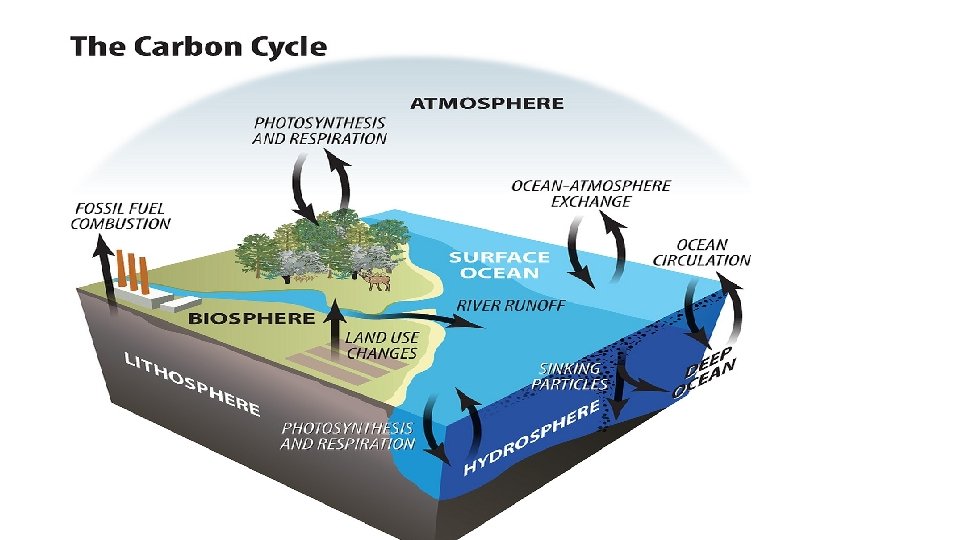
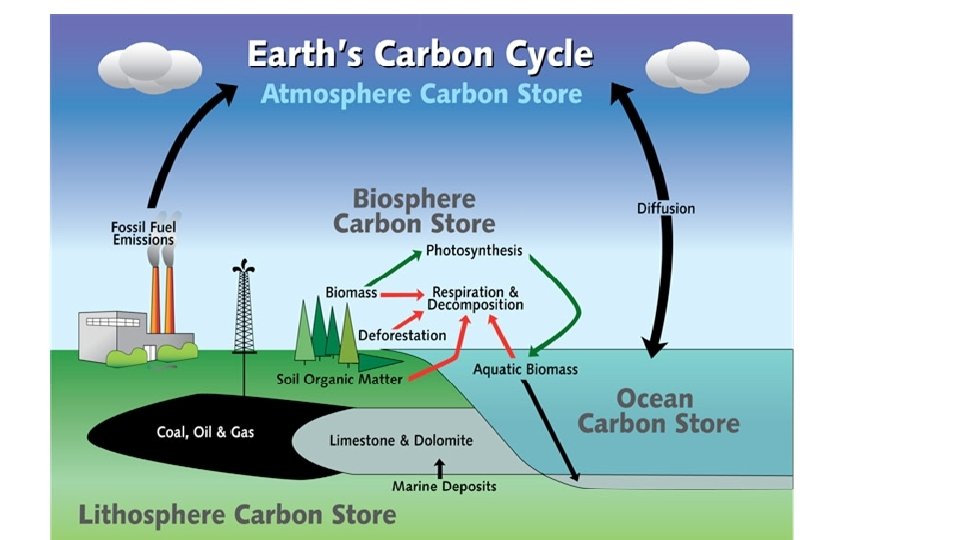
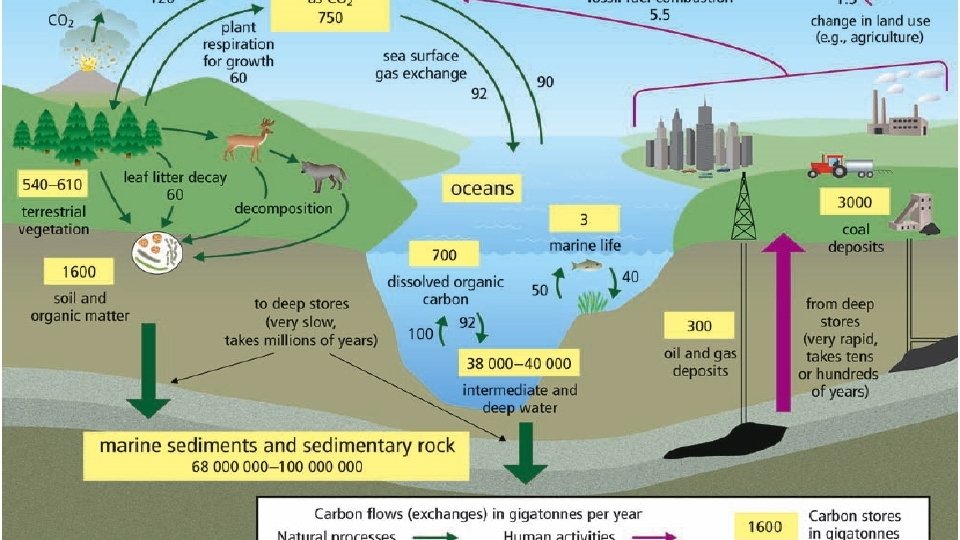
How does the Carbon Cycle Work? • MOST of the carbon is found in long-terms stores in geosphere but is also found in the atmosphere, and in all living things. • Carbon moves between stores via six main processes:
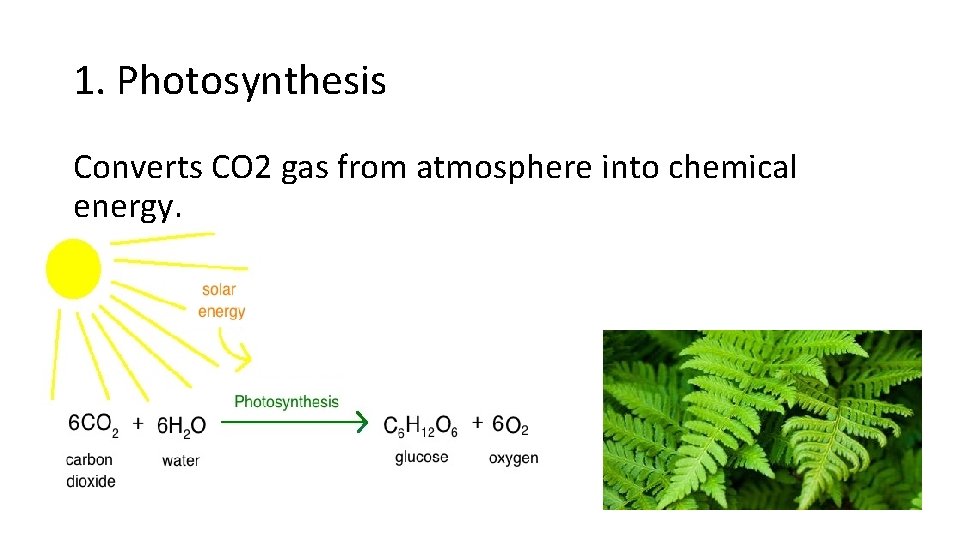
1. Photosynthesis Converts CO 2 gas from atmosphere into chemical energy.
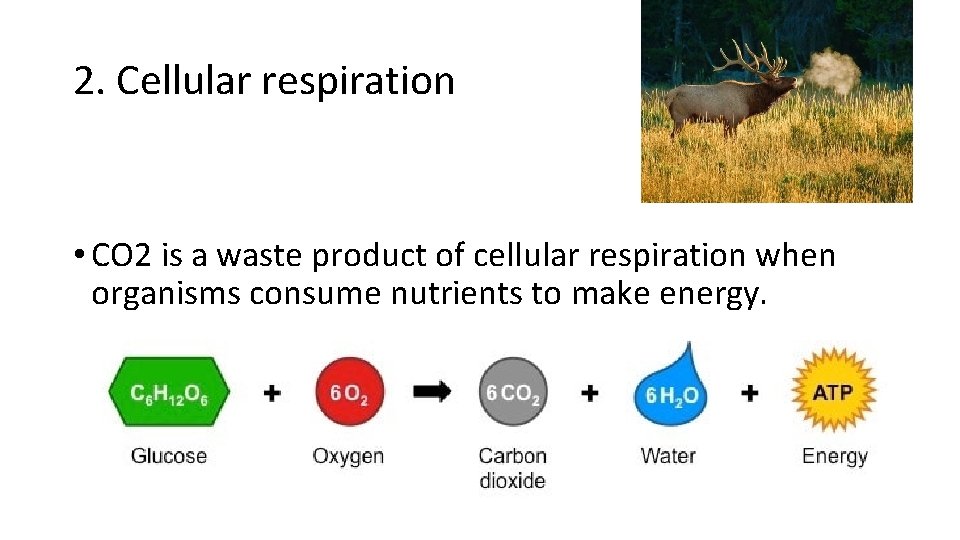
2. Cellular respiration • CO 2 is a waste product of cellular respiration when organisms consume nutrients to make energy.
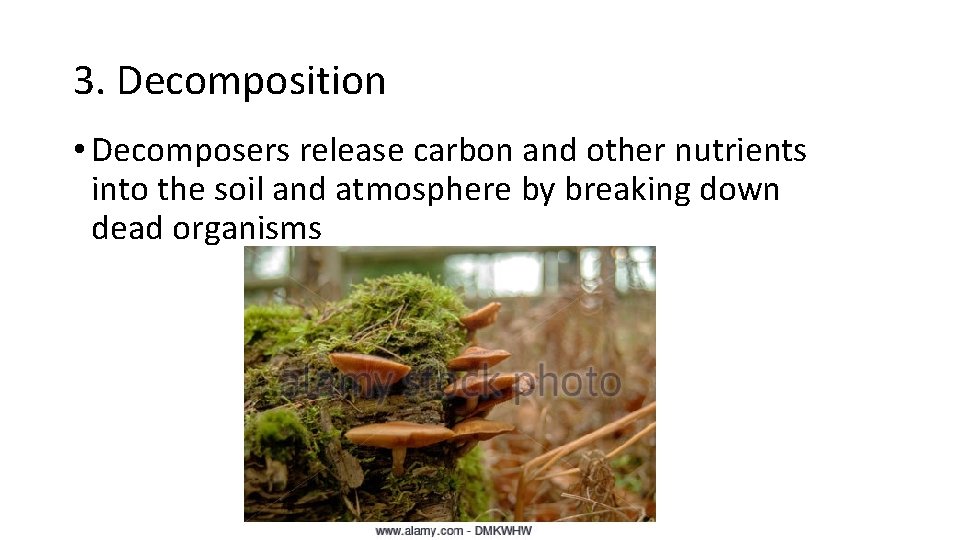
3. Decomposition • Decomposers release carbon and other nutrients into the soil and atmosphere by breaking down dead organisms
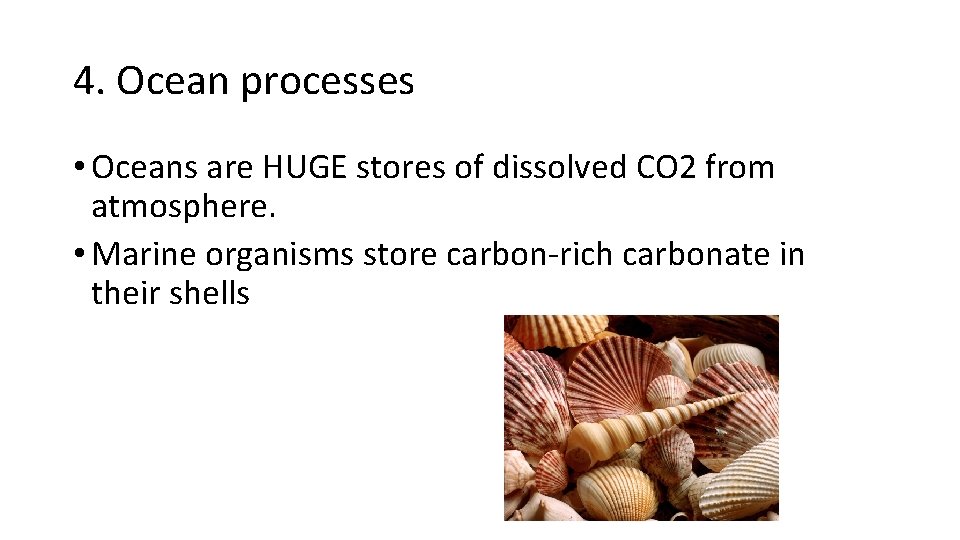
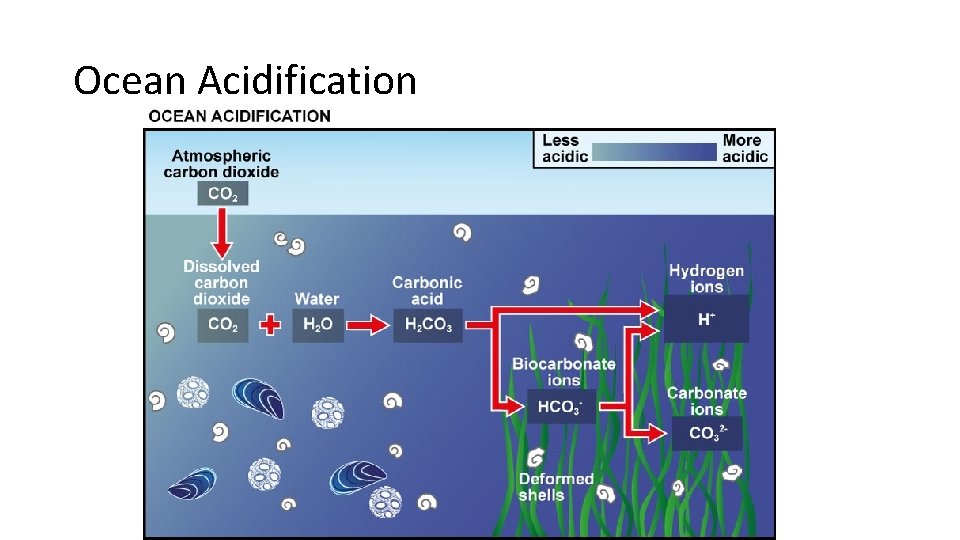
4. Ocean processes • Oceans are HUGE stores of dissolved CO 2 from atmosphere. • Marine organisms store carbon-rich carbonate in their shells
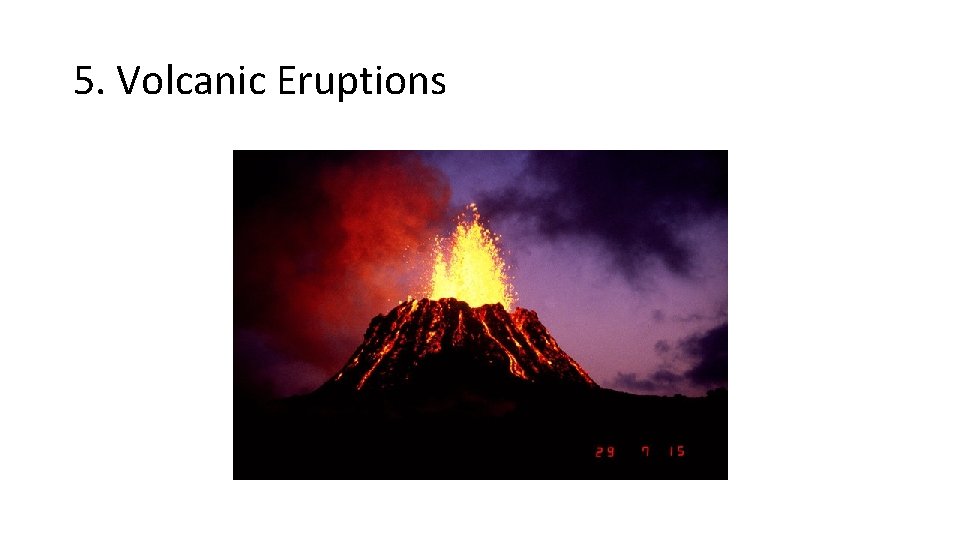
5. Volcanic Eruptions
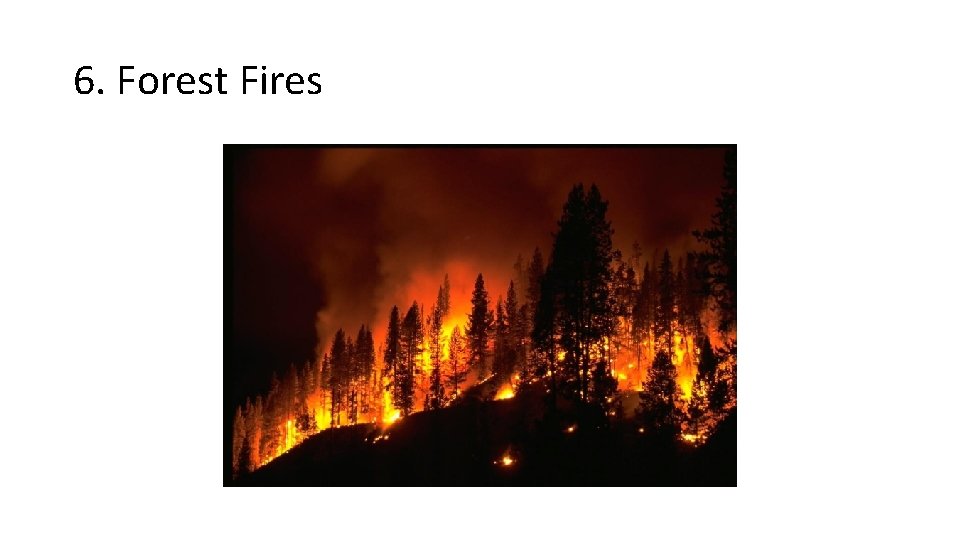
6. Forest Fires
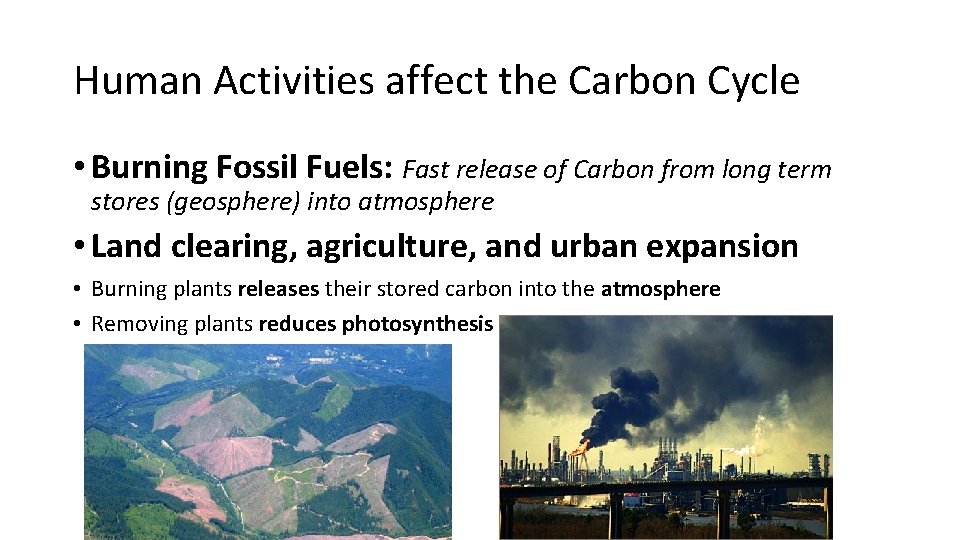
Human Activities affect the Carbon Cycle • Burning Fossil Fuels: Fast release of Carbon from long term stores (geosphere) into atmosphere • Land clearing, agriculture, and urban expansion • Burning plants releases their stored carbon into the atmosphere • Removing plants reduces photosynthesis
Effects of Excess Carbon in the Atmosphere: Excess carbon in atmosphere Green House Gases Global Warming.
So What? People like warm weather Warmer Temperatures may cause: 1. Extreme Weather more heat waves, droughts, fires possible fatalities 2. Sea ice melts sea level rises coastal flooding climate refugees 3. Warmer seawater absorbs more CO 2 ocean acidification coral reef harmed, declining fish populations
Ocean Acidification
Check your Understanding 1. 2. 3. 4. Why is the carbon cycle important? How is carbon stored? How is carbon cycled? Name several human activities that affect the carbon cycle.
Practice • Nutrient Cycle WS • In groups: Sustainability WS • View remainder of PPT for Nitrogen and Phosphorous Cycles and how to destroy a lake.
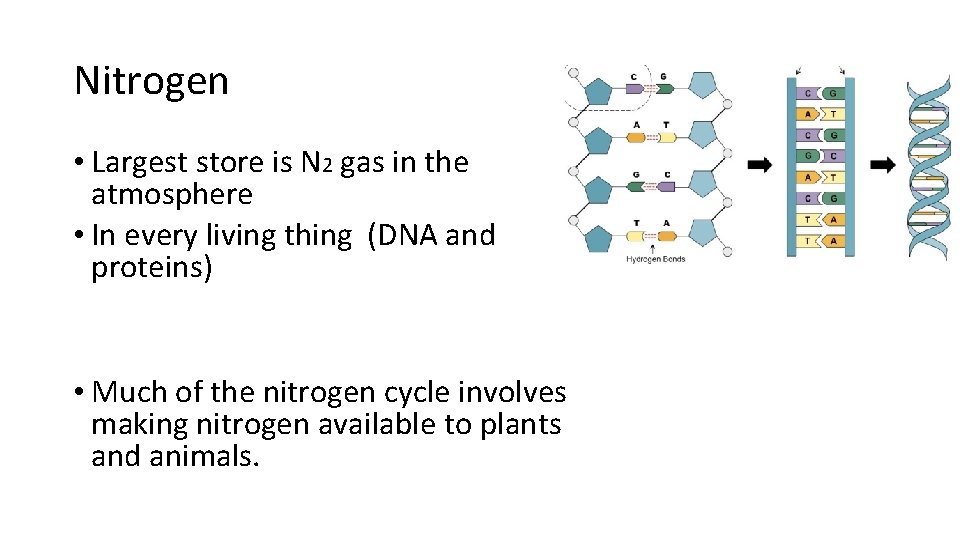
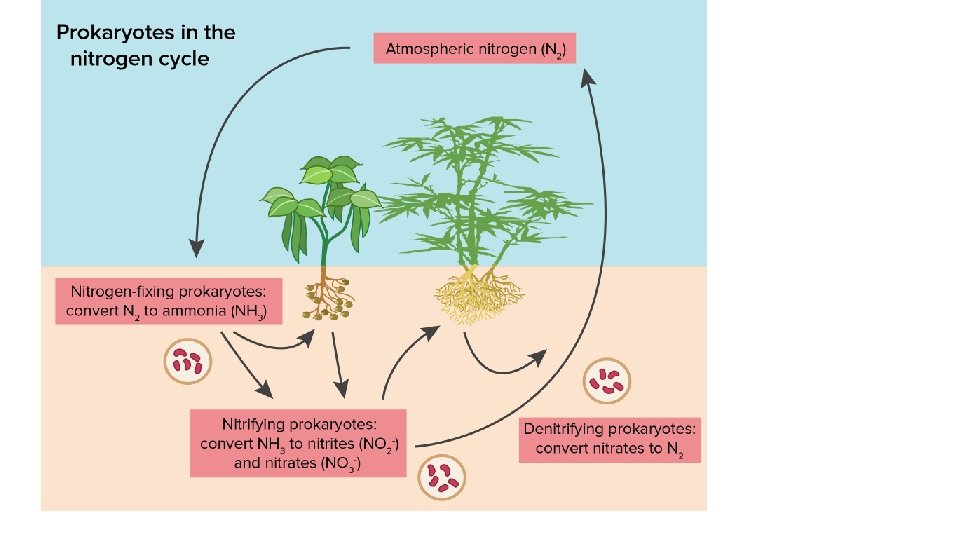
Nitrogen • Largest store is N 2 gas in the atmosphere • In every living thing (DNA and proteins) • Much of the nitrogen cycle involves making nitrogen available to plants and animals.
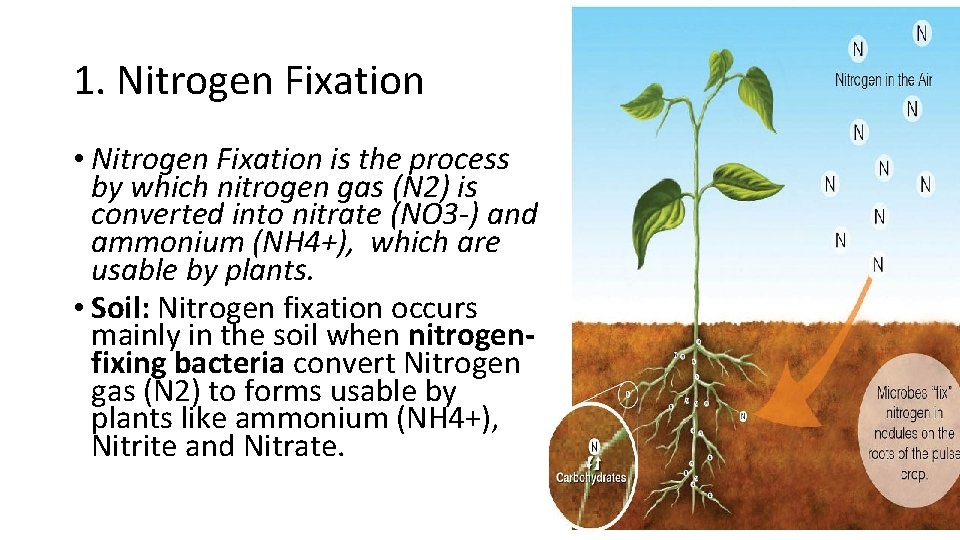
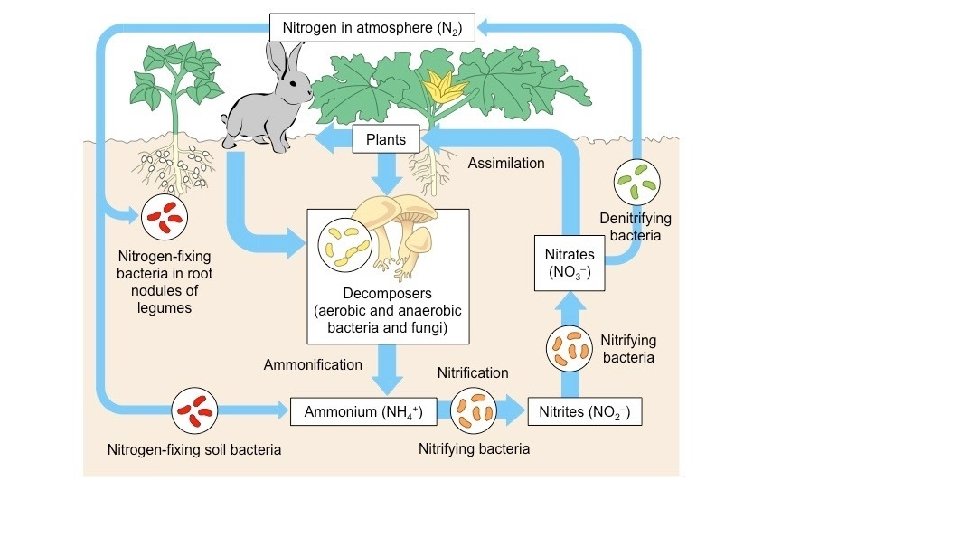
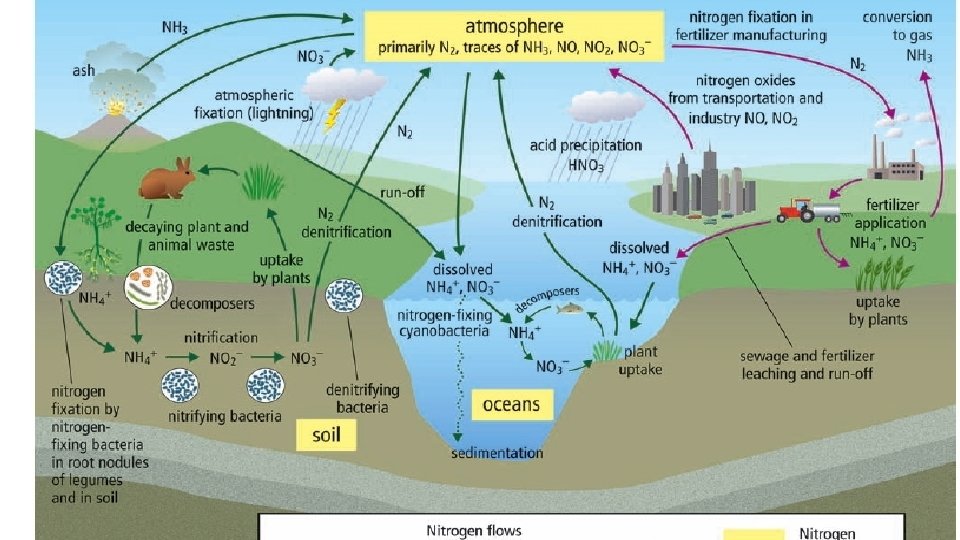
Nitrogen Cycle • Nitrogen Fixation: bacteria in the soil convert Nitrogen to Ammonia (NH 2) • Nitrification: bacteria convert Ammonia to Nitrite (NO 2) to Nitrate (NO 3) • Uptake: Plants take up nitrate/nitrite • Ammonification: Decomposers convert nitrogen in dead organisms back to ammonium (NH 4+) • Denitrification: Other soil bacteria convert nitrate back into N 2 gas to atmosphere
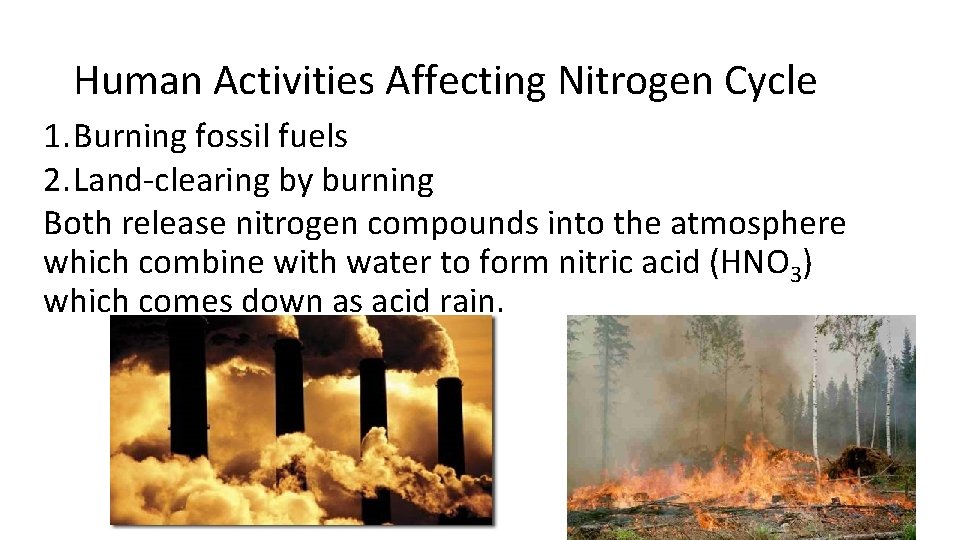
Human Activities Affecting Nitrogen Cycle 1. Burning fossil fuels 2. Land-clearing by burning Both release nitrogen compounds into the atmosphere which combine with water to form nitric acid (HNO 3) which comes down as acid rain.
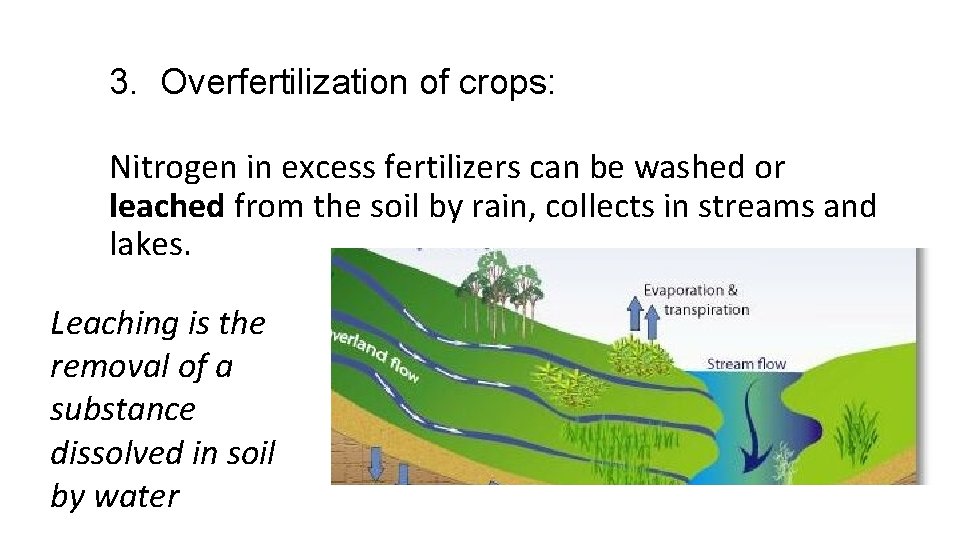
3. Overfertilization of crops: Nitrogen in excess fertilizers can be washed or leached from the soil by rain, collects in streams and lakes. Leaching is the removal of a substance dissolved in soil by water
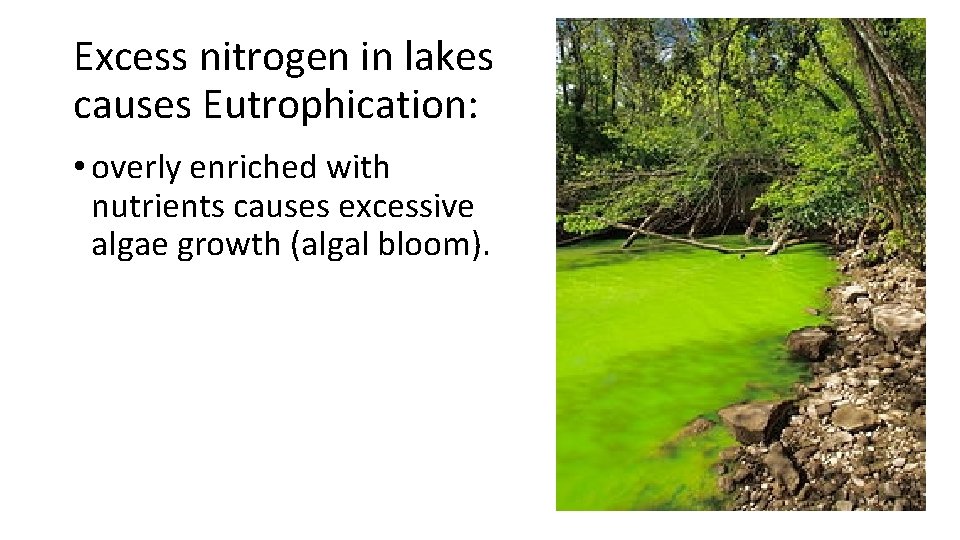
Excess nitrogen in lakes causes Eutrophication: • overly enriched with nutrients causes excessive algae growth (algal bloom).
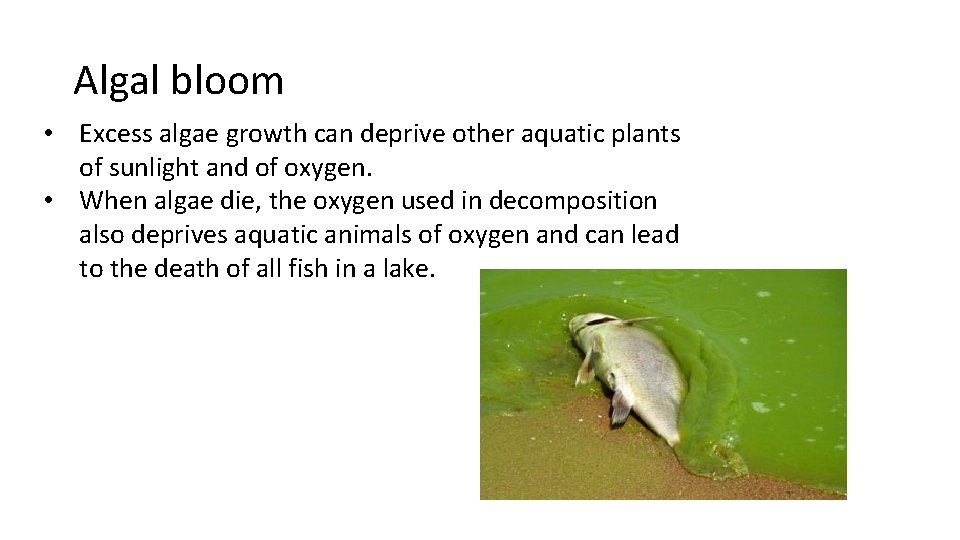
Algal bloom • Excess algae growth can deprive other aquatic plants of sunlight and of oxygen. • When algae die, the oxygen used in decomposition also deprives aquatic animals of oxygen and can lead to the death of all fish in a lake.
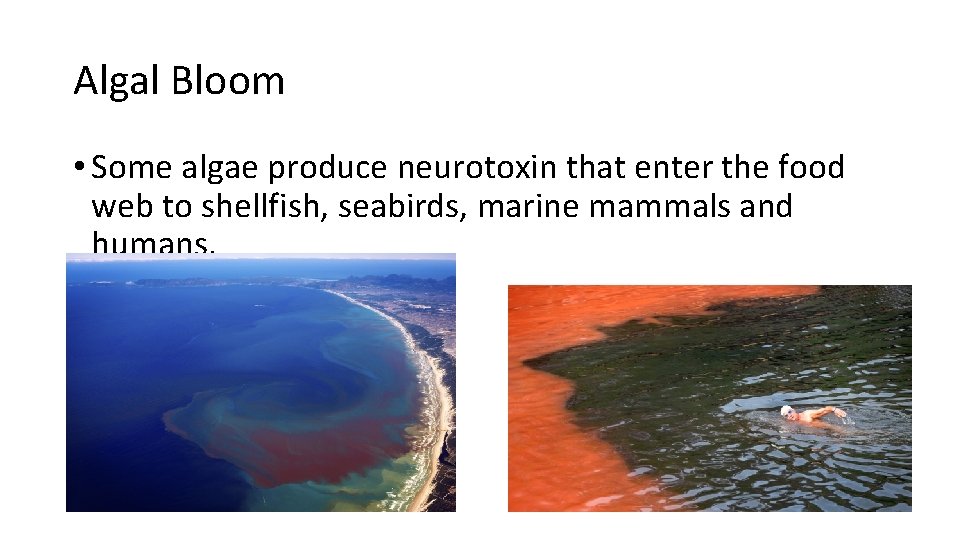
Algal Bloom • Some algae produce neurotoxin that enter the food web to shellfish, seabirds, marine mammals and humans. • Eg. Red Tide
Check your Understanding 1. 2. 3. 4. Why is the nitrogen cycle important? How is nitrogen stored? How is nitrogen cycled? Name several human activities that affect the nitrogen cycle?
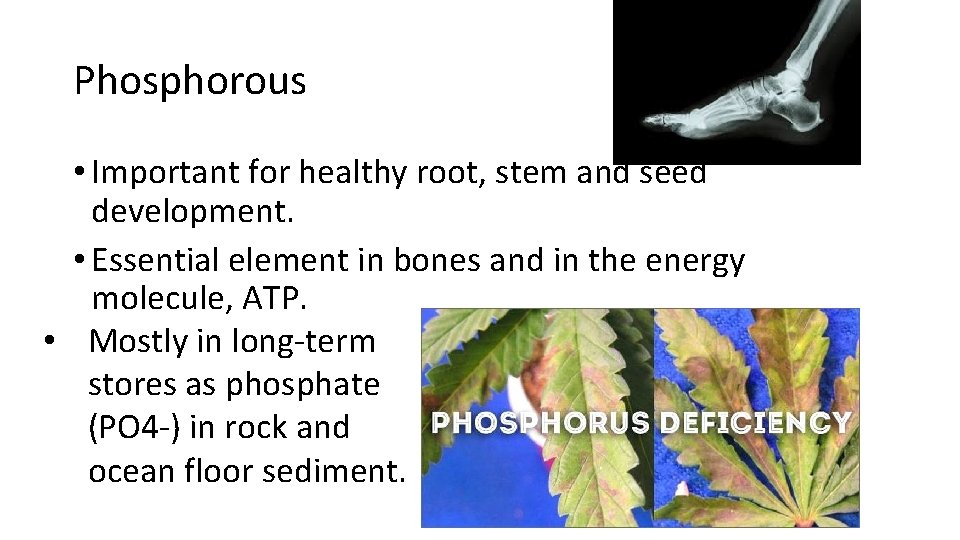
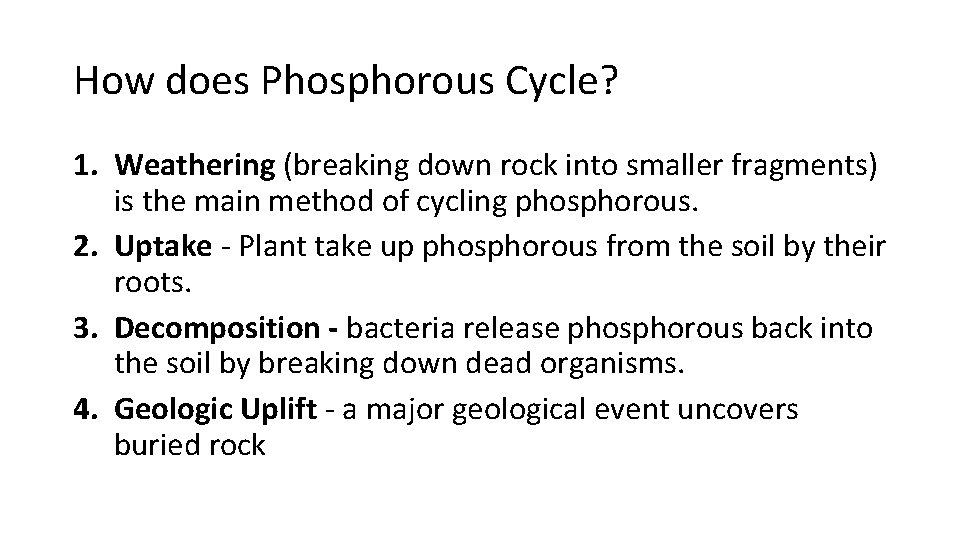
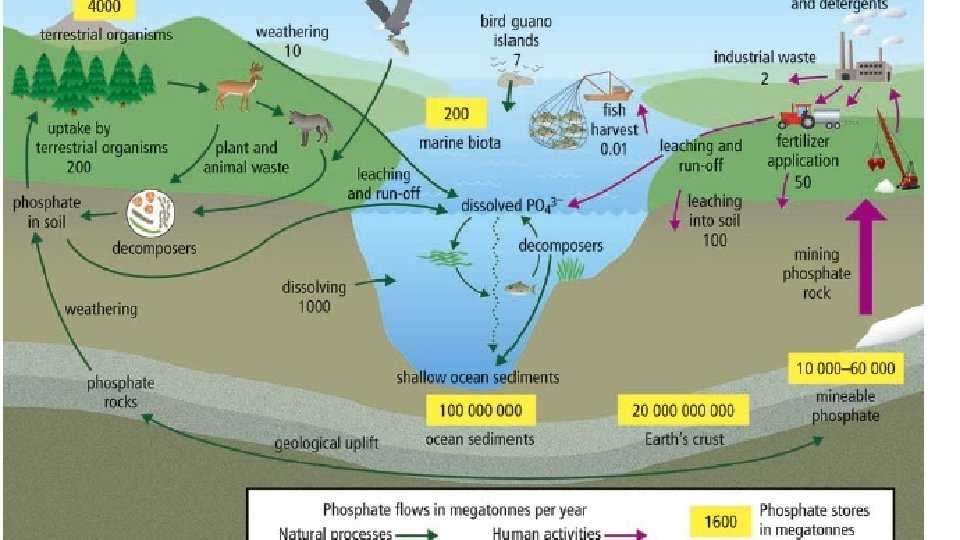
Phosphorous • Important for healthy root, stem and seed development. • Essential element in bones and in the energy molecule, ATP. • Mostly in long-term stores as phosphate (PO 4 -) in rock and ocean floor sediment.
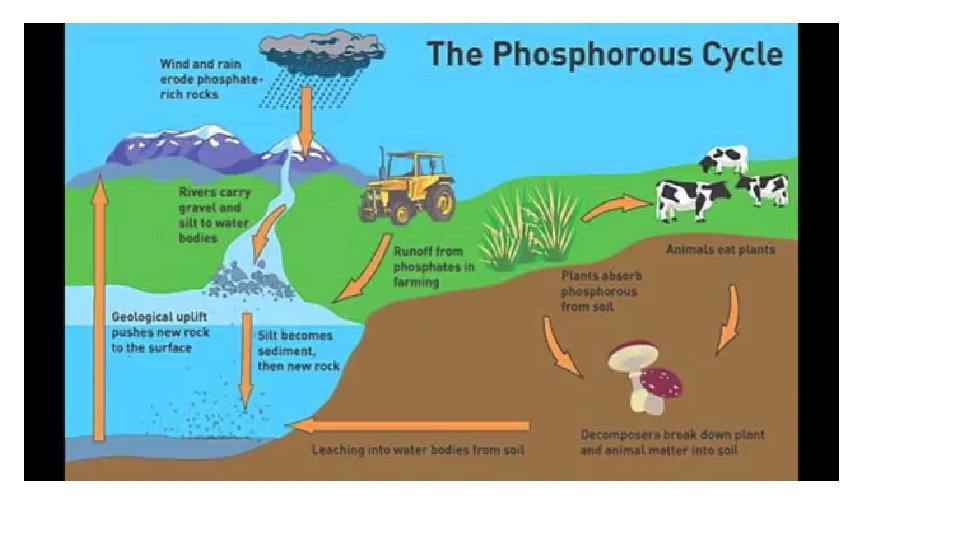
How does Phosphorous Cycle? 1. Weathering (breaking down rock into smaller fragments) is the main method of cycling phosphorous. 2. Uptake - Plant take up phosphorous from the soil by their roots. 3. Decomposition - bacteria release phosphorous back into the soil by breaking down dead organisms. 4. Geologic Uplift - a major geological event uncovers buried rock
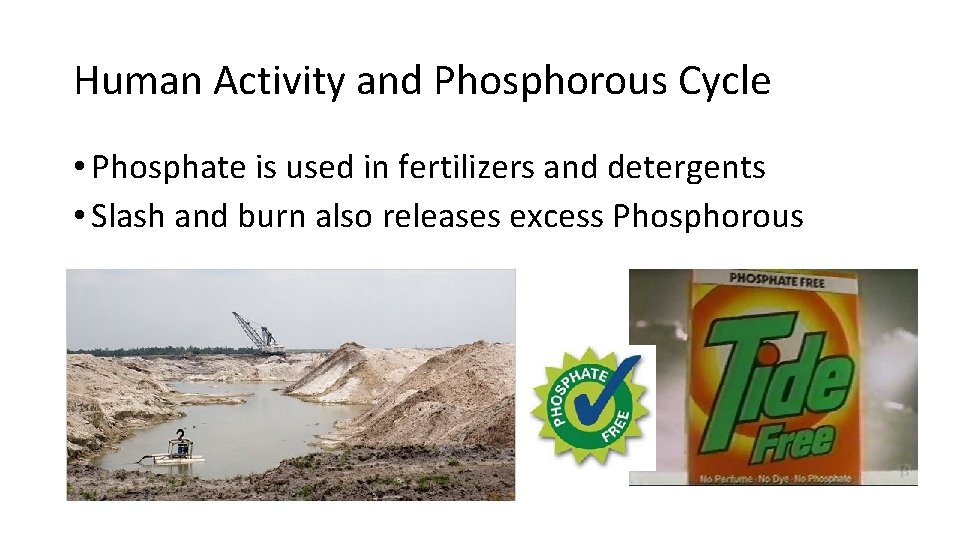
Human Activity and Phosphorous Cycle • Phosphate is used in fertilizers and detergents • Slash and burn also releases excess Phosphorous
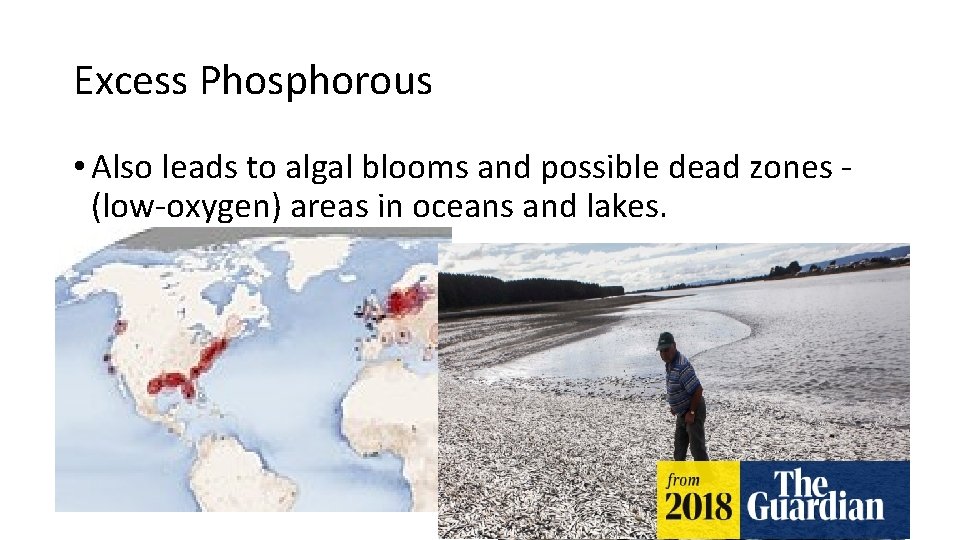
Excess Phosphorous • Also leads to algal blooms and possible dead zones (low-oxygen) areas in oceans and lakes.
Check your Understanding 1. 2. 3. 4. Why is the phosphorous cycle important? How is phosphorous stored? How is phosphorous cycled? Name several human activities that affect the phosphorous cycle?
• How are human activities harming the environment? • Do you think these practices are sustainable? • How long can we keep doing this? • Are there alternatives?
Assignment 1. Research a topic where human activity is disrupting the delicate balance of nature. • Eg. overhunting/fishing, introduction of non-native species, destruction of natural habitats, pollution, burning fossil fuels 2. Research what is being done to help curb or counteract the actions/effects or offer your own solution • Eg. Bioremediation, banning pesticides, reforestation, fishing caps, greener sources of energy.
1. Nitrogen Fixation • Nitrogen Fixation is the process by which nitrogen gas (N 2) is converted into nitrate (NO 3 -) and ammonium (NH 4+), which are usable by plants. • Soil: Nitrogen fixation occurs mainly in the soil when nitrogenfixing bacteria convert Nitrogen gas (N 2) to forms usable by plants like ammonium (NH 4+), Nitrite and Nitrate.
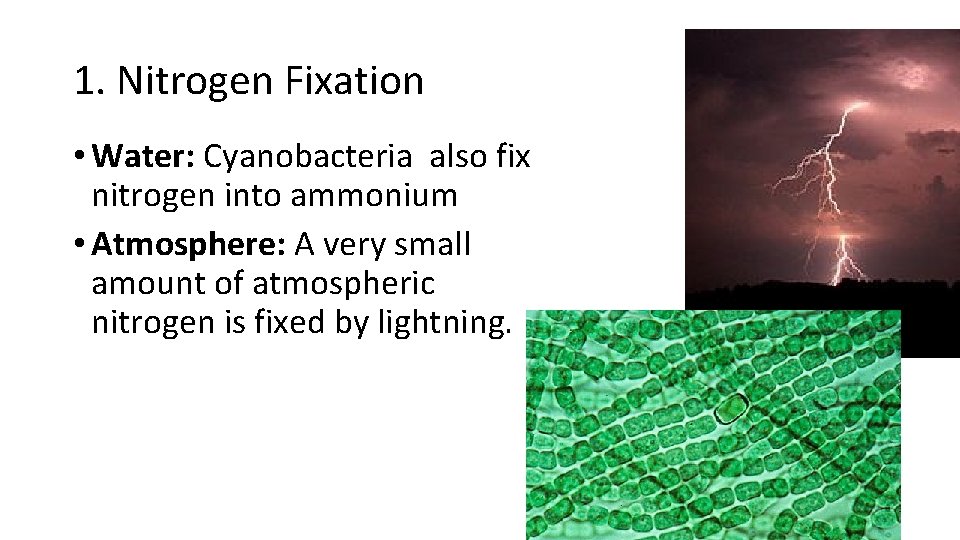
1. Nitrogen Fixation • Water: Cyanobacteria also fix nitrogen into ammonium • Atmosphere: A very small amount of atmospheric nitrogen is fixed by lightning.
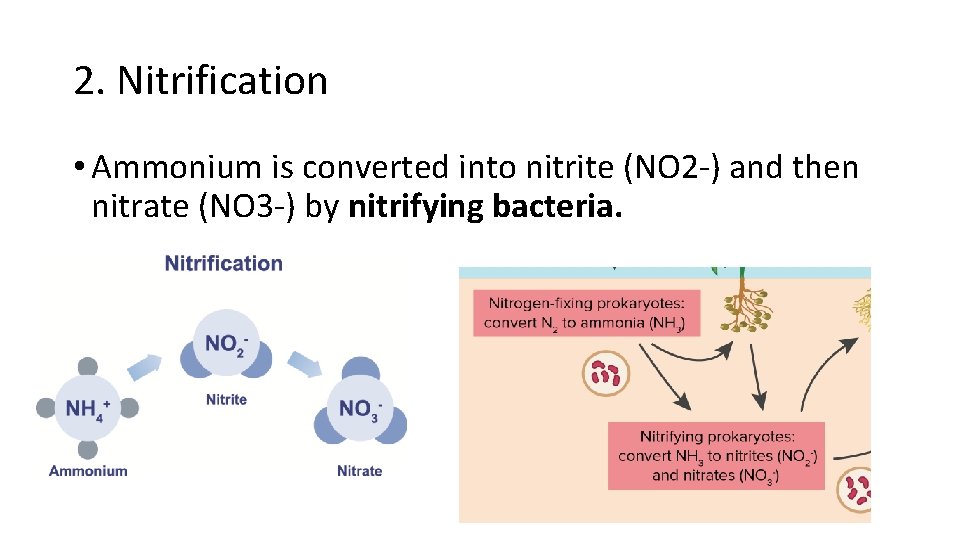
2. Nitrification • Ammonium is converted into nitrite (NO 2 -) and then nitrate (NO 3 -) by nitrifying bacteria.
3. Uptake • Once nitrates are made available by the nitrifying bacteria, plants can take up this usable form of nitrogen into their roots and incorporated it into plant proteins • Consumers (herbivores and omnivores) incorporate nitrogen into their tissues by eating the plants.
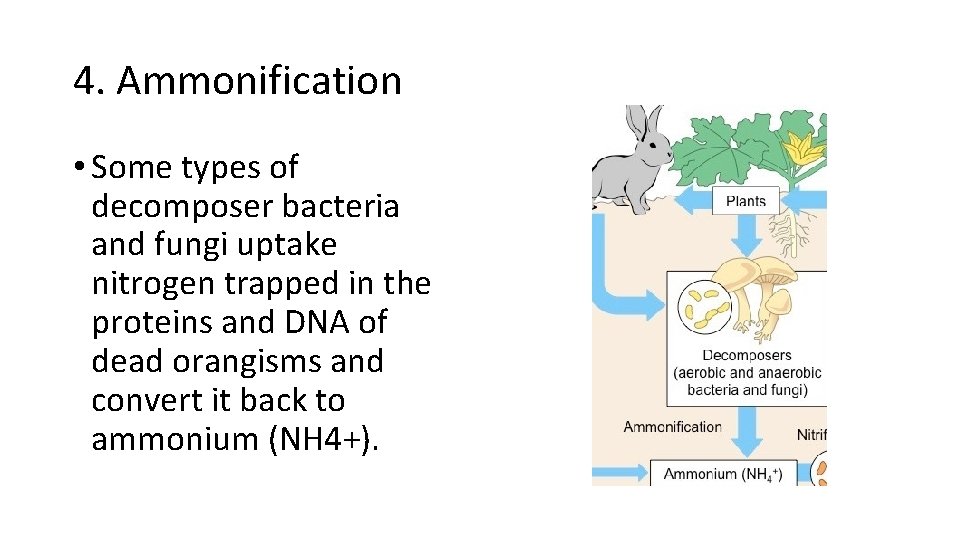
4. Ammonification • Some types of decomposer bacteria and fungi uptake nitrogen trapped in the proteins and DNA of dead orangisms and convert it back to ammonium (NH 4+).
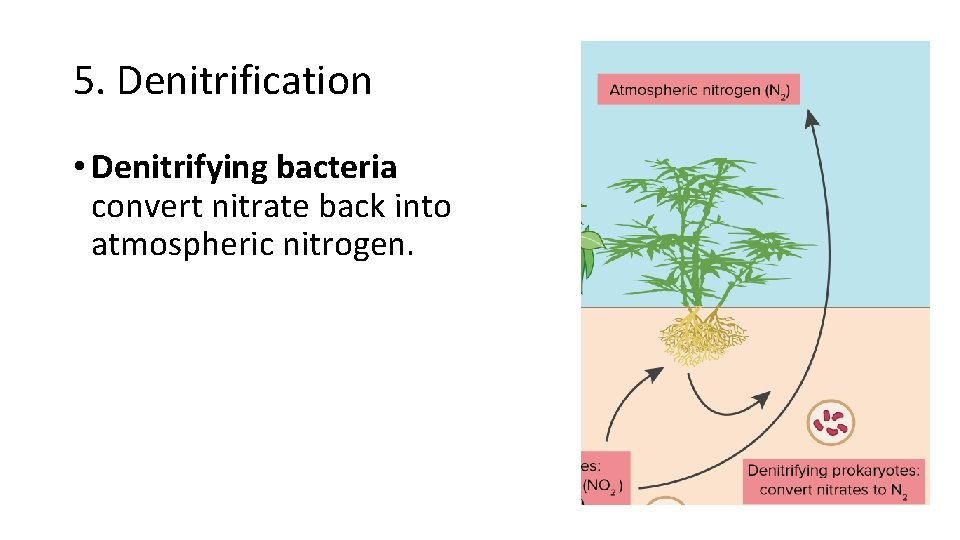
5. Denitrification • Denitrifying bacteria convert nitrate back into atmospheric nitrogen.