
Flow of Energy through Ecosystems Food Chain A

- Slides: 9
Flow of Energy through Ecosystems • Food Chain: A simple diagram of one string of feeding relationships in an ecosystem, showing the direction of the transfer of energy in that system. Sun Grass Rabbit Soil Wolf Bacteria
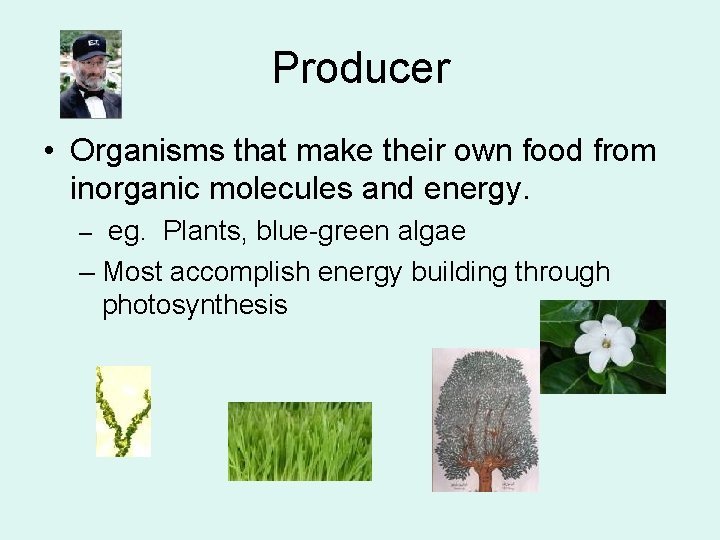
Producer • Organisms that make their own food from inorganic molecules and energy. – eg. Plants, blue-green algae – Most accomplish energy building through photosynthesis
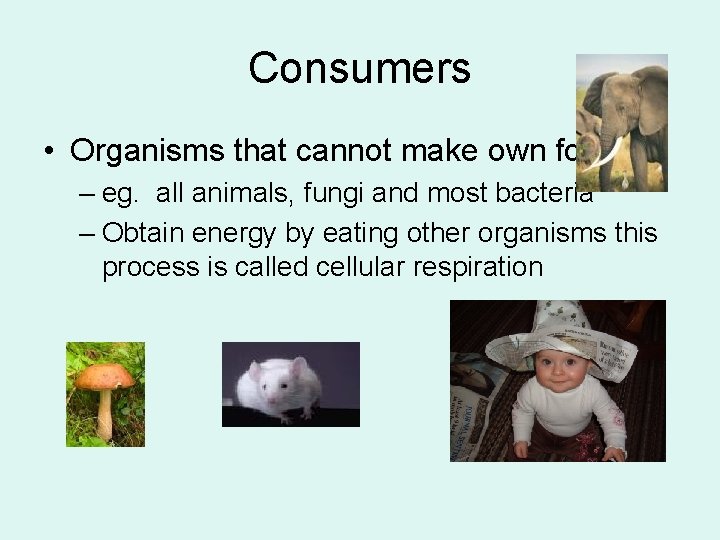
Consumers • Organisms that cannot make own food. – eg. all animals, fungi and most bacteria – Obtain energy by eating other organisms this process is called cellular respiration
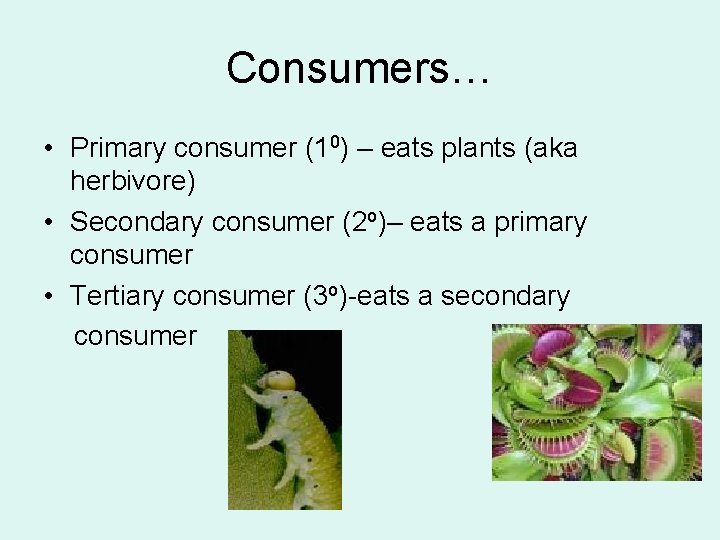
Consumers… • Primary consumer (10) – eats plants (aka herbivore) • Secondary consumer (2 o)– eats a primary consumer • Tertiary consumer (3 o)-eats a secondary consumer
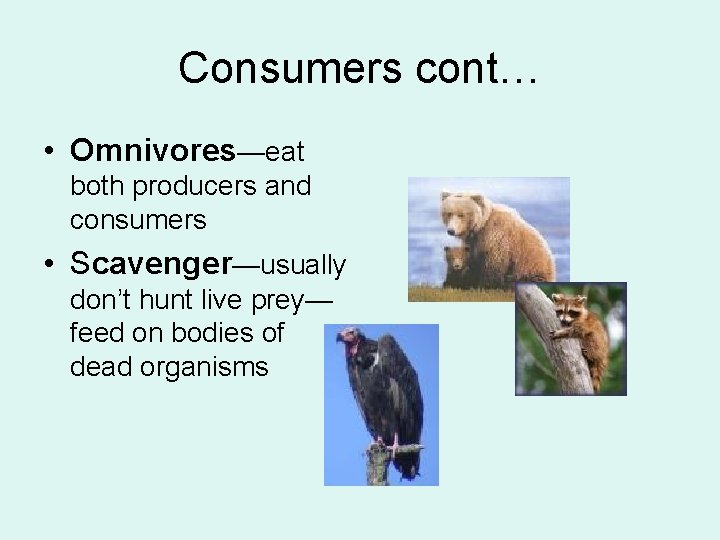
Consumers cont… • Omnivores—eat both producers and consumers • Scavenger—usually don’t hunt live prey— feed on bodies of dead organisms
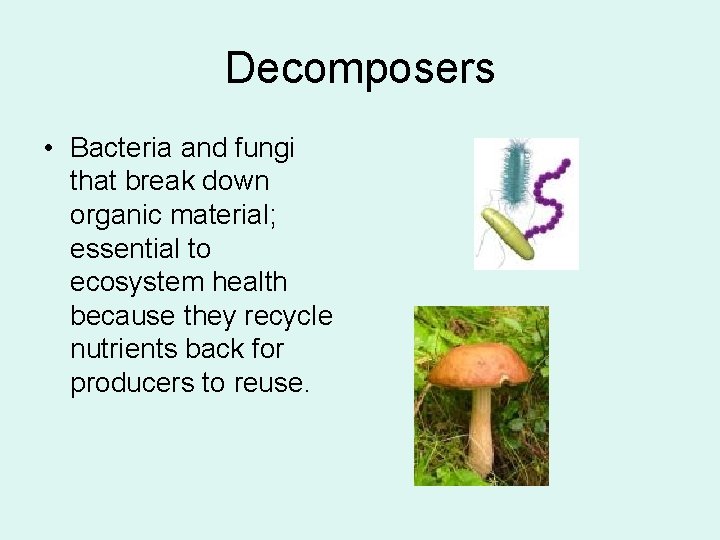
Decomposers • Bacteria and fungi that break down organic material; essential to ecosystem health because they recycle nutrients back for producers to reuse.
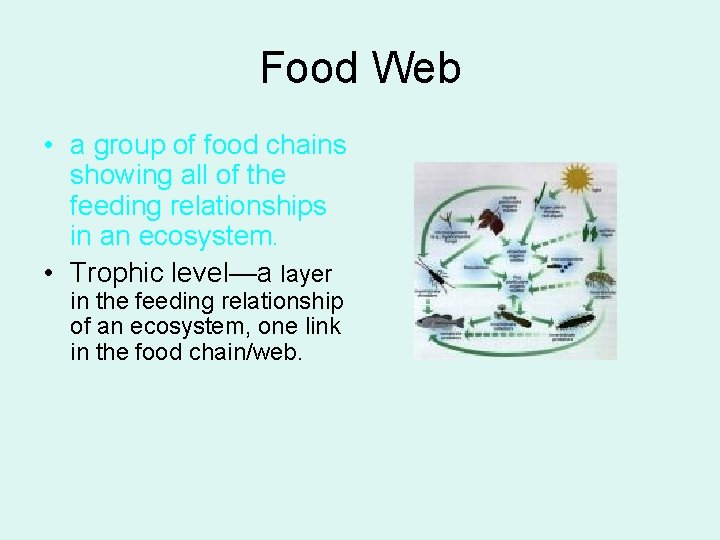
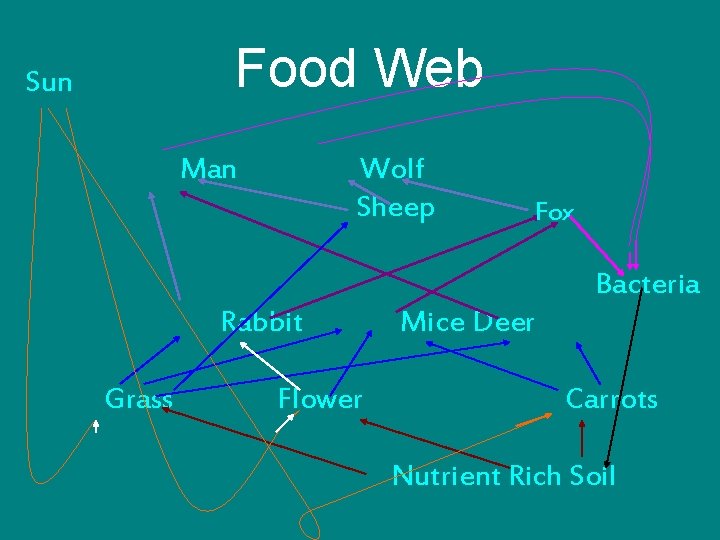
Food Web • a group of food chains showing all of the feeding relationships in an ecosystem. • Trophic level—a layer in the feeding relationship of an ecosystem, one link in the food chain/web.
Food Web Sun Man Wolf Sheep Fox Bacteria Rabbit Grass Flower Mice Deer Carrots Nutrient Rich Soil
Things to remember… • The sun…energy starts here. ALWAYS! • Decomposers (fungi and bacteria)…energy is recycled here. ALWAYS! • Put all the animals on the same trophic level on a horizontal line (producers together, then primary consumers, then secondary consumers, etc. ) • Make as many connections between your organisms as you can. Everything should have at least one food source and be eaten by at least one thing.