
FLOW OF ENERGY AND NUTRIENTS WITHIN ECOSYSTEMS Energy

- Slides: 19
FLOW OF ENERGY AND NUTRIENTS WITHIN ECOSYSTEMS
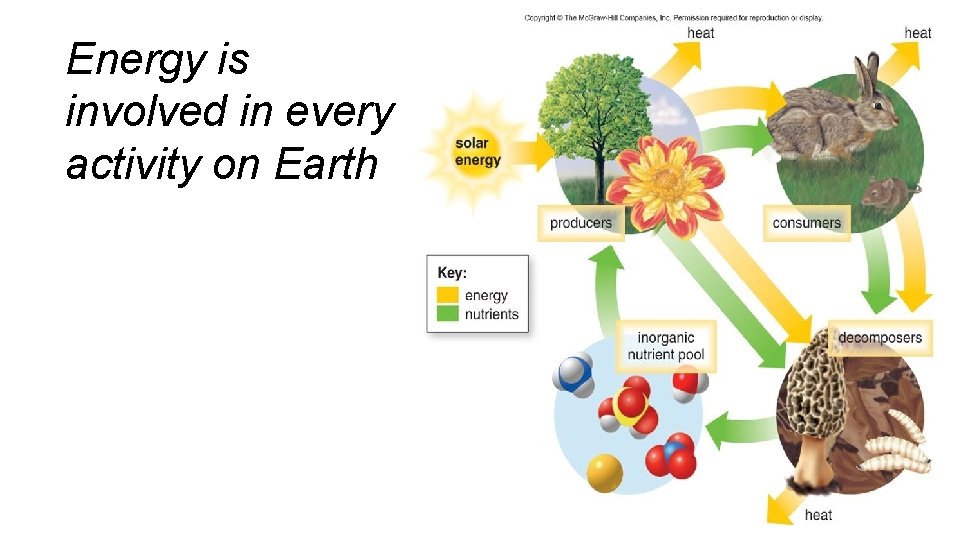
Energy is involved in every activity on Earth
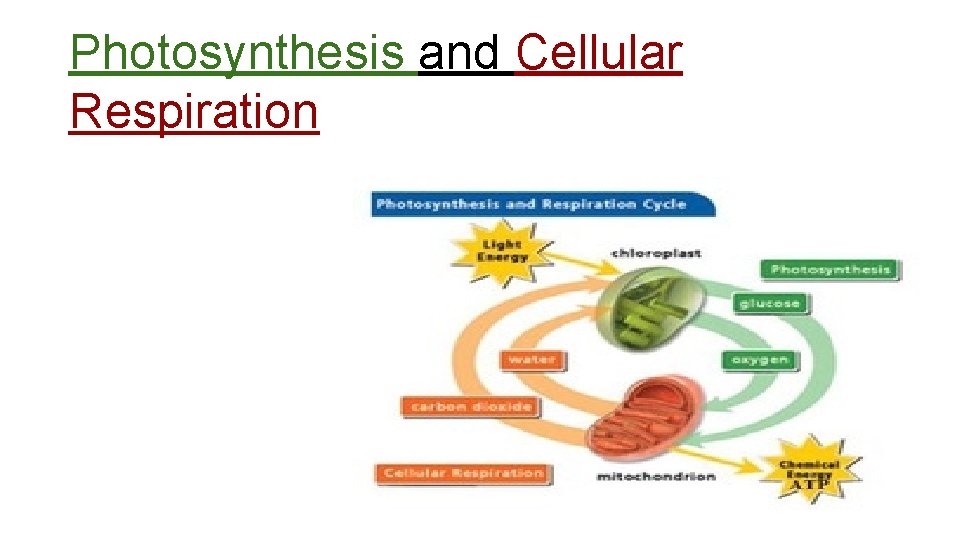
Photosynthesis and Cellular Respiration
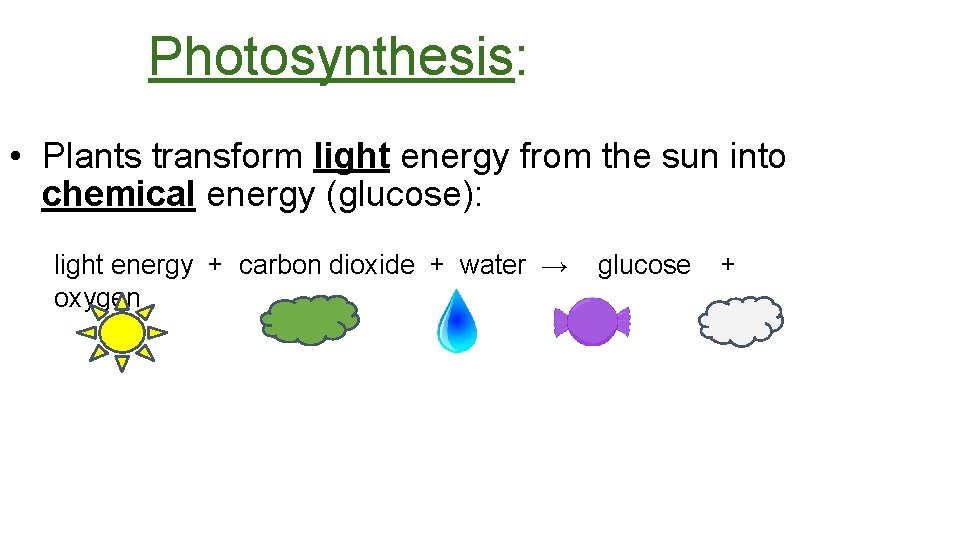
Photosynthesis: • Plants transform light energy from the sun into chemical energy (glucose): light energy + carbon dioxide + water → oxygen glucose +
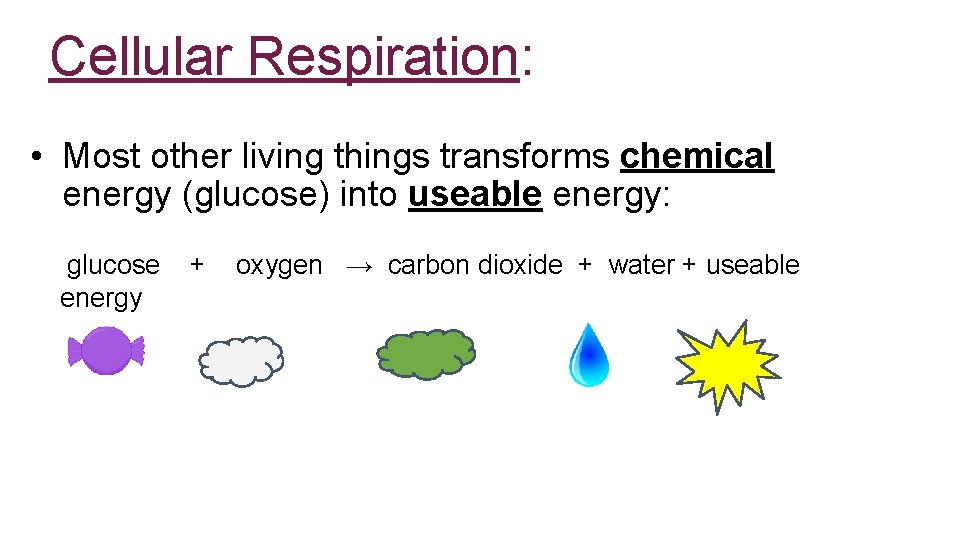
Cellular Respiration: • Most other living things transforms chemical energy (glucose) into useable energy: glucose energy + oxygen → carbon dioxide + water + useable
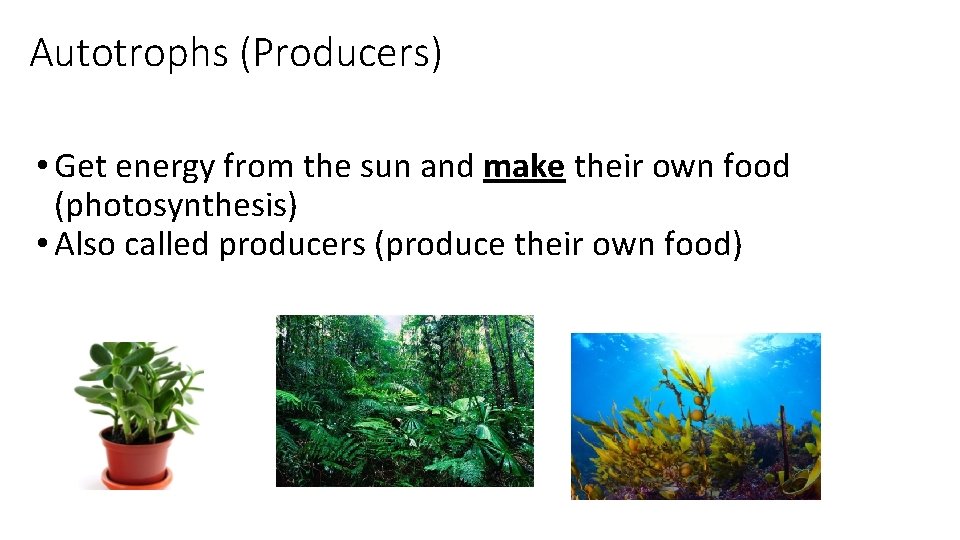
Autotrophs (Producers) • Get energy from the sun and make their own food (photosynthesis) • Also called producers (produce their own food)
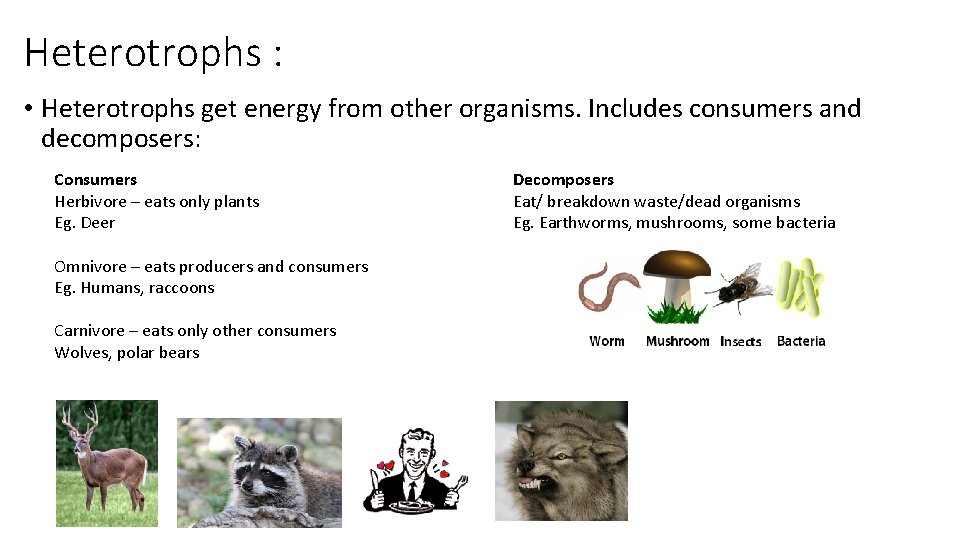
Heterotrophs : • Heterotrophs get energy from other organisms. Includes consumers and decomposers: Consumers Herbivore – eats only plants Eg. Deer Omnivore – eats producers and consumers Eg. Humans, raccoons Carnivore – eats only other consumers Wolves, polar bears Decomposers Eat/ breakdown waste/dead organisms Eg. Earthworms, mushrooms, some bacteria
How can we model the flow of energy in an ecosystem? • Food Chains • Food Webs
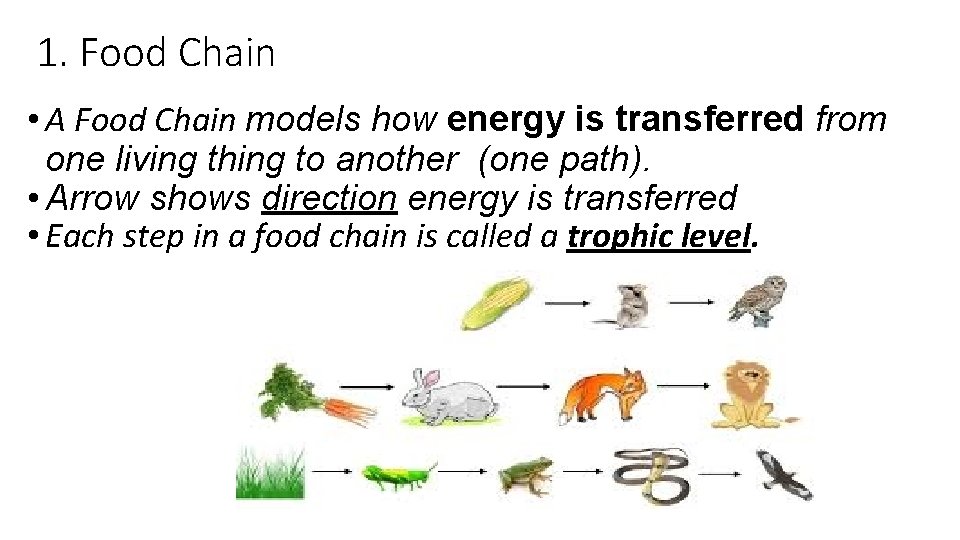
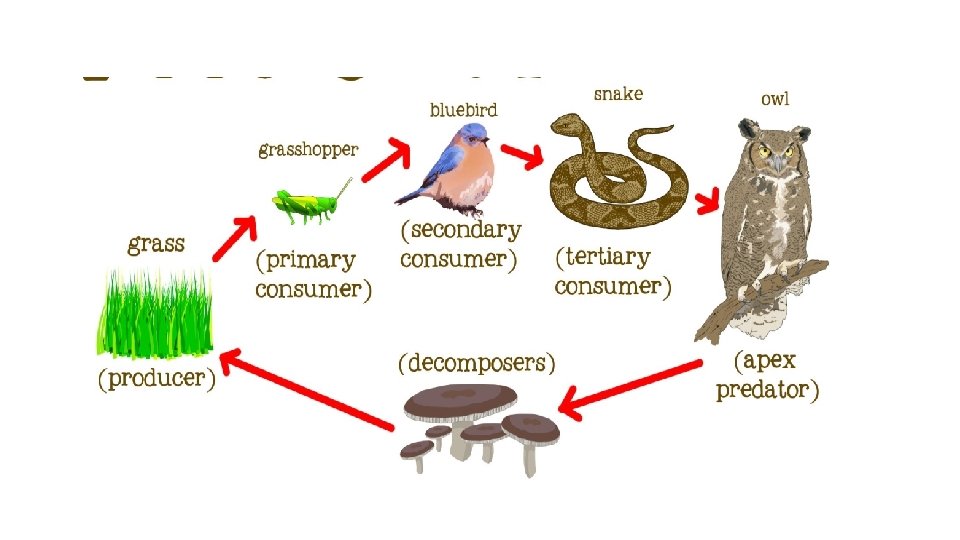
1. Food Chain • A Food Chain models how energy is transferred from one living thing to another (one path). • Arrow shows direction energy is transferred • Each step in a food chain is called a trophic level.
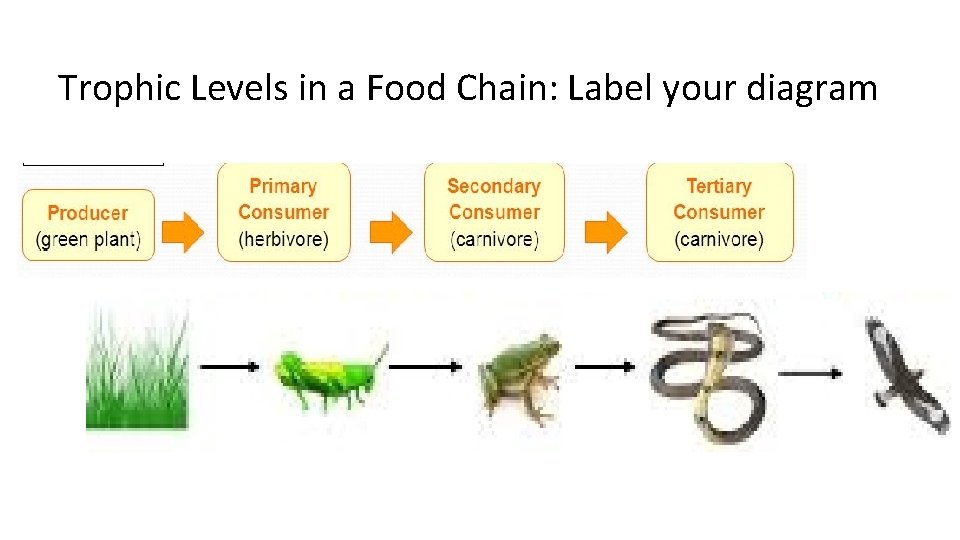
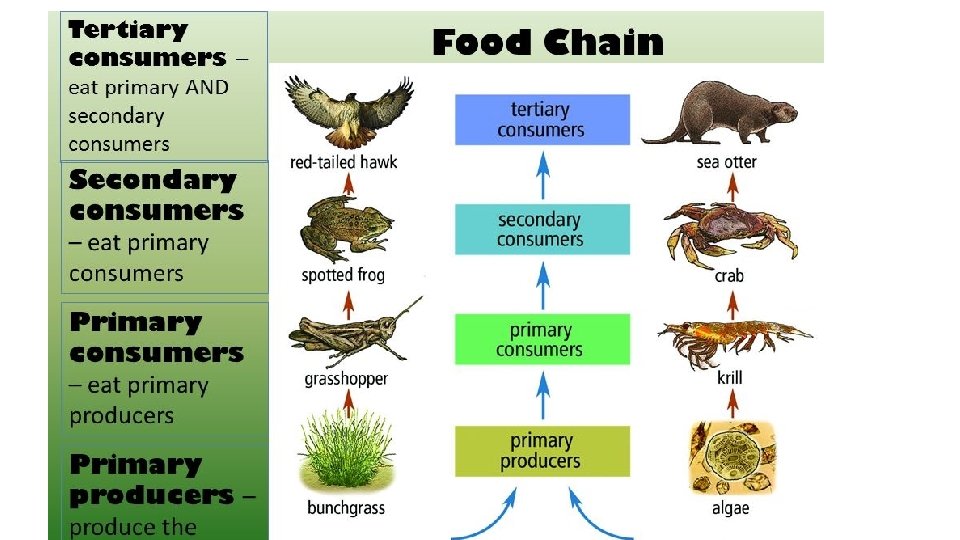
Trophic Levels in a Food Chain: Label your diagram
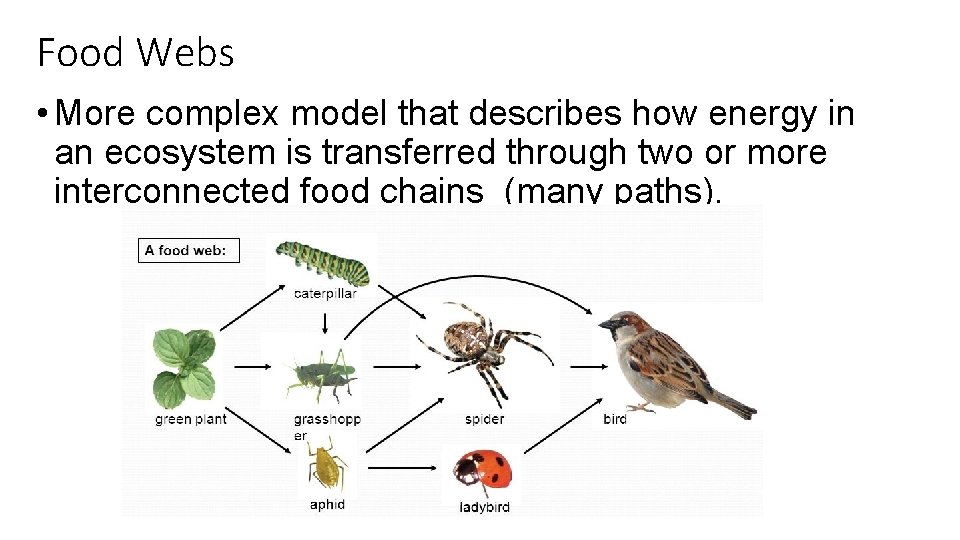
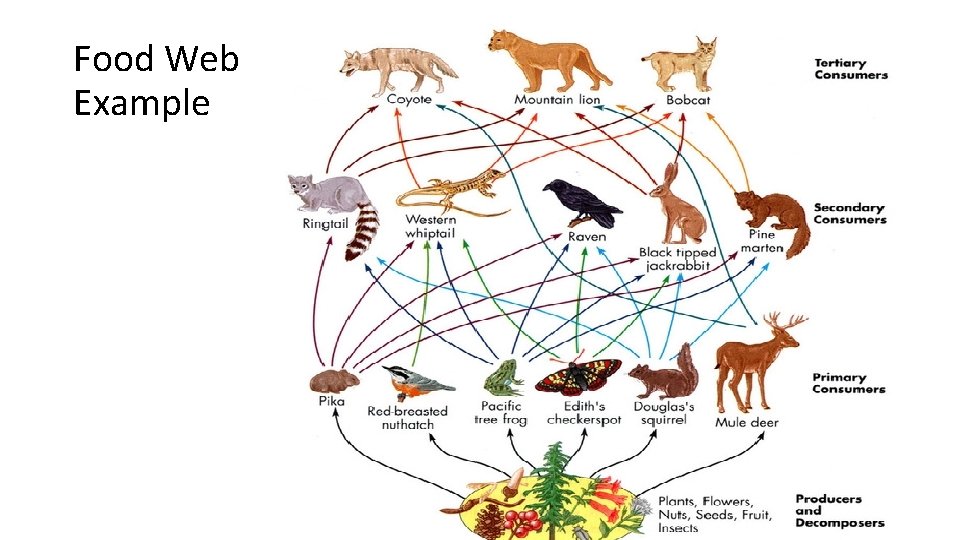
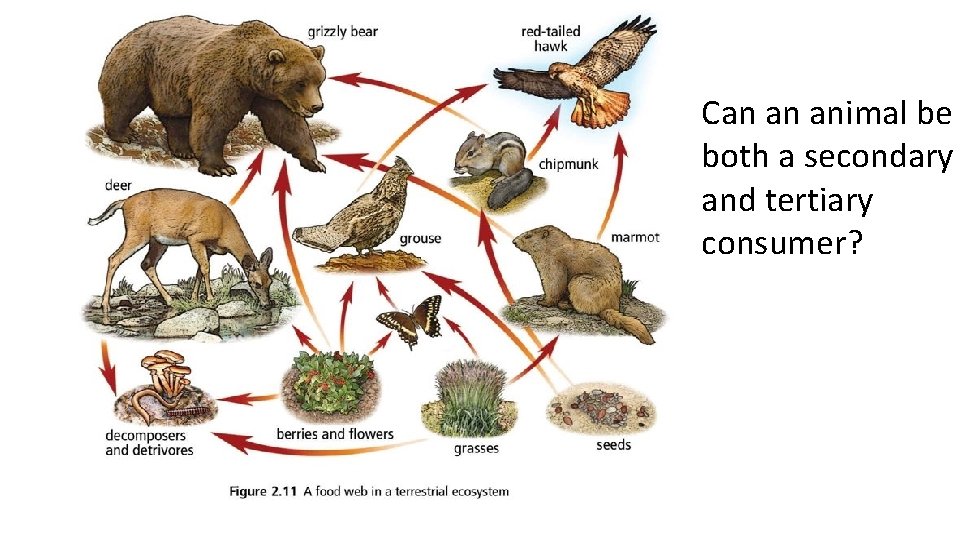
Food Webs • More complex model that describes how energy in an ecosystem is transferred through two or more interconnected food chains (many paths).
Food Web Example
Food Web Can an animal be both a secondary and tertiary consumer?
How does Energy Cycle in an ecosystem? • As each organism eats another, energy is transferred up the trophic level • When ANY organism dies, decomposers break it down and release any stored energy back into the earth. • What would the world be like without decomposers?
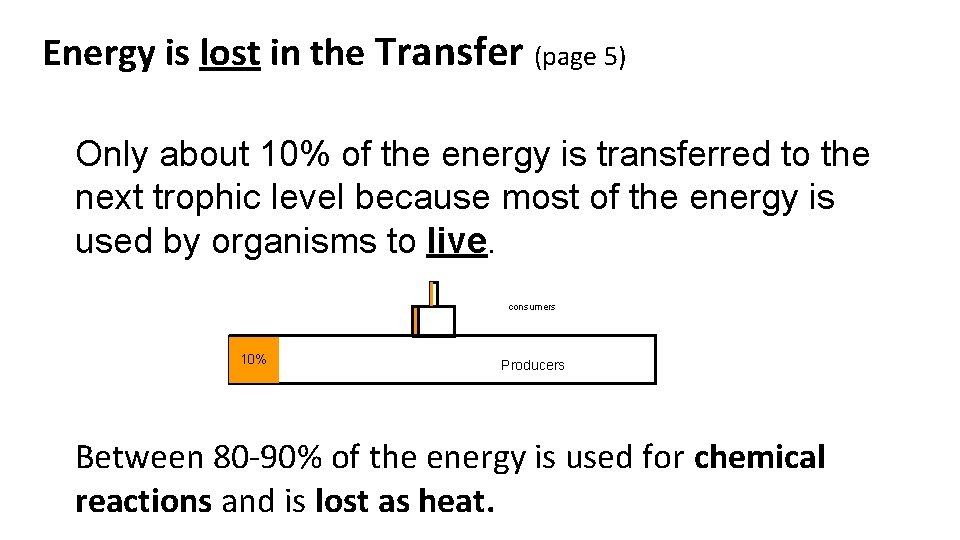
Energy is lost in the Transfer (page 5) Only about 10% of the energy is transferred to the next trophic level because most of the energy is used by organisms to live. consumers 10% Producers Between 80 -90% of the energy is used for chemical reactions and is lost as heat.
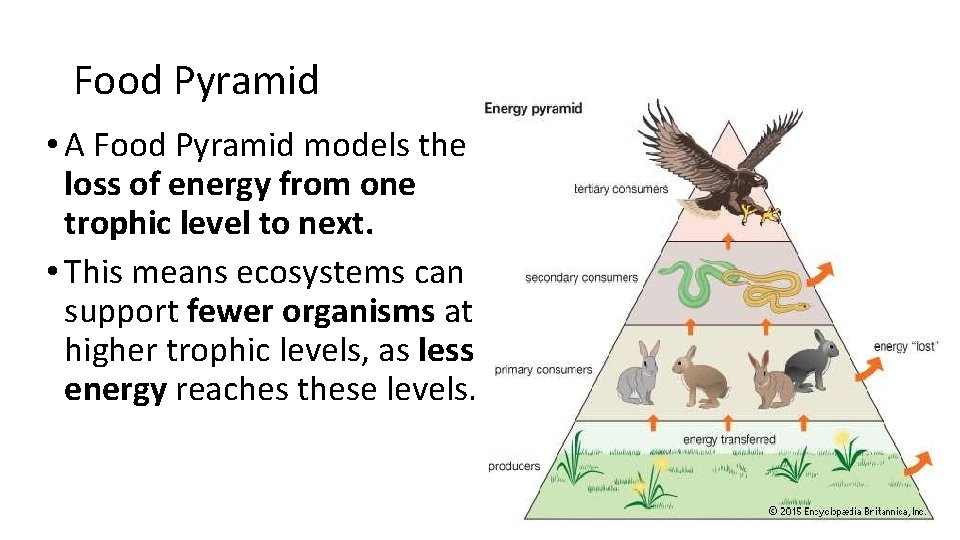
Food Pyramid • A Food Pyramid models the loss of energy from one trophic level to next. • This means ecosystems can support fewer organisms at higher trophic levels, as less energy reaches these levels.
Practice • Food Chain WS