
Floridas First Central Receiving Center A Collaborative Community
Florida’s First Central Receiving Center: A Collaborative Community Effort Sgt. Jules Brace Orange County Sheriff’s Office Youth Services Section School Resource Officer Unit Crisis Intervention Team Laura Gailey, LMHC Samantha Holden, LMHC Vice President of Hospital Acute Care/ Hospital Administrator Clinical Manager of Central Receiving Center Aspire Health Partners Crisis Intervention Team Coordinator CIT Trainer
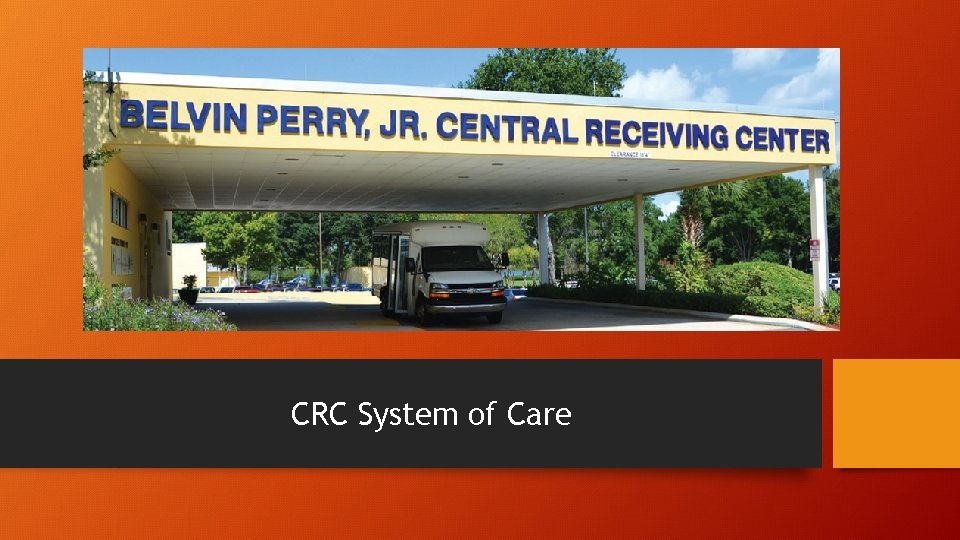
CRC System of Care
Before the CRC • Inappropriate use of the local hospital emergency departments • This created long wait times for all emergent care • Higher cost to treat patient in Emergency Departments • Bookings in the Orange County Jail • Inability to recognize substance use withdrawal resulted in 2 deaths • High cost of jail resources • Difficulty with psychotropic medications • Agencies Fighting over clients • Insured vs Uninsured • Litigation
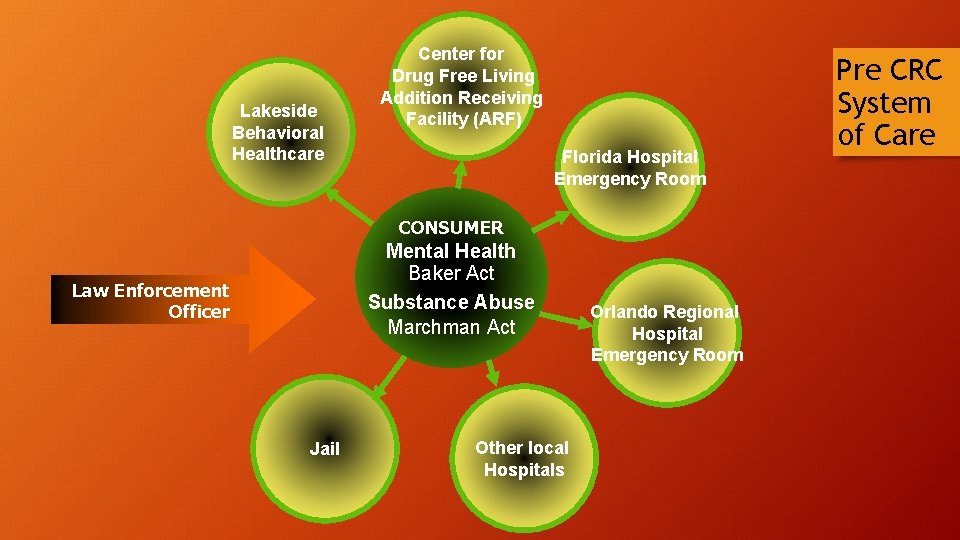
Lakeside Behavioral Healthcare Center for Drug Free Living Addition Receiving Facility (ARF) Florida Hospital Emergency Room CONSUMER Mental Health Baker Act Substance Abuse Marchman Act Law Enforcement Officer Jail Other local Hospitals Orlando Regional Hospital Emergency Room Pre CRC System of Care
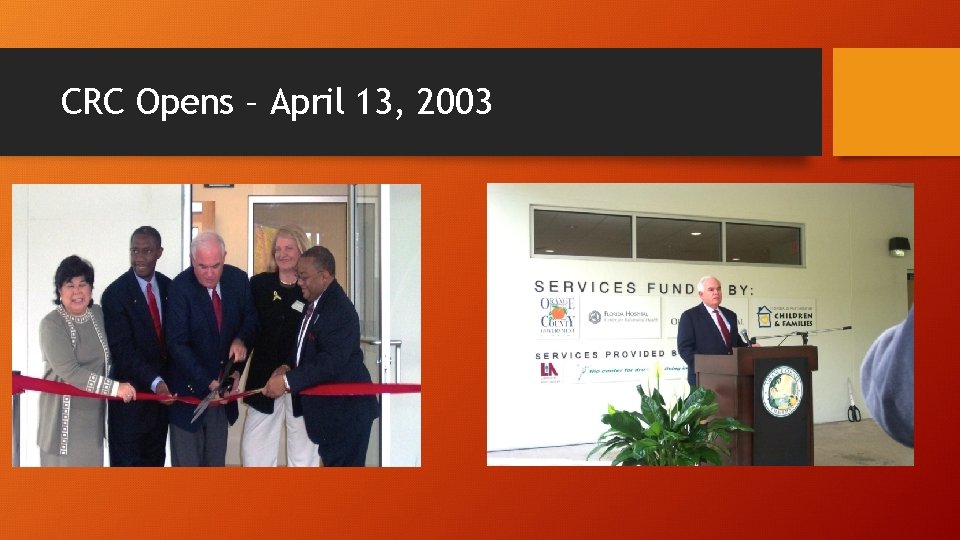
CRC Opens – April 13, 2003
History of the CRC • Designed to be the System of Care for all of Orange County for adults • To be a jail diversion for law enforcement • To be a state of the art facility, only one of its kind in the state of Florida • It is currently being replicated throughout the state through State Funding • However, some funding was just eliminated after one year • Initial Partnerships • • • Department of Children and Families Lakeside Behavioral Healthcare - Aspire Health Partners The Center for Drug Free Living – Aspire Health Partners Florida Hospital Orlando Regional Healthcare
History of the CRC • A transportation waiver was approved to allow all law enforcement to bring to CRC, one central location • With an ASO, utilized a rotation of placing insured clients appropriately and the uninsured stayed in the public system • On-going collaboration among community and providers • Since 2007, Florida Hospital and Orlando Health purchase CSU beds within Aspire to serve uninsured in emergency department
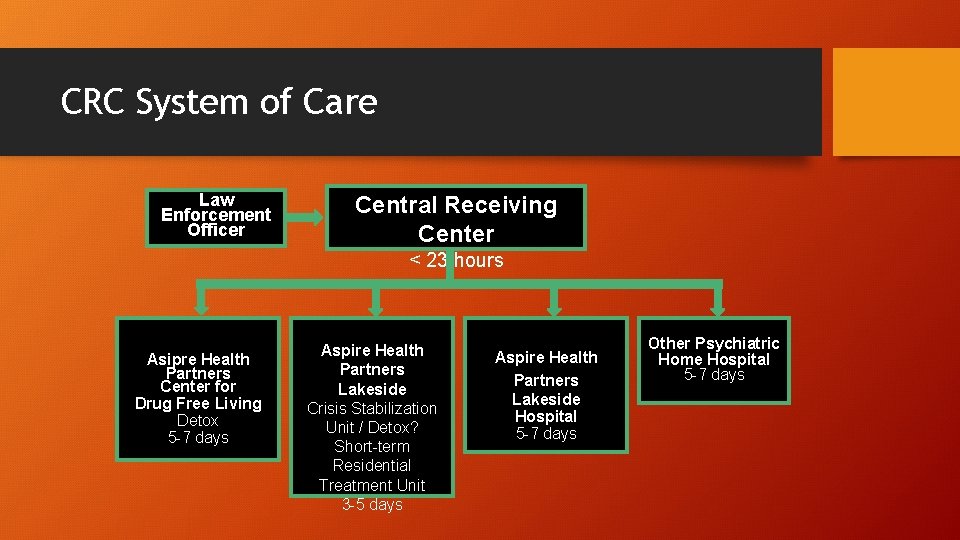
CRC System of Care Law Enforcement Officer Central Receiving Center < 23 hours Asipre Health Partners Center for Drug Free Living Detox 5 -7 days Aspire Health Partners Lakeside Crisis Stabilization Unit / Detox? Short-term Residential Treatment Unit 3 -5 days Aspire Health Partners Lakeside Hospital 5 -7 days Other Psychiatric Home Hospital 5 -7 days
Funding History • FY 2003 -2005 – County General Revenue, Florida Hospital and Orlando Health - $2. 1 M • FY 2005 - $2. 8 M in State Appropriations • FY 2006 - $3 M in State Appropriations • FY 2007 - $2. 25 M in State Appropriations • FY 2008 - $500 K in State Appropriations • FY 2009 – FY 2104 - $0 in State Appropriations • FY 2015 $3 M ($500 K – non recurring) in State Appropriations * Orange County Board of County Commissioners/Mayor fund the CRC $2 M annually since 2003
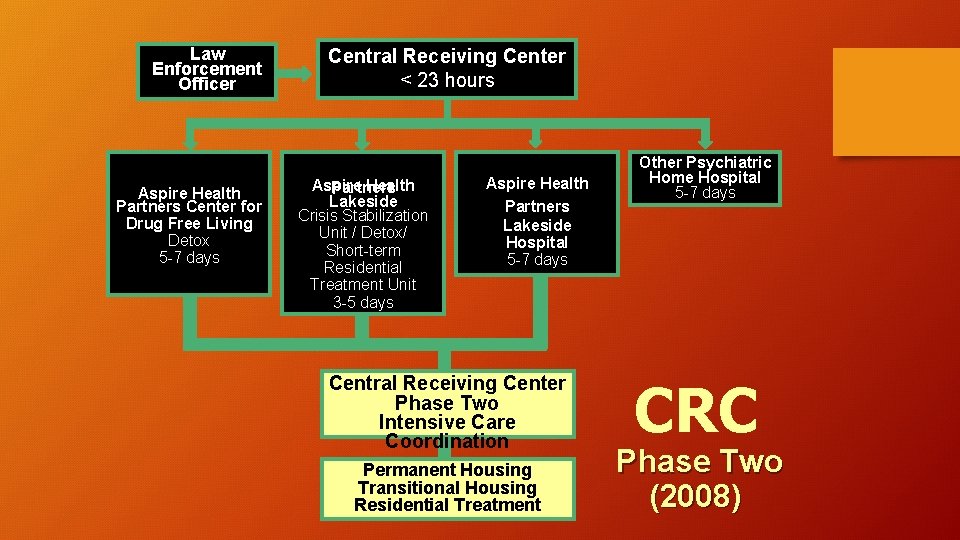
Law Enforcement Officer Aspire Health Partners Center for Drug Free Living Detox 5 -7 days Central Receiving Center < 23 hours Aspire Health Partners Lakeside Crisis Stabilization Unit / Detox/ Short-term Residential Treatment Unit 3 -5 days Aspire Health Partners Lakeside Hospital 5 -7 days Central Receiving Center Phase Two Intensive Care Coordination Permanent Housing Transitional Housing Residential Treatment Other Psychiatric Home Hospital 5 -7 days CRC Phase Two (2008)
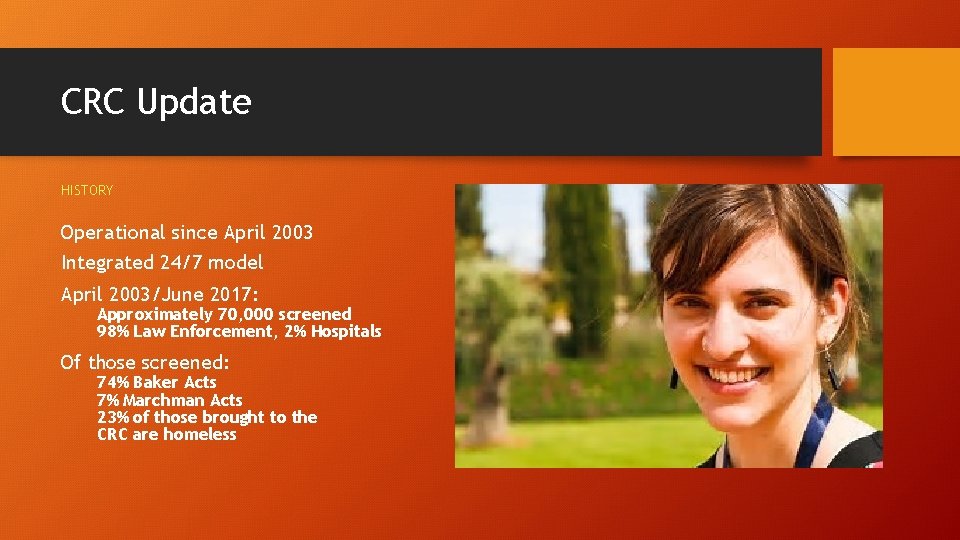
CRC Update HISTORY Operational since April 2003 Integrated 24/7 model April 2003/June 2017: Approximately 70, 000 screened 98% Law Enforcement, 2% Hospitals Of those screened: 74% Baker Acts 7% Marchman Acts 23% of those brought to the CRC are homeless
CRC Update JAIL DIVERSION EFFORTS • Jail had become the defacto mental health facility • Average length of jail time for mental health misdemeanant - 51 days • To date over 200, 000 saved (Jail Bed Days) • Provides an alternative to arrest • Law enforcement drop off averaging 12 minutes • Cost Savings to law enforcement approximately $3. 8 M
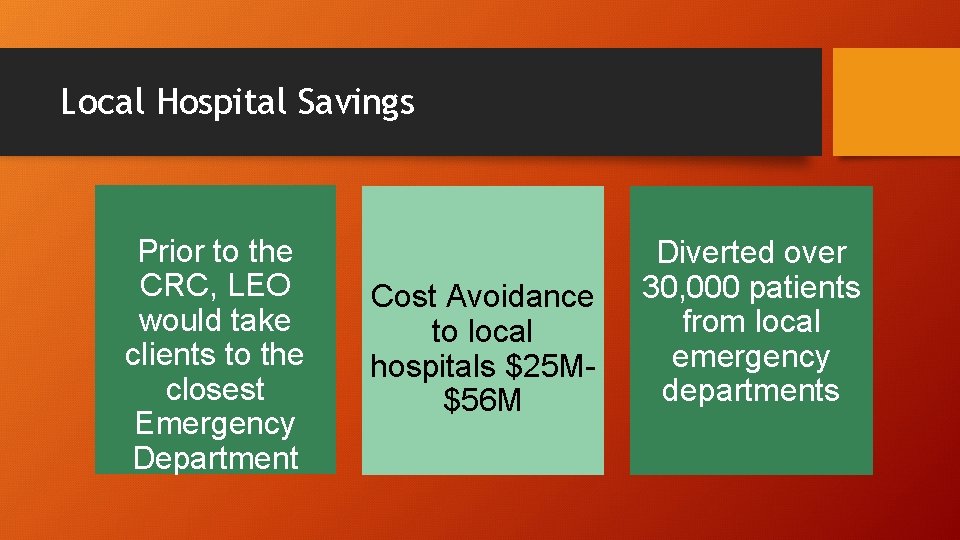
Local Hospital Savings Prior to the CRC, LEO would take clients to the closest Emergency Department Cost Avoidance to local hospitals $25 M$56 M Diverted over 30, 000 patients from local emergency departments
CRC Phase II Update ANCHOR – TRANSITIONAL HOUSING PROGRAM • Provided services and housing to over 621 chronically homeless individuals with co-occurring disorder since 2008 • 45% of residents who stay longer than 30 days transition to permanent housing • 93% of residents receiving employment services are gainfully employed • Average length of time in the program is 4 -6 months
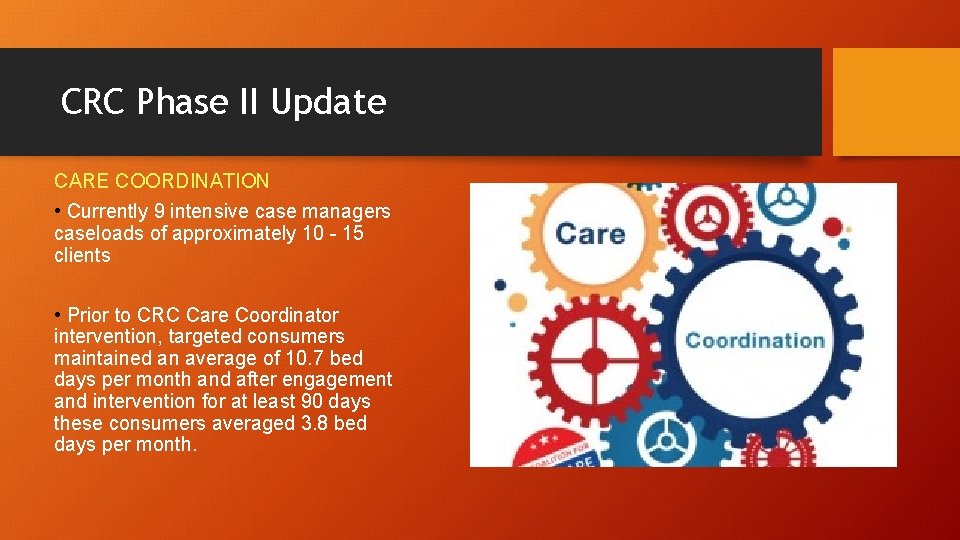
CRC Phase II Update CARE COORDINATION • Currently 9 intensive case managers caseloads of approximately 10 - 15 clients • Prior to CRC Care Coordinator intervention, targeted consumers maintained an average of 10. 7 bed days per month and after engagement and intervention for at least 90 days these consumers averaged 3. 8 bed days per month.
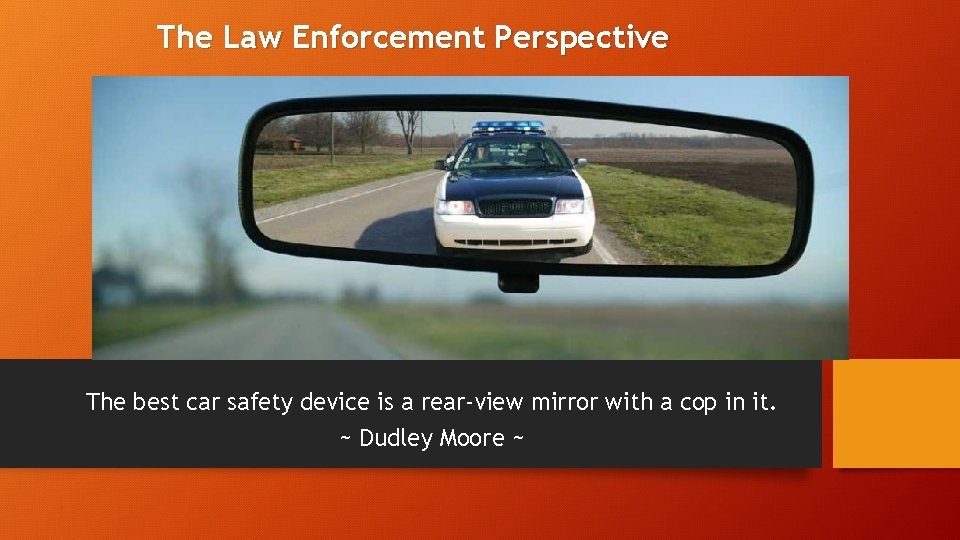
The Law Enforcement Perspective The best car safety device is a rear-view mirror with a cop in it. ~ Dudley Moore ~
The Law Enforcement Perspective • Astynomiaphobia • Anxiety associated with LEO contact • LEO often 1 st contact with persons in crisis • Minimize time with LEO & maximize time with MH professionals • Programs should mirror community needs

The Law Enforcement Perspective • More people with mental illness are roaming the streets • Half of Police Shootings Involve People with Mental Illness • 2 million mentally ill go untreated • $15 billion is spent incarcerating mentally ill • One-third of the homeless are mentally ill • 1, 000 homicides a year are committed by mentally ill • 10 -17% of seriously mentally ill kill themselves Statistics
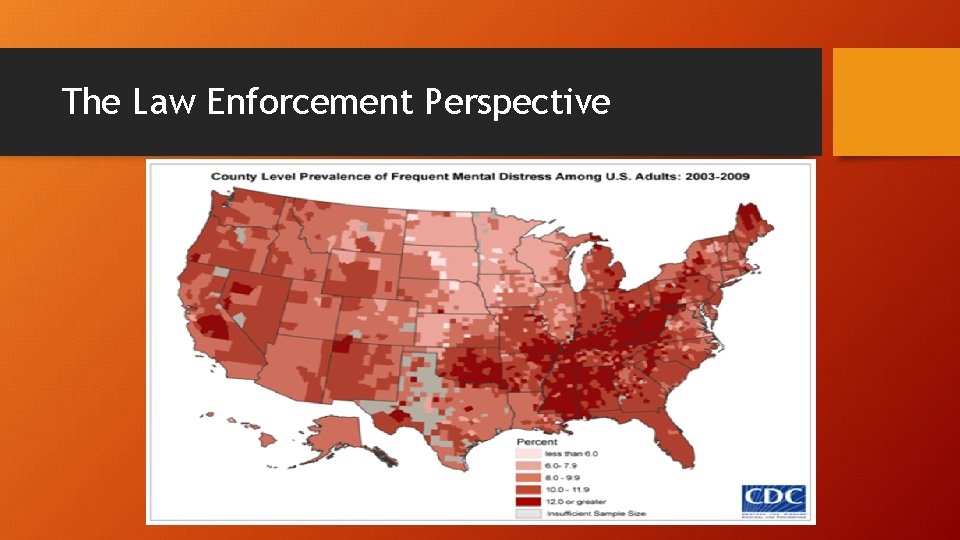
The Law Enforcement Perspective
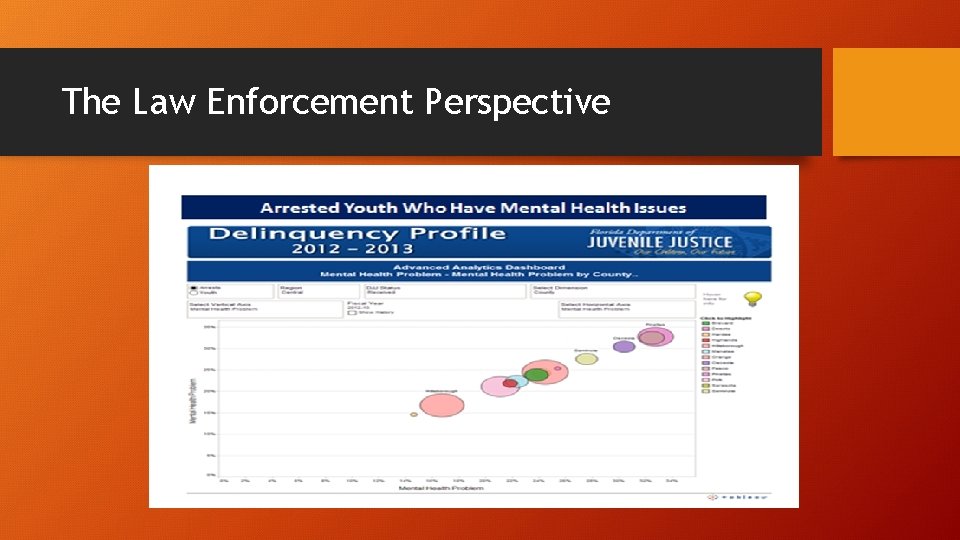
The Law Enforcement Perspective
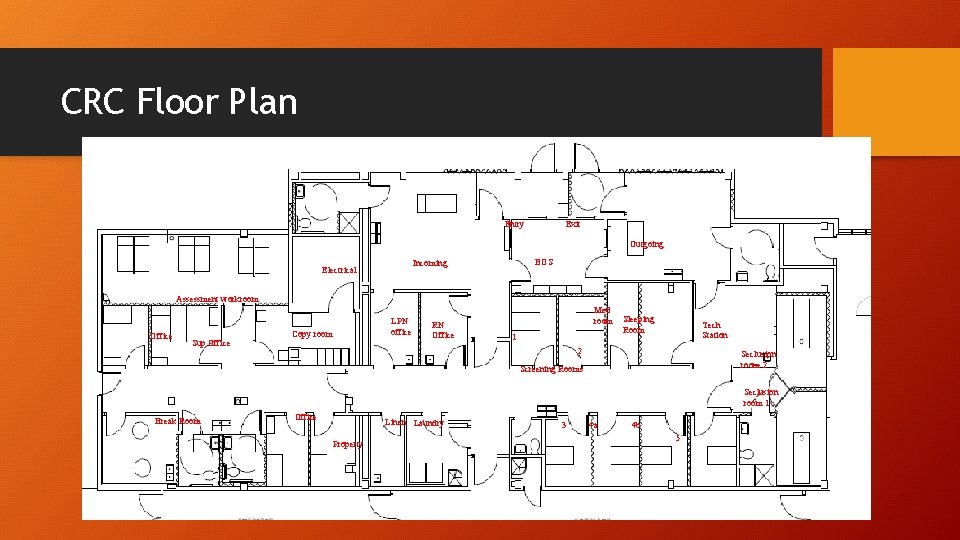
CRC Floor Plan Exit Entry Outgoing BOS Incoming Electrical Assessment workroom Office Sup Office LPN office Copy room RN Office Med room 1 Sleeping Room Tech Station 2 Seclusion room 2 Screening Rooms Seclusion room 1 Break Room Office Linen Laundry Property 3 4 a 4 b 5
The Client Experience - Incoming • LEO hands off the client to the Behavioral Tech • Tech pats the client down • LEO goes to complete paperwork • Registration is completed • Property/Valuable are inventoried • Client showers and changes into scrubs • Vitals, BAL, UDS
The Client Experience – LPN/RN Document UDS results Completes Health Screening Completes Nursing Assessment Med Reconciliation/Drug Disposition Options: Continue with Process Sent out for Medical Clearance Sent out as Exclusionary
The Client Experience – Assessment Specialist • Completes an Intake Screening • Completes a SA Screening (if needed) • Admin forms (ROI, HIPAA, Client Rights, AFT, etc) • Diagnosis • Insurance Pre-certs • Bed Assignment – 24/7 census staff
The Client Experience - Outgoing • • A second pat down Collect Belongings/Valuables Collect medications Transport via Aspire transportation department • CSU, Hospital Unit, Detox, Medical Hospital, Home
Staffing Patterns • • • 8 hours shifts RN – 1 per shift LPN – 1 on 3 -11 shift only Techs- four on 7 -3 and 3 -11, three on 11 -7 Driver – 1 per shift Assessors – 3 -5 per shift Census – 1 per shift One Clinical Manager One Nurse Manager
Questions ? ? ?
Contact Information • Sgt Jules Brace – Jules. Brace@ocfl. net • Laura Gailey – Laura. Gailey@aspirehp. org • Samantha Holden – Samantha. Holden@aspirehp. org
- Slides: 29