
Florida State University Schools Developmental Research Lab School
Florida State University Schools: Developmental Research Lab School Dr. Stacy Chambers Executive Director Instruction that Moves Leaders Who Inspire Research that Makes A Difference
Our Research Mission “Research, demonstration, and evaluation conducted at a developmental research school may consist of pilot projects to be generated by the affiliated college, the Education Standards Commission, or the Legislature” üDeveloping and Testing Educational Models üSharing best practices with educators throughout Florida, the United States and Internationally üBridging the gap between research and classroom practice üSupporting achievement for all of Florida’s students
Our Research Mission Research and Development at FSUS builds on the research and service components of our mission and the belief that "collaborative research and reasoned inquiry enables us to advance knowledge and contribute to best practices in education. " üCurriculum development that prepares students for College and Career ü Research of learners and learning systems üTeacher professional development with FSU and other stakeholders üAddressing challenges to education in the State of Florida and the nation
Our Research Mission üDeveloping and Testing Educational Models üSharing best practices with educators throughout Florida, the United States and Internationally üBridging the gap between research and classroom practice üSupporting achievement for all of Florida’s students
Who We Are
Sharing Best Practices with Educators: Statewide and Nationally • 2, 250 Teachers trained to use the Mathematics Formative Assessment System • 7 -10 Internships each semester • 220+ Field Participants on FSUS Campus • 18 FSUS educator presentations at National/Regional/Local Conferences • 9 Longitudinal Ongoing Research Projects by FSU and FSUS staff • 330 Observation hours using Live Remote Classroom Camera
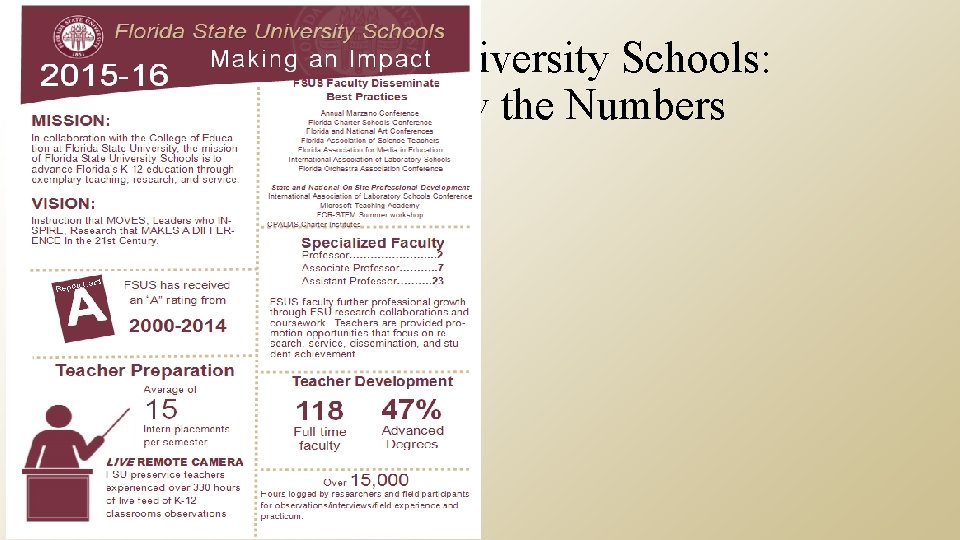
Florida State University Schools: Our Impact by the Numbers
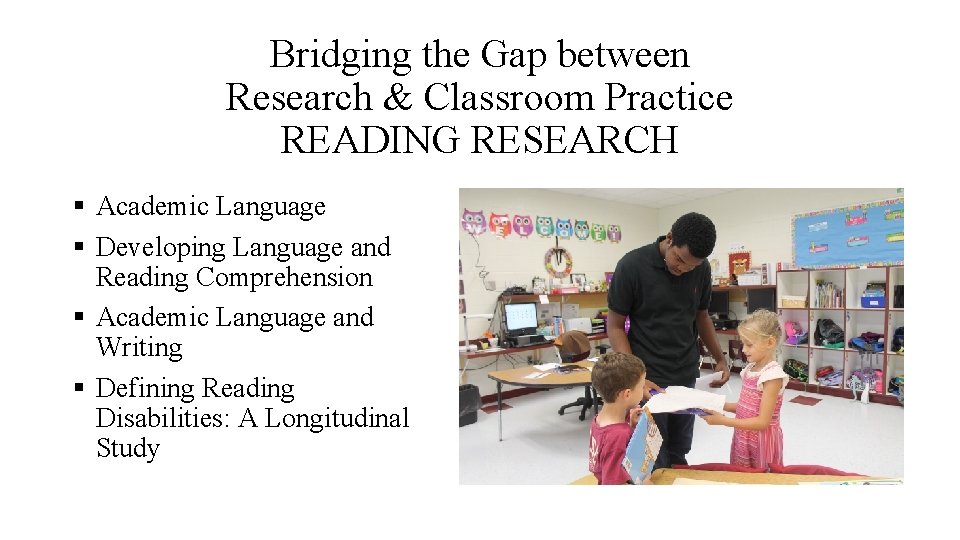
Bridging the Gap between Research & Classroom Practice READING RESEARCH § Academic Language § Developing Language and Reading Comprehension § Academic Language and Writing § Defining Reading Disabilities: A Longitudinal Study
Teacher Quality: Developmental Research Schools: Developing and Testing Educational Models § Teacher Education Collaboration: Physics Computer-based Simulation § FSU Teacher Education Placement and Field Experiences § State/National Professional Learning: 2, 250 teachers trained on Mathematics Formative Assessment System Promotion of Florida as Educational Leaders: • Program Development: • Technology-based Learning • Technology Sand-Box as part of FSU collaboration • Research Center on campus • Physics Research
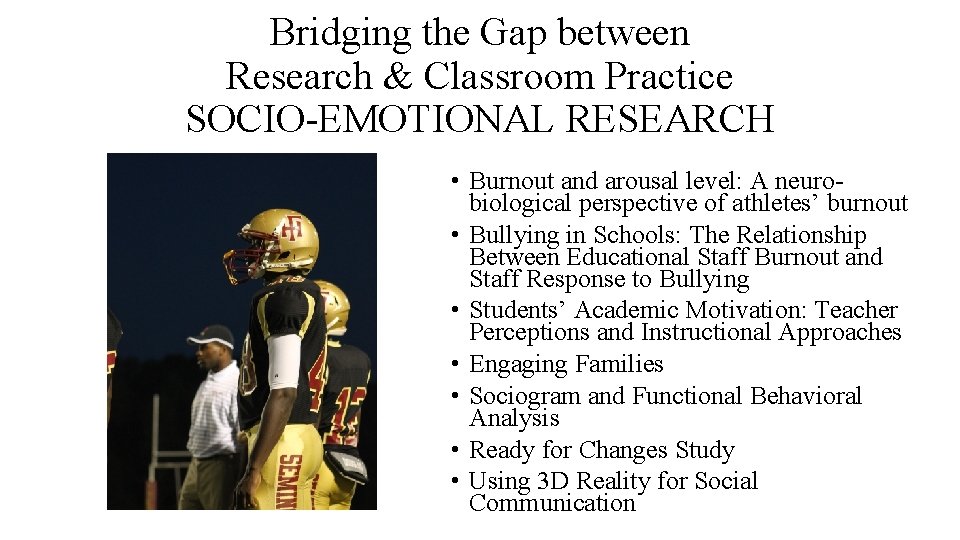
Bridging the Gap between Research & Classroom Practice SOCIO-EMOTIONAL RESEARCH • Burnout and arousal level: A neurobiological perspective of athletes’ burnout • Bullying in Schools: The Relationship Between Educational Staff Burnout and Staff Response to Bullying • Students’ Academic Motivation: Teacher Perceptions and Instructional Approaches • Engaging Families • Sociogram and Functional Behavioral Analysis • Ready for Changes Study • Using 3 D Reality for Social Communication
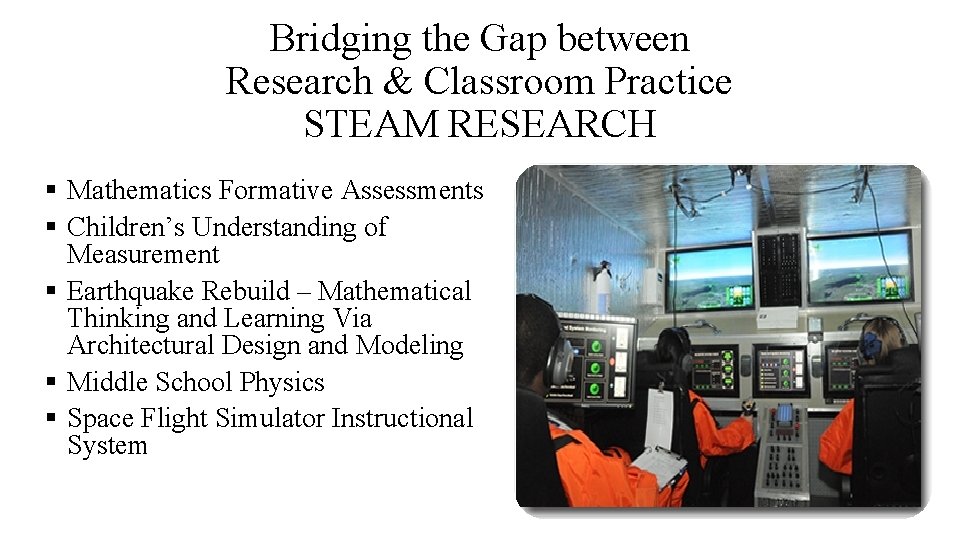
Bridging the Gap between Research & Classroom Practice STEAM RESEARCH § Mathematics Formative Assessments § Children’s Understanding of Measurement § Earthquake Rebuild – Mathematical Thinking and Learning Via Architectural Design and Modeling § Middle School Physics § Space Flight Simulator Instructional System STEAM RESEARCH
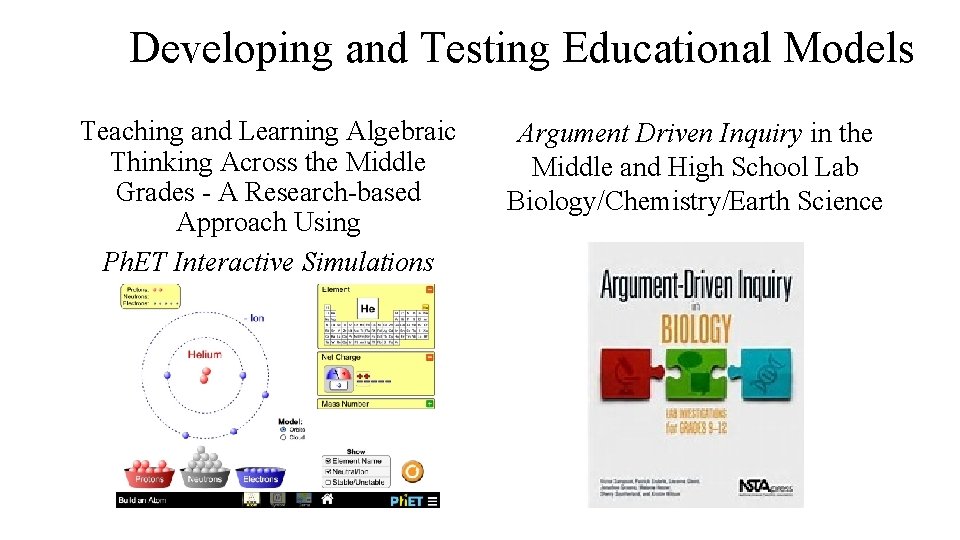
Developing and Testing Educational Models Teaching and Learning Algebraic Thinking Across the Middle Grades - A Research-based Approach Using Ph. ET Interactive Simulations Argument Driven Inquiry in the Middle and High School Lab Biology/Chemistry/Earth Science
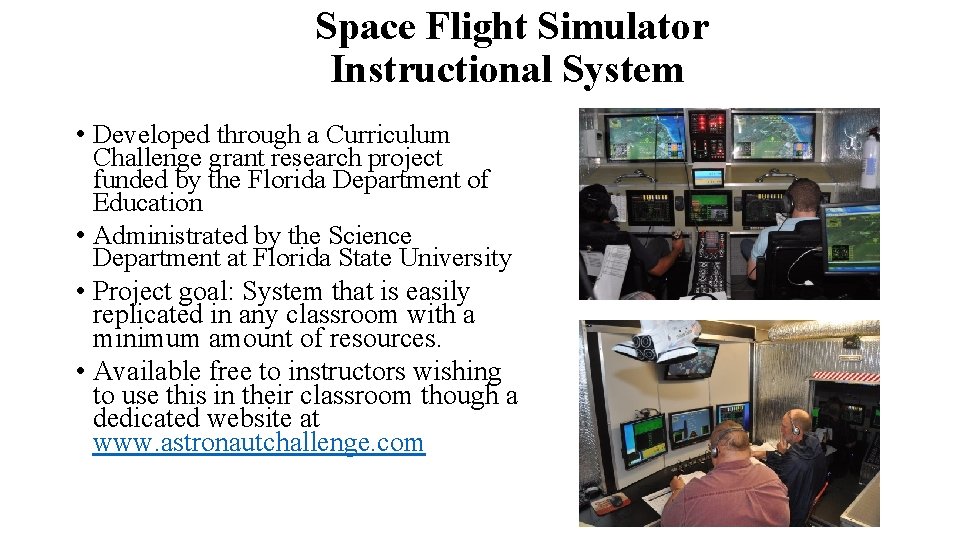
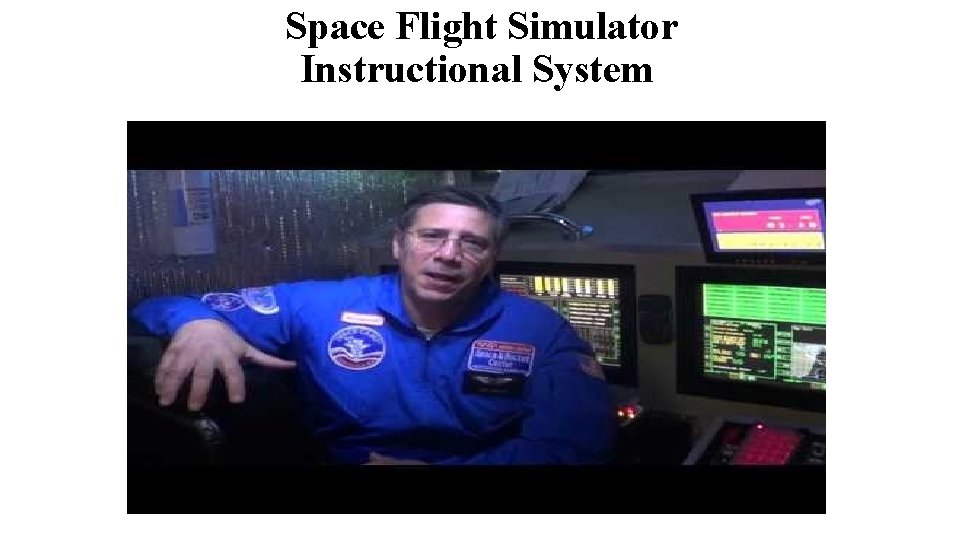
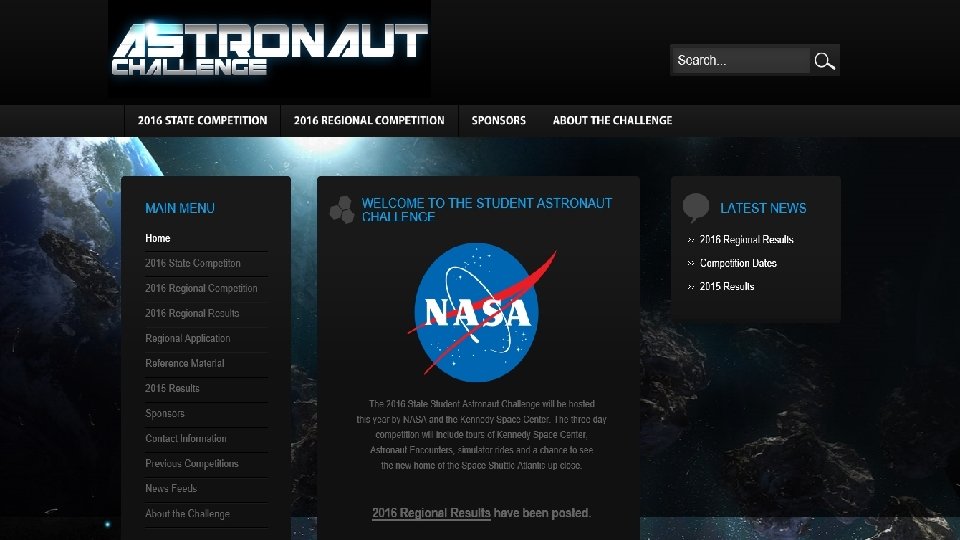
Space Flight Simulator Instructional System • Developed through a Curriculum Challenge grant research project funded by the Florida Department of Education • Administrated by the Science Department at Florida State University • Project goal: System that is easily replicated in any classroom with a minimum amount of resources. • Available free to instructors wishing to use this in their classroom though a dedicated website at www. astronautchallenge. com
Space Flight Simulator Instructional System
FSUS National Leadership: STEM Education
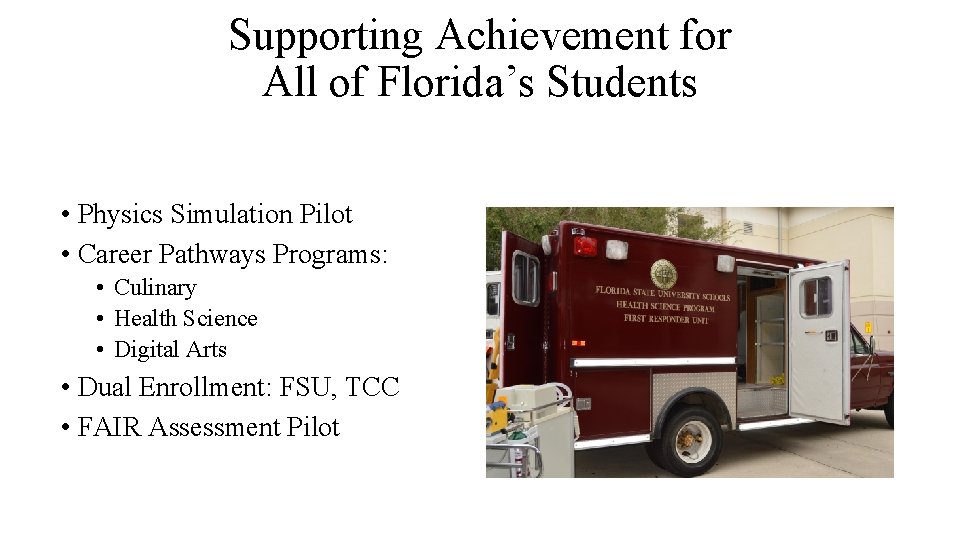
Supporting Achievement for All of Florida’s Students • Physics Simulation Pilot • Career Pathways Programs: • Culinary • Health Science • Digital Arts • Dual Enrollment: FSU, TCC • FAIR Assessment Pilot
Florida State University Schools: Developmental Research Lab School Current Educational Programming Needs Instruction that Moves Leaders Who Inspire Research that Makes A Difference
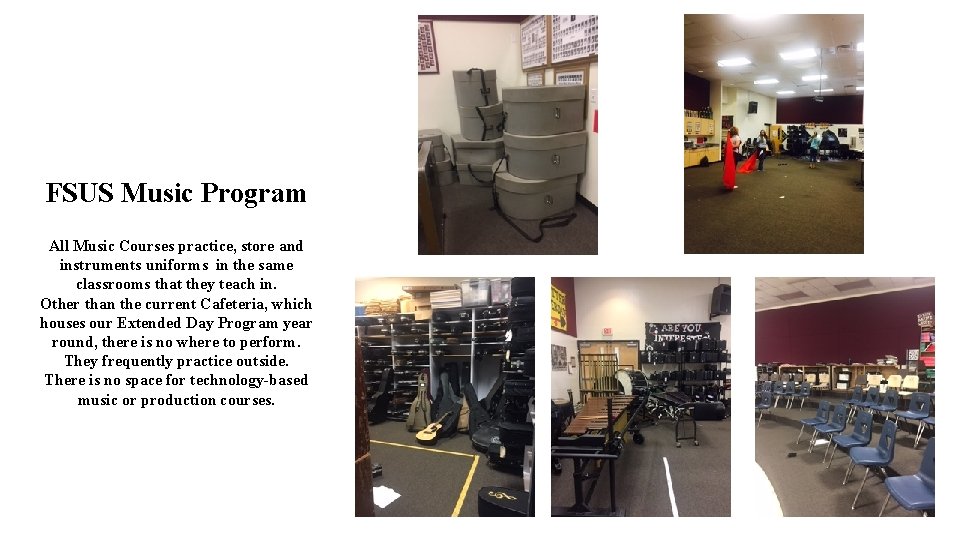
FSUS Music Program All Music Courses practice, store and instruments uniforms in the same classrooms that they teach in. Other than the current Cafeteria, which houses our Extended Day Program year round, there is no where to perform. They frequently practice outside. There is no space for technology-based music or production courses.
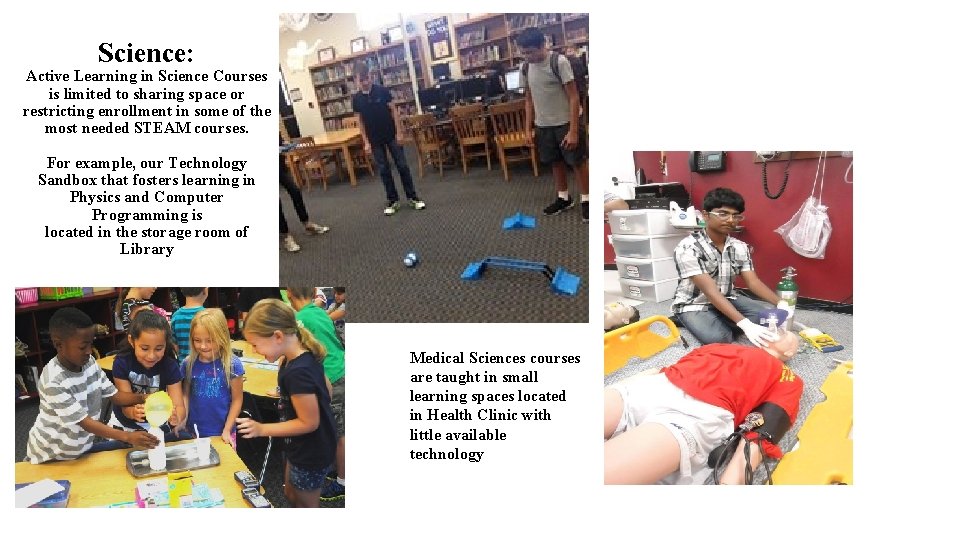
Science: Active Learning in Science Courses is limited to sharing space or restricting enrollment in some of the most needed STEAM courses. For example, our Technology Sandbox that fosters learning in Physics and Computer Programming is located in the storage room of Library Medical Sciences courses are taught in small learning spaces located in Health Clinic with little available technology
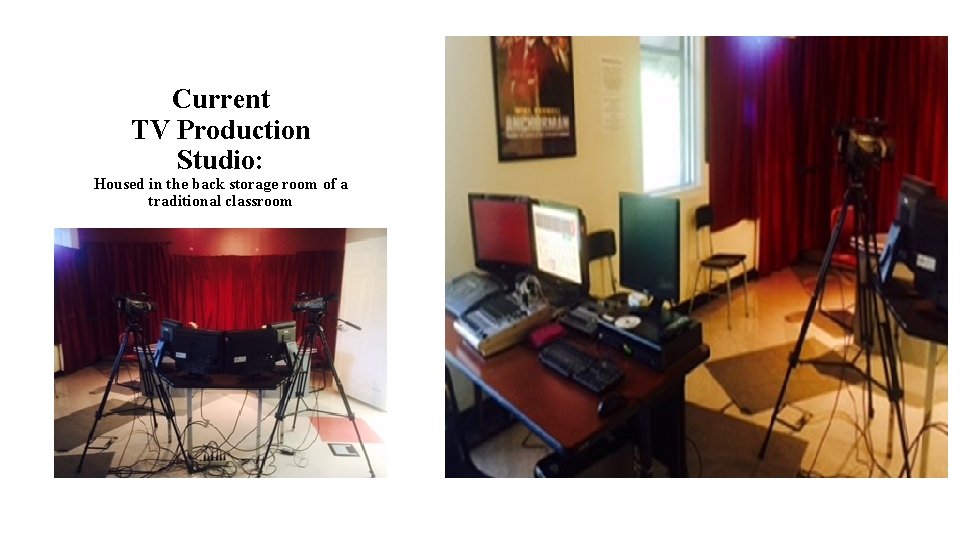
Current TV Production Studio: Housed in the back storage room of a traditional classroom
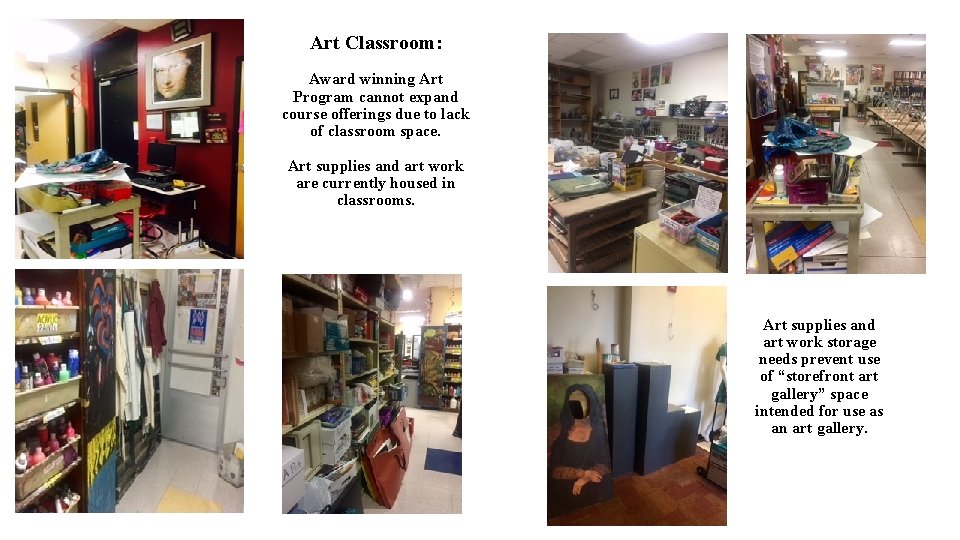
Art Classroom: Award winning Art Program cannot expand course offerings due to lack of classroom space. Art supplies and art work are currently housed in classrooms. Art supplies and art work storage needs prevent use of “storefront art gallery” space intended for use as an art gallery.
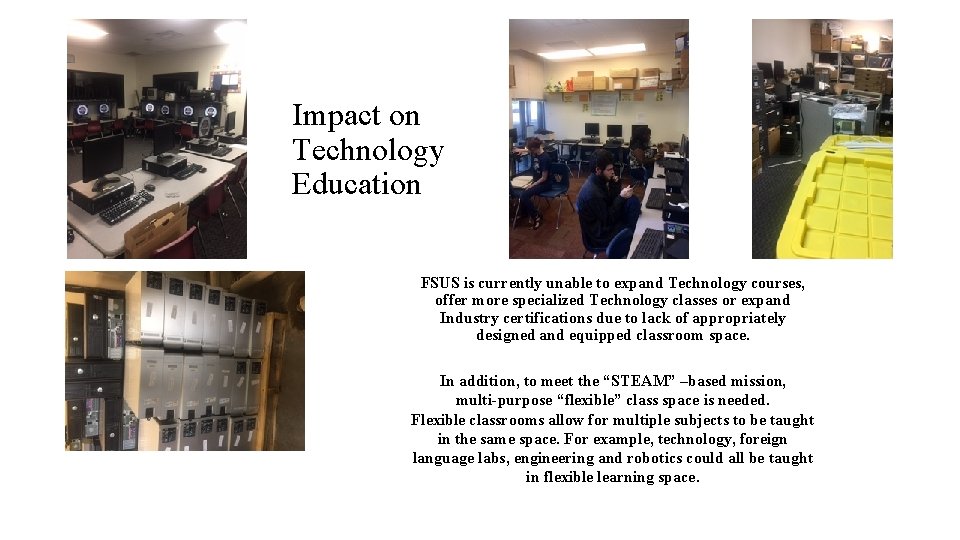
Impact on Technology Education FSUS is currently unable to expand Technology courses, offer more specialized Technology classes or expand Industry certifications due to lack of appropriately designed and equipped classroom space. In addition, to meet the “STEAM” –based mission, multi-purpose “flexible” class space is needed. Flexible classrooms allow for multiple subjects to be taught in the same space. For example, technology, foreign language labs, engineering and robotics could all be taught in flexible learning space.
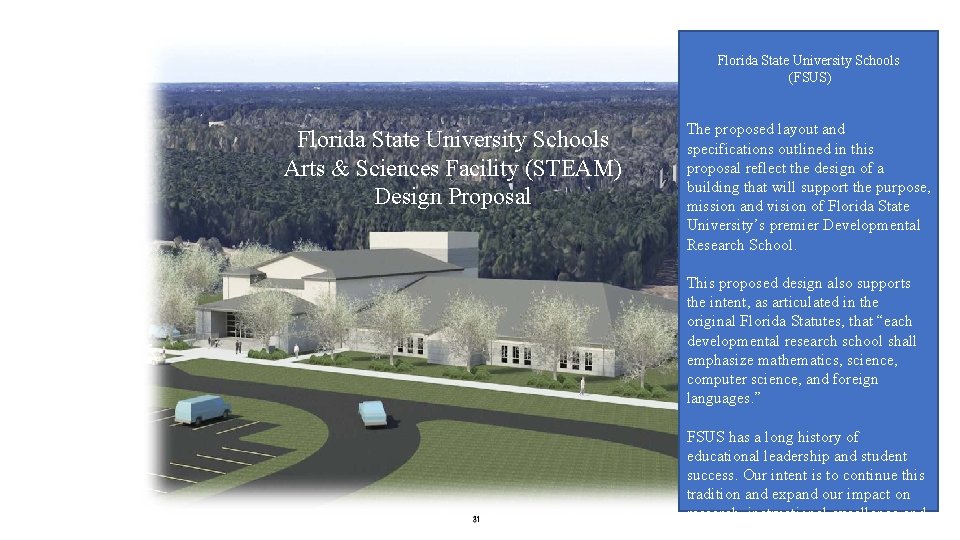
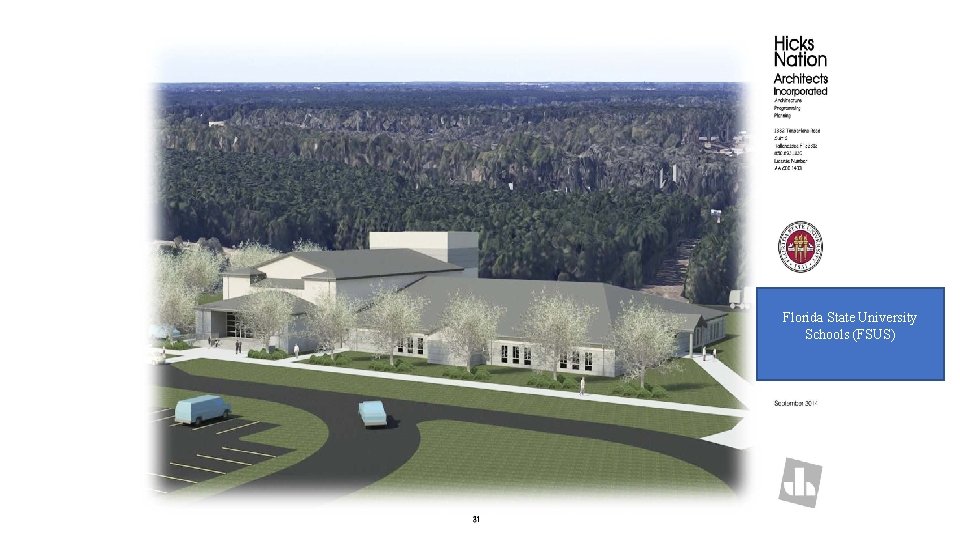
Florida State University Schools (FSUS) Florida State University Schools Arts & Sciences Facility (STEAM) Design Proposal The proposed layout and specifications outlined in this proposal reflect the design of a building that will support the purpose, mission and vision of Florida State University’s premier Developmental Research School. This proposed design also supports the intent, as articulated in the original Florida Statutes, that “each developmental research school shall emphasize mathematics, science, computer science, and foreign languages. ” FSUS has a long history of educational leadership and student success. Our intent is to continue this tradition and expand our impact on research, instructional excellence and innovation.
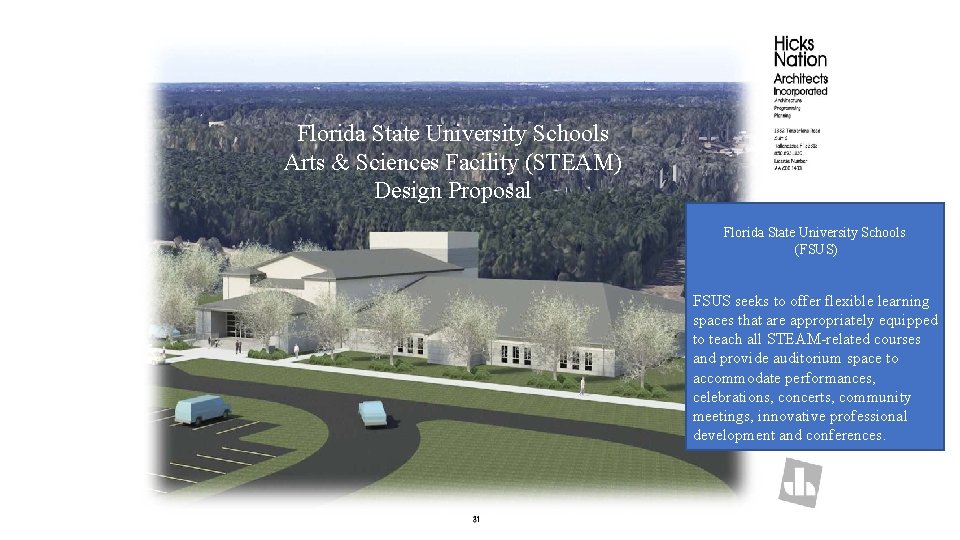
Florida State University Schools Arts & Sciences Facility (STEAM) Design Proposal Florida State University Schools (FSUS) FSUS seeks to offer flexible learning spaces that are appropriately equipped to teach all STEAM-related courses and provide auditorium space to accommodate performances, celebrations, concerts, community meetings, innovative professional development and conferences.
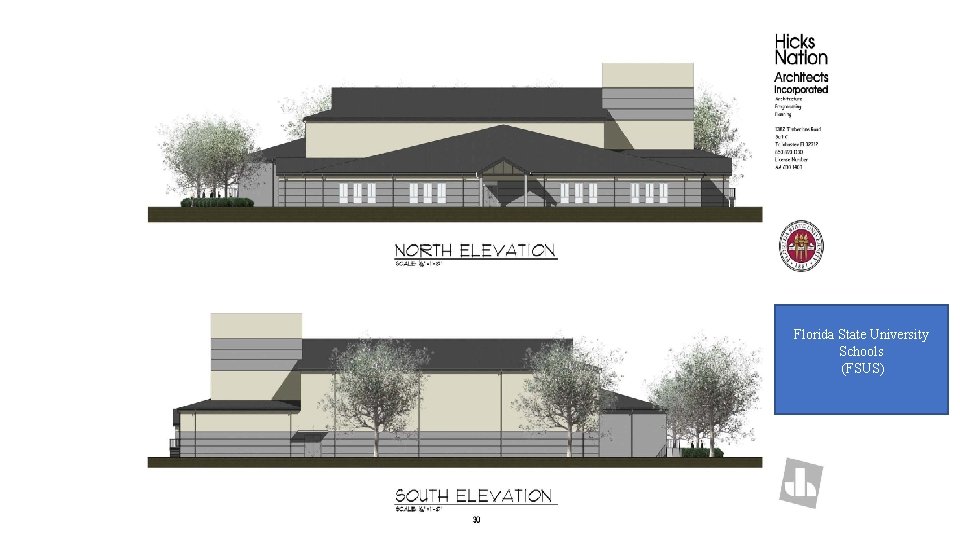
Florida State University Schools (FSUS)
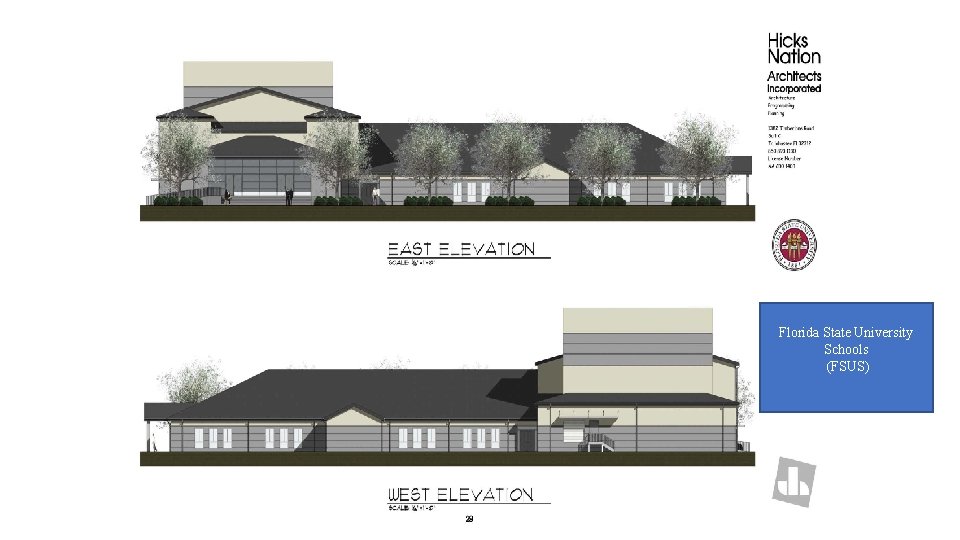
Florida State University Schools (FSUS)
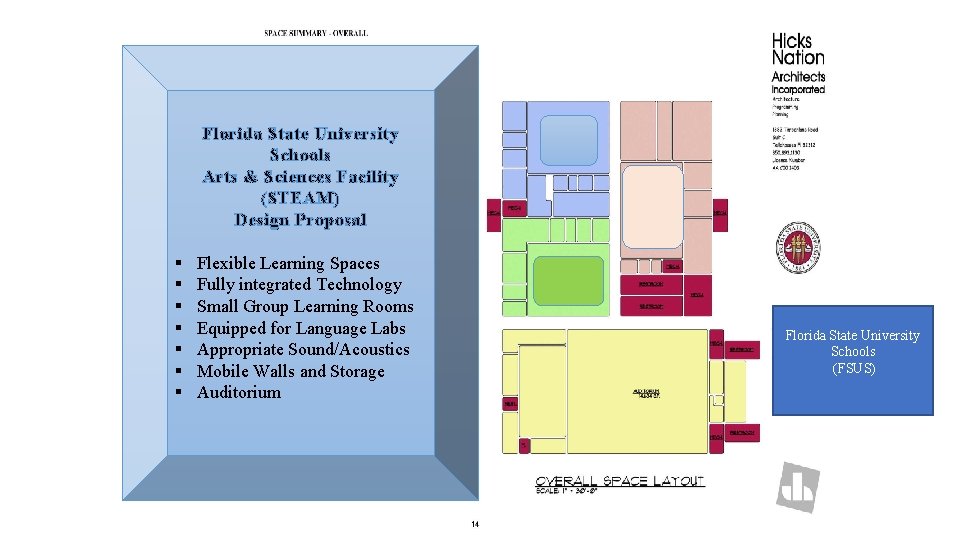
Florida State University Schools Arts & Sciences Facility (STEAM) Current Facility Needs: Proposal Design 12 -14 Floating teachers each period throughout the § Flexible Learning Spaces day § Fully integrated Technology Unable to hold academic competitions, professional § Small Group Learning Rooms learning conferences and/or community programs § to. Equipped for Language Labs due limited space § Appropriate Sound/Acoustics Need to expand industry certifications § Mobile Walls and Storage § Auditorium Florida State University Schools (FSUS)
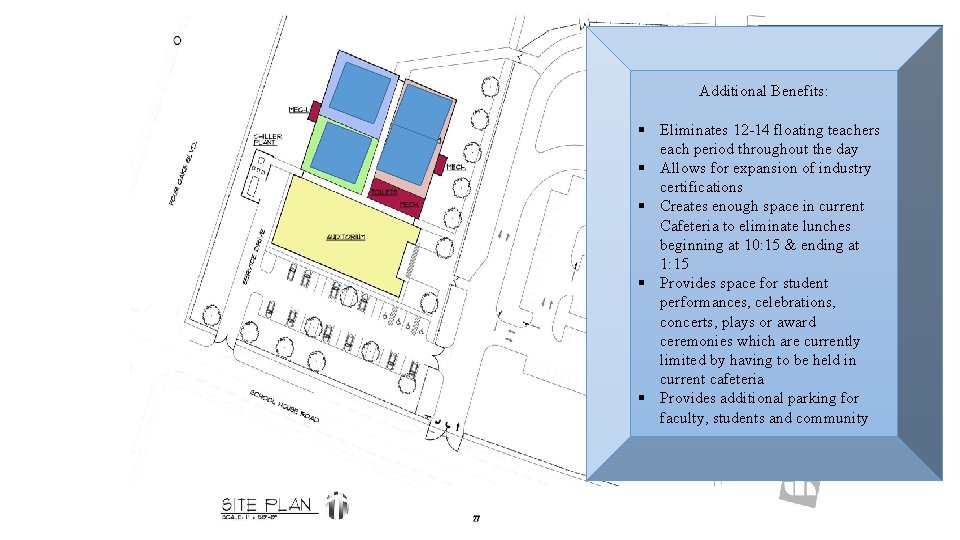
Current Facility Needs: 12 -14 Floating teachers each period throughout the day Additional Benefits: Unable to hold academic § Eliminates 12 -14 floating teachers competitions, professional each period throughout the day learning conferences and/or § Allows for expansion of industry community programs due to certifications limited space § Creates enough space in current Need to expand industry Cafeteria to eliminate lunches certifications beginning at 10: 15 & ending at 1: 15 § Provides space for student performances, celebrations, concerts, plays or award ceremonies which are currently limited by having to be held in current cafeteria § Provides additional parking for faculty, students and community
Florida State University Schools (FSUS)
- Slides: 29