
Floriculture Cultivation of ornamental and flowering plants Floral


- Slides: 50
Floriculture • Cultivation of ornamental and flowering plants • Floral industry engages in the production and sale of floriculture crops on a commercial scale 1
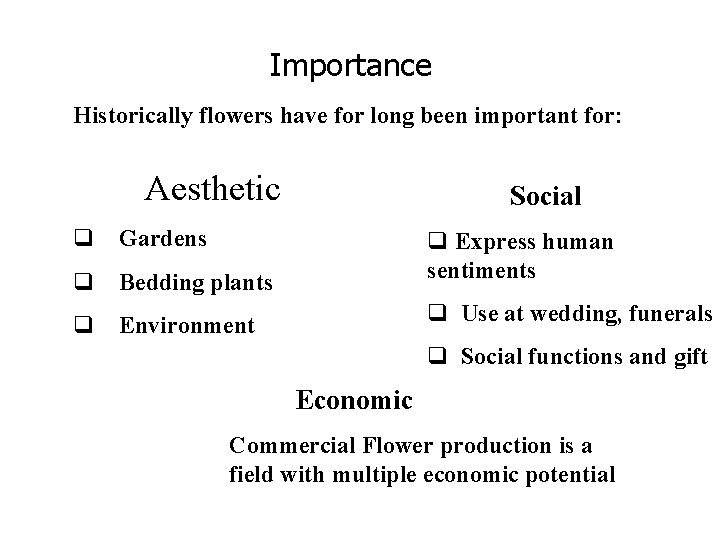
Importance Historically flowers have for long been important for: Aesthetic Social q Gardens q Bedding plants q Express human sentiments q Environment q Use at wedding, funerals q Social functions and gift Economic Commercial Flower production is a field with multiple economic potential
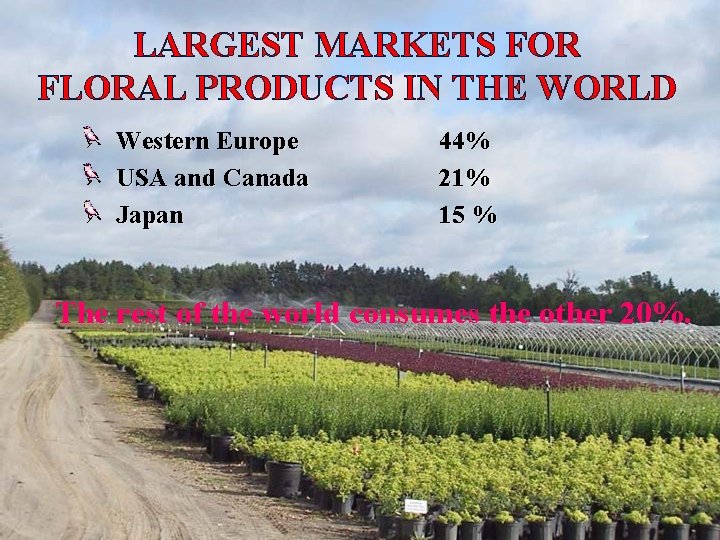
LARGEST MARKETS FOR FLORAL PRODUCTS IN THE WORLD Western Europe USA and Canada Japan 44% 21% 15 % The rest of the world consumes the other 20%.
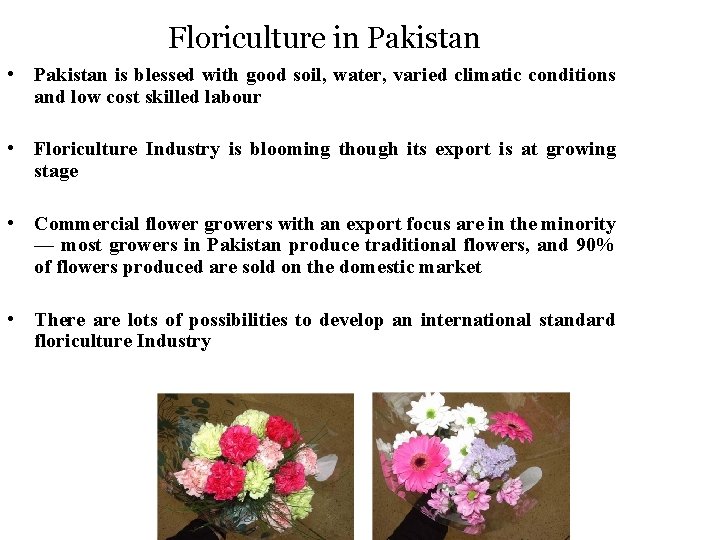
Floriculture in Pakistan • Pakistan is blessed with good soil, water, varied climatic conditions and low cost skilled labour • Floriculture Industry is blooming though its export is at growing stage • Commercial flower growers with an export focus are in the minority — most growers in Pakistan produce traditional flowers, and 90% of flowers produced are sold on the domestic market • There are lots of possibilities to develop an international standard floriculture Industry 4
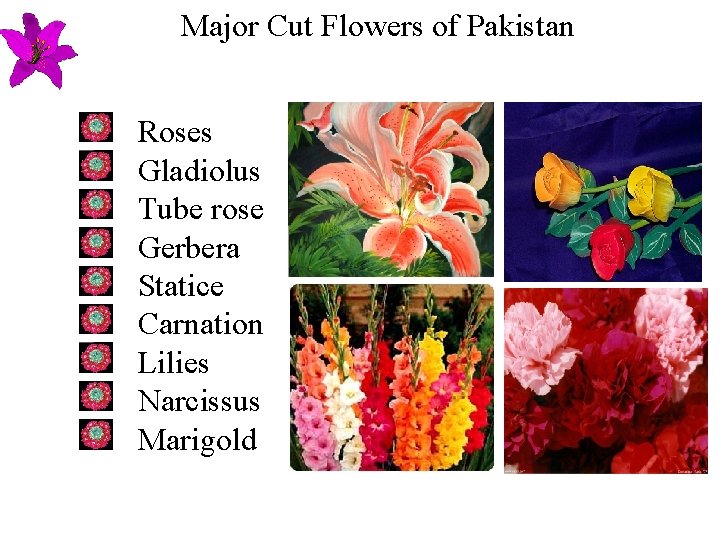
Major Cut Flowers of Pakistan Roses Gladiolus Tube rose Gerbera Statice Carnation Lilies Narcissus Marigold
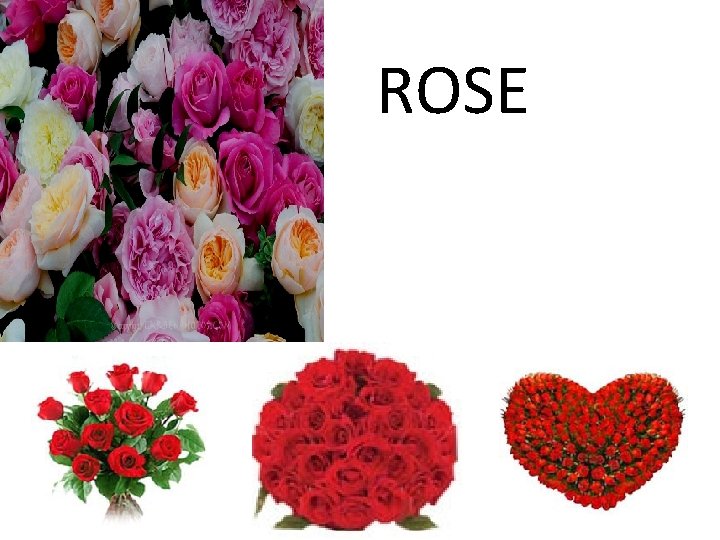
ROSE
“He who appreciates the beauty of a flower and its colors appreciate the beauty himself. ”
INTRODUCTION • Roses are symbol of beauty, love, affection, romance etc. • Besides their aesthetic value, they are important for their economic uses, such as – cut flowers – essential oils & cosmetics – rose petals – rose dry buds – rose water – rose hips – rose achenes (seeds of rose) – rose nursery stock
Roses In The Landscape These are used in today’s landscape as they have many advantages over other shrubs. • It blooms for long period and the effect and range of the flower is remarkable. • The autumn coloring of the foliage, the shape and color of the hips (fruits), sometime supplemented by decorative thorns make the rose important to be used in the landscape. • In large parks, housing developments, city green belts, along highways and in community gardens the rose has a spiritual palace in formal beds.
Roses In The Landscape • In order to enhance the natural beauty of the rose the grower places it in suitable settings. • The wide range of species and varieties allows us to select roses suitable for particular garden scheme, • the required effect being produced by isolated groups as well as continuous beds
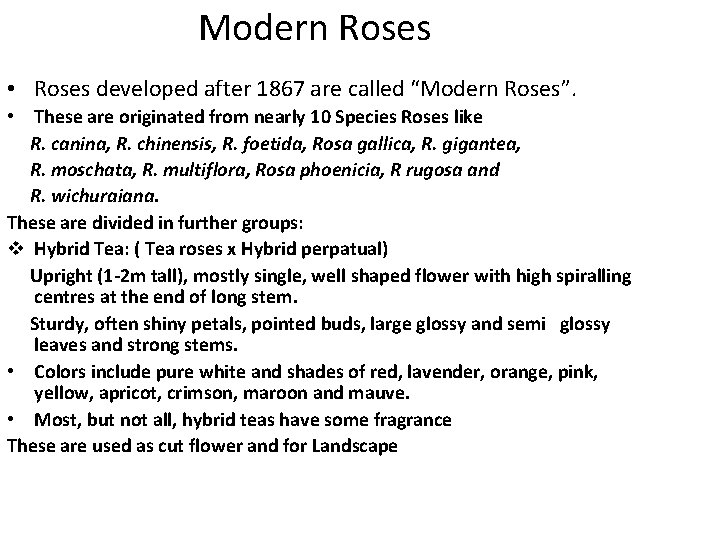
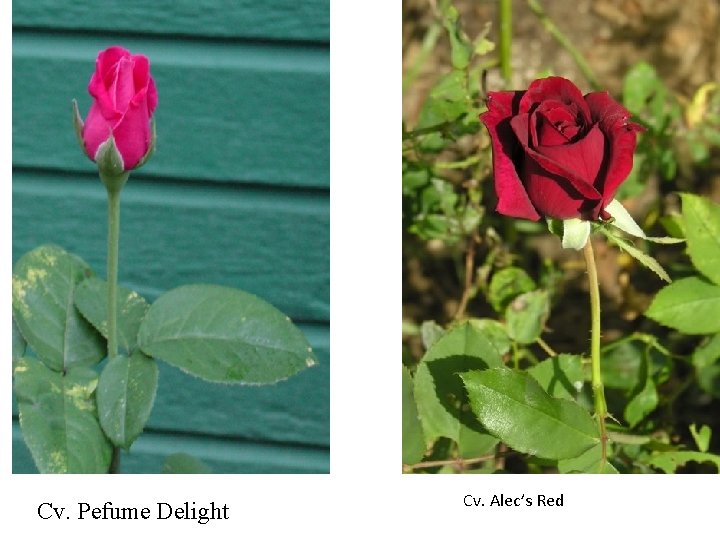
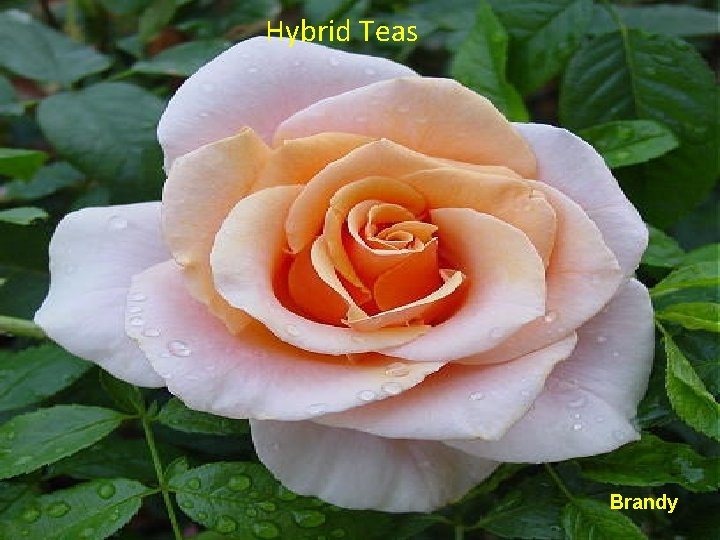
Modern Roses • Roses developed after 1867 are called “Modern Roses”. • These are originated from nearly 10 Species Roses like R. canina, R. chinensis, R. foetida, Rosa gallica, R. gigantea, R. moschata, R. multiflora, Rosa phoenicia, R rugosa and R. wichuraiana. These are divided in further groups: v Hybrid Tea: ( Tea roses x Hybrid perpatual) Upright (1 -2 m tall), mostly single, well shaped flower with high spiralling centres at the end of long stem. Sturdy, often shiny petals, pointed buds, large glossy and semi glossy leaves and strong stems. • Colors include pure white and shades of red, lavender, orange, pink, yellow, apricot, crimson, maroon and mauve. • Most, but not all, hybrid teas have some fragrance These are used as cut flower and for Landscape
Double Delight Cv. Pefume Delight Cv. Alec’s Red
Hybrid Teas Brandy
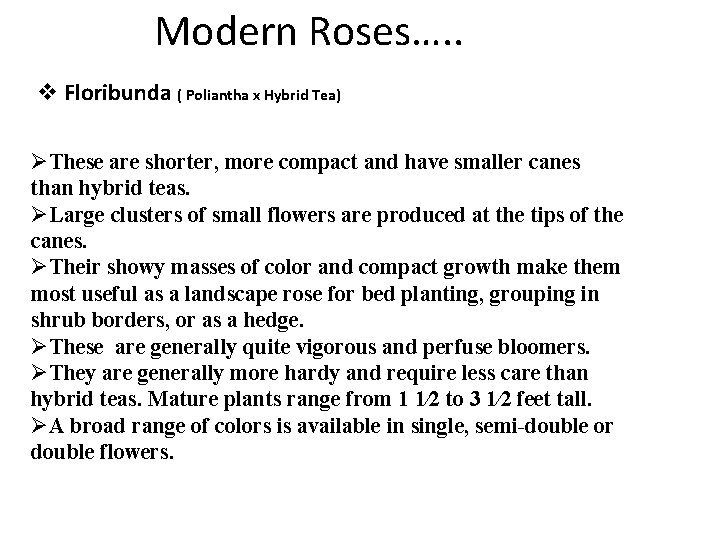
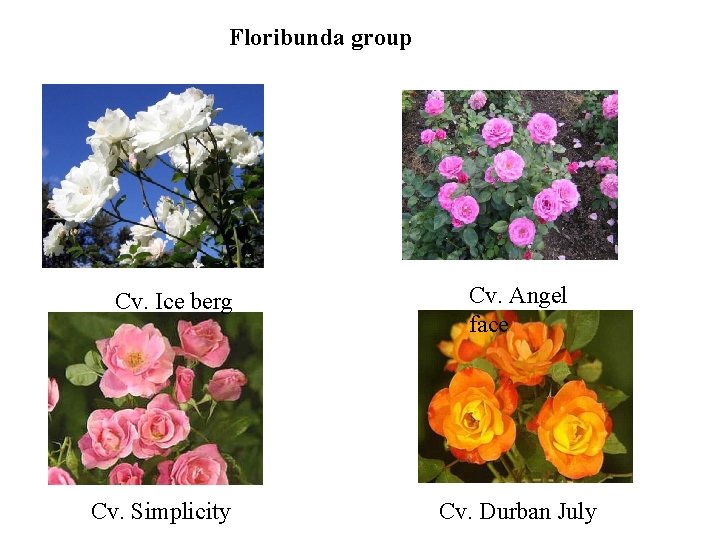
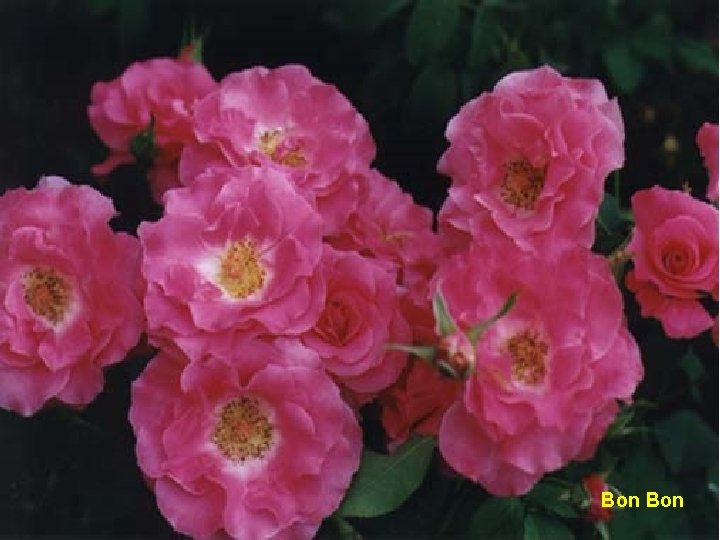
Modern Roses…. . v Floribunda ( Poliantha x Hybrid Tea) ØThese are shorter, more compact and have smaller canes than hybrid teas. ØLarge clusters of small flowers are produced at the tips of the canes. ØTheir showy masses of color and compact growth make them most useful as a landscape rose for bed planting, grouping in shrub borders, or as a hedge. ØThese are generally quite vigorous and perfuse bloomers. ØThey are generally more hardy and require less care than hybrid teas. Mature plants range from 1 1⁄2 to 3 1⁄2 feet tall. ØA broad range of colors is available in single, semi-double or double flowers.
Floribunda group Cv. Ice berg Cv. Simplicity Cv. Angel face Cv. Durban July
Floribundas Bon
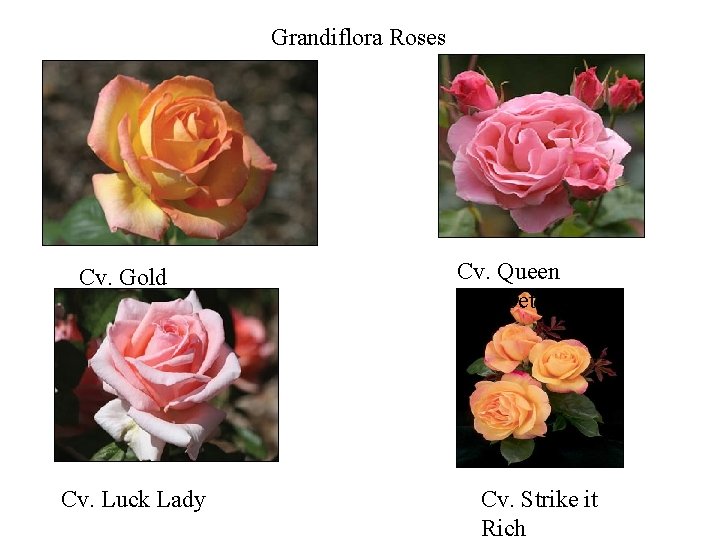
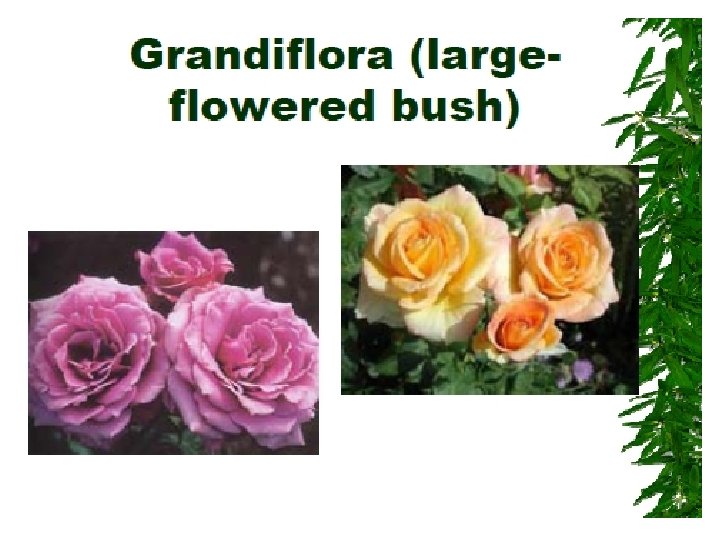
v. Grandiflora (Floribunda x Hybrid Tea) • These have some of the characteristics of both hybrid teas and floribundas. • Their flowers resemble hybrid teas but are smaller and are produced in groups of 5 to 7 resembling the cluster effect of floribundas. • They bloom more abundantly than hybrid teas, and their long stemmed flowers are also good for cutting. • These are the tallest of the bush roses, reaching a height of 5 to 6 feet. • They require the same degree of winter protection as hybrid teas.
Grandiflora Roses Cv. Gold Medal Cv. Luck Lady Cv. Queen Elizabeth Cv. Strike it Rich
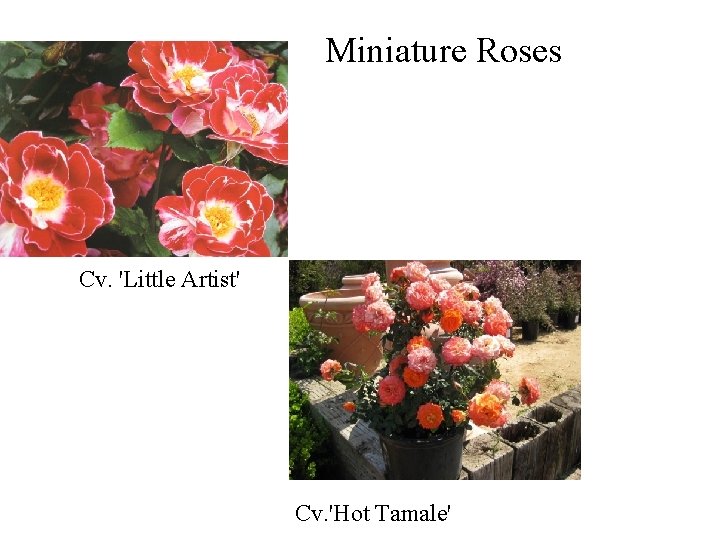
v Miniatures ( Polyantha x Rosa chinensis) • Miniature roses have become popular in recent years. • Their small size makes them useful for growing in containers and small gardens. • Flowers average about 1 inch in diameter in white and shades of pink, red or yellow. • The flowers can be used for miniature arrangements, corsages and boutonnieres. • Miniatures are not grafted and many varieties are quite hardy.
Miniature Roses Cv. 'Little Artist' Cv. 'Hot Tamale'
Roses as cut flowers • Value of fresh cut flower trade amounts to 50% followed by live ornamental plants (43%) and cut foliage (7%) of floriculture trade. • Out of all cut flowers, roses account for 50 % of total exports in world trade.
ROSE GROWING AREAS OF PAKISTAN • • • Qasur (Pattoki) Lahore Sheikhupura Rawalpindi Faisalabad Hyderabad
Characteristics of a Cut Rose Production Farm Any farm site selected for cut rose flower growing should have: • adequate quality water; • well-drained soil, with a p. H from 6. 0– 7. 0; • good access for machinery; • power for irrigation pumps, the cool room, and the packing shed.
CHARACTERISTICS OF EXPORT QUALITY CUT ROSE FLOWERS • • Low cost of production Long harvesting period Long stalk length (60 -90 cms. ) High level of production Long vase life Colour persistence for long period Bud diameter
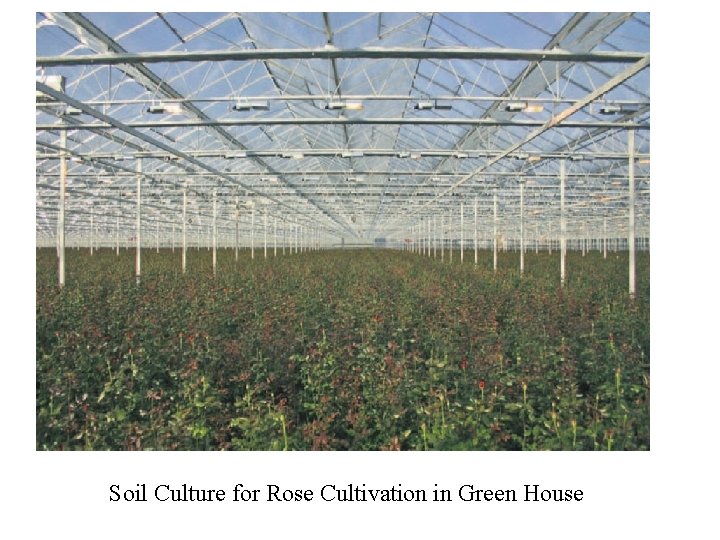
Rose Cultivation in The green House “A greenhouse is a structure which maintain the environmental conditions, like temperature, humidity, and air circulation inside it for crops”. Components of Green House 1 - Green House Framework and glass or polythene covering 2 - Cooling Pad system including, Fans, pads, exhaust fans and humidifier if we want to reduce the temperature and heating system if we increase the temperature in cool areas. 3 -Drip Irrigation System, including Water Reservoir, pump, Fertilizer mixer, Main pipes, Laterals and Drips.
Soil Culture for Rose Cultivation in Green House
Advantages of Greenhouse Technology • Controlled temperature and humidity that prevent pests and diseases • Standards are followed with more consistency • Varieties achieve their maximum potential in terms of bud size, color and other physical attributes • Sizes vary from short to very long stems (reaching up to a meter in length) and production may be programmed depending on buyers' demand
Less thorns that makes handling easier Clean petals and leaves, again for easier handling Good vase life so consumers can enjoy the flowers longer Year round reliable supply of flowers
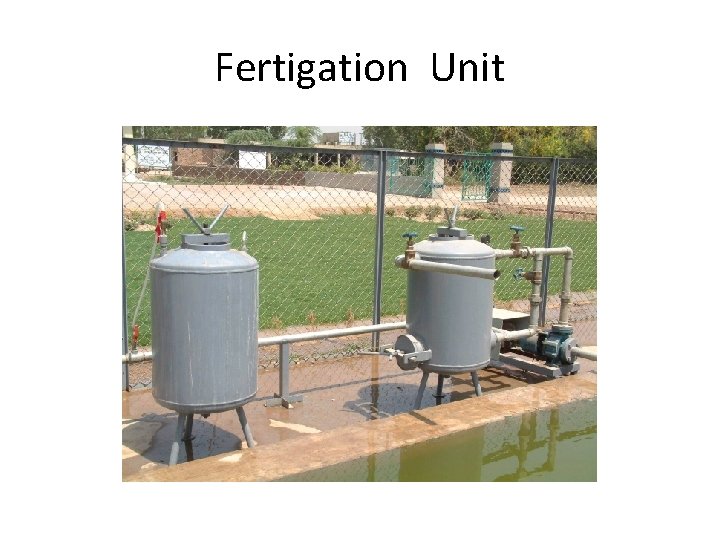
Layout and Fertigation • If roses are to be grown in greenhouse, trenches should be dug 4’ wide and 2’ deep which should be filled with sweet sand after lining with polythene sheet. • Plantation should be done at 1’ distance in 1’ apart rows with total plantation of 15, 000 plants per acre. • Nutrition and irrigation is provided though drip irrigation system daily during summer and at alternate day during winter.
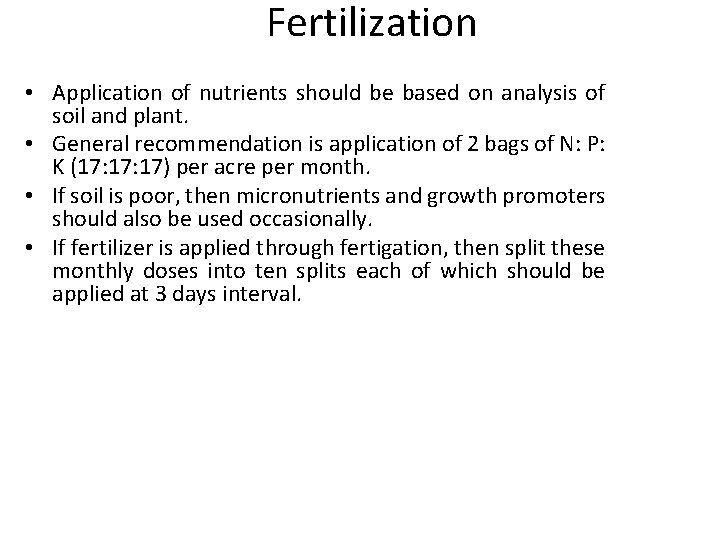
Fertilization • Application of nutrients should be based on analysis of soil and plant. • General recommendation is application of 2 bags of N: P: K (17: 17) per acre per month. • If soil is poor, then micronutrients and growth promoters should also be used occasionally. • If fertilizer is applied through fertigation, then split these monthly doses into ten splits each of which should be applied at 3 days interval.
Fertigation Unit
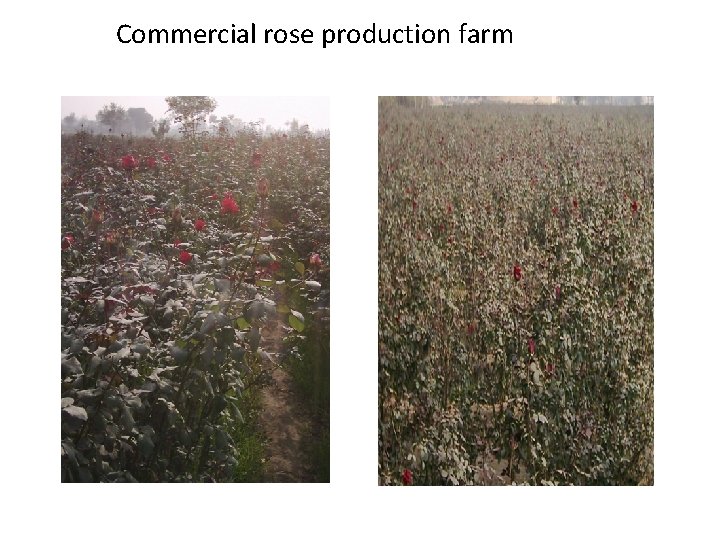
Commercial rose production farm
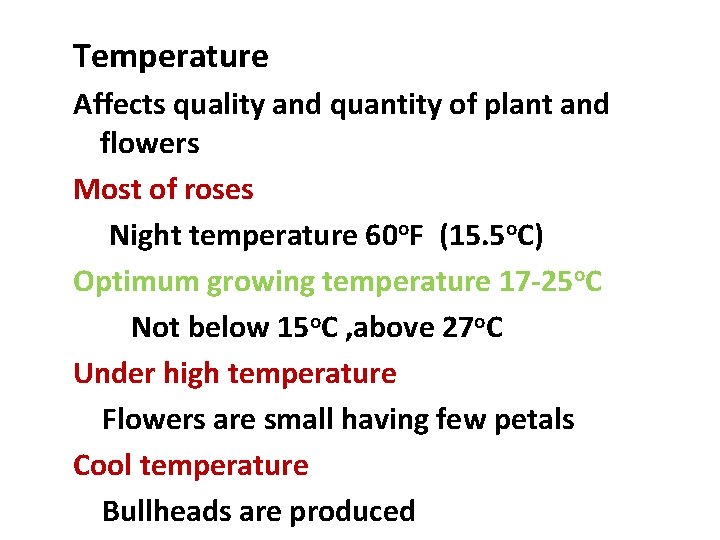
Temperature Affects quality and quantity of plant and flowers Most of roses Night temperature 60 o. F (15. 5 o. C) Optimum growing temperature 17 -25 o. C Not below 15 o. C , above 27 o. C Under high temperature Flowers are small having few petals Cool temperature Bullheads are produced
Humidity Roses required high humidity (65 -75%) ØBy damping the paths ØBy Misting Humidity helps in two ways ØReducing transpiration ØReduce incidence of red spider mite Excessive Humidity ØFoliage decrease ØDowny mildew Øblack spots
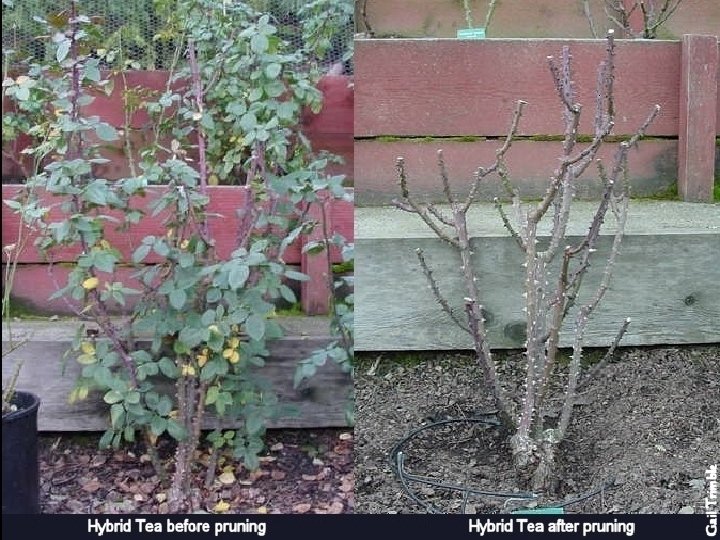
Plants Management Practices. • Pruning is an important step in regenerating the growth and flowering of roses. • Correct pruning is an essential factor for success in rose growing and there fore, should be done with precision and care. • There is a marked difference in growth habit of roses and each type has its own particular method and season of pruning. the practice of rose pruning consists of two operations.
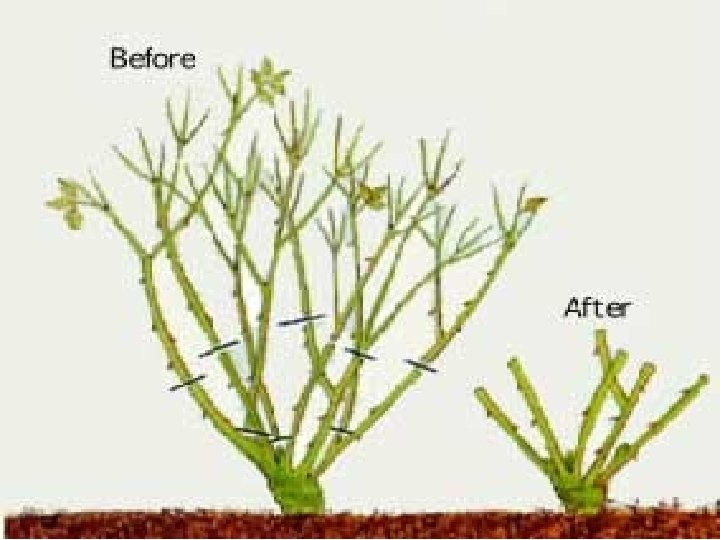
Thining out : Comprises removal of old, weak, dry, diseased stems. Heading back/shortening of stems. Cutting down of last years growth to desirable height
Objectives of pruning roses plants. • To remove the unproductive growth • To ensure production of large number of strong and healthy shoots, which will bear flowers and improve quality of blooms. • Keep the rose bush in proper shape and size. • To allow high and air to reach in centre of plant.
• Annual removal of wood on which flowers were produced will encourage growth of new healthy shoots which bear more flowers than old branches. • Produced longer stems • To facilitate various cultural operations, like weeds, hoeing etc. • To rejuvenate the old plants • To obtain a flush of flowers for a specific date e. g. . St. valentine day 14 Feb.
• The purpose of pruning will not serve, if it is done at wrong time • Sufficient time must be allowed for the new shorts to mature Pruning Time. and flower • Diseased, dry wood, grown irregularly should be removed without waiting for proper seasons • Best time is period when the activity of rose plants is least and plant is at near dormant stage. • In Pakistan, October to December depending on climatic condition of the region.
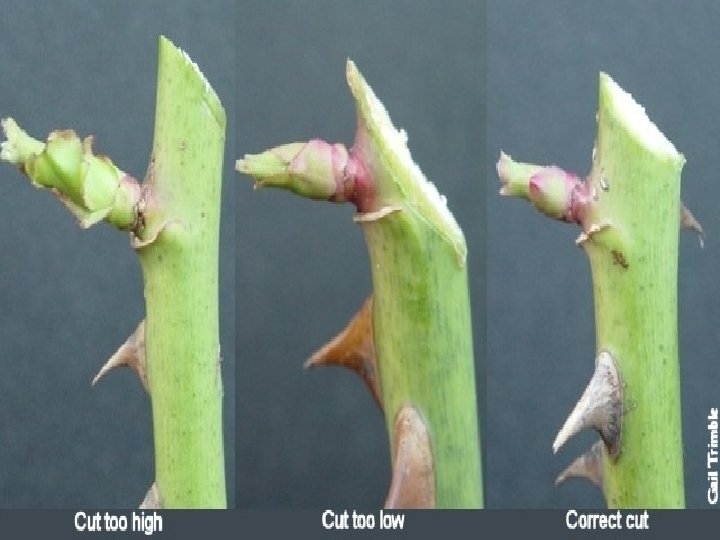
How to prune: • Every rose stem has (eye) buds alternating on opposite sides, usually out ward and in ward. • The basic rule in pruning is always to cut at about half a centimeter above a vigorous bud that points in the direction and desires the new shoot to grow. • A bush rose is to kept open in the center, the cut is made at an out ward growing bud. • Whichever bud is selected the cut should be slightly slanting. A horizontal cut retains moisture and therefore is liable to cause fungus growth.
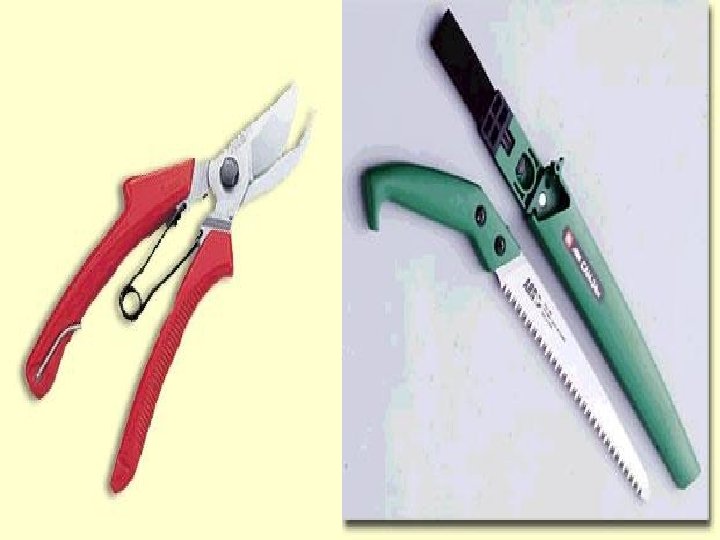
While making cut care should be taken not to make it too high above the eye as there may be chance of die back of the shoot. If cut is on the other hand, very near the eye, the bud may die due to sap flow. It is absolutely necessary to cut sharp and clean. Broken tissues, bruises or hanging shreds of bark are an invitation to pests and diseases. All wounds are painted with the fungicides and benlate.
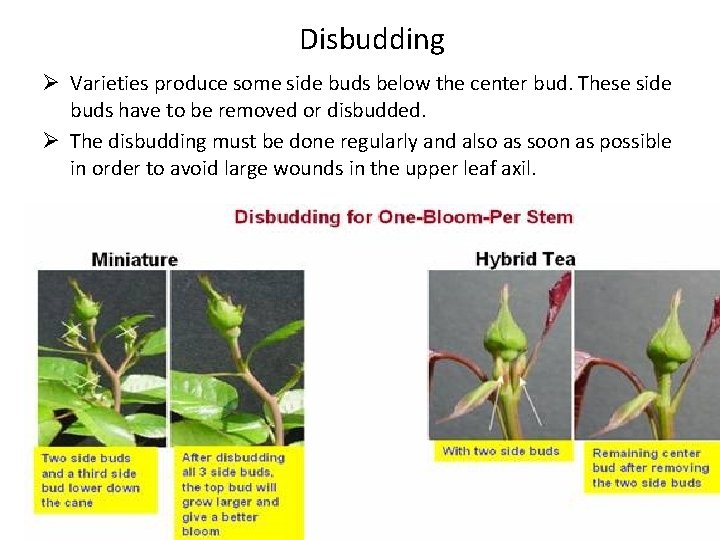
Disbudding Ø Varieties produce some side buds below the center bud. These side buds have to be removed or disbudded. Ø The disbudding must be done regularly and also as soon as possible in order to avoid large wounds in the upper leaf axil.
• Harvesting • Grading • Pulsing • Bunching • Sleeving • Packing • Pre-cooling • Transportation
Mishandling of cut roses
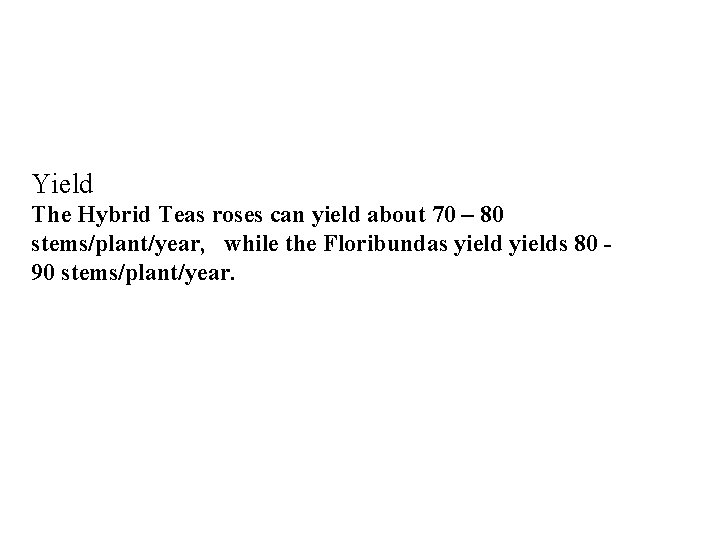
Yield The Hybrid Teas roses can yield about 70 – 80 stems/plant/year, while the Floribundas yields 80 90 stems/plant/year.