
FLOORING FLOORS Divides a building into different levels
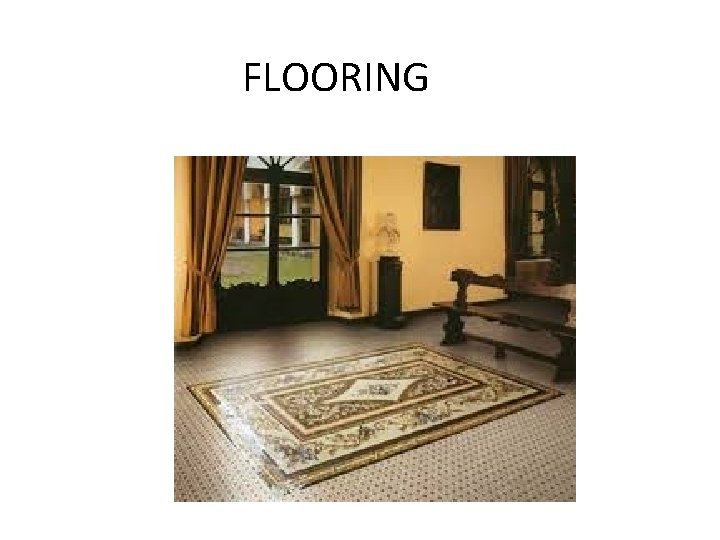
FLOORING
FLOORS • Divides a building into different levels, one above the other for creating more accommodation within a limited space • Floor consists of 2 components • Sub floor/Base course • Floor covering/Flooring
REQUIREMENTS OF GOOD FLOOR • • Hard and smooth surface Adequate strength and stability Damp resistant Good thermal insulation capacity Durable and easy to maintain Fire resistant Aesthetic look
Sub floor/Base course • Bottom most portion of a floor • Purpose: To impart strength & stability to support the floor covering & all super imposed loads • Materials used: Brick, Stone, wood, concrete
Floor covering/Flooring • Covering over subfloor • Purpose: to provide a hard, clean, smooth, impervious, durable & attractive surface to the floor • Materials used: Brick, stone, tile, concrete, timber, mosaic, marble, granite etc. • Selection depends: appearance, resistance to abrasion &slipperiness, cleanliness, durability, damp proof, initial cost, maintenance
Preparation of bed for flooring • Ground should be strong enough to support the floor • The ground surface should be levelled, compacted & watered before flooring • A porous layer of inert materials like sand or gravel should be provided just above the prepared bed • The porous layer helps to check the rise of subsurface water into the floor
Floor finishing materials • Used to improve the appearance of floors. • Provides a clean, damp proof surface • Commonly Used Types 1. Mosaic tile flooring 2. Ceramic tile flooring 3. Marble floor covering 4. Granite floor covering 5. Synthetic flooring
Base Preparation • 15 cm sand cushion provided over rammed & watered earthen surface • Over the sand cushion base course of 10 cm thick cement concrete(1: 5: 10) mix is placed • Top surface of concrete is roughly finished to develop good bond b/w the base & topping • Cure this concrete for 3 days
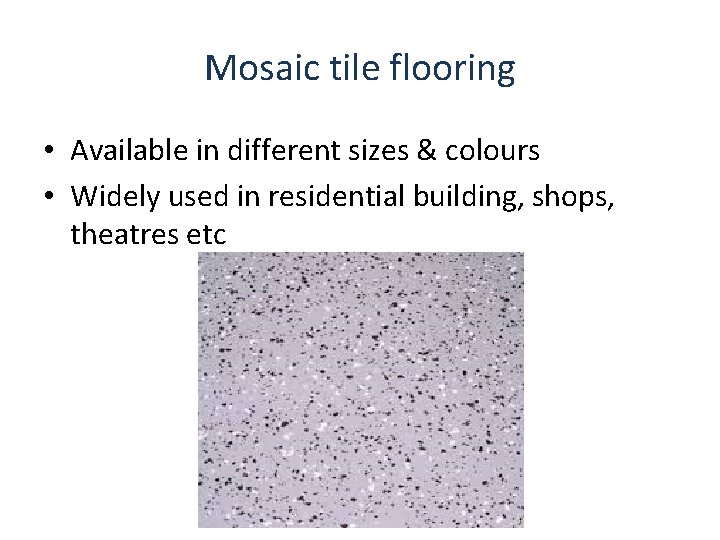
Mosaic tile flooring • Available in different sizes & colours • Widely used in residential building, shops, theatres etc
Laying steps 1. Over the concrete bedding , cement mortar layer of 1: 1 mix is spread and mosaic tiles are arranged above this. 2. Cement paste is applied to the sides 3. Tiles are slightly tapped till cement oozes out through the joints to the surface 4. This cement is cleaned with sawdust. 5. After 3 days joints are rubbed carborundum stone& then pumice stone. 6. Finally surface is washed with a weak solution of soap in warm water.
Advantages of mosaic flooring • • • High durable Dense hard and tough Available in variety of colours Water and bacteria resistant Low maintainance
Disavantages of mosaic flooring • Slippery when wet • Damage or crack
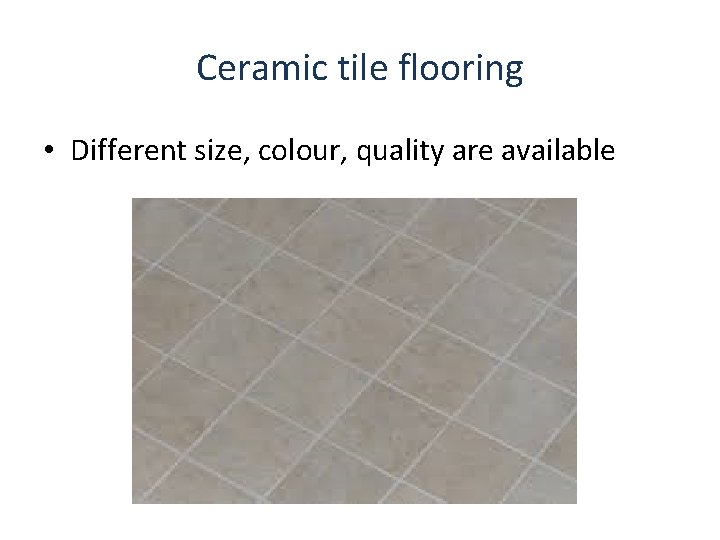
Ceramic tile flooring • Different size, colour, quality are available
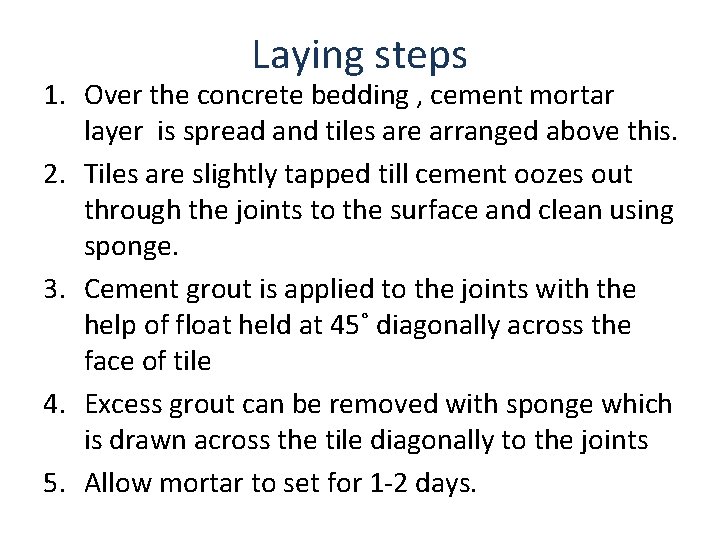
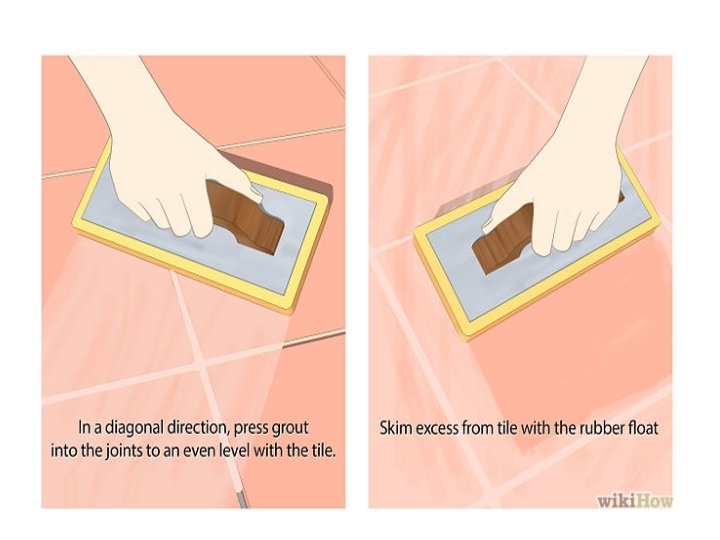
Laying steps 1. Over the concrete bedding , cement mortar layer is spread and tiles are arranged above this. 2. Tiles are slightly tapped till cement oozes out through the joints to the surface and clean using sponge. 3. Cement grout is applied to the joints with the help of float held at 45˚ diagonally across the face of tile 4. Excess grout can be removed with sponge which is drawn across the tile diagonally to the joints 5. Allow mortar to set for 1 -2 days.
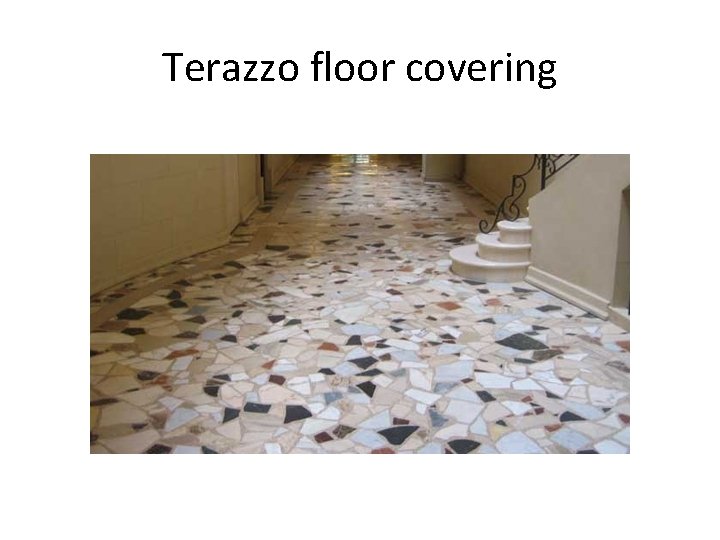
Terazzo floor covering
• Consist of granite, marble, quartz, glass or other suitable chips sprinkled with cement • It is poured into floor , cured and polished • Asethetic and durable • Resistant to heat and water • Less maintanance • Expensive • Slippery • Requires professional installation
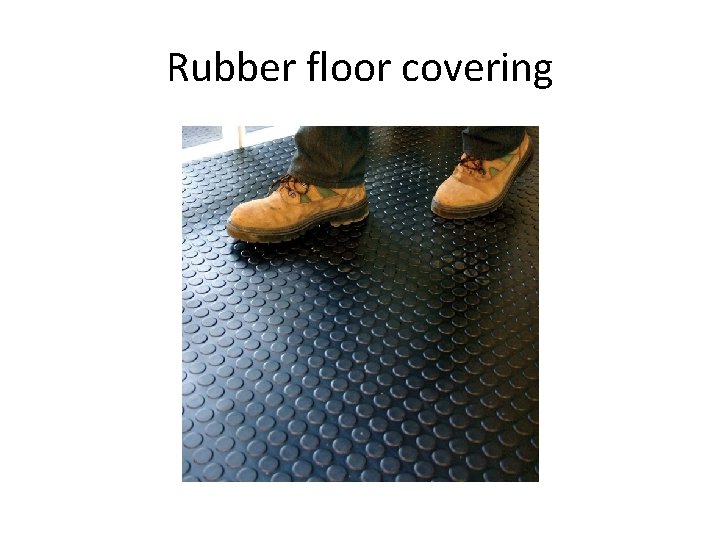
Rubber floor covering
• Noise proof • Rubber sheets available in variety of patterns and colours • Sheets are fixed into concrete floor with appropriate adhesives • Costly • Easy to install
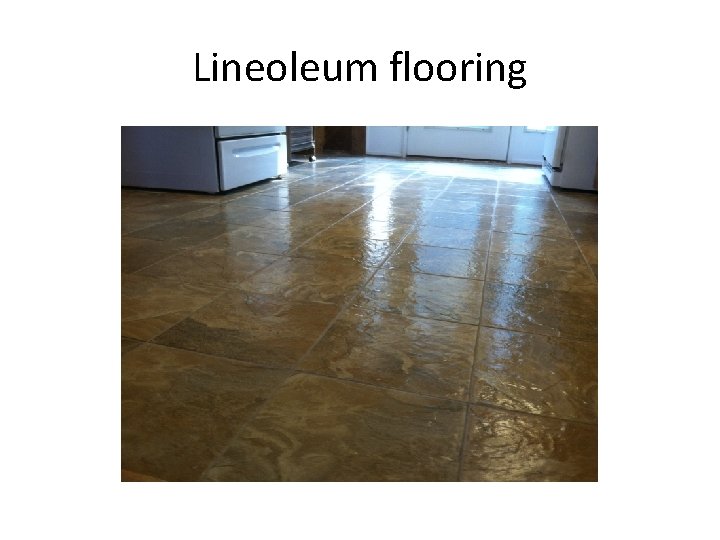
Lineoleum flooring
• Linoleum consist of linseed oil from flax seeds, limestone and wood dust • Duarble for high wear living areas • Linoleum flooring is used for floor base already smooth and plain • It is not used in area prone to fire • It is not used in areas likely to dam • Softer than other type of flooring
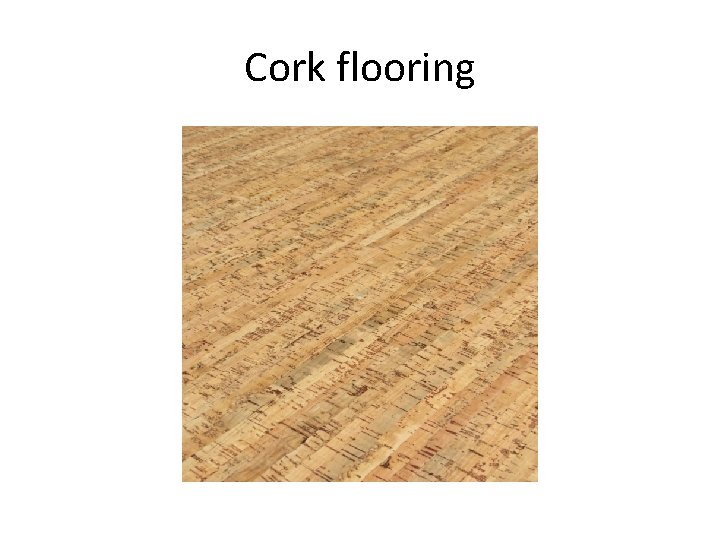
Cork flooring
• • • Excellent thermal qualities Beautiful, lightweight, fire resistant Soft cushion surface Antibacterial properties Requires high level of maintainance Tendency to stain, susceptible to water and damage
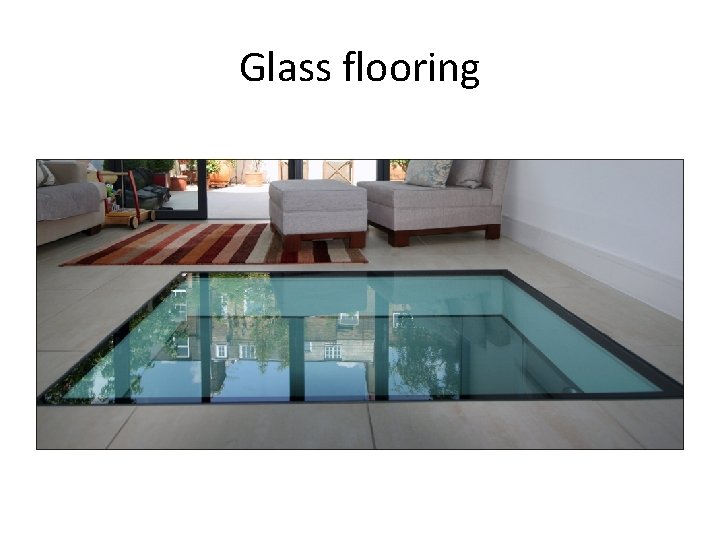
Glass flooring
• • • Costly Transmits light from upper floor to lower areas Area look bright and spacious Laminated glass is used for flooring Durable Bacteria and dirt resistance Impervious to water Expensive Very slippery when wet Scracted easily
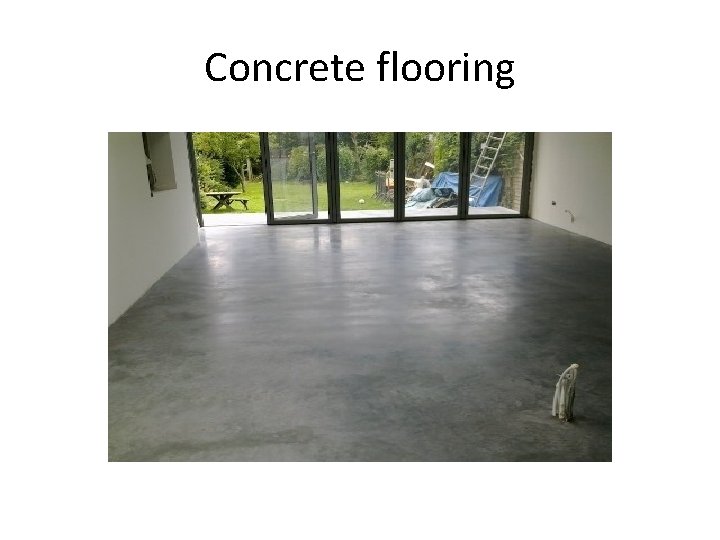
Concrete flooring
• • Durable Easy to maintain Easy to construct Economical
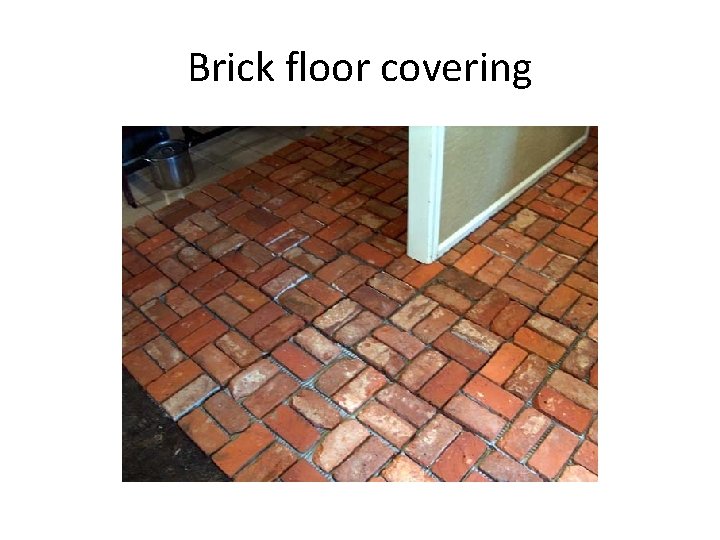
Brick floor covering
• Easy to construct • Used in ware houses, stores, godowns • Well burnt bricks of uniform shapes used in floor
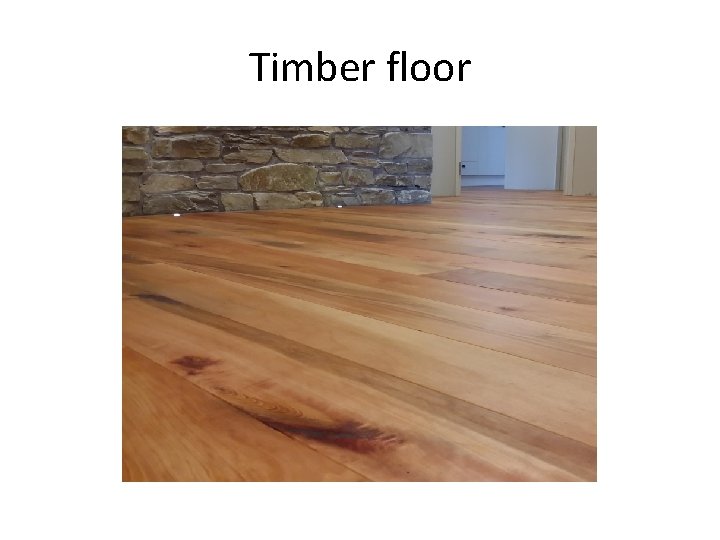
Timber floor
• Used in hilly regions • Known as wood or plank flooring uses reclaimed or recycled wooden boards • Different species of wood are fabricated • Beautiful apprearance • Withstand huge traffic without replacement • Ecofreindly material • Good insulator • Low maintainance • Expensive • Takes lot of time toset on floor • Sometimes slippery and dangerous.
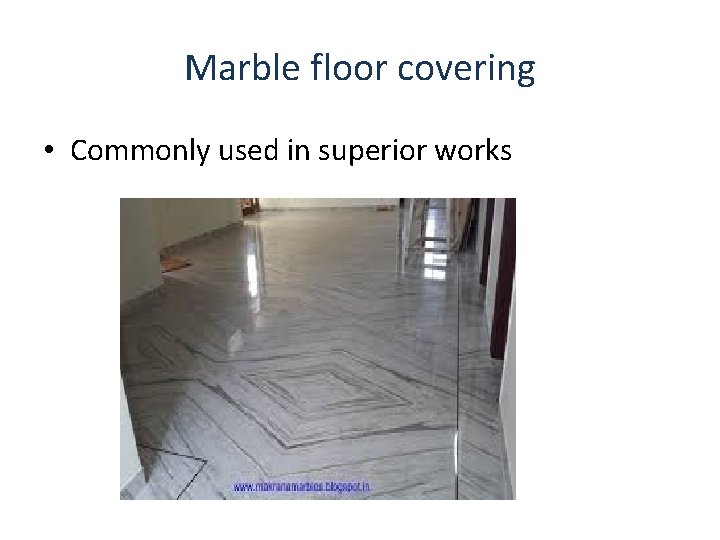
Marble floor covering • Commonly used in superior works
Laying steps 1. Over the base 20 mm thick bedding mortar of 1: 2 mix is spread under each slabs. 2. Marble slab is then laid over this mortar 3. Gently pressed with wooden mallet & levelled. 4. The marble is then again lifted up & fresh mortar is added to the hollows of the bedding mortar.
5. The marble is placed in position. 6. The edges of already laid slabs are smeared with cement slurry paste 7. Marble slabs are beaten with wooden mallet & cement oozes out through the joints is cleaned using a sponge. 8. Paved area is cured for 7 days 9. Finally surface is washed with a weak solution of soap in warm water.
advantages • Durable, attractive, hard • Available in variety of colours • Resistant to moisture

disadvantages • Expensive • Need proper maintainance • Skilled labours are required
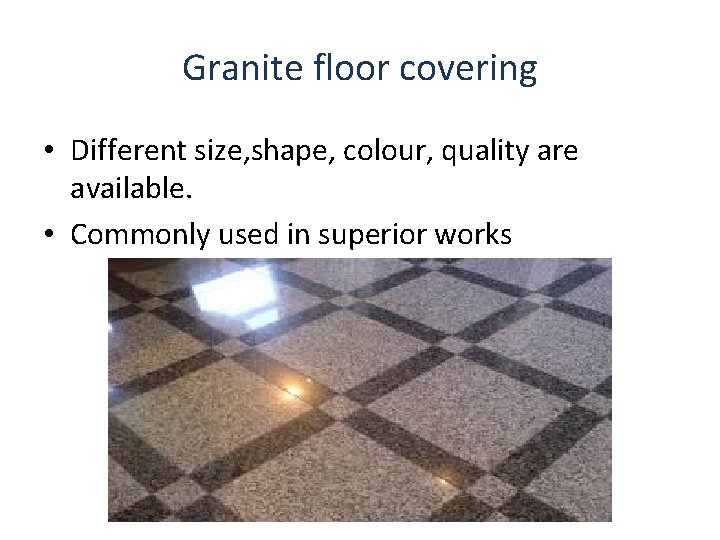
Granite floor covering • Different size, shape, colour, quality are available. • Commonly used in superior works
Laying steps 1. Over the base 20 mm thick bedding mortar of 1: 1 mix is spread for laying the granite slabs. 2. Granite slabs are then laid over this mortar. 3. They are beaten with wooden mallet & cement oozes out through the joints. It is cleaned using a sponge or cotton. 4. Paved area is cured for 7 days 5. Finally surface is washed with a weak solution of soap in warm water.
Synthetic flooring • Epoxies & polyesters are used • These synthetic materials replaces the cement in standard terrazo flooring & reduces the self weight of flooring • Synthetic material & marble chips are mixed with water to form a plastic paste. • The mixture is laid on the rough base prepared. • Grinding & polishing are performed after 16 to 48 hours.
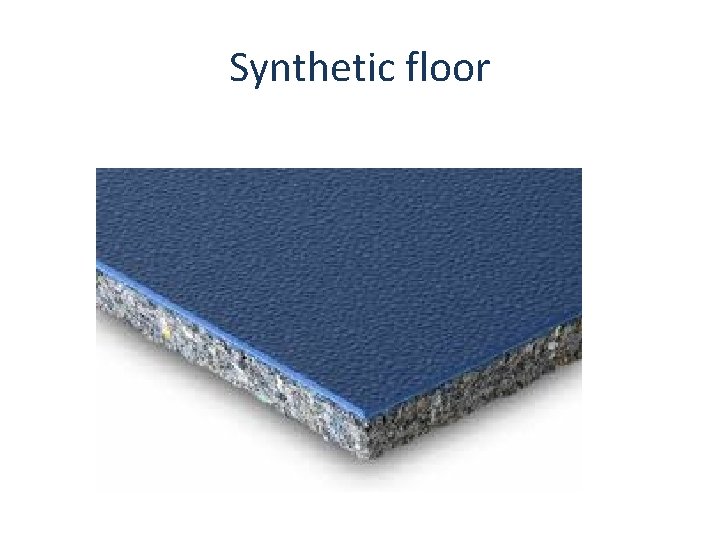
Synthetic floor
• Agglomerated marble- marble dust granules & synthetic resins are mixed & made to slabs under high pressure. • Available in different colours & dimension. • Superior quality • Resistance to abrasion, impact & chemical attack • Flexible & attractive • Non skid surface • Weather resistant- suitable for exterior & interior applications
• Vinyl tiles & Vinyl asbestos tiles –made from vinyl resins • Tough polymers- can withstand heavy loads • Comfortable to walk • Resistance to abrasion, impact & chemical attack • Fixed on the floor using hot bitumen adhesive & surface is rolled with light roller.
- Slides: 42