
FLOOD PANEL FLOODPROOFING TRAINING PROGRAM PART 1 DRY


- Slides: 49
FLOOD PANEL™ FLOODPROOFING TRAINING PROGRAM PART 1: DRY FLOODPROOFING SYSTEMS COURSE# 14003 © Flood Panel 2014 April 28, 2014
ABOUT THE PROGRAM: • Due to the ever growing threat of flooding across America and the Federal government removing subsidies for the National Flood Insurance Program, there are incentives for commercial building owners to install dry flood proofing mechanisms that mitigate the impacts from flooding. • Flood Panel, LLC designs, sources, installs and maintains high-quality flood protection products on commercial construction projects. The aluminum Flood Panel are flood barriers that will last for the life of the buildings if properly installed and maintained. • An elite team of expert architects, engineers and contractors have been identified, by Flood Panel, LLC, to train industry professionals on the installation and deployment of their vast array of flood protection products. The training is relevant to structural engineers, architects, shell contractors, construction professionals and commercial building owners. • The nation’s vulnerability to flooding is increasing. Because new insurance policies and the modernization of FEMA’s flood maps affecting property insurance and insurability, there is a great demand for Flood Panel products to be installed at commercial properties. 2
FLOODPROOFING COMMERCIAL BUILDINGS William L. Coulbourne, P. E. bill@coulbourneconsulting. com Adam Reeder, P. E. adam. reeder@atkinsglobal. com 3
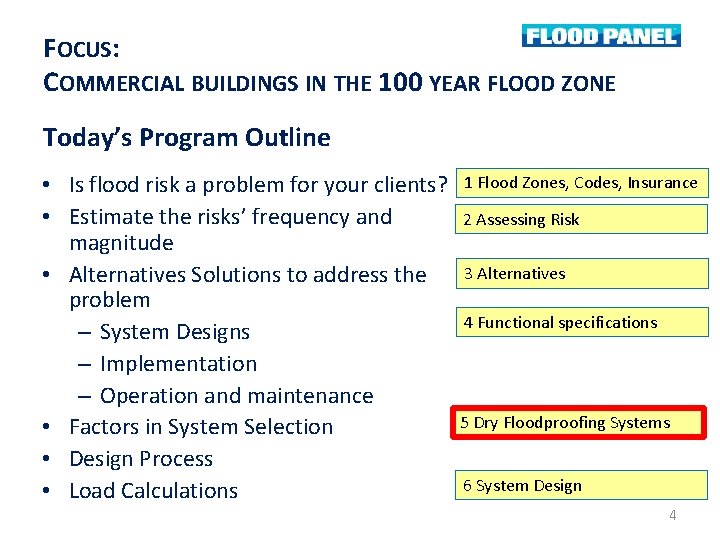
FOCUS: COMMERCIAL BUILDINGS IN THE 100 YEAR FLOOD ZONE Today’s Program Outline • Is flood risk a problem for your clients? • Estimate the risks’ frequency and magnitude • Alternatives Solutions to address the problem – System Designs – Implementation – Operation and maintenance • Factors in System Selection • Design Process • Load Calculations 1 Flood Zones, Codes, Insurance 2 Assessing Risk 3 Alternatives 4 Functional specifications 5 Dry Floodproofing Systems 6 System Design 4
SESSION 5: SELECTION AND DESIGN OF DRY FLOODPROOFING SYSTEMS 5
LEARNING OBJECTIVES: • Learn to select and design dry floodproofing systems • How to conduct field investigations • Learn structural failure mechanisms that occur in flood conditions • Learn dry floodproofing system elements 6
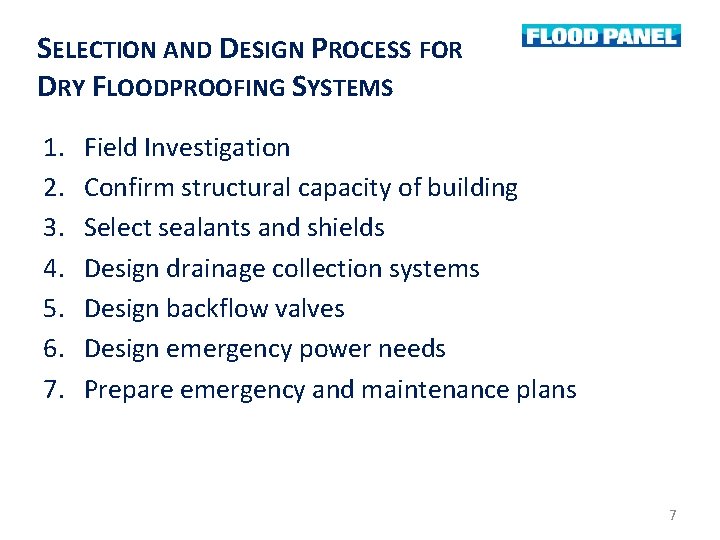
SELECTION AND DESIGN PROCESS FOR DRY FLOODPROOFING SYSTEMS 1. 2. 3. 4. 5. 6. 7. Field Investigation Confirm structural capacity of building Select sealants and shields Design drainage collection systems Design backflow valves Design emergency power needs Prepare emergency and maintenance plans 7
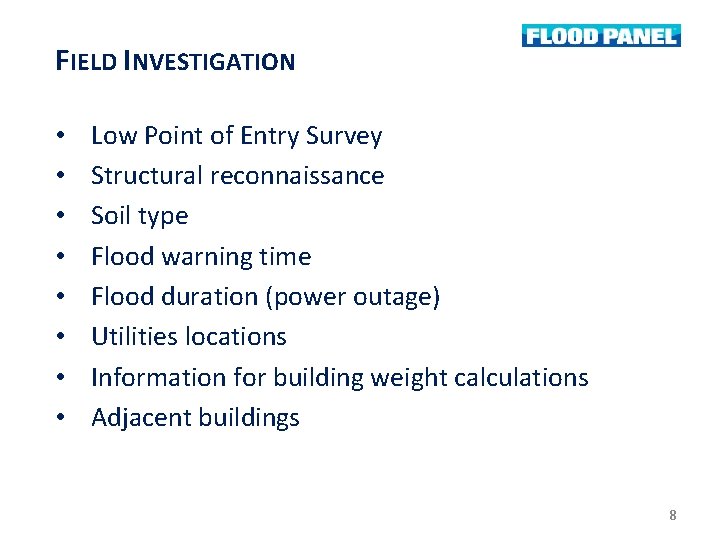
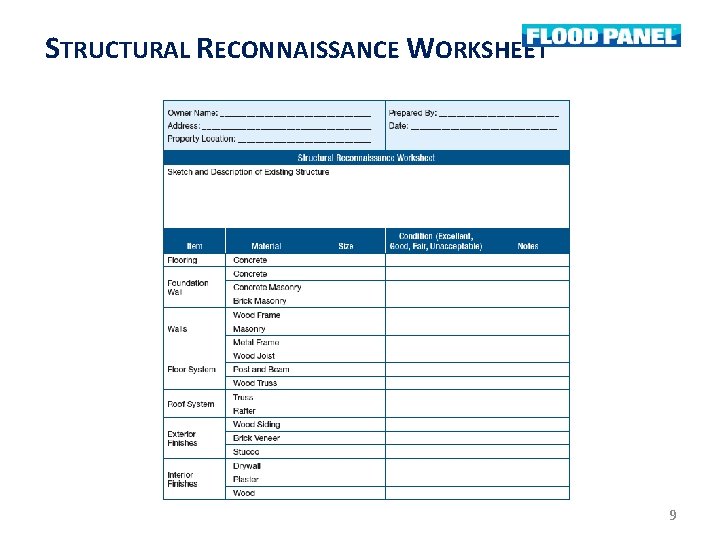
FIELD INVESTIGATION • • Low Point of Entry Survey Structural reconnaissance Soil type Flood warning time Flood duration (power outage) Utilities locations Information for building weight calculations Adjacent buildings 8
STRUCTURAL RECONNAISSANCE WORKSHEET 9
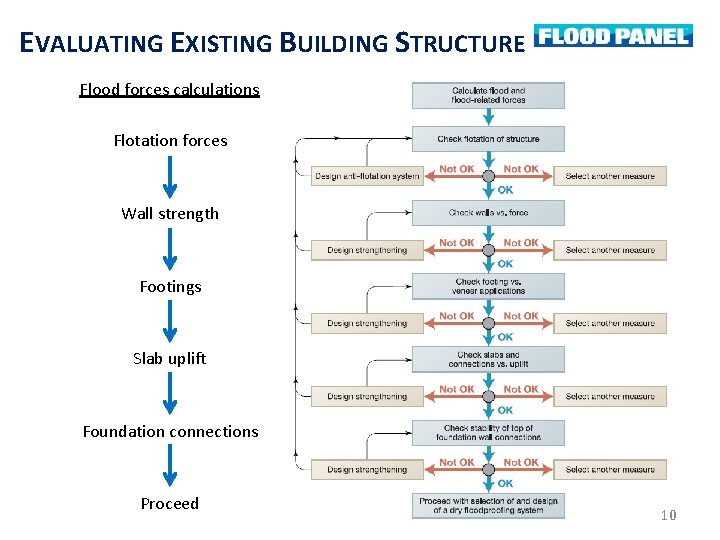
EVALUATING EXISTING BUILDING STRUCTURE Flood forces calculations Flotation forces Wall strength Footings Slab uplift Foundation connections Proceed 10
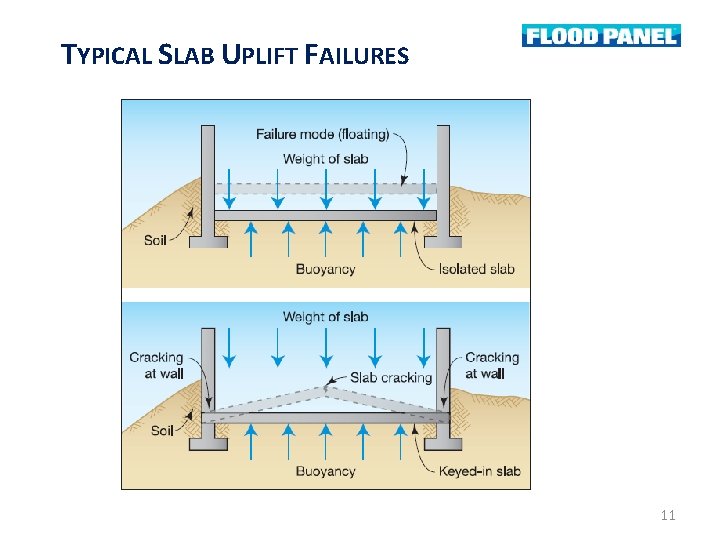
TYPICAL SLAB UPLIFT FAILURES 11
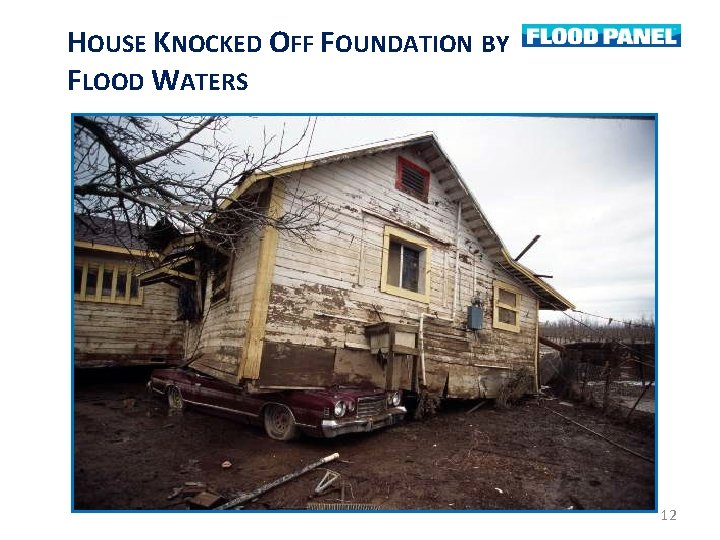
HOUSE KNOCKED OFF FOUNDATION BY FLOOD WATERS 12
DRY FLOODPROOFING SYSTEM ELEMENTS • • • Watertight Shields for doors and windows Reinforcement of walls Membranes and other sealants Drainage collection systems and sump pumps Check valves Anchoring 13
SHIELDS 14
SHIELDS (CONT’D. ) 15
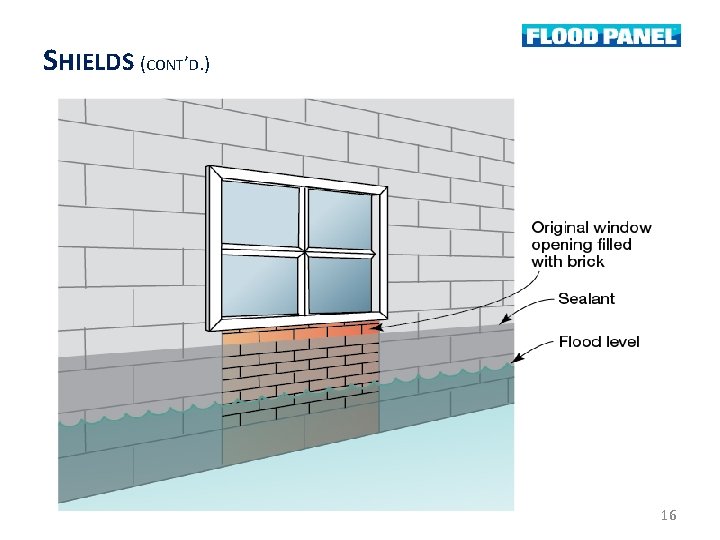
SHIELDS (CONT’D. ) 16
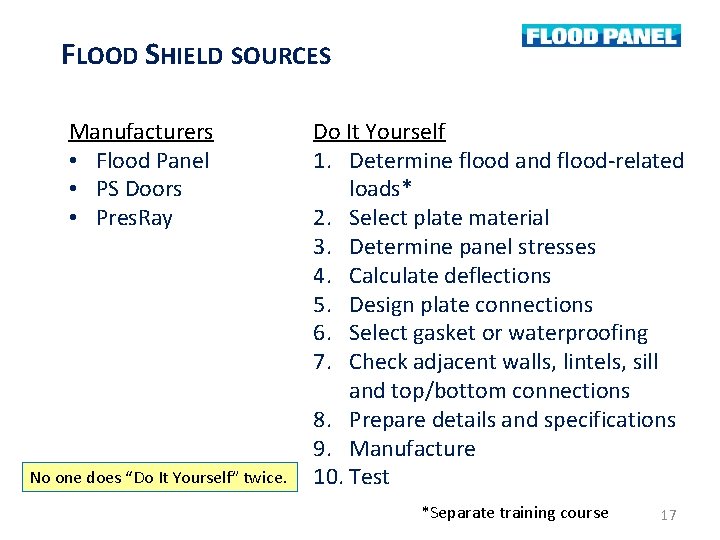
FLOOD SHIELD SOURCES Manufacturers • Flood Panel • PS Doors • Pres. Ray No one does “Do It Yourself” twice. Do It Yourself 1. Determine flood and flood-related loads* 2. Select plate material 3. Determine panel stresses 4. Calculate deflections 5. Design plate connections 6. Select gasket or waterproofing 7. Check adjacent walls, lintels, sill and top/bottom connections 8. Prepare details and specifications 9. Manufacture 10. Test *Separate training course 17
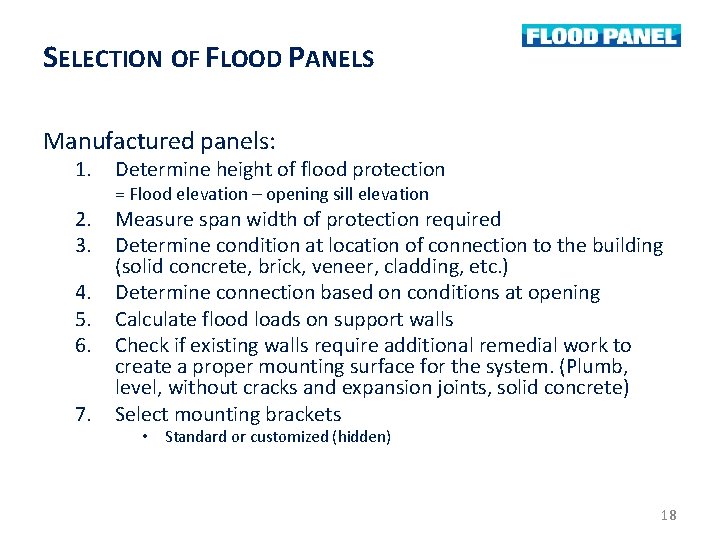
SELECTION OF FLOOD PANELS Manufactured panels: 1. Determine height of flood protection 2. 3. Measure span width of protection required Determine condition at location of connection to the building (solid concrete, brick, veneer, cladding, etc. ) Determine connection based on conditions at opening Calculate flood loads on support walls Check if existing walls require additional remedial work to create a proper mounting surface for the system. (Plumb, level, without cracks and expansion joints, solid concrete) Select mounting brackets 4. 5. 6. 7. = Flood elevation – opening sill elevation • Standard or customized (hidden) 18
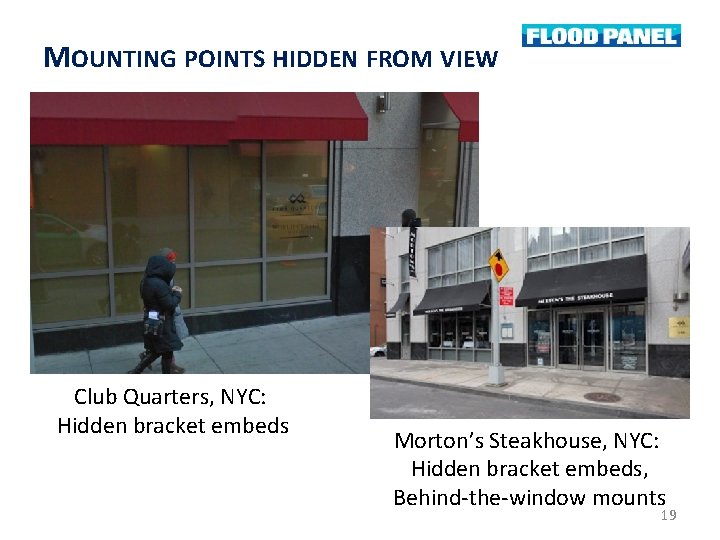
MOUNTING POINTS HIDDEN FROM VIEW Club Quarters, NYC: Hidden bracket embeds Morton’s Steakhouse, NYC: Hidden bracket embeds, Behind-the-window mounts 19
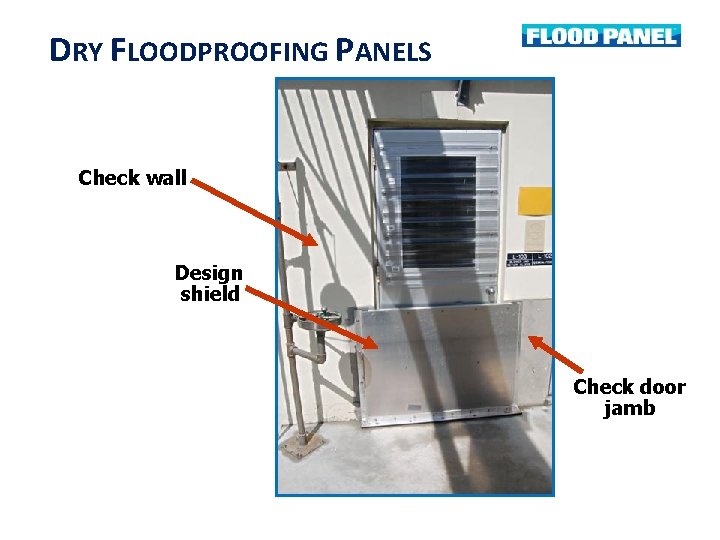
DRY FLOODPROOFING PANELS Check wall Design shield Check door jamb
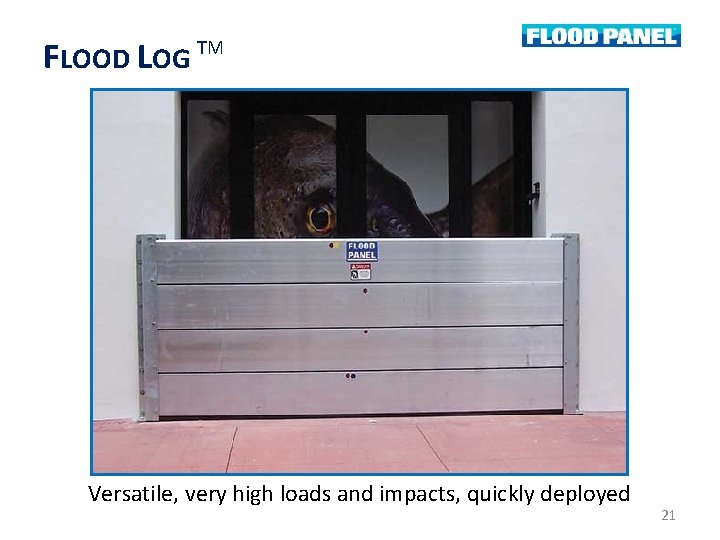
FLOOD LOG TM Versatile, very high loads and impacts, quickly deployed 21
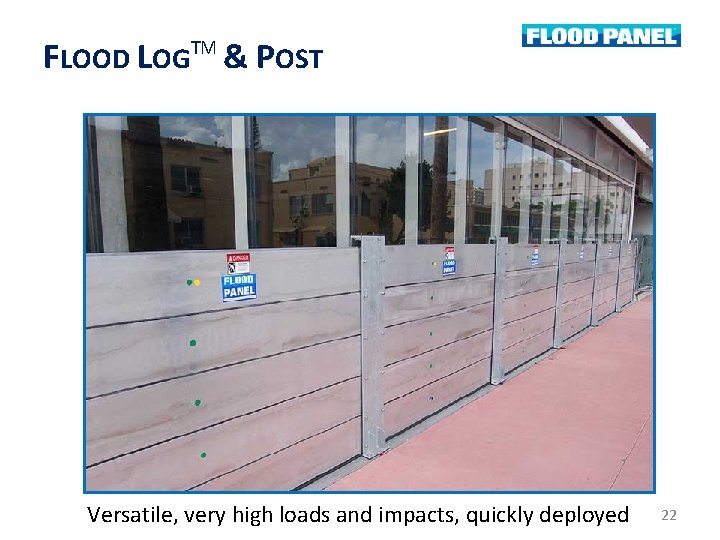
FLOOD LOGTM & POST Versatile, very high loads and impacts, quickly deployed 22
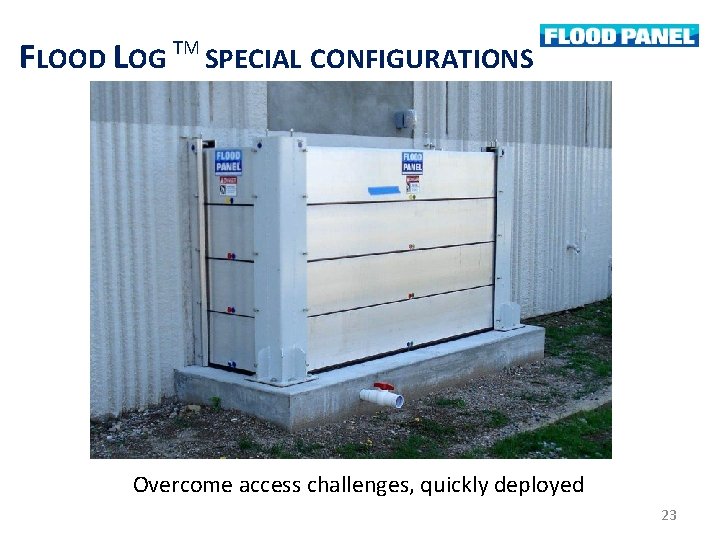
FLOOD LOG TM SPECIAL CONFIGURATIONS Overcome access challenges, quickly deployed 23
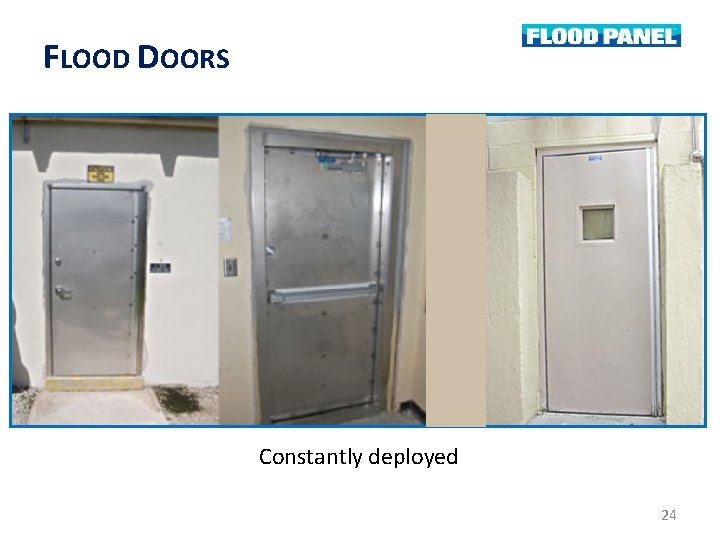
FLOOD DOORS Constantly deployed 24
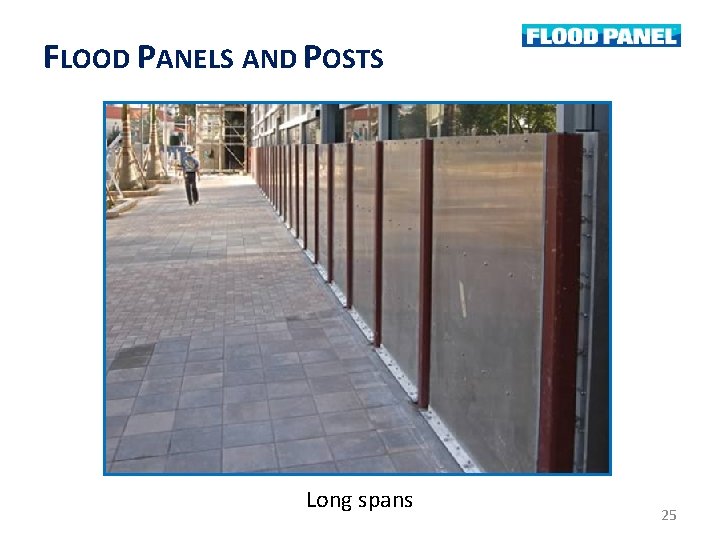
FLOOD PANELS AND POSTS Long spans 25
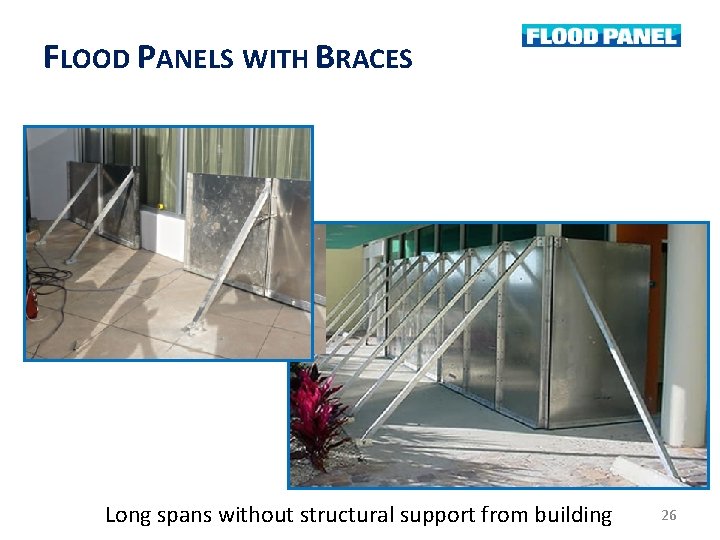
FLOOD PANELS WITH BRACES Long spans without structural support from building 26
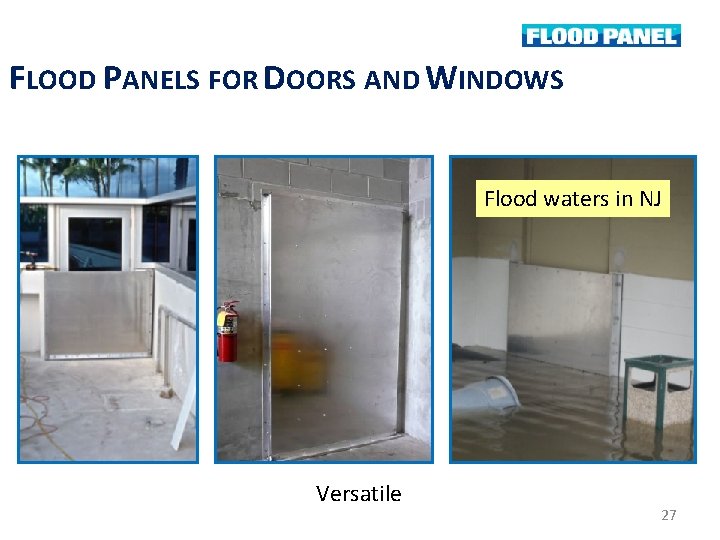
FLOOD PANELS FOR DOORS AND WINDOWS Flood waters in NJ Versatile 27
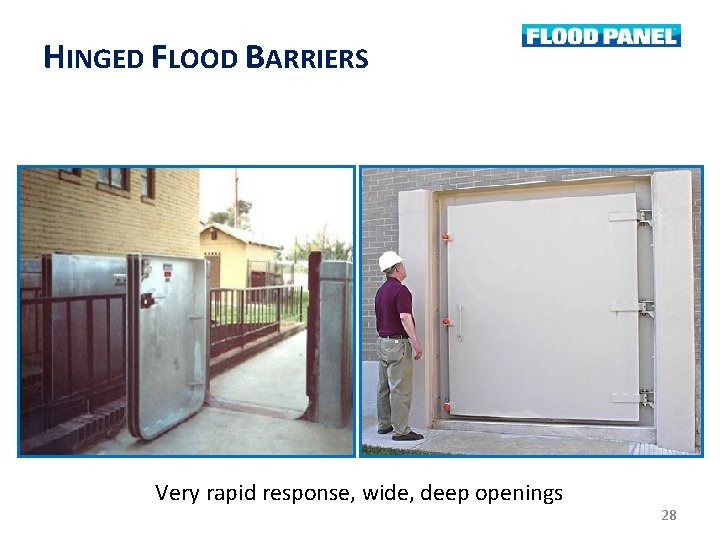
HINGED FLOOD BARRIERS Very rapid response, wide, deep openings 28
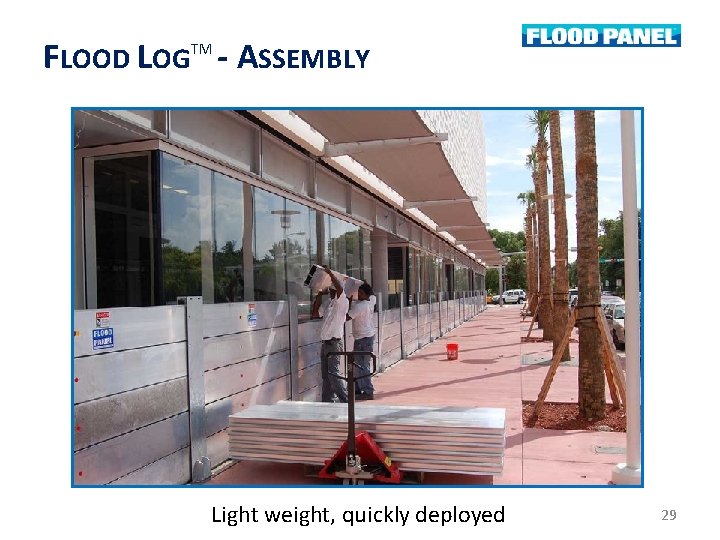
FLOOD LOGTM - ASSEMBLY Light weight, quickly deployed 29
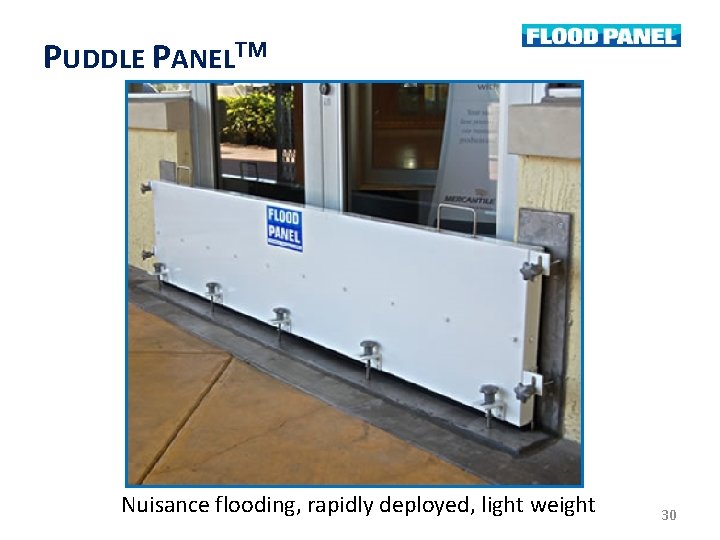
PUDDLE PANELTM Nuisance flooding, rapidly deployed, light weight 30
PRE-STORM-INSTALLATION CHECKLIST • • • Flood Response Plans for FEMA certification Emergency preparedness annual plans Replacement kit for gaskets (required for warranty) High grade anchor bolts for installation Replacement stainless screws and washers Waterproof caulk Sump pumps and generators Specialty drills and bits Storage Trolley carts for panel transportation Photographs of installed system including supports and anchorage. 31
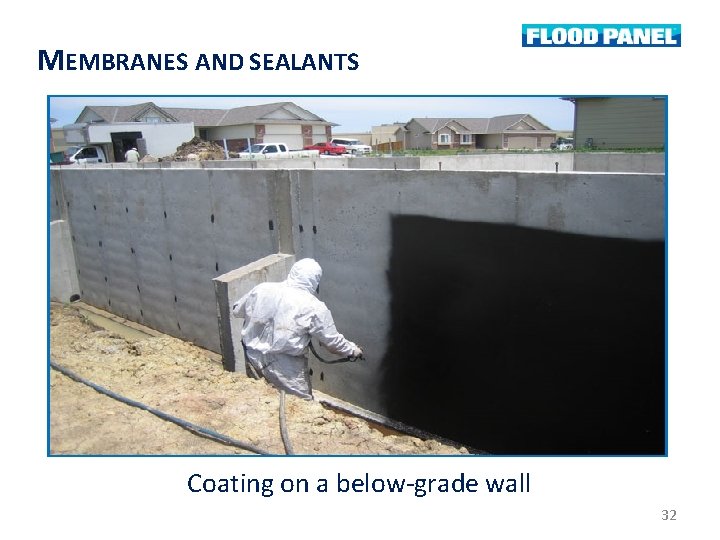
MEMBRANES AND SEALANTS Coating on a below-grade wall 32
SELECTION OF SEALANTS/COATINGS • Duration and depth of flooding • Applicability with existing construction materials • Installation applicability • Interior drainage collection system 33
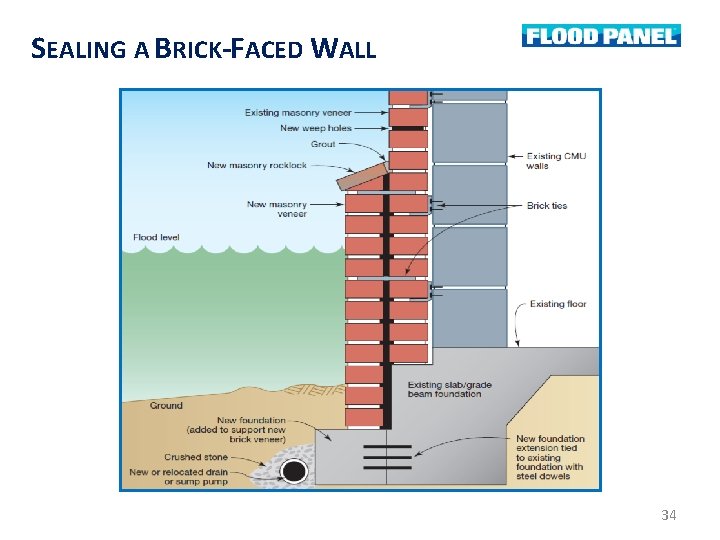
SEALING A BRICK-FACED WALL DFE 34
SELECTION AND DESIGN OF A BRICK VENEER SEALANT SYSTEM • Footing capacity vs. additional loading • Duration and depth of flooding • Applicability with existing construction materials • Installation applicability • Connection to top of wall • Wall reinforcing as required • Interior drainage collection system 35
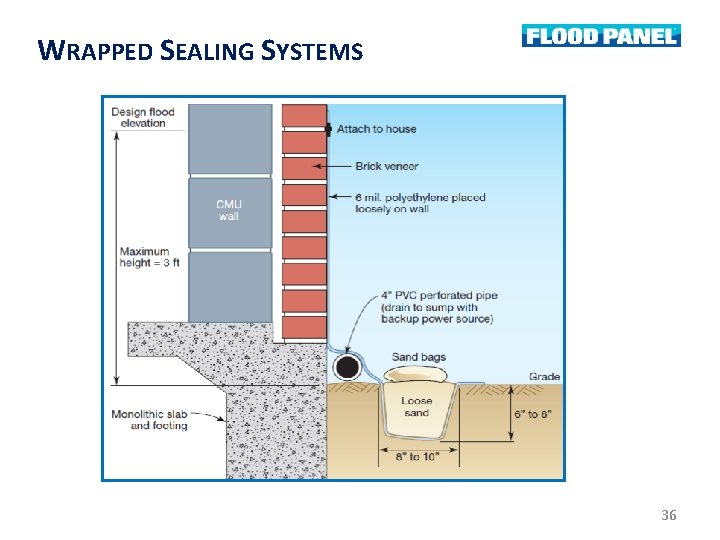
WRAPPED SEALING SYSTEMS 36
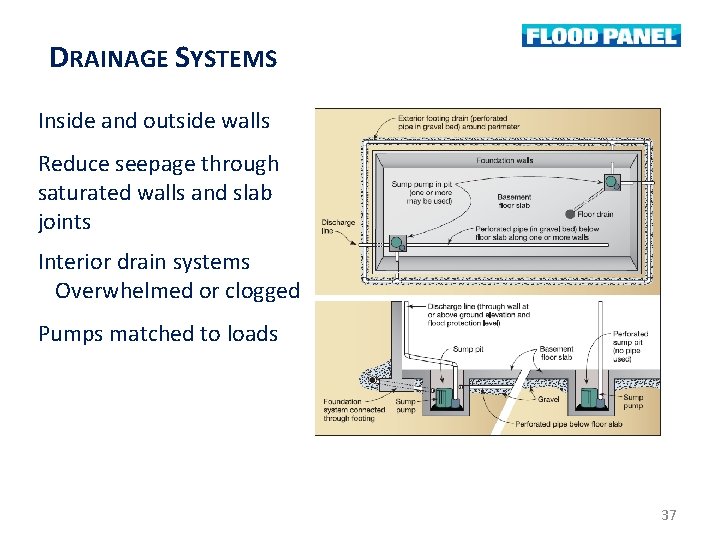
DRAINAGE SYSTEMS Inside and outside walls Reduce seepage through saturated walls and slab joints Interior drain systems Overwhelmed or clogged Pumps matched to loads 37
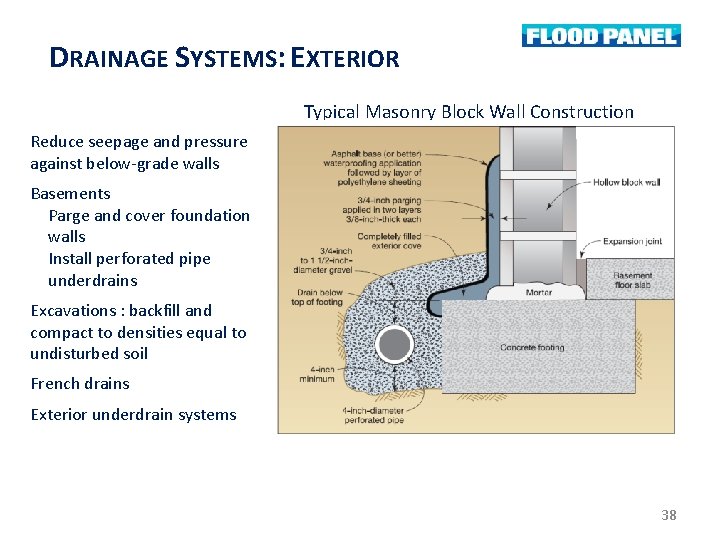
DRAINAGE SYSTEMS: EXTERIOR Typical Masonry Block Wall Construction Reduce seepage and pressure against below-grade walls Basements Parge and cover foundation walls Install perforated pipe underdrains Excavations : backfill and compact to densities equal to undisturbed soil French drains Exterior underdrain systems 38
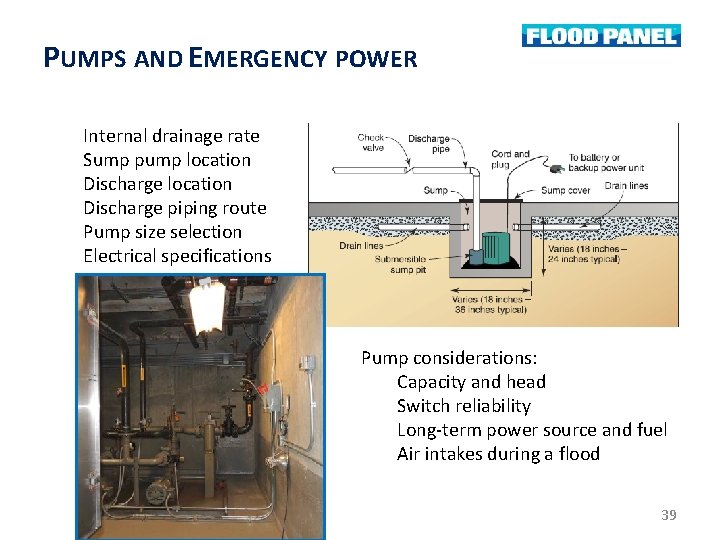
PUMPS AND EMERGENCY POWER Internal drainage rate Sump pump location Discharge piping route Pump size selection Electrical specifications Pump considerations: Capacity and head Switch reliability Long-term power source and fuel Air intakes during a flood 39
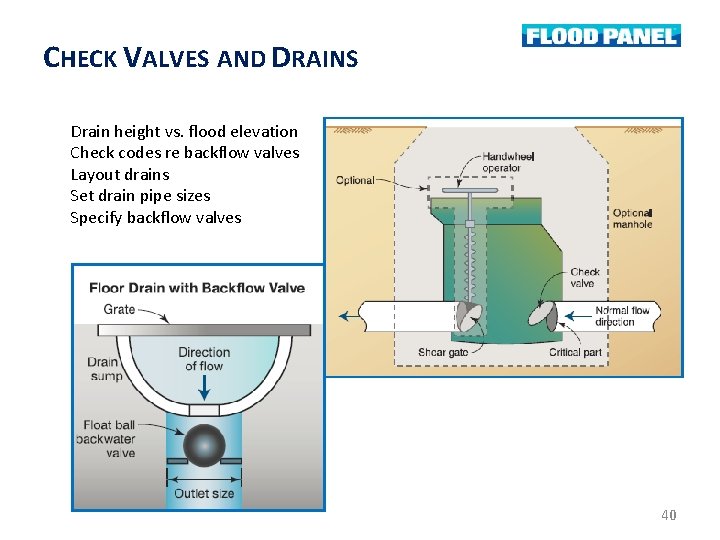
CHECK VALVES AND DRAINS Drain height vs. flood elevation Check codes re backflow valves Layout drains Set drain pipe sizes Specify backflow valves 40
ANCHORS • • Prevent floatation, collapse, shifting Core slab area anchors overcome buoyancy Wall-footing anchors overcome base shear In-ground fuel tanks often buoyant – Anchor at 1. 5 x potential buoyancy 41
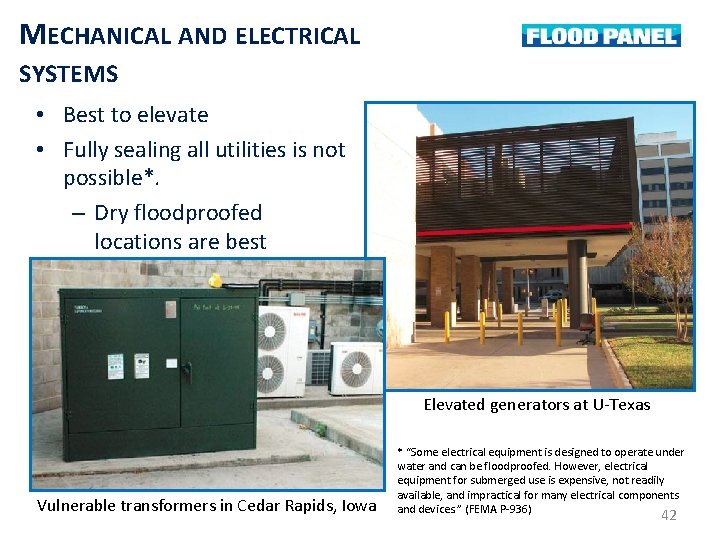
MECHANICAL AND ELECTRICAL SYSTEMS • Best to elevate • Fully sealing all utilities is not possible*. – Dry floodproofed locations are best alternative Elevated generators at U-Texas Vulnerable transformers in Cedar Rapids, Iowa * “Some electrical equipment is designed to operate under water and can be floodproofed. However, electrical equipment for submerged use is expensive, not readily available, and impractical for many electrical components and devices. ” (FEMA P-936) 42
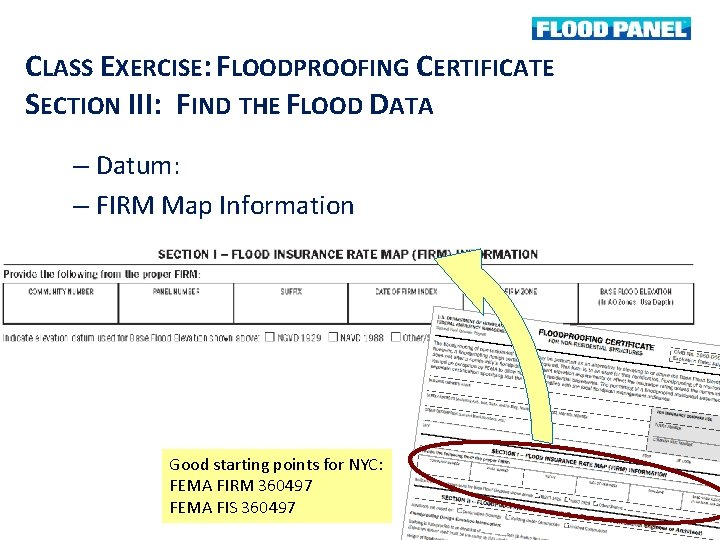
CLASS EXERCISE: FLOODPROOFING CERTIFICATE SECTION III: FIND THE FLOOD DATA – Datum: – FIRM Map Information Good starting points for NYC: FEMA FIRM 360497 FEMA FIS 360497 43
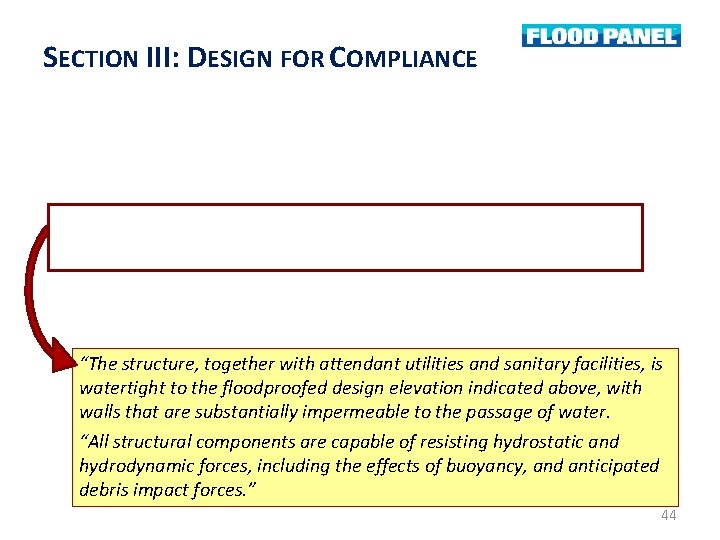
SECTION III: DESIGN FOR COMPLIANCE “The structure, together with attendant utilities and sanitary facilities, is watertight to the floodproofed design elevation indicated above, with walls that are substantially impermeable to the passage of water. “All structural components are capable of resisting hydrostatic and hydrodynamic forces, including the effects of buoyancy, and anticipated debris impact forces. ” 44
EXERCISE Team members 45
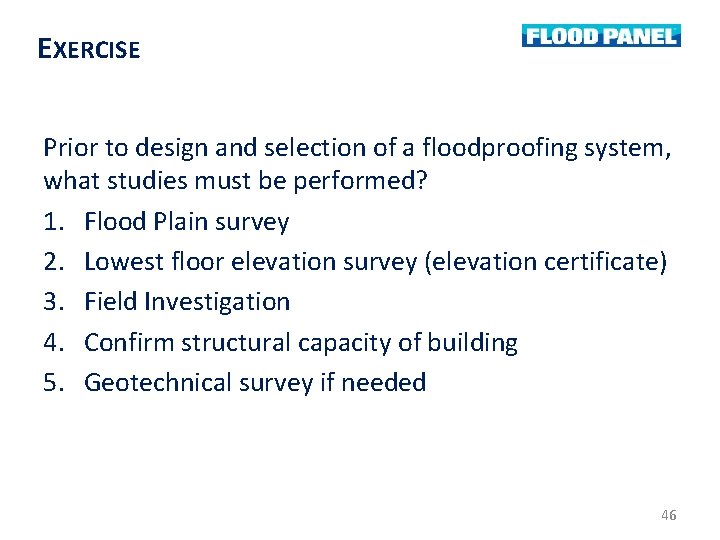
EXERCISE Prior to design and selection of a floodproofing system, what studies must be performed? 1. Flood Plain survey 2. Lowest floor elevation survey (elevation certificate) 3. Field Investigation 4. Confirm structural capacity of building 5. Geotechnical survey if needed 46
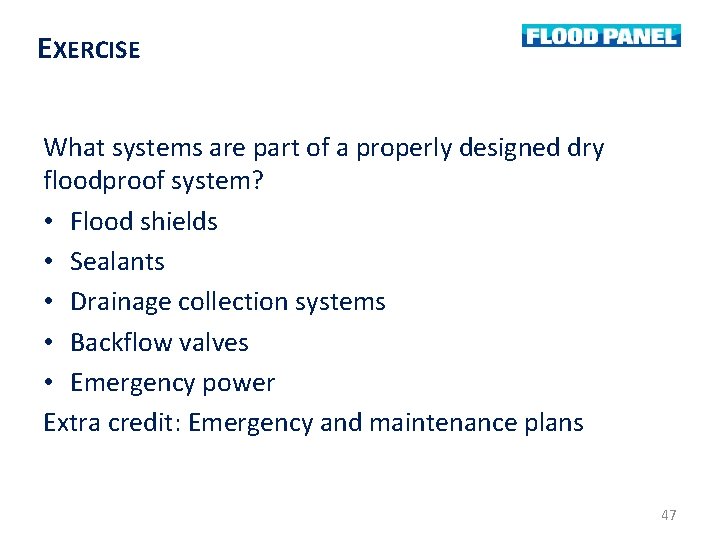
EXERCISE What systems are part of a properly designed dry floodproof system? • Flood shields • Sealants • Drainage collection systems • Backflow valves • Emergency power Extra credit: Emergency and maintenance plans 47
CONTACT &QUESTIONS: Address: Flood Panel 5500 Military Trail #22 -220 Jupiter, FL 33458 Tom Osborne President / Engineering Office: 561 -744 -2727 tom@floodpanel. com Telephone: 1 -888 -744 -2607 (Toll Free) 1 -561 -744 -2727 (Phone) 1 -561 -744 -2755 (Fax) 48
QUESTIONS 49