
FLOATING STUDENT RESIDENCE Evelyne Hornblower 110227953 Yan Claprood
FLOATING STUDENT RESIDENCE Evelyne Hornblower 110227953 Yan Claprood 110142614 April 2005 Energy, Environment and Buildings 301 -377 B
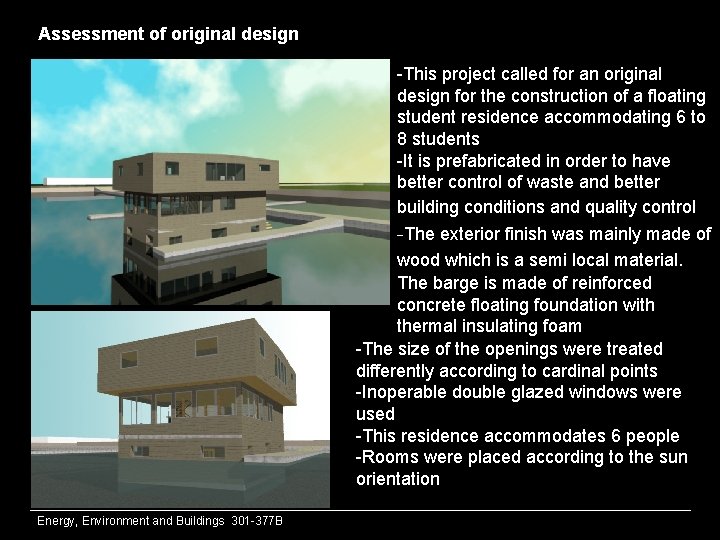
Assessment of original design -This project called for an original design for the construction of a floating student residence accommodating 6 to 8 students -It is prefabricated in order to have better control of waste and better building conditions and quality control -The exterior finish was mainly made of wood which is a semi local material. The barge is made of reinforced concrete floating foundation with thermal insulating foam -The size of the openings were treated differently according to cardinal points -Inoperable double glazed windows were used -This residence accommodates 6 people -Rooms were placed according to the sun orientation Energy, Environment and Buildings 301 -377 B
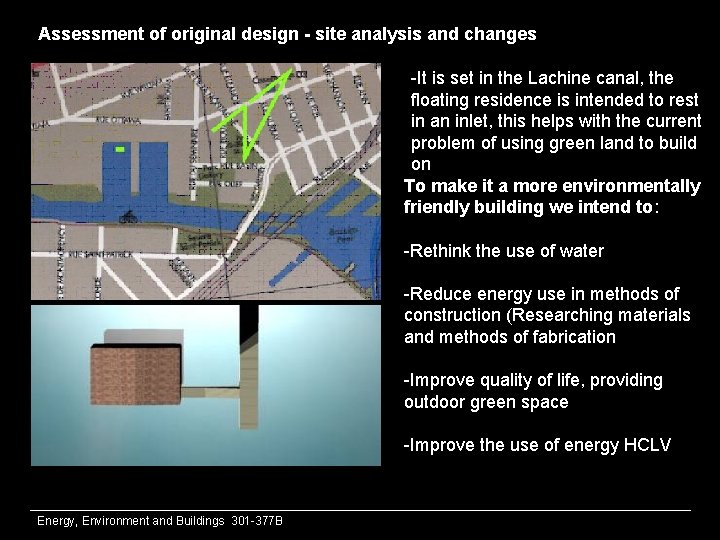
Assessment of original design - site analysis and changes -It is set in the Lachine canal, the floating residence is intended to rest in an inlet, this helps with the current problem of using green land to build on To make it a more environmentally friendly building we intend to: -Rethink the use of water -Reduce energy use in methods of construction (Researching materials and methods of fabrication -Improve quality of life, providing outdoor green space -Improve the use of energy HCLV Energy, Environment and Buildings 301 -377 B
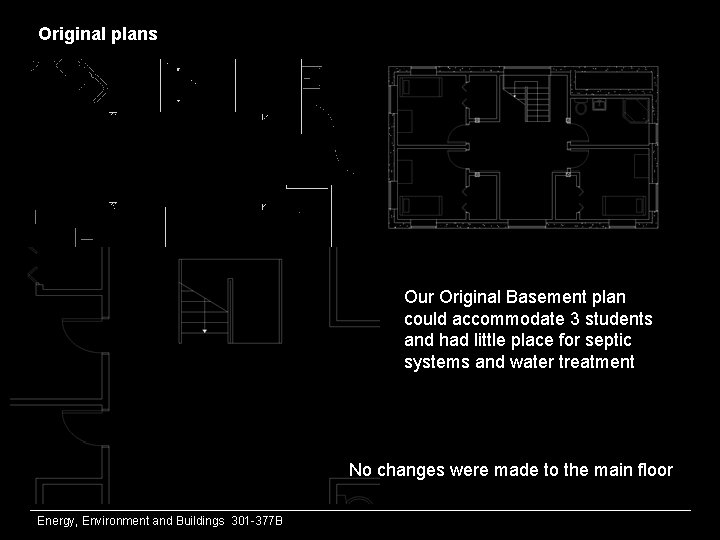
Original plans Our Original Basement plan could accommodate 3 students and had little place for septic systems and water treatment No changes were made to the main floor Energy, Environment and Buildings 301 -377 B
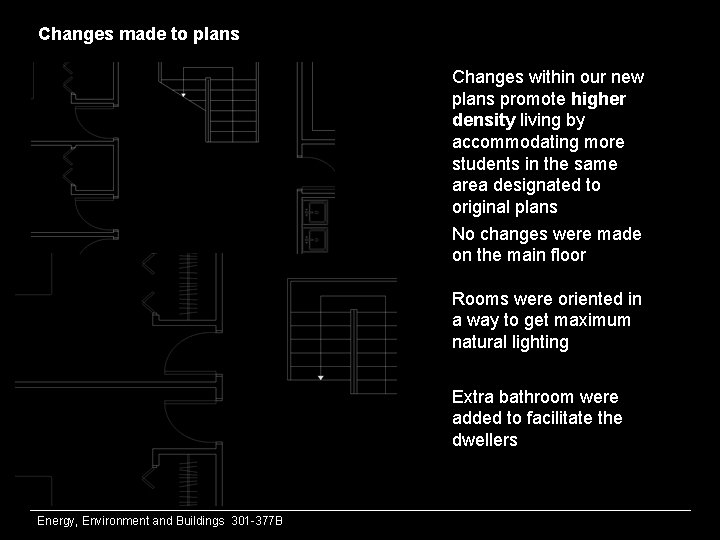
Changes made to plans Changes within our new plans promote higher density living by accommodating more students in the same area designated to original plans No changes were made on the main floor Rooms were oriented in a way to get maximum natural lighting Extra bathroom were added to facilitate the dwellers Energy, Environment and Buildings 301 -377 B
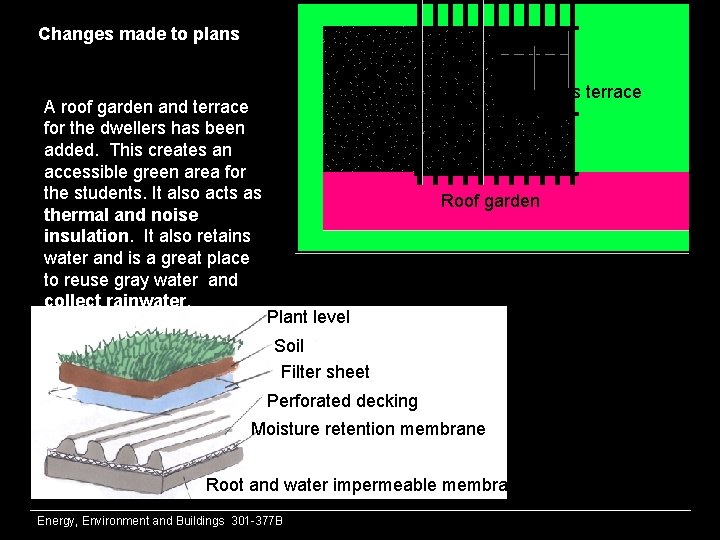
Changes made to plans A roof garden and terrace for the dwellers has been added. This creates an accessible green area for the students. It also acts as thermal and noise insulation. It also retains water and is a great place to reuse gray water and collect rainwater. grass terrace Roof garden Plant level Soil Filter sheet Perforated decking Moisture retention membrane Root and water impermeable membrane Energy, Environment and Buildings 301 -377 B
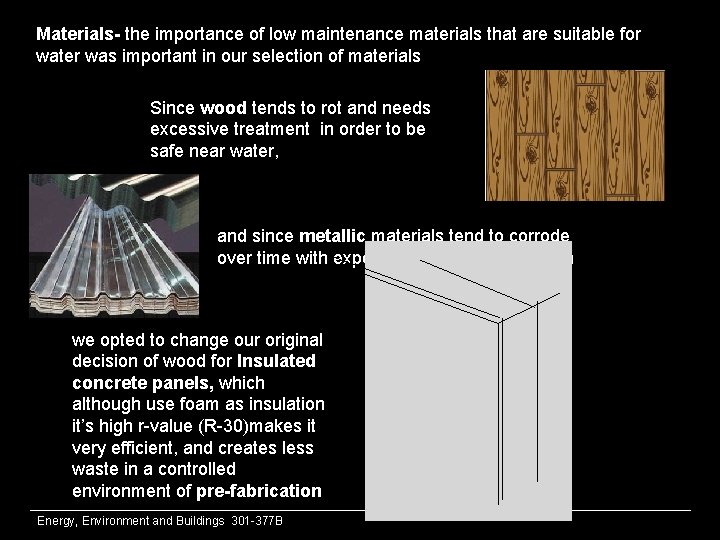
Materials- the importance of low maintenance materials that are suitable for water was important in our selection of materials Since wood tends to rot and needs excessive treatment in order to be safe near water, and since metallic materials tend to corrode over time with exposure to water and oxygen we opted to change our original decision of wood for Insulated concrete panels, which although use foam as insulation it’s high r-value (R-30)makes it very efficient, and creates less waste in a controlled environment of pre-fabrication Energy, Environment and Buildings 301 -377 B
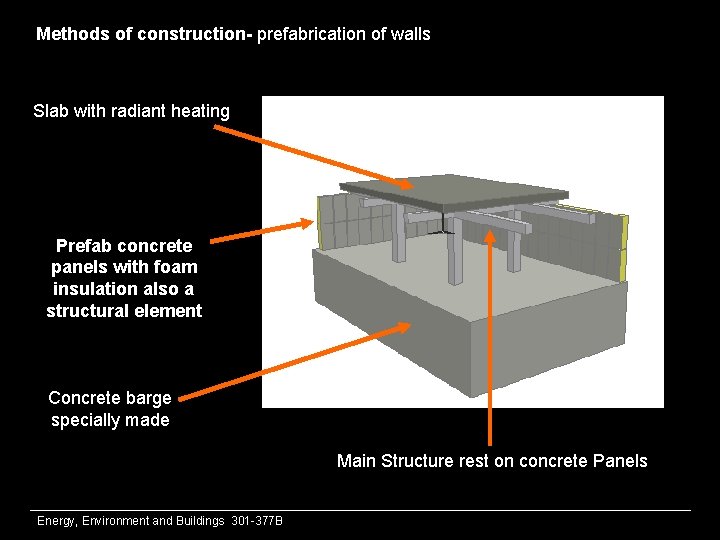
Methods of construction- prefabrication of walls Slab with radiant heating Prefab concrete panels with foam insulation also a structural element Concrete barge specially made Main Structure rest on concrete Panels Energy, Environment and Buildings 301 -377 B
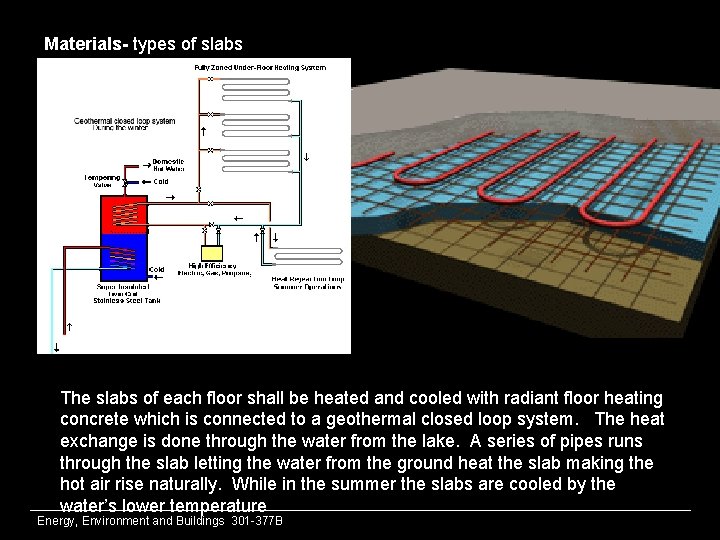
Materials- types of slabs The slabs of each floor shall be heated and cooled with radiant floor heating concrete which is connected to a geothermal closed loop system. The heat exchange is done through the water from the lake. A series of pipes runs through the slab letting the water from the ground heat the slab making the hot air rise naturally. While in the summer the slabs are cooled by the water’s lower temperature Energy, Environment and Buildings 301 -377 B
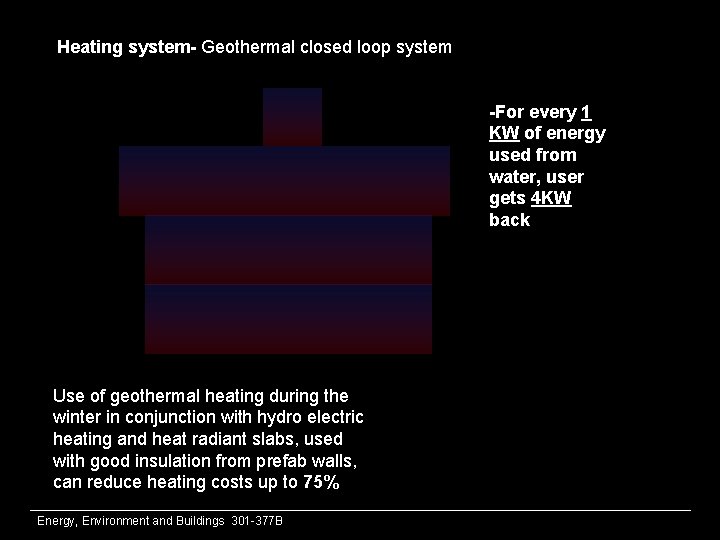
Heating system- Geothermal closed loop system -For every 1 KW of energy used from water, user gets 4 KW back Use of geothermal heating during the winter in conjunction with hydro electric heating and heat radiant slabs, used with good insulation from prefab walls, can reduce heating costs up to 75% Energy, Environment and Buildings 301 -377 B
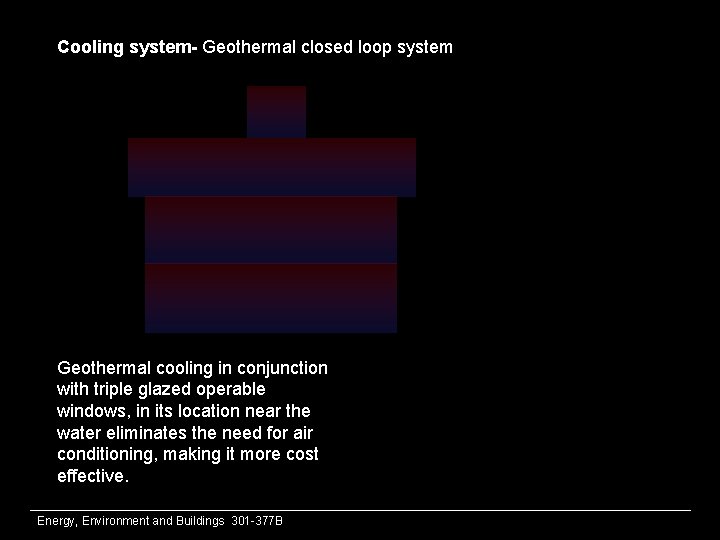
Cooling system- Geothermal closed loop system Geothermal cooling in conjunction with triple glazed operable windows, in its location near the water eliminates the need for air conditioning, making it more cost effective. Energy, Environment and Buildings 301 -377 B
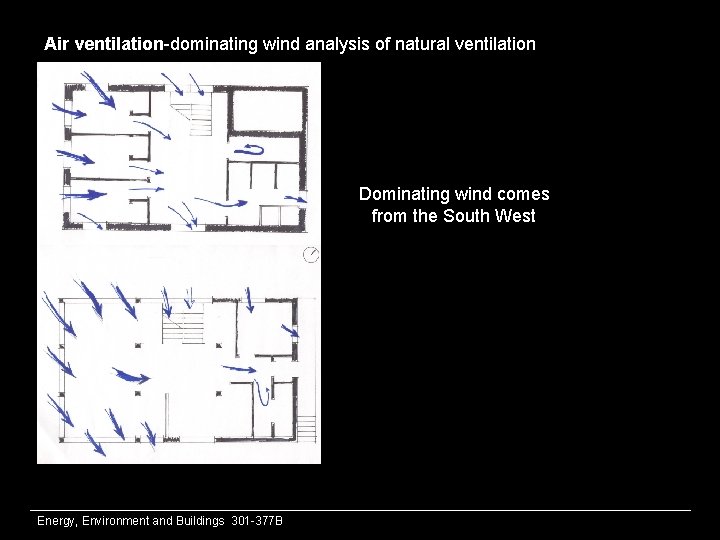
Air ventilation-dominating wind analysis of natural ventilation Dominating wind comes from the South West Energy, Environment and Buildings 301 -377 B
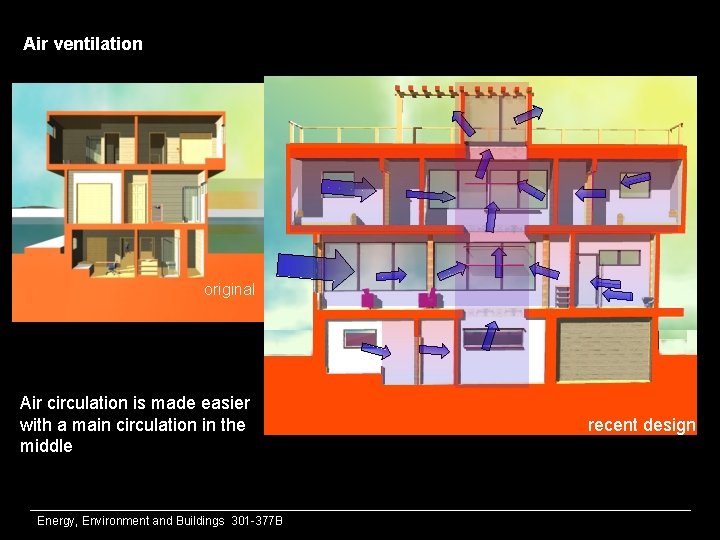
Air ventilation original Air circulation is made easier with a main circulation in the middle Energy, Environment and Buildings 301 -377 B recent design
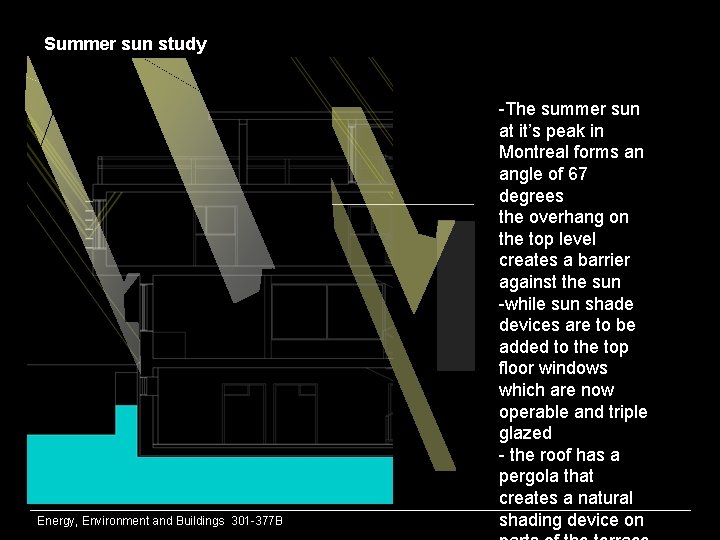
Summer sun study Energy, Environment and Buildings 301 -377 B -The summer sun at it’s peak in Montreal forms an angle of 67 degrees the overhang on the top level creates a barrier against the sun -while sun shade devices are to be added to the top floor windows which are now operable and triple glazed - the roof has a pergola that creates a natural shading device on
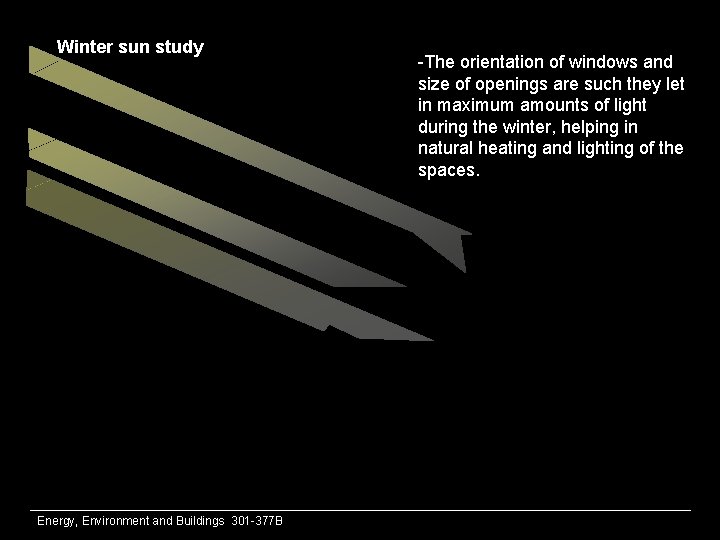
Winter sun study Energy, Environment and Buildings 301 -377 B -The orientation of windows and size of openings are such they let in maximum amounts of light during the winter, helping in natural heating and lighting of the spaces.
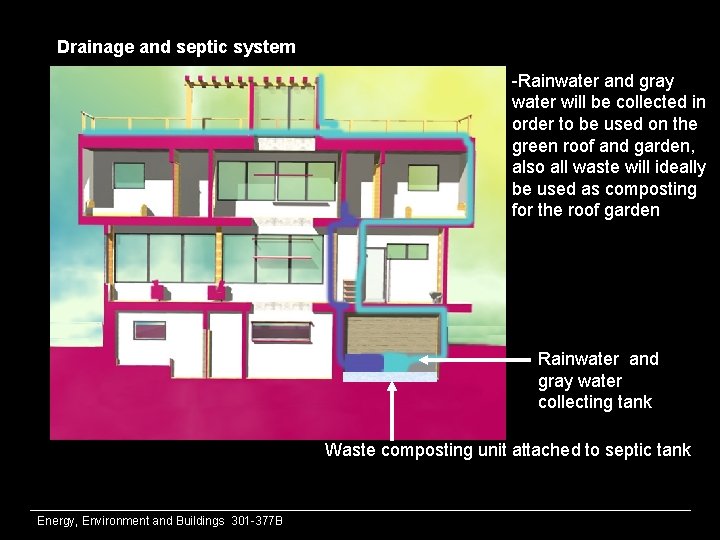
Drainage and septic system -Rainwater and gray water will be collected in order to be used on the green roof and garden, also all waste will ideally be used as composting for the roof garden Rainwater and gray water collecting tank Waste composting unit attached to septic tank Energy, Environment and Buildings 301 -377 B
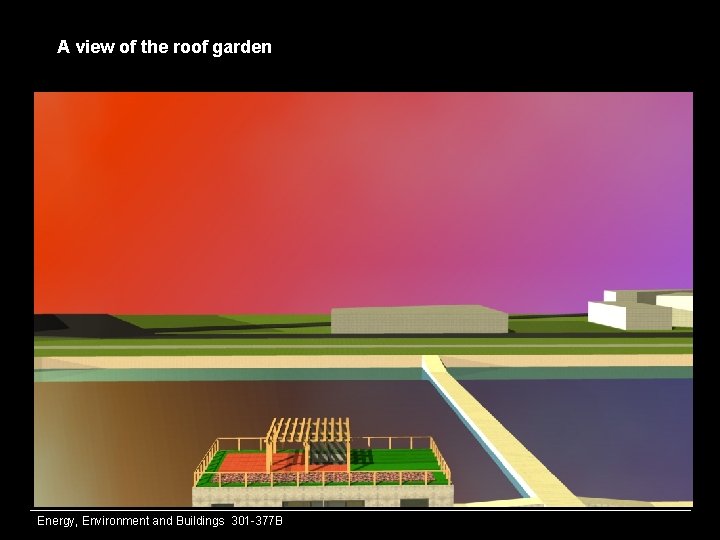
A view of the roof garden Energy, Environment and Buildings 301 -377 B
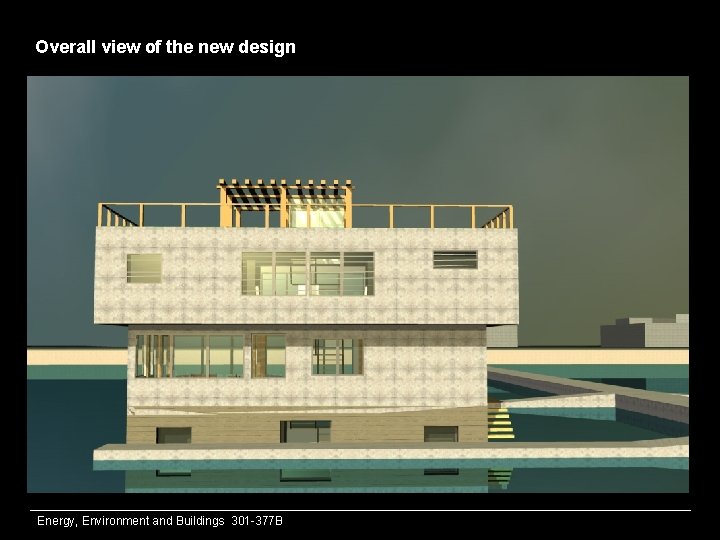
Overall view of the new design Energy, Environment and Buildings 301 -377 B
- Slides: 18