
Floating Offshore Wind Turbine Aerodynamics and Optimization Opportunities
Floating Offshore Wind Turbine Aerodynamics and Optimization Opportunities Evan Gaertner University of Massachusetts, Amherst egaertne@umass. edu IGERT Seminar Series October 1 st, 2015
Agenda § Floating Wind Turbine Aerodynamics § Dynamics Stall § Design Optimization 2

Floating Offshore Wind Turbines Advantages: § Access to deeper water • More useable area • Further from onshore lines of site • Reduce impact to important near shore habitats § Simplified installation • Tow-out installation • Reduce environmental impacts from pile driving 3
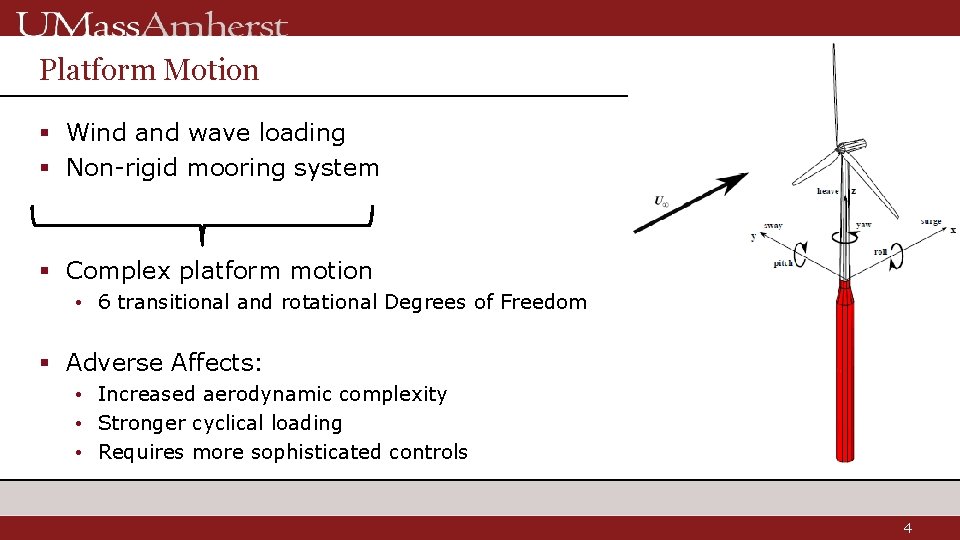
Platform Motion § Wind and wave loading § Non-rigid mooring system § Complex platform motion • 6 transitional and rotational Degrees of Freedom § Adverse Affects: • Increased aerodynamic complexity • Stronger cyclical loading • Requires more sophisticated controls 4
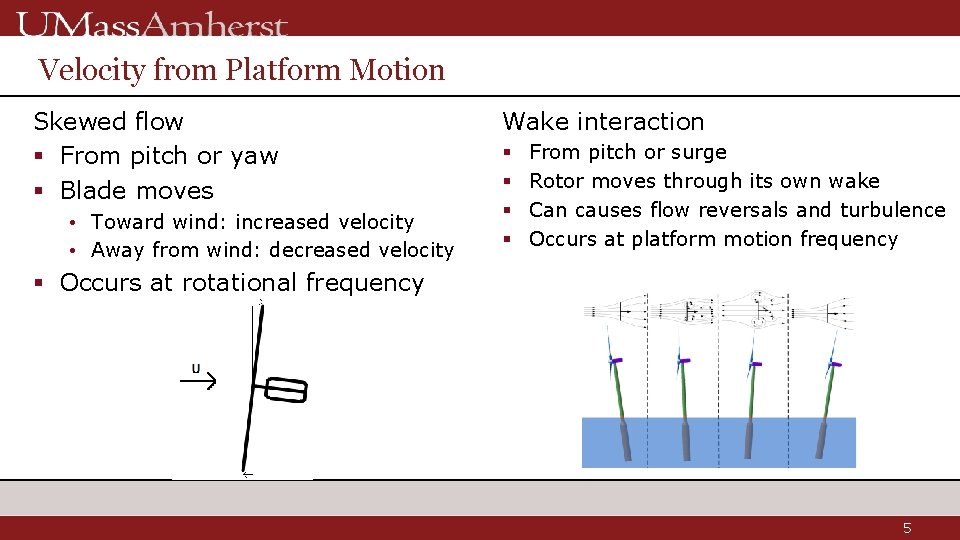
Velocity from Platform Motion Skewed flow § From pitch or yaw § Blade moves • Toward wind: increased velocity • Away from wind: decreased velocity Wake interaction § § From pitch or surge Rotor moves through its own wake Can causes flow reversals and turbulence Occurs at platform motion frequency § Occurs at rotational frequency 5
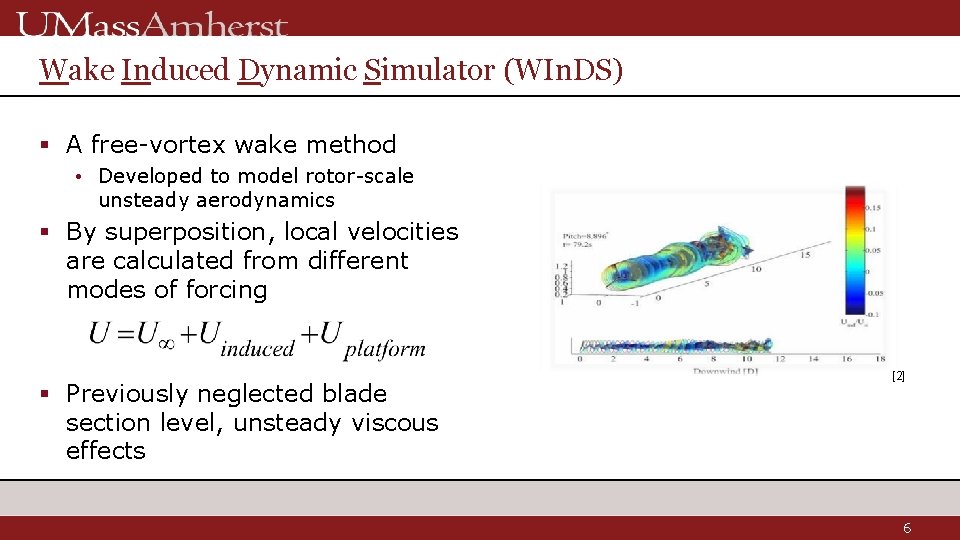
Wake Induced Dynamic Simulator (WIn. DS) § A free-vortex wake method • Developed to model rotor-scale unsteady aerodynamics § By superposition, local velocities are calculated from different modes of forcing § Previously neglected blade section level, unsteady viscous effects [2] 6
Blade Scale Unsteadiness
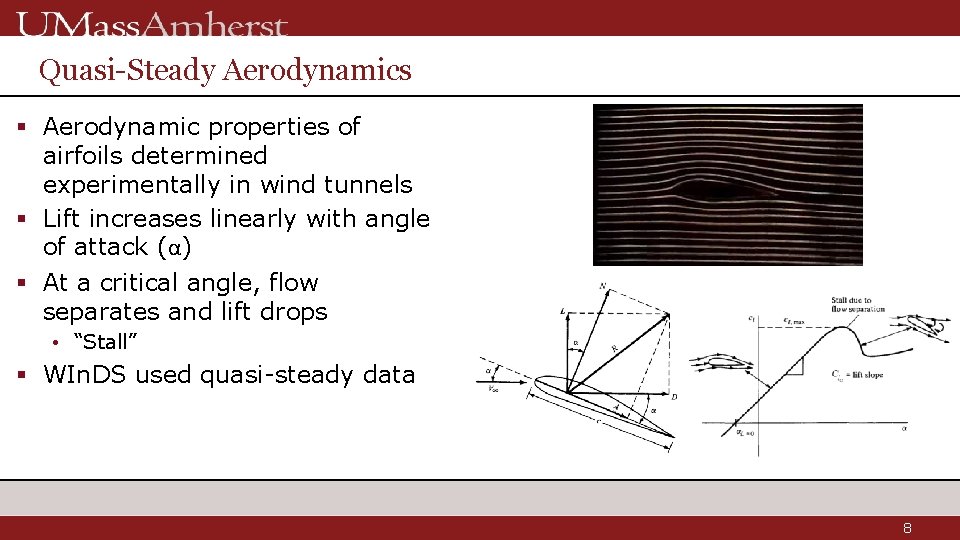
Quasi-Steady Aerodynamics § Aerodynamic properties of airfoils determined experimentally in wind tunnels § Lift increases linearly with angle of attack (α) § At a critical angle, flow separates and lift drops • “Stall” § WIn. DS used quasi-steady data 8
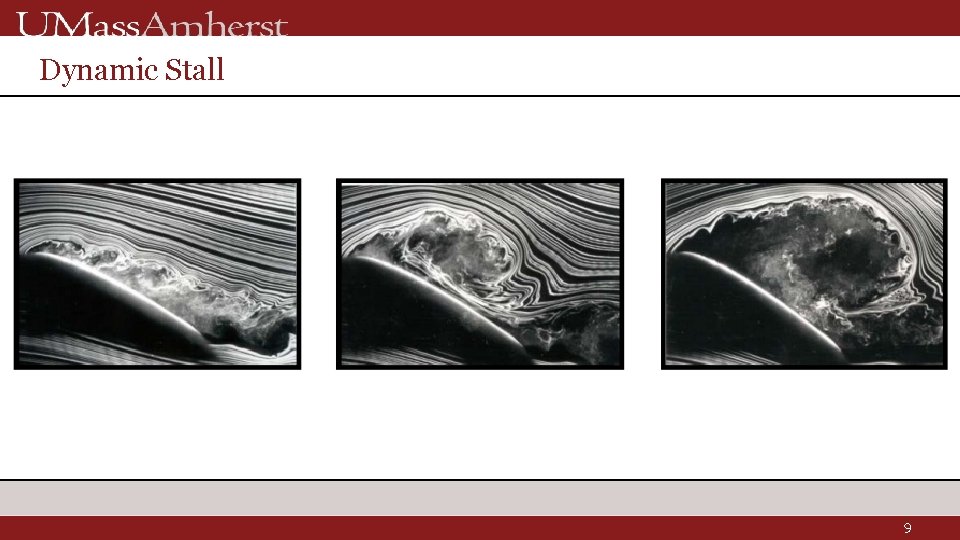
Dynamic Stall 9

Dynamic Stall Flow Morphology Stage 2 -3 Lift Coef, CL Angle of Attack, α (°) Stage 3 -4 Stage 5 Moment Coef, CM Stage 2 Drag Coef, CD Stage 1 Angle of Attack, α (°) [3] 10
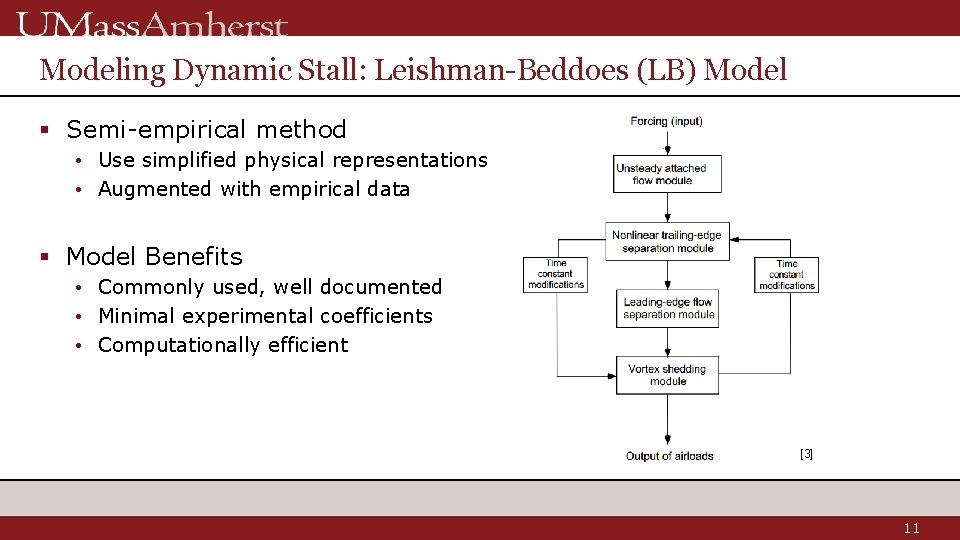
Modeling Dynamic Stall: Leishman-Beddoes (LB) Model § Semi-empirical method • Use simplified physical representations • Augmented with empirical data § Model Benefits • Commonly used, well documented • Minimal experimental coefficients • Computationally efficient [3] 11
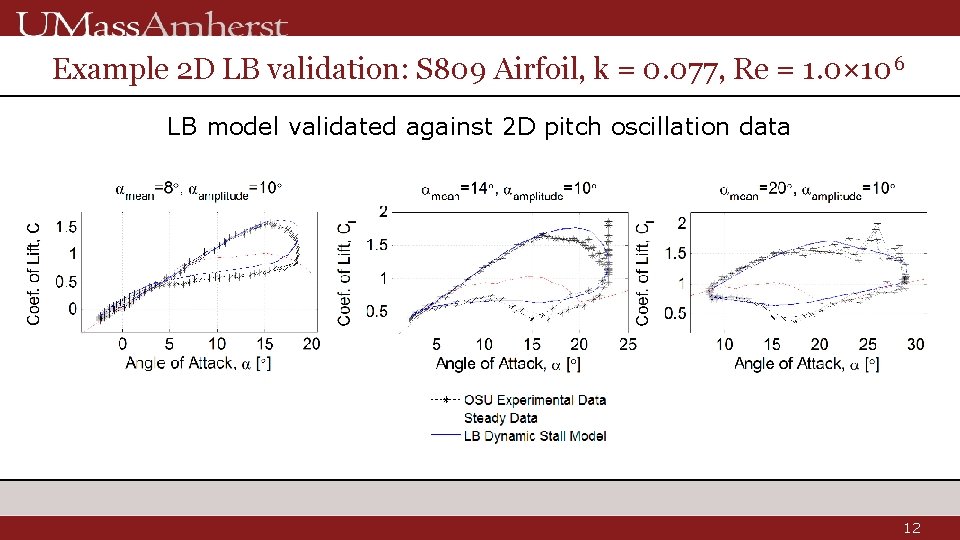
Example 2 D LB validation: S 809 Airfoil, k = 0. 077, Re = 1. 0× 106 LB model validated against 2 D pitch oscillation data 12
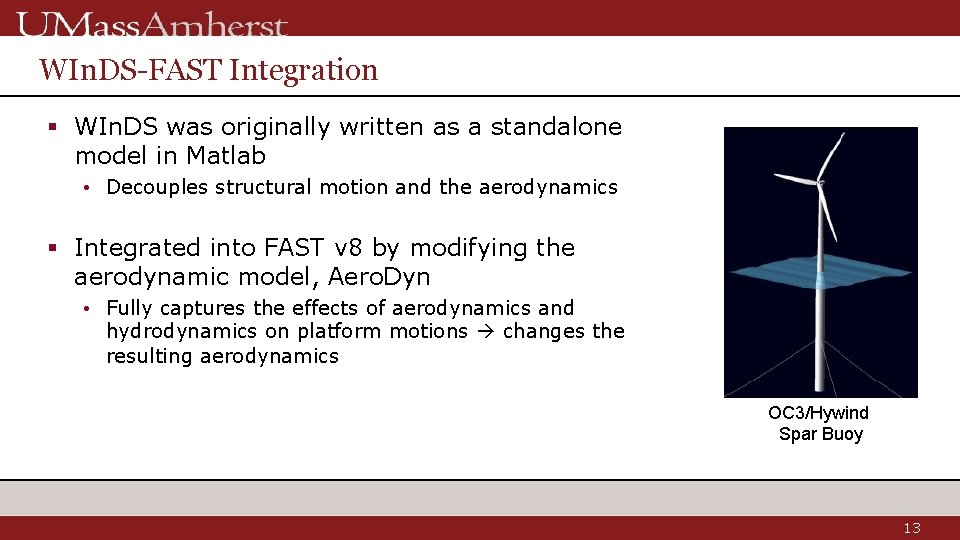
WIn. DS-FAST Integration § WIn. DS was originally written as a standalone model in Matlab • Decouples structural motion and the aerodynamics § Integrated into FAST v 8 by modifying the aerodynamic model, Aero. Dyn • Fully captures the effects of aerodynamics and hydrodynamics on platform motions changes the resulting aerodynamics OC 3/Hywind Spar Buoy 13

Design Optimization
Rotor Design Process § Start with known optimal blade shape § Modify for practical structural and manufacturing concerns Problem § Uses ideal conditions for aerodynamic analysis: uniform, steady, non-skewed flow Typical optimization projects in the literation: § More sophisticated models § More design variables 15
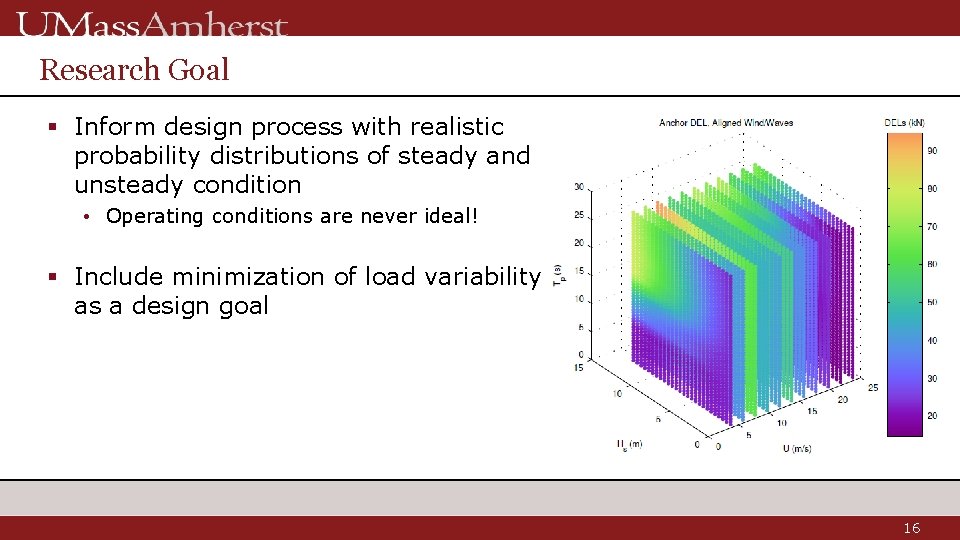
Research Goal § Inform design process with realistic probability distributions of steady and unsteady condition • Operating conditions are never ideal! § Include minimization of load variability as a design goal 16

Integrated Design of Offshore Wind Turbines Turbine Design Platform Design Controls Process: § Sequential design of subsystems Problem: § Optimized subsystems § Sub-optimal global system Solution: § Multi-objective, multidisciplinary, iterative optimization 17
Interdisciplinary Opportunities Additional design goals could include: § Lower tip speed ratios • Reduce risk of bird strikes § Larger turbine rotors • Allow smaller wind farms with fewer seafloor disturbances § Optimization for deeper waters farther from shore • Reduce competition for use or view-shed concerns Open to suggestions for other interdisciplinary objects! 18

Thank You! Questions? Evan Gaertner egaertne@umass. edu This work was supported in part by the NSF-sponsored IGERT: Offshore Wind Energy Engineering, Environmental Science, and Policy and by the Edwin V. Sisson Doctoral Fellowship

Supplemental Slides
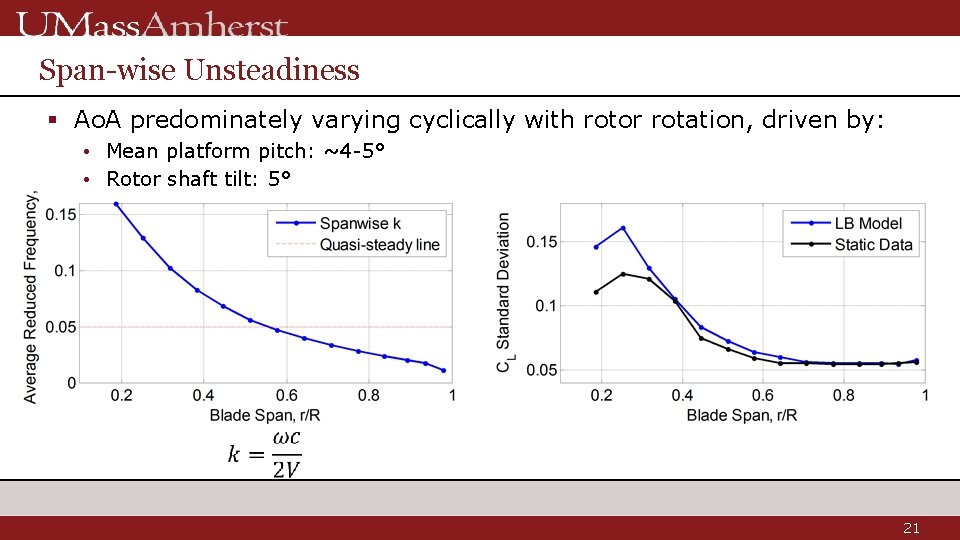
Span-wise Unsteadiness § Ao. A predominately varying cyclically with rotor rotation, driven by: • Mean platform pitch: ~4 -5° • Rotor shaft tilt: 5° 21
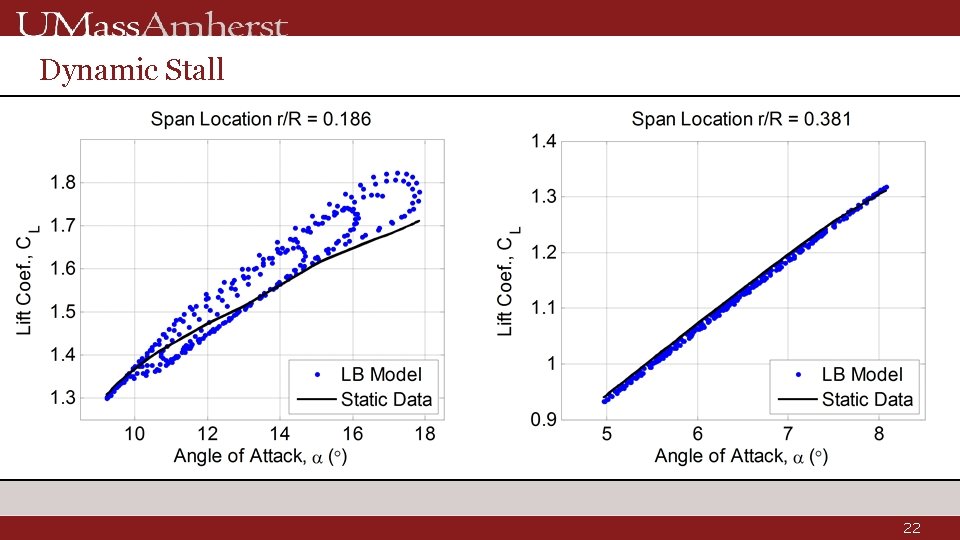
Dynamic Stall 22
- Slides: 22