
FlipFlops Basic concepts FlipFlops n A flipflop is
Flip-Flops Basic concepts
Flip-Flops n A flip-flop is a bi-stable device: a circuit having 2 stable conditions (0 or 1) n 3 classes of flip-flops n n n 1/50 latches: outputs respond immediately while enabled (no timing control) pulse-triggered flip-flops: outputs response to the triggering pulse edge-triggered flip-flops: outputs responses to the control input edge 2
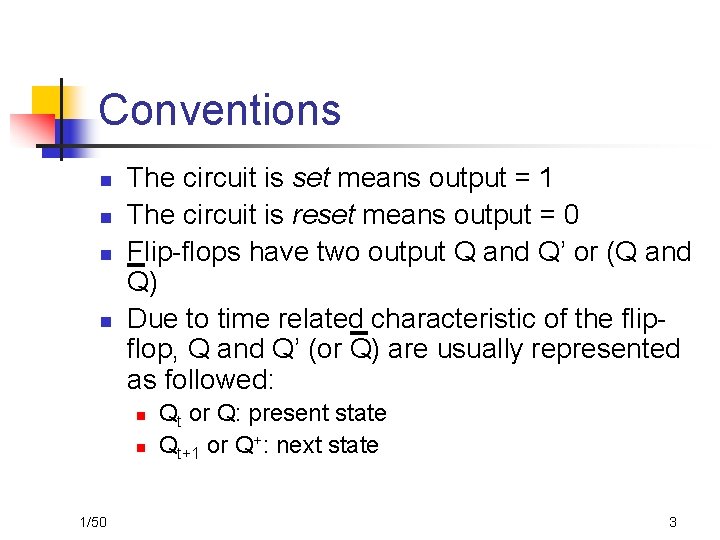
Conventions n n The circuit is set means output = 1 The circuit is reset means output = 0 Flip-flops have two output Q and Q’ or (Q and Q) Due to time related characteristic of the flipflop, Q and Q’ (or Q) are usually represented as followed: n n 1/50 Qt or Q: present state Qt+1 or Q+: next state 3

4 Types of Flip-Flops SR flip-flop JK flip-flop D flip-flop T flip-flop 1/50 4
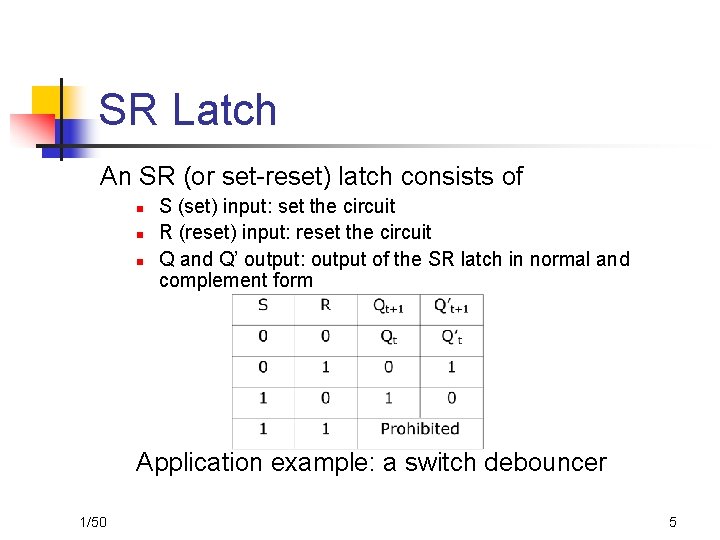
SR Latch An SR (or set-reset) latch consists of n n n S (set) input: set the circuit R (reset) input: reset the circuit Q and Q’ output: output of the SR latch in normal and complement form Application example: a switch debouncer 1/50 5

SR latch 1/50 6
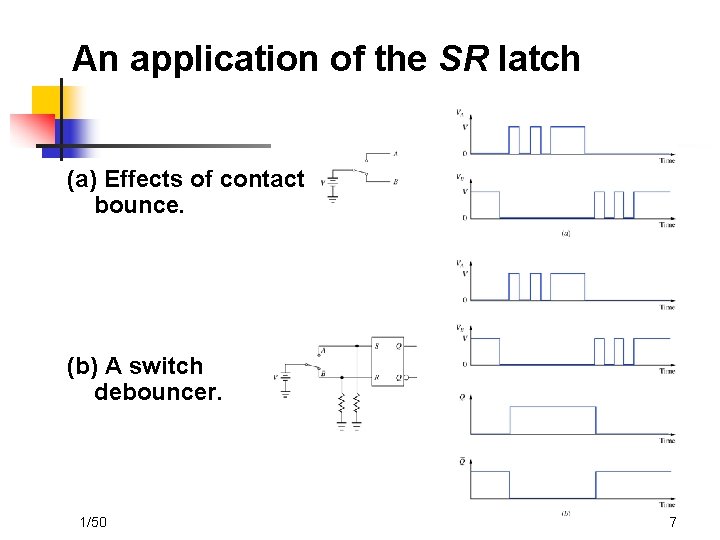
An application of the SR latch (a) Effects of contact bounce. (b) A switch debouncer. 1/50 7
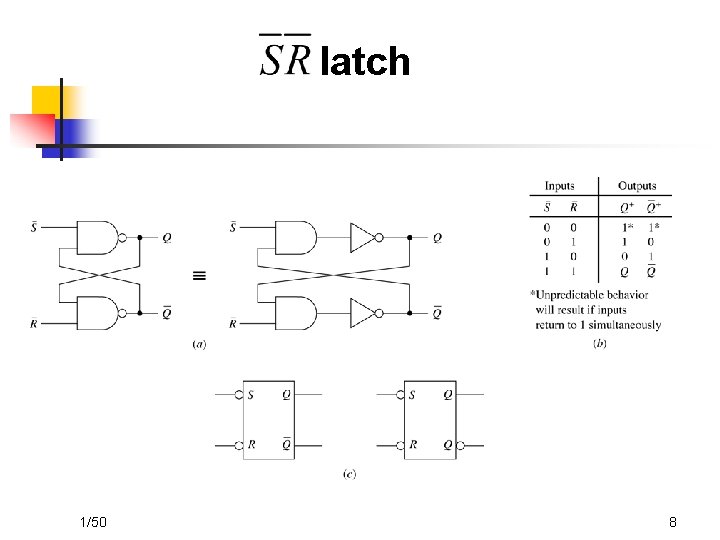
latch 1/50 8
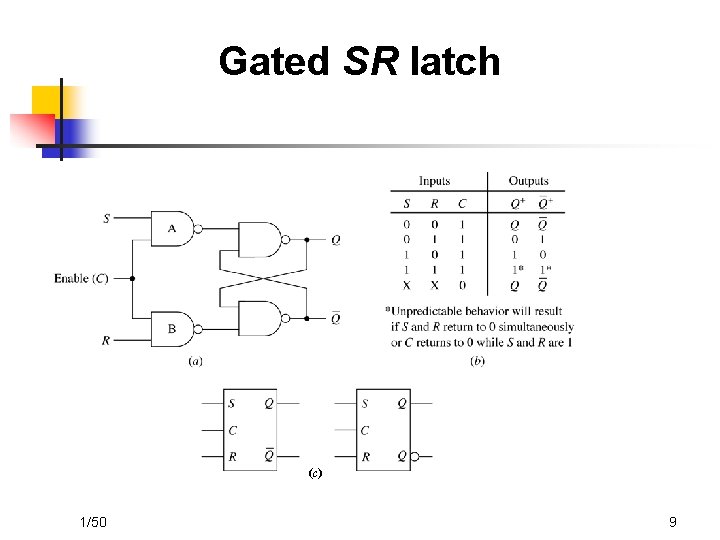
Gated SR latch (c) 1/50 9
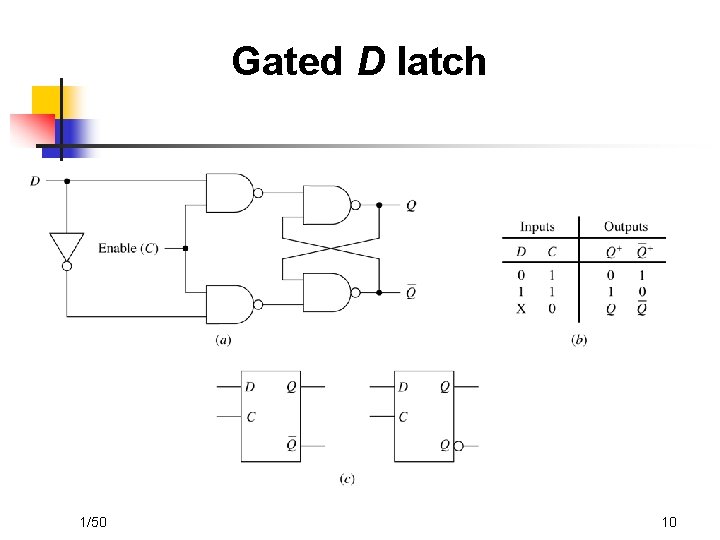
Gated D latch 1/50 10
Timing Consideration When using a real flip-flop, the following information is needed to be considered: n n n 1/50 propagation delay (tp. LH, tp. HL) - time needed for an input signal to produce an output signal minimum pulse width (tw(min)) - minimum amount of time a signal must be applied setup and hold time (tsu, th) - minimum time the input signal must be held fixed before and after the latching action 11
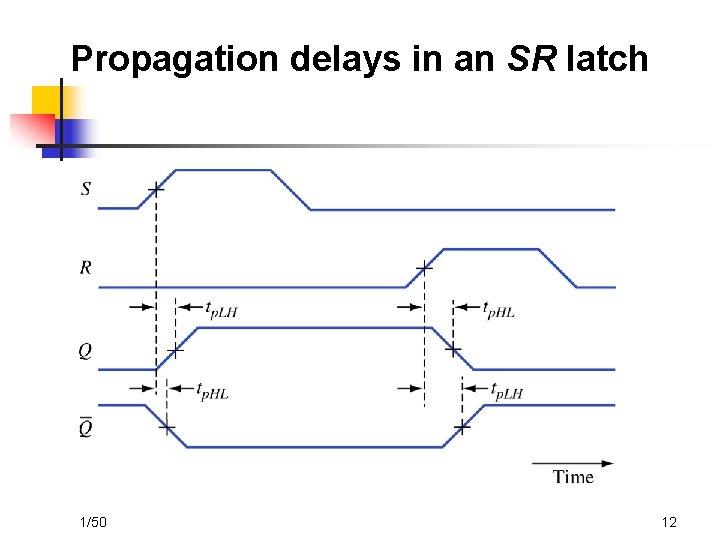
Propagation delays in an SR latch 1/50 12
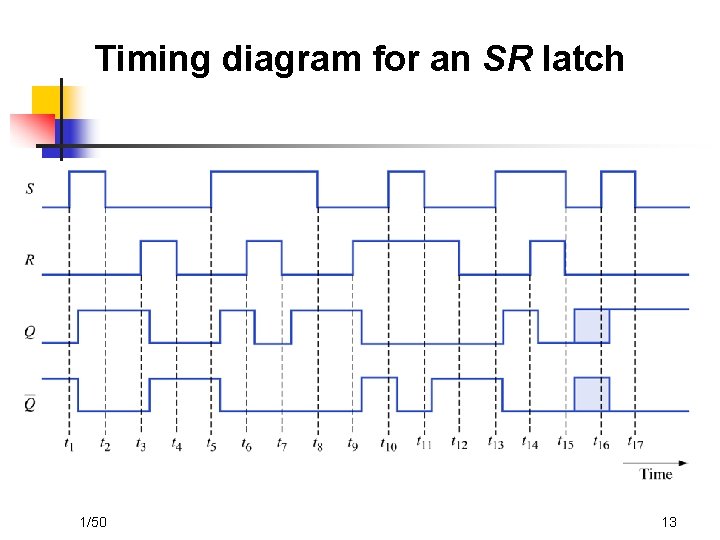
Timing diagram for an SR latch 1/50 13
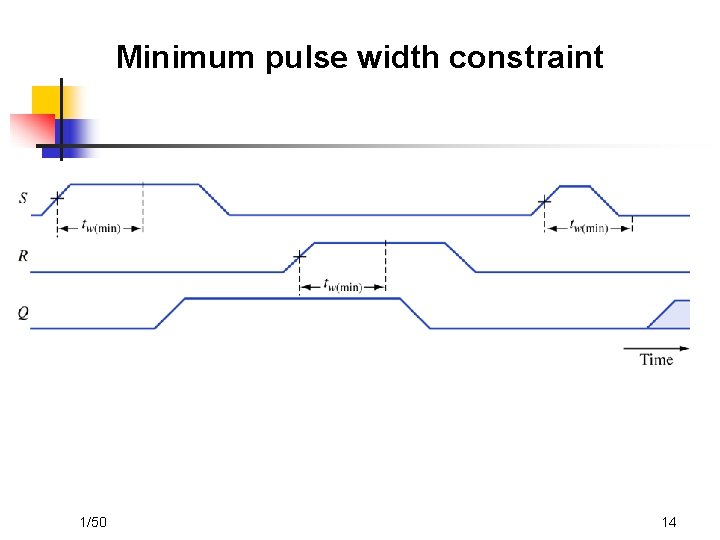
Minimum pulse width constraint 1/50 14
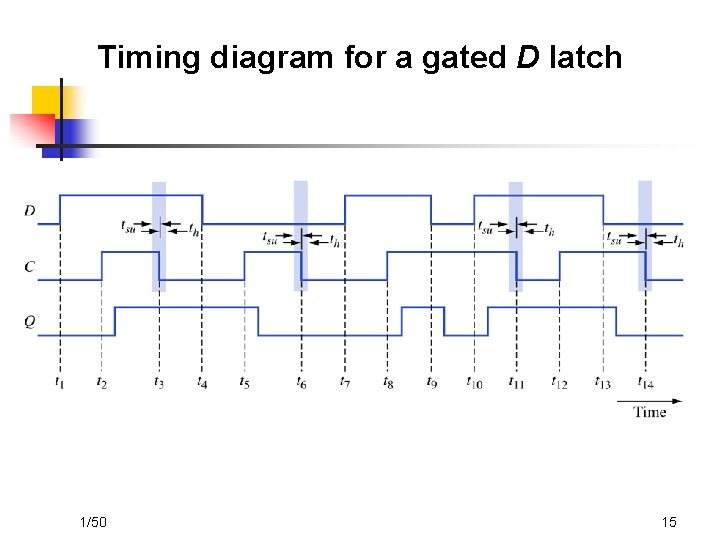
Timing diagram for a gated D latch 1/50 15
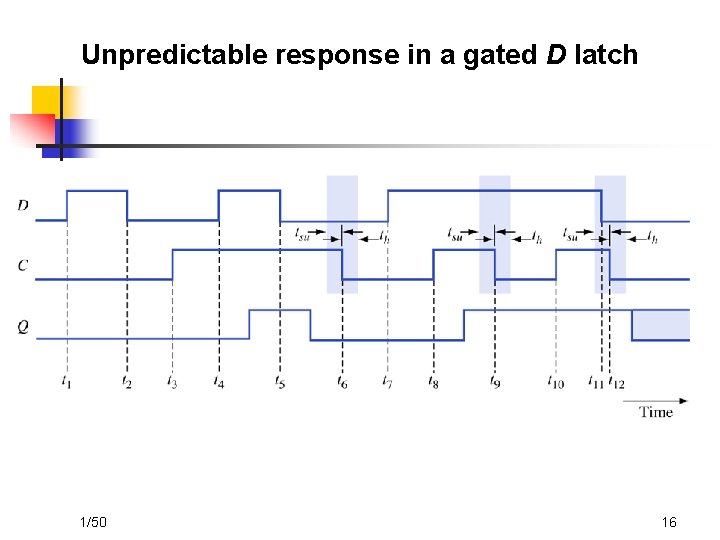
Unpredictable response in a gated D latch 1/50 16
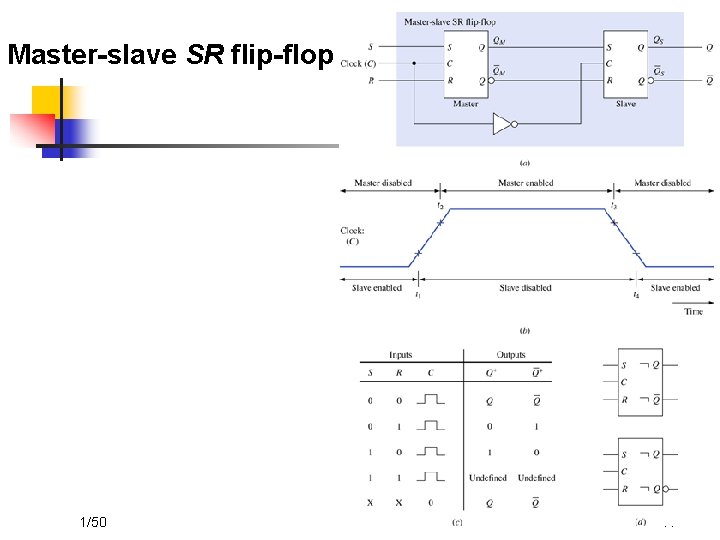
Master-slave SR flip-flop 1/50 17

Timing diagram for a master-slave SR flip-flop 1/50 18
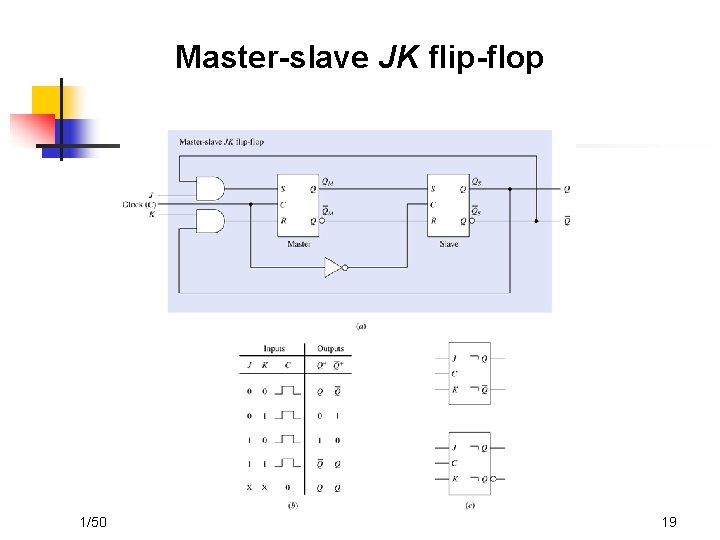
Master-slave JK flip-flop 1/50 19
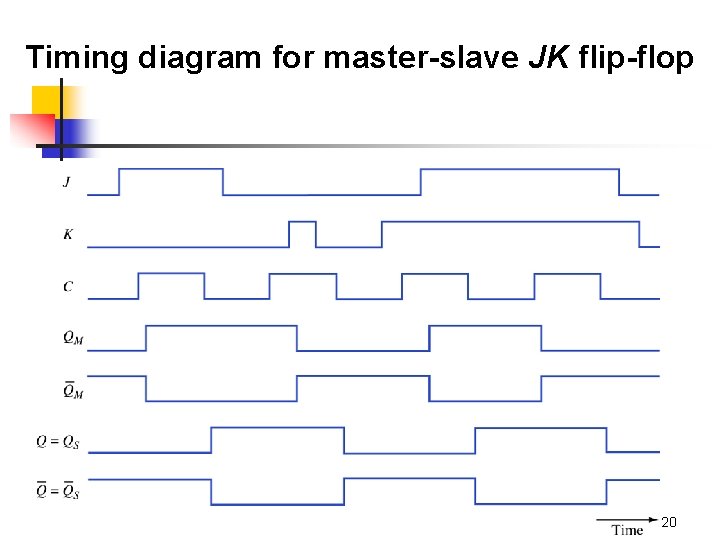
Timing diagram for master-slave JK flip-flop 1/50 20
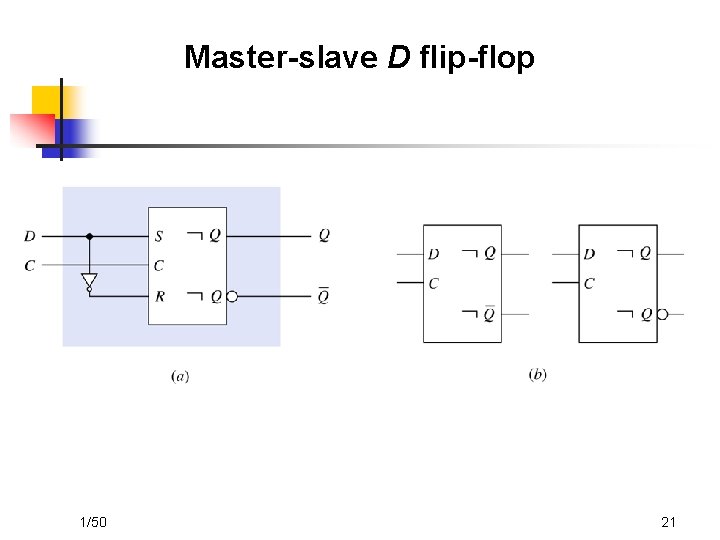
Master-slave D flip-flop 1/50 21
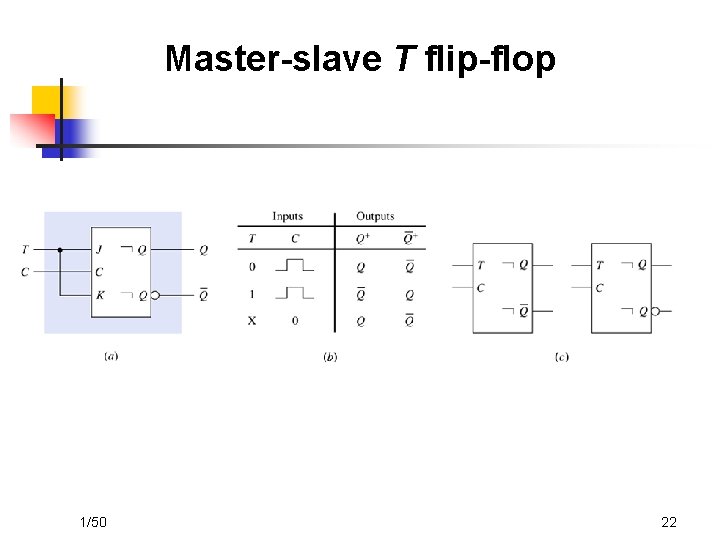
Master-slave T flip-flop 1/50 22
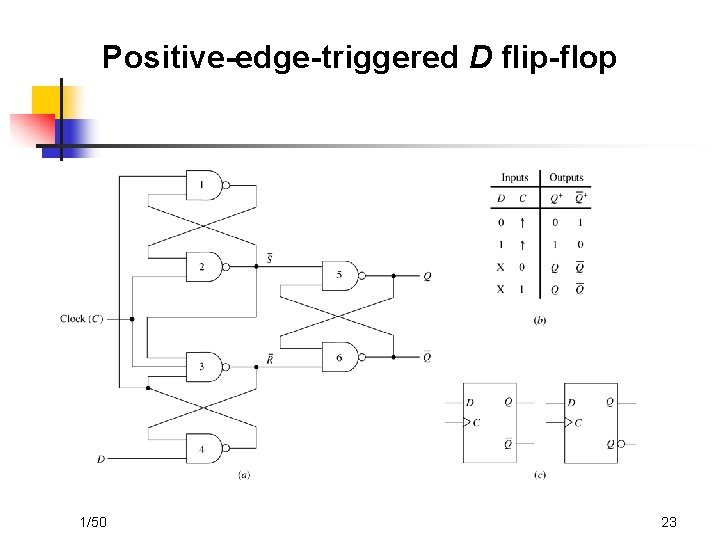
Positive-edge-triggered D flip-flop 1/50 23
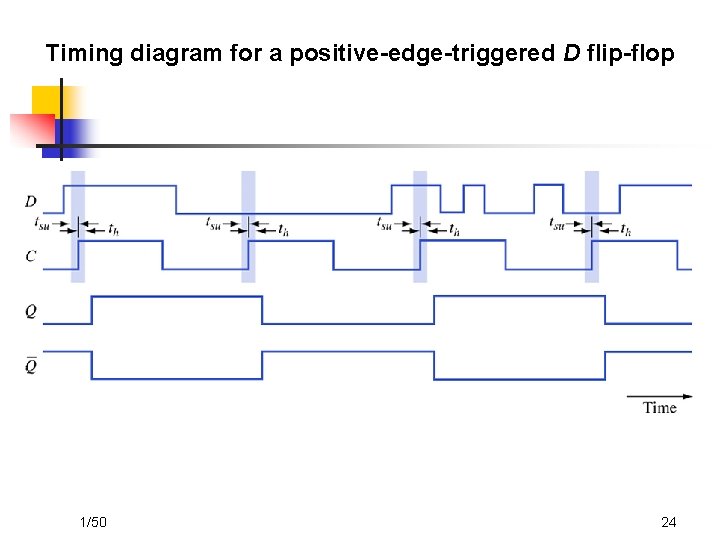
Timing diagram for a positive-edge-triggered D flip-flop 1/50 24
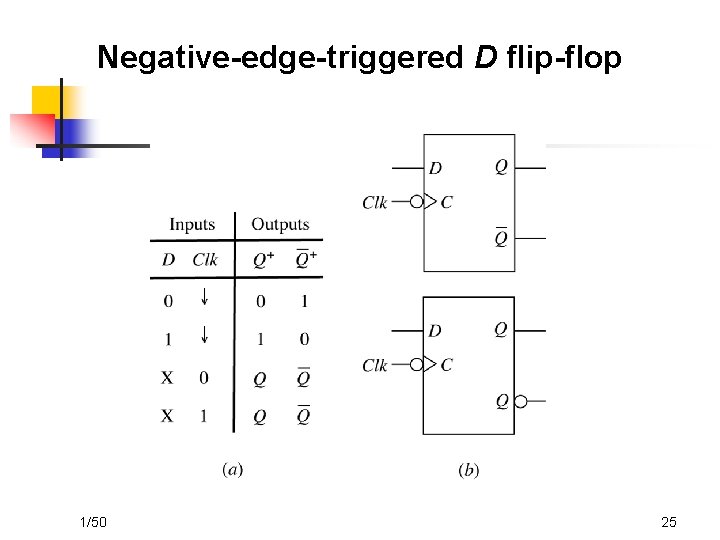
Negative-edge-triggered D flip-flop 1/50 25
Asynchronous Inputs n do not require the presence of a control signal n n n 1/50 preset (PR) - set the flip-flop clear (CLR) - reset the flip-flop useful to bring a flip-flop to a desired initial state 26
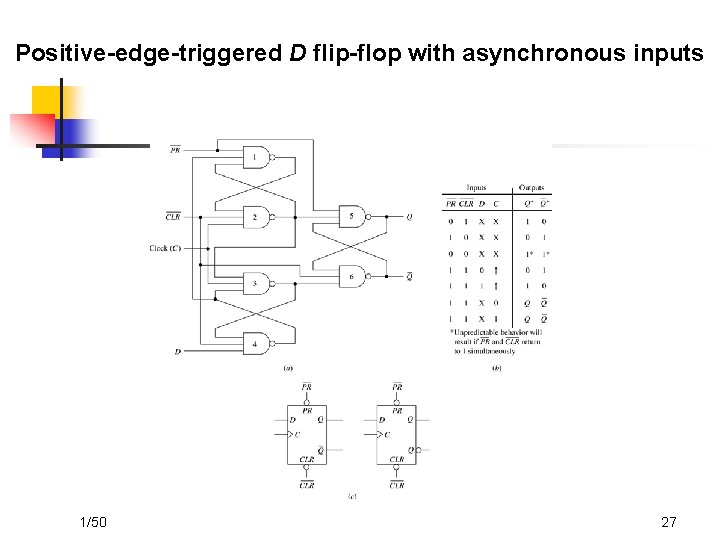
Positive-edge-triggered D flip-flop with asynchronous inputs 1/50 27
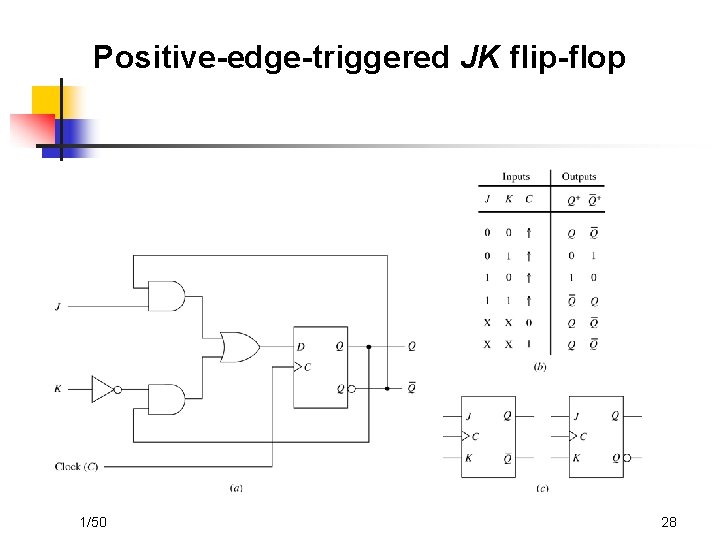
Positive-edge-triggered JK flip-flop 1/50 28
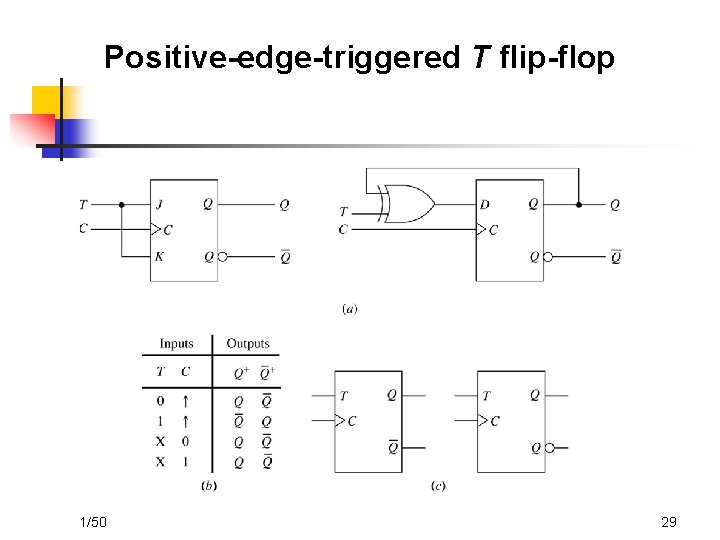
Positive-edge-triggered T flip-flop 1/50 29
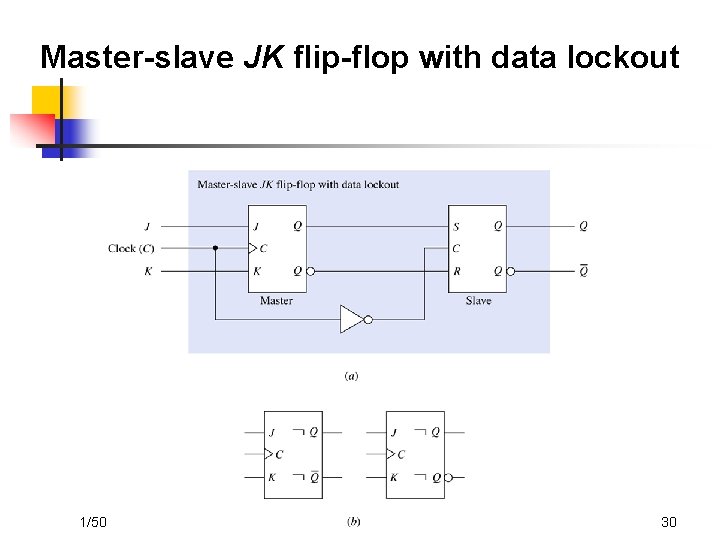
Master-slave JK flip-flop with data lockout 1/50 30
Characteristic Equations n n 1/50 algebraic descriptions of the next-state table of a flip-flop constructing from the Karnaugh map for Qt+1 in terms of the present state and input 31
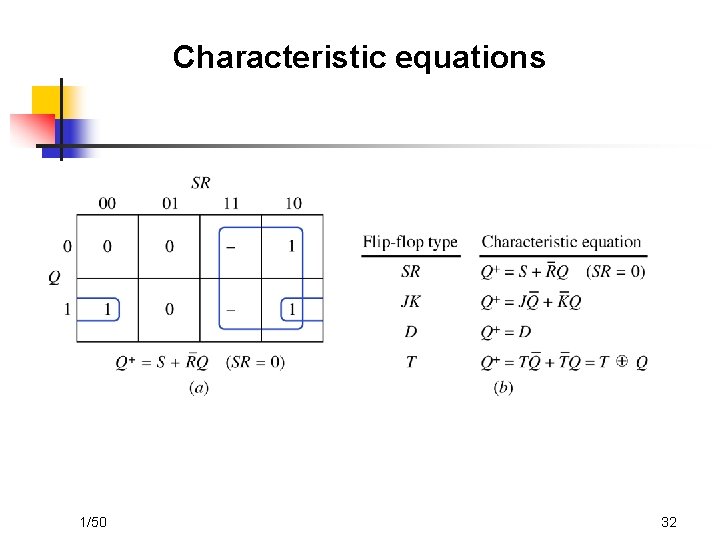
Characteristic equations 1/50 32
- Slides: 32