
FLIGHT UNIT Grade 6 VIDEOS https www youtube
FLIGHT UNIT Grade 6

VIDEOS https: //www. youtube. com/watch? v=GVZZAqt. UWy 4 Bill Nye & Netflix- Story bots
LESSON #1 FLOATERS/ GLIDERS/ POWERED FLYERS • Floaters: is not really flying; the wind controls the speed and direction of flight. Example- hot air balloon • Gliders: wings interact with air currents (moving air). These could be paper airplanes, flying squirrels or hang gliders. • Powered Flyers: use an engine or body energy to fly or gain altitude. Examples: insects, birds and airplanes
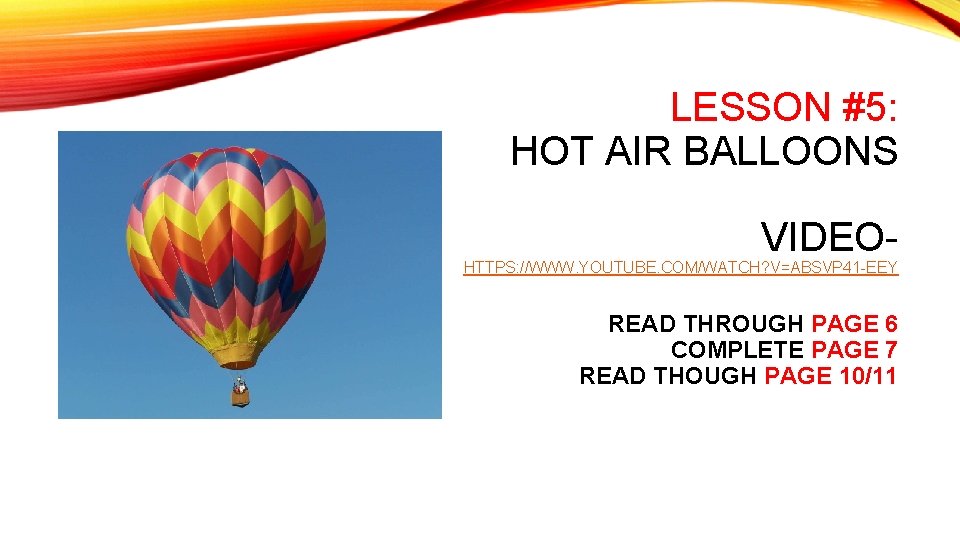
LESSON #5: HOT AIR BALLOONS VIDEO- HTTPS: //WWW. YOUTUBE. COM/WATCH? V=ABSVP 41 -EEY READ THROUGH PAGE 6 COMPLETE PAGE 7 READ THOUGH PAGE 10/11
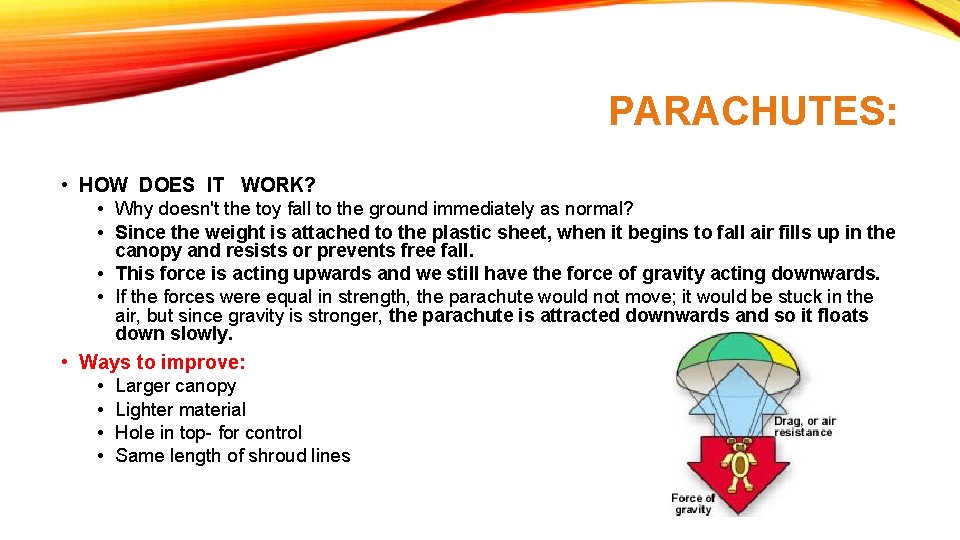
PARACHUTES: • HOW DOES IT WORK? • Why doesn't the toy fall to the ground immediately as normal? • Since the weight is attached to the plastic sheet, when it begins to fall air fills up in the canopy and resists or prevents free fall. • This force is acting upwards and we still have the force of gravity acting downwards. • If the forces were equal in strength, the parachute would not move; it would be stuck in the air, but since gravity is stronger, the parachute is attracted downwards and so it floats down slowly. • Ways to improve: • Larger canopy • Lighter material • Hole in top- for control • Same length of shroud lines
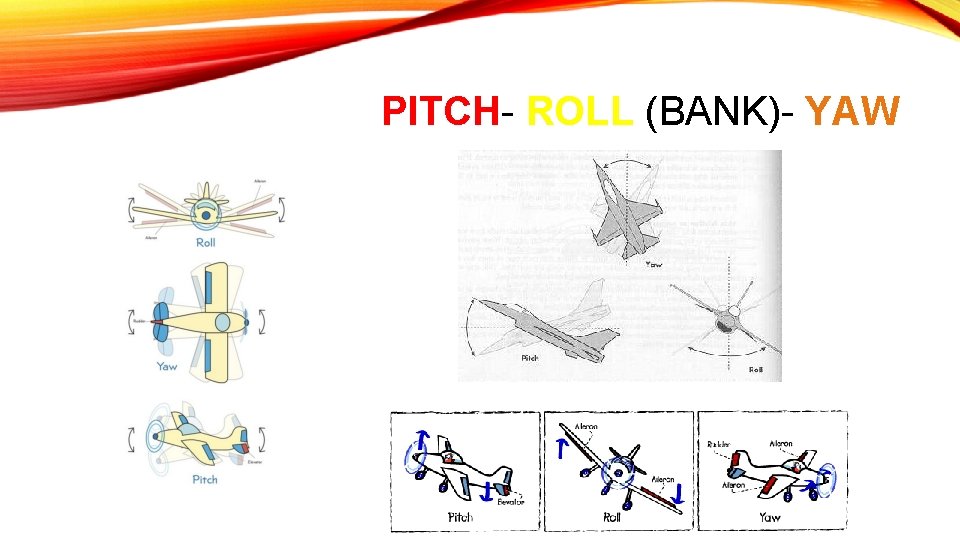
PITCH- ROLL (BANK)- YAW
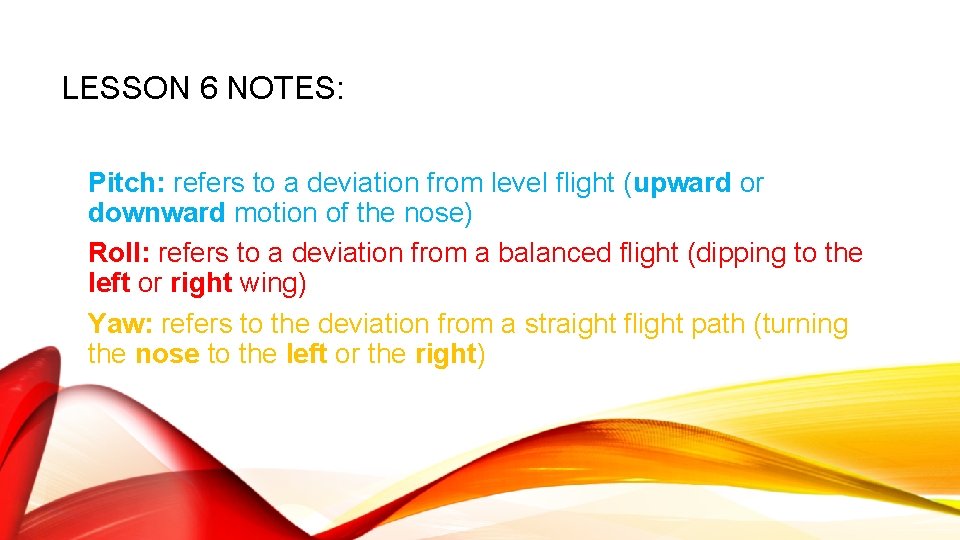
LESSON 6 NOTES: Pitch: refers to a deviation from level flight (upward or downward motion of the nose) Roll: refers to a deviation from a balanced flight (dipping to the left or right wing) Yaw: refers to the deviation from a straight flight path (turning the nose to the left or the right)
• Pitch: • Elevator helps control pitch- upward and downward motion of the nose • Elevators are located on the horizontal stabilizer section of the planes tail • elevator = up position (tail section goes down, nose goes up and plane climbs • Elevator = down position (tail section lifts, nose goes down, plane descends)
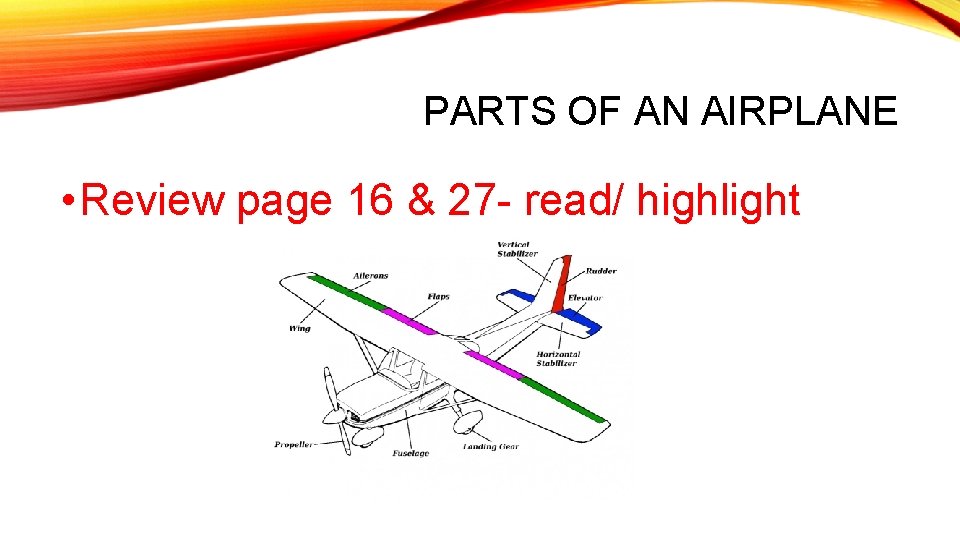
PARTS OF AN AIRPLANE • Review page 16 & 27 - read/ highlight
QUIZ #1 - PARTS OF AN AIRPLANE
LESSON #8: FLYING RABBITS Read through: Page 24, 25, 26, 28, 29
LESSON #9 - HELIOSTRAWS • How a helicopter works- they hover, climb and glide • Try the following: • The glide: spin the heliostraw gently backwards (clockwise) and let go. It should spin toward the ground like rabbit ears • The hover: hold the straw straight up and down and fly the heliostraw. It should climb and hover before flying to the ground • Fast forward: launch the straw by tilting it away from you
LESSON #10 - MINI ROCKETS Read page 20/ 21
COMPLETE GIZMO www. learnalberta. ab. ca The Thrill of Flight- complete the worksheet
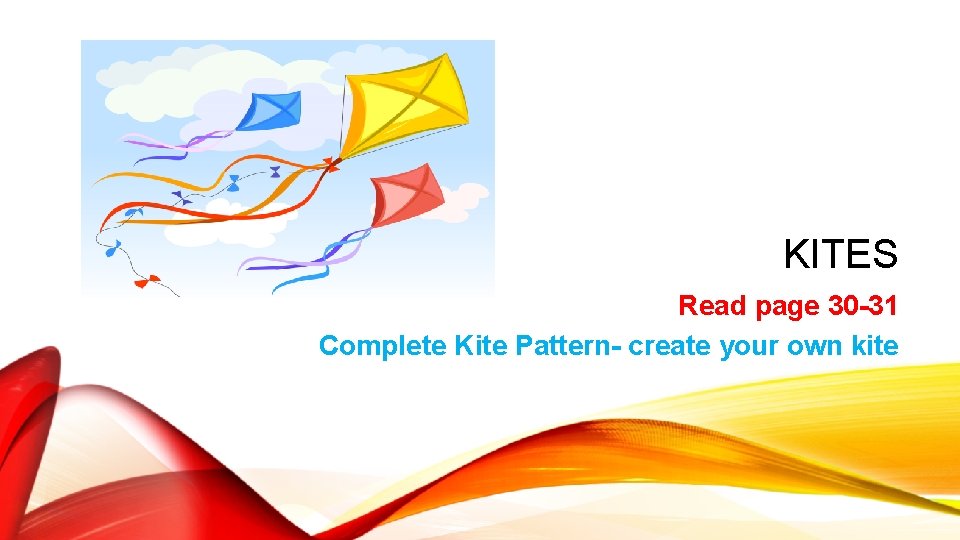
KITES Read page 30 -31 Complete Kite Pattern- create your own kite
- Slides: 15