
Flight Navigation and Planning Radio Navigation Aerospace Engineering


![References Jeppesen (2007). Guided flight discovery private pilot [CDROM]. Englewood, CO: Jeppesen. Retrieved from](https://slidetodoc.com/presentation_image_h/1e11c4998cc6601f2d329b425eec879b/image-40.jpg "References Jeppesen (2007). Guided flight discovery private pilot [CDROM]. Englewood, CO: Jeppesen. Retrieved from")
- Slides: 40
Flight Navigation and Planning Radio Navigation Aerospace Engineering © 2011 Project Lead The Way, Inc.
Radio Navigation • ILS – Instrument Landing System • VOR – Very High Frequency Omni-Directional Range
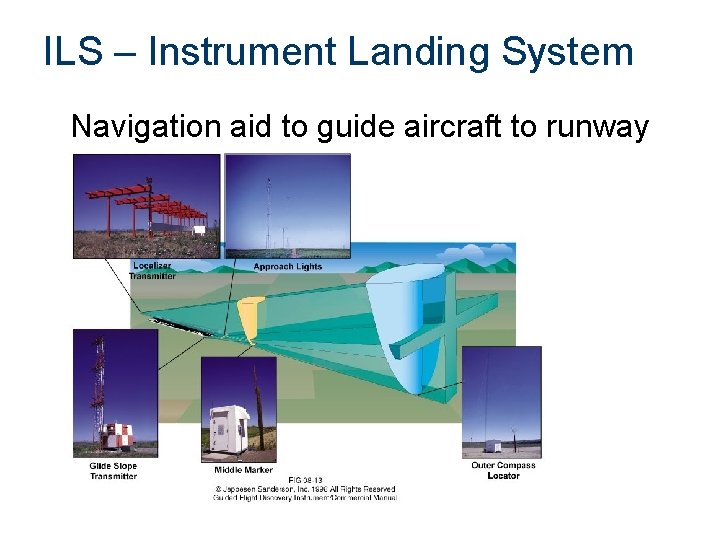
ILS – Instrument Landing System Navigation aid to guide aircraft to runway
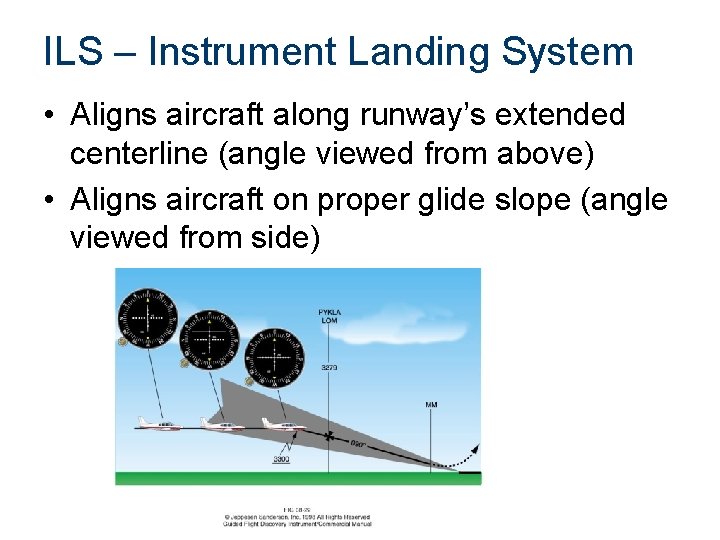
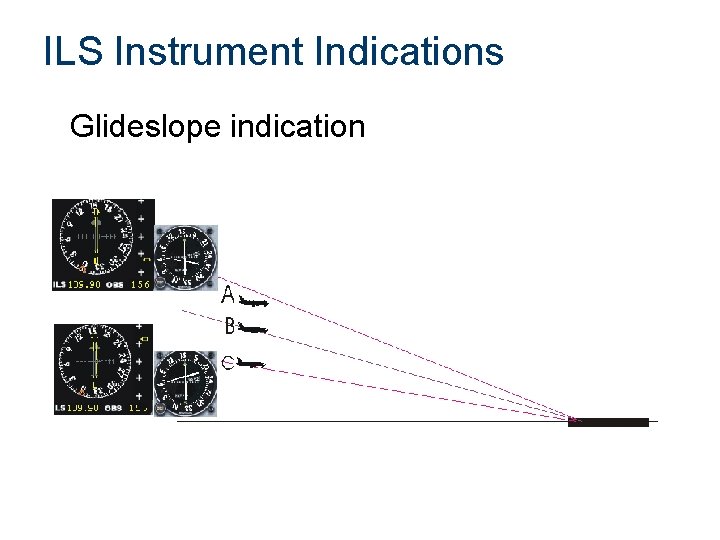
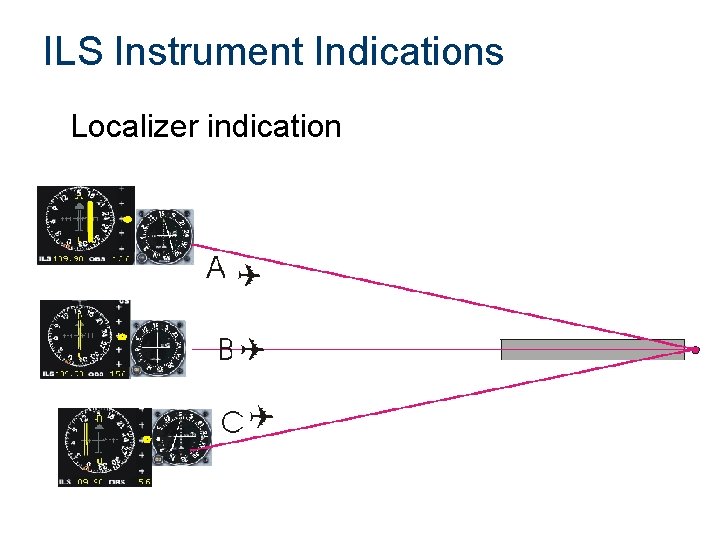
ILS – Instrument Landing System • Aligns aircraft along runway’s extended centerline (angle viewed from above) • Aligns aircraft on proper glide slope (angle viewed from side)
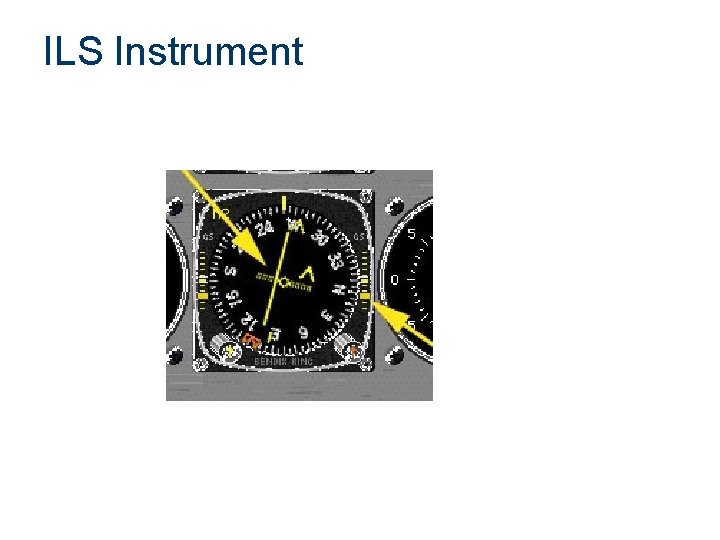
ILS Instrument
ILS Instrument Indications Glideslope indication
ILS Instrument Indications Localizer indication
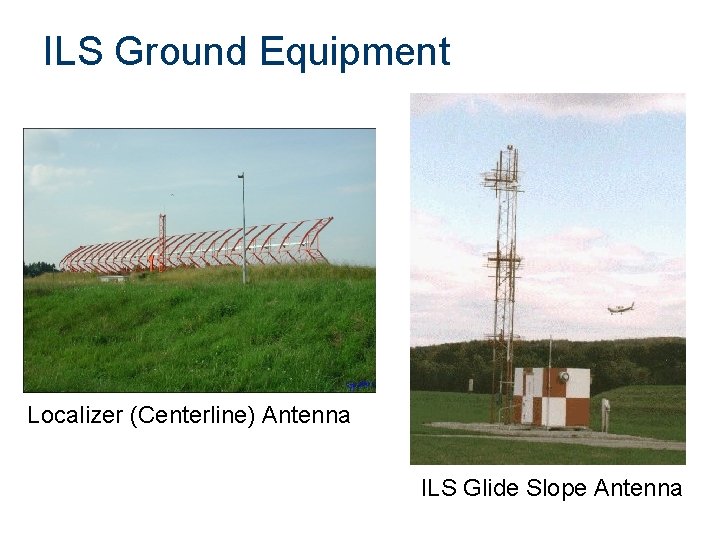
ILS Ground Equipment Localizer (Centerline) Antenna ILS Glide Slope Antenna
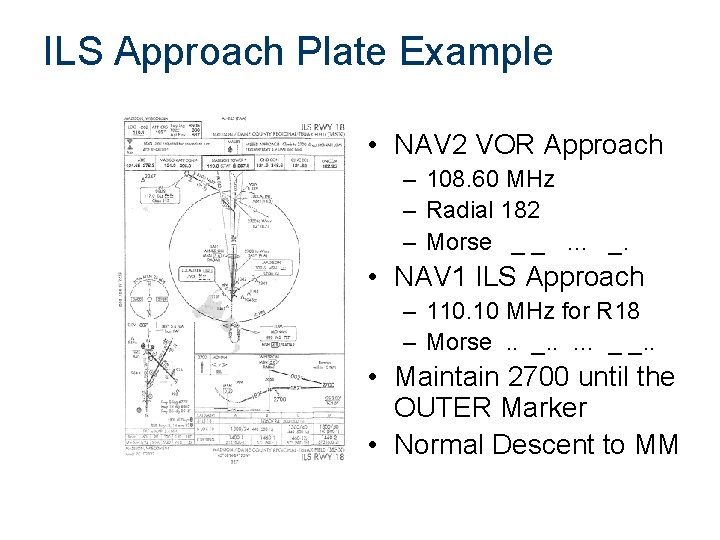
ILS Approach Plate Example • NAV 2 VOR Approach – 108. 60 MHz – Radial 182 – Morse _ _ … _. • NAV 1 ILS Approach – 110. 10 MHz for R 18 – Morse. . _. . … _ _. . • Maintain 2700 until the OUTER Marker • Normal Descent to MM
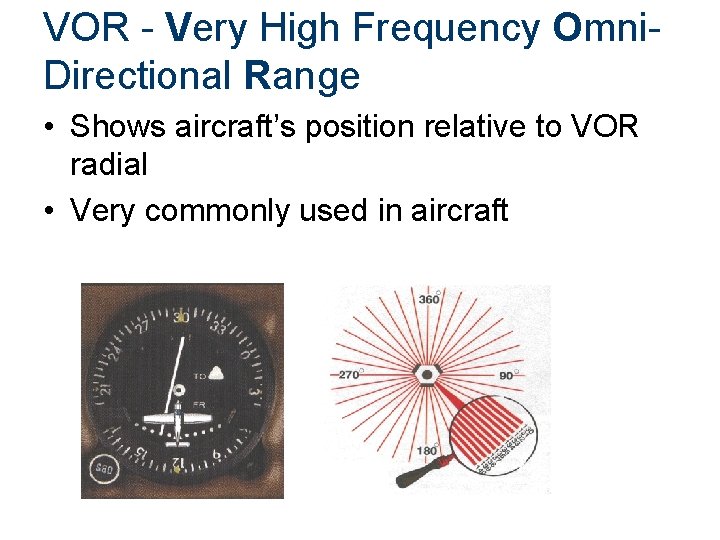
VOR - Very High Frequency Omni. Directional Range • Shows aircraft’s position relative to VOR radial • Very commonly used in aircraft
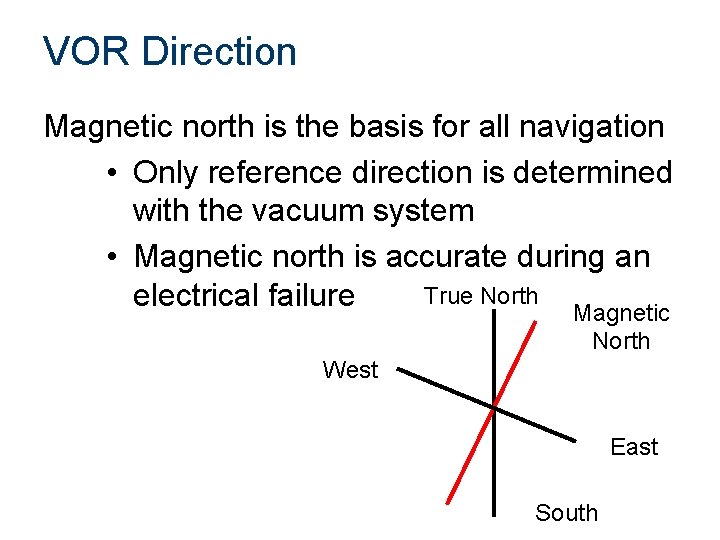
VOR Direction Magnetic north is the basis for all navigation • Only reference direction is determined with the vacuum system • Magnetic north is accurate during an True North electrical failure Magnetic North West East South
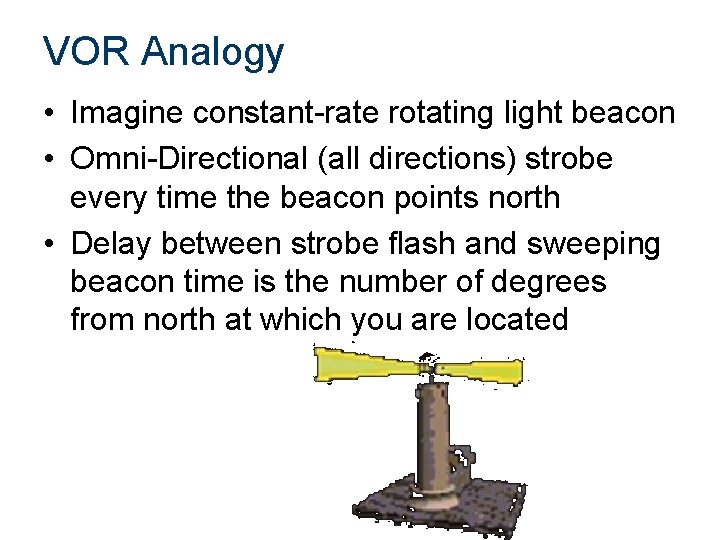
VOR Analogy • Imagine constant-rate rotating light beacon • Omni-Directional (all directions) strobe every time the beacon points north • Delay between strobe flash and sweeping beacon time is the number of degrees from north at which you are located
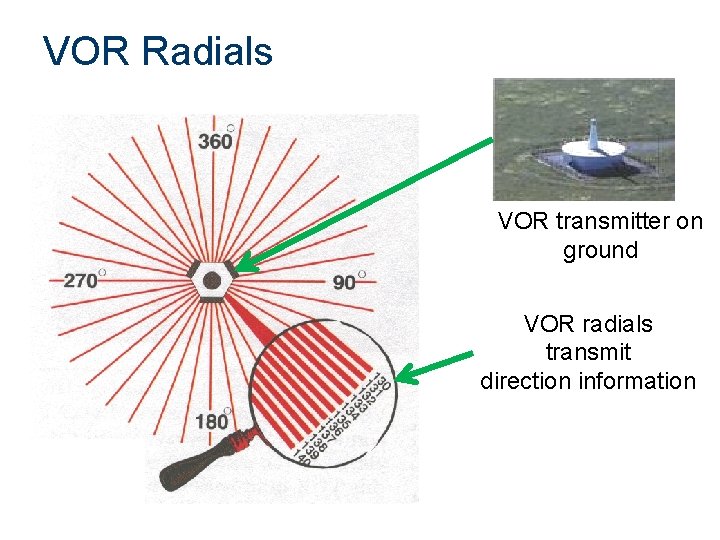
VOR Radials VOR transmitter on ground VOR radials transmit direction information
VOR Radials • Radial is a specific beam transmitted by a VOR station • 360 radials (one per degree) • Accurate navigation to 1° of precision • Radials named based on clockwise bearing from magnetic north • 90° radial points to magnetic east from VOR station • Effective at 1000 ft AGL (above ground level)
VOR Benefits and Limitations • Benefits – Multiple stations, so multiple cross checks – Very little interference from lightning – Straight line courses – Automatic wind drift correction – Works regardless of aircraft orientation • Limitations – Ground-based transmitters – Line of sight (VHF) frequencies – Limited range at low altitude – Limited range at higher altitudes (not a global solution)
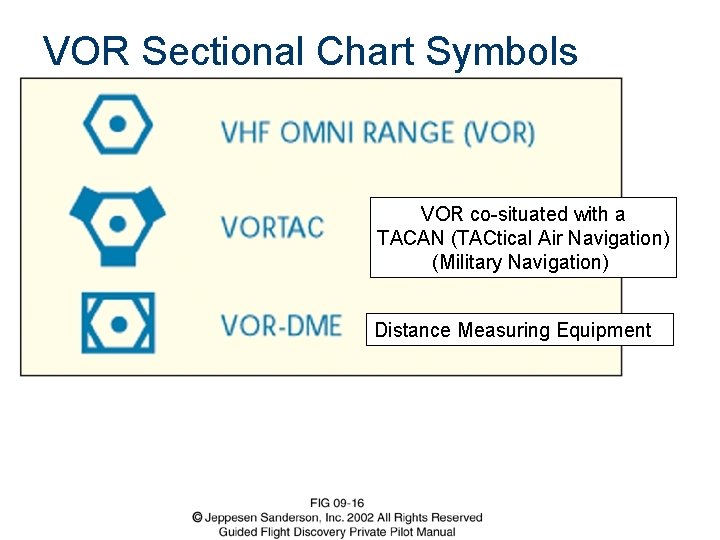
VOR Sectional Chart Symbols VOR co-situated with a TACAN (TACtical Air Navigation) (Military Navigation) Distance Measuring Equipment
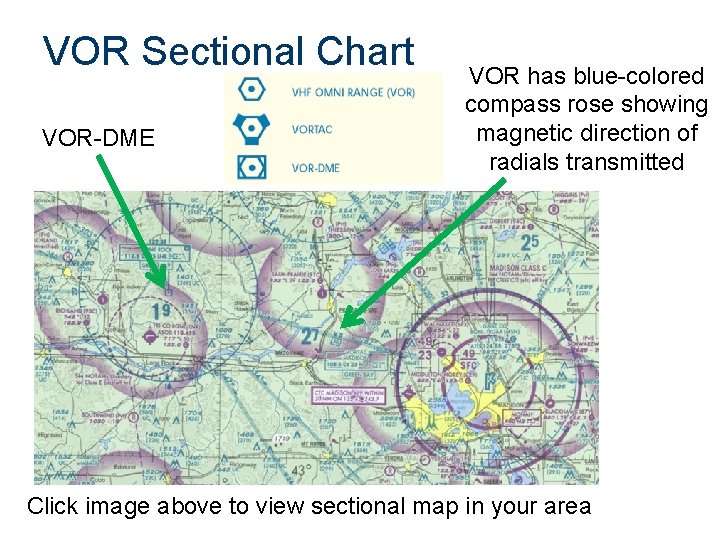
VOR Sectional Chart VOR-DME VOR has blue-colored compass rose showing magnetic direction of radials transmitted Click image above to view sectional map in your area
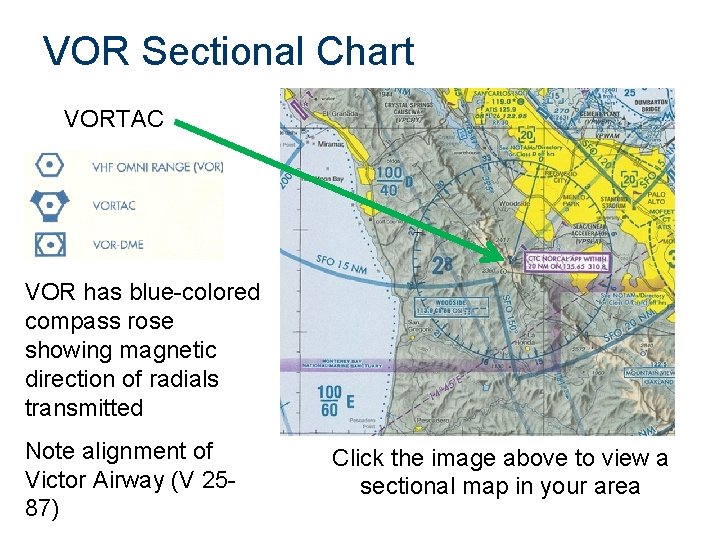
VOR Sectional Chart VORTAC VOR has blue-colored compass rose showing magnetic direction of radials transmitted Note alignment of Victor Airway (V 2587) Click the image above to view a sectional map in your area
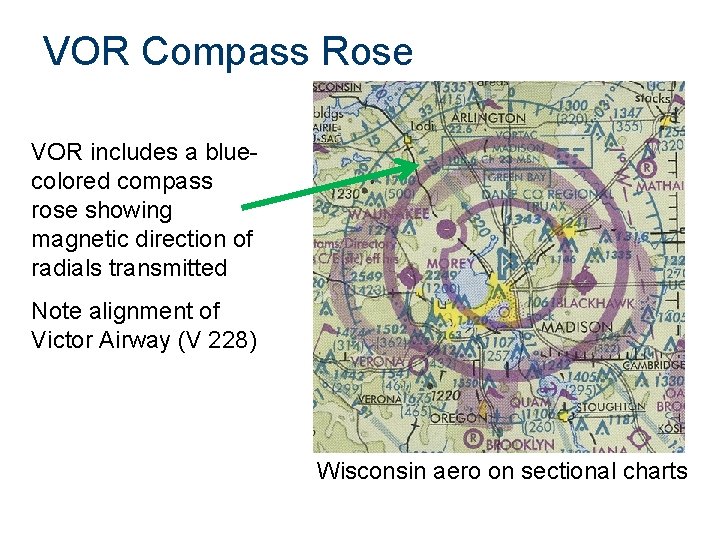
VOR Compass Rose VOR includes a bluecolored compass rose showing magnetic direction of radials transmitted Note alignment of Victor Airway (V 228) Wisconsin aero on sectional charts
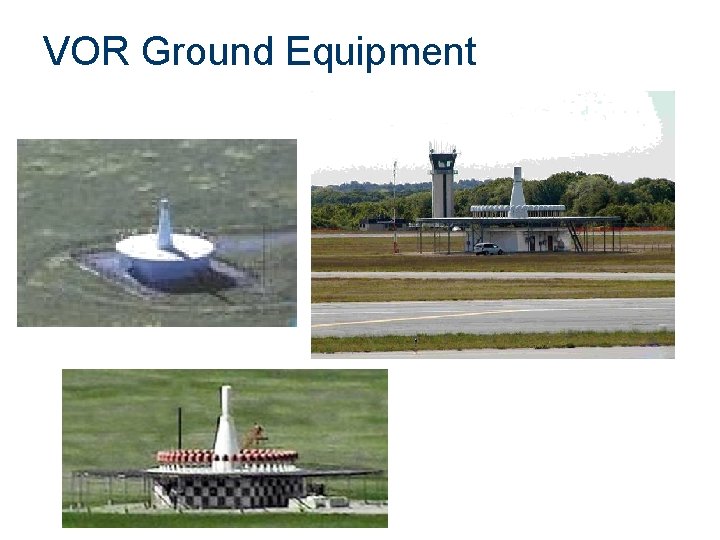
VOR Ground Equipment
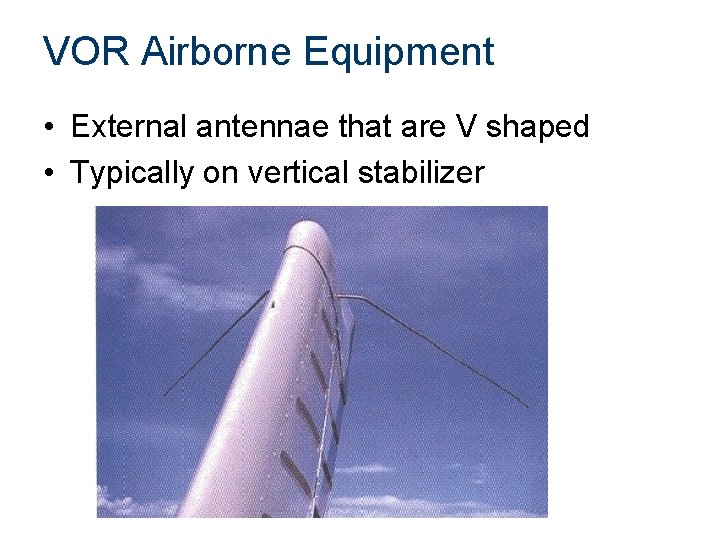
VOR Airborne Equipment • External antennae that are V shaped • Typically on vertical stabilizer
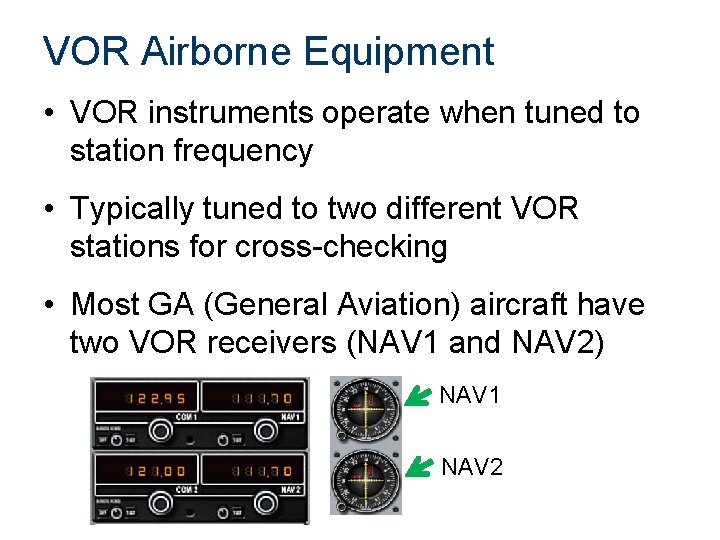
VOR Airborne Equipment • VOR instruments operate when tuned to station frequency • Typically tuned to two different VOR stations for cross-checking • Most GA (General Aviation) aircraft have two VOR receivers (NAV 1 and NAV 2) NAV 1 NAV 2
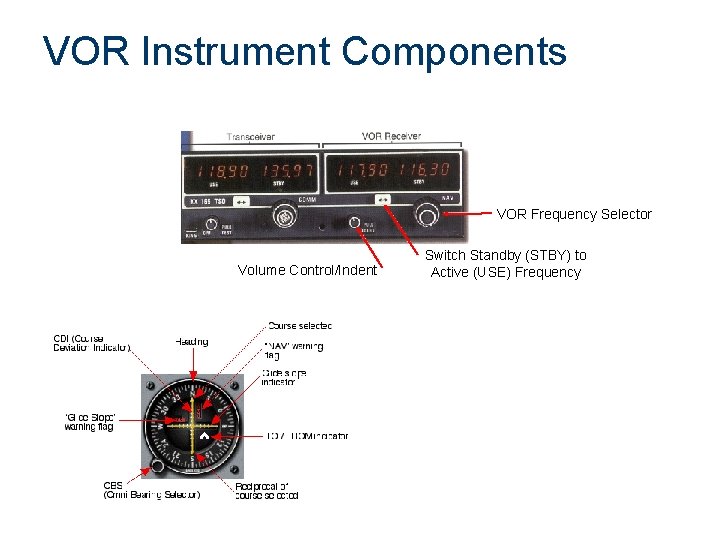
VOR Instrument Components VOR Frequency Selector Volume Control/Indent Switch Standby (STBY) to Active (USE) Frequency
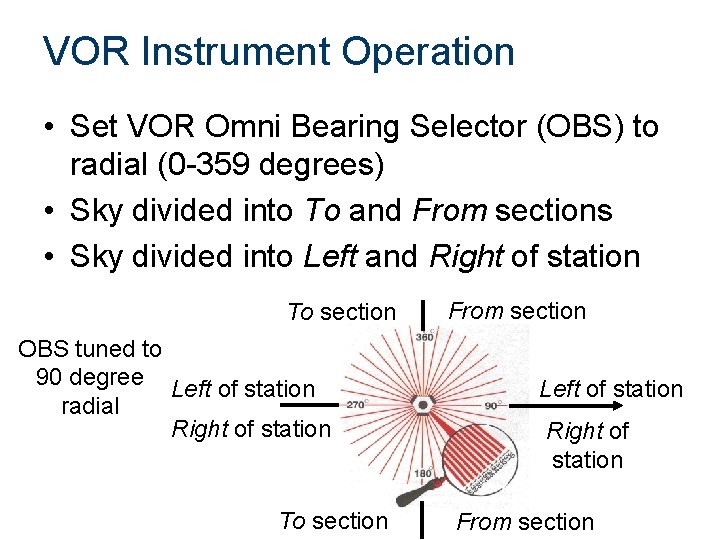
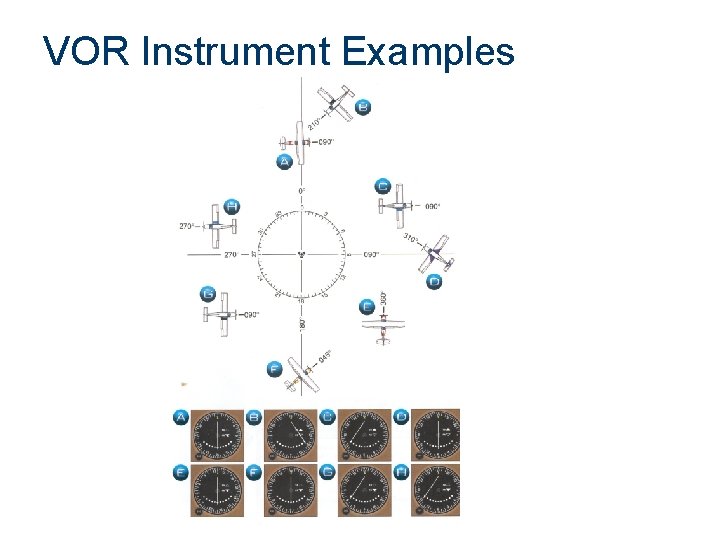
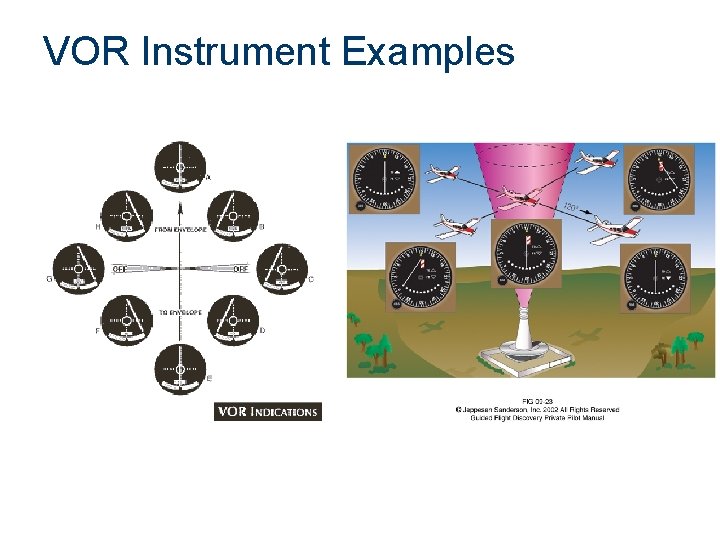
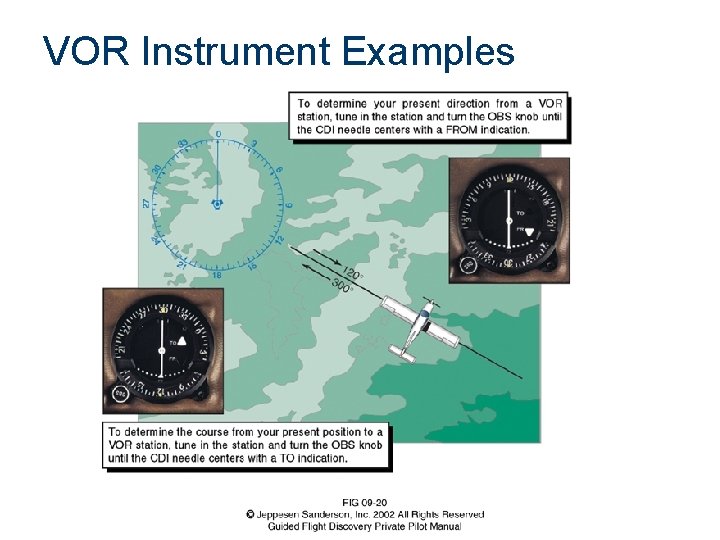
VOR Instrument Operation • Set VOR Omni Bearing Selector (OBS) to radial (0 -359 degrees) • Sky divided into To and From sections • Sky divided into Left and Right of station To section OBS tuned to 90 degree Left of station radial Right of station To section From section Left of station Right of station From section
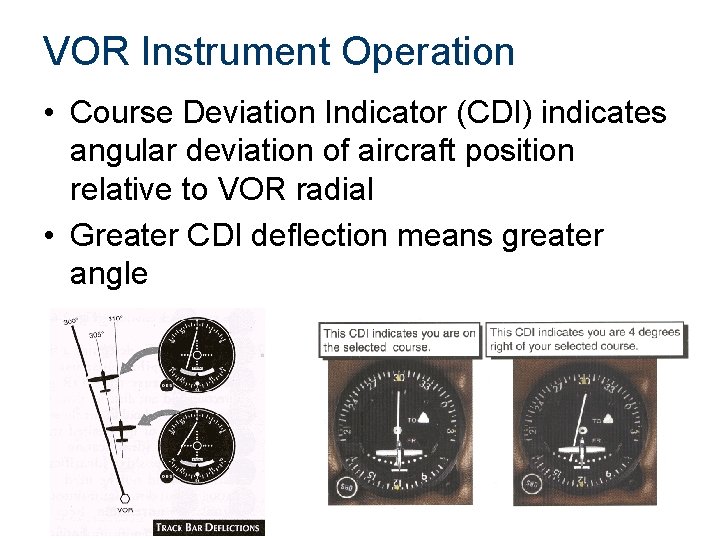
VOR Instrument Operation • Course Deviation Indicator (CDI) indicates angular deviation of aircraft position relative to VOR radial • Greater CDI deflection means greater angle
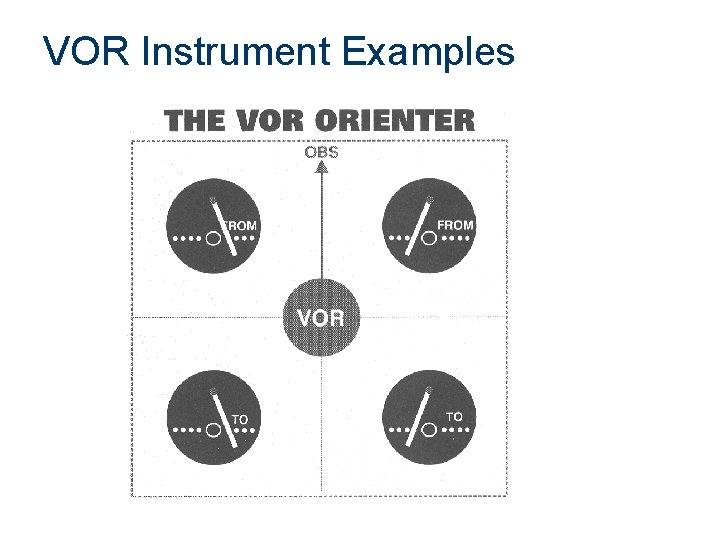
VOR Instrument Examples
VOR Instrument Examples
VOR Instrument Examples
VOR Instrument Examples
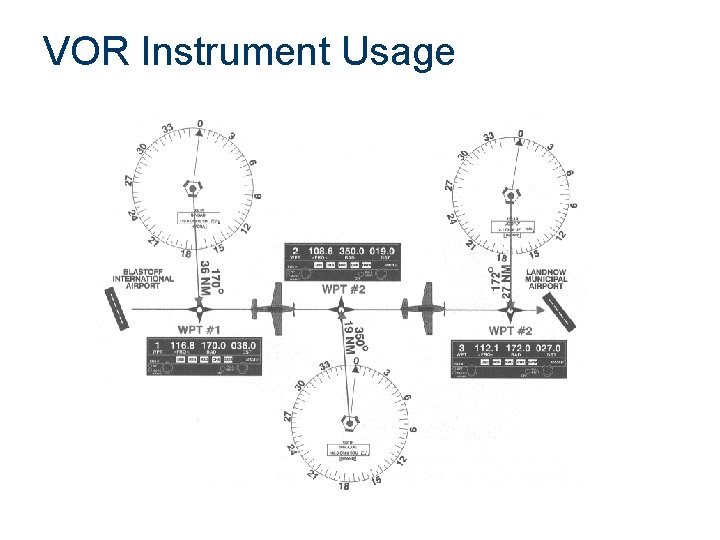
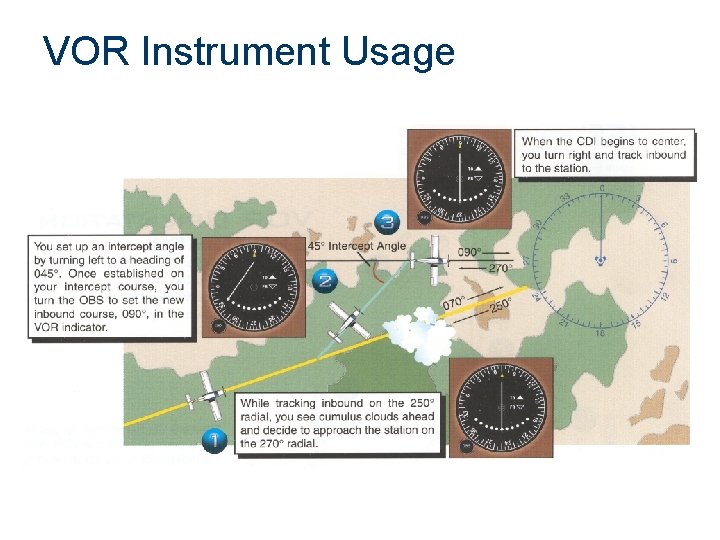
VOR Instrument Usage
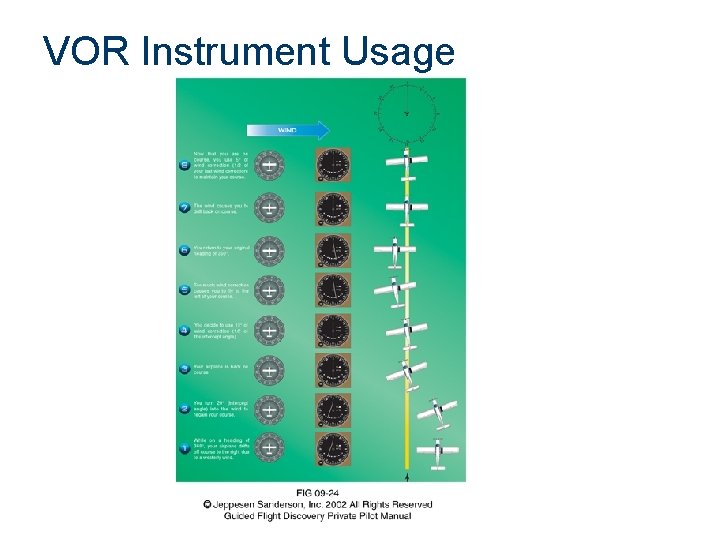
VOR Instrument Usage
VOR Instrument Usage
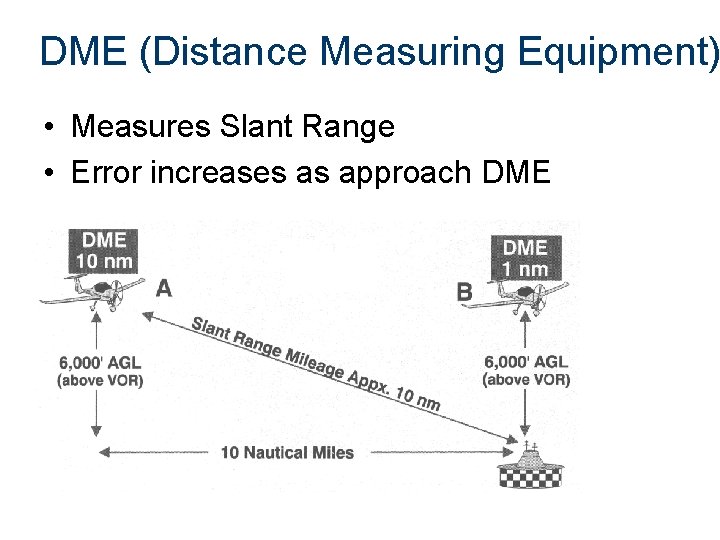
DME (Distance Measuring Equipment) • Measures Slant Range • Error increases as approach DME
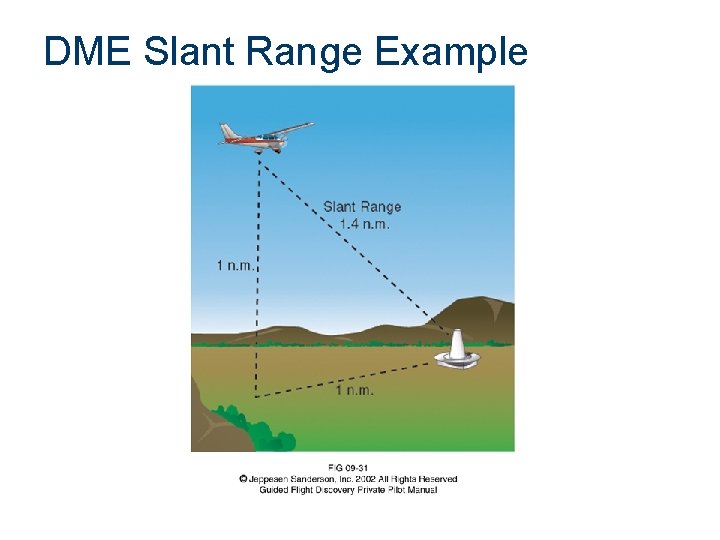
DME Slant Range Example
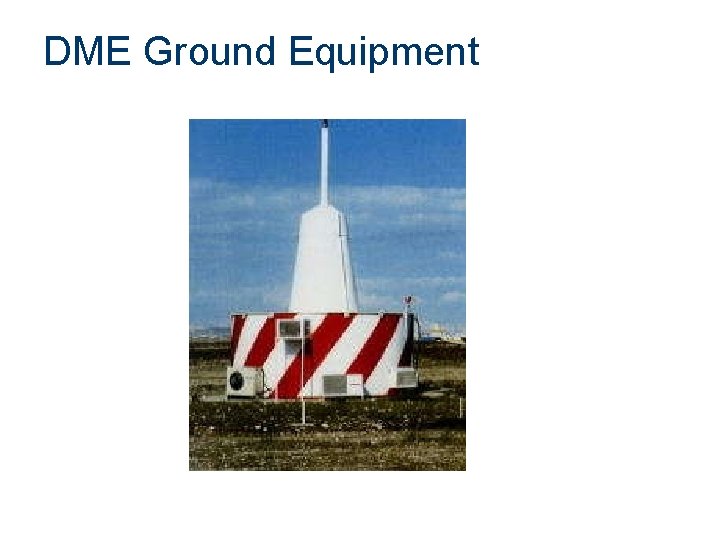
DME Ground Equipment
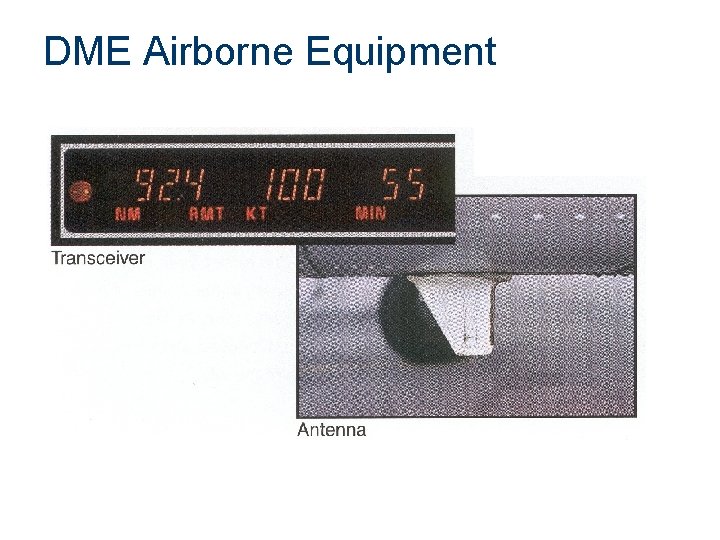
DME Airborne Equipment
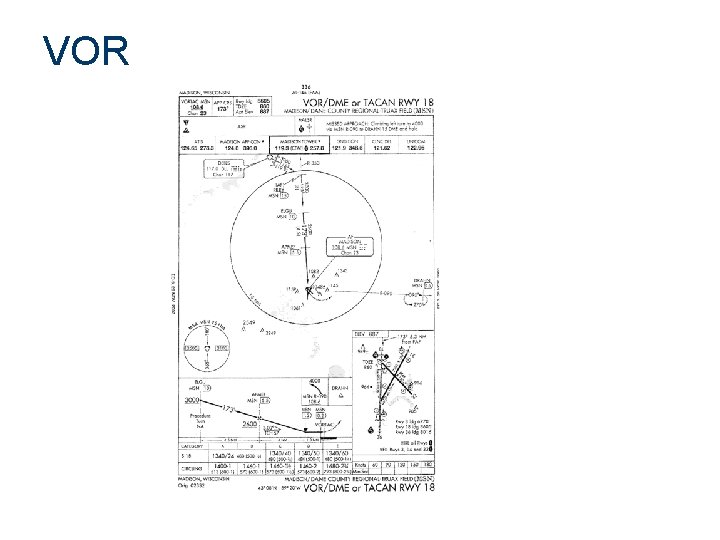
VOR
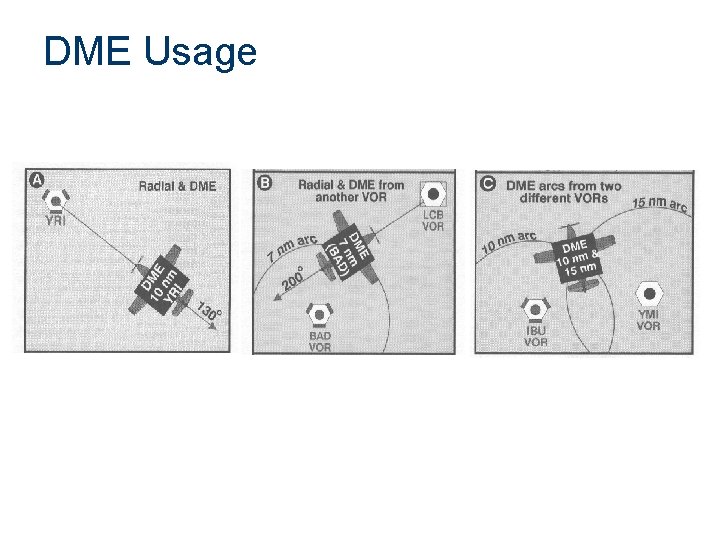
DME Usage
References Crouch, T. (2004). Wings. New York: W. W. Norton & Company. Dalton, S. (1999). The Miracle of flight. Kingston, Ontario: Bookmakers Press Inc. Federal Aviation Administration (2009). Retrieved from http: //www. faa. gov/ Garber, S. (2007). Sputnik and The Dawn of the Space Age. Retrieved from http: //history. nasa. gov/sputnik/ Grant, R. G. (2007). Flight the complete history. New York: DK Publishing.
References Jeppesen (2007). Guided flight discovery private pilot [CDROM]. Englewood, CO: Jeppesen. Retrieved from http: //skyvector. com/ Jeppesen Sanderson, Inc. (2006). Guided flight discovery private pilot images [CD-ROM]. Englewood, CO: Jeppesen Sanderson, Inc. National Aeronautics and Space Administration (2009). Retrieved from http: //www. nasa. gov/ National Executive Committee for Space-Based Positioning, Navigation, and Timing (2009). Retrieved from http: //pnt. gov/ Sky. Vector (2009). Retrieved from www. skyvector. com