
Flexlab A Realistic Controlled and Friendly Environment for

Flexlab: A Realistic, Controlled, and Friendly Environment for Evaluating Networked Systems Jonathon Duerig, Robert Ricci, Junxing Zhang, Daniel Gebhardt, Sneha Kasera, Jay Lepreau University of Utah Hot. Nets-V November 30, 2006 1
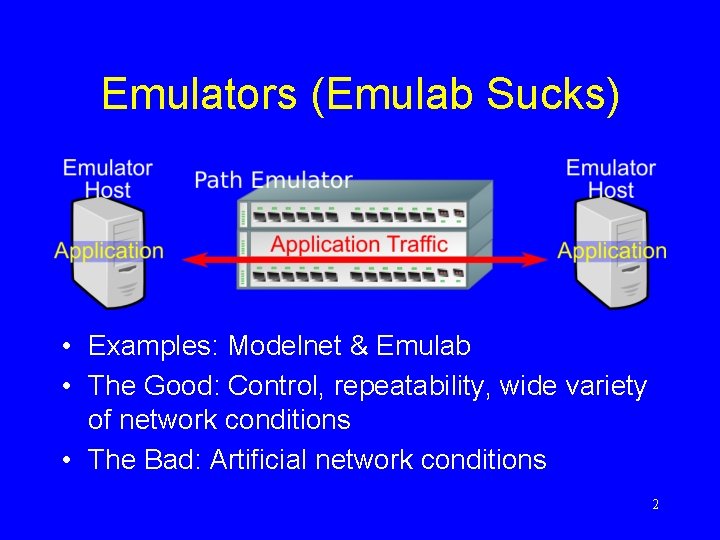
Emulators (Emulab Sucks) • Examples: Modelnet & Emulab • The Good: Control, repeatability, wide variety of network conditions • The Bad: Artificial network conditions 2
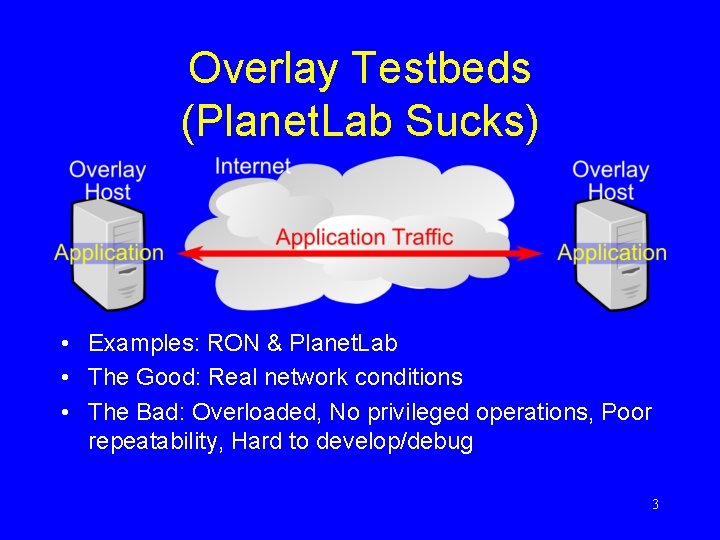
Overlay Testbeds (Planet. Lab Sucks) • Examples: RON & Planet. Lab • The Good: Real network conditions • The Bad: Overloaded, No privileged operations, Poor repeatability, Hard to develop/debug 3
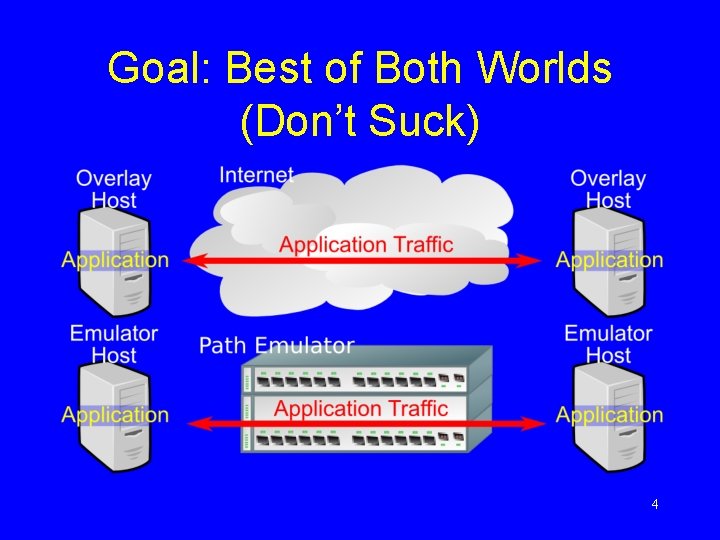
Goal: Best of Both Worlds (Don’t Suck) 4
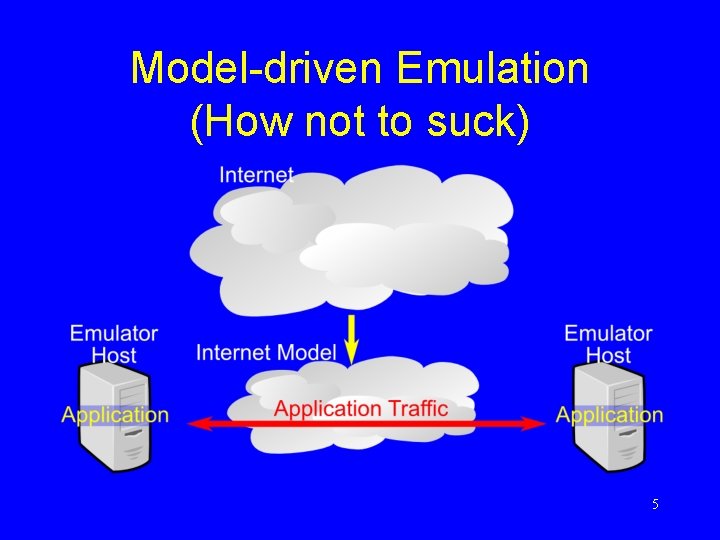
Model-driven Emulation (How not to suck) 5
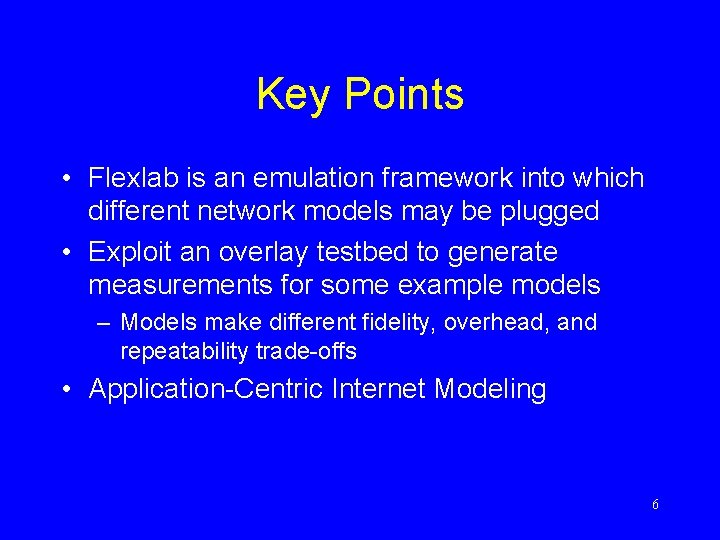
Key Points • Flexlab is an emulation framework into which different network models may be plugged • Exploit an overlay testbed to generate measurements for some example models – Models make different fidelity, overhead, and repeatability trade-offs • Application-Centric Internet Modeling 6
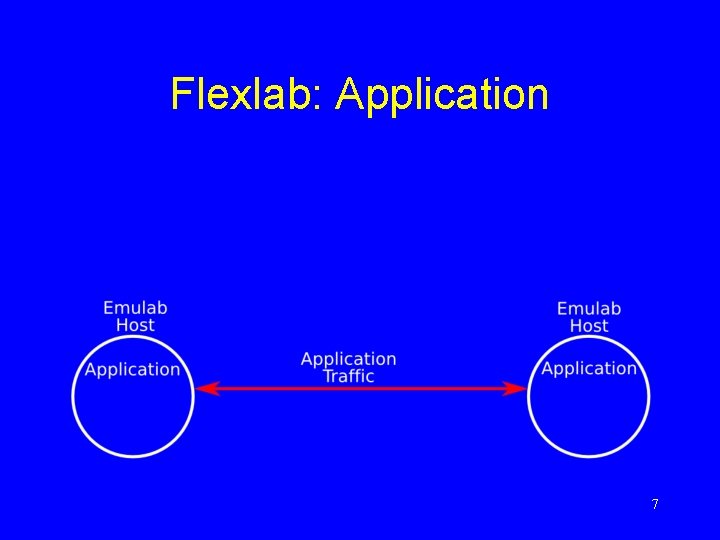
Flexlab: Application 7
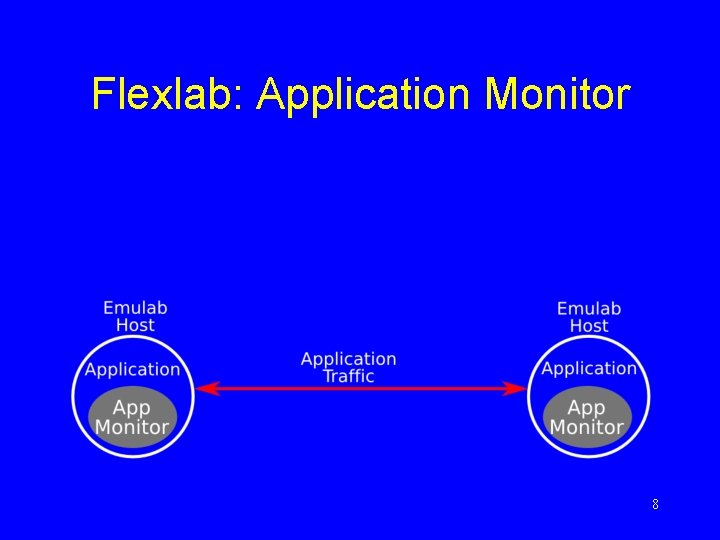
Flexlab: Application Monitor 8
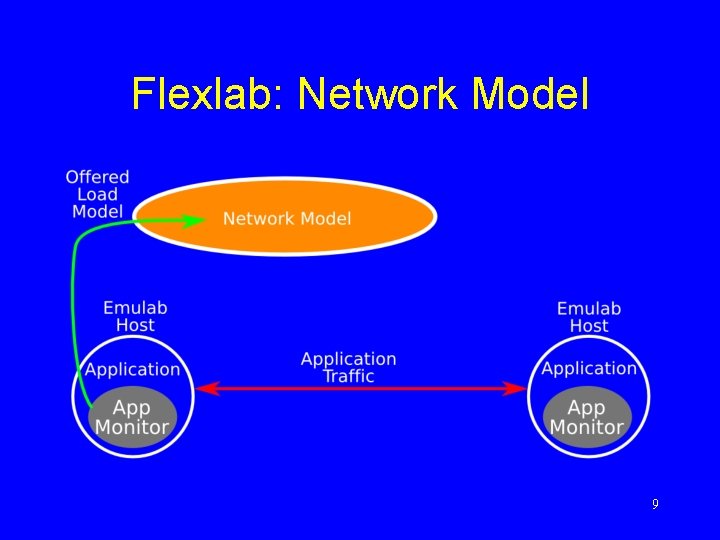
Flexlab: Network Model 9

Flexlab: Measurement Repository 10
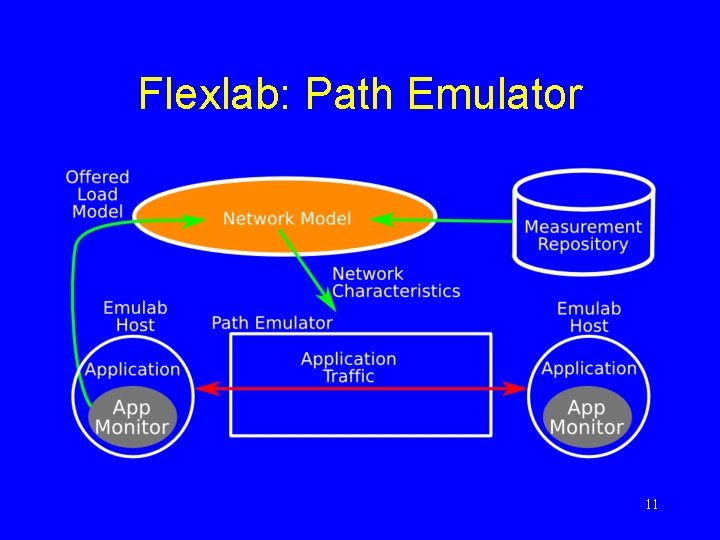
Flexlab: Path Emulator 11

Flexlab: Feedback 12
ACIM: Application-Centric Internet Modeling 13
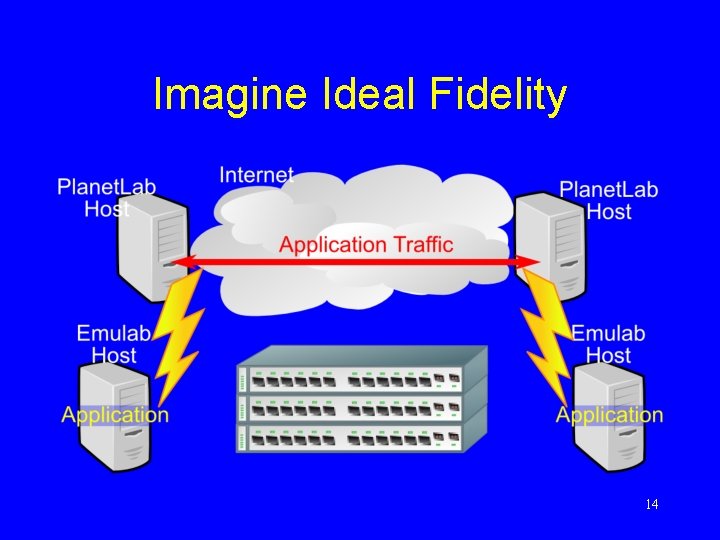
Imagine Ideal Fidelity 14
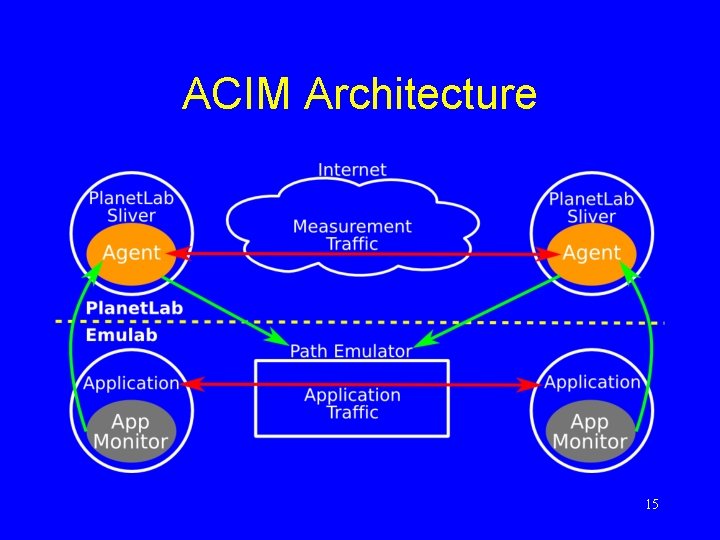
ACIM Architecture 15
ACIM Challenges • Hardening implementation to deal with Planet. Lab unreliability • CPU starvation on Planet. Lab – Host artifacts in throughput – Packet loss from libpcap • Reverse path congestion • Measuring bottleneck queue size in time • Discovering when bottleneck link is saturated 16
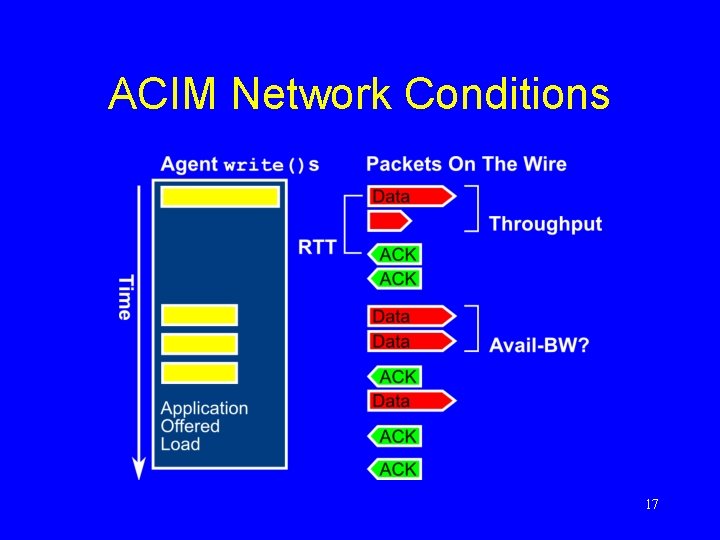
ACIM Network Conditions 17
ACIM Available Bandwidth • Throughput == available bandwidth iff agent is saturating && bottleneck link is saturated • Agent saturating socket buffer full • Bottleneck queue saturated queue filling up RTT increasing recently 18
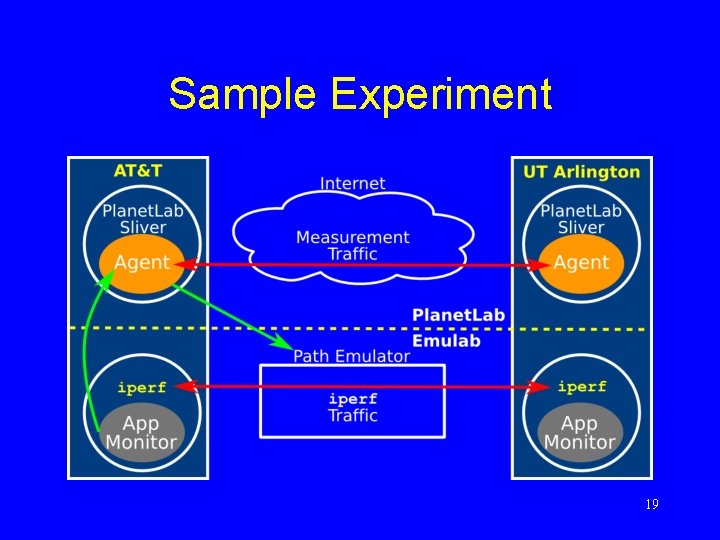
Sample Experiment 19
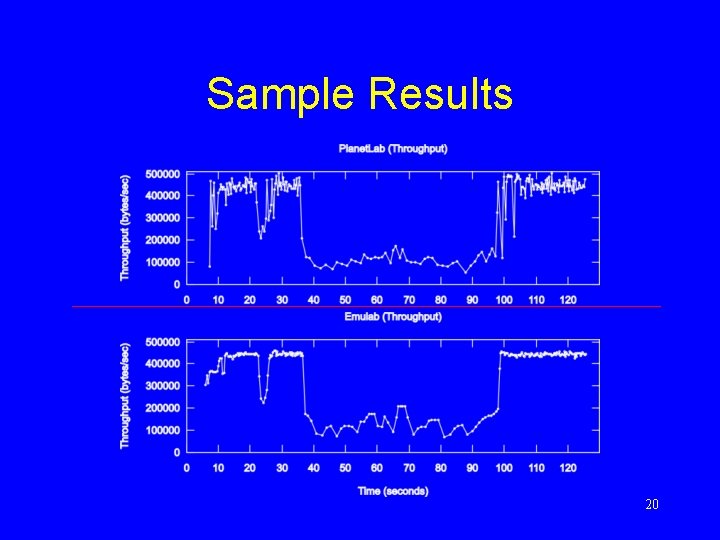
Sample Results 20

Sample Results 21

Sample Results 22
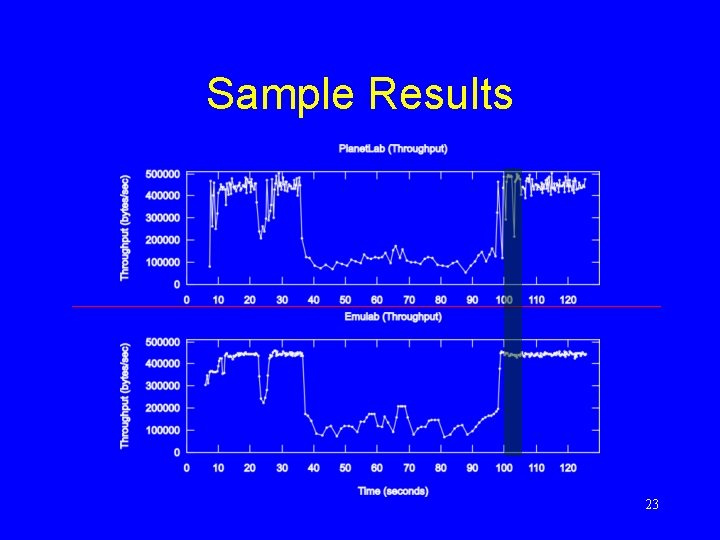
Sample Results 23
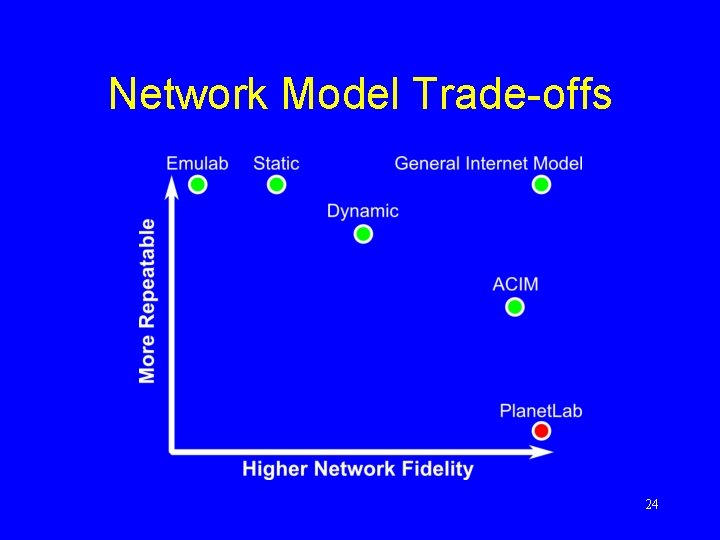
Network Model Trade-offs 24
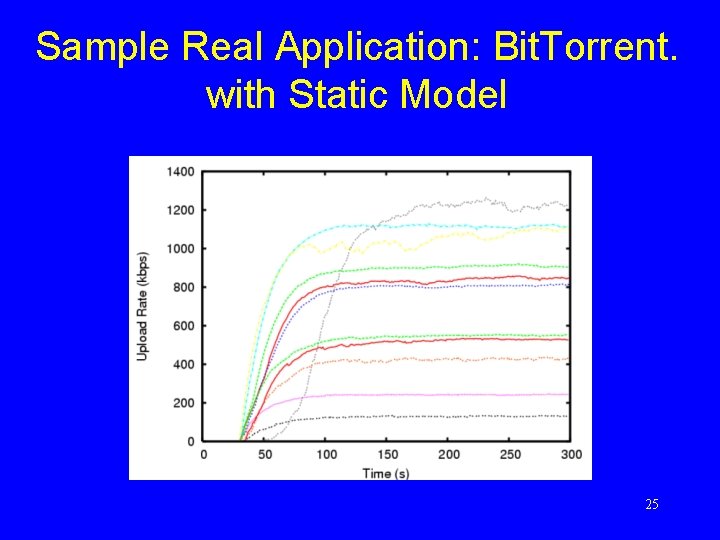
Sample Real Application: Bit. Torrent. with Static Model 25
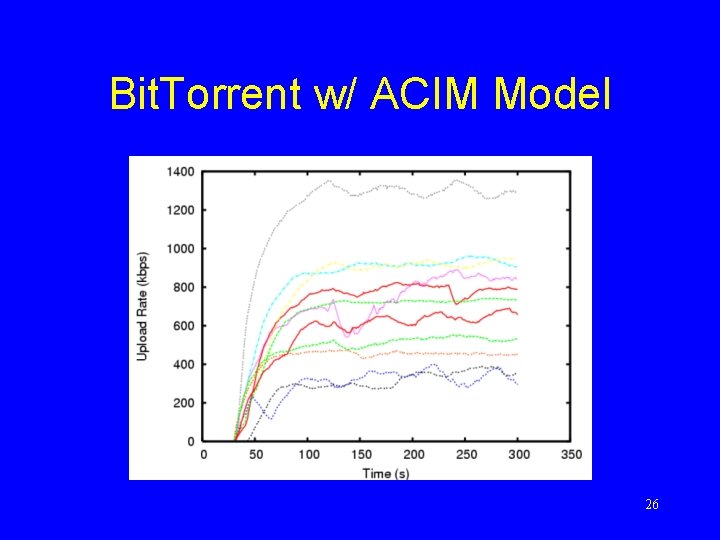
Bit. Torrent w/ ACIM Model 26
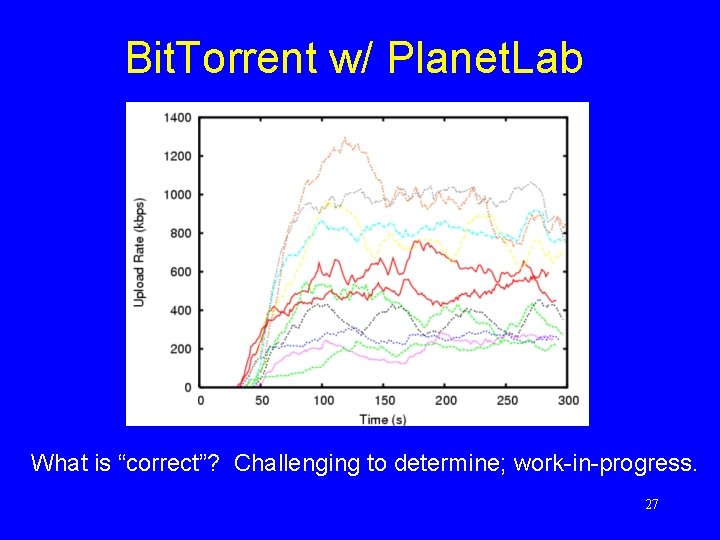
Bit. Torrent w/ Planet. Lab What is “correct”? Challenging to determine; work-in-progress. 27
Conclusions • Contribution: Modeling Framework for Emulation – Models can allow the experimenter to trade-off fidelity, repeatability, and overhead • Contribution: Application-Centric Internet Modeling • Contribution: Running on Emulab and Planet. Lab in alpha stage 28
Backup Slides 29
Why not just add more nodes to every Planet. Lab site? (cf. public review) • Remaining problems: – Poor repeatability – Hard to develop/debug – No privileged operations • Malicious traffic cannot be tested • Some Flexlab network models reduce network load • Emulab node pool stat muxed and shared more efficiently than per-site pools • Overload can (will? ) still happen with PL’s pure shared-host model • Major practical barriers: admin, cost 30
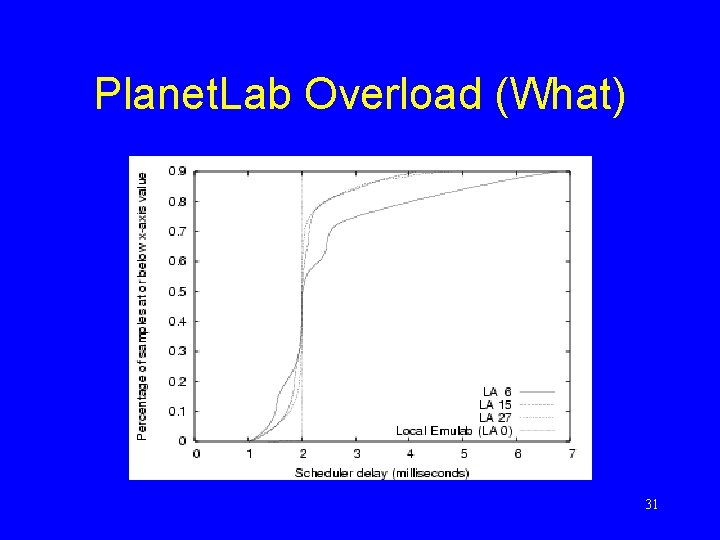
Planet. Lab Overload (What) 31
Planet. Lab Overload (Why) • Only a few nodes per site – Sites supply their own nodes – No incentive to increase number of nodes • • No admission control No resource guarantees No incentive to minimize usage Typically tedious to set up experiments (exceptions: Emulab portal, Plush, other? ) 32
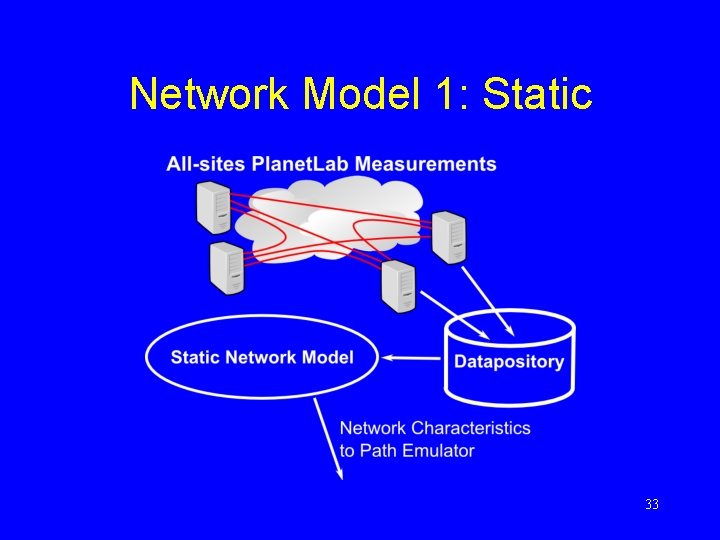
Network Model 1: Static 33
Static Trade-offs • Low fidelity • Fixed continuous overhead • Complete repeatability 34
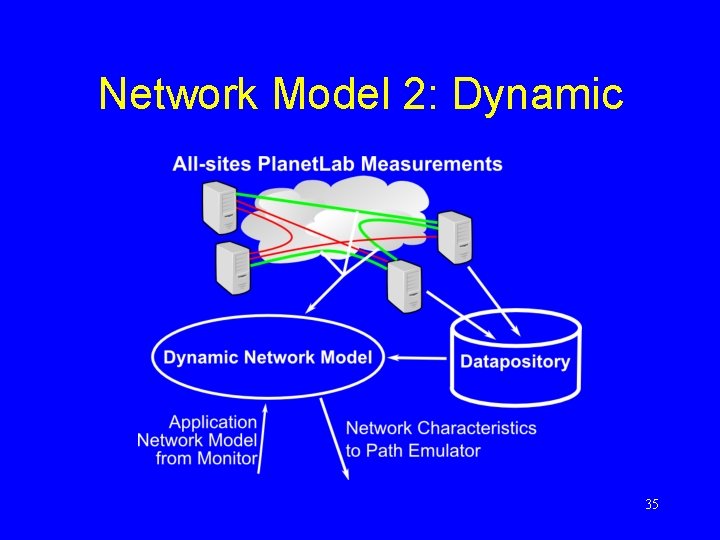
Network Model 2: Dynamic 35
Dynamic Trade-offs • Moderate fidelity • Overhead proportional to number of paths used • High repeatability 36
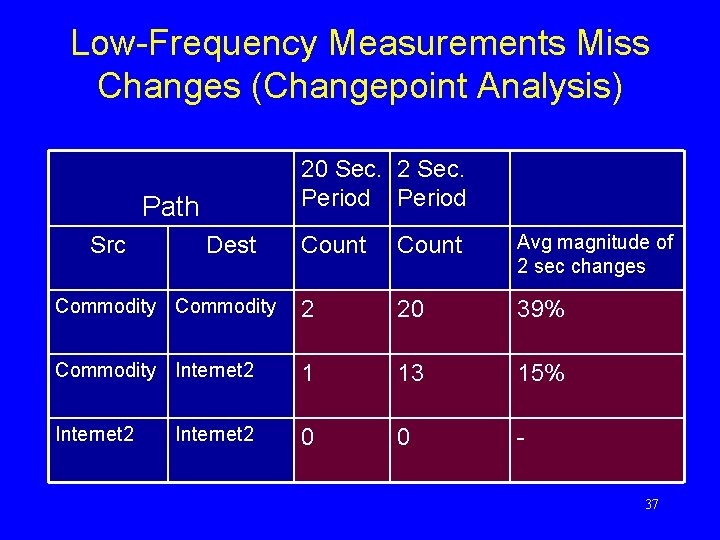
Low-Frequency Measurements Miss Changes (Changepoint Analysis) 20 Sec. 2 Sec. Period Path Count Avg magnitude of 2 sec changes Commodity 2 20 39% Commodity Internet 2 1 13 15% Internet 2 0 0 - Src Dest Internet 2 37
Flexlab and VINI Entirely different kinds of realism and control • Flexlab: passes “experiment” traffic over shared path – Real Internet conditions from other traffic on same path, but app. traffic is not from real users – Control: of all software – Environment: friendly local dev. environ, dedicated hosts • VINI: can pass “real traffic” over dedicated link – Real routing, real neighbor ISPs, potentially traffic from real users, but network resources are not realistic/representative – Dedicated pipes with dedicated bandwidth, that insulate experiment from normal Internet conditions – Control: restricted to VINI’s APIs (Click, XORP, etc) – Environment: distributed environ; shared host resources. 38
Dealing with Planet. Lab Unreliability • Our initial design was optimistic • Nodes fail – There is no set of ‘good nodes’ – Agents must react robustly to node failure • Most errors are transient – Log everything – Replay packet analysis 39

CPU Starvation on Planet. Lab • Host Artifacts – Long period when agent can’t read or write – Empty socket buffer or full receive window – Solution: Detect and ignore • Packet loss from libpcap – Long period without reading libpcap buffer – Many packets are dropped at once – Solution: Detect and ignore 40
Handling Reverse Path Congestion • Can cause ack compression • Throughput Measurement – Throughput numbers become much noisier – We abuse the TCP timestamp option – Planet. Lab: homogenous OS environment – Extending it would require hacking client • RTT Measurement – Future work 41
Measuring Bottleneck Queue Size • Important to emulate loss episodes due to congestion • No one knows how in terms of bytes/packets • Easier to measure in terms of time: – full = RTT when queue is full – empty = RTT when queue is empty – queue_time = full - empty 42
Initial Conditions • Needed to bootstrap ACIM – ACIM uses traffic to generate conditions – But conditions must exist for first traffic • We created a measurement framework – All pairs of sites are measured – Put data into measurement repository • Set initial conditions to latest measurements 43
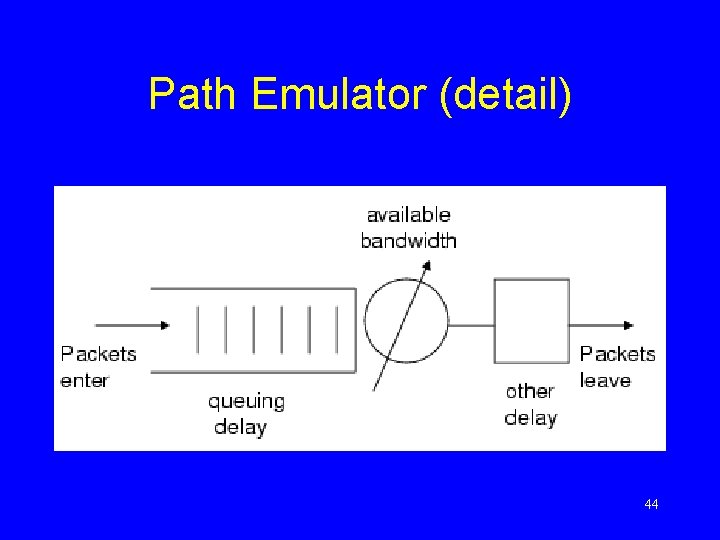
Path Emulator (detail) 44
- Slides: 44