
Flexible Seating Effects on Students with ADHD in
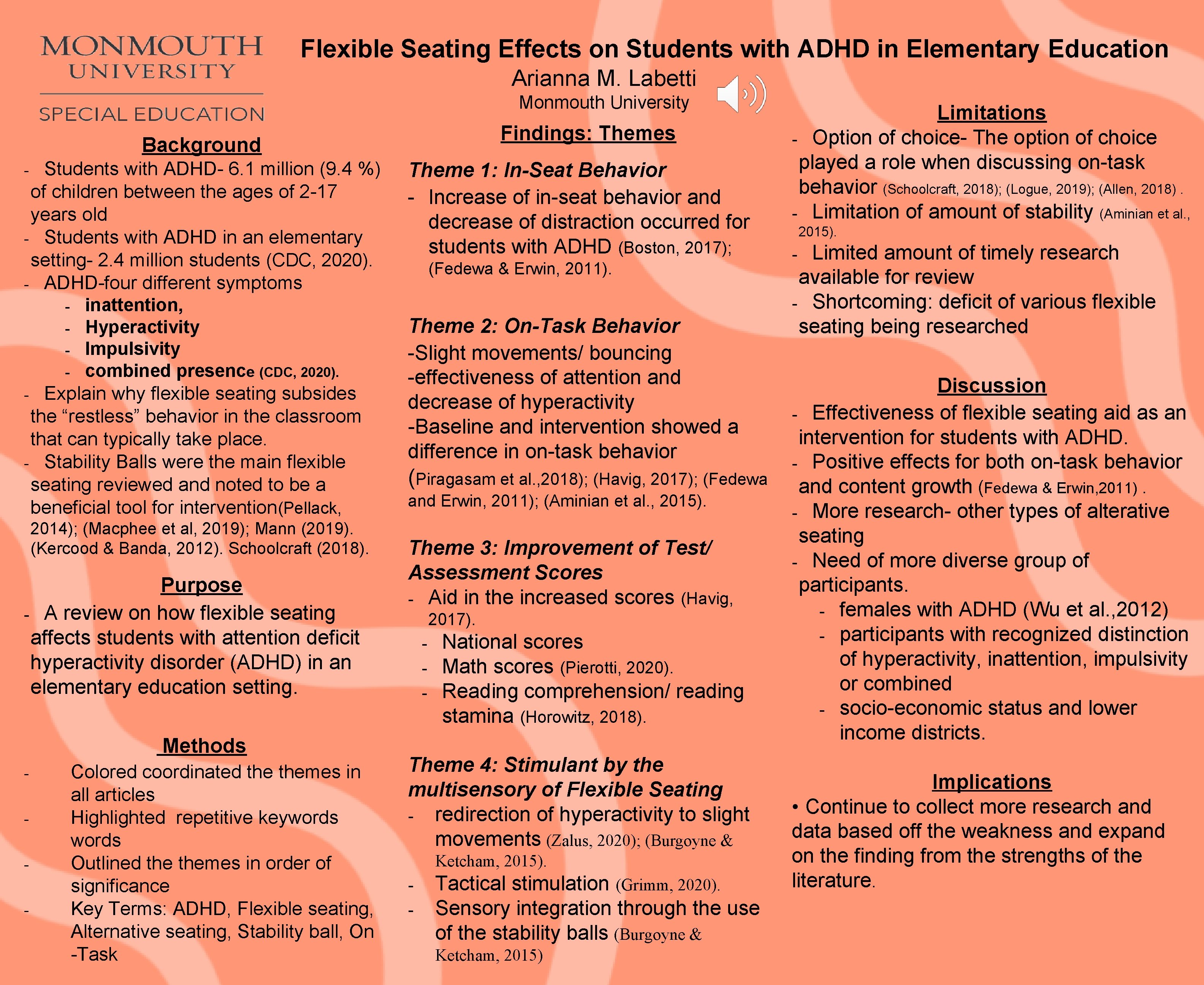
Flexible Seating Effects on Students with ADHD in Elementary Education Arianna M. Labetti Monmouth University Findings: Themes Background - Students with ADHD- 6. 1 million (9. 4 %) of children between the ages of 2 -17 years old - Students with ADHD in an elementary setting- 2. 4 million students (CDC, 2020). - ADHD-four different symptoms - inattention, - Hyperactivity - Impulsivity - combined presence (CDC, 2020). - Explain why flexible seating subsides the “restless” behavior in the classroom that can typically take place. - Stability Balls were the main flexible seating reviewed and noted to be a beneficial tool for intervention(Pellack, 2014); (Macphee et al, 2019); Mann (2019). (Kercood & Banda, 2012). Schoolcraft (2018). Purpose - A review on how flexible seating affects students with attention deficit hyperactivity disorder (ADHD) in an elementary education setting. Methods - Colored coordinated themes in all articles Highlighted repetitive keywords Outlined themes in order of significance Key Terms: ADHD, Flexible seating, Alternative seating, Stability ball, On -Task Theme 1: In-Seat Behavior - Increase of in-seat behavior and decrease of distraction occurred for students with ADHD (Boston, 2017); (Fedewa & Erwin, 2011). Theme 2: On-Task Behavior -Slight movements/ bouncing -effectiveness of attention and decrease of hyperactivity -Baseline and intervention showed a difference in on-task behavior (Piragasam et al. , 2018); (Havig, 2017); (Fedewa and Erwin, 2011); (Aminian et al. , 2015). Theme 3: Improvement of Test/ Assessment Scores - Aid in the increased scores (Havig, 2017). - National scores - Math scores (Pierotti, 2020). - Reading comprehension/ reading stamina (Horowitz, 2018). Theme 4: Stimulant by the multisensory of Flexible Seating - redirection of hyperactivity to slight movements (Zalus, 2020); (Burgoyne & Ketcham, 2015). - Tactical stimulation (Grimm, 2020). Sensory integration through the use of the stability balls (Burgoyne & Ketcham, 2015) Limitations - Option of choice- The option of choice played a role when discussing on-task behavior (Schoolcraft, 2018); (Logue, 2019); (Allen, 2018). - Limitation of amount of stability (Aminian et al. , 2015). - Limited amount of timely research available for review - Shortcoming: deficit of various flexible seating being researched Discussion - Effectiveness of flexible seating aid as an intervention for students with ADHD. - Positive effects for both on-task behavior and content growth (Fedewa & Erwin, 2011). - More research- other types of alterative seating - Need of more diverse group of participants. - females with ADHD (Wu et al. , 2012) - participants with recognized distinction of hyperactivity, inattention, impulsivity or combined - socio-economic status and lower income districts. Implications • Continue to collect more research and data based off the weakness and expand on the finding from the strengths of the literature.
- Slides: 1