
Flexible Manufacturing System Classroom Laboratory Design Team Jonathan

Flexible Manufacturing System Classroom Laboratory Design Team Jonathan Correia, Sean Heckathorne, Jeff Quinn
Problem Statement Project Need ► Current Manufacturing Systems and Techniques (MIMU 530) lab experiments do not adequately relate classroom theory to practice or expose students to a broad enough range of manufacturing techniques.
Problem Statement Project Statement ► To create a set of laboratory experiments that satisfy the need to integrate classroom teachings with laboratory practices. ► Understand the demands and expectations of laboratory objectives and formulate strategies to satisfy them. ► Design a flexible manufacturing system to introduce students to a practical application of traditional and state of the art manufacturing techniques.
on Our Goals ► Design a set of lab experiments to allow students to demonstrate knowledge of course objectives ► Research and recommend lab configurations and equipment that satisfy the demands of the lab procedures ► Identify and address missing links and voids within the equipment configurations that require unique solutions

Proposed Solution Project Benefits ► Creation of a set of pedagogically sound laboratory exercises to be used in the MIMU 530 course ► Integration of classroom theory and hands-on practice ► Addition of problem solving aspect to lab experience ► Recommendation of equipment and configurations to satisfy demands of long-term laboratory needs ► A specification for Phase I laboratory development - definition of equipment and operating procedures required for implementation ► Design of enabling technologies for implementation of Phase I
nts Overview ► Demonstrate and understand practical measure and calculation of process performance metrics § WIP, cycle time, MLT, utilization, production rate ► Analyze the process performance and recommend improvements ► Gain understanding of manufacturing configurations and how they relate to process performance § Storage buffers, batch vs. flow, product customization (pull), lean manufacturing
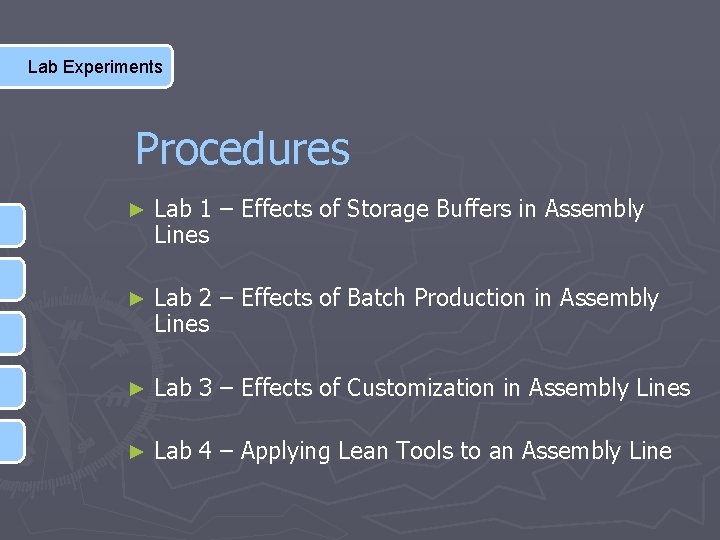
Lab Experiments Procedures ► Lab 1 – Effects of Storage Buffers in Assembly Lines ► Lab 2 – Effects of Batch Production in Assembly Lines ► Lab 3 – Effects of Customization in Assembly Lines ► Lab 4 – Applying Lean Tools to an Assembly Line
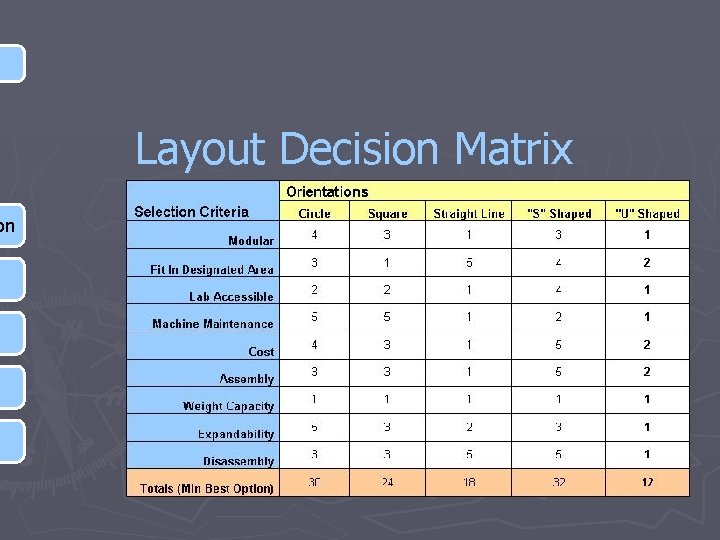
on Layout Decision Matrix
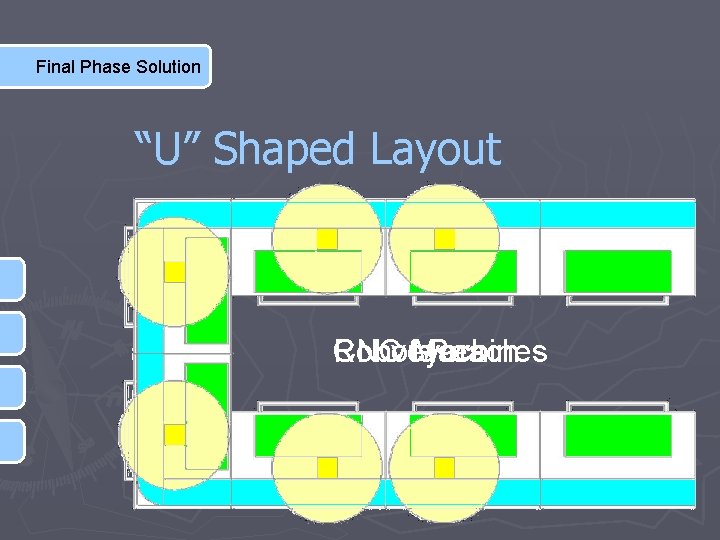
Final Phase Solution “U” Shaped Layout CNC Machines Conveyors Robots Reach
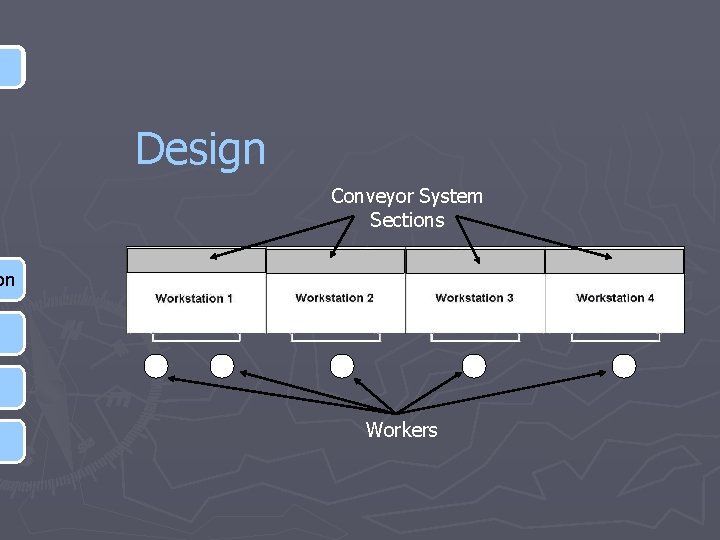
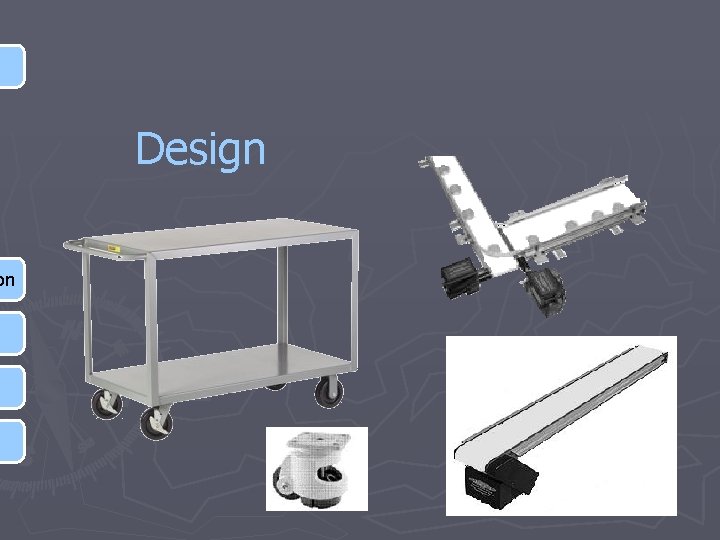
Design Conveyor System Sections on Workers
on Design
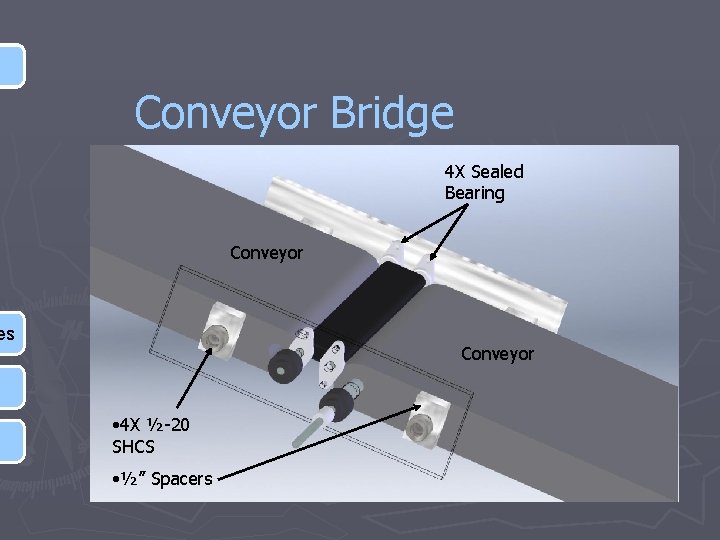
Conveyor Bridge 4 X Sealed Bearing Support Plates Conveyor es 2. 75” Gap Conveyor • 4 X ½-20 SHCS Conveyor Drive Shaft Timing Pulleys and Belt • ½” Spacers
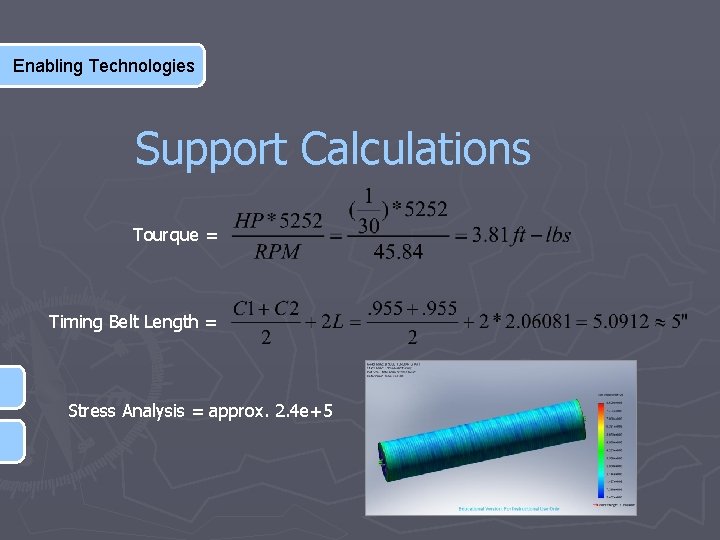
Enabling Technologies Support Calculations Tourque = Timing Belt Length = Stress Analysis = approx. 2. 4 e+5
Accomplishments ► Four lab experiments written and ready for implementation at the next course offering ► Final phase system design in place ► Phase I design refined and ready for implementation ► Conveyor gap solution designed and ready for testing and implementation on
Conclusion Future Consideration ► Purchase of Phase I equipment for implementation ► Continue research into machines that will satisfy laboratory objectives ► Research computer programs to control machine automation ► Build prototype of conveyor bridge and test in the system ► Maintain laboratory experiment objectives while altering the procedure to include new machines

ns ?
- Slides: 16