
Flexible Extensible Digital Object Repository Architecture 01 24
Flexible Extensible Digital Object Repository Architecture 01 -24 -2006
Introduction to Fedora u An Open-Source Digital Repository Management System. u Fedora demonstrates how distributed digital library architecture can be deployed using web-based technologies, including XML and Web services. u Developed jointly by UVA and Cornell University.
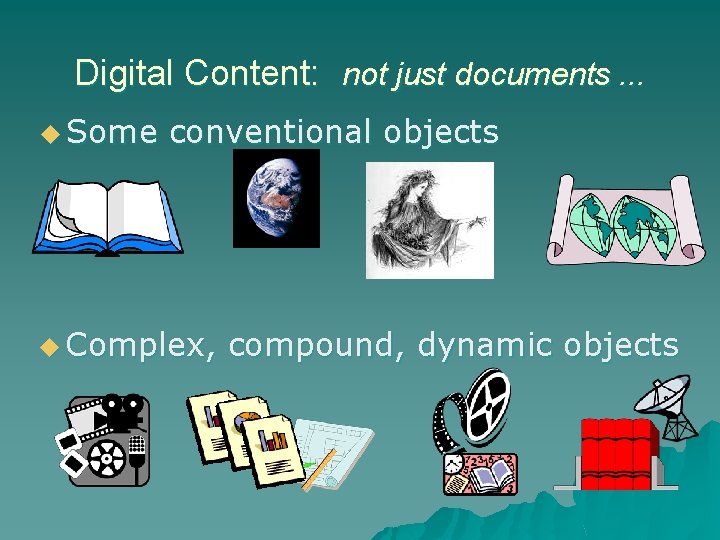
Digital Content: not just documents. . . u Some conventional objects u Complex, compound, dynamic objects
Why Fedora? (1) u Digital Object Model – – Abstraction: model for heterogeneous digital resources Flexible: create different “content models” Generic: no bifurcation of metadata and content Aggregation: both locally stored content items and byreference content items – Extensible: associate services with objects (extensible behavior interfaces) u u Distributed Repositories – – – Interoperable object serialization (defined by XML schema) Common web service APIs for access and management Federation for distributed, virtual collections Object Lifecycle Management (archive and preservation) – – XML ingest, storage, and export Content versioning Object-to-Object relationships Event history
Why Fedora? (2) u Content repurposing – – – u Provide multiple views of content/metadata Dynamic transformations of content/metadata Add new views/transformations over time Web Services – Fedora is exposed via web services – Fedora can interact with other web services – Fedora uses WSDL to define interfaces and XML transmission u Easy integration with other applications and systems – Does not assume any particular workflow or end-user application – Generic repository service as substrate for many kinds of applications

Digital Object Model Architectural View Persistent ID (PID) Default Disseminator Your Extension Datastream (item) Digital object identifier Service Perspective: methods for disseminating “views” of content Item Perspective: Set of content or metadata items Datastream (item) System Metadata Internal: key metadata necessary to manage the object

Digital Object Model Service Relationships Data Object r o i av tion h be crip bs u s Persistent ID (PID) Disseminators System Metadata Datastreams da ta co Persistent ID (PID) System Metadata Behavior Definition Object Datastreams Service Definition Metadata (WSDL) nt behavior contract ra ct Persistent ID (PID) System Metadata Behavior Mechanism Object Datastreams Service Binding Metadata (WSDL) External Service
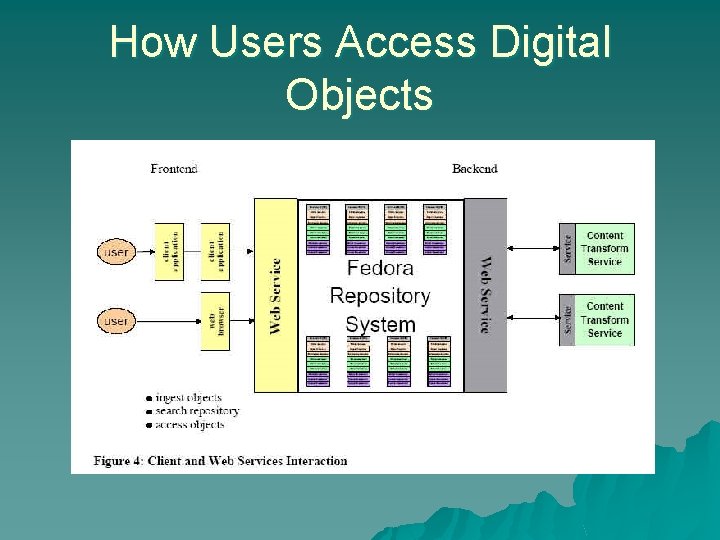
How Users Access Digital Objects
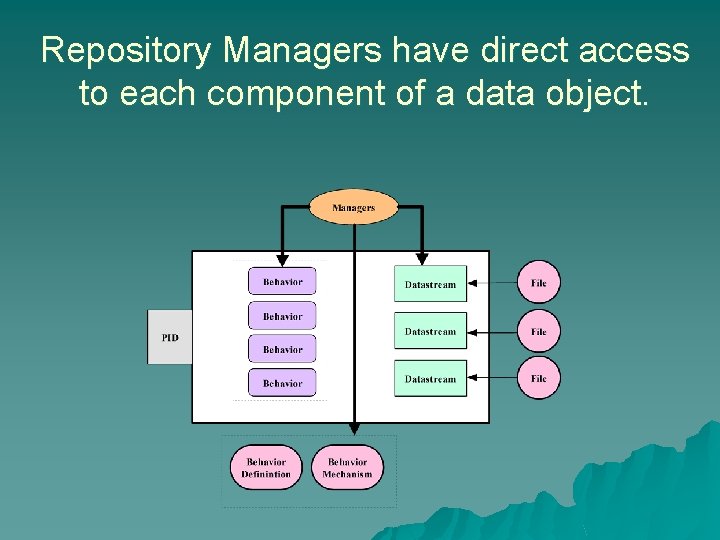
Repository Managers have direct access to each component of a data object.
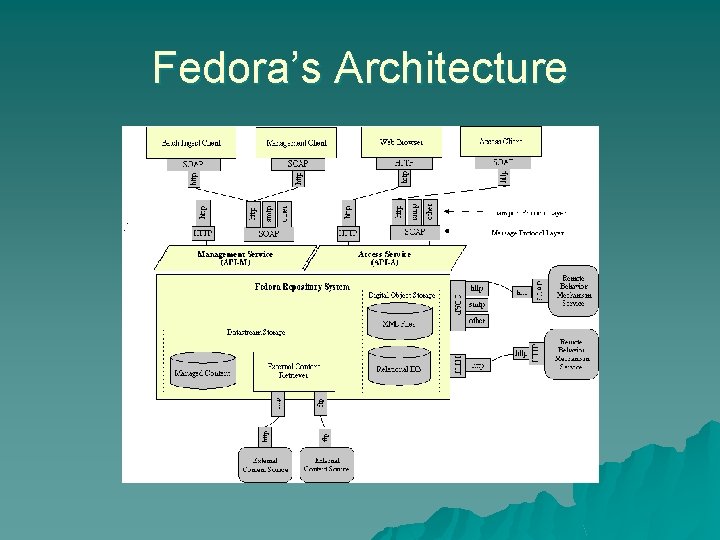
Fedora’s Architecture
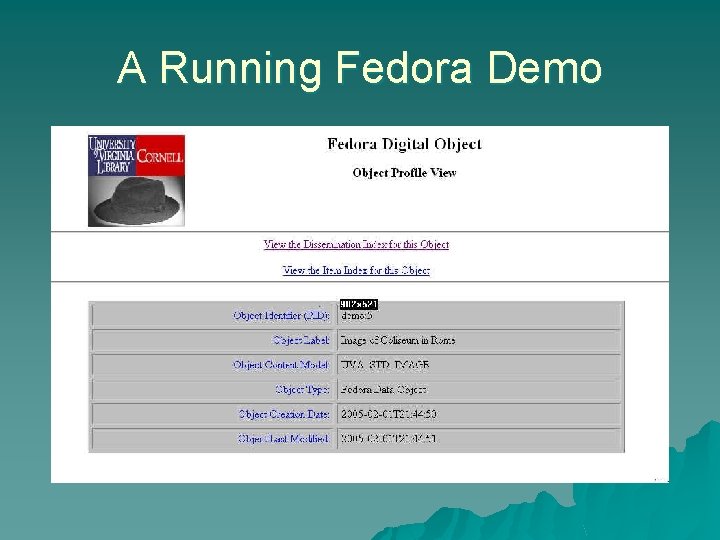
A Running Fedora Demo
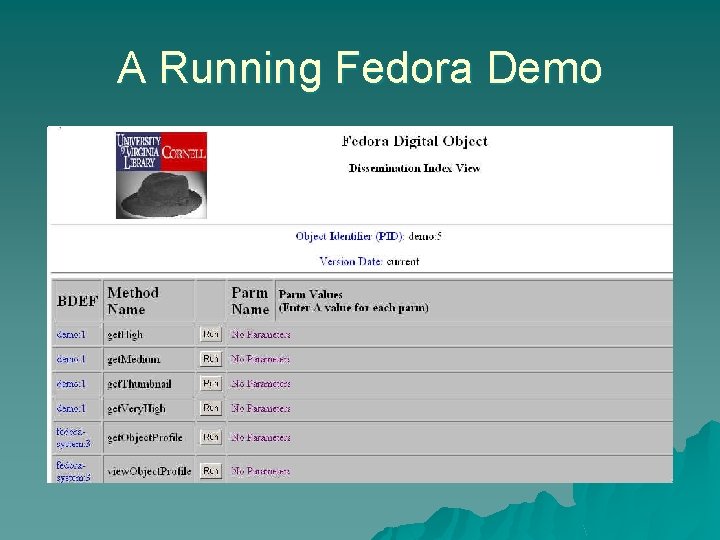
A Running Fedora Demo
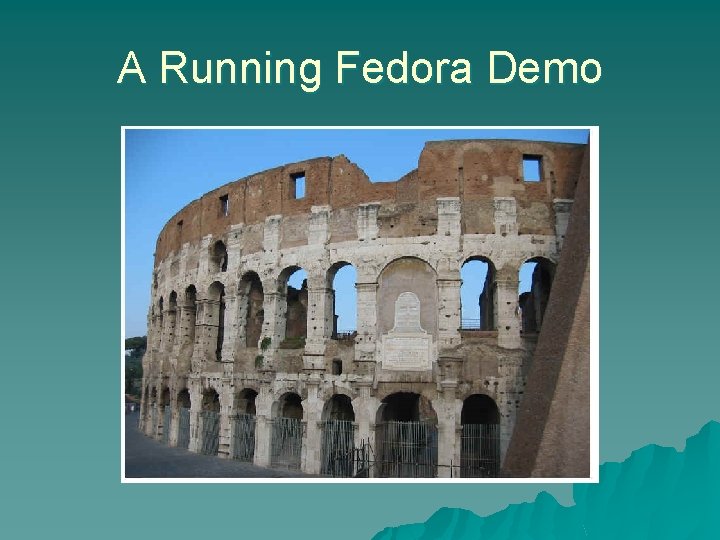
A Running Fedora Demo
Questions? u For technical problems, feel free to contact me: huali@cse. psu. edu
- Slides: 14