
FLEXIBILITY WARM UPCOOL DOWN Objectives q Students will
FLEXIBILITY WARM UP/COOL DOWN Objectives: q. Students will recognize important principles of flexibility, i. e. warm up, cool down, range of motion, FITT: frequency, intensity, time, type q. Each individual will demonstrate a range of motion by performing a flexibility test on the TRIFITT machine in class. Indian Hills Middle School
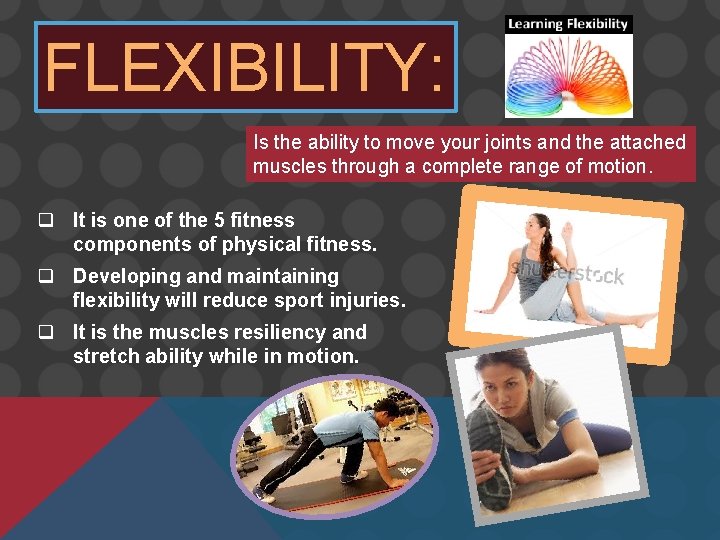
FLEXIBILITY: Is the ability to move your joints and the attached muscles through a complete range of motion. q It is one of the 5 fitness components of physical fitness. q Developing and maintaining flexibility will reduce sport injuries. q It is the muscles resiliency and stretch ability while in motion.
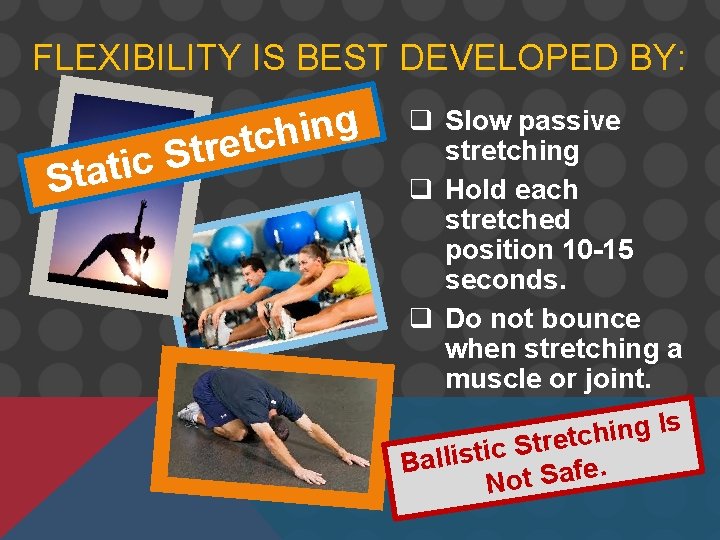
FLEXIBILITY IS BEST DEVELOPED BY: S c i t Sta g n i h c t e r t q Slow passive stretching q Hold each stretched position 10 -15 seconds. q Do not bounce when stretching a muscle or joint. Is g n i h c t e r t S c i t Ballis e. f a S t o N
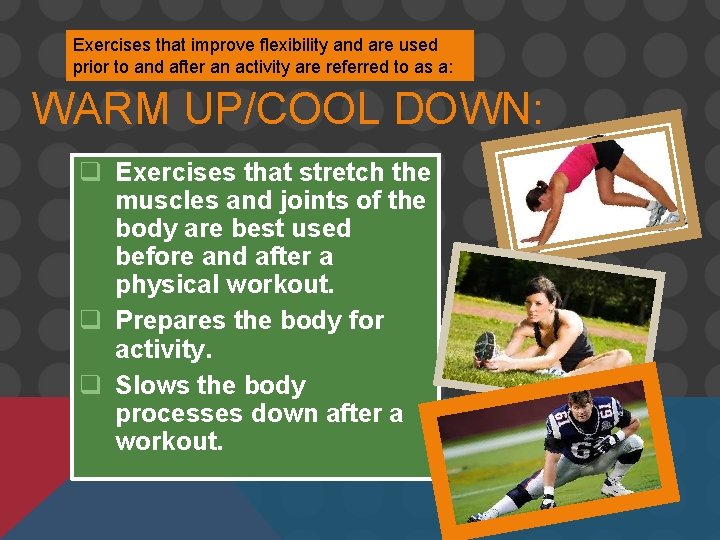
Exercises that improve flexibility and are used prior to and after an activity are referred to as a: WARM UP/COOL DOWN: q Exercises that stretch the muscles and joints of the body are best used before and after a physical workout. q Prepares the body for activity. q Slows the body processes down after a workout.
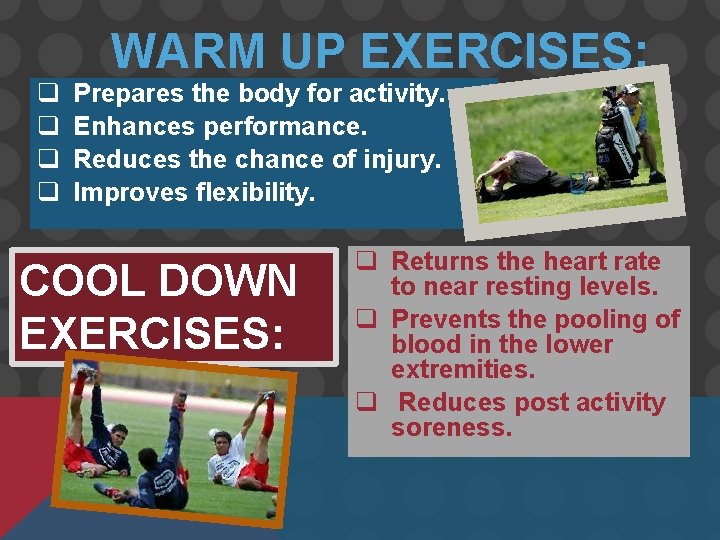
q q WARM UP EXERCISES: Prepares the body for activity. Enhances performance. Reduces the chance of injury. Improves flexibility. COOL DOWN EXERCISES: q Returns the heart rate to near resting levels. q Prevents the pooling of blood in the lower extremities. q Reduces post activity soreness.
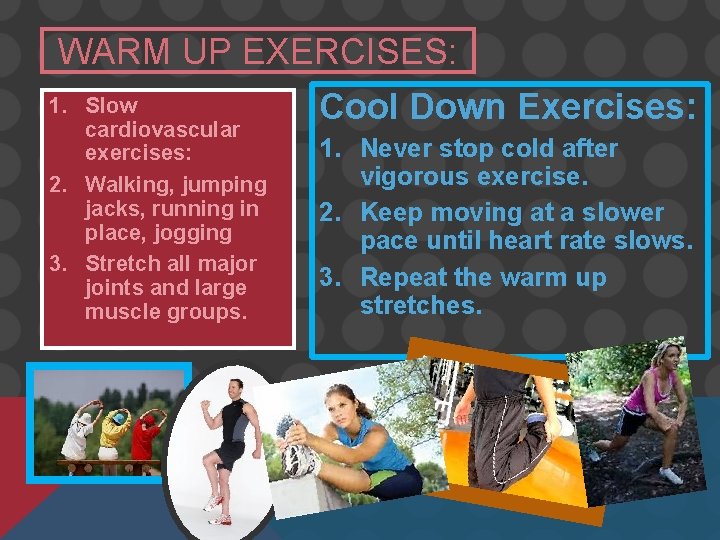
WARM UP EXERCISES: 1. Slow cardiovascular exercises: 2. Walking, jumping jacks, running in place, jogging 3. Stretch all major joints and large muscle groups. Cool Down Exercises: 1. Never stop cold after vigorous exercise. 2. Keep moving at a slower pace until heart rate slows. 3. Repeat the warm up stretches.
FLEXIBILITY: F. I. T. T. SAFETY: WARM UP/COOL DOWN EXERCISES q Exercises should not be painful q There should be some discomfort in the stretch. q 10 -15 minutes of stretching activities, daily or before and after activity. F: I: T : T: Frequency: daily, before and after activity. Intensity: stretch beyond the muscles normal length-- to discomfort. Time: hold each stretch 1015 seconds or longer. Type: static stretches, slow and gradual.
GOOD HEALTH REVIEW & QUESTIONS: 1. What is flexibility? 2. What kind of stretching is best and which is the worst? Explain. 3. What is a warm up and cool down? 4. What does a good warm up do for an individual? Name 3 things. 5. Why is a good cool down important? Name 3 things. 6. What are the F. I. T. T. safety principles of flexibility? Explain each.
- Slides: 8