
Flauberts Madame Bovary Issues Contexts Main issues l
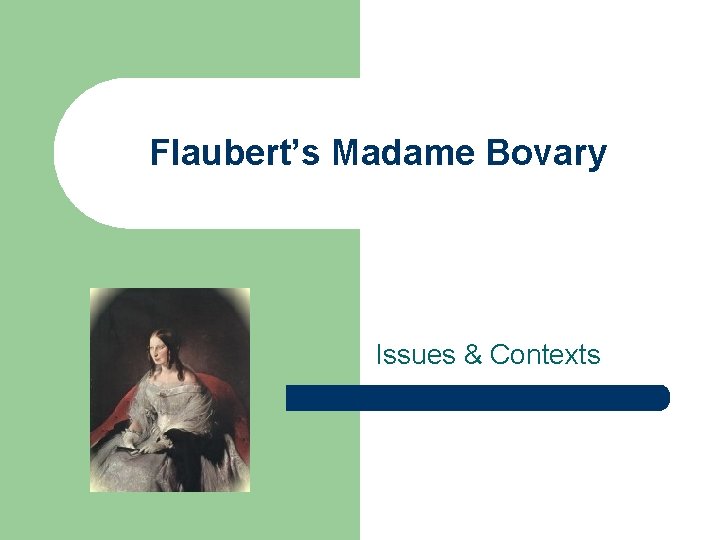
Flaubert’s Madame Bovary Issues & Contexts
Main issues l Anti-Romantic novel with underlying Romantic impulses – simultaneous criticism and admiration of Emma Bovary; Emma as base and materialistic but also unfulfilled dreamer, failed Romantic hero, a sort of female Don Quixote – Flaubert was tried on charges of immorality stemming from the publication of the novel; successfully defended himself arguing that the novel's ending upholds morality and illustrates the consequences of sin l Critical portrayal of bourgeois life as driven by petty self-interest and hypocrisy
More Issues Novel Illustrates: l Belief in possibility of genuine professionalism, craftsmanship, and scientific knowledge l Redeeming power of art – victory of art over reality, a passionate search for Beauty, even though it is an illusion l Narrative technique blends authorial and characters' perspectives. – "The author, in his work, must be like God in the universe, present everywhere and visible nowhere" (Flaubert)
Main Historical Contexts l Flaubert's critical attitude toward the bourgeoisie related to the failure of the popular revolutions in France and the growing power, selfishness, and arrogance of the middle classes. – French Revolution: popular uprising against the monarchy of Louis XVI; ideals of liberty, equality, and brotherhood; storming of the Bastille (July 14); "Declaration of the Rights of Man and the Citizen" (August 27) l Popular and egalitarian character of 1789 French Revolution betrayed in Napoleon Bonaparte's Consulate (1799 -1804) and his later crowning as Emperor of France (1804 -1815) l Napoleon as characteristic of the bourgeois adoption of aristocratic values and attitudes; return to monarchic, dictatorial model; denial of the values of freedom and equality embodied in the Revolution of 1789
More Historical Contexts l Repeated failures of revolutionary movements in France (1830 -1848) – The July Revolution in France, students and workers who wanted a republic against monarchists. l Constitutional monarchy, Louis-Philippe, king of France (1830 -1848); Louis-Napoleon Bonaparte's repetition of his uncle's historical trajectory and favoring of the bourgeoisie at the expense of the popular classes l French middle classes represented in Madame Bovary by the variety of professionals (doctors, pharmacists, lawyers, notaries, bankers, etc. ) and townspeople; middle and professional classes marked by seeming "progressiveness" masking underlying selfishness and hypocritical, self-serving purposes
- Slides: 5