
Flatworms Roundworms Rotifers Chapter 34 Phylum Platyhelminthes Section
- Slides: 42
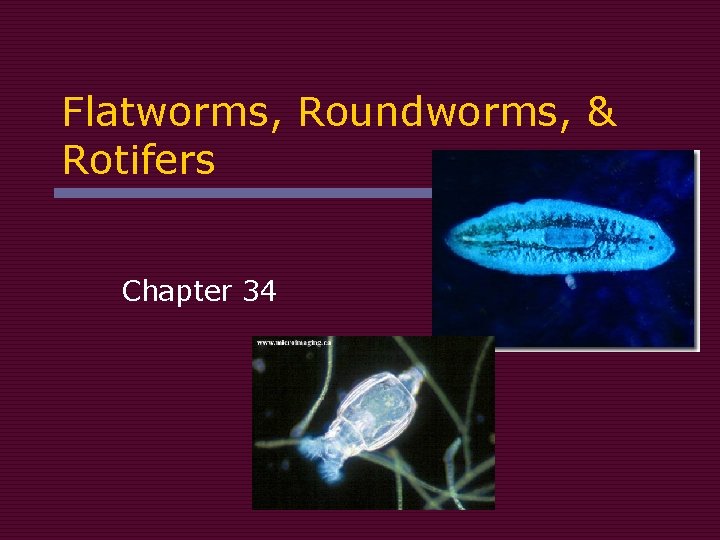
Flatworms, Roundworms, & Rotifers Chapter 34
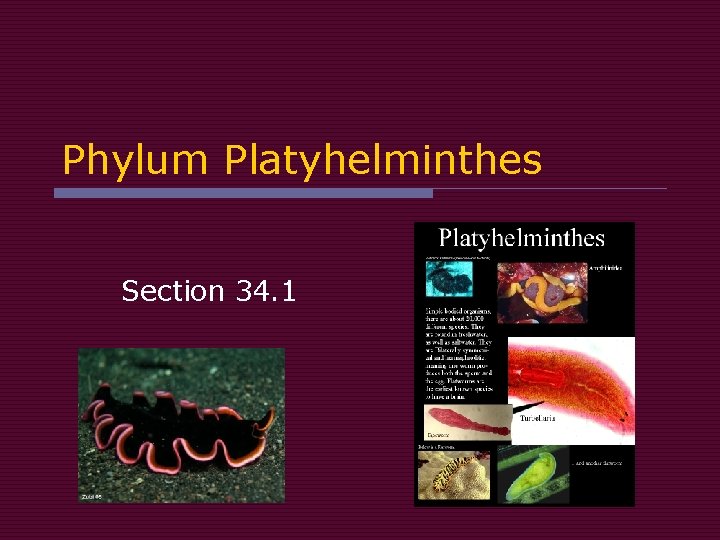
Phylum Platyhelminthes Section 34. 1
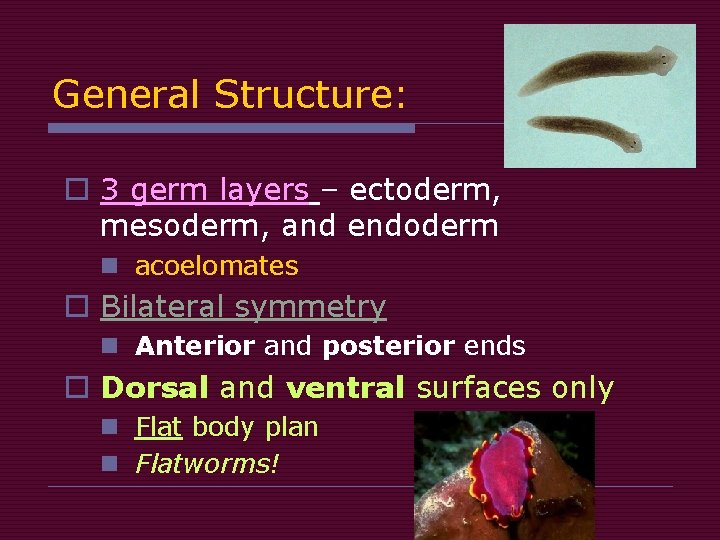
General Structure: o 3 germ layers – ectoderm, mesoderm, and endoderm n acoelomates o Bilateral symmetry n Anterior and posterior ends o Dorsal and ventral surfaces only n Flat body plan n Flatworms!
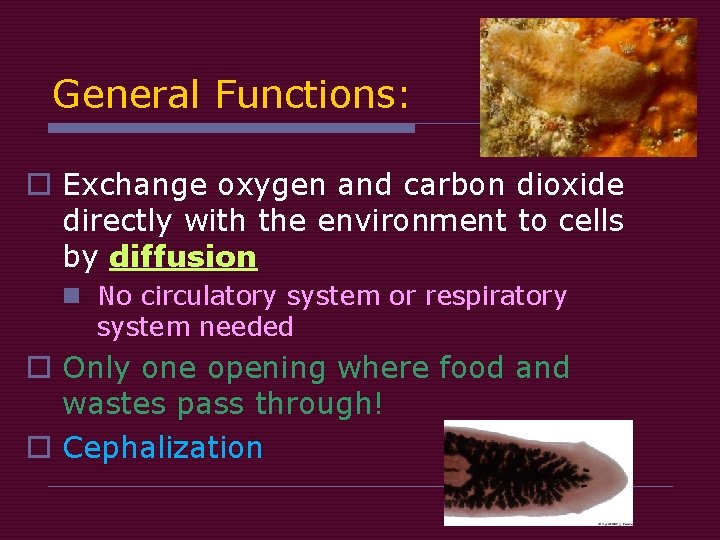
General Functions: o Exchange oxygen and carbon dioxide directly with the environment to cells by diffusion n No circulatory system or respiratory system needed o Only one opening where food and wastes pass through! o Cephalization
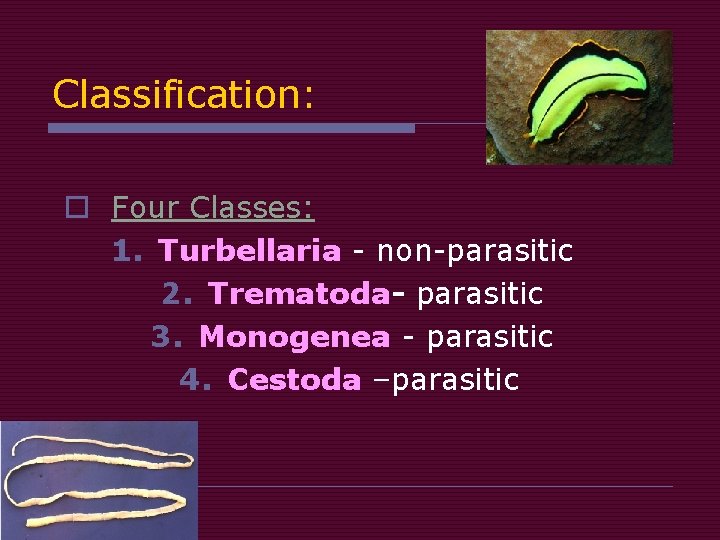
Classification: o Four Classes: 1. Turbellaria - non-parasitic 2. Trematoda- parasitic 3. Monogenea - parasitic 4. Cestoda –parasitic
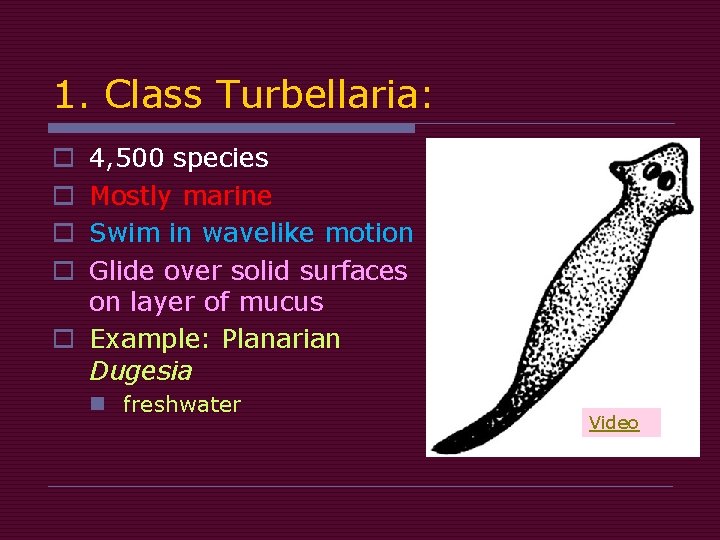
1. Class Turbellaria: 4, 500 species Mostly marine Swim in wavelike motion Glide over solid surfaces on layer of mucus o Example: Planarian Dugesia o o n freshwater Video
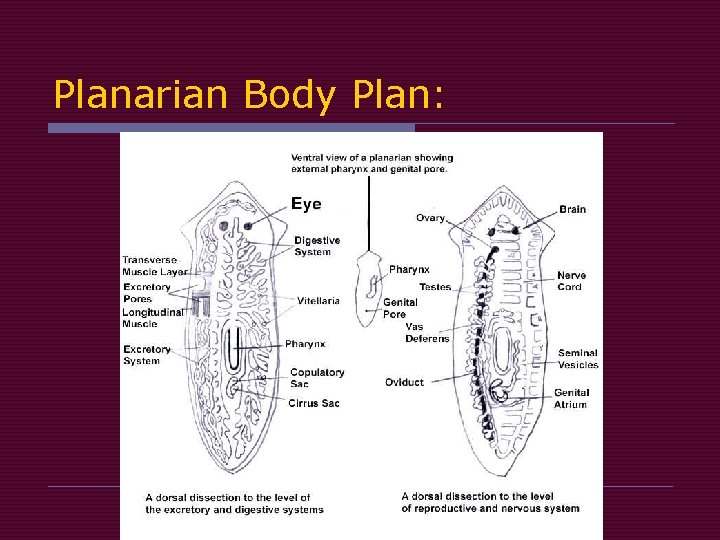
Planarian Body Plan:
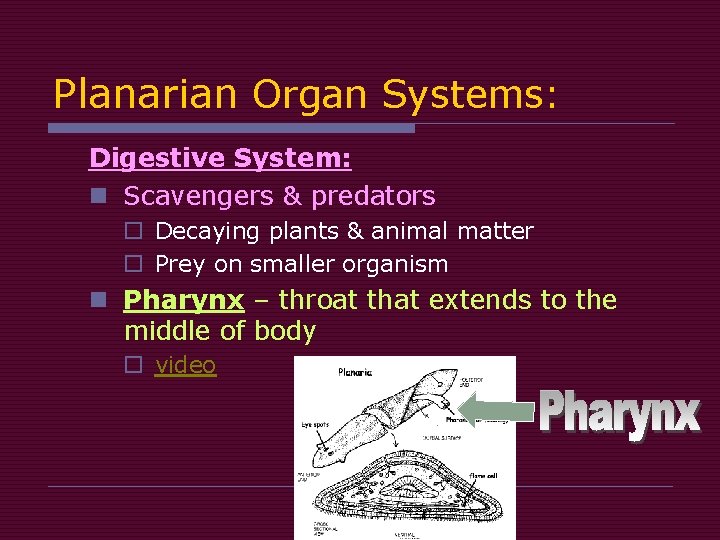
Planarian Organ Systems: Digestive System: n Scavengers & predators o Decaying plants & animal matter o Prey on smaller organism n Pharynx – throat that extends to the middle of body o video
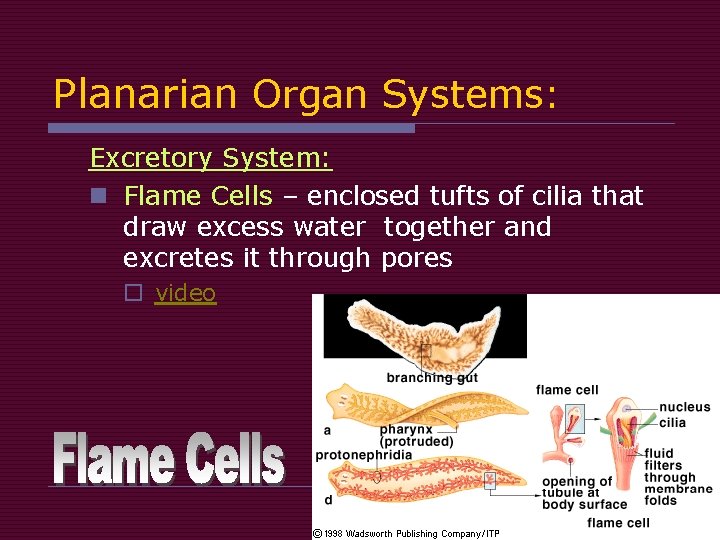
Planarian Organ Systems: Excretory System: n Flame Cells – enclosed tufts of cilia that draw excess water together and excretes it through pores o video
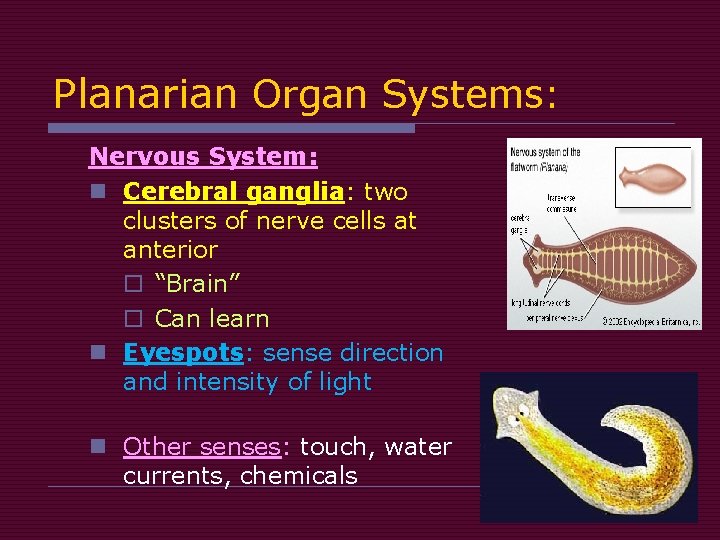
Planarian Organ Systems: Nervous System: n Cerebral ganglia: two clusters of nerve cells at anterior o “Brain” o Can learn n Eyespots: sense direction and intensity of light n Other senses: touch, water currents, chemicals
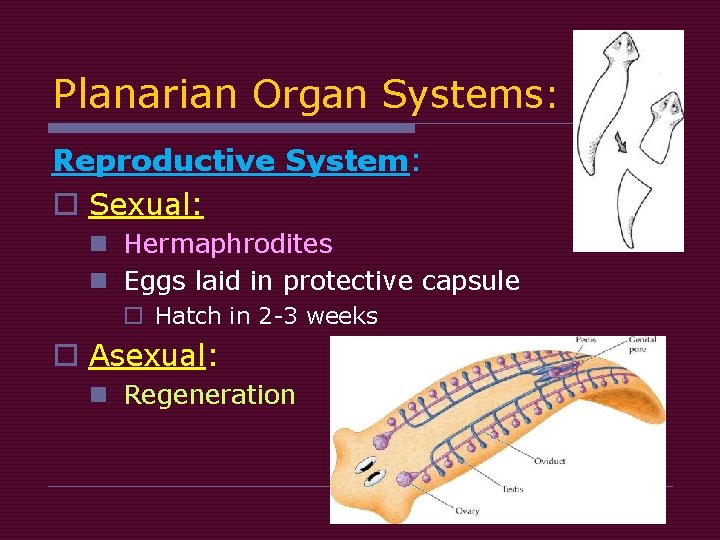
Planarian Organ Systems: Reproductive System: o Sexual: n Hermaphrodites n Eggs laid in protective capsule o Hatch in 2 -3 weeks o Asexual: n Regeneration
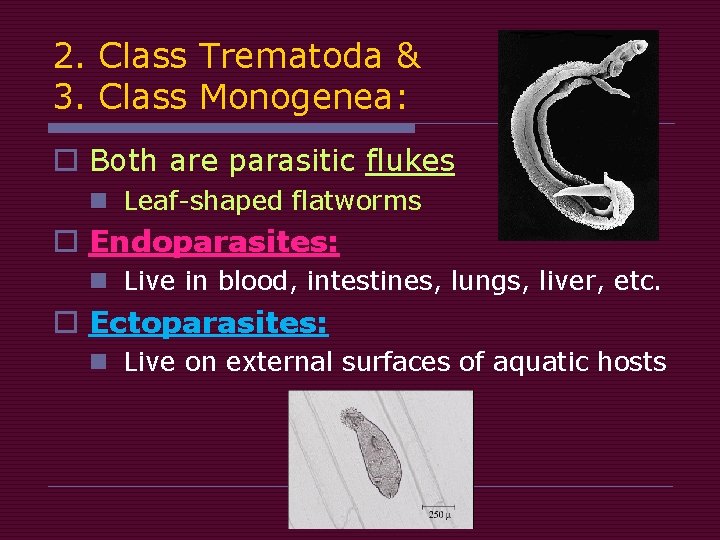
2. Class Trematoda & 3. Class Monogenea: o Both are parasitic flukes n Leaf-shaped flatworms o Endoparasites: n Live in blood, intestines, lungs, liver, etc. o Ectoparasites: n Live on external surfaces of aquatic hosts
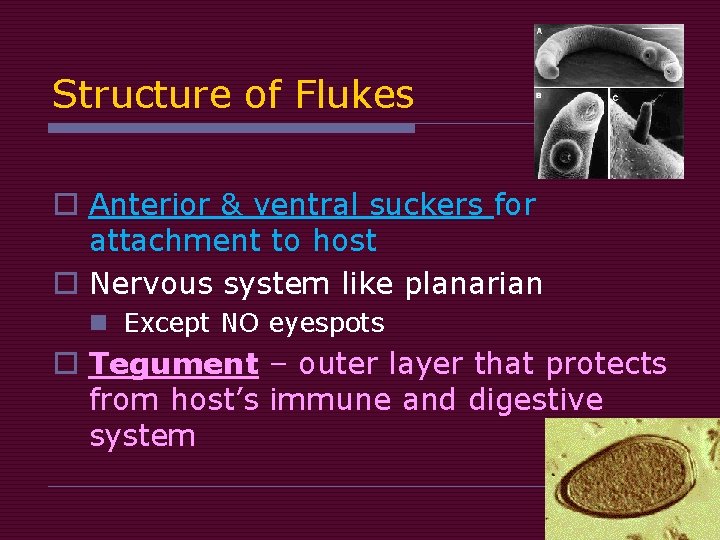
Structure of Flukes o Anterior & ventral suckers for attachment to host o Nervous system like planarian n Except NO eyespots o Tegument – outer layer that protects from host’s immune and digestive system
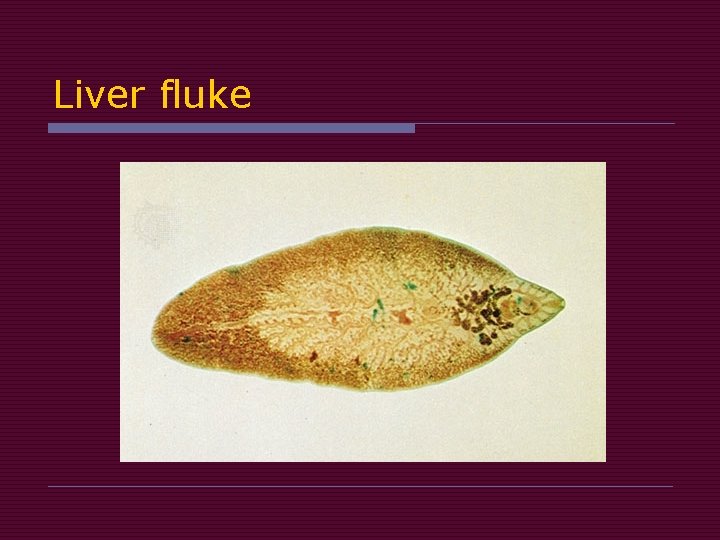
Liver fluke
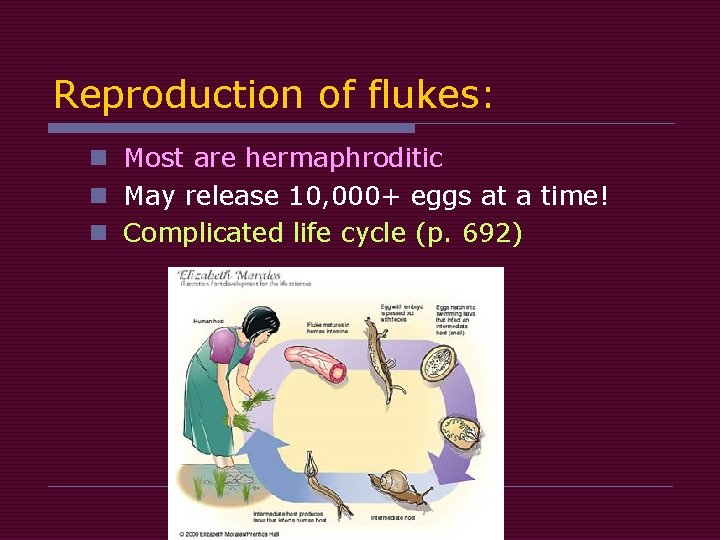
Reproduction of flukes: n Most are hermaphroditic n May release 10, 000+ eggs at a time! n Complicated life cycle (p. 692)
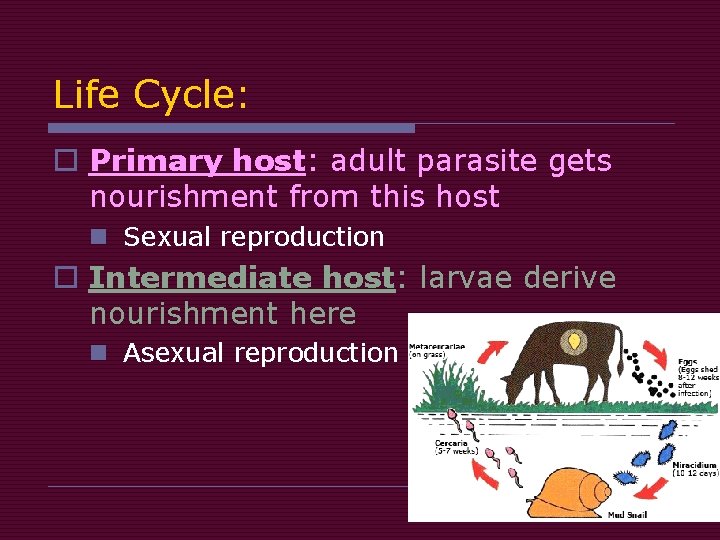
Life Cycle: o Primary host: adult parasite gets nourishment from this host n Sexual reproduction o Intermediate host: larvae derive nourishment here n Asexual reproduction
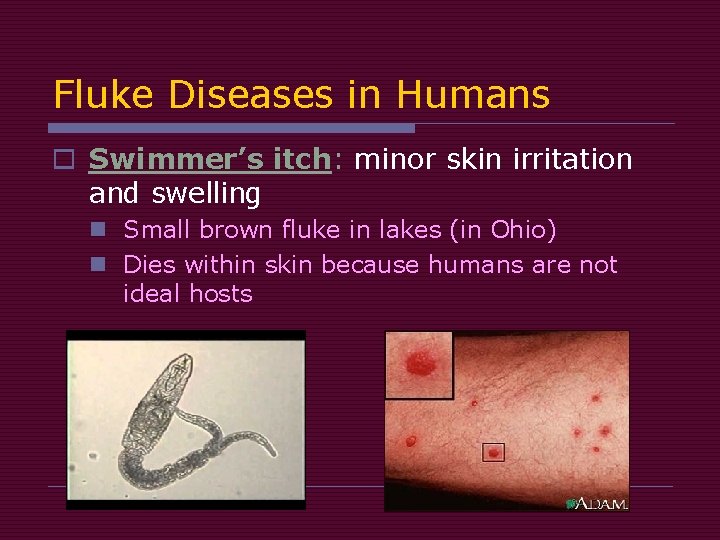
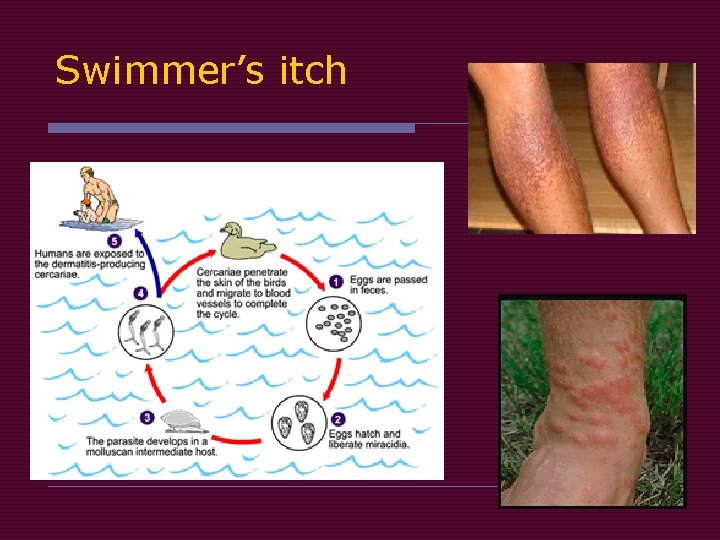
Fluke Diseases in Humans o Swimmer’s itch: minor skin irritation and swelling n Small brown fluke in lakes (in Ohio) n Dies within skin because humans are not ideal hosts
Swimmer’s itch
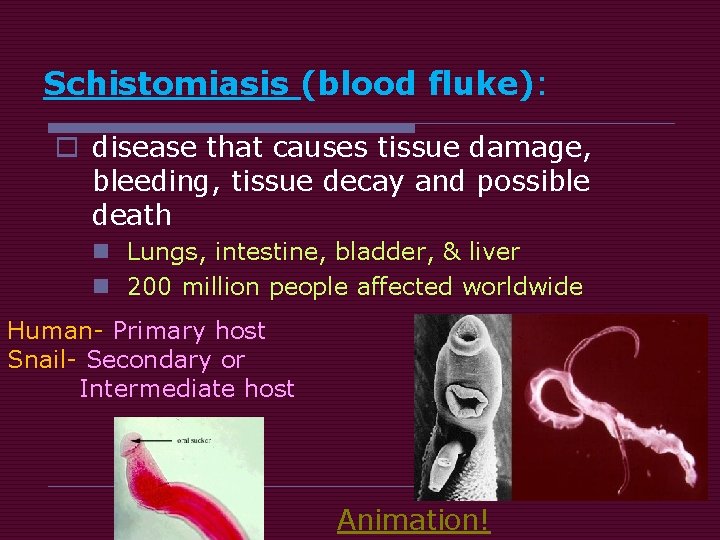
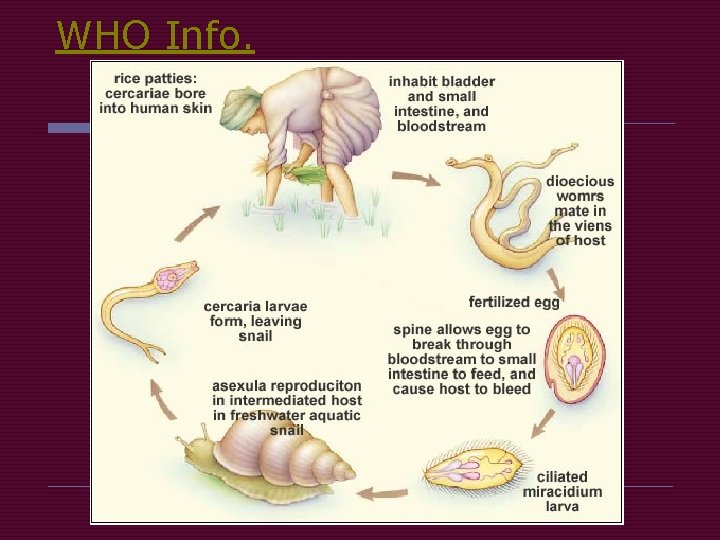
Schistomiasis (blood fluke): o disease that causes tissue damage, bleeding, tissue decay and possible death n Lungs, intestine, bladder, & liver n 200 million people affected worldwide Human- Primary host Snail- Secondary or Intermediate host Animation!
WHO Info.
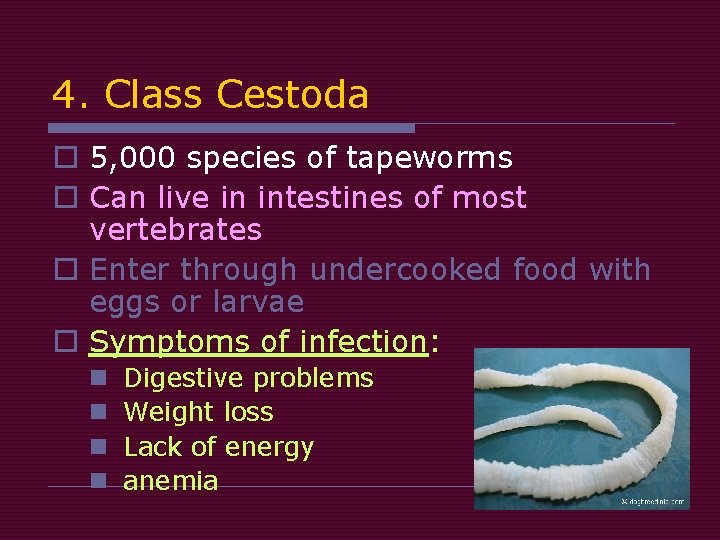
4. Class Cestoda o 5, 000 species of tapeworms o Can live in intestines of most vertebrates o Enter through undercooked food with eggs or larvae o Symptoms of infection: n n Digestive problems Weight loss Lack of energy anemia
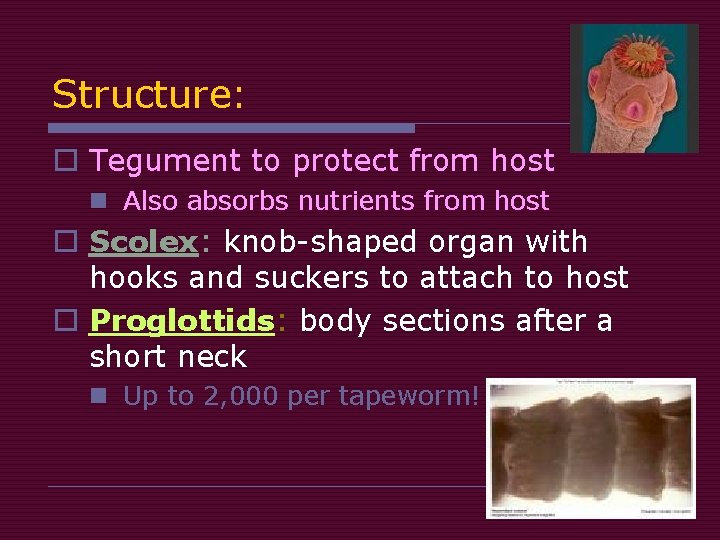
Structure: o Tegument to protect from host n Also absorbs nutrients from host o Scolex: knob-shaped organ with hooks and suckers to attach to host o Proglottids: body sections after a short neck n Up to 2, 000 per tapeworm!
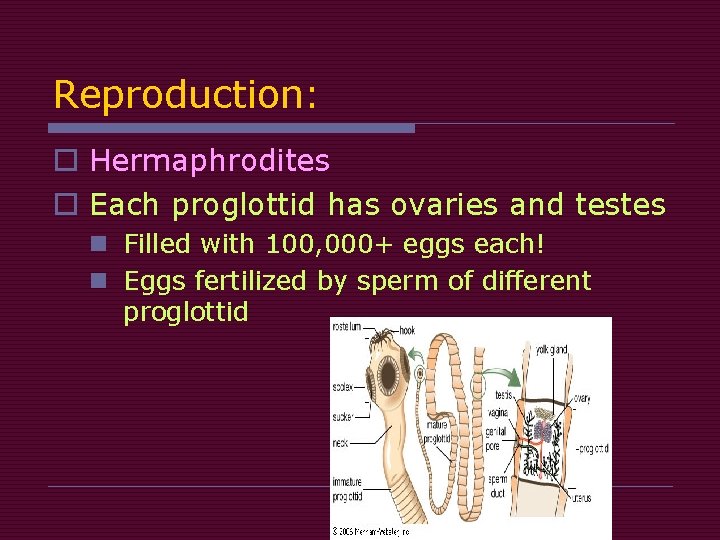
Reproduction: o Hermaphrodites o Each proglottid has ovaries and testes n Filled with 100, 000+ eggs each! n Eggs fertilized by sperm of different proglottid
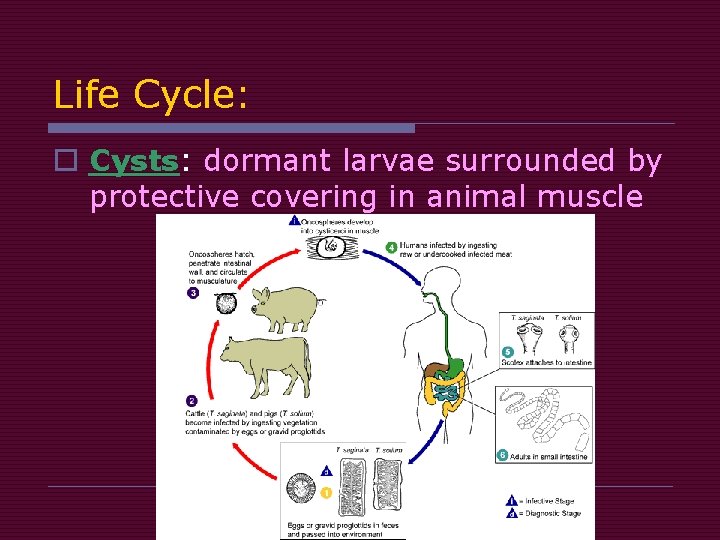
Life Cycle: o Cysts: dormant larvae surrounded by protective covering in animal muscle
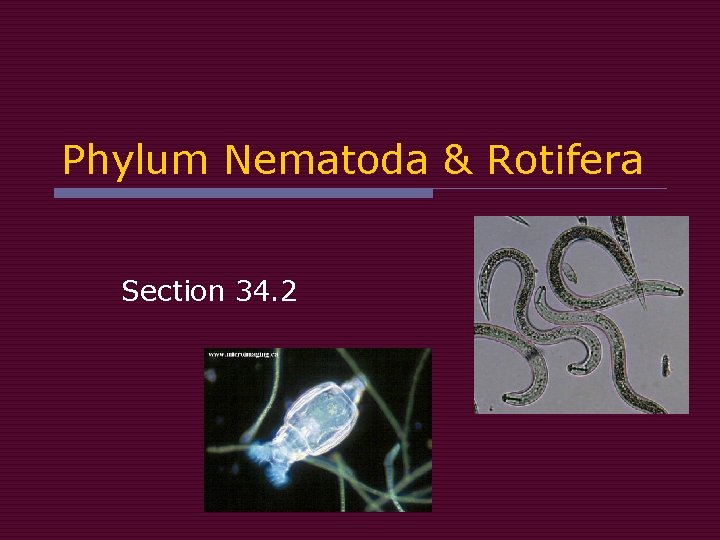
Phylum Nematoda & Rotifera Section 34. 2
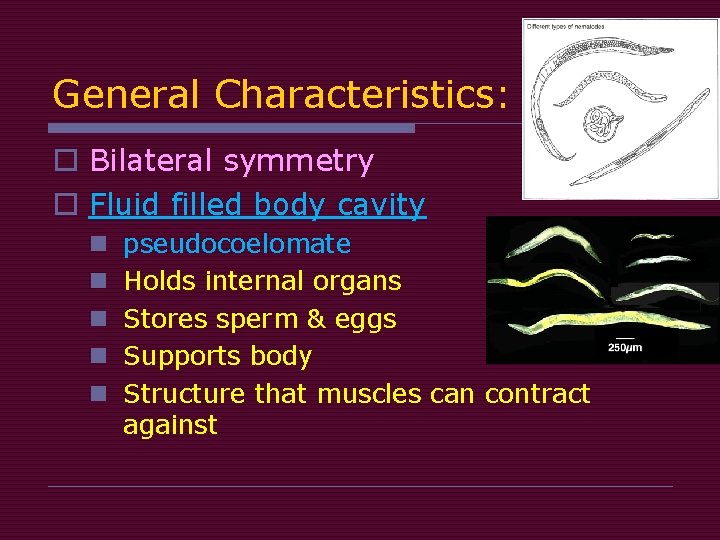
General Characteristics: o Bilateral symmetry o Fluid filled body cavity n n n pseudocoelomate Holds internal organs Stores sperm & eggs Supports body Structure that muscles can contract against
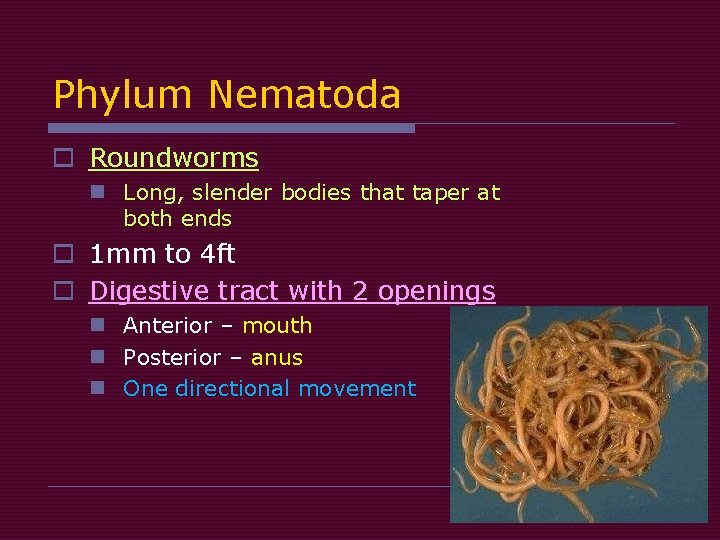
Phylum Nematoda o Roundworms n Long, slender bodies that taper at both ends o 1 mm to 4 ft o Digestive tract with 2 openings n Anterior – mouth n Posterior – anus n One directional movement
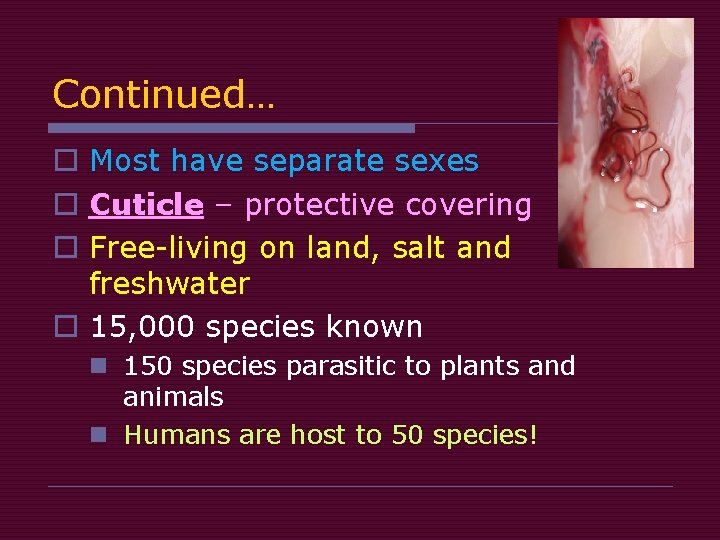
Continued… o Most have separate sexes o Cuticle – protective covering o Free-living on land, salt and freshwater o 15, 000 species known n 150 species parasitic to plants and animals n Humans are host to 50 species!
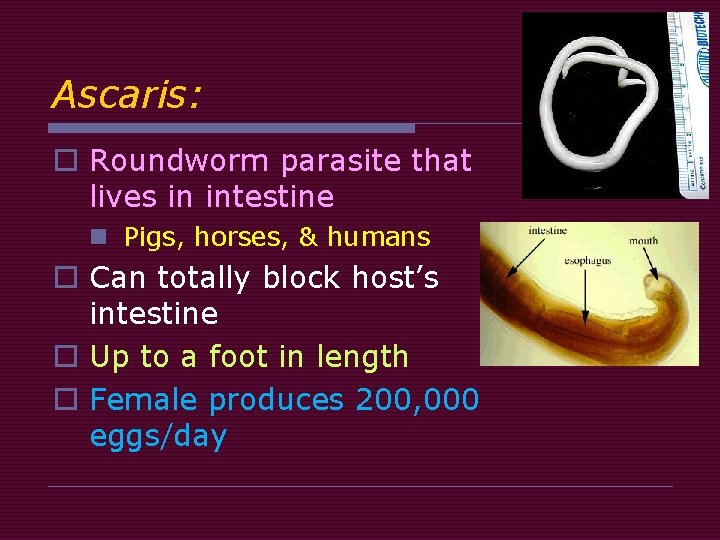
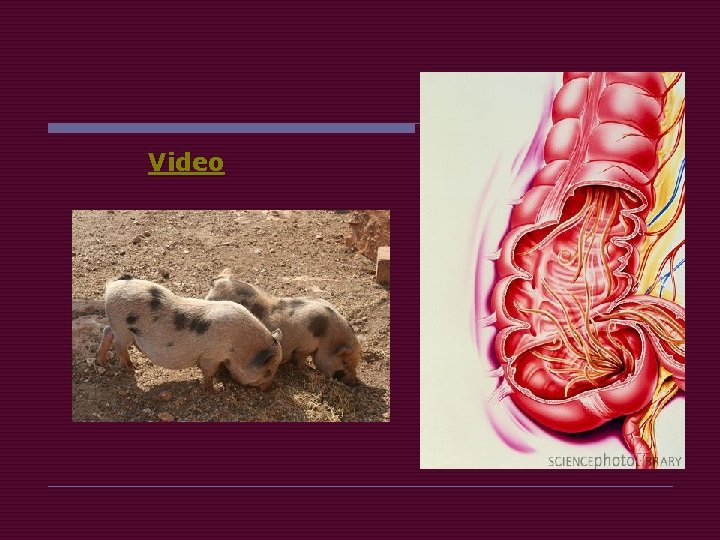
Ascaris: o Roundworm parasite that lives in intestine n Pigs, horses, & humans o Can totally block host’s intestine o Up to a foot in length o Female produces 200, 000 eggs/day
Video
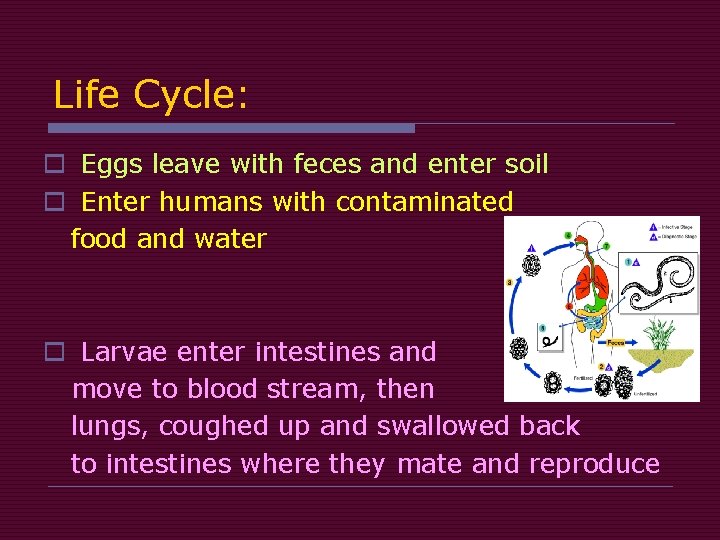
Life Cycle: o Eggs leave with feces and enter soil o Enter humans with contaminated food and water o Larvae enter intestines and move to blood stream, then lungs, coughed up and swallowed back to intestines where they mate and reproduce
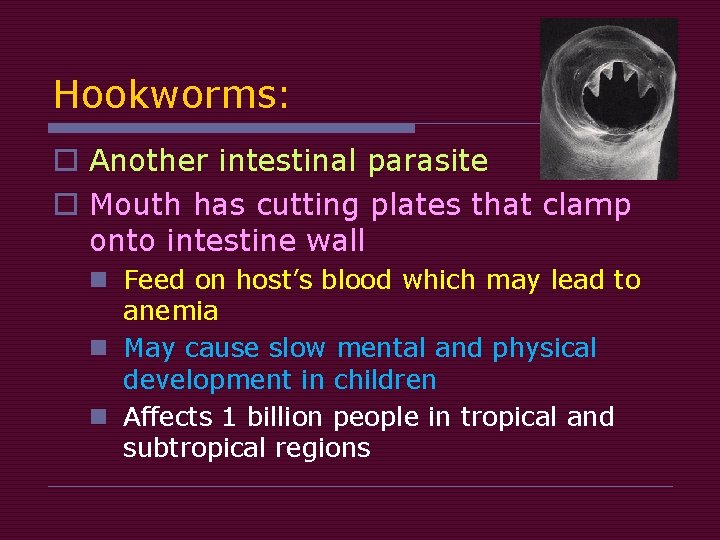
Hookworms: o Another intestinal parasite o Mouth has cutting plates that clamp onto intestine wall n Feed on host’s blood which may lead to anemia n May cause slow mental and physical development in children n Affects 1 billion people in tropical and subtropical regions
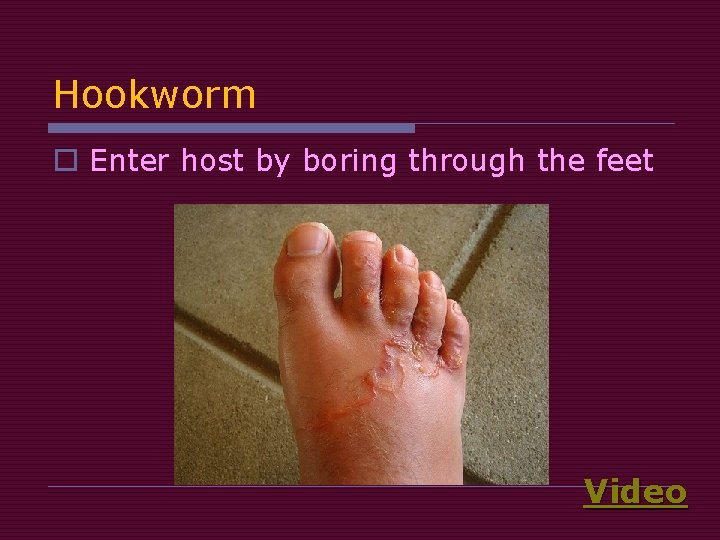
Hookworm o Enter host by boring through the feet Video
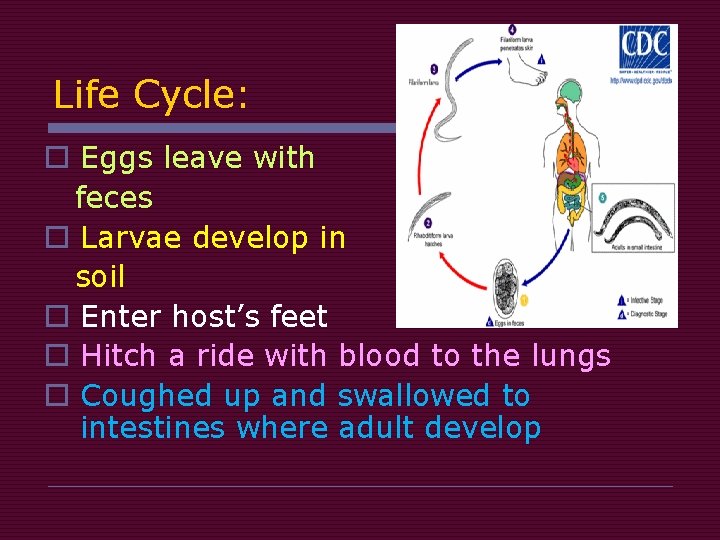
Life Cycle: o Eggs leave with feces o Larvae develop in soil o Enter host’s feet o Hitch a ride with blood to the lungs o Coughed up and swallowed to intestines where adult develop
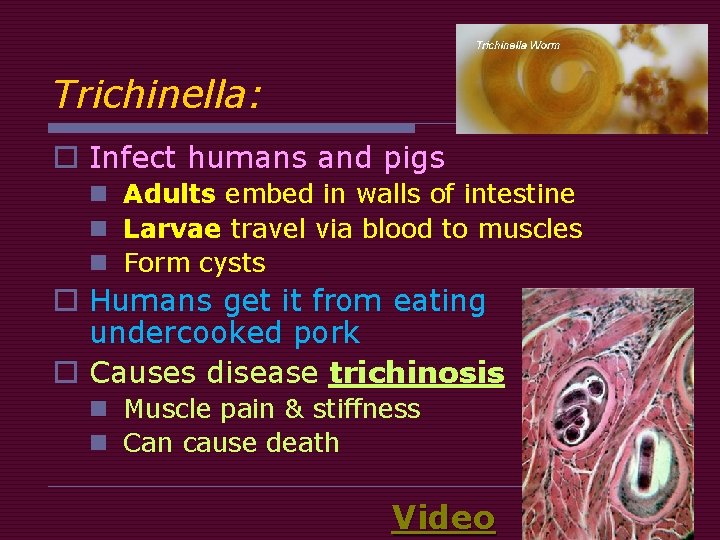
Trichinella: o Infect humans and pigs n Adults embed in walls of intestine n Larvae travel via blood to muscles n Form cysts o Humans get it from eating undercooked pork o Causes disease trichinosis n Muscle pain & stiffness n Can cause death Video
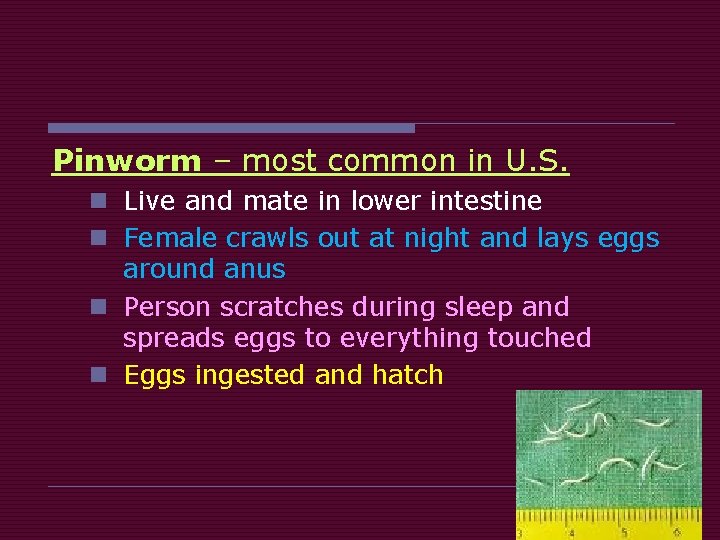
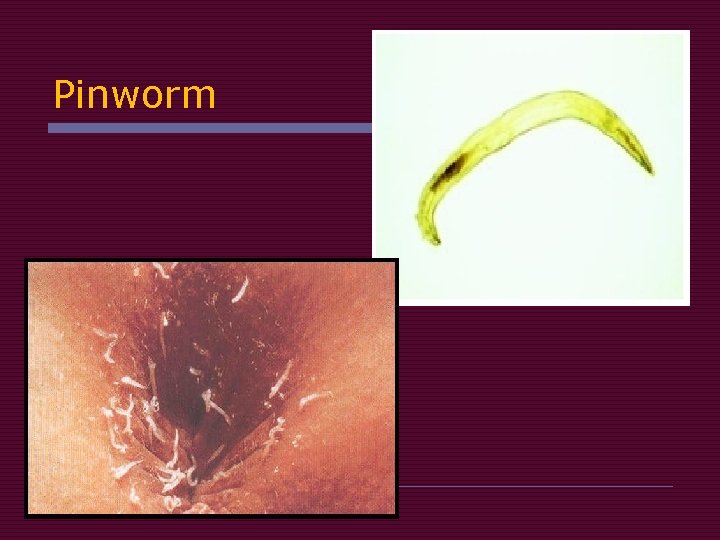
Pinworm – most common in U. S. n Live and mate in lower intestine n Female crawls out at night and lays eggs around anus n Person scratches during sleep and spreads eggs to everything touched n Eggs ingested and hatch
Pinworm
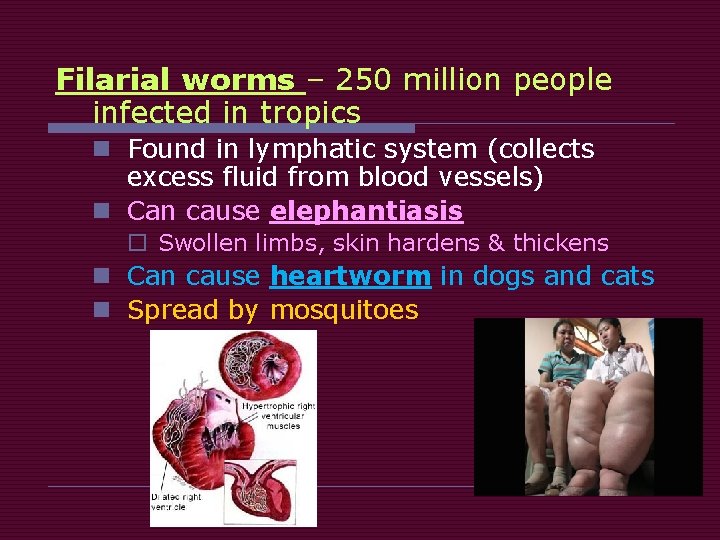
Filarial worms – 250 million people infected in tropics n Found in lymphatic system (collects excess fluid from blood vessels) n Can cause elephantiasis o Swollen limbs, skin hardens & thickens n Can cause heartworm in dogs and cats n Spread by mosquitoes
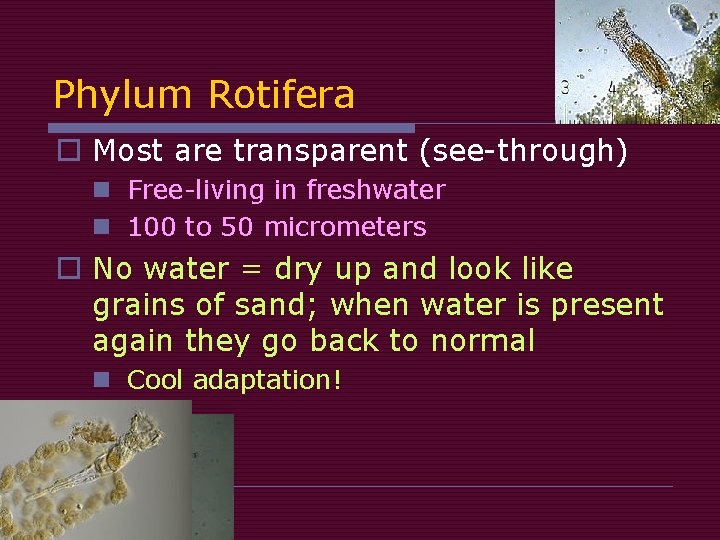
Phylum Rotifera o Most are transparent (see-through) n Free-living in freshwater n 100 to 50 micrometers o No water = dry up and look like grains of sand; when water is present again they go back to normal n Cool adaptation!
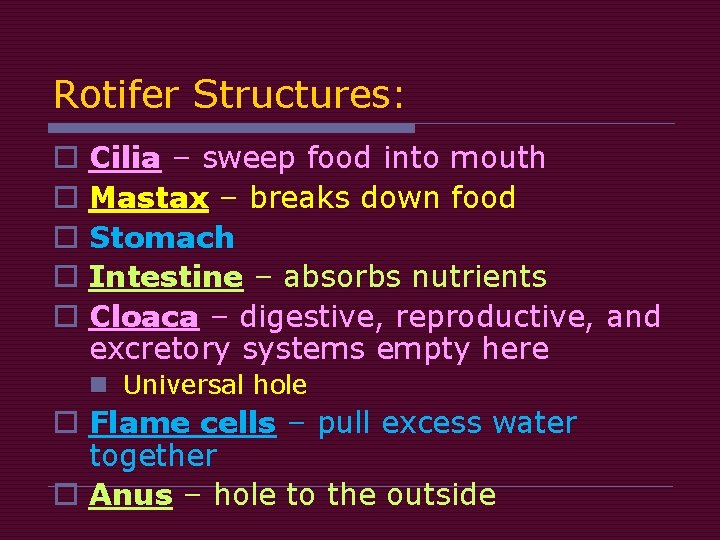
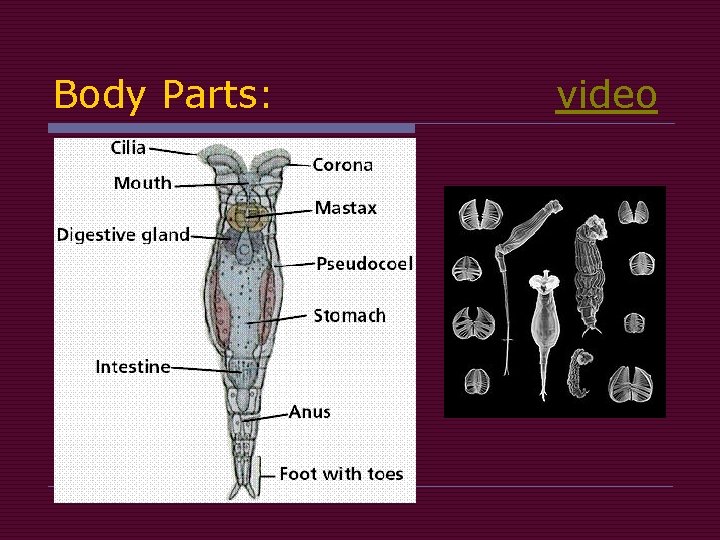
Rotifer Structures: o o o Cilia – sweep food into mouth Mastax – breaks down food Stomach Intestine – absorbs nutrients Cloaca – digestive, reproductive, and excretory systems empty here n Universal hole o Flame cells – pull excess water together o Anus – hole to the outside
Body Parts: video
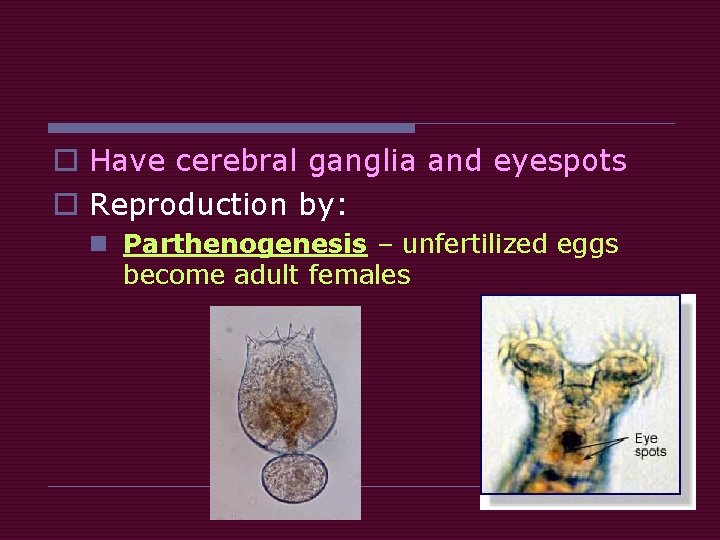
o Have cerebral ganglia and eyespots o Reproduction by: n Parthenogenesis – unfertilized eggs become adult females