
FLATWORMS Belong to the KINDGOM ANIMALIA PHYLUM PLATYHELMINTHES

FLATWORMS Belong to the KINDGOM ANIMALIA PHYLUM PLATYHELMINTHES
Characteristics 1. Three germ layers (endoderm, ectoderm, mesoderm) 2. Bilateral symmetry 3. Cephalization (has a head) COELOM = fluid filled body cavity Acoelomates = without coelom
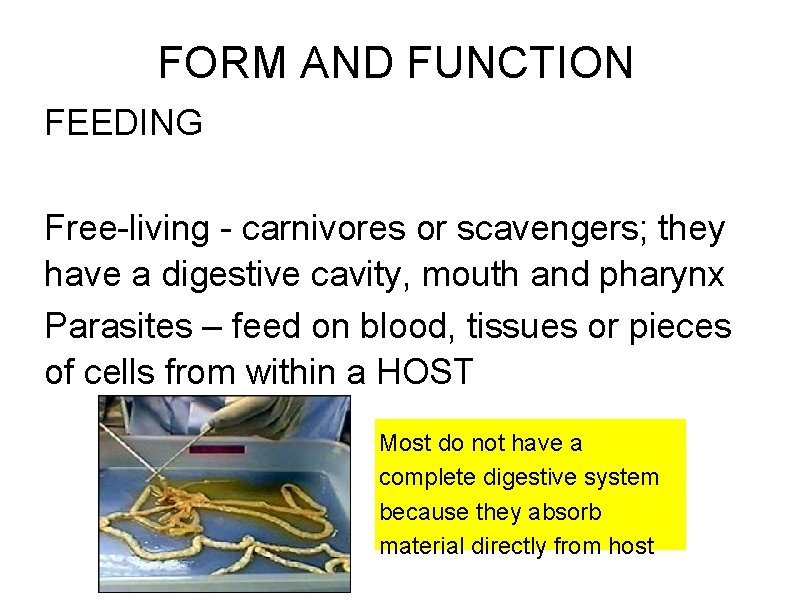
FORM AND FUNCTION FEEDING Free-living - carnivores or scavengers; they have a digestive cavity, mouth and pharynx Parasites – feed on blood, tissues or pieces of cells from within a HOST Most do not have a complete digestive system because they absorb material directly from host
Respiration, Circulation, and Excretion 1. Thin bodies allow for materials to diffuse (respiration, excretion, etc) 2. Flame Cell – specialized cells that remove excess water
Response Ganglia – group of nerve cells that control the body (like a brain) Eyespot – group of cells that can detect light (like an eye)
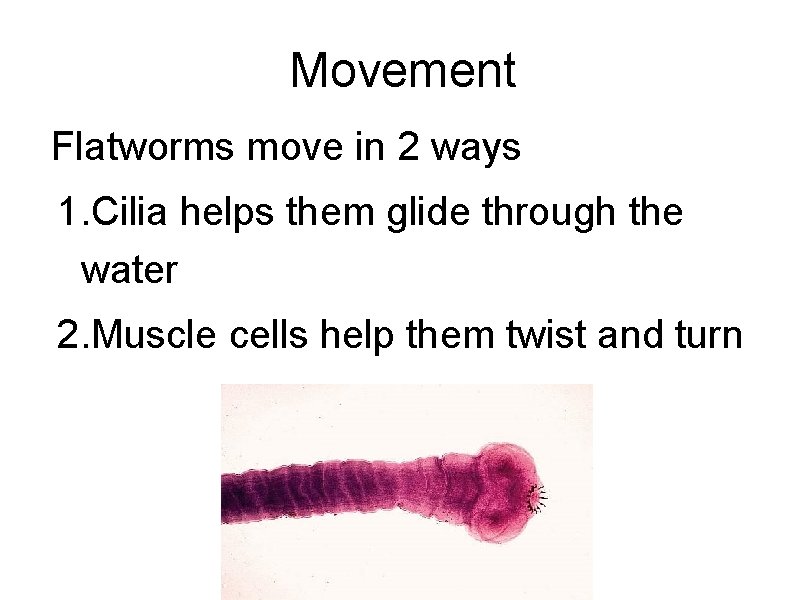
Movement Flatworms move in 2 ways 1. Cilia helps them glide through the water 2. Muscle cells help them twist and turn
Reproduction Sexual Reproduction – most flatworms are hermaphrodites (have both male and female sex organs) Asexual Reproduction by fission – flatworms can split in two and regenerate
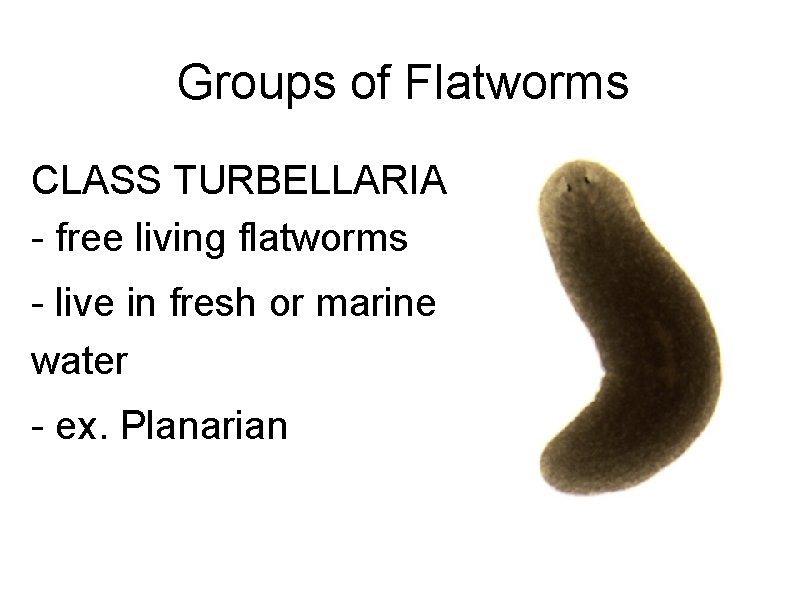
Groups of Flatworms CLASS TURBELLARIA - free living flatworms - live in fresh or marine water - ex. Planarian
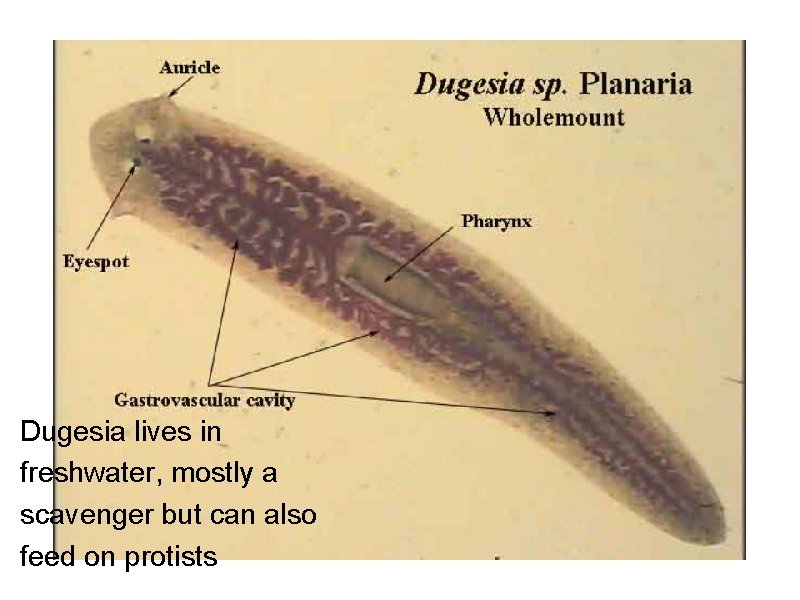
Dugesia lives in freshwater, mostly a scavenger but can also feed on protists
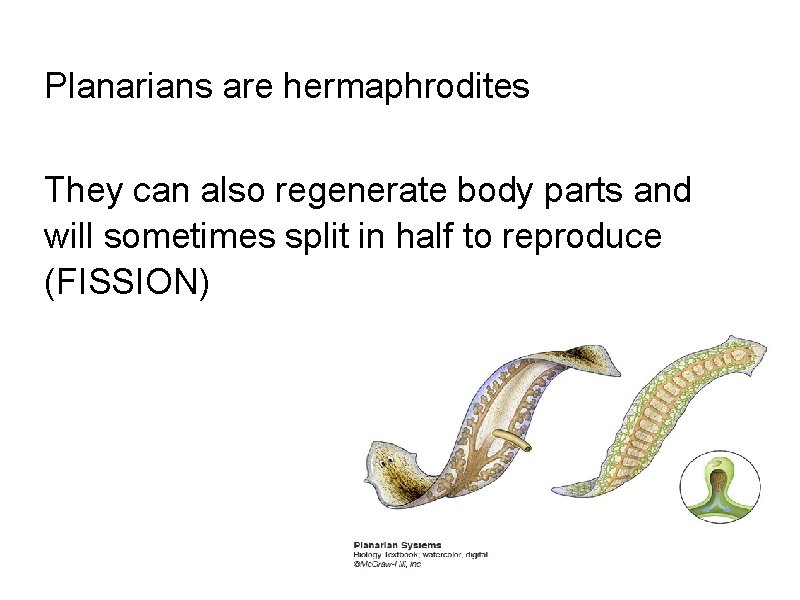
Planarians are hermaphrodites They can also regenerate body parts and will sometimes split in half to reproduce (FISSION)
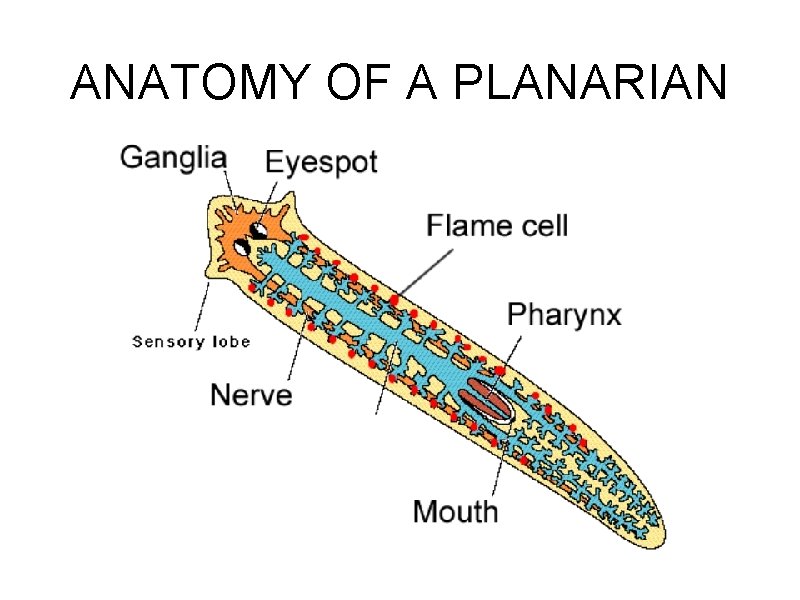
ANATOMY OF A PLANARIAN
Brain (ganglia) - planarian can process information about their environment Pharynx - used for suckling food in (the mouth is at the end of the pharynx) Eyespot - simple eye, can detect light Flame cells - located along the lateral edges, used for excretion Intestine - digestion (does not have an anus)
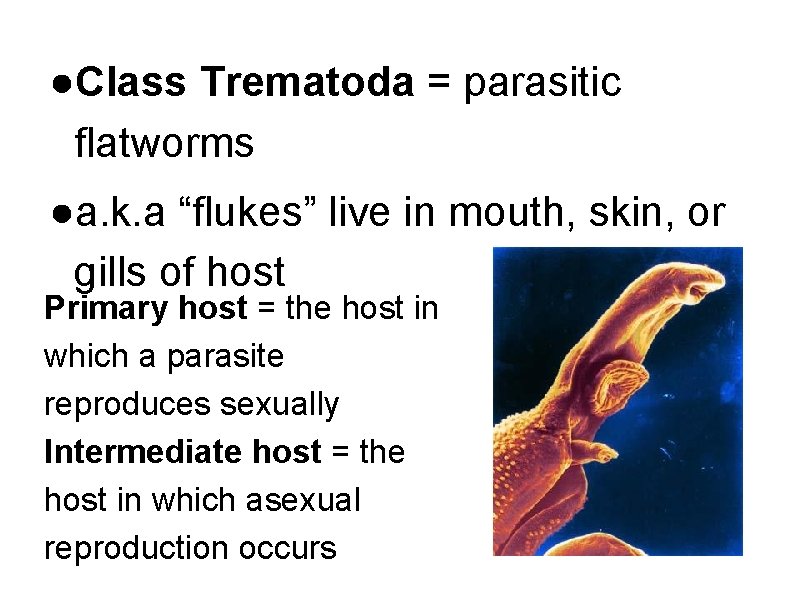
●Class Trematoda = parasitic flatworms ●a. k. a “flukes” live in mouth, skin, or gills of host Primary host = the host in which a parasite reproduces sexually Intermediate host = the host in which asexual reproduction occurs
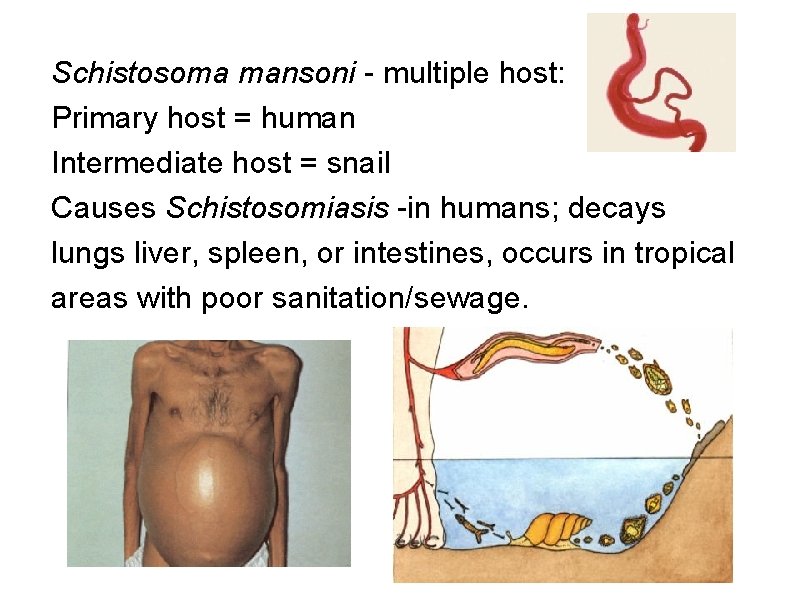
Schistosoma mansoni - multiple host: Primary host = human Intermediate host = snail Causes Schistosomiasis -in humans; decays lungs liver, spleen, or intestines, occurs in tropical areas with poor sanitation/sewage.
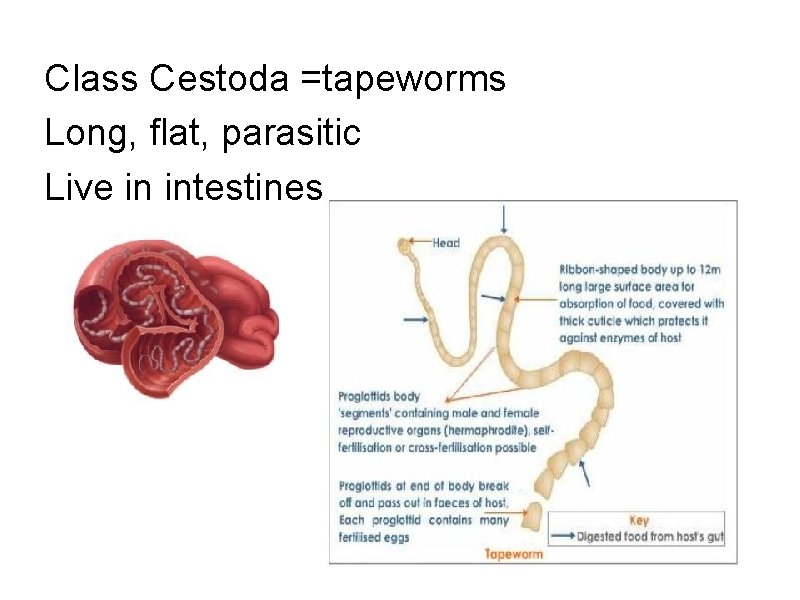
Class Cestoda =tapeworms Long, flat, parasitic Live in intestines
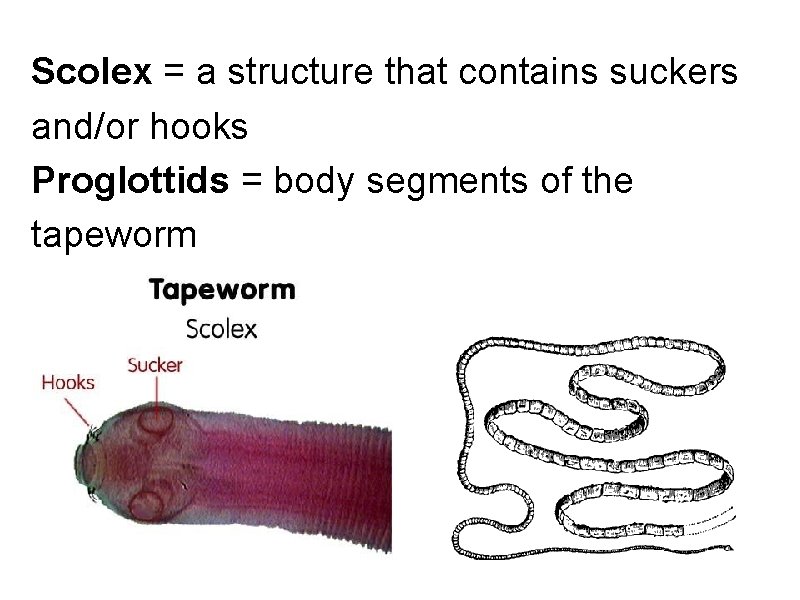
Scolex = a structure that contains suckers and/or hooks Proglottids = body segments of the tapeworm
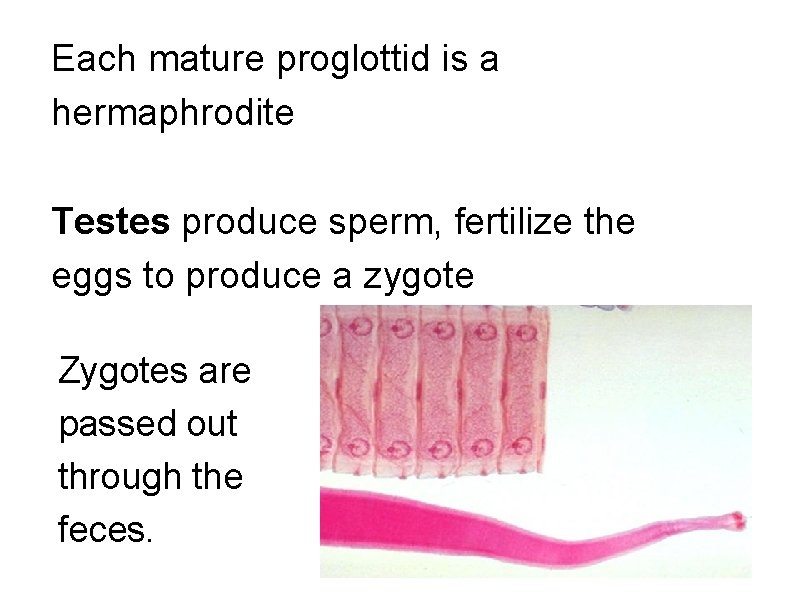
Each mature proglottid is a hermaphrodite Testes produce sperm, fertilize the eggs to produce a zygote Zygotes are passed out through the feces.
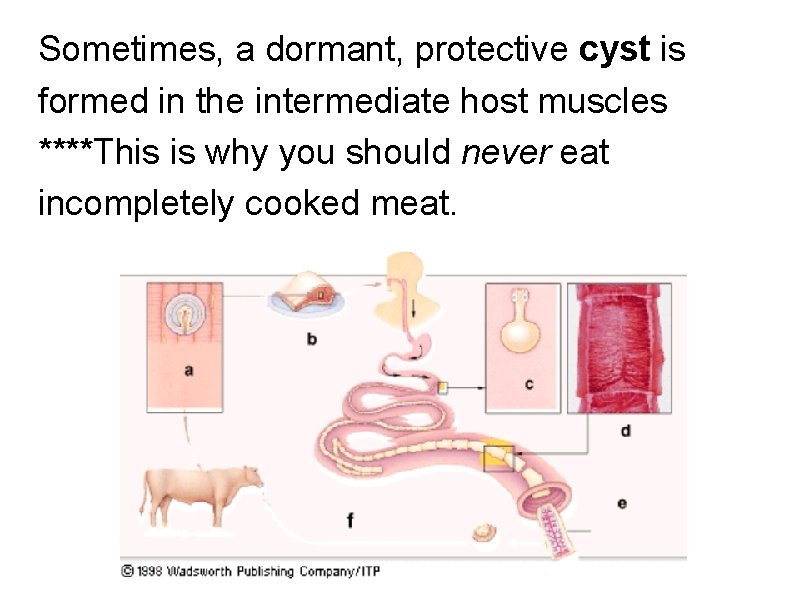
Sometimes, a dormant, protective cyst is formed in the intermediate host muscles ****This is why you should never eat incompletely cooked meat.
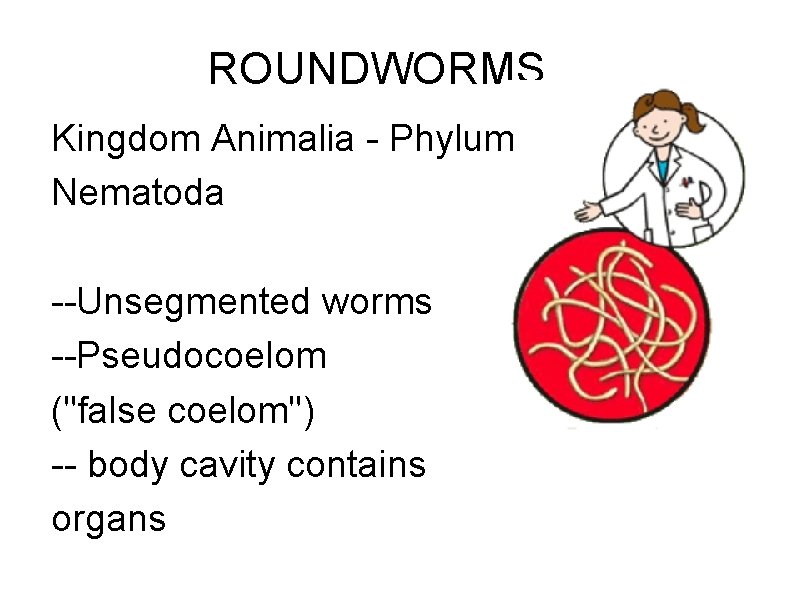
ROUNDWORMS Kingdom Animalia - Phylum Nematoda --Unsegmented worms --Pseudocoelom ("false coelom") -- body cavity contains organs
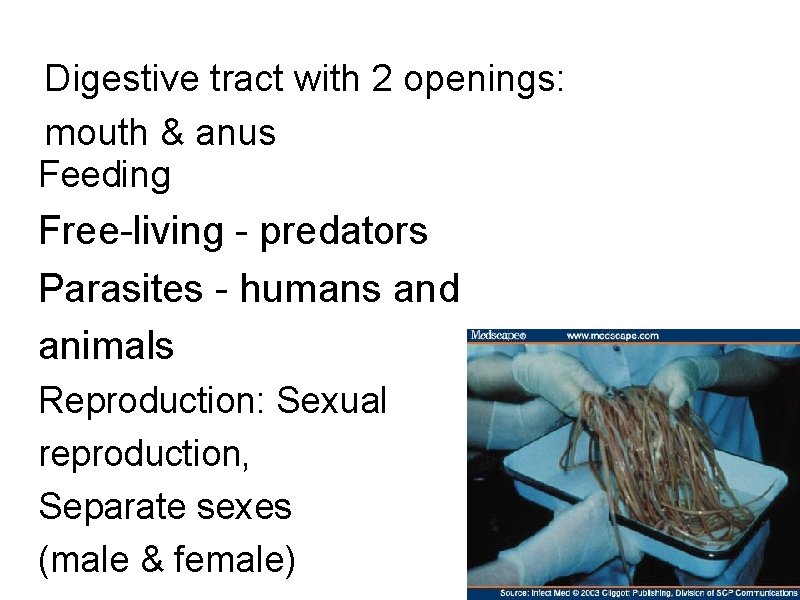
Digestive tract with 2 openings: mouth & anus Feeding Free-living - predators Parasites - humans and animals Reproduction: Sexual reproduction, Separate sexes (male & female)
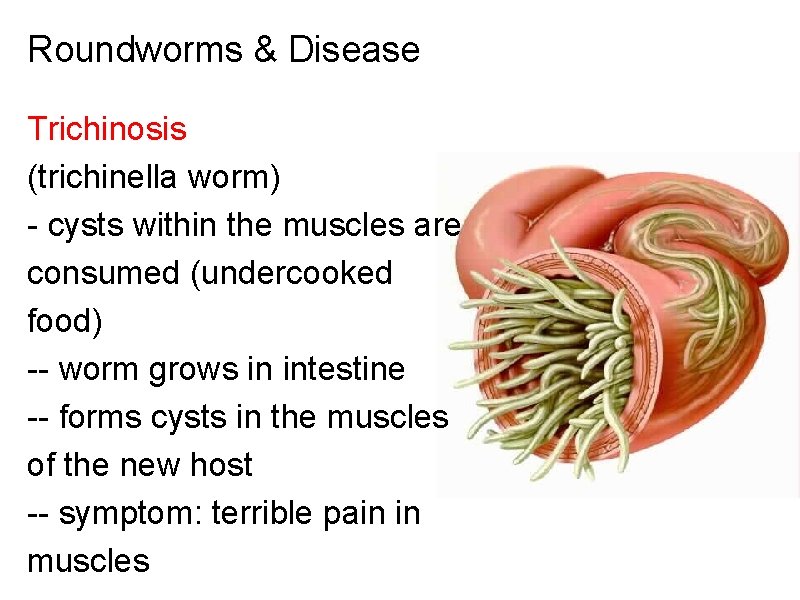
Roundworms & Disease Trichinosis (trichinella worm) - cysts within the muscles are consumed (undercooked food) -- worm grows in intestine -- forms cysts in the muscles of the new host -- symptom: terrible pain in muscles
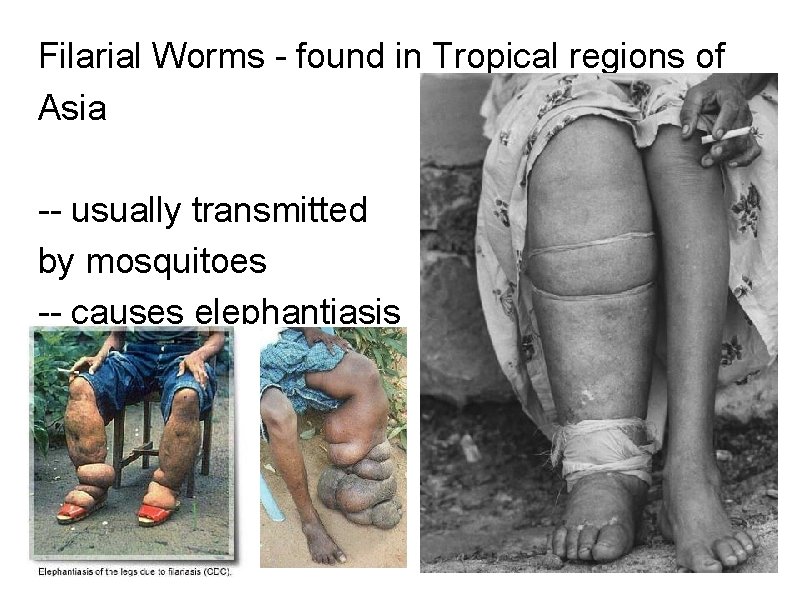
Filarial Worms - found in Tropical regions of Asia -- usually transmitted by mosquitoes -- causes elephantiasis
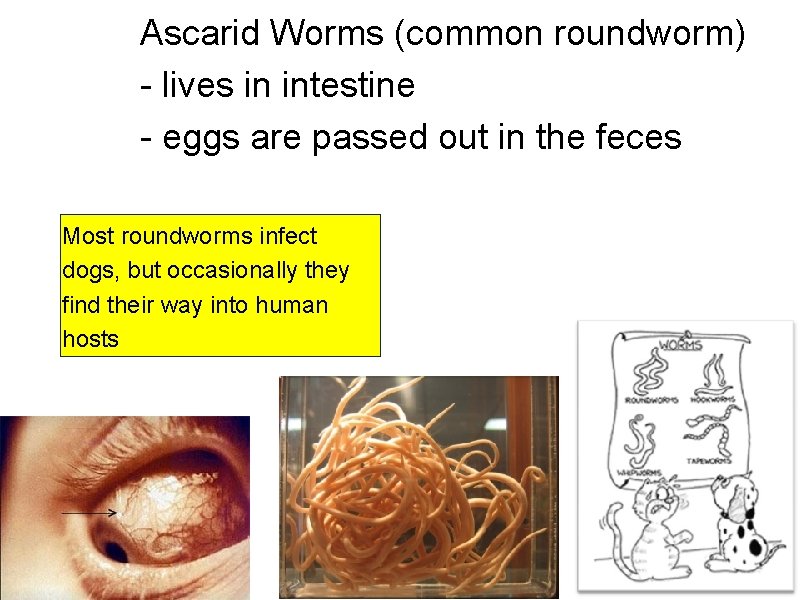
Ascarid Worms (common roundworm) - lives in intestine - eggs are passed out in the feces Most roundworms infect dogs, but occasionally they find their way into human hosts
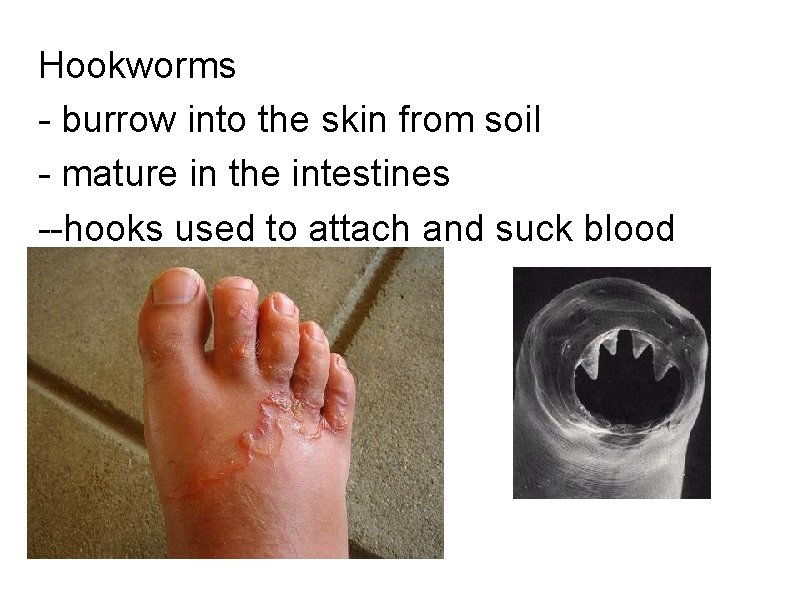
Hookworms - burrow into the skin from soil - mature in the intestines --hooks used to attach and suck blood
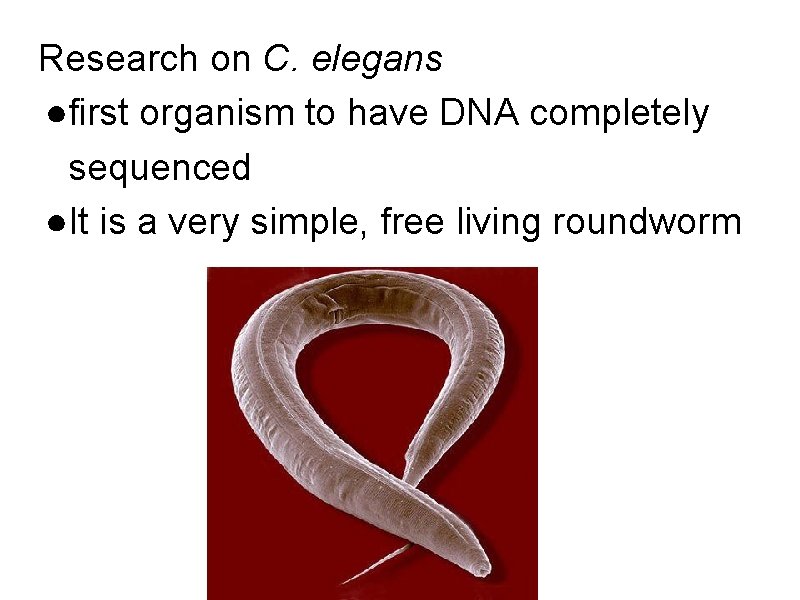
Research on C. elegans ●first organism to have DNA completely sequenced ●It is a very simple, free living roundworm
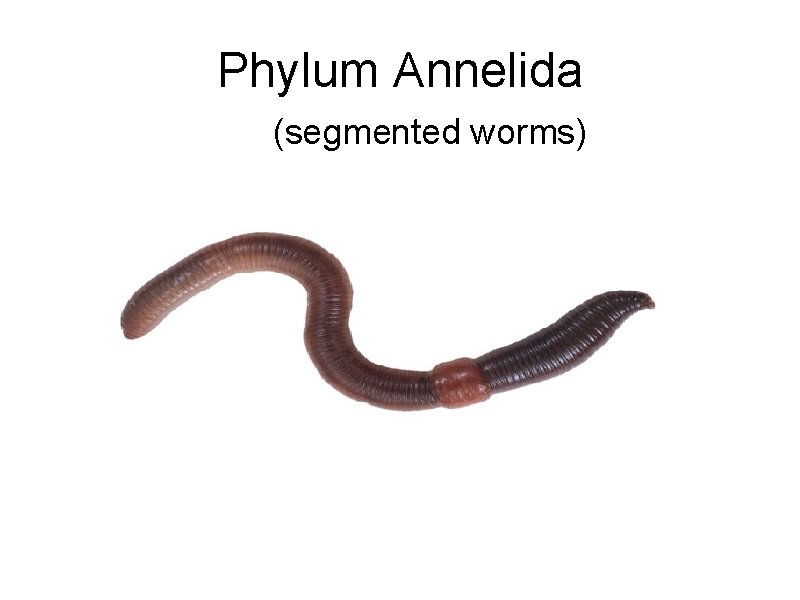
Phylum Annelida (segmented worms)

Main Characteristics segments true coelom (body cavity)
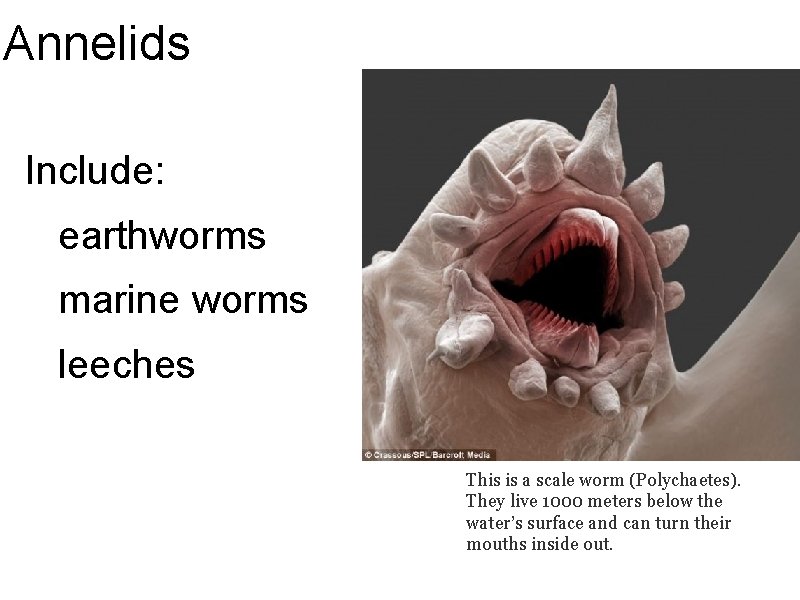
Annelids Include: earthworms marine worms leeches This is a scale worm (Polychaetes). They live 1000 meters below the water’s surface and can turn their mouths inside out.
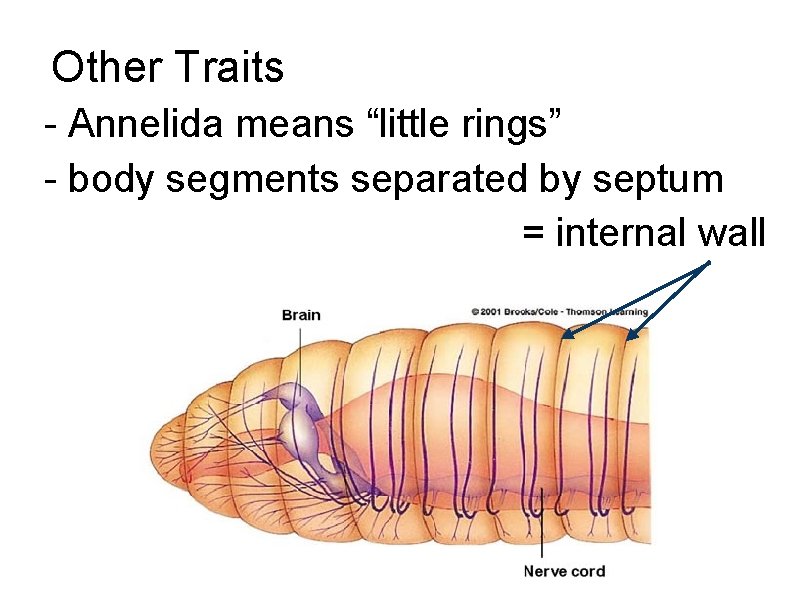
Other Traits - Annelida means “little rings” - body segments separated by septum = internal wall
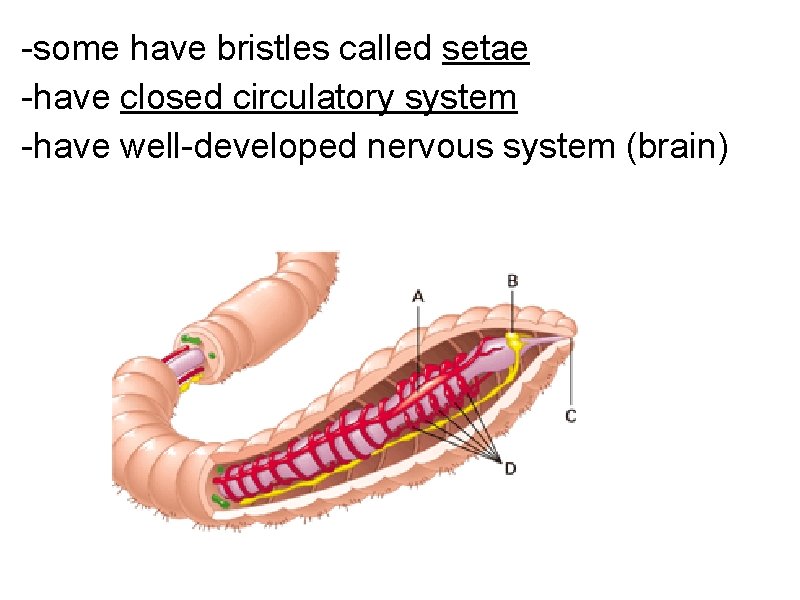
-some have bristles called setae -have closed circulatory system -have well-developed nervous system (brain)
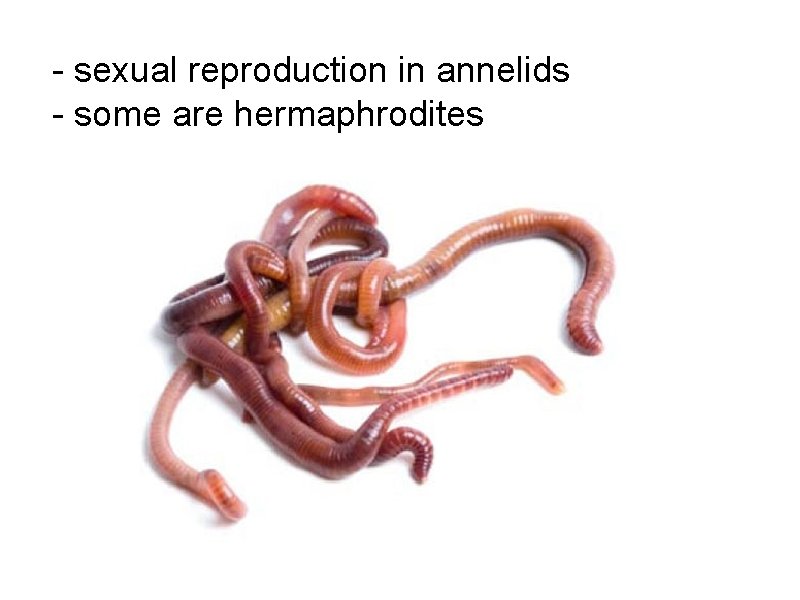
- sexual reproduction in annelids - some are hermaphrodites
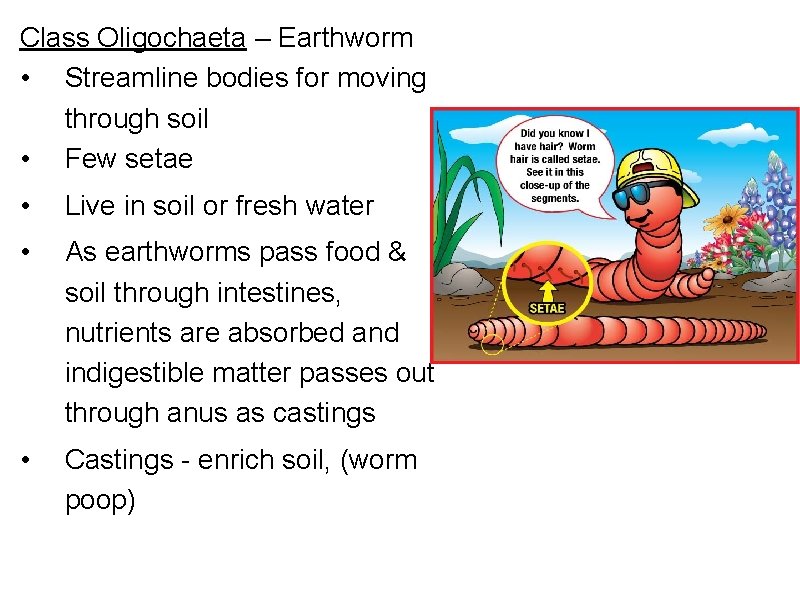
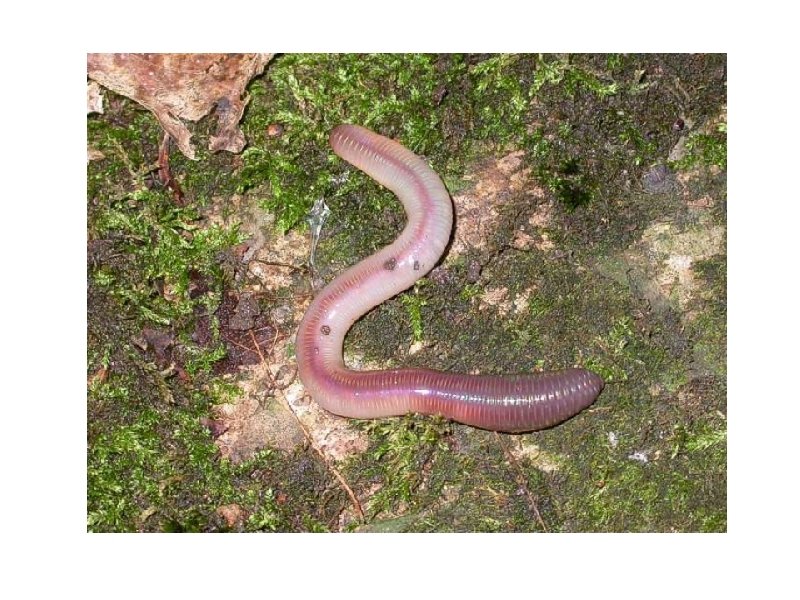
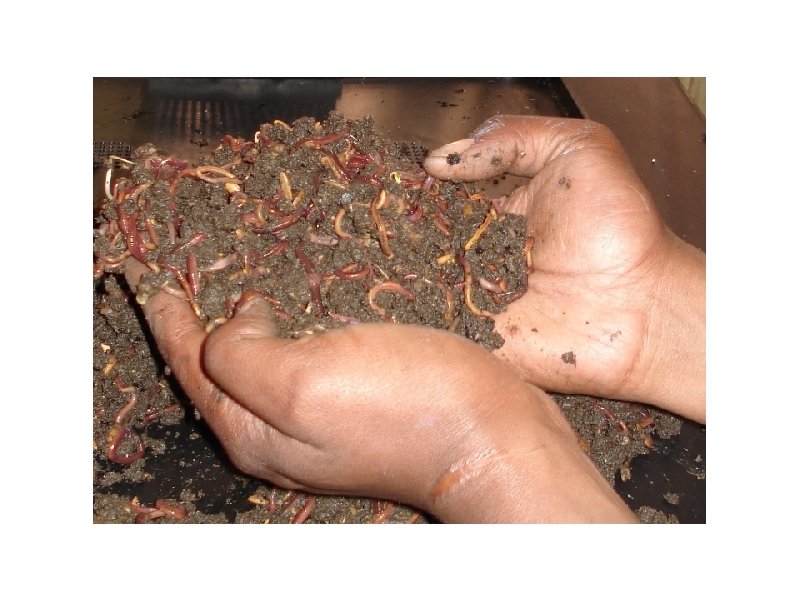
Class Oligochaeta – Earthworm • Streamline bodies for moving through soil • Few setae • Live in soil or fresh water • As earthworms pass food & soil through intestines, nutrients are absorbed and indigestible matter passes out through anus as castings • Castings - enrich soil, (worm poop)
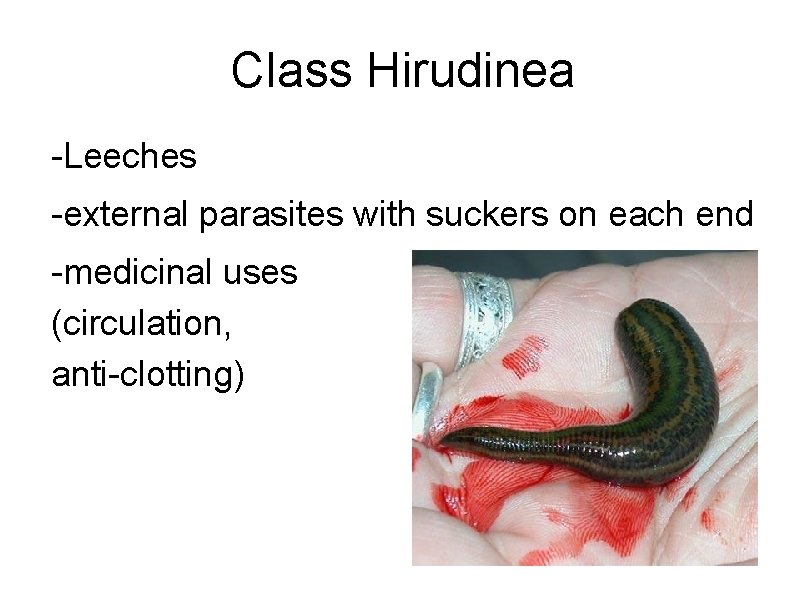
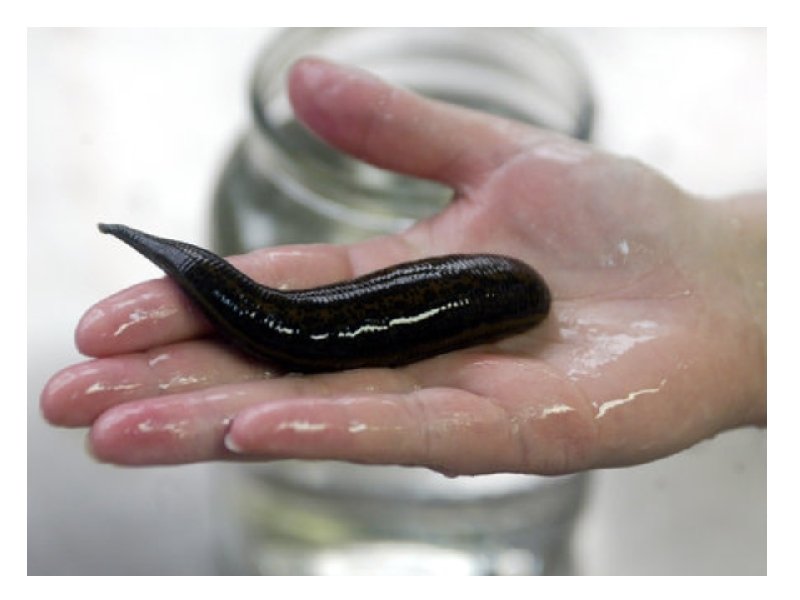
Class Hirudinea -Leeches -external parasites with suckers on each end -medicinal uses (circulation, anti-clotting)
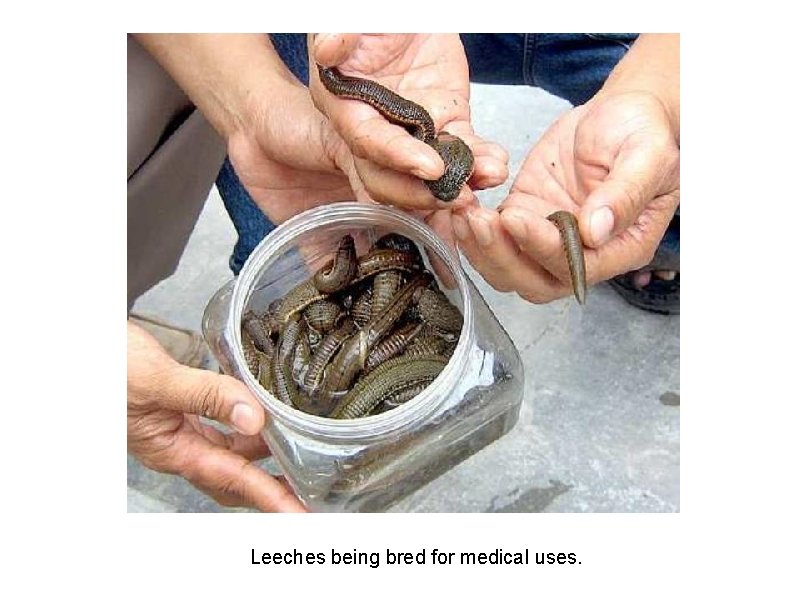
Leeches being bred for medical uses.
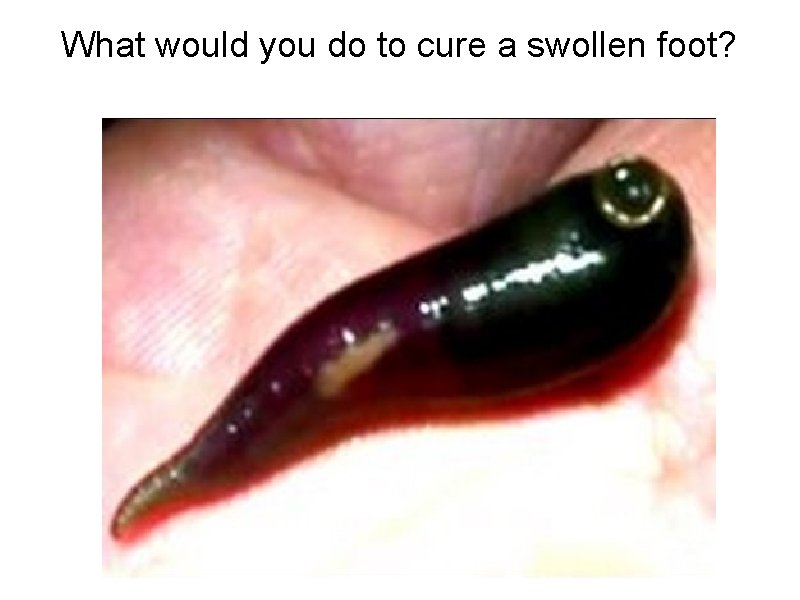
What would you do to cure a swollen foot?
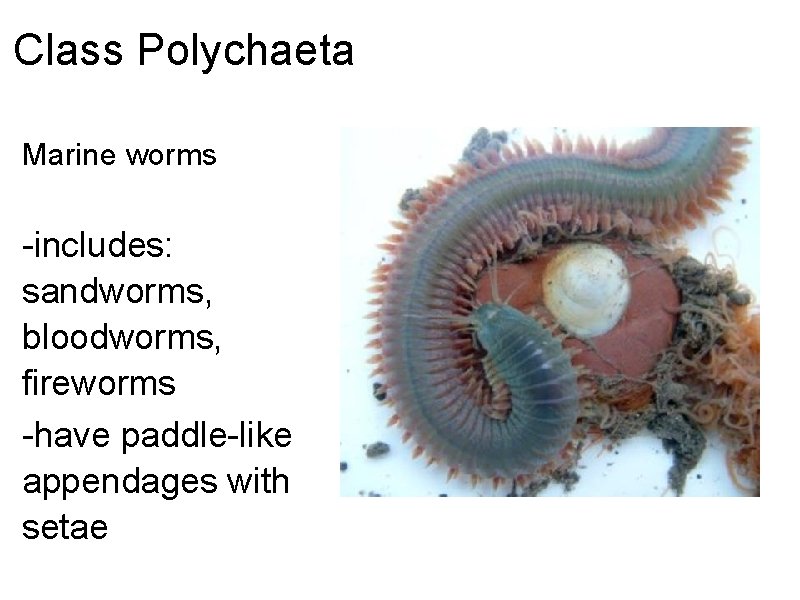
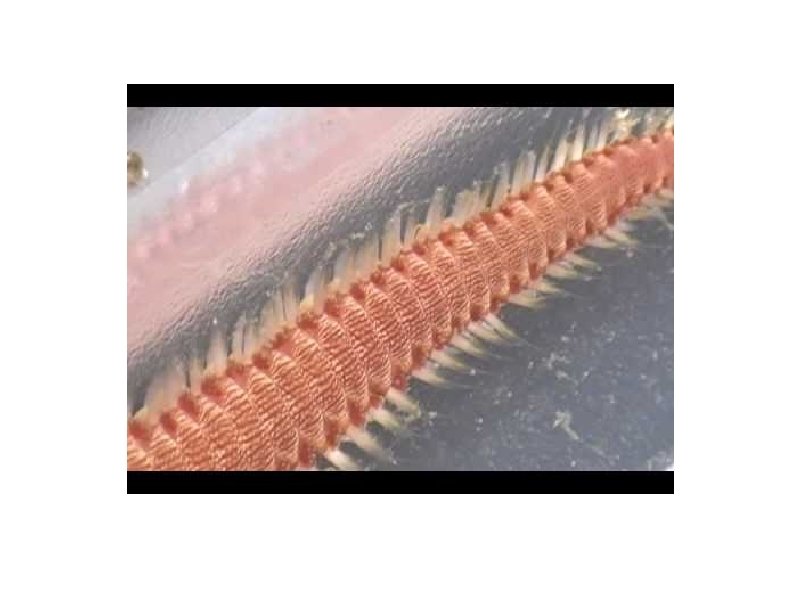
Class Polychaeta Marine worms -includes: sandworms, bloodworms, fireworms -have paddle-like appendages with setae
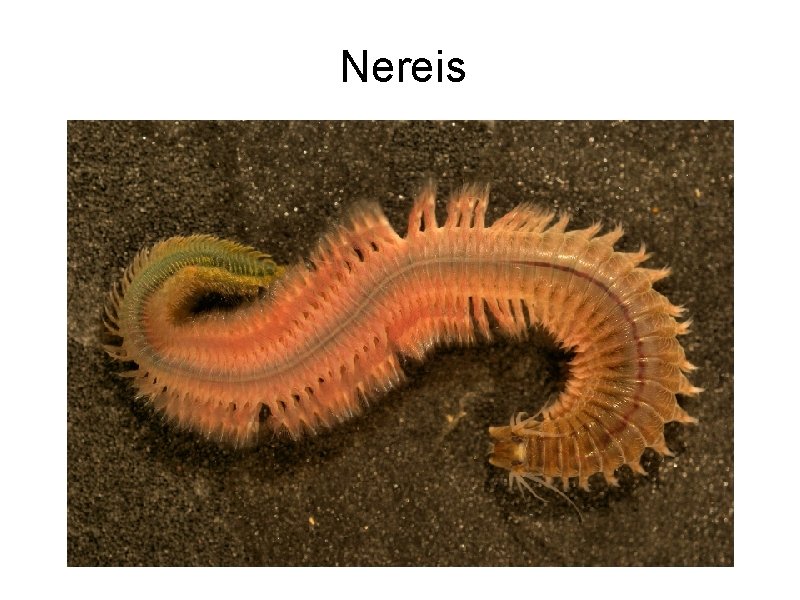
Nereis
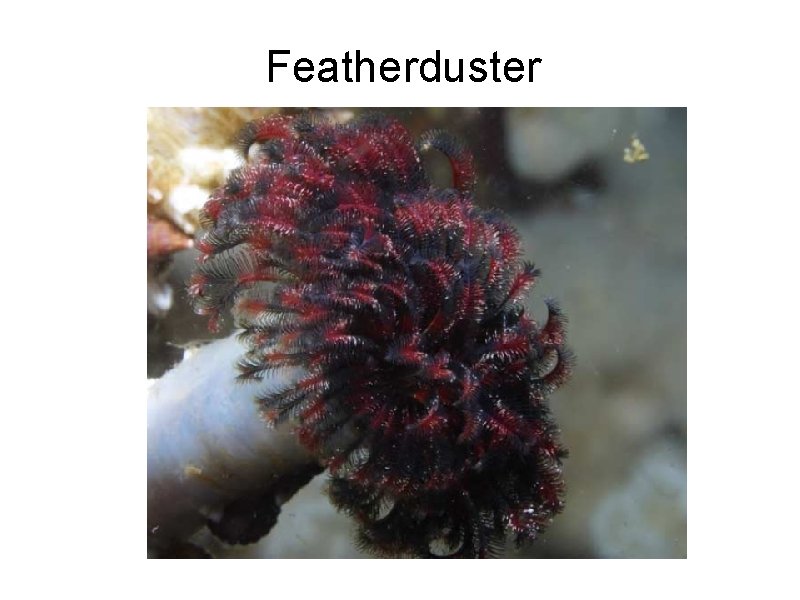
Featherduster
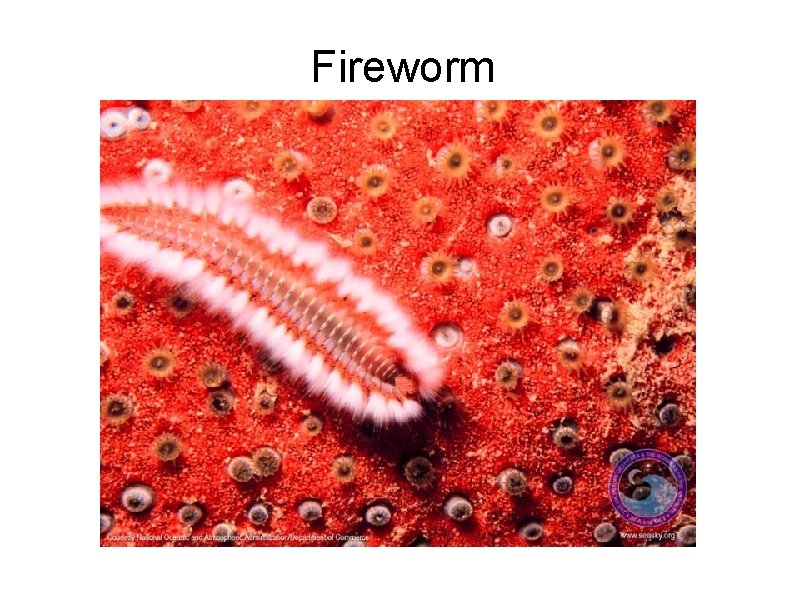
Fireworm
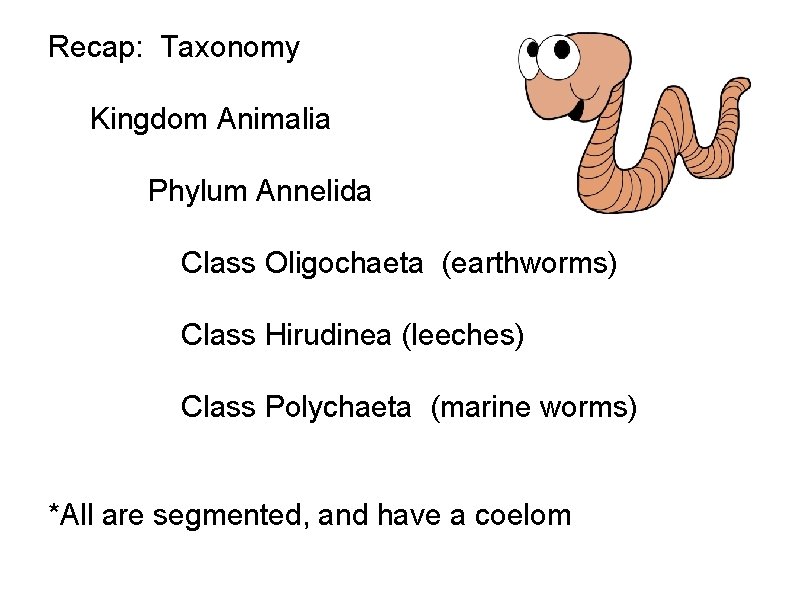
Recap: Taxonomy Kingdom Animalia Phylum Annelida Class Oligochaeta (earthworms) Class Hirudinea (leeches) Class Polychaeta (marine worms) *All are segmented, and have a coelom
- Slides: 44