
FlashNo Flash and Dark Flash Photography Ren Magritte
- Slides: 18
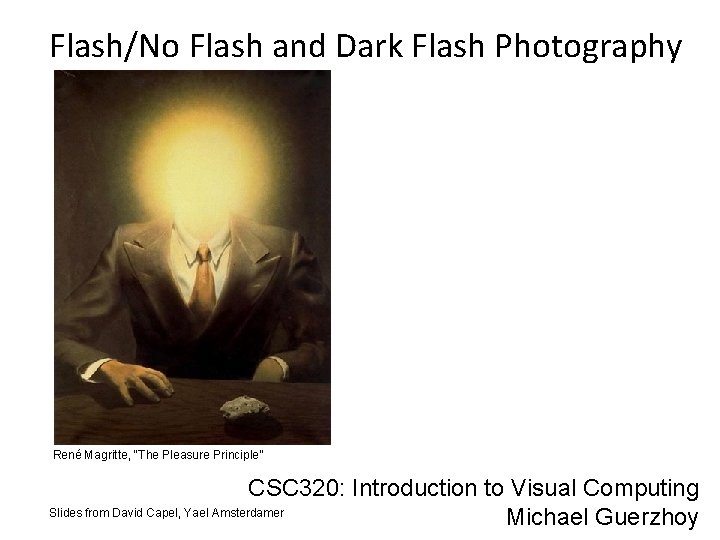
Flash/No Flash and Dark Flash Photography René Magritte, “The Pleasure Principle” CSC 320: Introduction to Visual Computing Slides from David Capel, Yael Amsterdamer Michael Guerzhoy
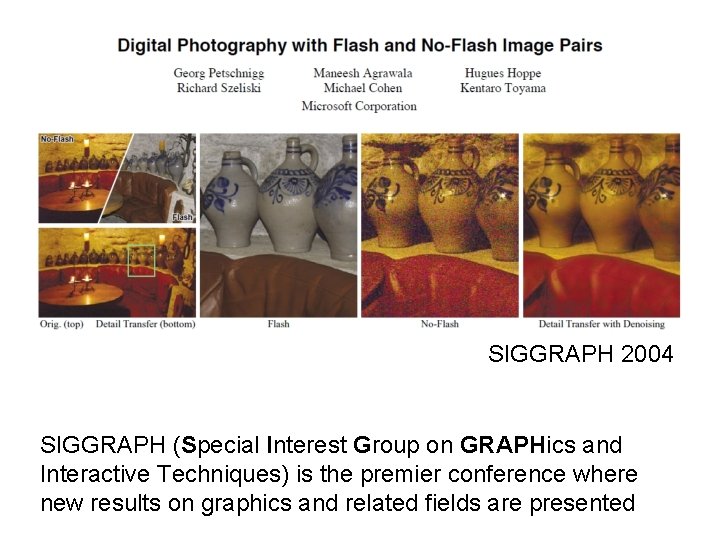
SIGGRAPH 2004 SIGGRAPH (Special Interest Group on GRAPHics and Interactive Techniques) is the premier conference where new results on graphics and related fields are presented
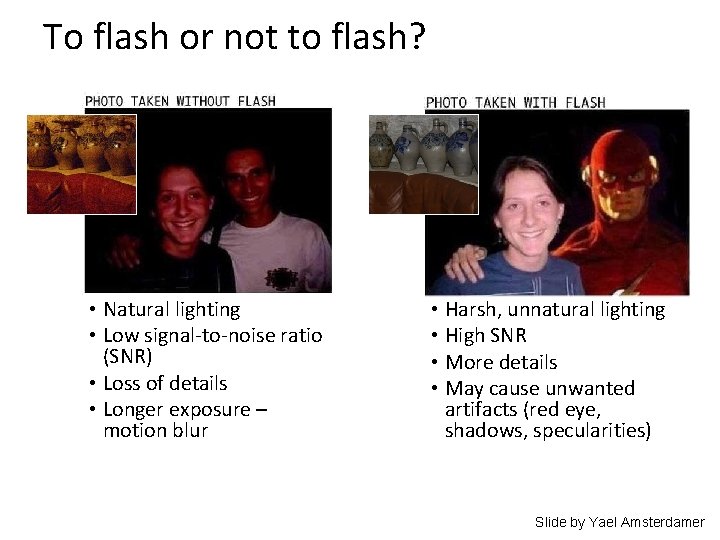
To flash or not to flash? • Natural lighting • Low signal-to-noise ratio (SNR) • Loss of details • Longer exposure – motion blur • Harsh, unnatural lighting • High SNR • More details • May cause unwanted artifacts (red eye, shadows, specularities) Slide by Yael Amsterdamer
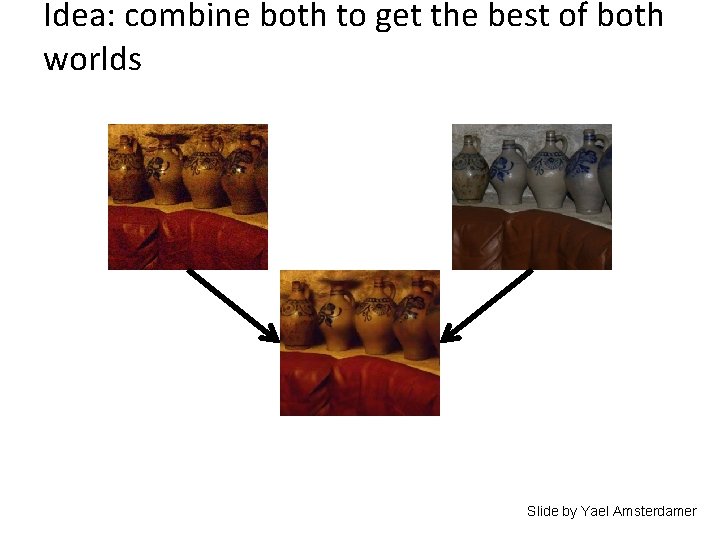
Idea: combine both to get the best of both worlds Slide by Yael Amsterdamer
Acquiring a flash/no flash photo pair • Focus on the subject, lock camera settings • Capture ambient image A • Enable flash, capture flash image with minimal exposure time
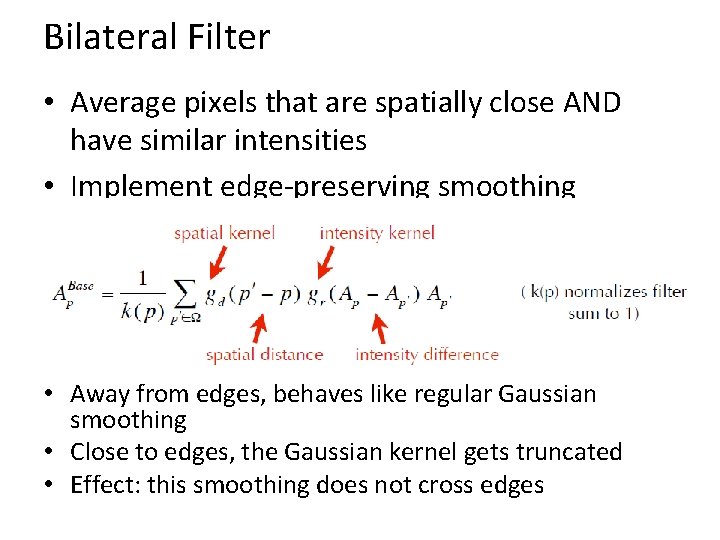
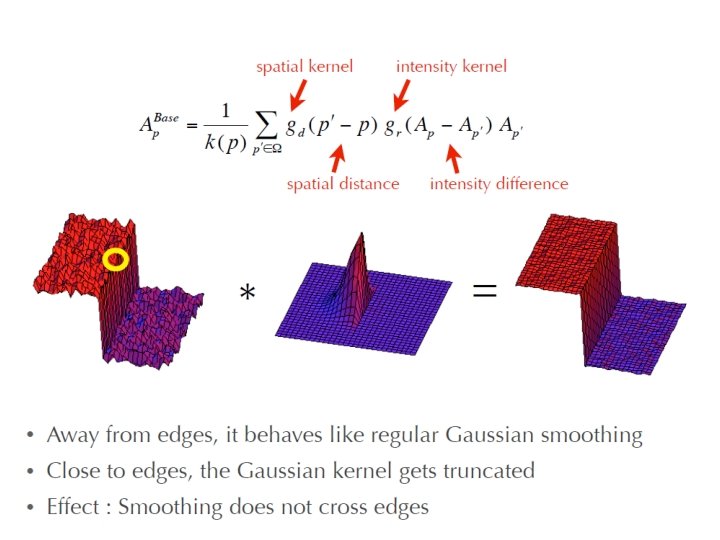
Bilateral Filter • Average pixels that are spatially close AND have similar intensities • Implement edge-preserving smoothing • Away from edges, behaves like regular Gaussian smoothing • Close to edges, the Gaussian kernel gets truncated • Effect: this smoothing does not cross edges
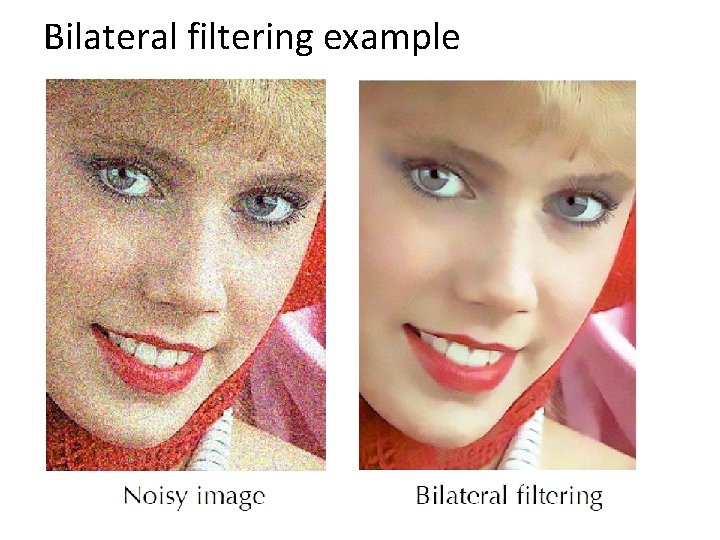
Bilateral filtering example
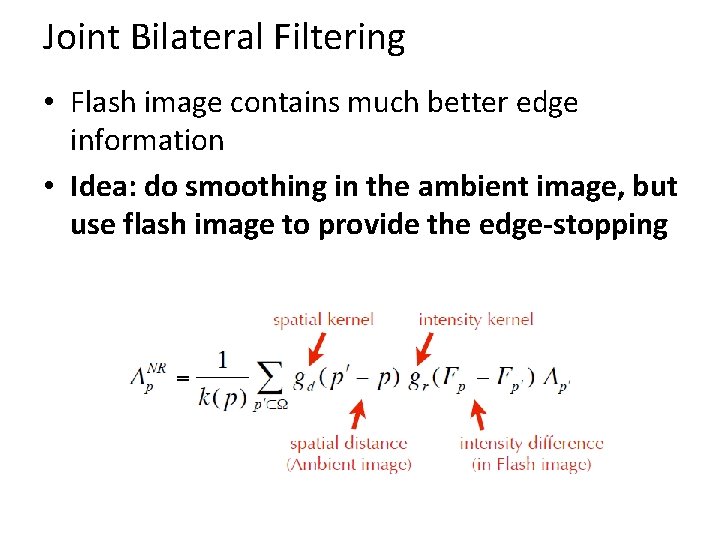
Joint Bilateral Filtering • Flash image contains much better edge information • Idea: do smoothing in the ambient image, but use flash image to provide the edge-stopping
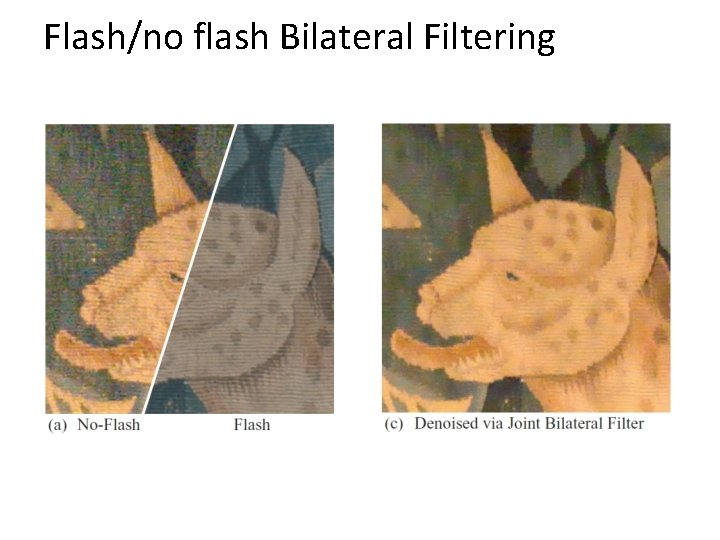
Flash/no flash Bilateral Filtering
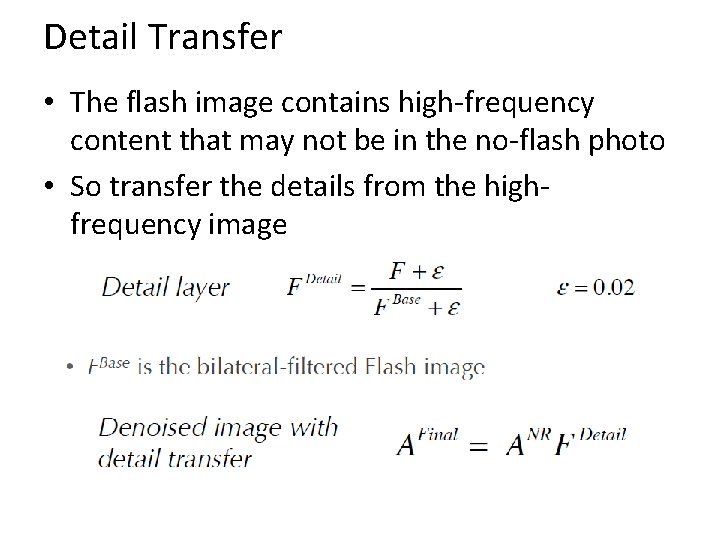
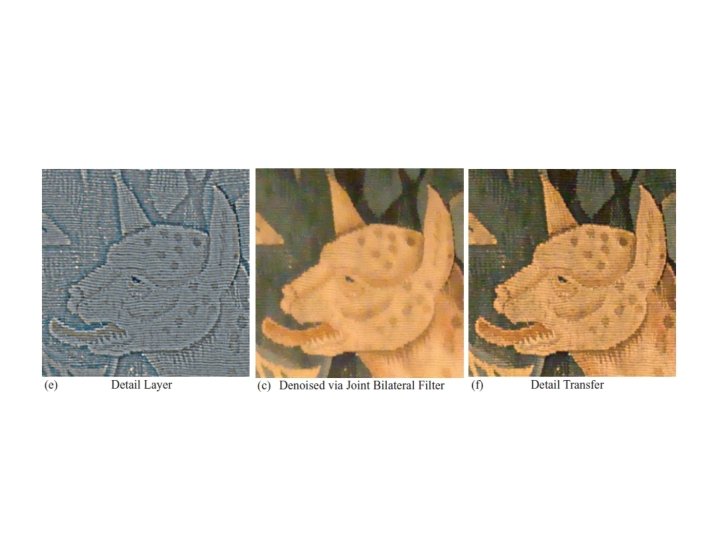
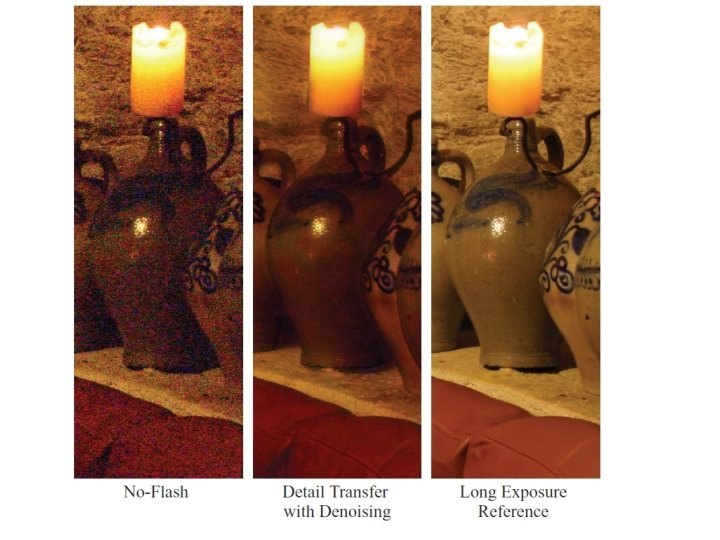
Detail Transfer • The flash image contains high-frequency content that may not be in the no-flash photo • So transfer the details from the highfrequency image
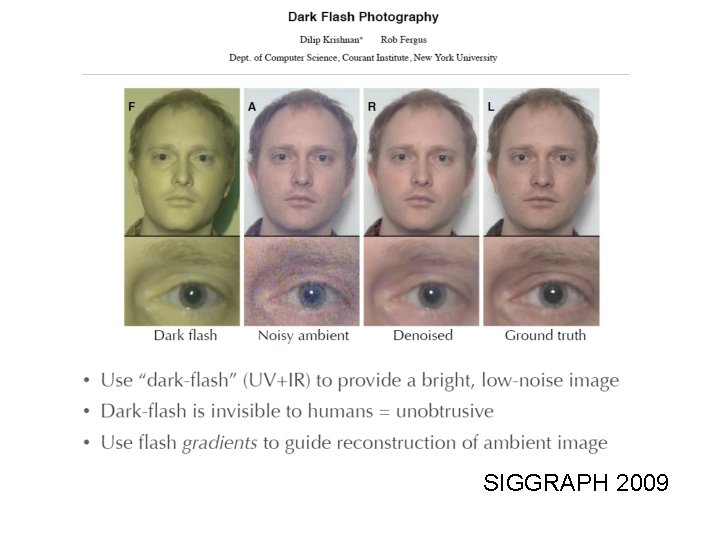
SIGGRAPH 2009
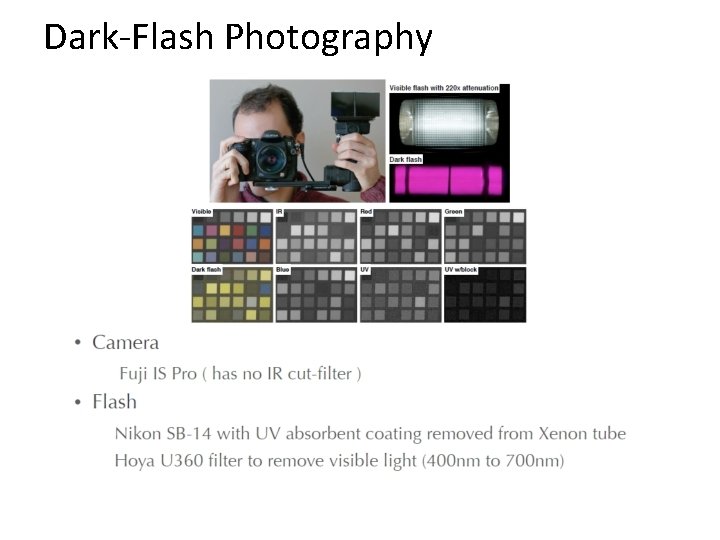
Dark-Flash Photography
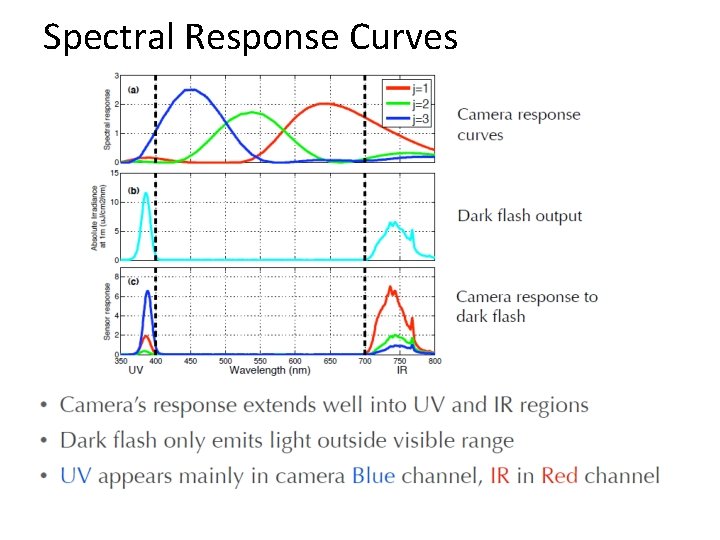
Spectral Response Curves
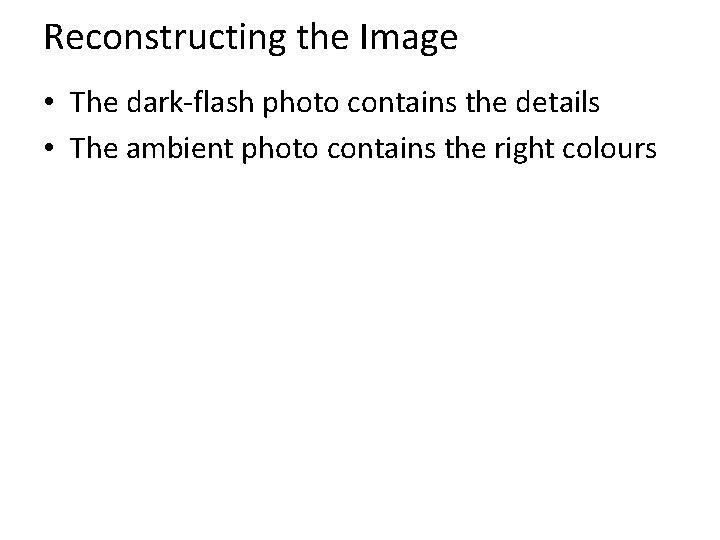
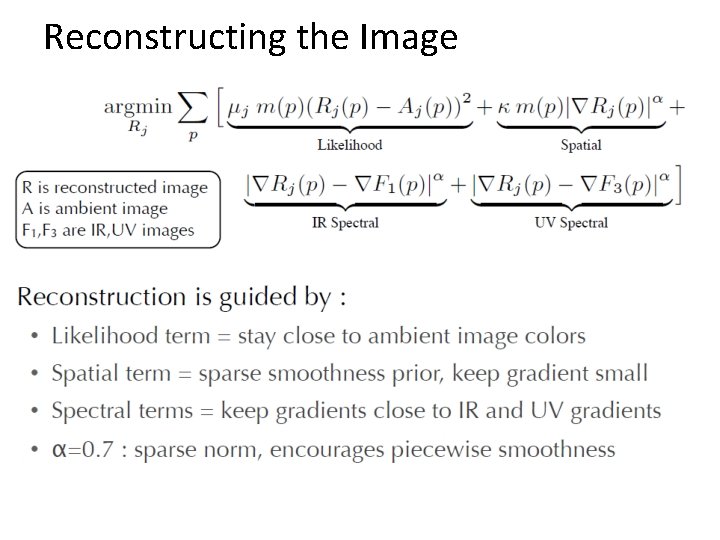
Reconstructing the Image • The dark-flash photo contains the details • The ambient photo contains the right colours
Reconstructing the Image