
FLASH Experiments with Photons High intensity laser light
- Slides: 20
FLASH Experiments with Photons High intensity laser light in the VUV spectral region Harald Redlin; HASYLAB
What is FLASH ? "F"ree-Elektron-"LAS"er in "H"amburg • • Free Electron Laser (FEL) generating short light pulses in the spectral region 13 … 47 nm Second phase of development on the way to an X-ray FEL User facility and playground for accelerator improvement at the same time First lasing on 13. 01. 2005 / start of user operation: August 2005 Outline of the lecture 1. 2. 3. 4. Generation of the VUV-photons Properties of the VUV-laser Examples for first experiments Optical pump-probe laser and experiments using it
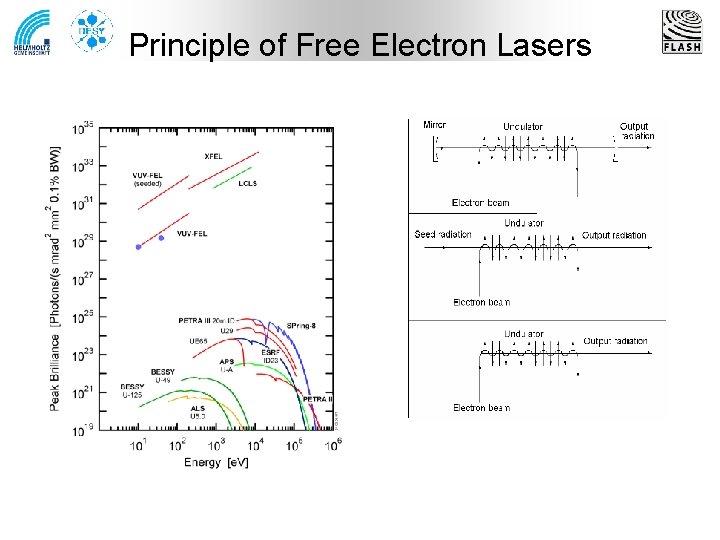
Principle of Free Electron Lasers
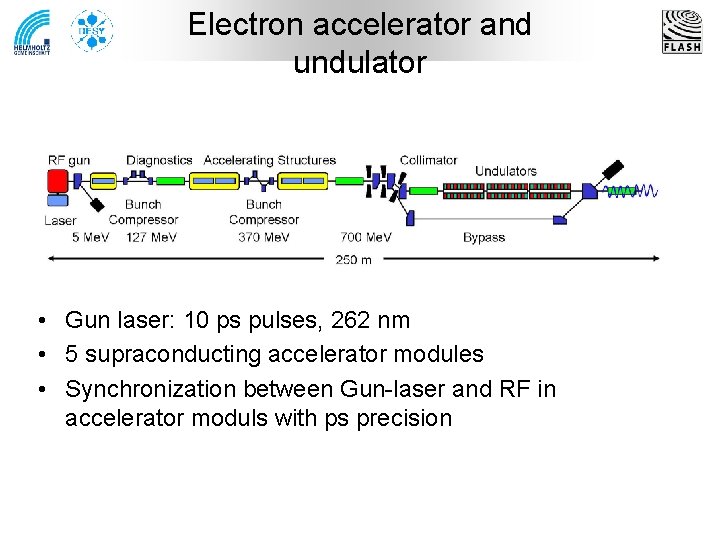
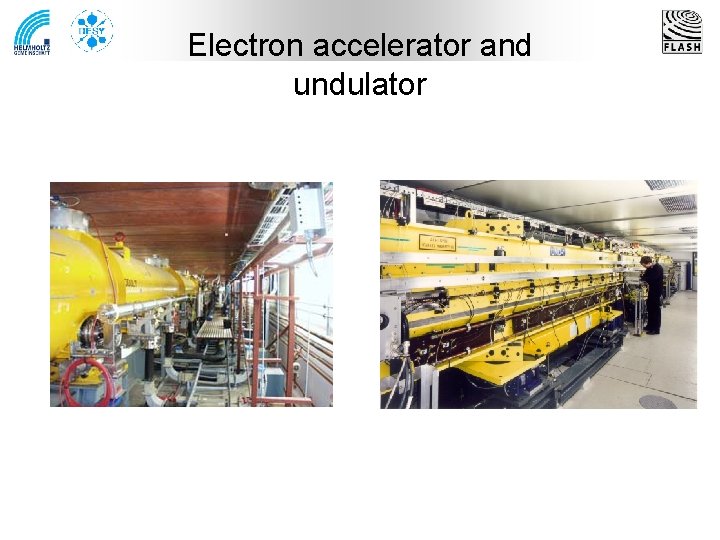
Electron accelerator and undulator • Gun laser: 10 ps pulses, 262 nm • 5 supraconducting accelerator modules • Synchronization between Gun-laser and RF in accelerator moduls with ps precision
Electron accelerator and undulator
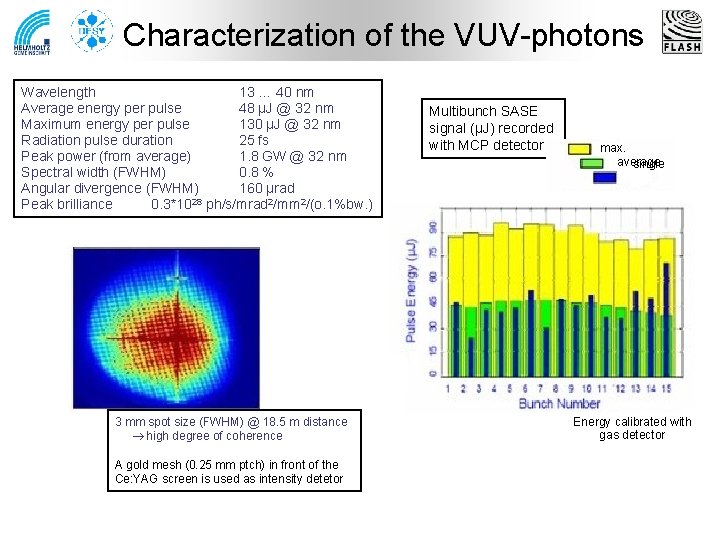
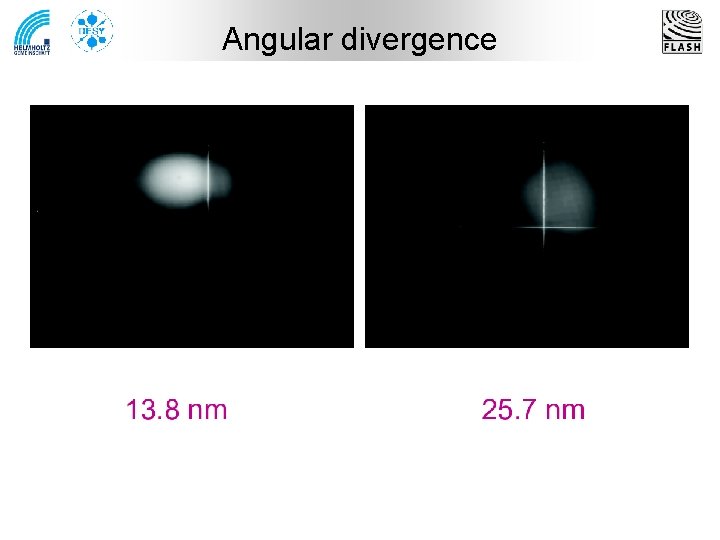
Characterization of the VUV-photons Wavelength 13 … 40 nm Average energy per pulse 48 µJ @ 32 nm Maximum energy per pulse 130 µJ @ 32 nm Radiation pulse duration 25 fs Peak power (from average) 1. 8 GW @ 32 nm Spectral width (FWHM) 0. 8 % Angular divergence (FWHM) 160 µrad 28 Peak brilliance 0. 3*10 ph/s/mrad 2/mm 2/(o. 1%bw. ) 3 mm spot size (FWHM) @ 18. 5 m distance ® high degree of coherence A gold mesh (0. 25 mm ptch) in front of the Ce: YAG screen is used as intensity detetor Multibunch SASE signal (µJ) recorded with MCP detector max. average single Energy calibrated with gas detector
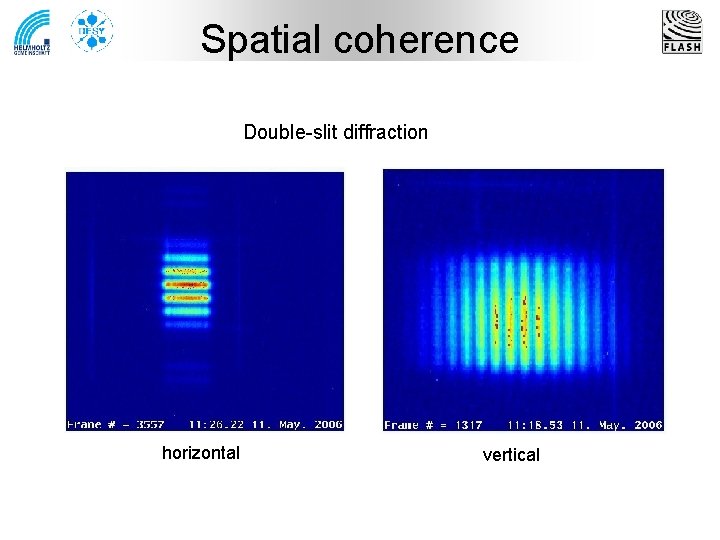
Spatial coherence Double-slit diffraction horizontal vertical
Angular divergence
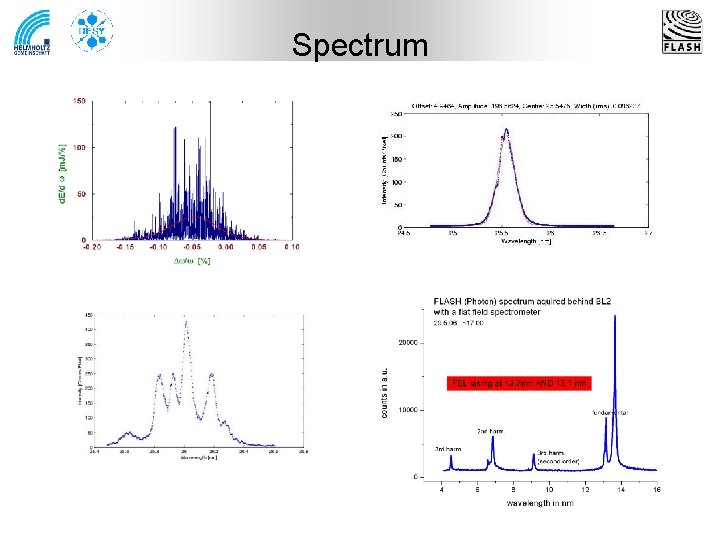
Spectrum
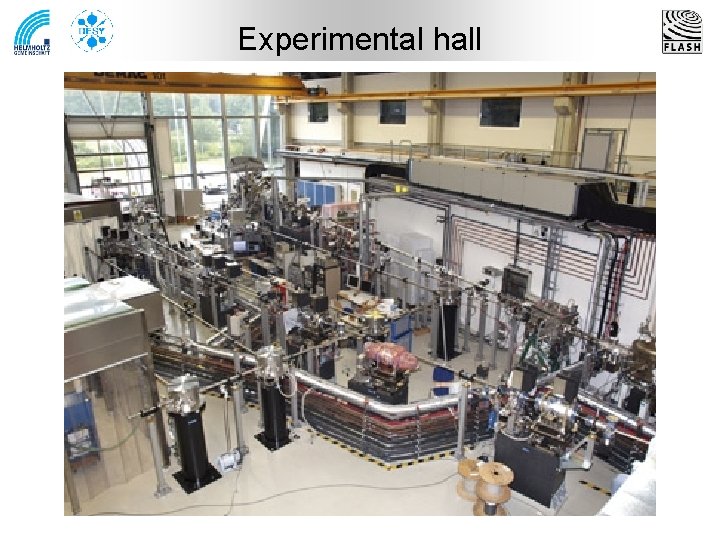
Experimental hall
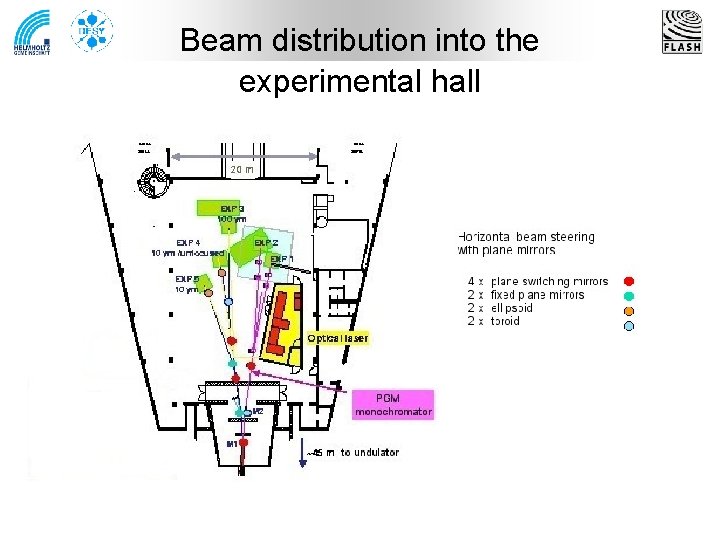
Beam distribution into the experimental hall
Examples of first experiments User operation startet in August 2005 • Ablation/ damage threshold of materials • Cluster experiments • Atomic excitations – spectroscopy, nonlinear effects
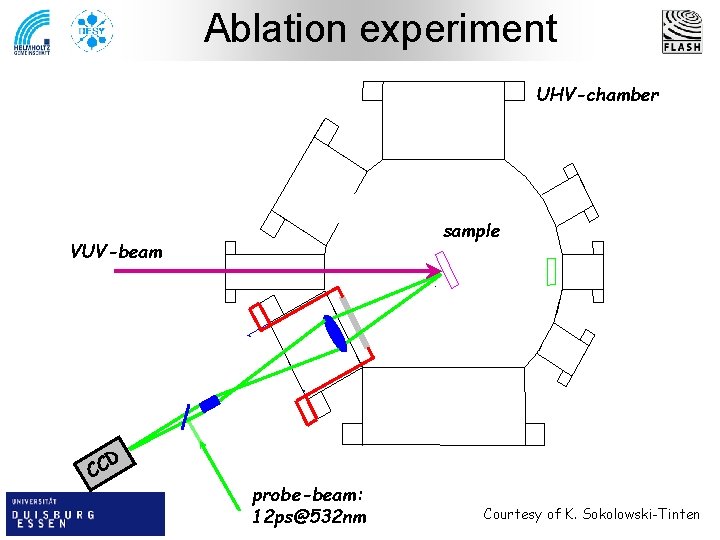
Ablation experiment UHV-chamber sample VUV-beam CC D probe-beam: 12 ps@532 nm Courtesy of K. Sokolowski-Tinten
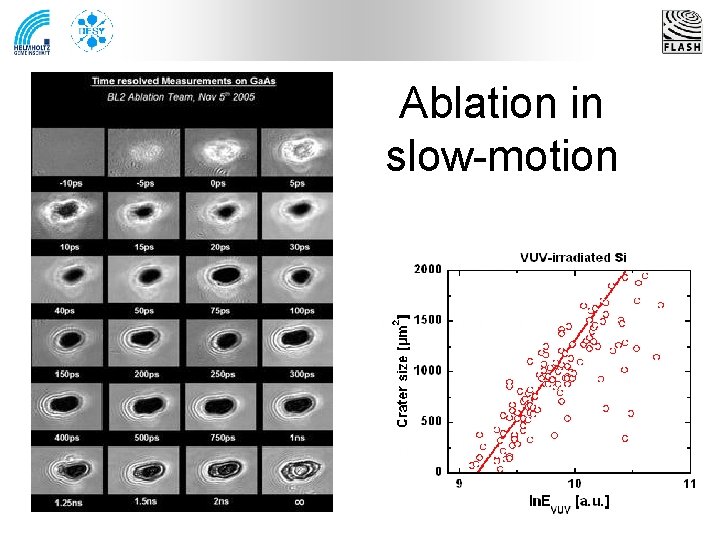
Ablation in slow-motion
Single-pulse diffraction imaging Task: High resolution imaging of single molecules or small clusters Short wavelength is necessary, i. e. X-rays Problem: The first X-ray photons will destroy the sample -> data collection with low intensity source is not possible Alternative method: Use diffraction data with one high intensity X-ray pulse Question: Is it possible to obtain data before coulomb explosion and thermal destruction of the sample ?
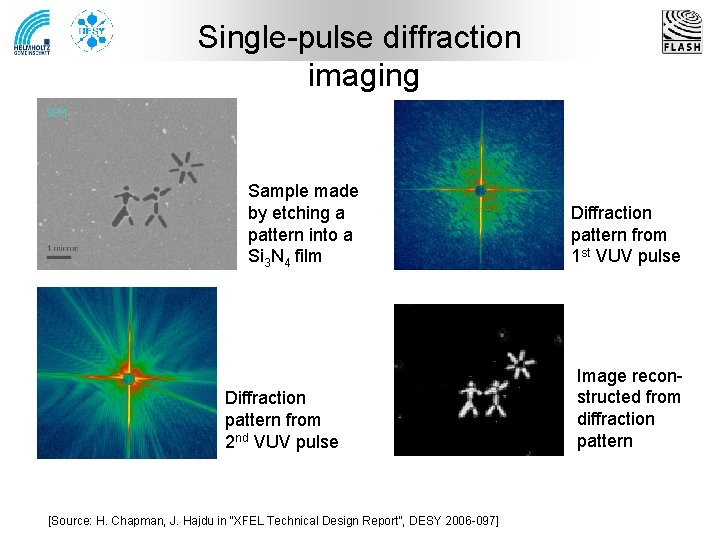
Single-pulse diffraction imaging Sample made by etching a pattern into a Si 3 N 4 film Diffraction pattern from 2 nd VUV pulse [Source: H. Chapman, J. Hajdu in “XFEL Technical Design Report”, DESY 2006 -097] Diffraction pattern from 1 st VUV pulse Image reconstructed from diffraction pattern
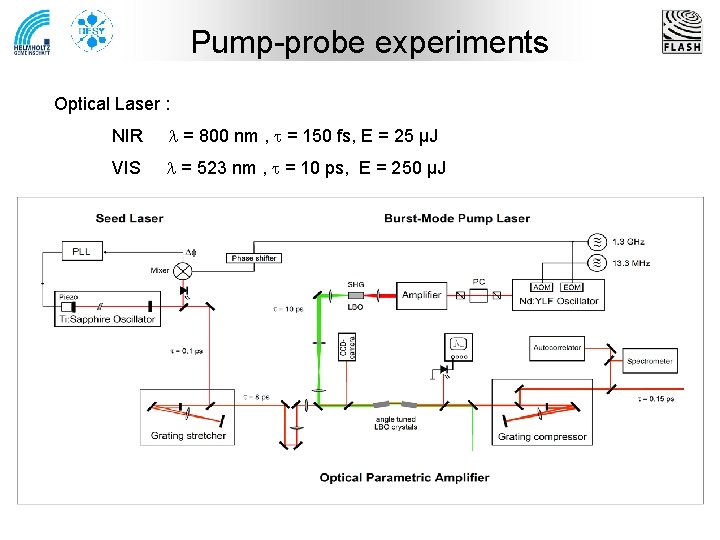
Pump-probe experiments Optical Laser : NIR l = 800 nm , t = 150 fs, E = 25 µJ VIS l = 523 nm , t = 10 ps, E = 250 µJ
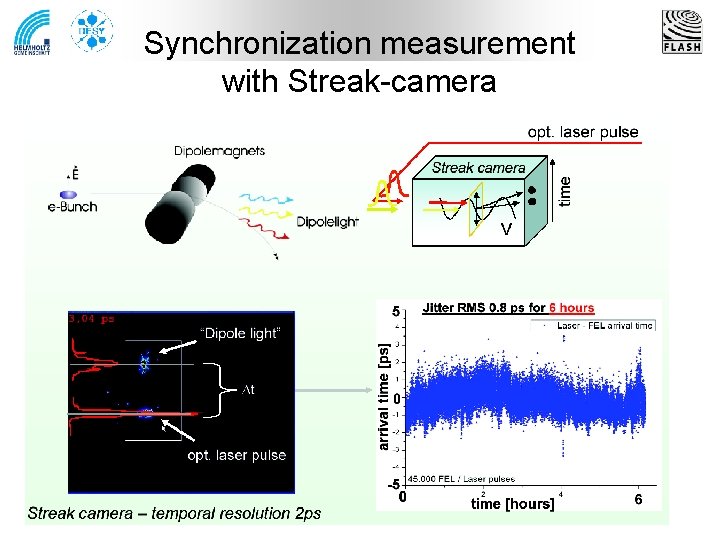
Synchronization measurement with Streak-camera
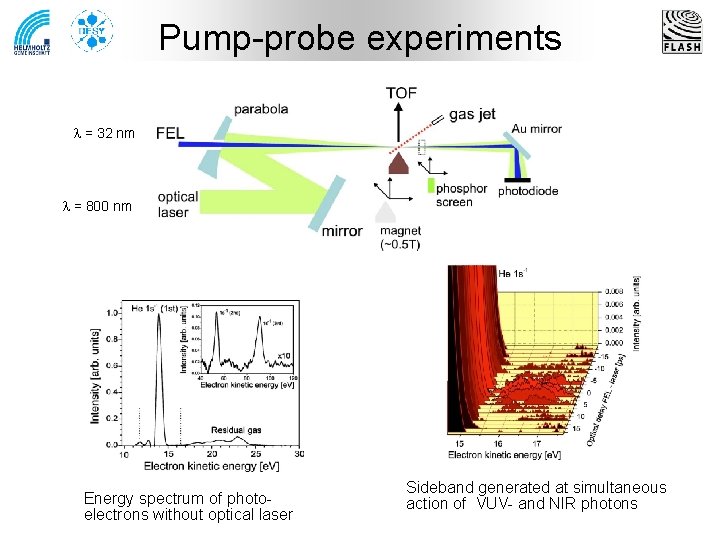
Pump-probe experiments l = 32 nm l = 800 nm Energy spectrum of photoelectrons without optical laser Sideband generated at simultaneous action of VUV- and NIR photons
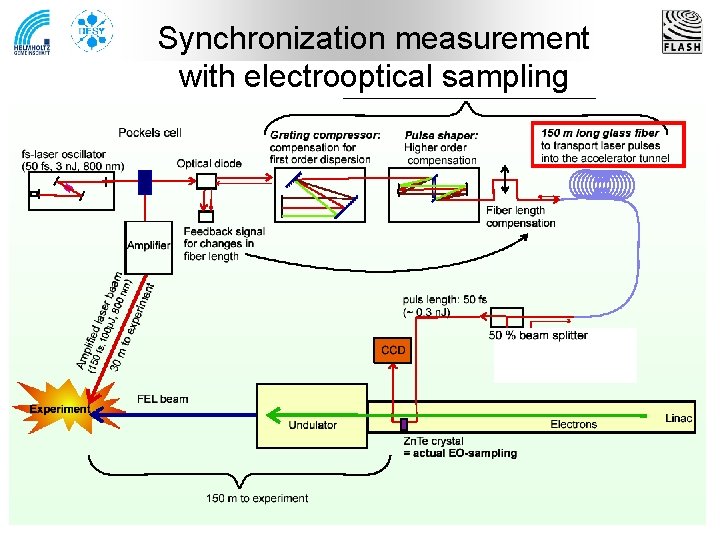
Synchronization measurement with electrooptical sampling