
FLASH CHROMATOGRAPHY 1 INTRODUCTION WHAT IS FLASH CHROMATOGRAPHY
- Slides: 15
FLASH CHROMATOGRAPHY 1
INTRODUCTION WHAT IS FLASH CHROMATOGRAPHY? ü A type of preparative purification for rapid isolation of compounds including reaction mixtures, where the target (synthesized) molecule must be separated from excess reagents, by-products, and side-products; natural products. ü Sample range varies from several mg to over 150 g ü Flow rates up to 10 ml/min upwards of 300 ml/min. ü Pressure 10 -100 psi 2
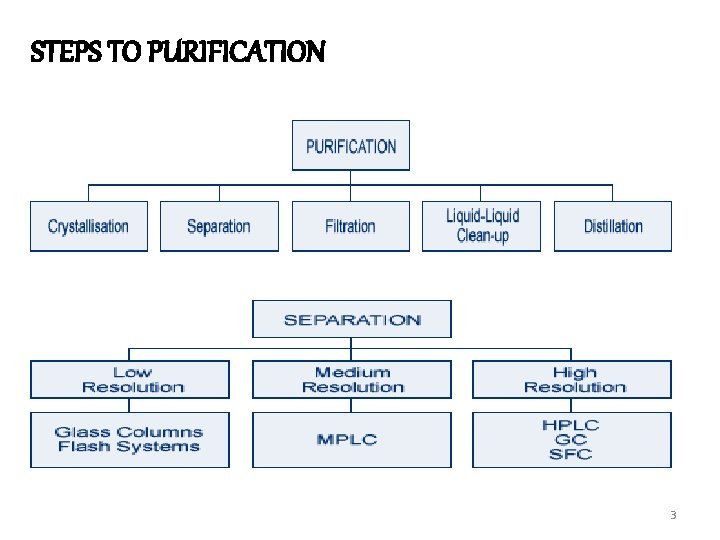
STEPS TO PURIFICATION 3
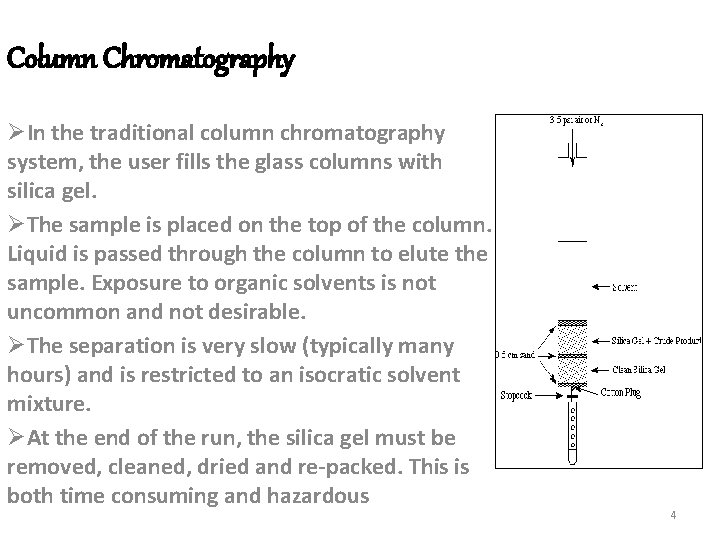
Column Chromatography ØIn the traditional column chromatography system, the user fills the glass columns with silica gel. ØThe sample is placed on the top of the column. Liquid is passed through the column to elute the sample. Exposure to organic solvents is not uncommon and not desirable. ØThe separation is very slow (typically many hours) and is restricted to an isocratic solvent mixture. ØAt the end of the run, the silica gel must be removed, cleaned, dried and re-packed. This is both time consuming and hazardous 4
DRAWBACKS OF COLOUMN CHROMATOGRPHY ØDo-by-yourselves style ØSignificant labor involved in packing, unpacking and washing columns ØSafety risks in shattering glass columns ØLimited flow rate and pressure ØReproducibility concerns 5
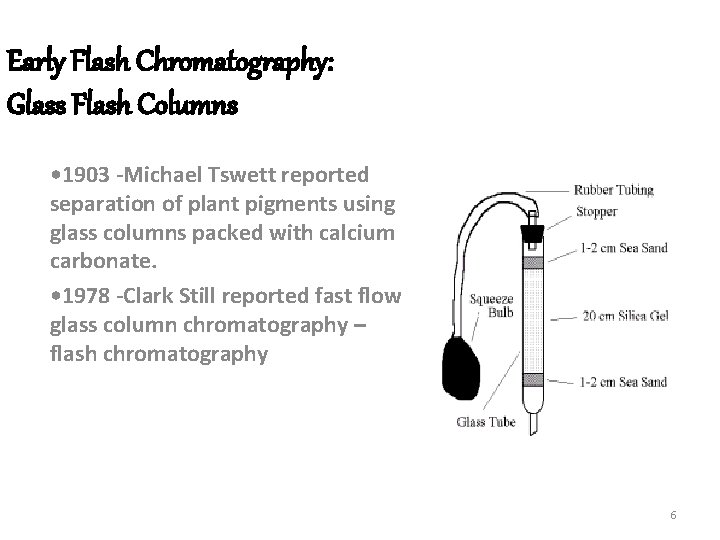
Early Flash Chromatography: Glass Flash Columns • 1903 -Michael Tswett reported separation of plant pigments using glass columns packed with calcium carbonate. • 1978 -Clark Still reported fast flow glass column chromatography – flash chromatography 6
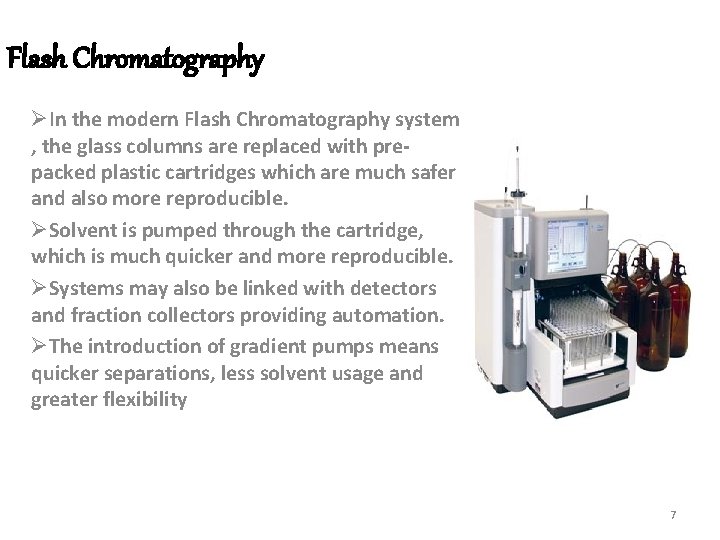
Flash Chromatography ØIn the modern Flash Chromatography system , the glass columns are replaced with prepacked plastic cartridges which are much safer and also more reproducible. ØSolvent is pumped through the cartridge, which is much quicker and more reproducible. ØSystems may also be linked with detectors and fraction collectors providing automation. ØThe introduction of gradient pumps means quicker separations, less solvent usage and greater flexibility 7
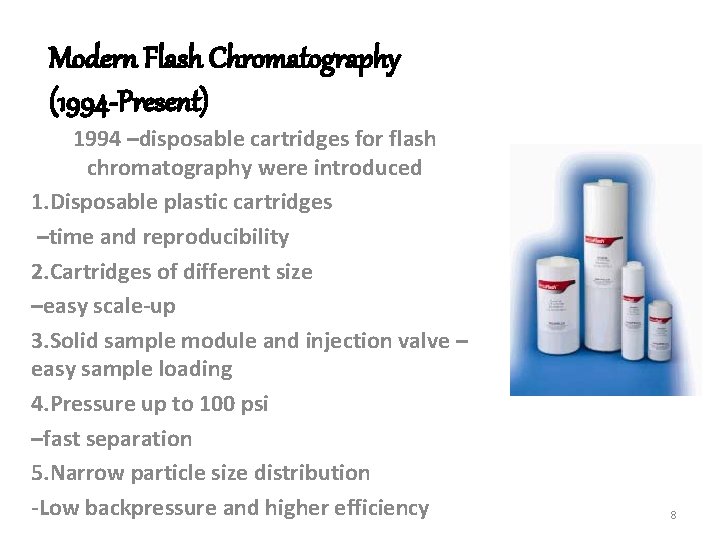
Modern Flash Chromatography (1994 -Present) 1994 –disposable cartridges for flash chromatography were introduced 1. Disposable plastic cartridges –time and reproducibility 2. Cartridges of different size –easy scale-up 3. Solid sample module and injection valve – easy sample loading 4. Pressure up to 100 psi –fast separation 5. Narrow particle size distribution -Low backpressure and higher efficiency 8
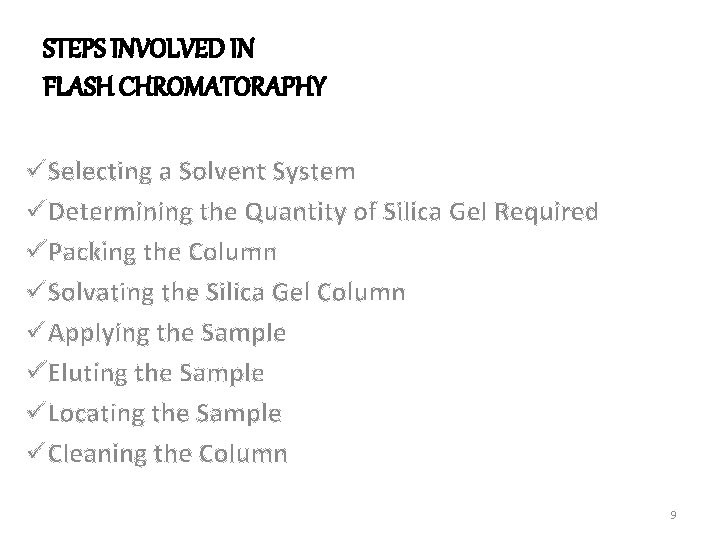
STEPS INVOLVED IN FLASH CHROMATORAPHY üSelecting a Solvent System üDetermining the Quantity of Silica Gel Required üPacking the Column üSolvating the Silica Gel Column üApplying the Sample üEluting the Sample üLocating the Sample üCleaning the Column 9
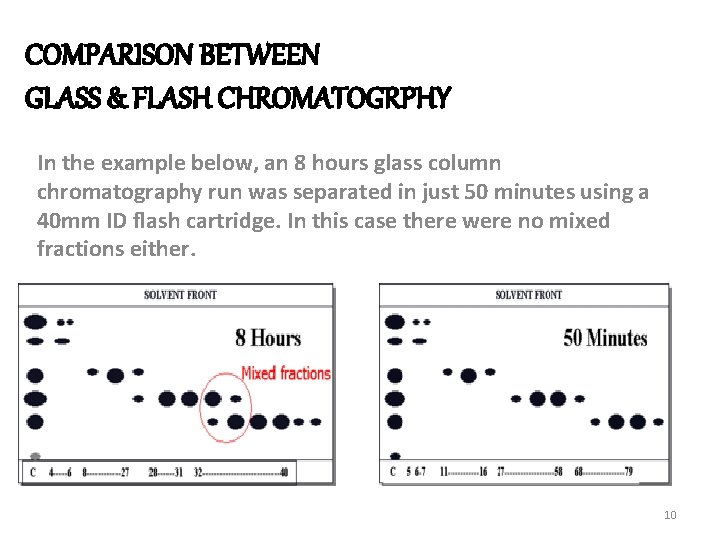
COMPARISON BETWEEN GLASS & FLASH CHROMATOGRPHY In the example below, an 8 hours glass column chromatography run was separated in just 50 minutes using a 40 mm ID flash cartridge. In this case there were no mixed fractions either. 10
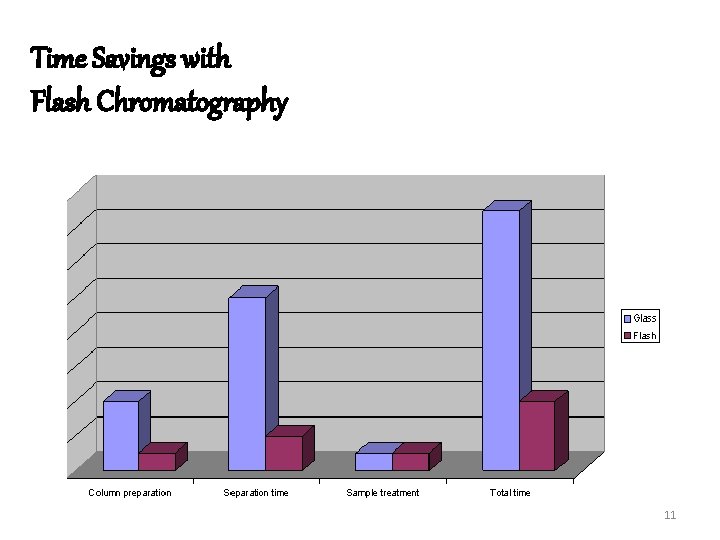
Time Savings with Flash Chromatography 11
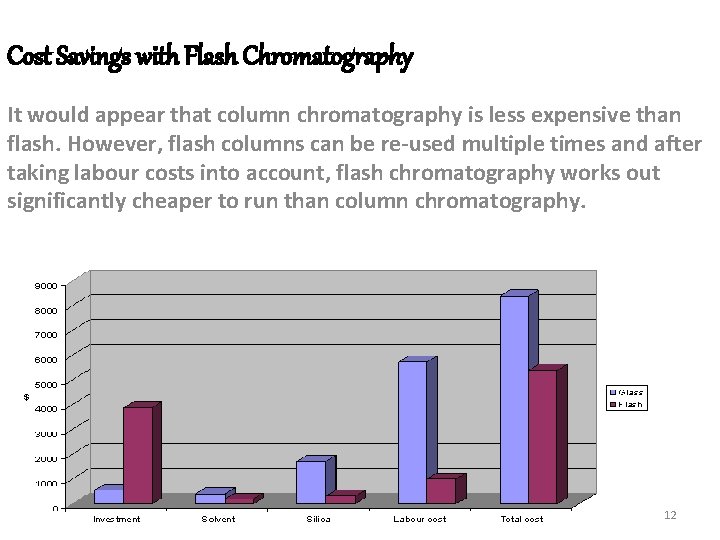
Cost Savings with Flash Chromatography It would appear that column chromatography is less expensive than flash. However, flash columns can be re-used multiple times and after taking labour costs into account, flash chromatography works out significantly cheaper to run than column chromatography. 12
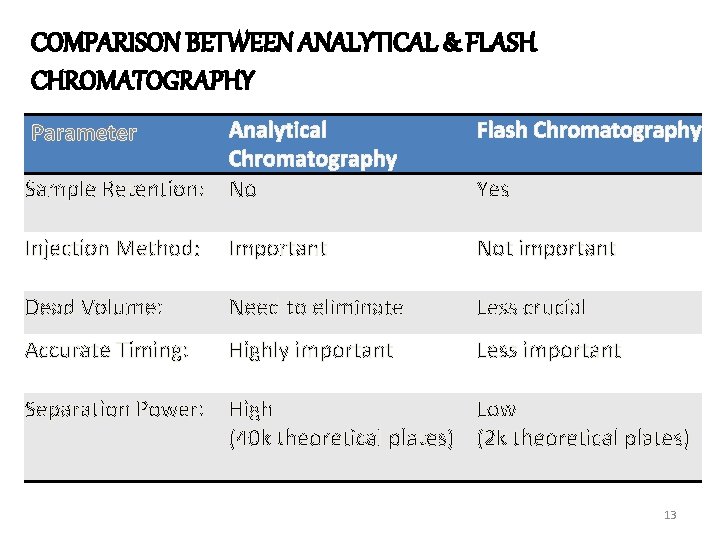
COMPARISON BETWEEN ANALYTICAL & FLASH CHROMATOGRAPHY Flash Chromatography Sample Retention: Analytical Chromatography No Injection Method: Important Not important Dead Volume: Need to eliminate Less crucial Accurate Timing: Highly important Less important Separation Power: High Low (40 k theoretical plates) (2 k theoretical plates) Parameter Yes 13
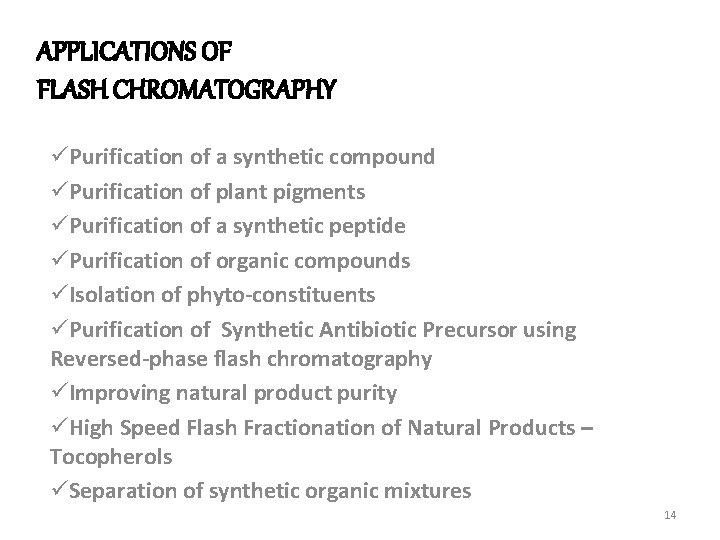
APPLICATIONS OF FLASH CHROMATOGRAPHY üPurification of a synthetic compound üPurification of plant pigments üPurification of a synthetic peptide üPurification of organic compounds üIsolation of phyto-constituents üPurification of Synthetic Antibiotic Precursor using Reversed-phase flash chromatography üImproving natural product purity üHigh Speed Flash Fractionation of Natural Products – Tocopherols üSeparation of synthetic organic mixtures 14
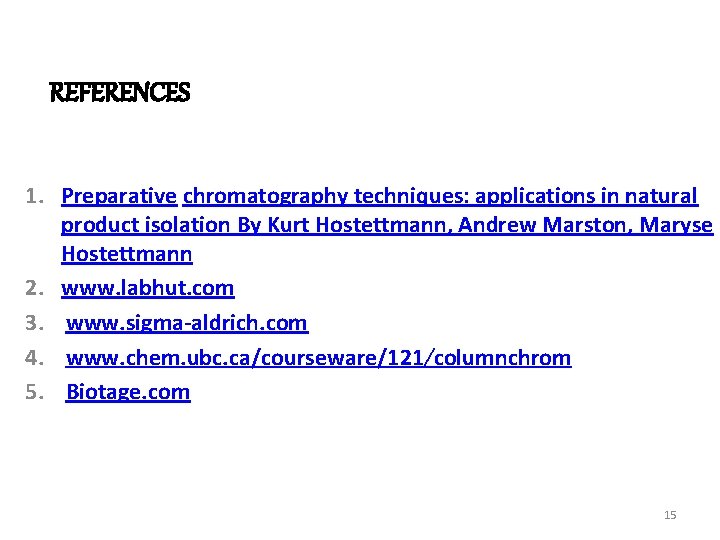
REFERENCES 1. Preparative chromatography techniques: applications in natural product isolation By Kurt Hostettmann, Andrew Marston, Maryse Hostettmann 2. www. labhut. com 3. www. sigma-aldrich. com 4. www. chem. ubc. ca/courseware/121/columnchrom 5. Biotage. com 15