
Flange facings Contact surfaces to seat the sealing

- Slides: 11
Flange facings • Contact surfaces to seat the sealing gasket material. • Wide face: – Non-standard – Simple – Gasket extended beyond bolt holes – Soft gasket – P<20 kg/cm 2, T<220 C • Narrow face
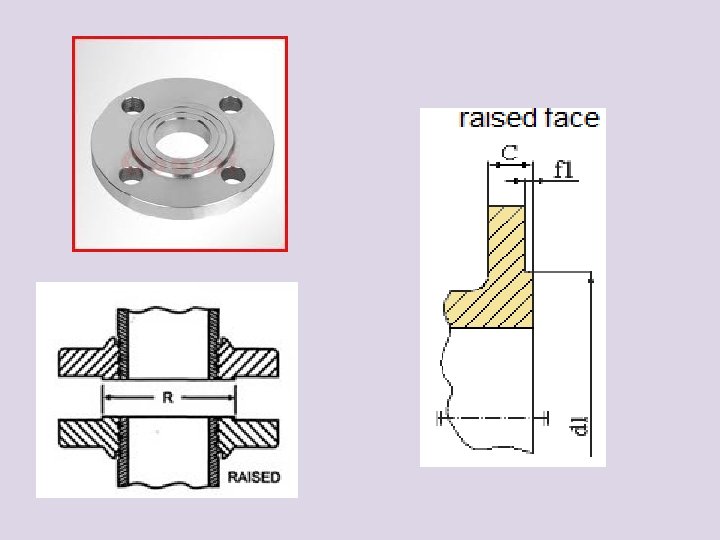
Raised face • Most common type • Average service conditions • Gasket surfaces are raised above the bolting circle face. • The raised faces have a prescribed texture to increase their gripping and retaining force on this flat gasket.
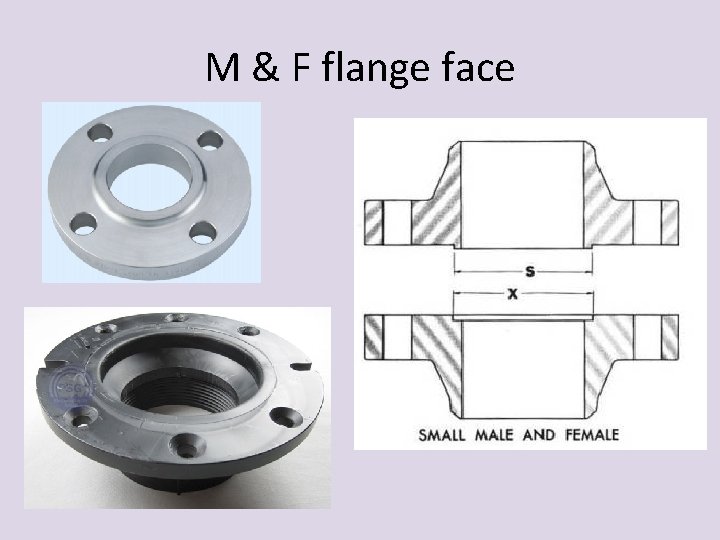
Male and Female Face • Flanges must be matched. One flange face has an area that extends beyond the normal flange face (Male). The other flange has a matching depression (Female) machined into it's face. • The female face is 3/16 -inch deep, the male face is 1/4 -inch high • Heat Exchanger shell to channel and cover flanges.
M & F flange face
Tongue and Groove face • Gasket is placed inside the groove • They differ from male-and-female in that the inside diameters of the tongue-and-groove do not extend into the flange base, thus retaining the gasket on its inner and outer diameter. These are commonly found on pump covers and Valve Bonnets. • Self-aligning
Tongue and Groove face
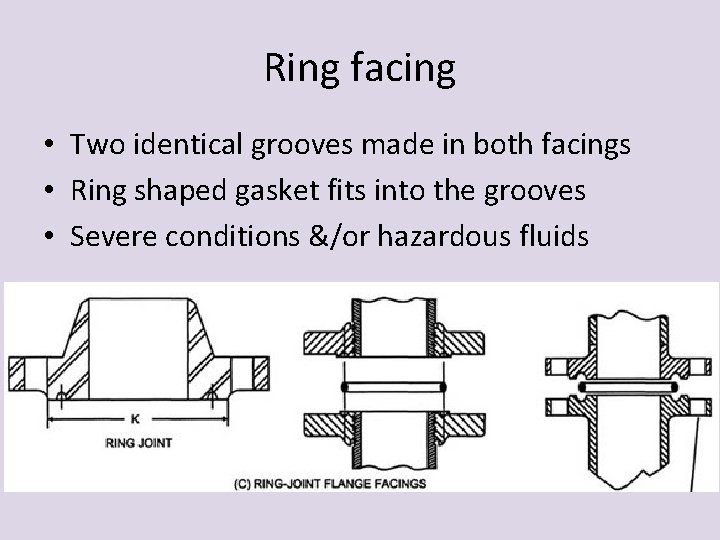
Ring facing • Two identical grooves made in both facings • Ring shaped gasket fits into the grooves • Severe conditions &/or hazardous fluids
Gaskets • Plastic/semiplastic material placed between two flanges & held tight by series of bolts • Tries to expand occupy space between two flange facings, thereby sealing minute irregularities • Min force reqd by the gasket to flow and seal the surface is known as Yield or Seating Force • Ratio of gasket stress to internal pressure is called Gasket Factor
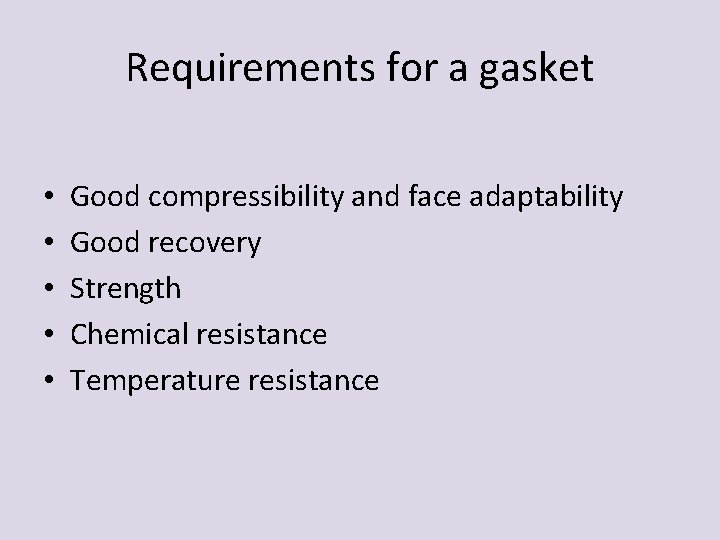
Requirements for a gasket • • • Good compressibility and face adaptability Good recovery Strength Chemical resistance Temperature resistance
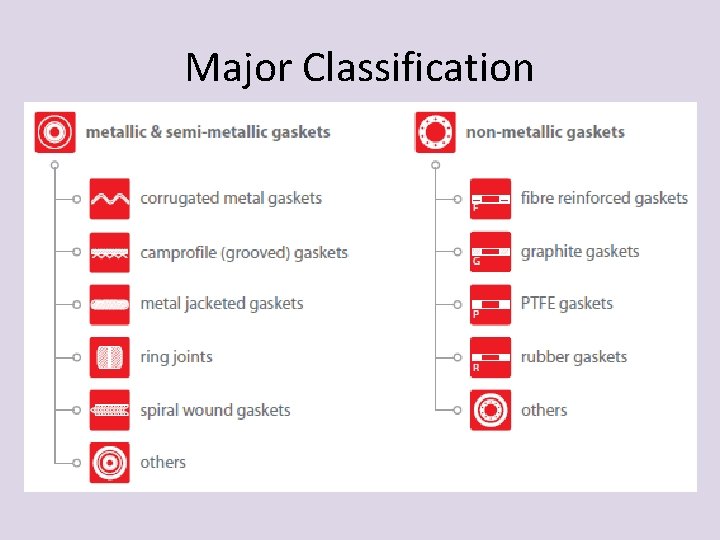
Major Classification