
Flagships of the Future SUSTAINABILITY CHALLENGES AND OPPORTUNITIES
Flagships of the Future SUSTAINABILITY CHALLENGES AND OPPORTUNITIES IN A HETEROGENEOUS GLOBAL FLEET
Flagships of the Future Shipping is. . . Lifeblood of international trade Sector needs to be identifying global opportunities resilient future proof solutions future wealth streams
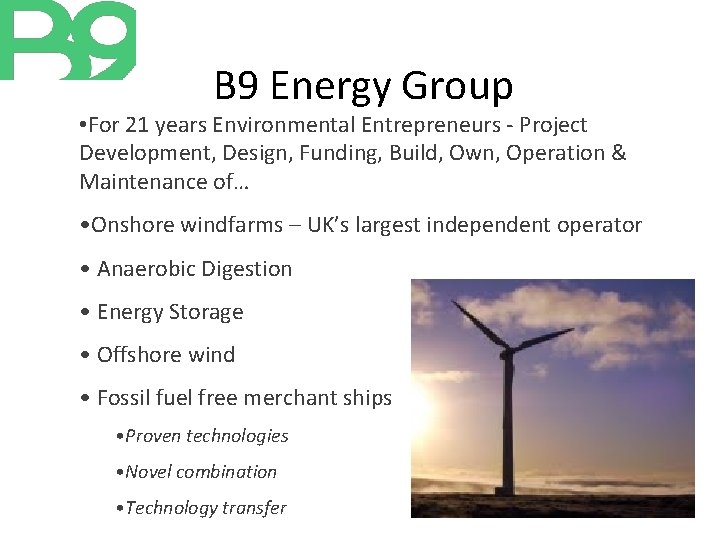
B 9 Energy Group • For 21 years Environmental Entrepreneurs - Project Development, Design, Funding, Build, Own, Operation & Maintenance of… • Onshore windfarms – UK’s largest independent operator • Anaerobic Digestion • Energy Storage • Offshore wind • Fossil fuel free merchant ships • Proven technologies • Novel combination • Technology transfer
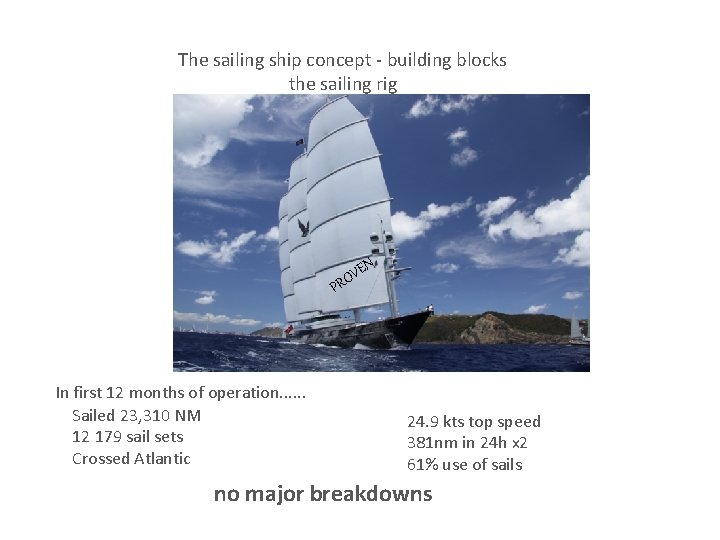
The sailing ship concept - building blocks the sailing rig N PR E OV 24. 9 knots top speed 381 NM in 24 h x 2 61% use of sail In first 12 months of operation. . . Sailed 23, 310 NM 12 179 sail sets Crossed Atlantic 24. 9 kts top speed 381 nm in 24 h x 2 61% use of sails no major breakdowns
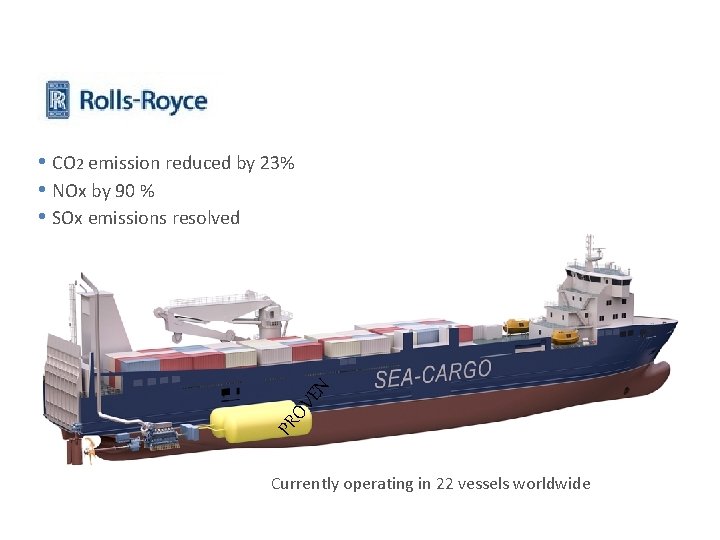
PR OV EN • CO 2 emission reduced by 23% • NOx by 90 % • SOx emissions resolved Currently operating in 22 vessels worldwide

Making bio-gas from food waste Anaerobic Digestion
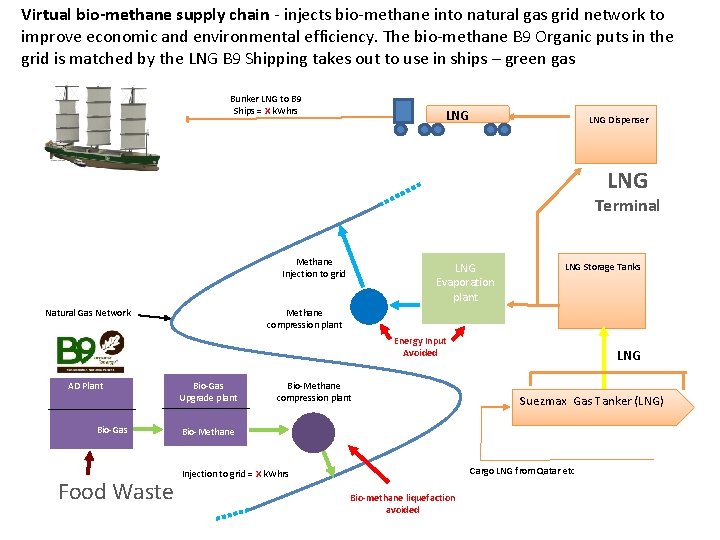
Virtual bio-methane supply chain - injects bio-methane into natural gas grid network to improve economic and environmental efficiency. The bio-methane B 9 Organic puts in the grid is matched by the LNG B 9 Shipping takes out to use in ships – green gas Bunker LNG to B 9 Ships = X k. Whrs LNG Dispenser LNG Terminal Methane Injection to grid LNG Evaporation plant LNG Storage Tanks Methane compression plant Natural Gas Network Energy Input Avoided AD Plant Bio-Gas Food Waste Bio-Gas Upgrade plant Bio-Methane compression plant LNG Suezmax Gas Tanker (LNG) Bio-Methane Cargo LNG from Qatar etc Injection to grid = X k. Whrs Bio-methane liquefaction avoided
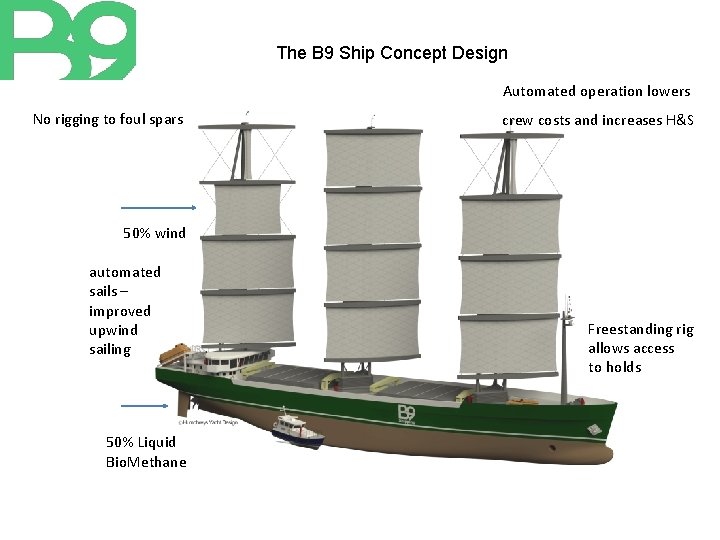
The B 9 Ship Concept Design Automated operation lowers No rigging to foul spars crew costs and increases H&S 50% wind automated sails – improved upwind sailing 50% Liquid Bio. Methane Freestanding rig allows access to holds
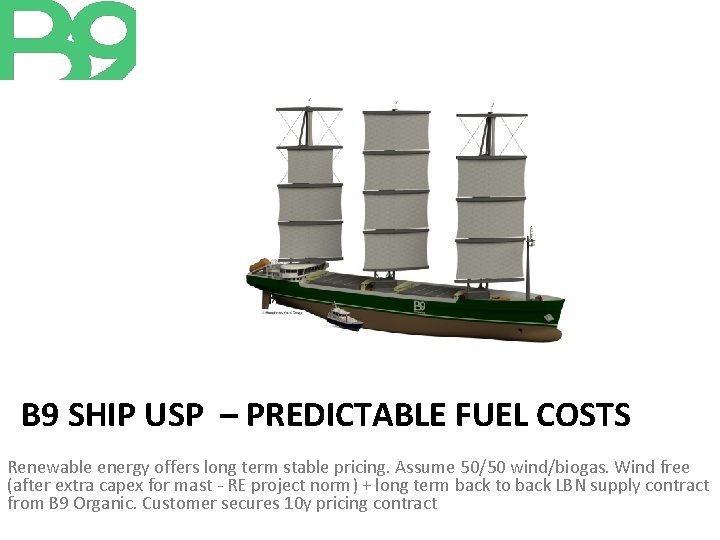
B 9 SHIP USP – PREDICTABLE FUEL COSTS Renewable energy offers long term stable pricing. Assume 50/50 wind/biogas. Wind free (after extra capex for mast - RE project norm) + long term back to back LBN supply contract from B 9 Organic. Customer secures 10 y pricing contract
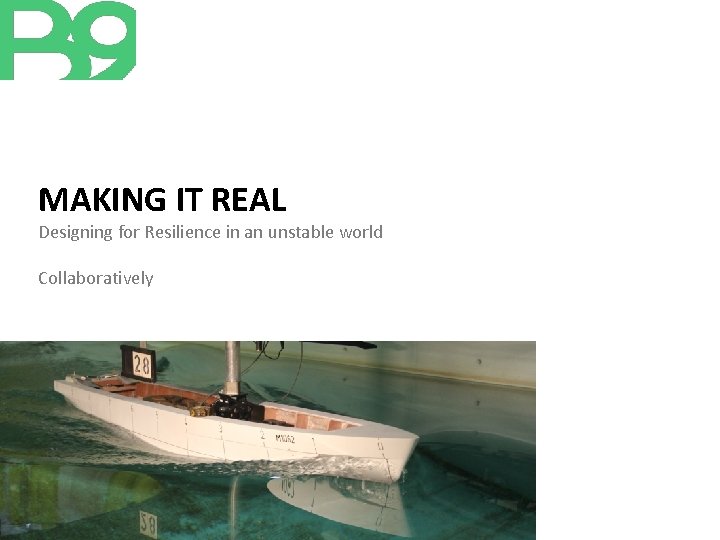
MAKING IT REAL Designing for Resilience in an unstable world Collaboratively
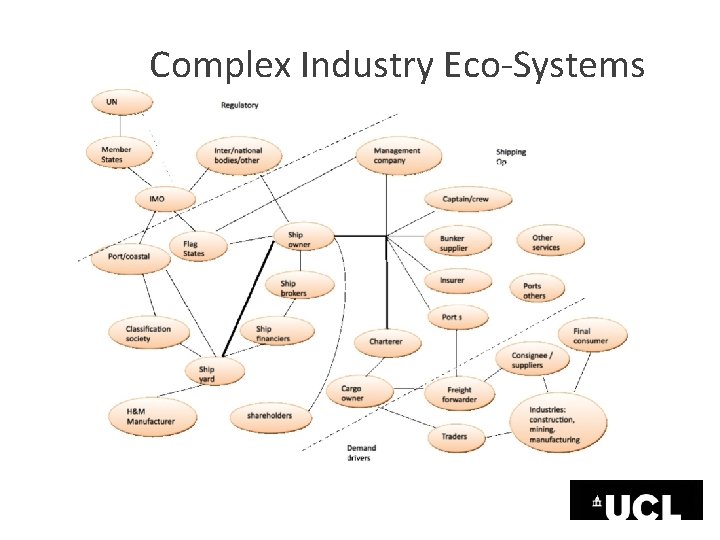
Complex Industry Eco-Systems
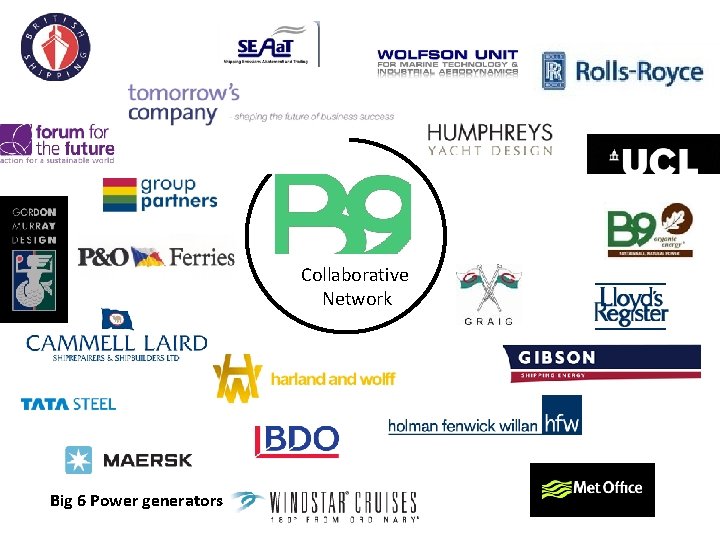
Collaborative Network Big 6 Power generators
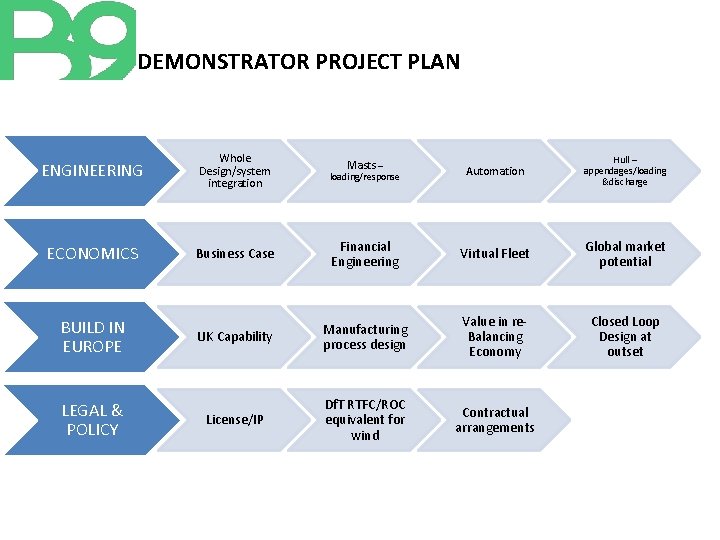
B 9 SHIP DEMONSTRATOR PROJECT PLAN ENGINEERING Whole Design/system integration ECONOMICS Business Case Financial Engineering Virtual Fleet Global market potential UK Capability Manufacturing process design Value in re. Balancing Economy Closed Loop Design at outset License/IP Df. T RTFC/ROC equivalent for wind Contractual arrangements BUILD IN EUROPE LEGAL & POLICY Masts – Automation Hull – appendages/loading &discharge loading/response
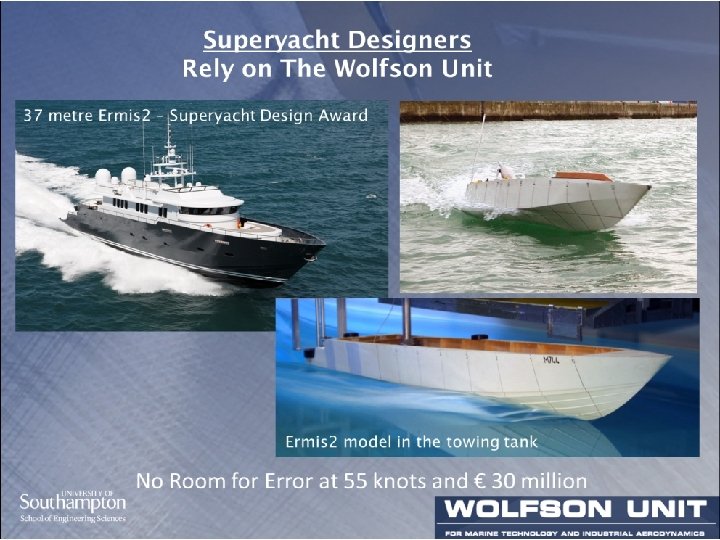
Superyacht Designers Rely on The Wolfson Unit (1) 37 metre Ermis 2 – Superyacht Design Award Ermis 2 model in the towing tank No Room for Error at 55 knots and € 30 million
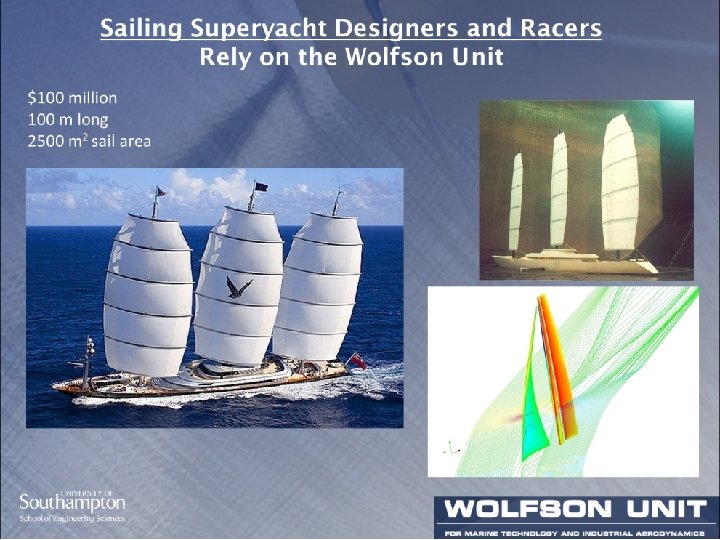
Sailing Superyacht Designers and Racers Rely on the Wolfson Unit $100 million 100 m long 2500 m 2 sail area
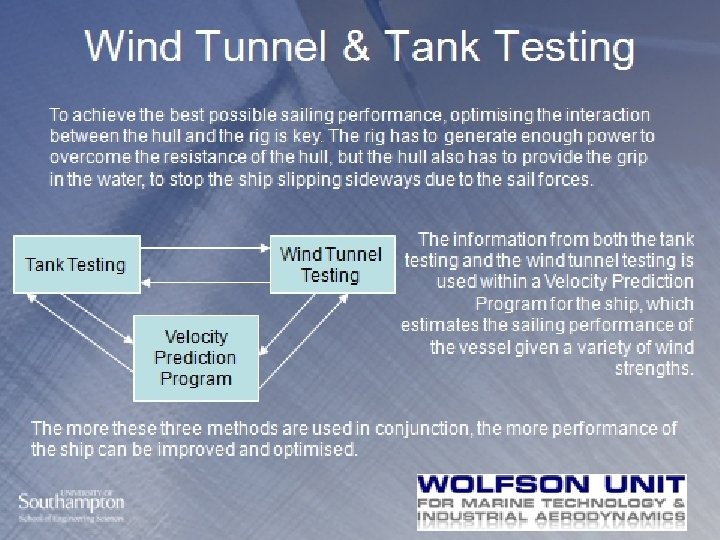
To achieve the best possible sailing performance, optimising the interaction between the hull and the rig is key. The rig has to generate enough power to overcome the resistance of the hull, but the hull also has to provide the grip in the water, to stop the ship slipping sideways due to the sail forces. Wind Tunnel Testing Tank Testing Velocity Prediction Program The information from both the tank testing and the wind tunnel testing is used within a Velocity Prediction Program for the ship, which estimates the sailing performance of the vessel given a variety of wind strengths. Wind Tunnel & Tank Testing The more these three methods are used in conjunction, the more performance of the ship can be improved and optimised.
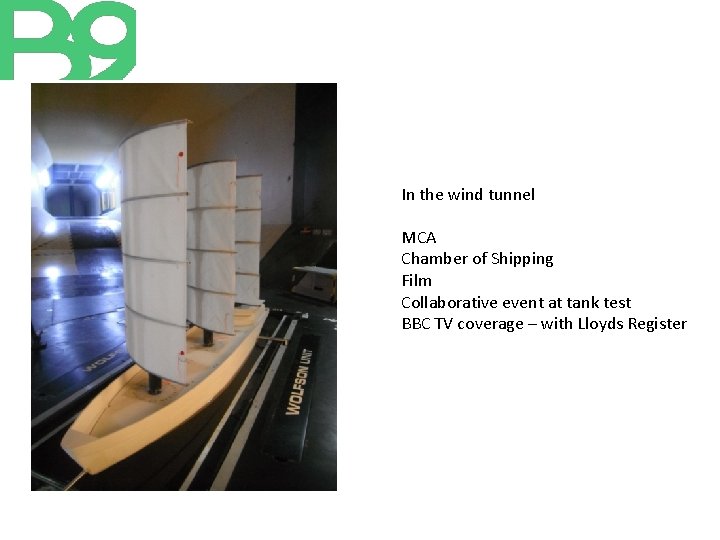
In the wind tunnel MCA Chamber of Shipping Film Collaborative event at tank test BBC TV coverage – with Lloyds Register
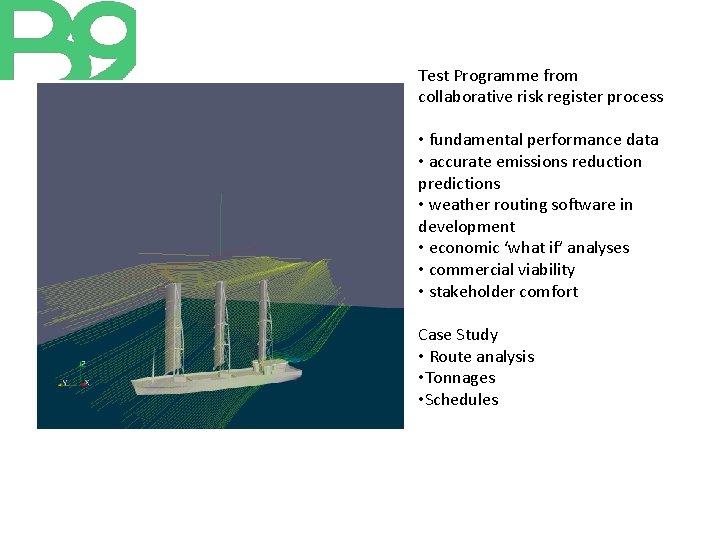
Test Programme from collaborative risk register process • fundamental performance data • accurate emissions reduction predictions • weather routing software in development • economic ‘what if’ analyses • commercial viability • stakeholder comfort Case Study • Route analysis • Tonnages • Schedules
- Slides: 18