
FlagellatesI Intestinal and Genital Dr Mohit Bhatia Assistant
Flagellates—I (Intestinal and Genital) Dr. Mohit Bhatia Assistant Professor Department of Microbiology AIIMS, Rishikesh
Learning objectives • Classification of flagellates • Giardia intestinalis • Trichomonas vaginalis
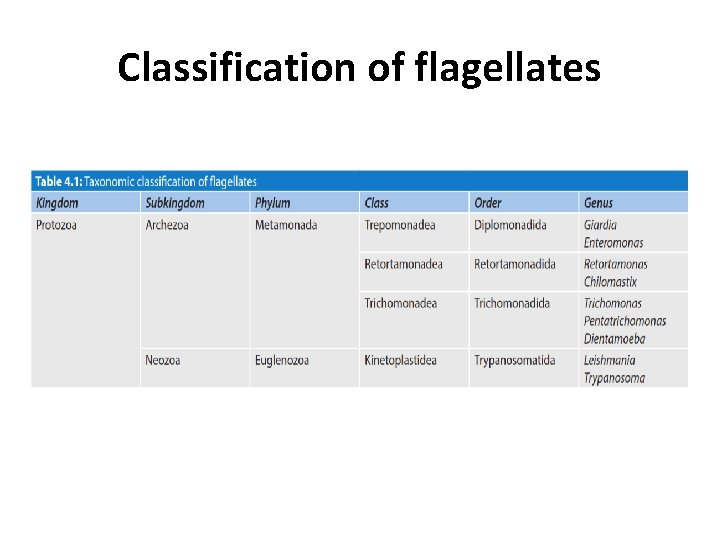
Classification of flagellates
Essentials of Medical Parasitology © 2018, Jaypee Brothers Medical Publishers
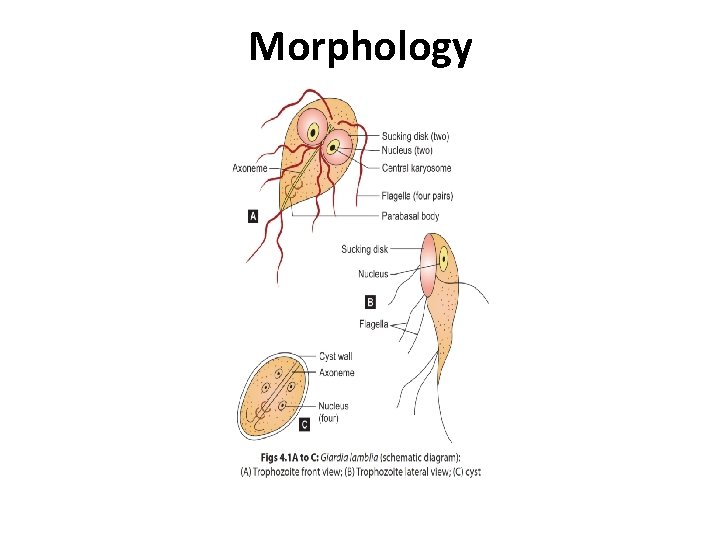
Morphology
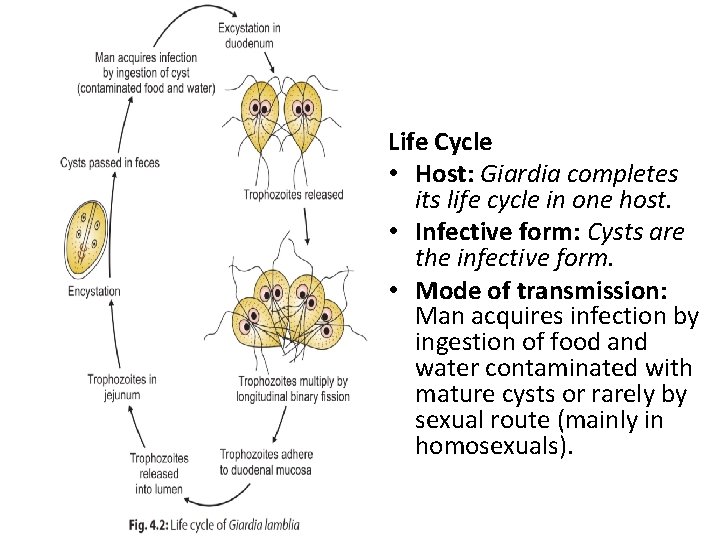
Life Cycle • Host: Giardia completes its life cycle in one host. • Infective form: Cysts are the infective form. • Mode of transmission: Man acquires infection by ingestion of food and water contaminated with mature cysts or rarely by sexual route (mainly in homosexuals).
Pathogenicity • Infective dose: 10 -25 cysts can initiate the Infection • Malabsorption: This could be of various types such as: – Malabsorption of fat (steatorrhea)- leads to foul smelling profuse frothy diarrhoea – Disaccharides deficiencies (lactose, xylose)- leading to lactose intolerance – Malabsorption of vitamin A, B 12 and iron – Protein loosing enteropathy • Antigenic variation: Giardia undergoes frequent antigenic variations due to a cysteine rich protein on its surface called variant surface protein (VSP)
Clinical features • Asymptomatic carriers • Acute giardiasis: – Incubation period varies from 1 week to 3 weeks – Common symptoms - diarrhoea, abdominal pain, bloating, belching – Diarrhoea is often foul smelling with fat, and mucus but no blood • Chronic giardiasis: – Recurrent episodes of foul smelling diarrhoea – Extraintestinal manifestations such as urticaria, anterior uveitis, salt and pepper retinal changes, arthritis, myopathy
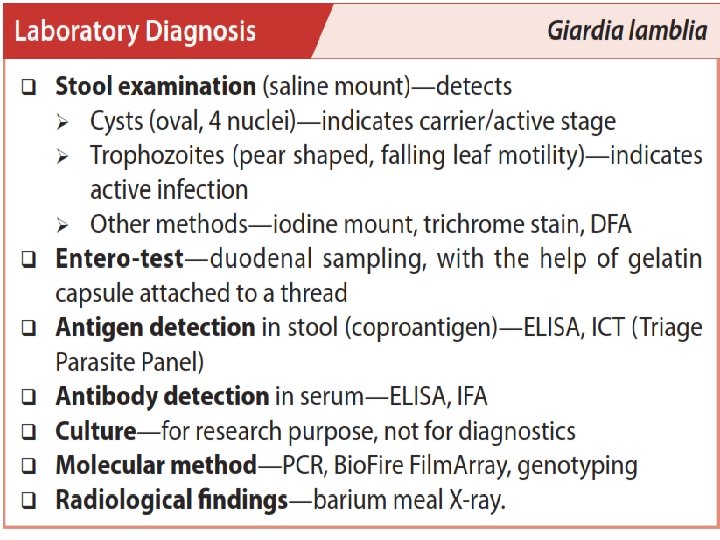
Essentials of Medical Parasitology © 2018, Jaypee Brothers Medical Publishers
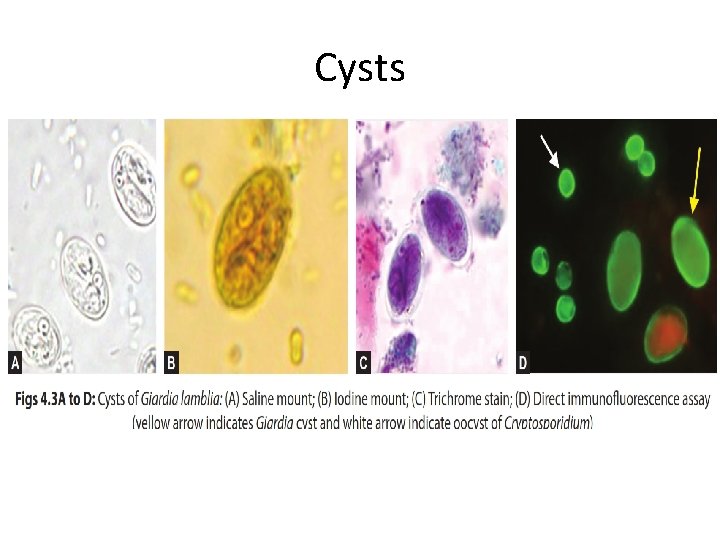
Cysts
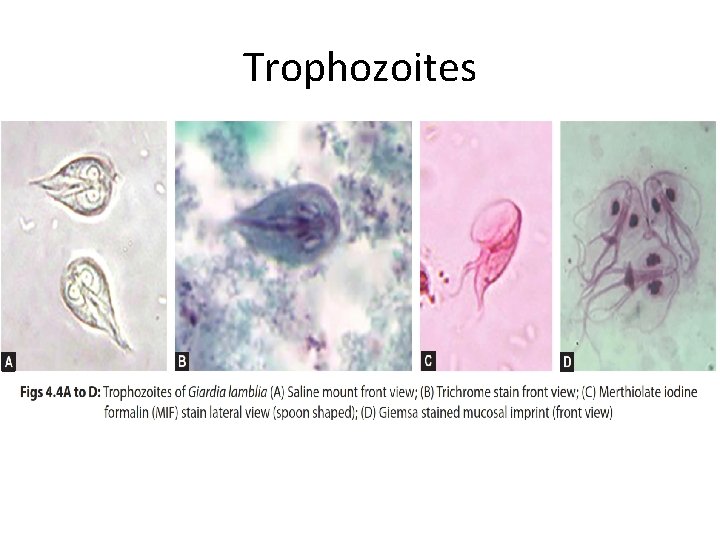
Trophozoites
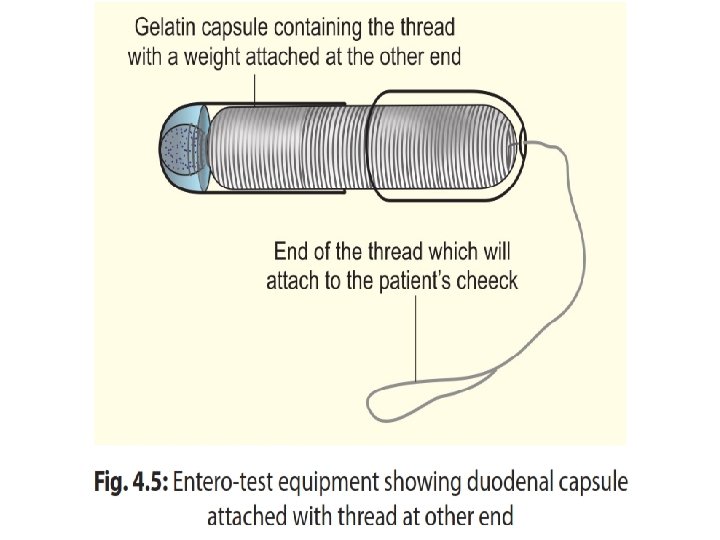
Entero-test Essentials of Medical Parasitology © 2018, Jaypee Brothers Medical Publishers
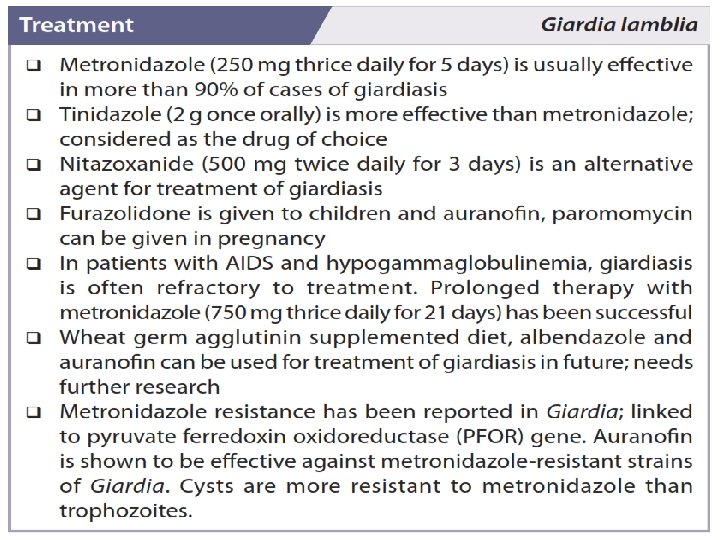
Essentials of Medical Parasitology © 2018, Jaypee Brothers Medical Publishers
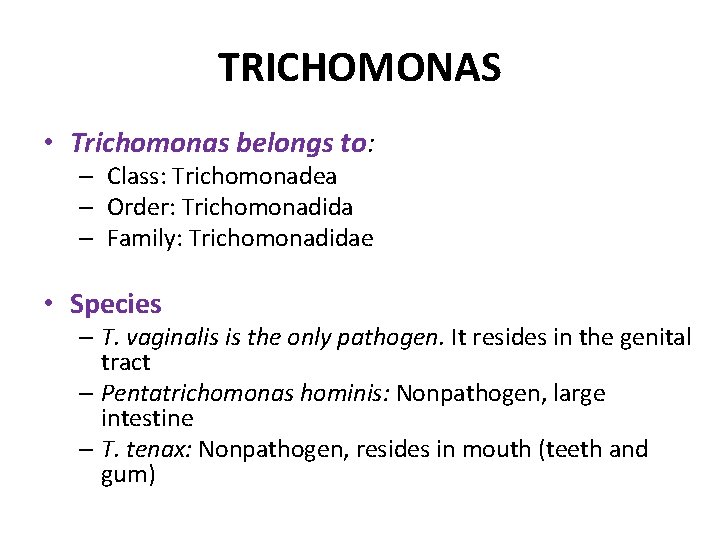
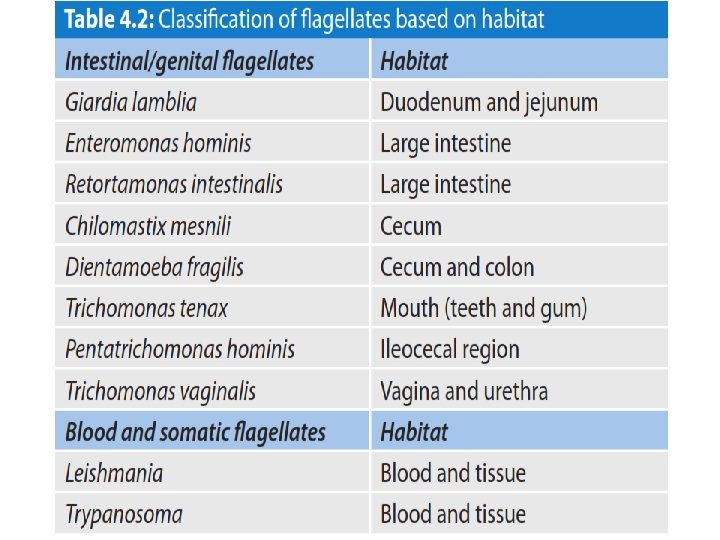
TRICHOMONAS • Trichomonas belongs to: – Class: Trichomonadea – Order: Trichomonadida – Family: Trichomonadidae • Species – T. vaginalis is the only pathogen. It resides in the genital tract – Pentatrichomonas hominis: Nonpathogen, large intestine – T. tenax: Nonpathogen, resides in mouth (teeth and gum)
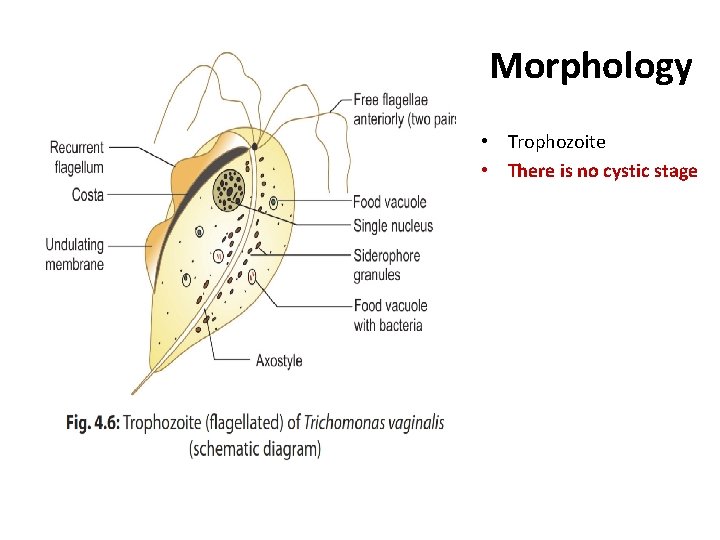
Morphology • Trophozoite • There is no cystic stage
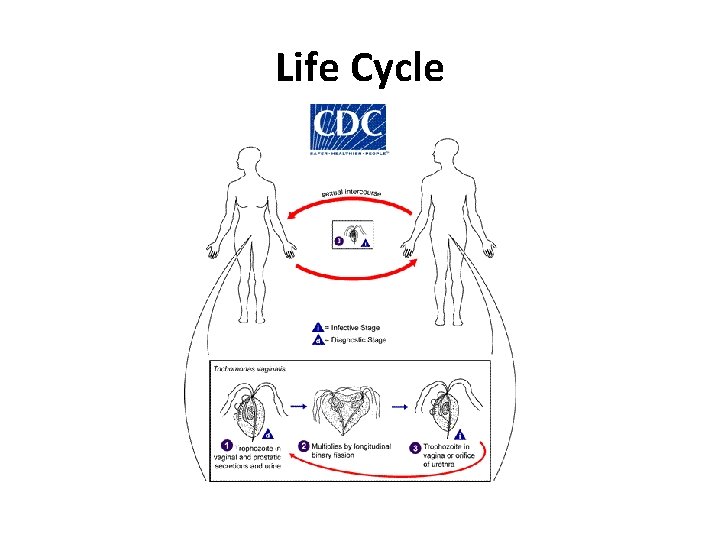
Life Cycle
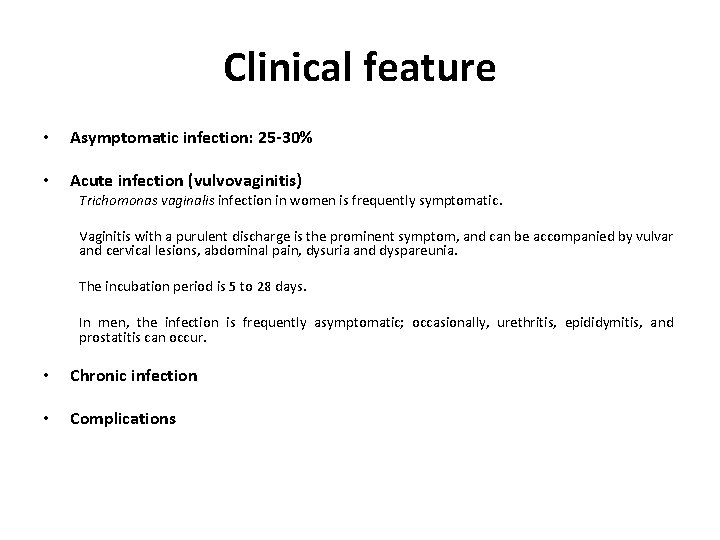
Clinical feature • Asymptomatic infection: 25 -30% • Acute infection (vulvovaginitis) Trichomonas vaginalis infection in women is frequently symptomatic. Vaginitis with a purulent discharge is the prominent symptom, and can be accompanied by vulvar and cervical lesions, abdominal pain, dysuria and dyspareunia. The incubation period is 5 to 28 days. In men, the infection is frequently asymptomatic; occasionally, urethritis, epididymitis, and prostatitis can occur. • Chronic infection • Complications
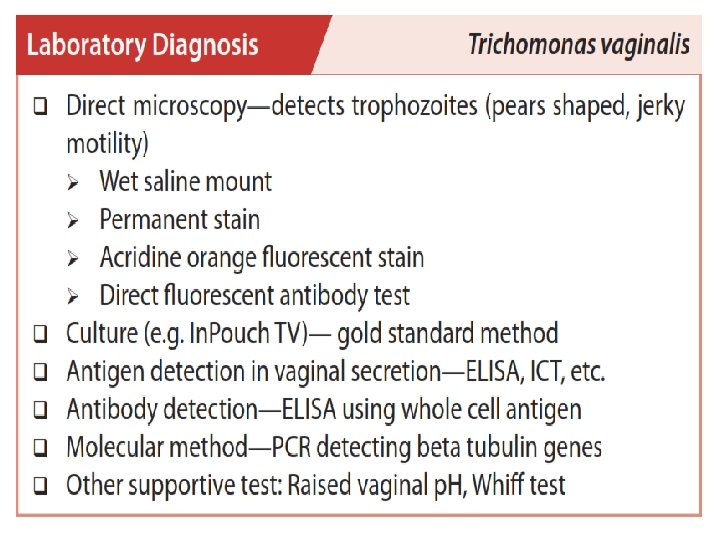
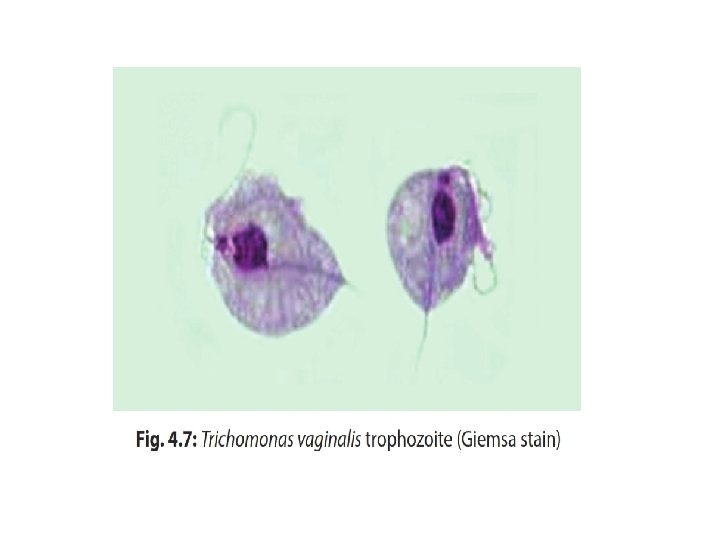
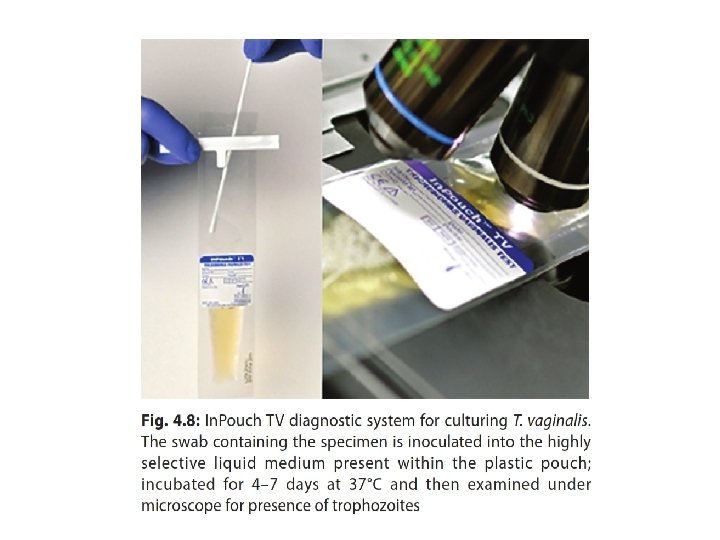
Essentials of Medical Parasitology © 2018, Jaypee Brothers Medical Publishers

- Slides: 22