
FIXING THE ILLINOIS SCHOOL FUNDING FORMULA Ensuring equitable
FIXING THE ILLINOIS SCHOOL FUNDING FORMULA Ensuring equitable funding to help all students succeed.
CURRENT REALITY v. In Illinois today, a child’s education is a function of the wealth of the community in which they live! v. The diversity of needs among our students is rising significantly in the State of Illinois. (Low income, ESL, Special Needs, etc. ) 2
CURRENT REALITY v. Research shows that low-income students need more resources to support their learning than their wealthier peers, not less! v. Low income students are faced with larger class sizes, fewer special classes like Art and Music, outdated textbooks and a lack of technology. 3
CURRENT REALITY v. The way Illinois funds K-12 education is upside-down: For every dollar Illinois spends on a non-low income student, the State spends only. 81 cents on a low income student, ranking Illinois worst-in-the-nation in providing resources for low income students! 4
CURRENT REALITY v. The current school funding formula is neither equitable nor adequate: v. EQUITY: The responsibility of the State to ensure that every school district will receive sufficient funding from a combination of local, state and federal sources to provide a program of instruction where every child has the access and support to achieve a high quality education. v. ADEQUATE: The level of funding sufficient for every child in a school district to have access to a high quality education that provides meaningful opportunities to learn. 5
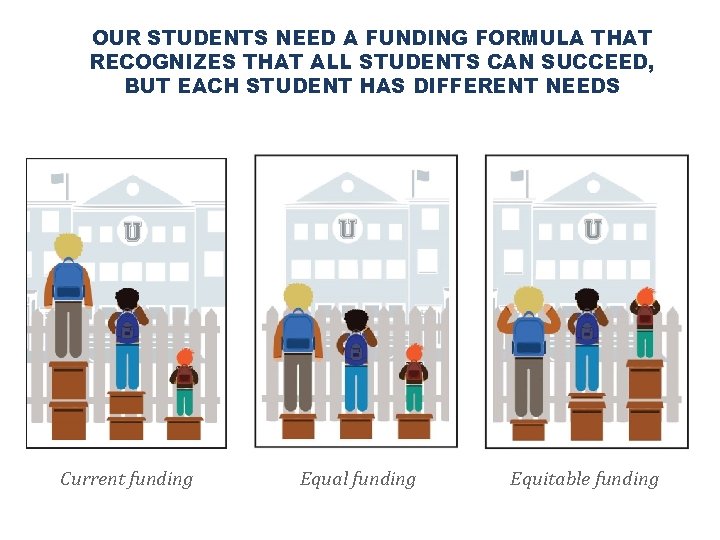
OUR STUDENTS NEED A FUNDING FORMULA THAT RECOGNIZES THAT ALL STUDENTS CAN SUCCEED, BUT EACH STUDENT HAS DIFFERENT NEEDS Current funding Equal funding Equitable funding
CURRENT REALITY v. The problem in Illinois……. We spend the least on kids who need it the most!! 7
CURRENT REALITY v. These problems, which are inherent in the current funding formula are exacerbated for every district in the State when the State does not pay their bills on time as is the case for every school district in Illinois today. 8
CURRENT REALITY Illinois’s broken school funding formula demands change this Spring in the General Assembly! HAVEN’T OUR STUDENTS WAITED LONG ENOUGH? ? !! 9
CURRENT REALITY https: //vimeo. com/174733070 10
WE BELIEVE • Resources should exist in all schools so that the conditions can exist to provide our students with a highly competitive education, allowing them to experience success in our society. • Our investors deserve to know what their investment is purchasing. • Those in the greatest need should receive the highest priority of our effort. • Each district should have the autonomy to decide how to best invest in their students. • Districts should be able to articulate the relationship between investment and execution. 11
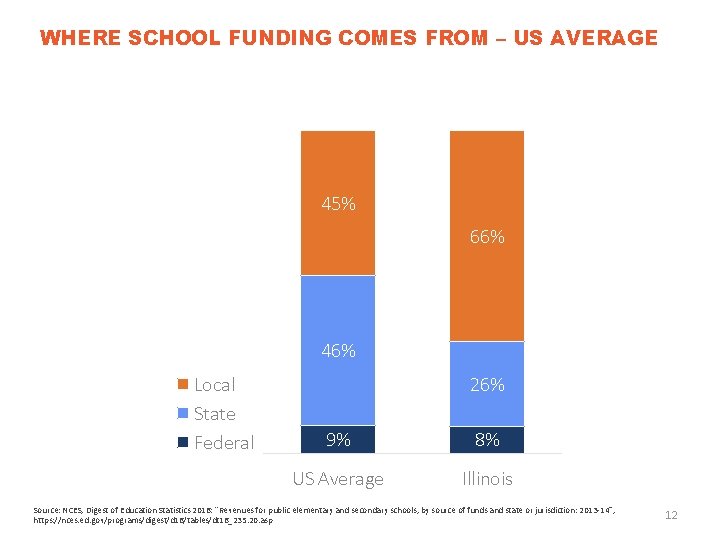
WHERE SCHOOL FUNDING COMES FROM – US AVERAGE 45% 66% 46% Local State Federal 26% 9% 8% US Average Illinois Source: NCES, Digest of Education Statistics 2016: “Revenues for public elementary and secondary schools, by source of funds and state or jurisdiction: 2013 -14”, https: //nces. ed. gov/programs/digest/d 16/tables/dt 16_235. 20. asp 12
THE SOLUTION IS AN EQUITABLE & ADEQUATE SYSTEM 1. Recognizes individual student needs 2. Accounts for differences in local resources 3. Provides for a mechanism of distribution that puts resources in the districts of greatest need first, while ensuring that no district shall lose a current level of state support on a per pupil basis. 4. Provides a sustainable and scalable model for investment in public education.
THE SOLUTION THE EVIDENCED BASED MODEL FOR SCHOOL FUNDING The following video was produced by Vision 20/20 and explains the Evidence Based Model. 14

Vision 20/20 Evidence Based Model Video 15
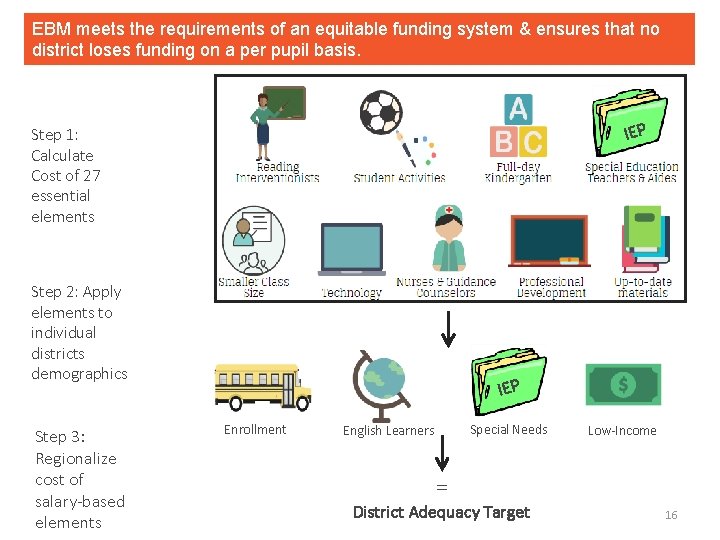
EBM meets the requirements of an equitable funding system & ensures that no district loses funding on a per pupil basis. IEP Step 1: Calculate Cost of 27 essential elements Step 2: Apply elements to individual districts demographics Step 3: Regionalize cost of salary-based elements IEP Enrollment Special Needs English Learners Low-Income = District Adequacy Target 16
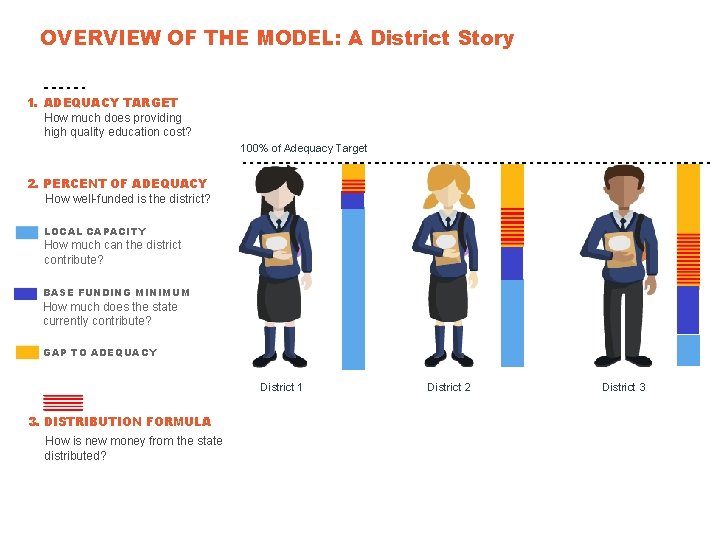
OVERVIEW OF THE MODEL: A District Story 1. ADEQUACY TARGET How much does providing high quality education cost? 100% of Adequacy Target 2. PERCENT OF ADEQUACY How well-funded is the district? LOCAL CAPACITY How much can the district contribute? BASE FUNDING MINIMUM How much does the state currently contribute? GAP TO ADEQUACY District 1 3. DISTRIBUTION FORMULA How is new money from the state distributed? District 2 District 3
WHAT CAN YOU DO? • Send an email to your Representative, Senator, and the Governor asking them to make school funding more equitable § www. fundingilfuture. org/action § www. illinoisvision 2020. org • Call your legislator urging them to fix the formula ASAP! • Tell everyone you know what you have heard today!. • Engage on social media

NEXT STEPS & MORE INFORMATION • Need help or have another idea? Contact us at: twomeym@mcusd 185. org jmeixner@roe 26. net
- Slides: 19