
Fixing Health Care from the Inside Out The








- Slides: 30
Fixing Health Care from the Inside Out: The Physician’s Role in Health System Reform Collocated Congress on the Un- and Under-insured and National Congress on Health Reform Sept. 23, 2008 Jack Lewin, M. D. CEO
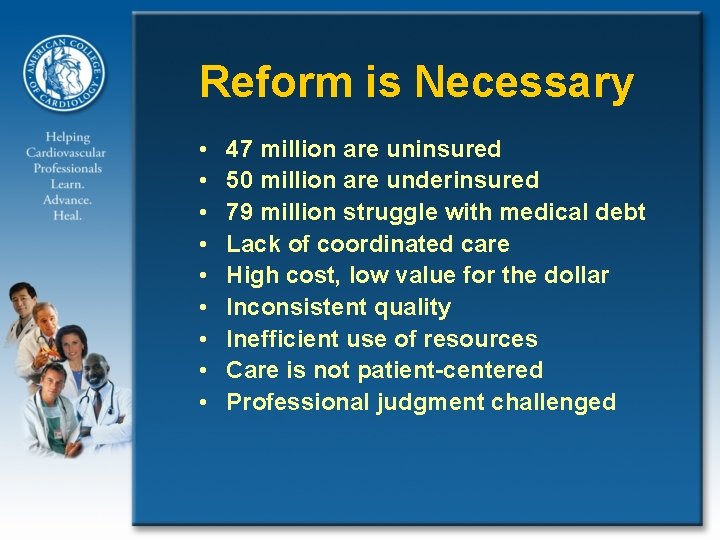
Reform is Necessary • • • 47 million are uninsured 50 million are underinsured 79 million struggle with medical debt Lack of coordinated care High cost, low value for the dollar Inconsistent quality Inefficient use of resources Care is not patient-centered Professional judgment challenged
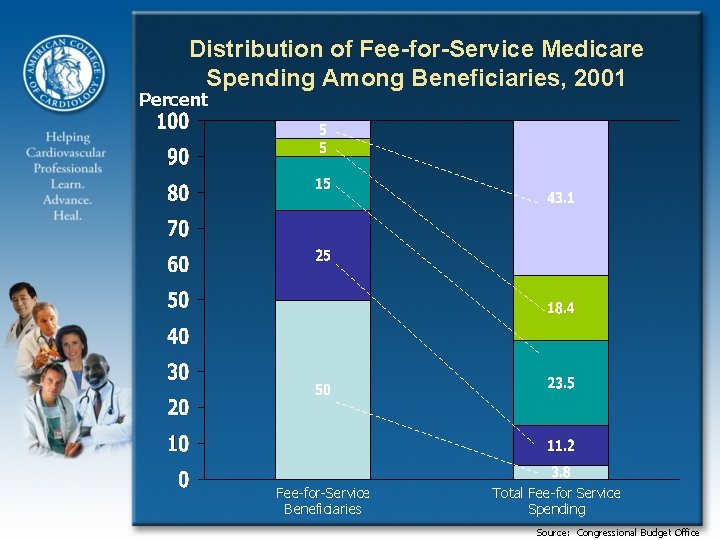
Distribution of Fee-for-Service Medicare Spending Among Beneficiaries, 2001 Percent Fee-for-Service Beneficiaries Total Fee-for Service Spending Source: Congressional Budget Office
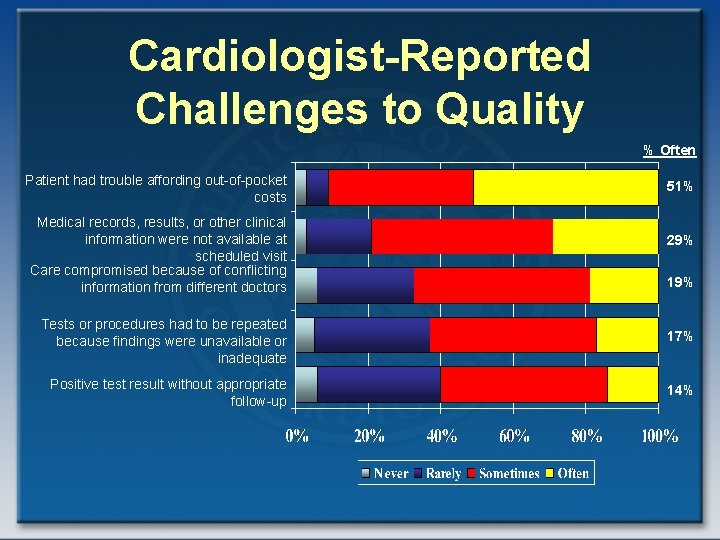
Cardiologist-Reported Challenges to Quality % Often Patient had trouble affording out-of-pocket costs Medical records, results, or other clinical information were not available at scheduled visit Care compromised because of conflicting information from different doctors 51% 29% 19% Tests or procedures had to be repeated because findings were unavailable or inadequate 17% Positive test result without appropriate follow-up 14%
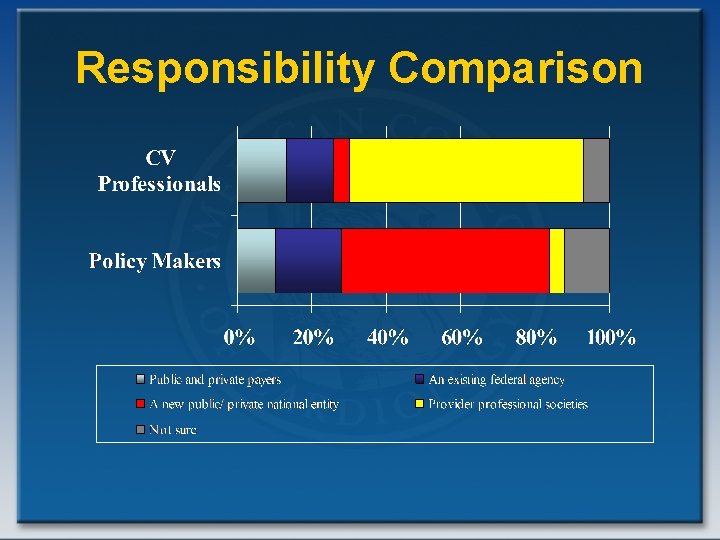
Responsibility Comparison
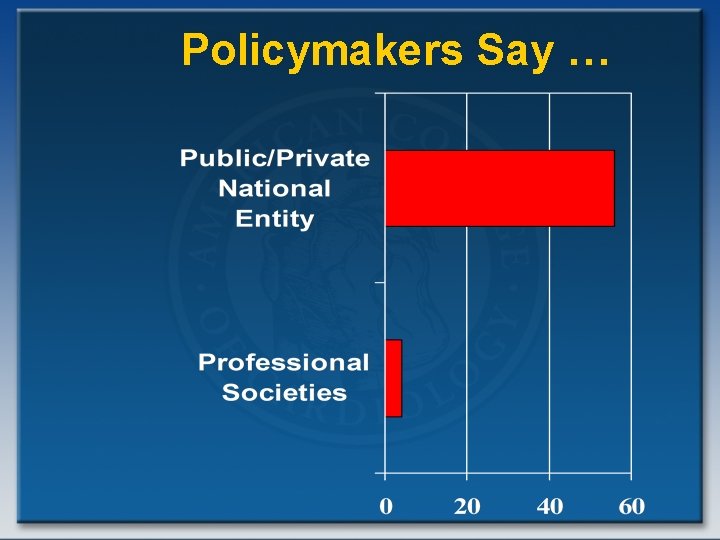
Policymakers Say …
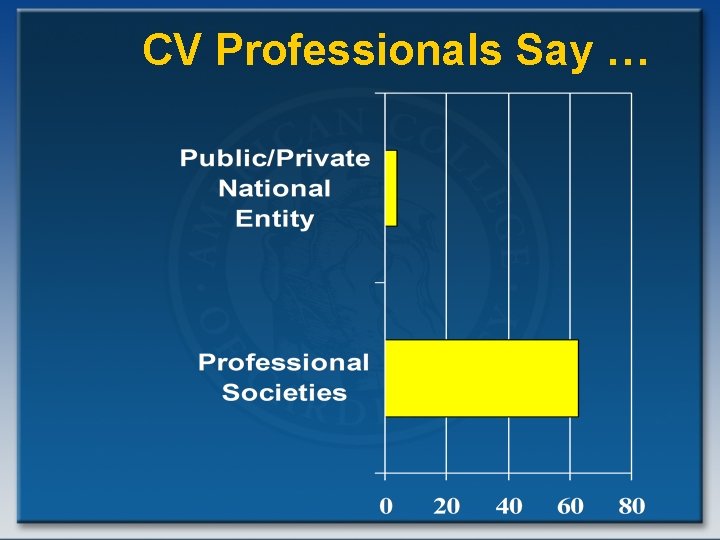
CV Professionals Say …
A Fork in the Road
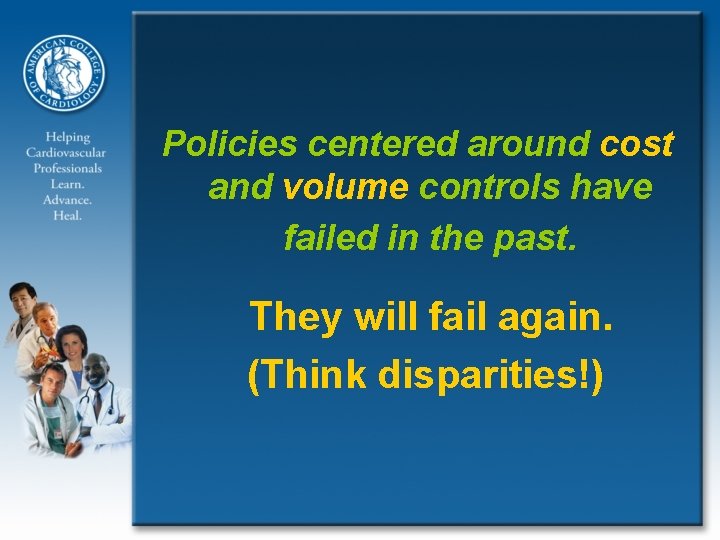
Policies centered around cost and volume controls have failed in the past. They will fail again. (Think disparities!)
PROACTIVE rather than REACTIVE
What about the patient?
Patient in the Center • • O. O. P. s Informed (Cardio. Smart™) Choices Responsibility for lifestyle and adherence • Boomers …
We must transform health care … … from the inside out.
Events to Date • • • BOT Visioning Session, 8. 07 Blue Ribbon Panel Key Issues Debated, Vetted Draft Document Developed Presented at Health System Reform Summit, Feb 1 – 2 • Stakeholder Meetings • Legislative Proposals
Principles of Health Care Reform • Universal access to necessary care • Public/private financing • A focus on high-quality, patientcentered care • Patient, physician, medical team at the center • Payment incentives for quality care and value • Coordination across sources and sites of care
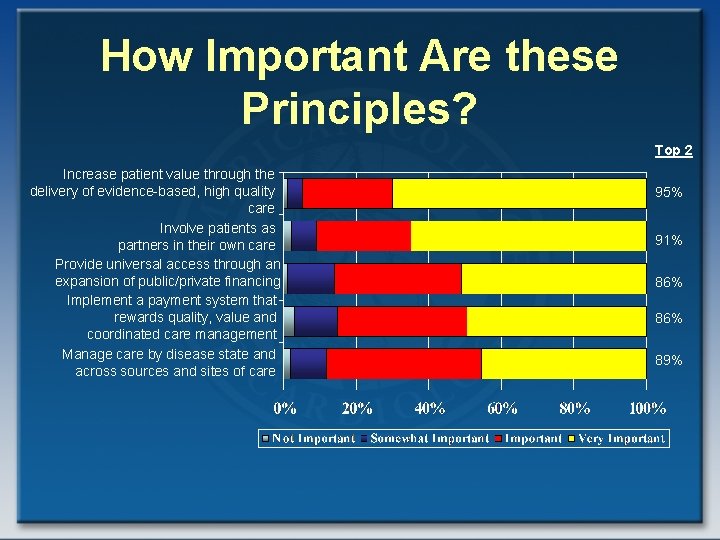
How Important Are these Principles? Top 2 Increase patient value through the delivery of evidence-based, high quality care Involve patients as partners in their own care Provide universal access through an expansion of public/private financing Implement a payment system that rewards quality, value and coordinated care management Manage care by disease state and across sources and sites of care 95% 91% 86% 89%
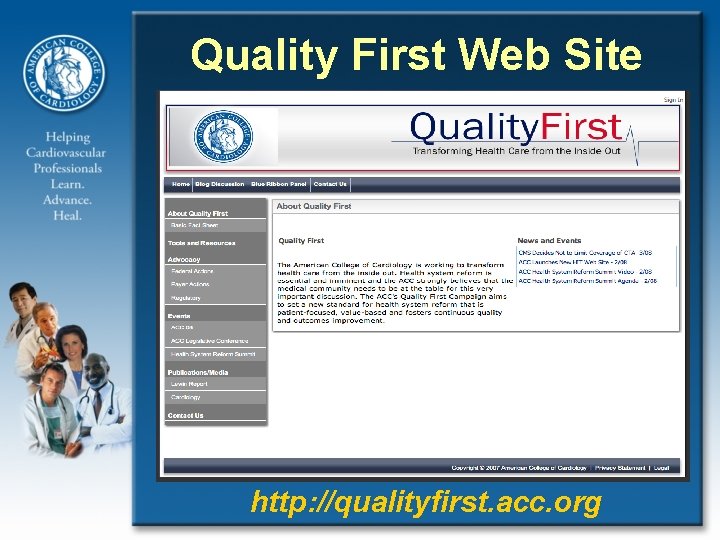
Quality First Web Site http: //qualityfirst. acc. org
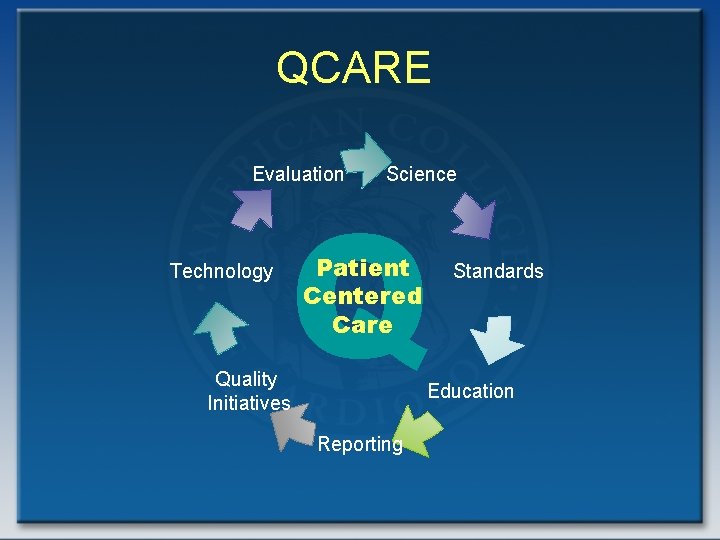
QCARE Evaluation Technology Science Q Patient Centered Care Quality Initiatives Standards Education Reporting
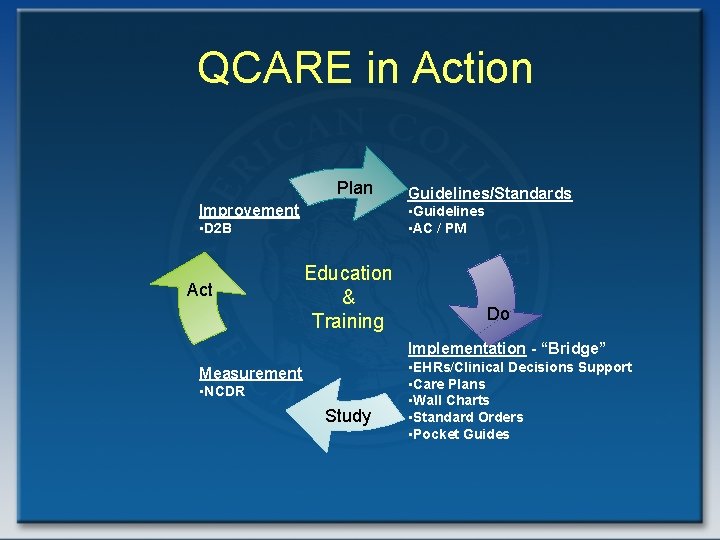
QCARE in Action Plan Improvement • Guidelines • AC / PM • D 2 B Act Guidelines/Standards Education & Training Do Implementation - “Bridge” Measurement • NCDR Study • EHRs/Clinical Decisions Support • Care Plans • Wall Charts • Standard Orders • Pocket Guides
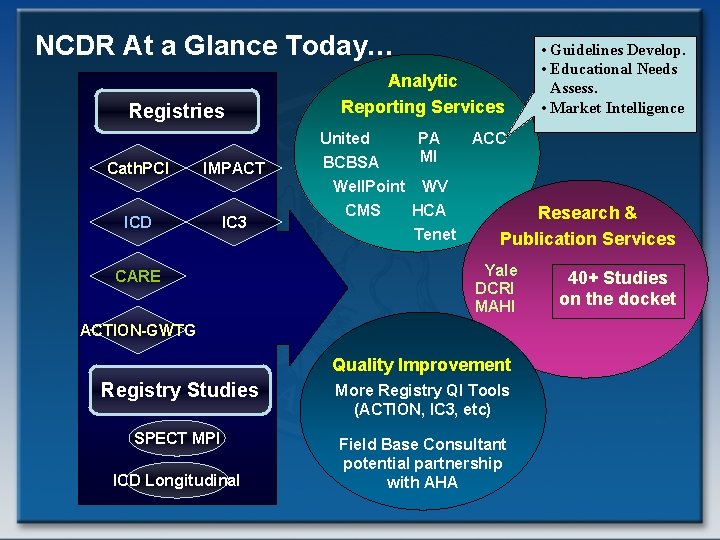
NCDR At a Glance Today… Registries Cath. PCI IMPACT ICD IC 3 CARE Analytic Reporting Services United PA ACC MI BCBSA Well. Point WV CMS HCA Research & Tenet Publication Services Yale DCRI MAHI ACTION-GWTG Quality Improvement Registry Studies More Registry QI Tools (ACTION, IC 3, etc) SPECT MPI Field Base Consultant potential partnership with AHA ICD Longitudinal • Guidelines Develop. • Educational Needs Assess. • Market Intelligence 40+ Studies on the docket
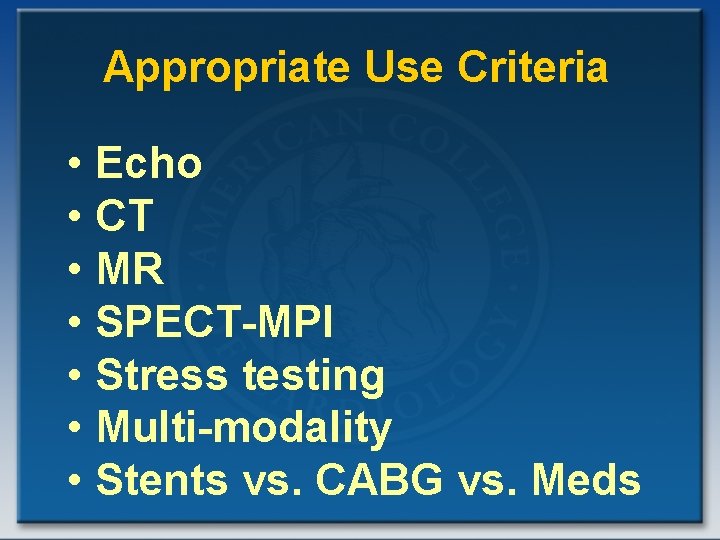
Appropriate Use Criteria • Echo • CT • MR • SPECT-MPI • Stress testing • Multi-modality • Stents vs. CABG vs. Meds
CQI and Transparency
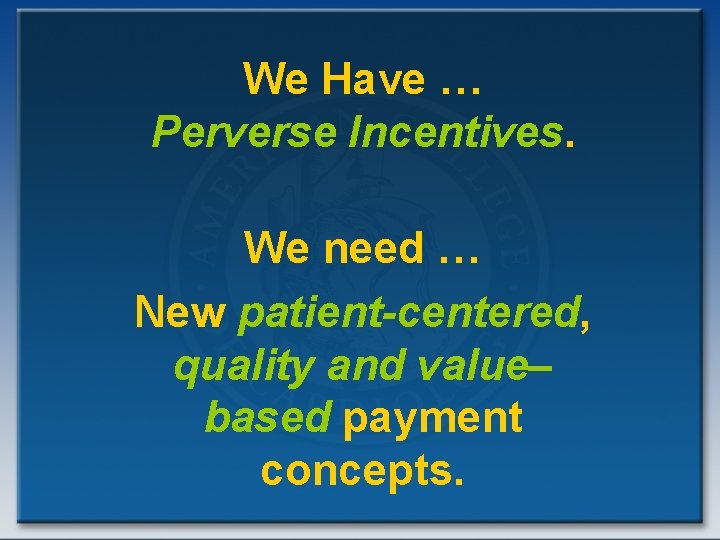
We Have … Perverse Incentives. We need … New patient-centered, quality and value– based payment concepts.
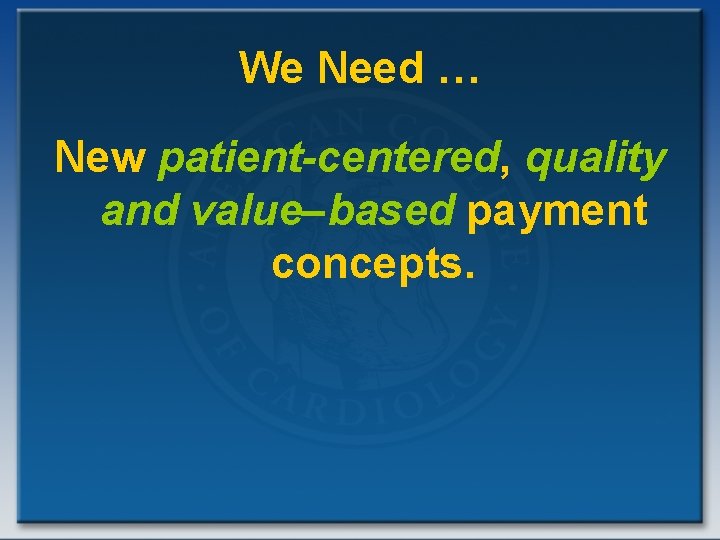
We Need … New patient-centered, quality and value–based payment concepts.
The Greatest Threat to Physician Autonomy
Autonomy vs. Systems of Care
Learning Systems rather than Cookbooks
Nothing About You Without You
Who will save us?
http: //qualityfirst. acc. org