
Five Layers The Earth is unlike every other
- Slides: 9
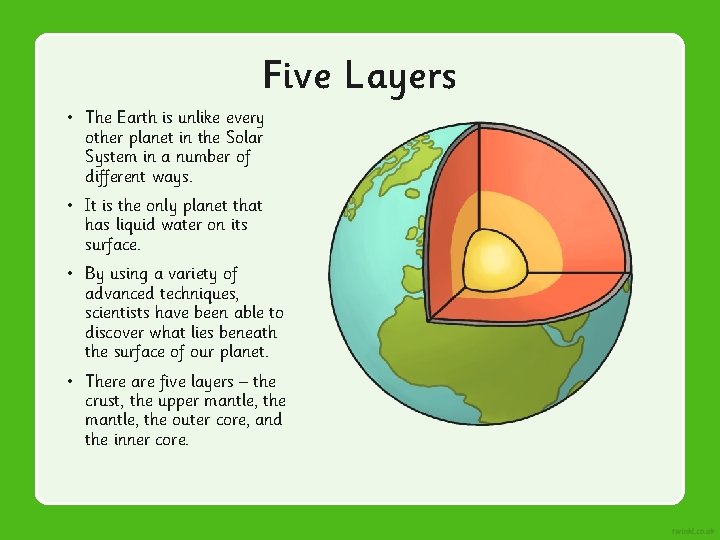
Five Layers • The Earth is unlike every other planet in the Solar System in a number of different ways. • It is the only planet that has liquid water on its surface. • By using a variety of advanced techniques, scientists have been able to discover what lies beneath the surface of our planet. • There are five layers – the crust, the upper mantle, the outer core, and the inner core.
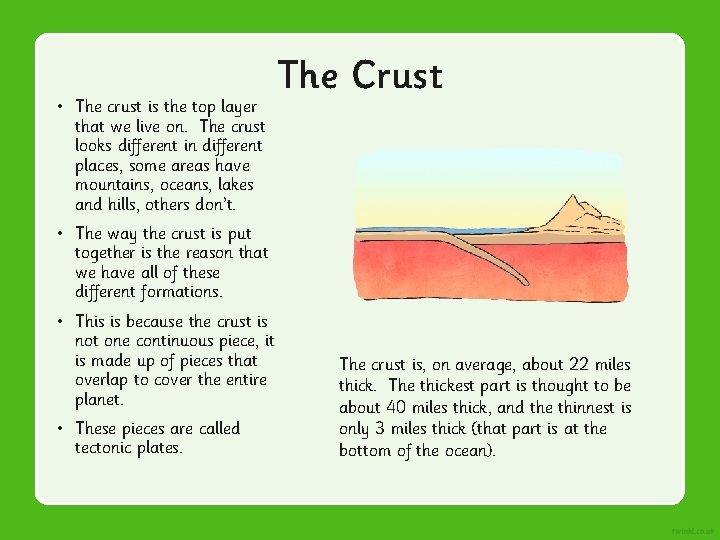
• The crust is the top layer that we live on. The crust looks different in different places, some areas have mountains, oceans, lakes and hills, others don’t. The Crust • The way the crust is put together is the reason that we have all of these different formations. • This is because the crust is not one continuous piece, it is made up of pieces that overlap to cover the entire planet. • These pieces are called tectonic plates. The crust is, on average, about 22 miles thick. The thickest part is thought to be about 40 miles thick, and the thinnest is only 3 miles thick (that part is at the bottom of the ocean).
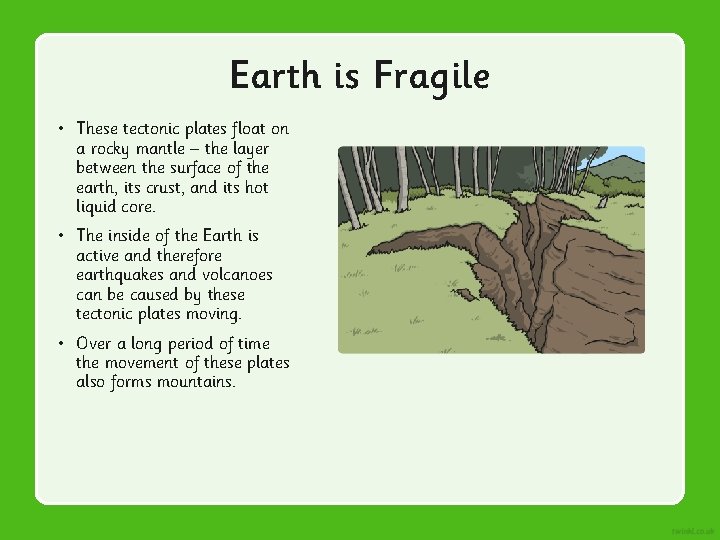
Earth is Fragile • These tectonic plates float on a rocky mantle – the layer between the surface of the earth, its crust, and its hot liquid core. • The inside of the Earth is active and therefore earthquakes and volcanoes can be caused by these tectonic plates moving. • Over a long period of time the movement of these plates also forms mountains.
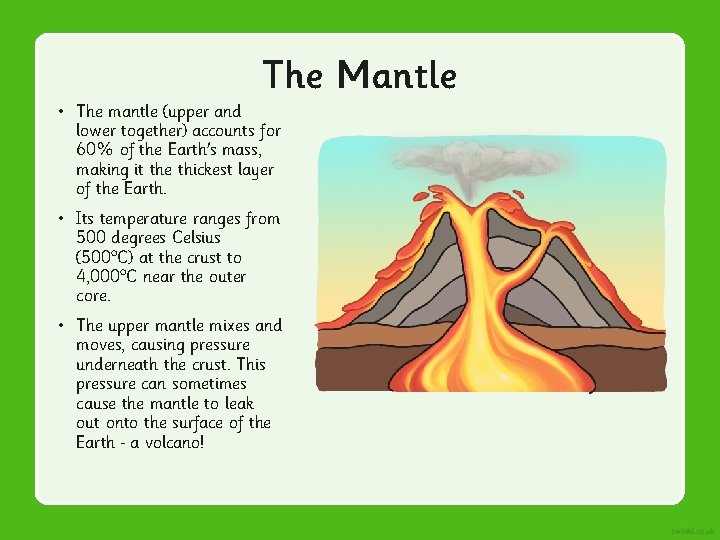
The Mantle • The mantle (upper and lower together) accounts for 60% of the Earth's mass, making it the thickest layer of the Earth. • Its temperature ranges from 500 degrees Celsius (500°C) at the crust to 4, 000°C near the outer core. • The upper mantle mixes and moves, causing pressure underneath the crust. This pressure can sometimes cause the mantle to leak out onto the surface of the Earth a volcano!
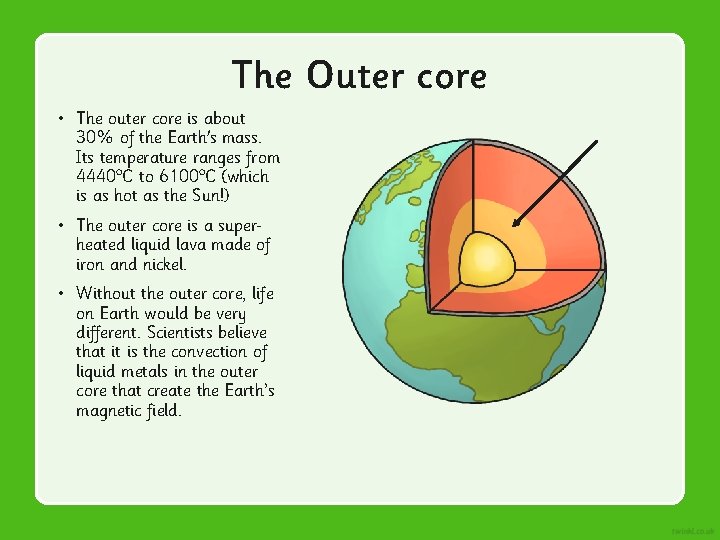
The Outer core • The outer core is about 30% of the Earth's mass. Its temperature ranges from 4440°C to 6100°C (which is as hot as the Sun!) • The outer core is a super heated liquid lava made of iron and nickel. • Without the outer core, life on Earth would be very different. Scientists believe that it is the convection of liquid metals in the outer core that create the Earth’s magnetic field.
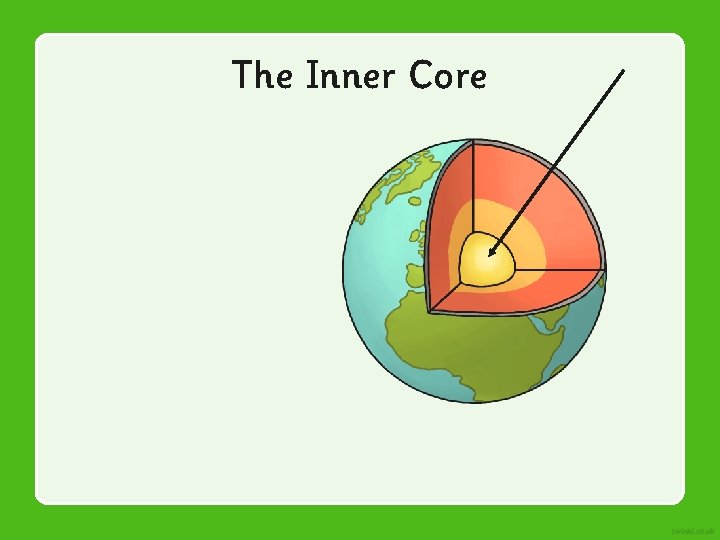
The Inner Core
What Have You Learned? Take this quick quiz to see how much you have remembered about the Earth’s surface. 1. 2. 3. 4. 5. 6. 7. 8. 9. 10. How many layers does the Earth have? Name the layers. What are the pieces of the Earth’s crust called? What causes earthquakes? Which is the thickest layer of the Earth? What is created when the mantle leaks out onto the surface? What two metals is the core made of? Is the outer core a solid or a liquid? What is the inner core like? Draw an annotated diagram showing the different layers of the Earth.