
Five Fingers of Evolution video Part 3 Evidence
- Slides: 44
Five Fingers of Evolution - video Part 3: Evidence of Evolution What supports the Theory of Evolution…. .
What supports the Theory of Evolution? 1. Direct Observation 2. Fossil record 3. Homologous structures 4. genetic/and or biochemical similarities
Direct Observations Evolution of drug resistant viruses and antibiotic resistant bacteria Peppered moths during Industrial Revolution. Peppered Moth Video
A. Early Life Forms: Fossils Fossil = a trace of a long-dead organism, found in layers of sedimentary rock; hard minerals replace tissues of organism
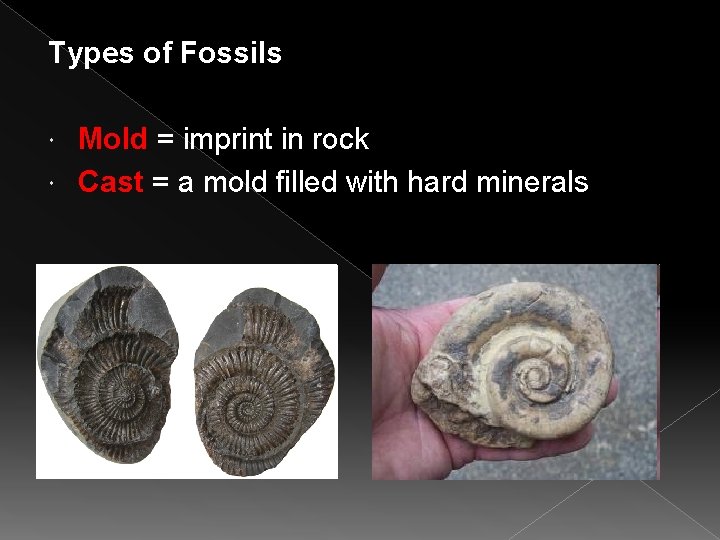
Types of Fossils Mold = imprint in rock Cast = a mold filled with hard minerals
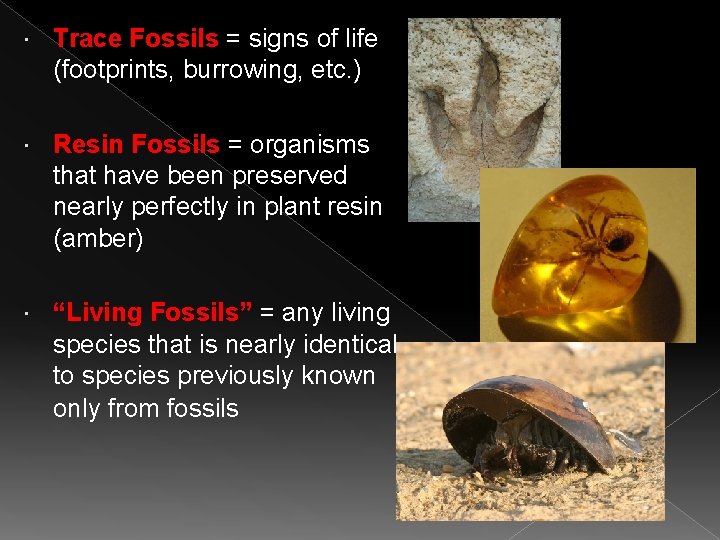
Trace Fossils = signs of life (footprints, burrowing, etc. ) Resin Fossils = organisms that have been preserved nearly perfectly in plant resin (amber) “Living Fossils” = any living species that is nearly identical to species previously known only from fossils
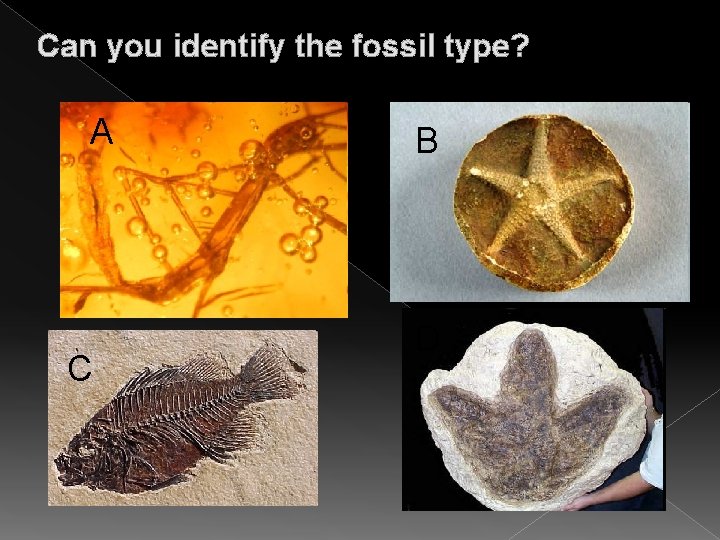
Can you identify the fossil type? A C B D
The Fossil Record is Incomplete Likely fossil formation: • Wet lowlands, slow moving streams, lakes, shallow seas, near volcanoes Unlikely fossil formation: • Upland forests, mountains, grasslands, deserts
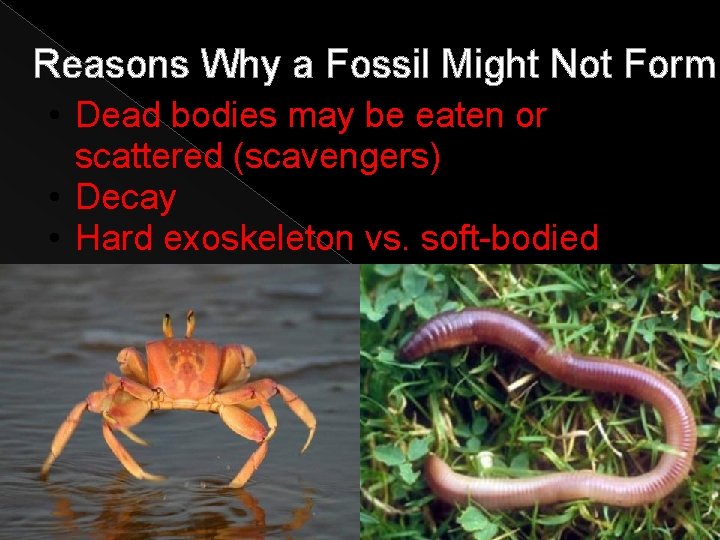
Reasons Why a Fossil Might Not Form • Dead bodies may be eaten or scattered (scavengers) • Decay • Hard exoskeleton vs. soft-bodied organism
How do we determine the age of fossils? Relative Age – the approximate age based on position in the layers of sedimentary rocks Absolute Age – the exact age of a fossil based on Radioactive Dating (carbon-14)
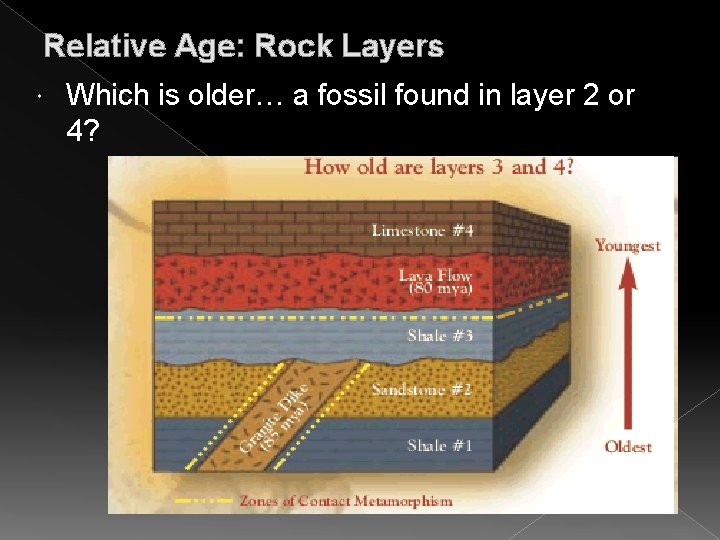
Relative Age: Rock Layers Which is older… a fossil found in layer 2 or 4?
Absolute Age: Radioactive Dating when “isotopes” of atoms in fossils decay into other “isotopes” Remember: isotopes are the same atom with different numbers of neutrons Measured in half-lives (how long it takes for one-half of a sample of an isotope to decay) Example: Carbon Dating (C-14 C-12)
Absolute Aging Practice Problem If the half life of C-14 is 15 years, meaning half a sample of C-14 will decay into C-12 in 15 years… How much C 14 (in a fraction) remains after 45 years? How old is the sample if only 1/16 of the carbon is in the C-14 form? You need to add this to the back of your notes packet!
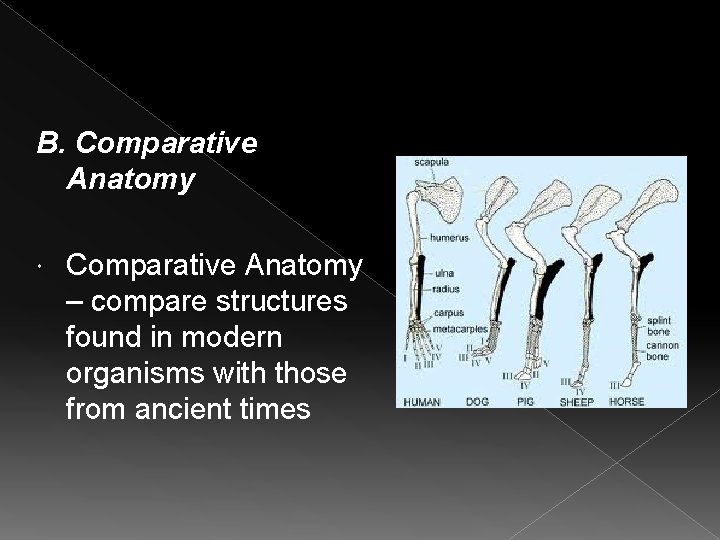
B. Comparative Anatomy – compare structures found in modern organisms with those from ancient times
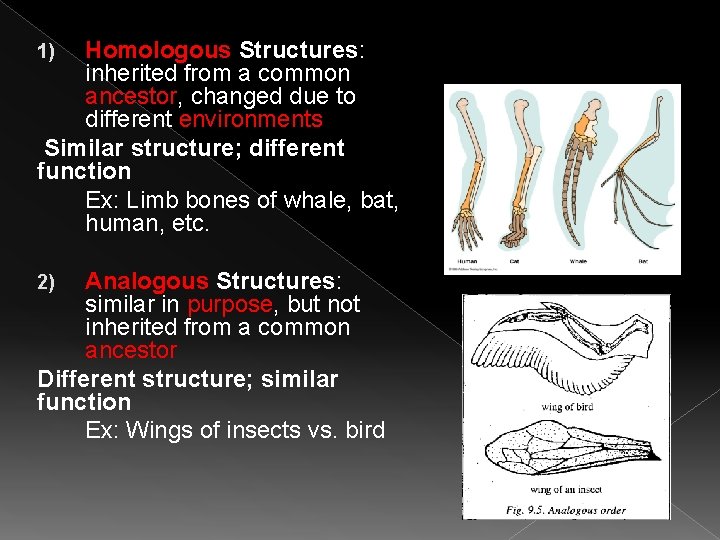
Homologous Structures: inherited from a common ancestor, changed due to different environments Similar structure; different function Ex: Limb bones of whale, bat, human, etc. 1) Analogous Structures: similar in purpose, but not inherited from a common ancestor Different structure; similar function Ex: Wings of insects vs. bird 2)
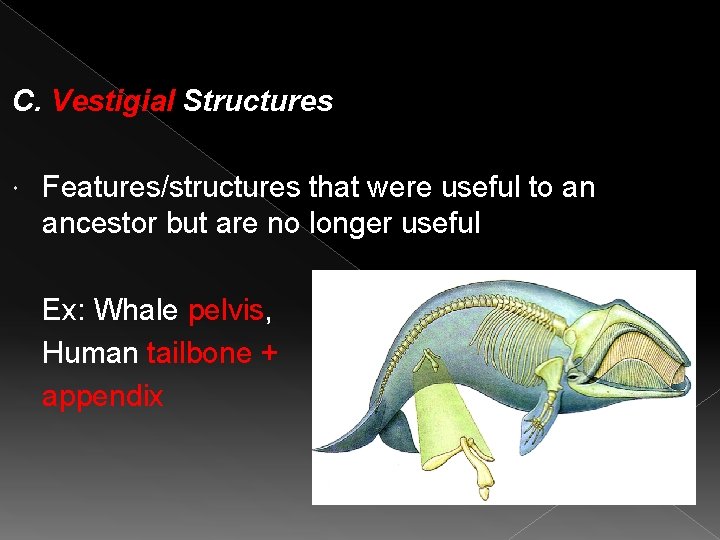
C. Vestigial Structures Features/structures that were useful to an ancestor but are no longer useful Ex: Whale pelvis, Human tailbone + appendix
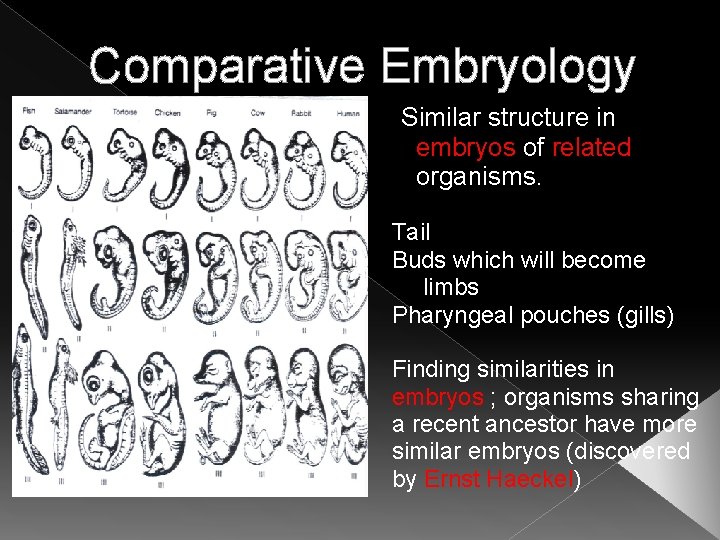
Comparative Embryology Similar structure in embryos of related organisms. Tail Buds which will become limbs Pharyngeal pouches (gills) Finding similarities in embryos ; organisms sharing a recent ancestor have more similar embryos (discovered by Ernst Haeckel)
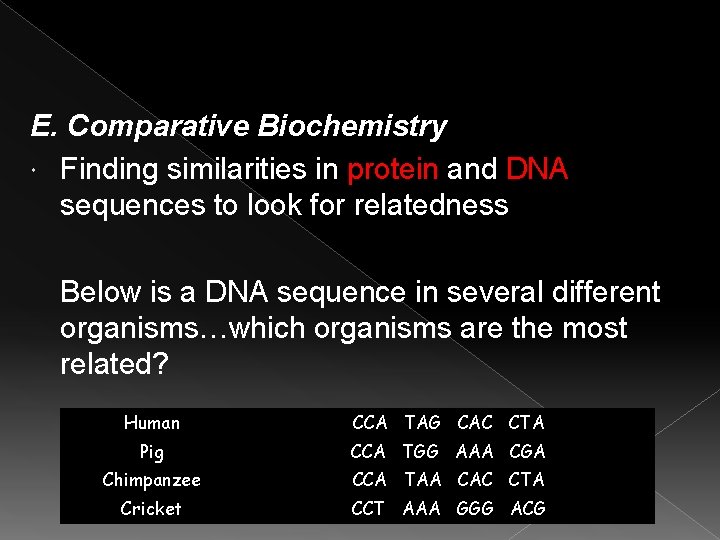
E. Comparative Biochemistry Finding similarities in protein and DNA sequences to look for relatedness Below is a DNA sequence in several different organisms…which organisms are the most related? Human CCA TAG CAC CTA Pig CCA TGG AAA CGA Chimpanzee CCA TAA CAC CTA Cricket CCT AAA GGG ACG
Part 4: Types of Natural Selection
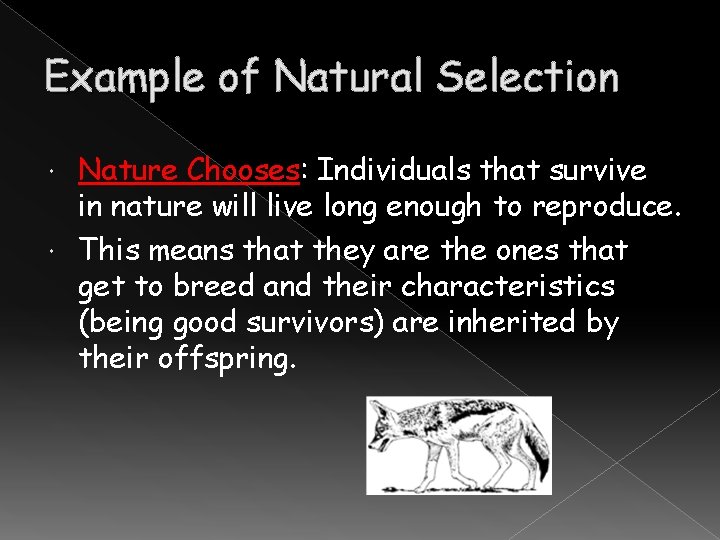
Example of Natural Selection Nature Chooses: Individuals that survive in nature will live long enough to reproduce. This means that they are the ones that get to breed and their characteristics (being good survivors) are inherited by their offspring.
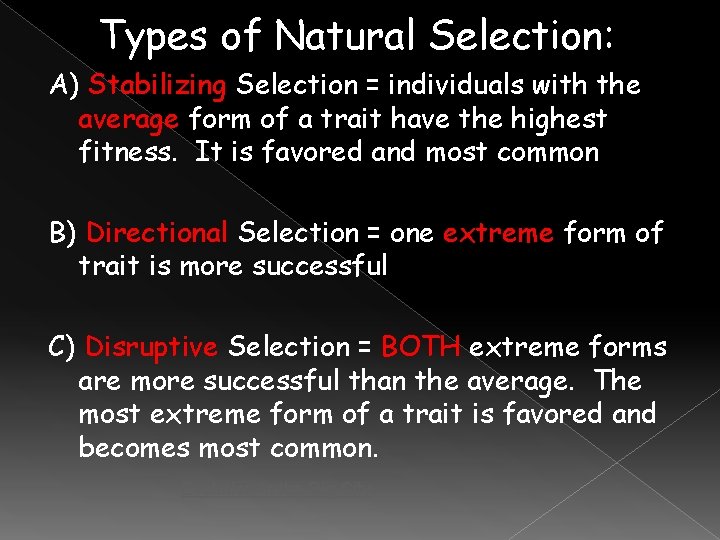
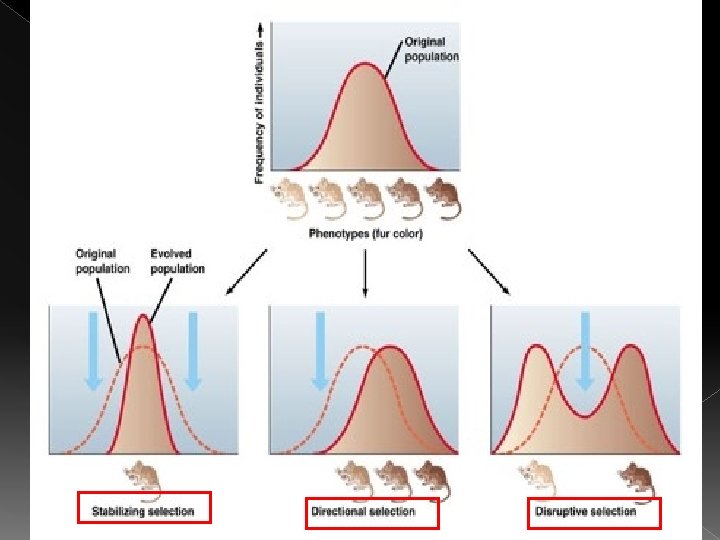
Types of Natural Selection: A) Stabilizing Selection = individuals with the average form of a trait have the highest fitness. It is favored and most common B) Directional Selection = one extreme form of trait is more successful C) Disruptive Selection = BOTH extreme forms are more successful than the average. The most extreme form of a trait is favored and becomes most common. Evolution in the Big City
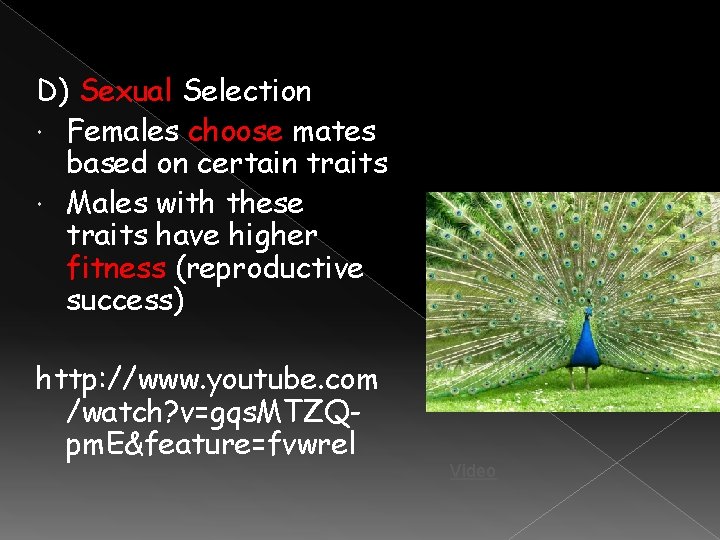
D) Sexual Selection Females choose mates based on certain traits Males with these traits have higher fitness (reproductive success) http: //www. youtube. com /watch? v=gqs. MTZQpm. E&feature=fvwrel Video
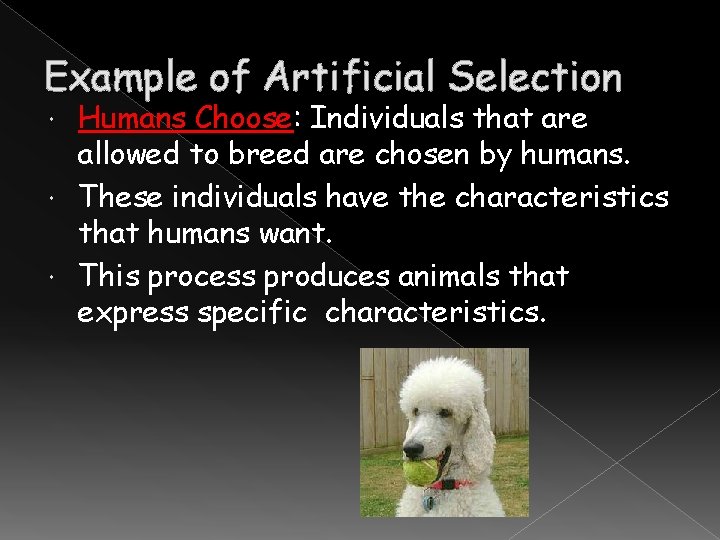
Example of Artificial Selection Humans Choose: Individuals that are allowed to breed are chosen by humans. These individuals have the characteristics that humans want. This process produces animals that express specific characteristics.
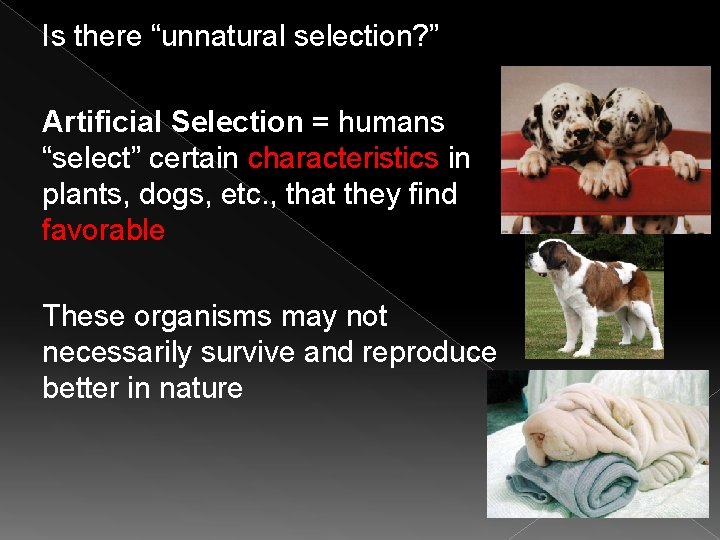
Is there “unnatural selection? ” Artificial Selection = humans “select” certain characteristics in plants, dogs, etc. , that they find favorable These organisms may not necessarily survive and reproduce better in nature
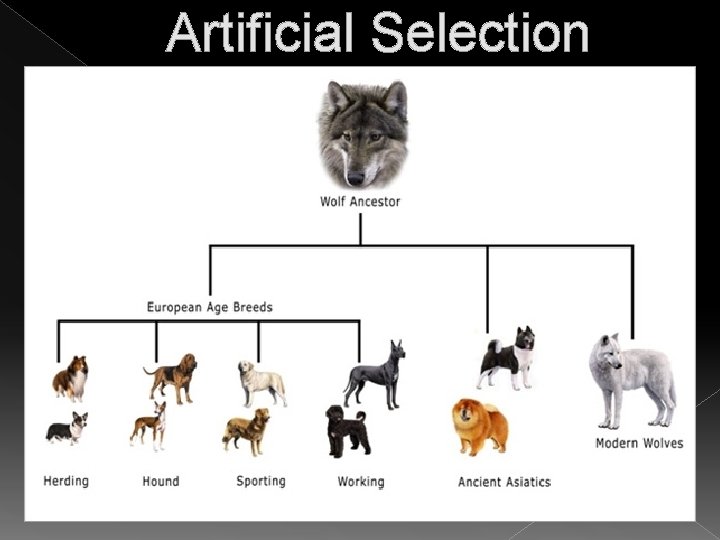
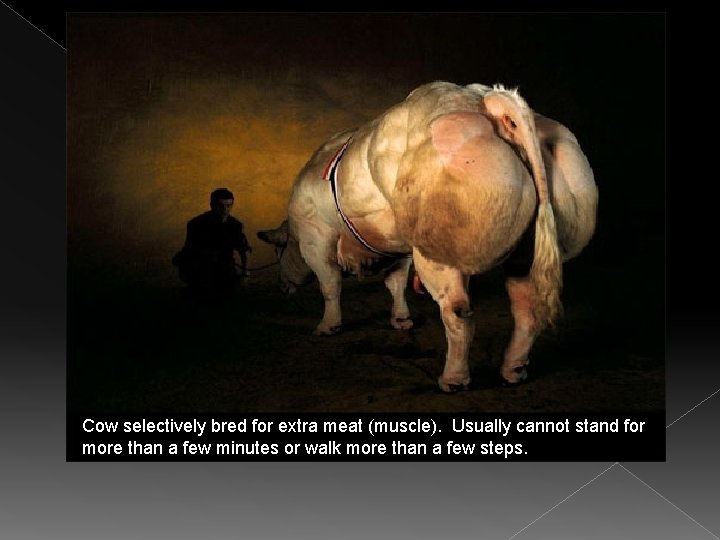
Artificial Selection It has led to offspring through successive generations that can be very different in appearance and behavior from their distant ancestors. Organisms with certain traits are bred repeatedly until population has only that trait Example- Dogs, Corn, Broccoli, Cows, etc. Creating the Perfect Pet - Video
Artificial Selection
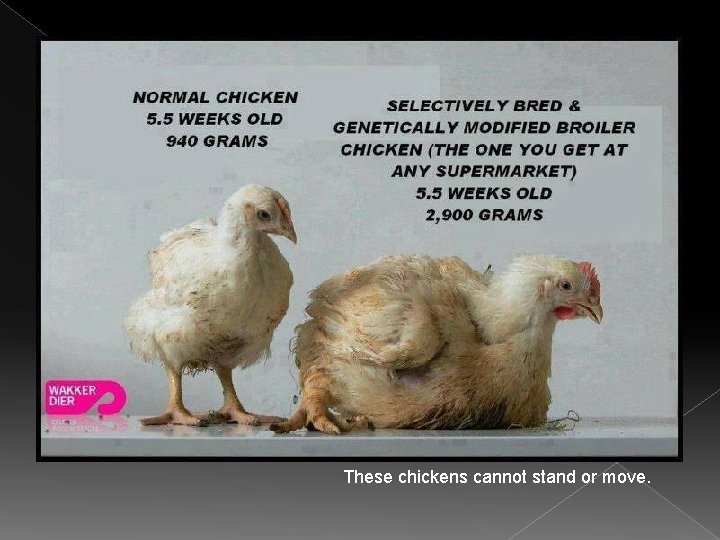
These chickens cannot stand or move.
Cow selectively bred for extra meat (muscle). Usually cannot stand for more than a few minutes or walk more than a few steps.
Artificial Selection Selective Breeding - Video
Part 5: The Creation of New Species Through Evolution
First off, how do we define a species? Morphological Species Concept – internal and external structures are used to group organisms into species Biological Species Concept– defines a species as a population of organisms that can successfully interbreed
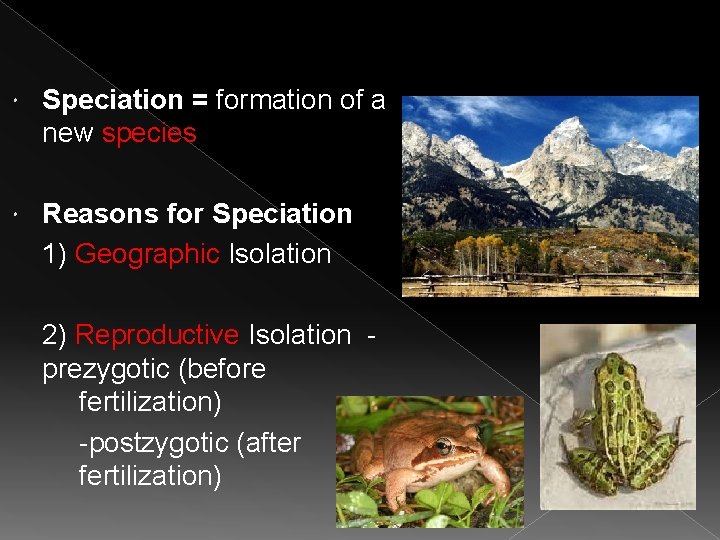
Speciation = formation of a new species Reasons for Speciation 1) Geographic Isolation 2) Reproductive Isolation prezygotic (before fertilization) -postzygotic (after fertilization)
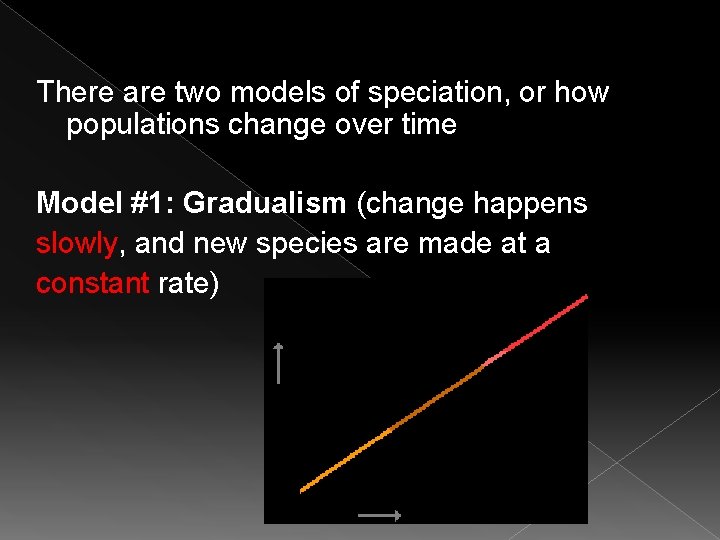
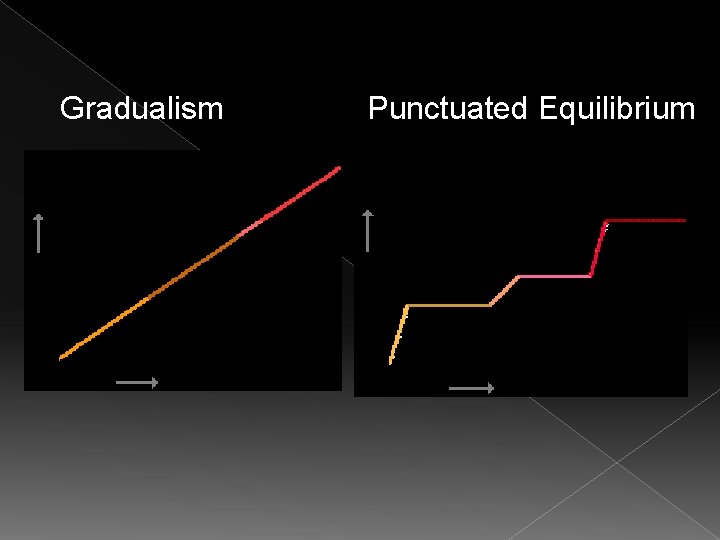
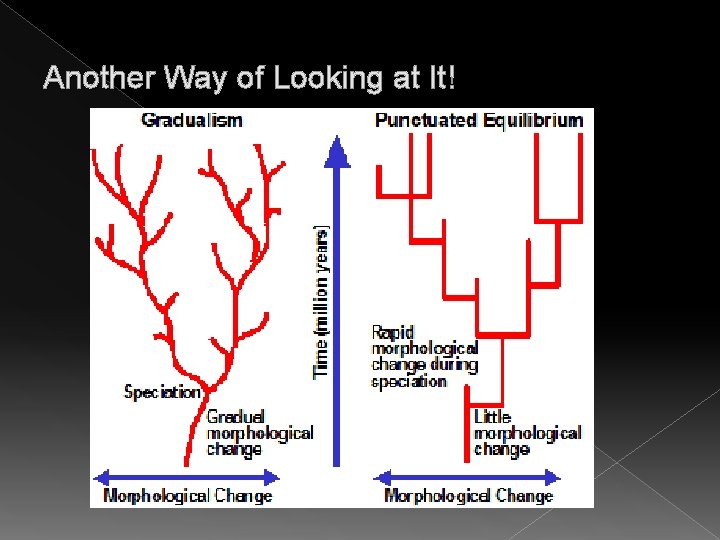
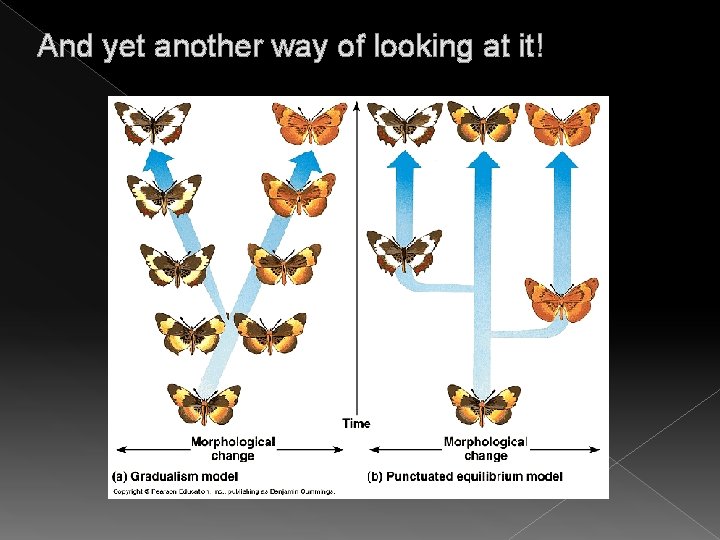
There are two models of speciation, or how populations change over time Model #1: Gradualism (change happens slowly, and new species are made at a constant rate)
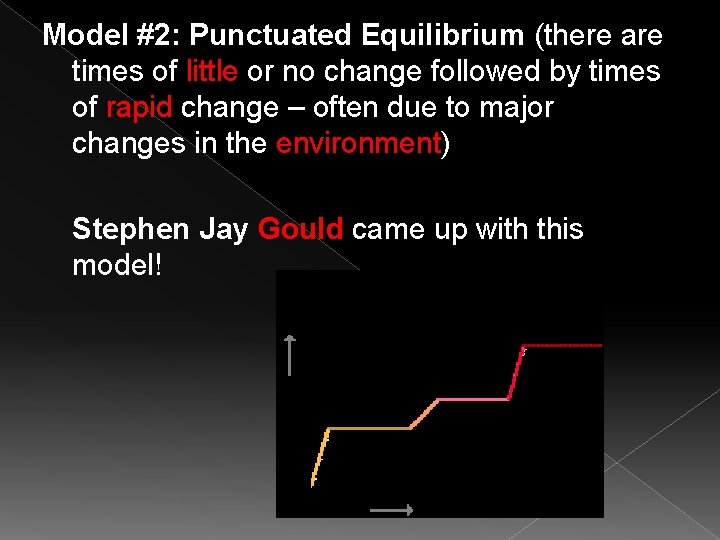
Model #2: Punctuated Equilibrium (there are times of little or no change followed by times of rapid change – often due to major changes in the environment) Stephen Jay Gould came up with this model!
Gradualism Punctuated Equilibrium
Another Way of Looking at It!
And yet another way of looking at it!
Part 6: Patterns of Evolution
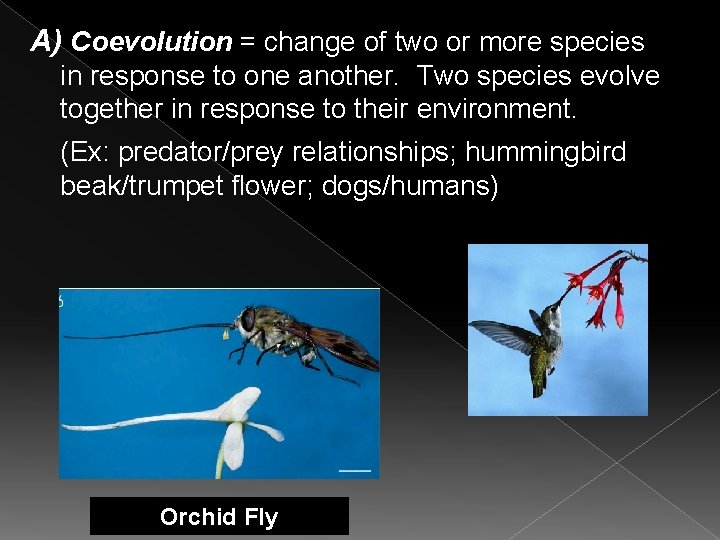
A) Coevolution = change of two or more species in response to one another. Two species evolve together in response to their environment. (Ex: predator/prey relationships; hummingbird beak/trumpet flower; dogs/humans) Orchid Fly
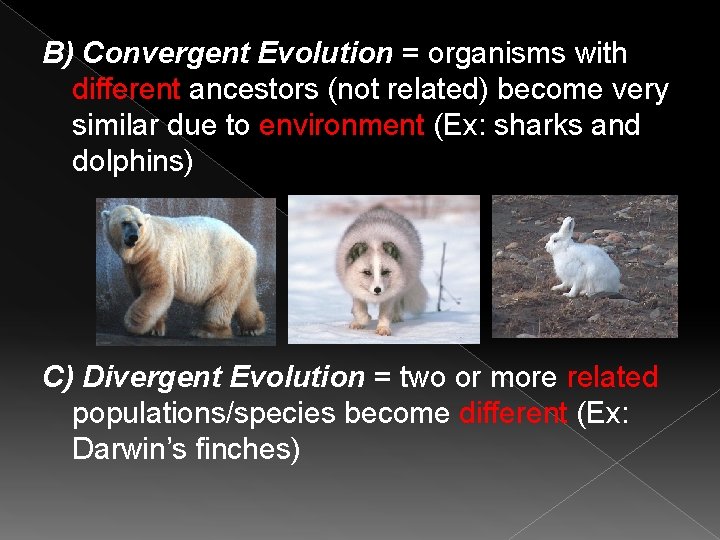
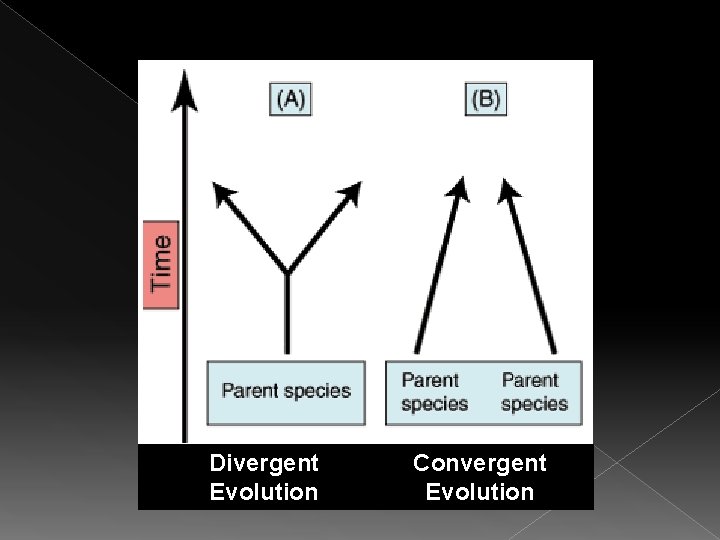
B) Convergent Evolution = organisms with different ancestors (not related) become very similar due to environment (Ex: sharks and dolphins) C) Divergent Evolution = two or more related populations/species become different (Ex: Darwin’s finches)
Divergent Evolution Convergent Evolution
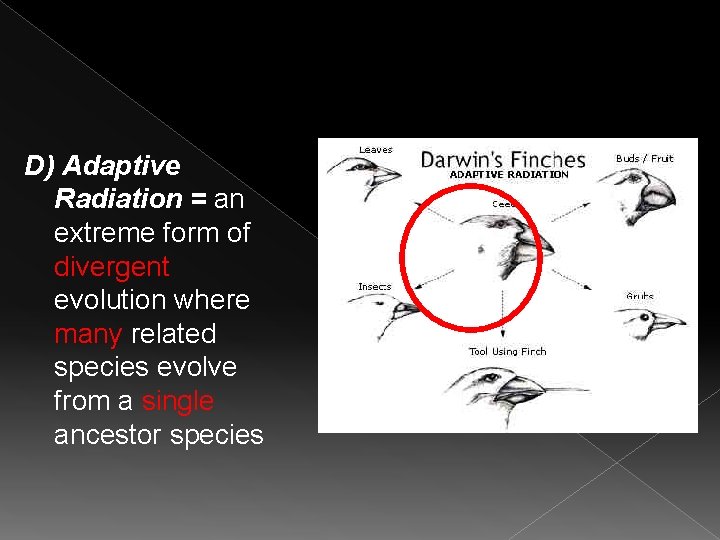
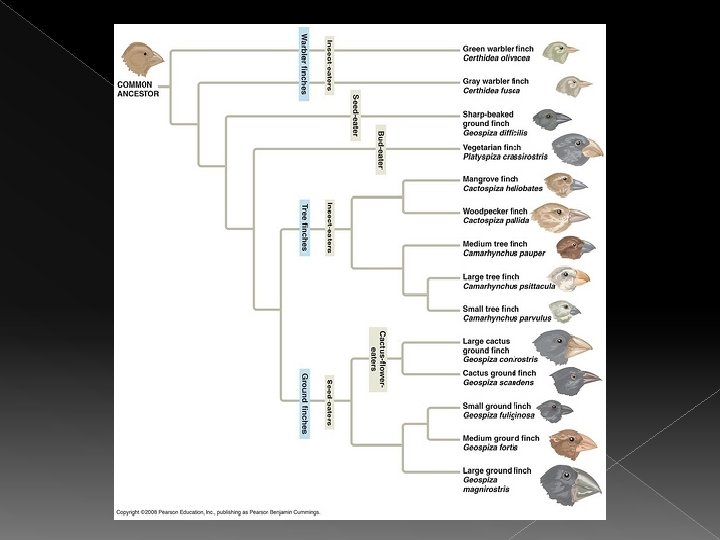
D) Adaptive Radiation = an extreme form of divergent evolution where many related species evolve from a single ancestor species