
FIVE CORE BELIEFS OF THE ENLIGHTENMENT Day 2
FIVE CORE BELIEFS OF THE ENLIGHTENMENT Day 2
Background Info ■ Looked to Greek/Roman scholars or Bible for truth ■ Renaissance ■ Reformation ■ Scientific Revolution
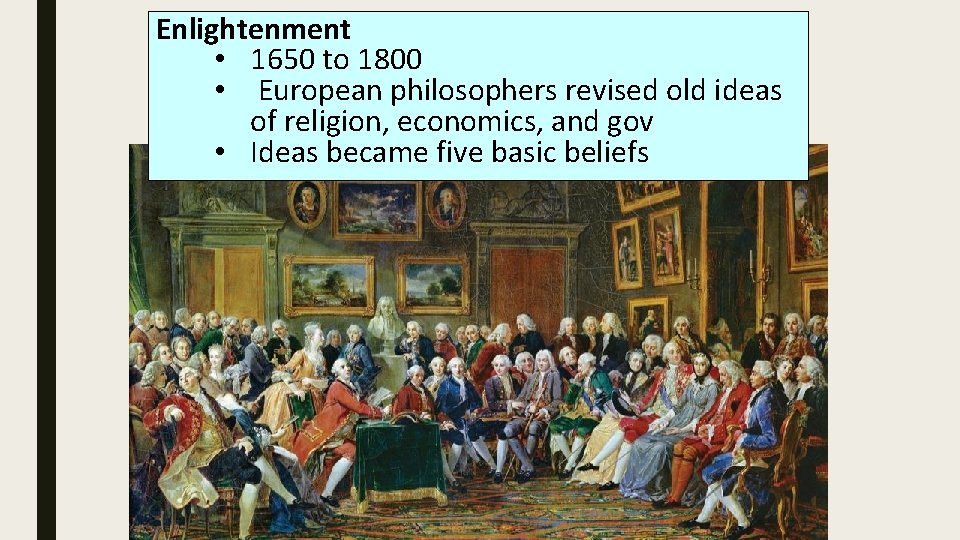
Enlightenment • 1650 to 1800 • European philosophers revised old ideas of religion, economics, and gov • Ideas became five basic beliefs
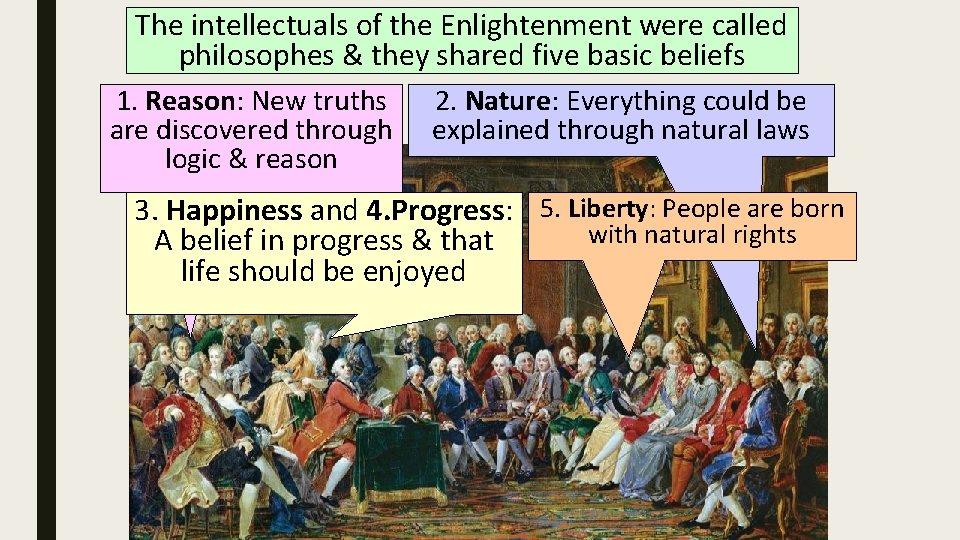
The intellectuals of the Enlightenment were called philosophes & they shared five basic beliefs 1. Reason: New truths are discovered through logic & reason 2. Nature: Everything could be explained through natural laws 3. Happiness and 4. Progress: 5. Liberty: People are born with natural rights A belief in progress & that life should be enjoyed
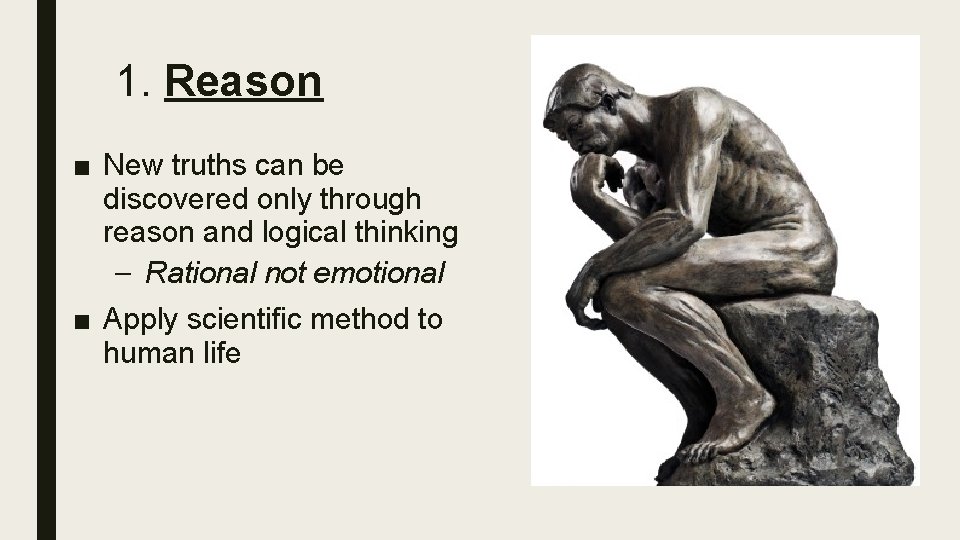
1. Reason ■ New truths can be discovered only through reason and logical thinking – Rational not emotional ■ Apply scientific method to human life
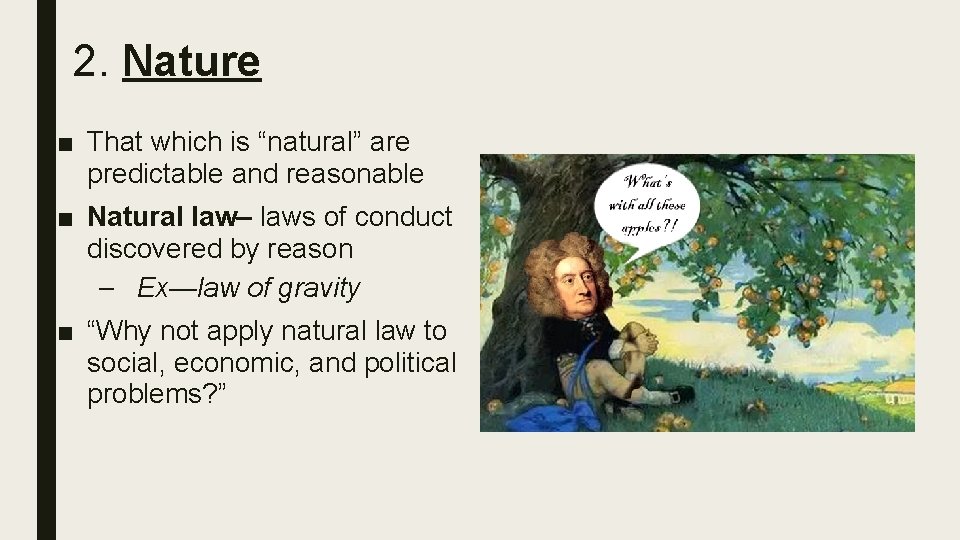
2. Nature ■ That which is “natural” are predictable and reasonable ■ Natural law– laws of conduct discovered by reason – Ex—law of gravity ■ “Why not apply natural law to social, economic, and political problems? ”
3. Happiness ■ It is a moral duty to pursue happiness here and now ■ “Here and Now” – Do not wait until the afterlife for happiness – Secularism and Individualism
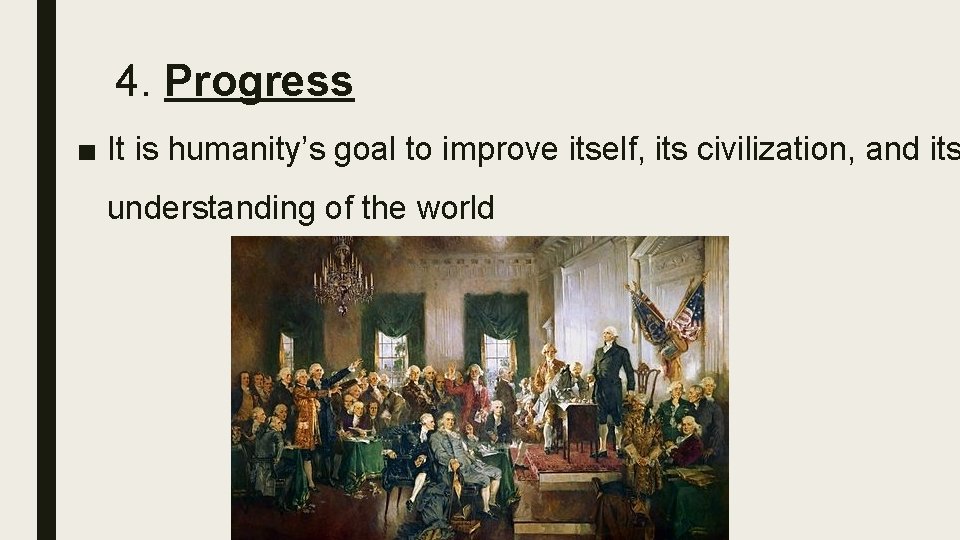
4. Progress ■ It is humanity’s goal to improve itself, its civilization, and its understanding of the world
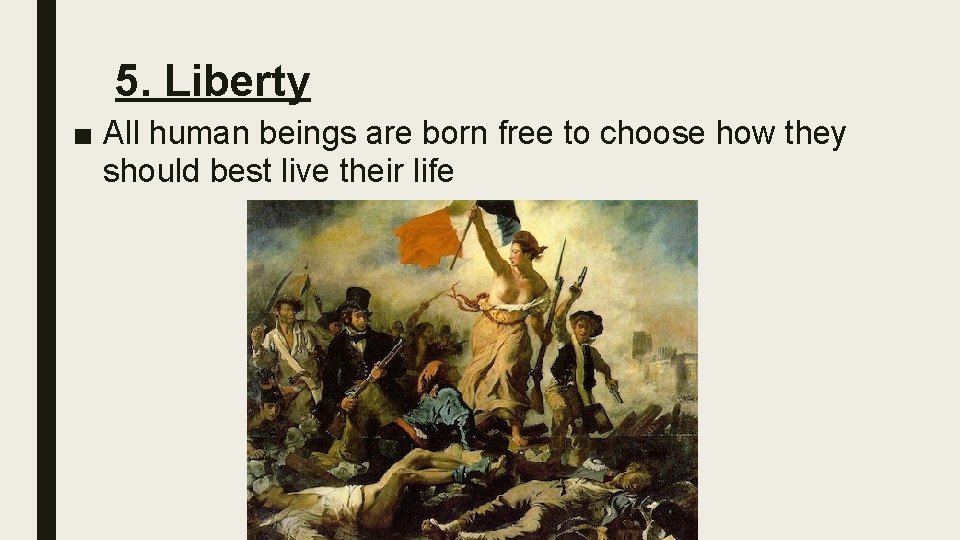
5. Liberty ■ All human beings are born free to choose how they should best live their life
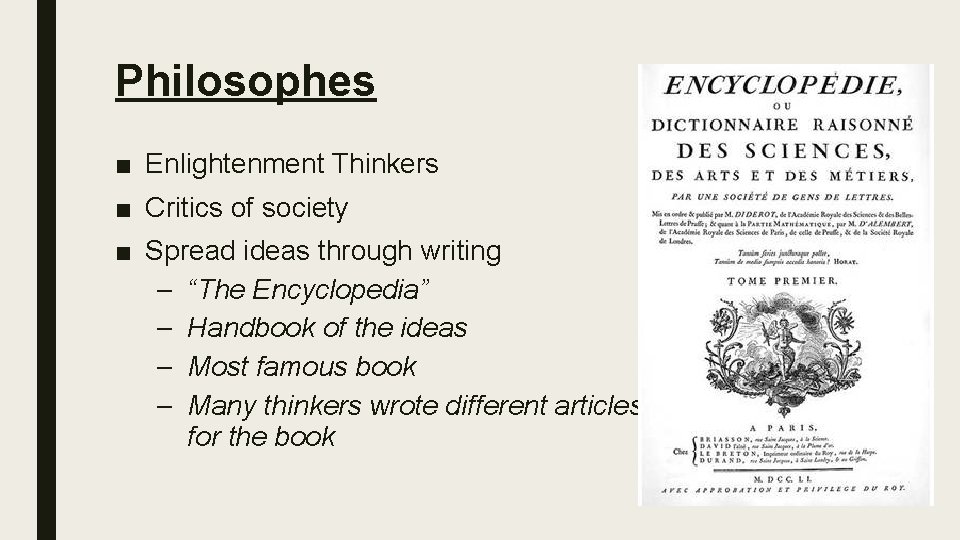
Philosophes ■ Enlightenment Thinkers ■ Critics of society ■ Spread ideas through writing – “The Encyclopedia” – Handbook of the ideas – Most famous book – Many thinkers wrote different articles for the book
Takeaway: ■ Question Authority! ■ Rational over Emotional ■ Humanity can be changed through rational change
‘Enlightenment is man’s emergence from his self-imposed immaturity. Immaturity is the inability to use one’s understanding without guidance from another. This immaturity is self-imposed when its cause lies not in lack of understanding, but in lack of resolve and courage to use it without guidance from another. Dare to know! Have the courage to use your own understanding! That is the motto of enlightenment. ’ - Immanuel Kant, 1784
Tomorrow: Enlightenment Thinkers ■ Homework: ■ Read either— – The Magna Carta and answer questions – The Mayflower Compact, 1620 and answer questions ■ Tomorrow: – You will be a expert in which ever one you will read – You will pair up with a expert in the other reading and you will need to “teach” them all about what you read – This is practice for the group activity we will do in class
- Slides: 13