
Fits and Tolerances Dr manal amin ENG 111
- Slides: 24
Fits and Tolerances Dr. manal amin ENG 111
Tolerancing – Control of Variability Goals Understand the description and control of variability through tolerancing. Use standard tables for tolerancing and control of fit Gateway Engineering Education Coalition
Definition of Tolerance is the total amount a dimension may vary. It is the difference between the maximum and minimum limits. There is no such thing as an "exact size". Tolerance is key to interchangeable parts. Gateway Engineering Education Coalition
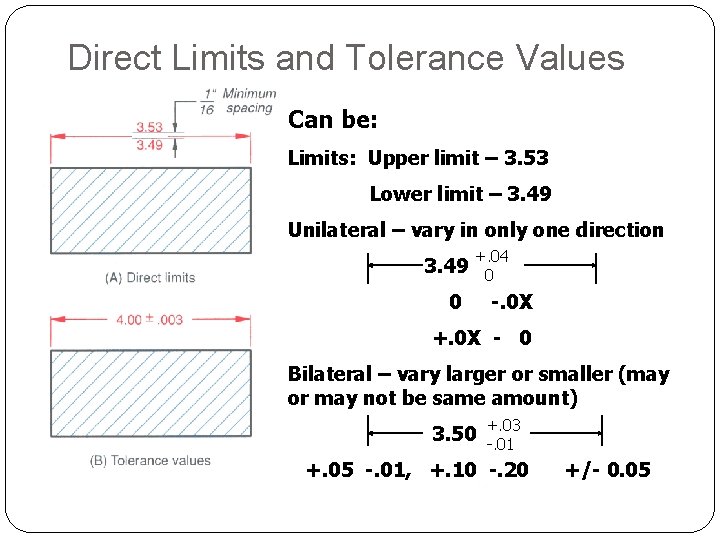
Direct Limits and Tolerance Values Can be: Limits: Upper limit – 3. 53 Lower limit – 3. 49 Unilateral – vary in only one direction 3. 49 +. 04 0 0 -. 0 X +. 0 X - 0 Bilateral – vary larger or smaller (may or may not be same amount) 3. 50 +. 03 -. 01 +. 05 -. 01, +. 10 -. 20 Gateway Engineering Education Coalition +/- 0. 05
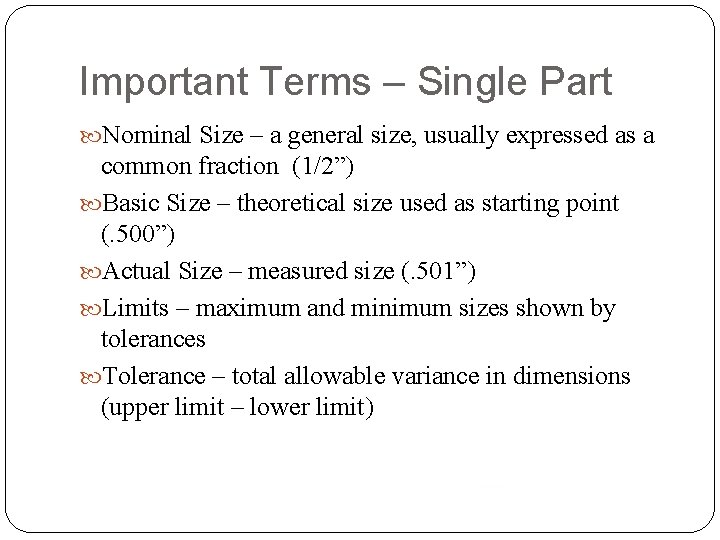
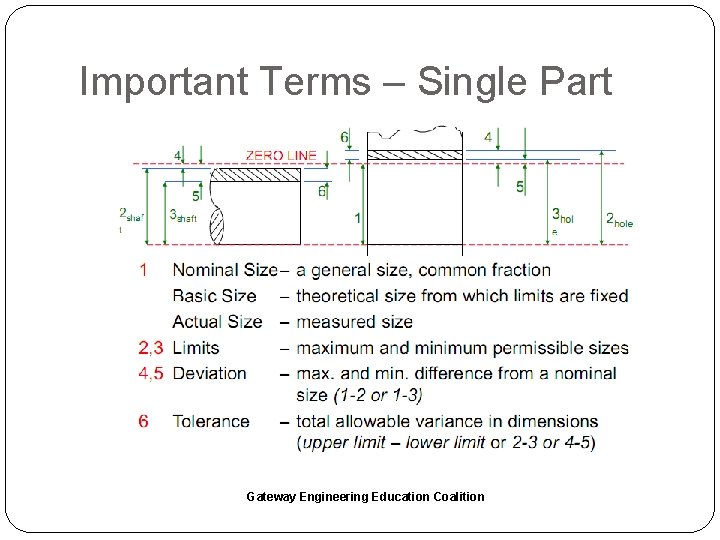
Important Terms – Single Part Nominal Size – a general size, usually expressed as a common fraction (1/2”) Basic Size – theoretical size used as starting point (. 500”) Actual Size – measured size (. 501”) Limits – maximum and minimum sizes shown by tolerances Tolerance – total allowable variance in dimensions (upper limit – lower limit) Gateway Engineering Education Coalition
Important Terms – Single Part Gateway Engineering Education Coalition
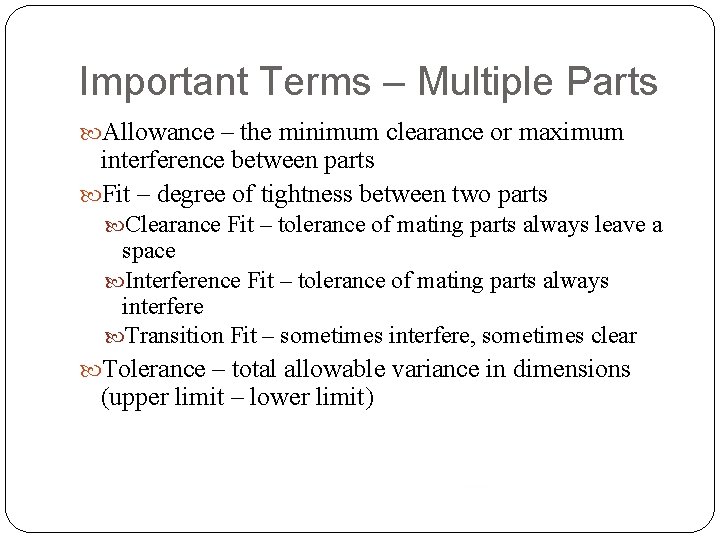
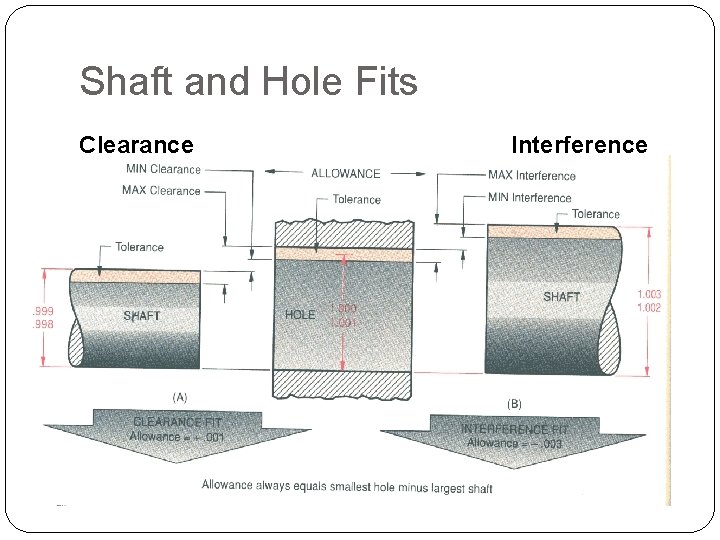
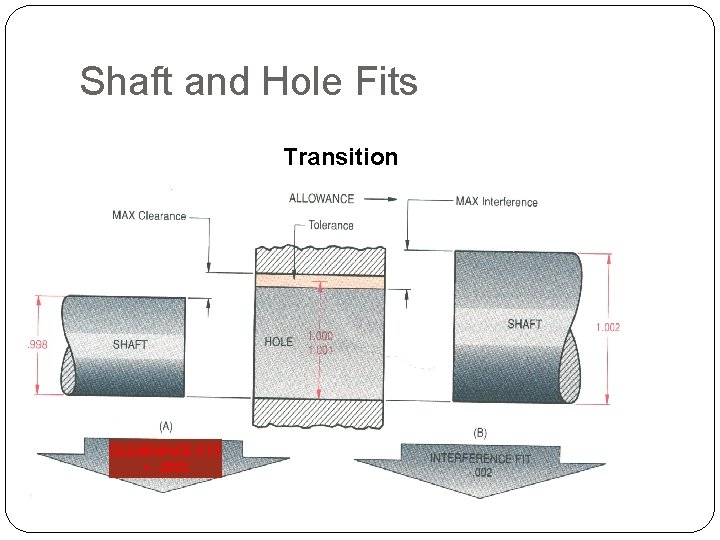
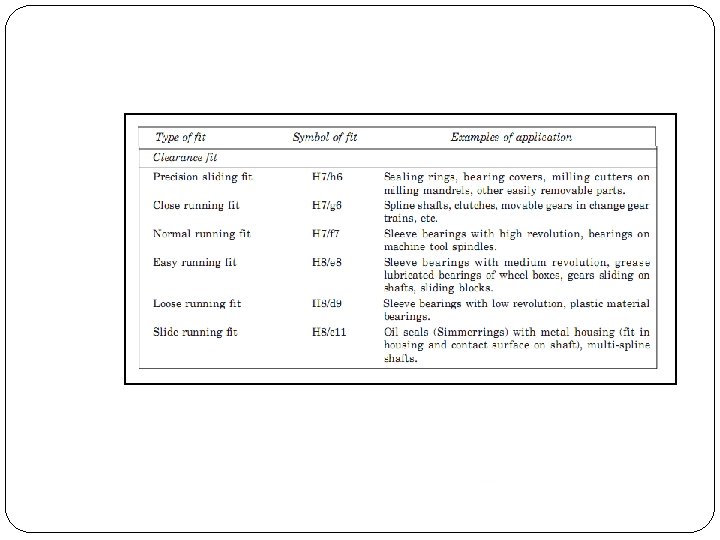
Important Terms – Multiple Parts Allowance – the minimum clearance or maximum interference between parts Fit – degree of tightness between two parts Clearance Fit – tolerance of mating parts always leave a space Interference Fit – tolerance of mating parts always interfere Transition Fit – sometimes interfere, sometimes clear Tolerance – total allowable variance in dimensions (upper limit – lower limit) Gateway Engineering Education Coalition
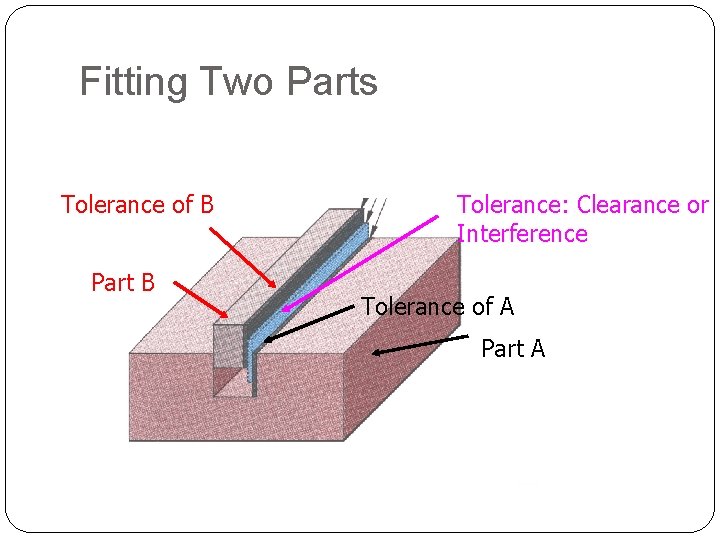
Fitting Two Parts Tolerance of B Part B Tolerance: Clearance or Interference Tolerance of A Part A Gateway Engineering Education Coalition
Shaft and Hole Fits Clearance Interference Gateway Engineering Education Coalition
Shaft and Hole Fits Transition CLEARANCE FIT +. 003 Gateway Engineering Education Coalition
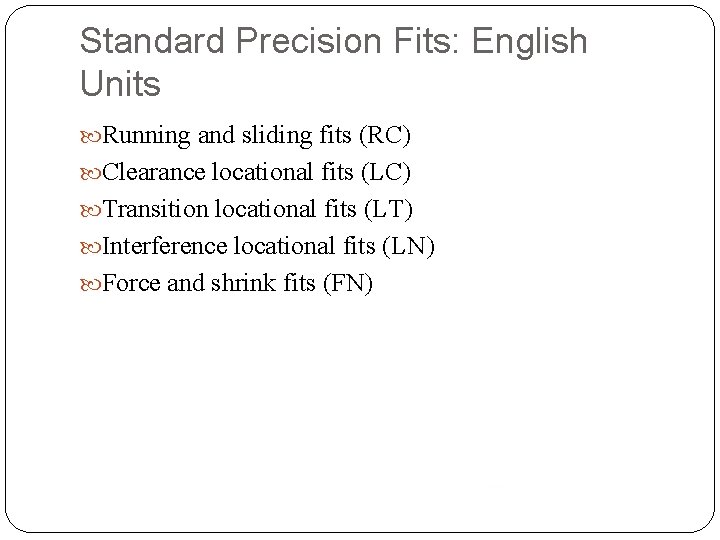
Standard Precision Fits: English Units Running and sliding fits (RC) Clearance locational fits (LC) Transition locational fits (LT) Interference locational fits (LN) Force and shrink fits (FN) Gateway Engineering Education Coalition
Gateway Engineering Education Coalition
Gateway Engineering Education Coalition
Gateway Engineering Education Coalition
Gateway Engineering Education Coalition
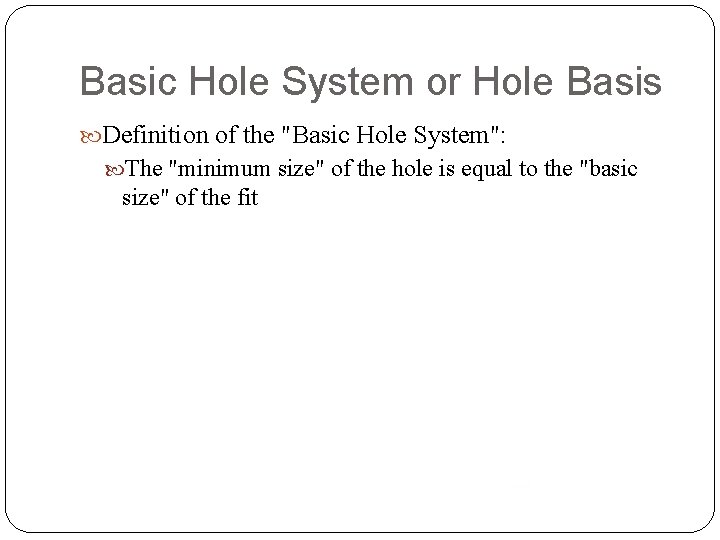
Basic Hole System or Hole Basis Definition of the "Basic Hole System": The "minimum size" of the hole is equal to the "basic size" of the fit Gateway Engineering Education Coalition
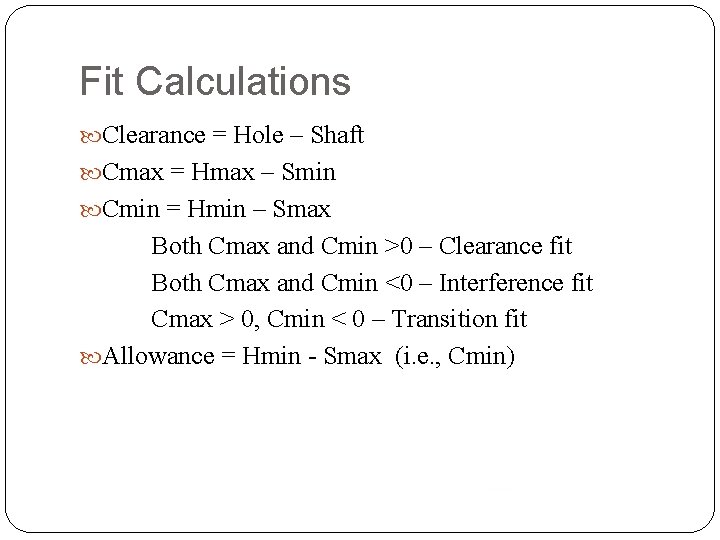
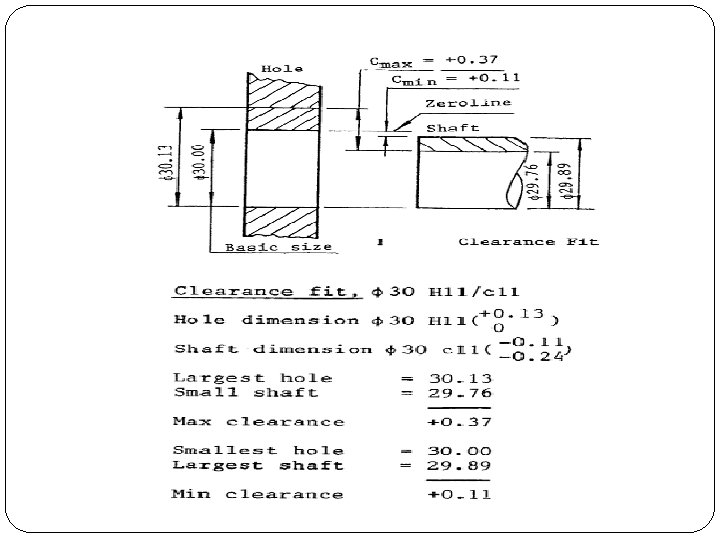
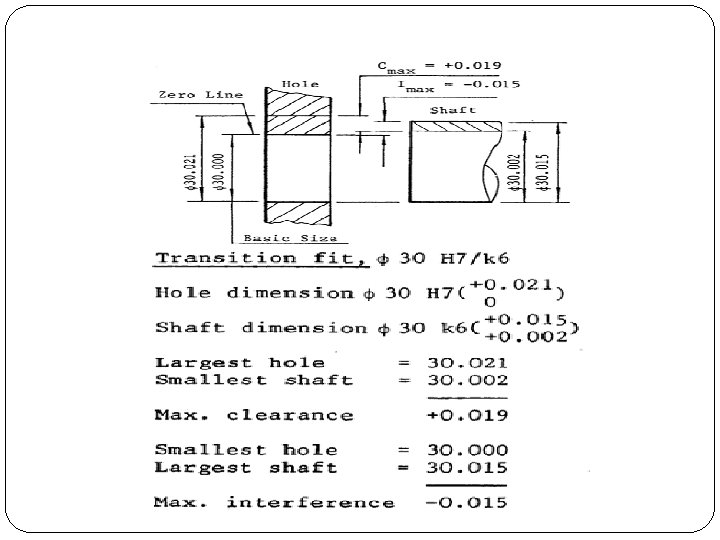
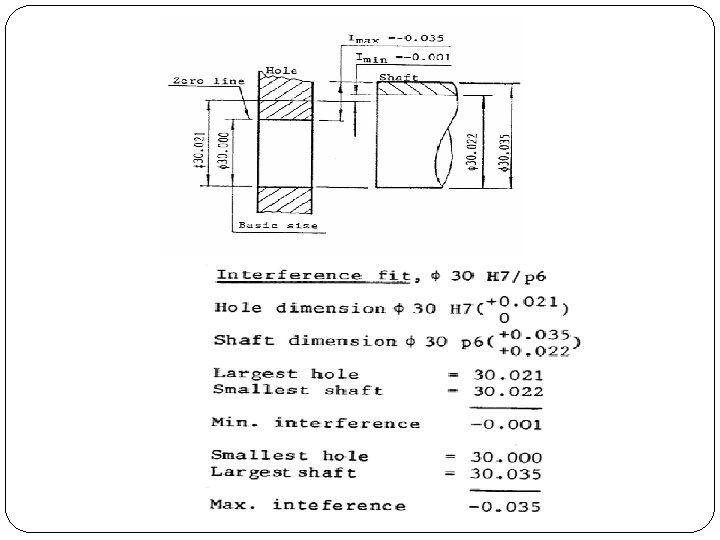
Fit Calculations Clearance = Hole – Shaft Cmax = Hmax – Smin Cmin = Hmin – Smax Both Cmax and Cmin >0 – Clearance fit Both Cmax and Cmin <0 – Interference fit Cmax > 0, Cmin < 0 – Transition fit Allowance = Hmin - Smax (i. e. , Cmin) Gateway Engineering Education Coalition
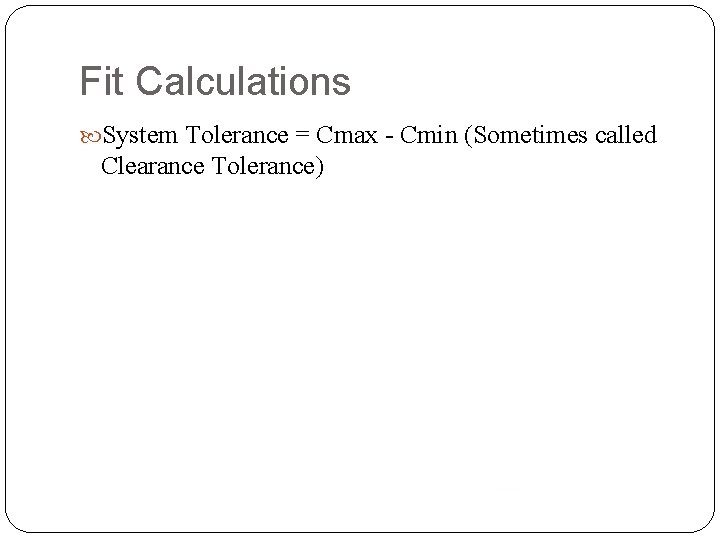
Fit Calculations System Tolerance = Cmax - Cmin (Sometimes called Clearance Tolerance) Gateway Engineering Education Coalition
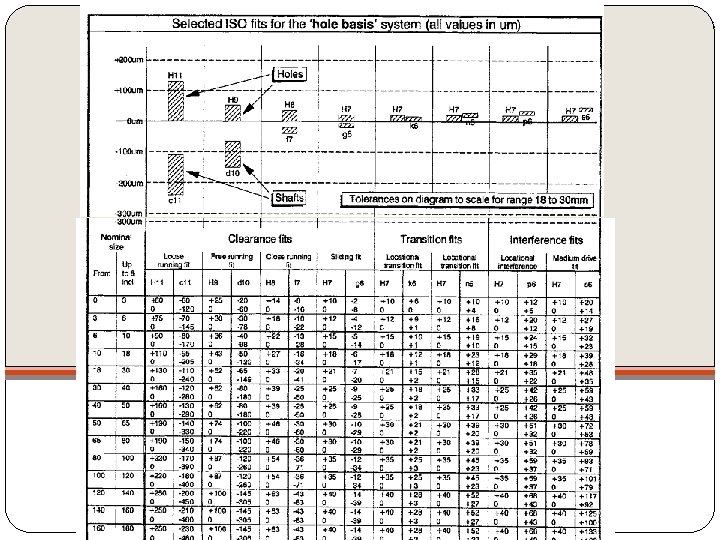
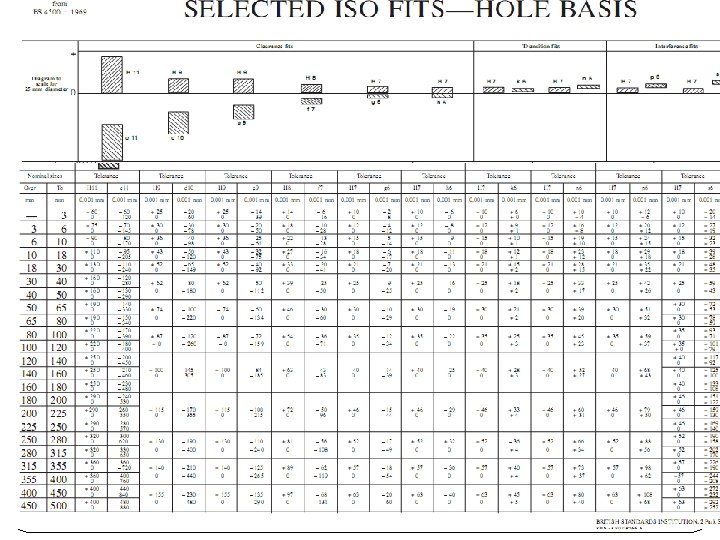
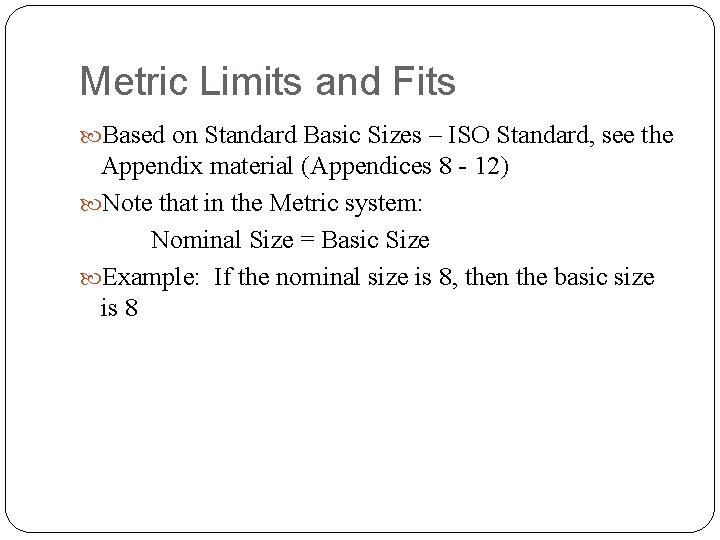
Metric Limits and Fits Based on Standard Basic Sizes – ISO Standard, see the Appendix material (Appendices 8 - 12) Note that in the Metric system: Nominal Size = Basic Size Example: If the nominal size is 8, then the basic size is 8 Gateway Engineering Education Coalition
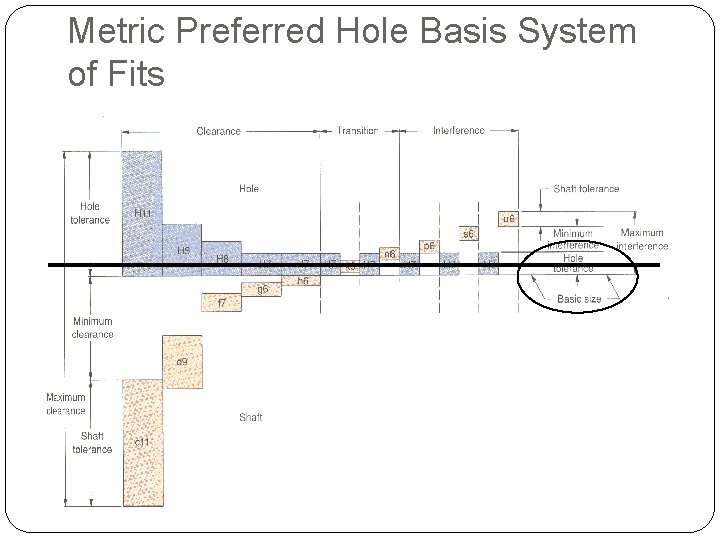
Metric Preferred Hole Basis System of Fits Gateway Engineering Education Coalition
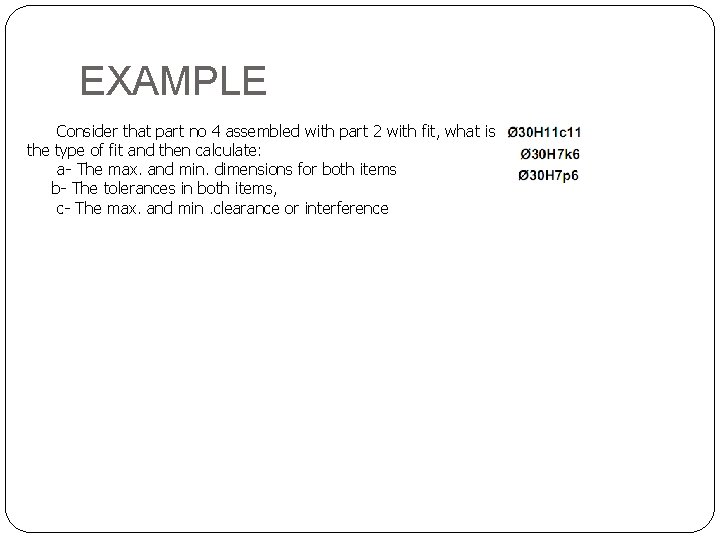
EXAMPLE Consider that part no 4 assembled with part 2 with fit, what is the type of fit and then calculate: a- The max. and min. dimensions for both items b- The tolerances in both items, c- The max. and min. clearance or interference Gateway Engineering Education Coalition
Gateway Engineering Education Coalition
Gateway Engineering Education Coalition
Gateway Engineering Education Coalition