
Fitness Physical Activity Nutrients And Body Adaptations Kristen
Fitness Physical Activity, Nutrients, And Body Adaptations Kristen Kodeski, MS, RD

Fitness • Sedentary • Physical activity – Exercise Copyright 2005 Wadsworth Group, a division of Thomson Learning
Benefits Of Fitness • Restful sleep • Nutritional health • Optimal body composition • Optimal bone density
• Resistance to colds and other infectious diseases • Low risks of some types of cancers • Strong circulation and lung function • Low risk of cardiovascular disease • Low risk of type 2 diabetes • Reduced risk of gallbladder disease in women
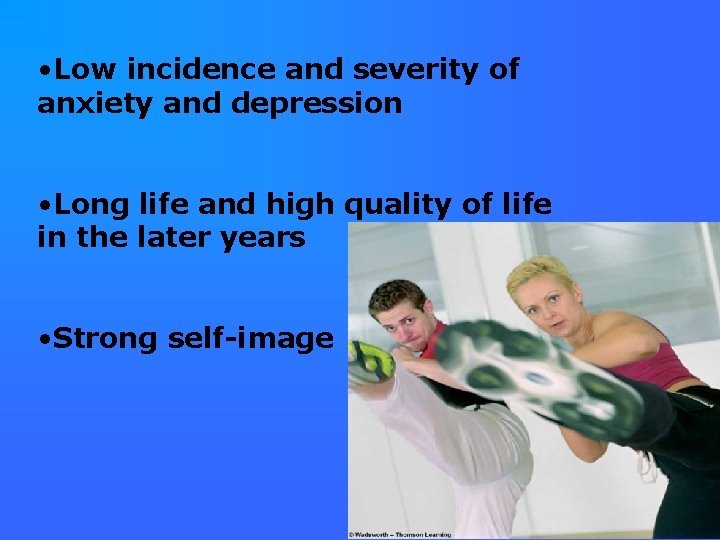
• Low incidence and severity of anxiety and depression • Long life and high quality of life in the later years • Strong self-image
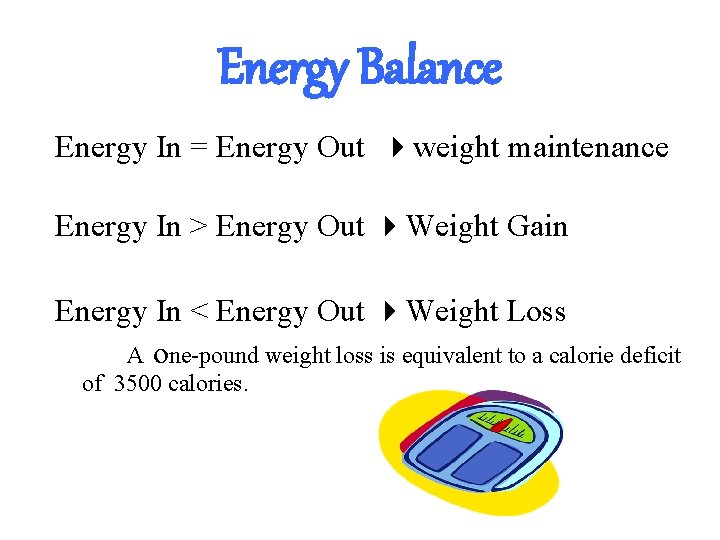
Energy Balance Energy In = Energy Out weight maintenance Energy In > Energy Out Weight Gain Energy In < Energy Out Weight Loss A one-pound weight loss is equivalent to a calorie deficit of 3500 calories.
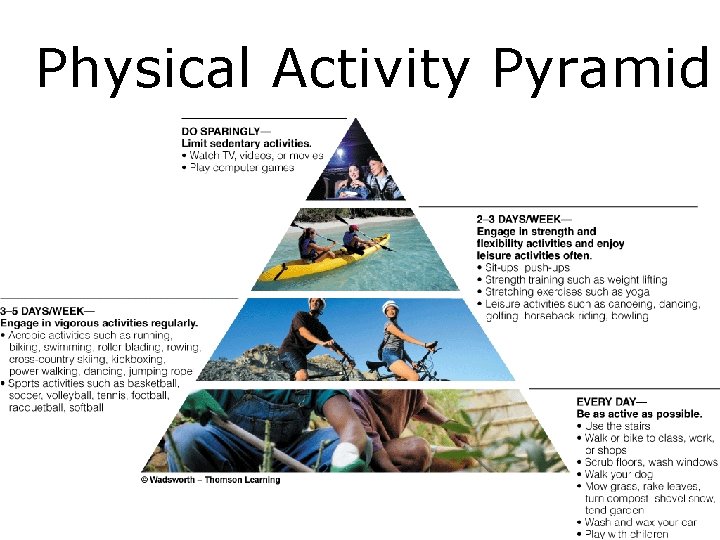
Physical Activity Pyramid
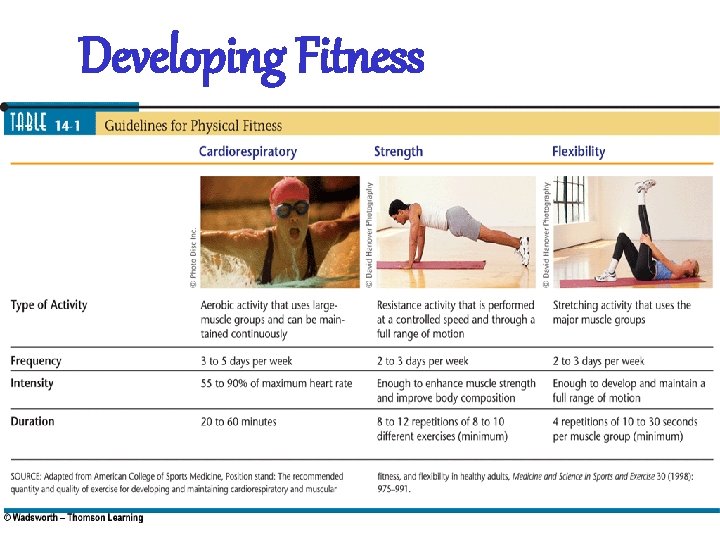
Developing Fitness
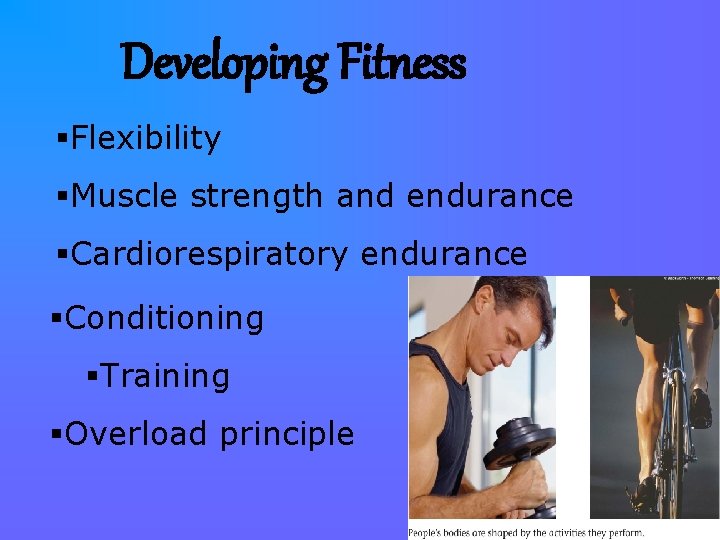
Developing Fitness §Flexibility §Muscle strength and endurance §Cardiorespiratory endurance §Conditioning §Training §Overload principle
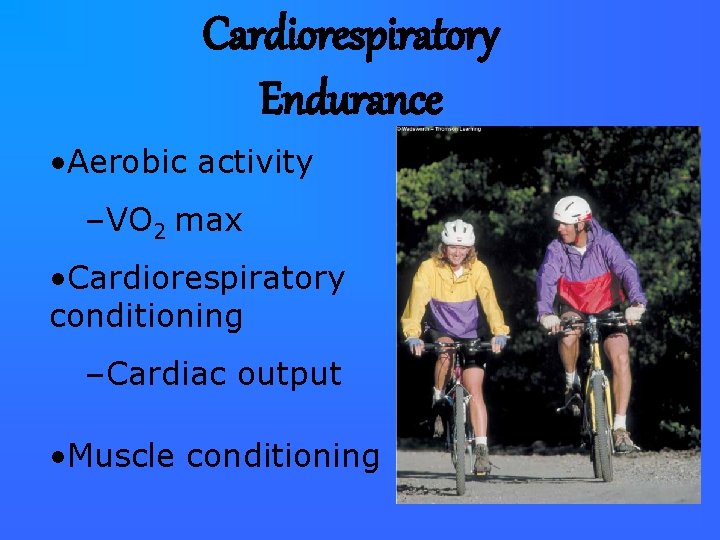
Cardiorespiratory Endurance • Aerobic activity –VO 2 max • Cardiorespiratory conditioning –Cardiac output • Muscle conditioning
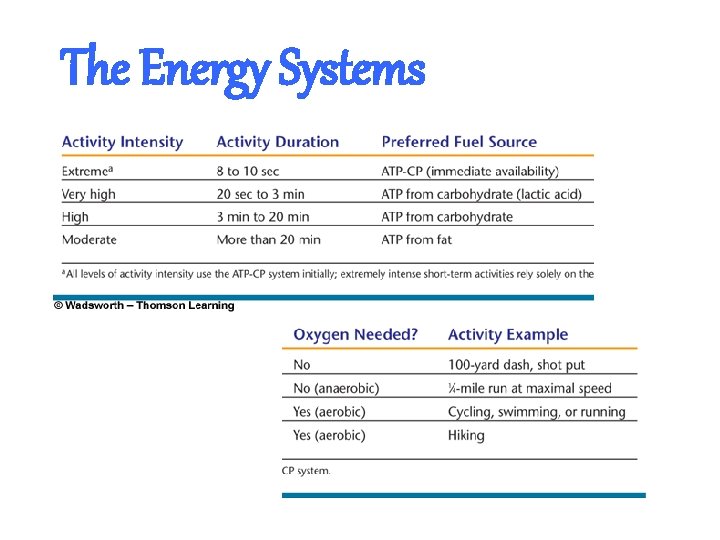
The Energy Systems
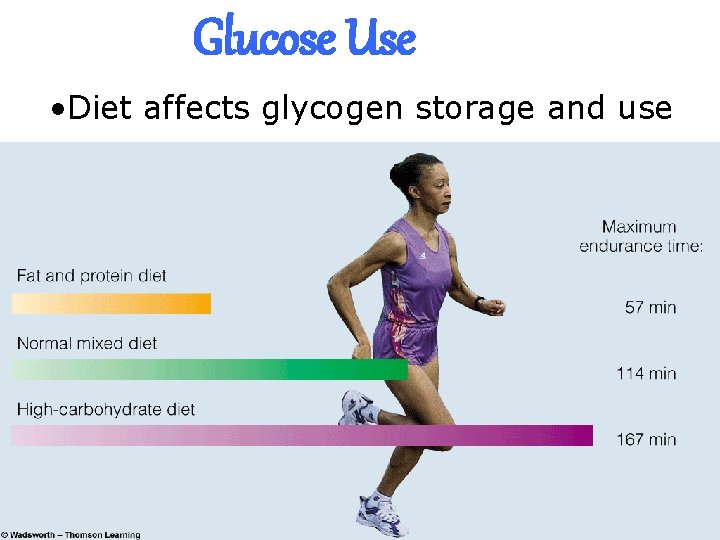
Glucose Use • Diet affects glycogen storage and use
• Exercise is the only way to deplete muscle glycogen • Carbohydrate is the main source of energy for high -intensity, short or intermittent duration activities – Competitive races, basketball, football, soccer, & swimming • Contributes to energy used in moderate intensity activites – Jogging, hiking, aerobic dancing, & gymnastics
Glucose Use §Intensity of activity affects glycogen use §Lactic acid §Duration of activity affects glycogen use
Glucose Use • Glucose depletion –Carbohydrate loading • Glucose during activity • Glucose after activity • Training affects glycogen use
Fat Use • Recommendations for endurance athletes – 20% - 30% of energy intake from fat • Dietary fat vs. body fat stores
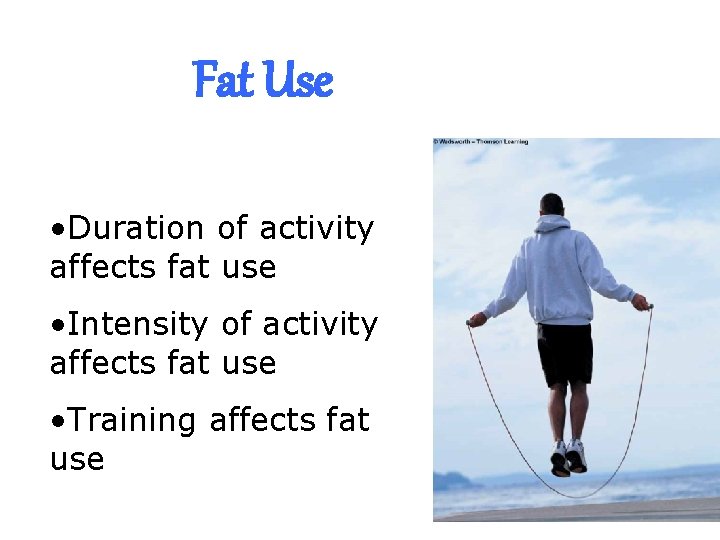
Fat Use • Duration of activity affects fat use • Intensity of activity affects fat use • Training affects fat use
Protein Use • Protein used in muscle building • Protein used as fuel • Diet affects protein use during activity
Protein Use • Intensity and duration of activity affect protein use during activity • Training affects protein use
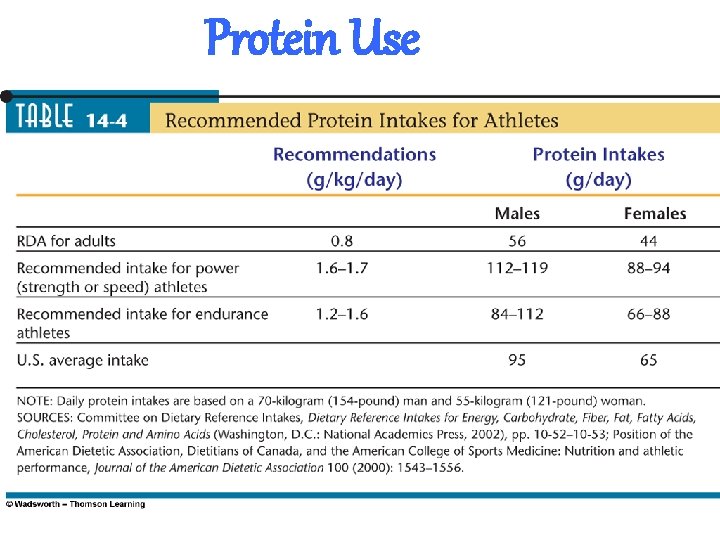
Protein Use
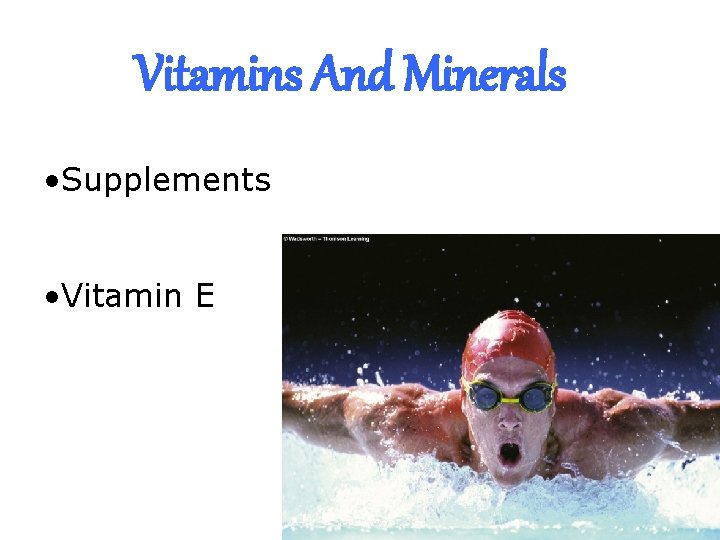
Vitamins And Minerals • Supplements • Vitamin E
Vitamins And Minerals • Iron –Iron deficiency • Iron-deficiency anemia –Sports anemia –Iron recommendations for athletes
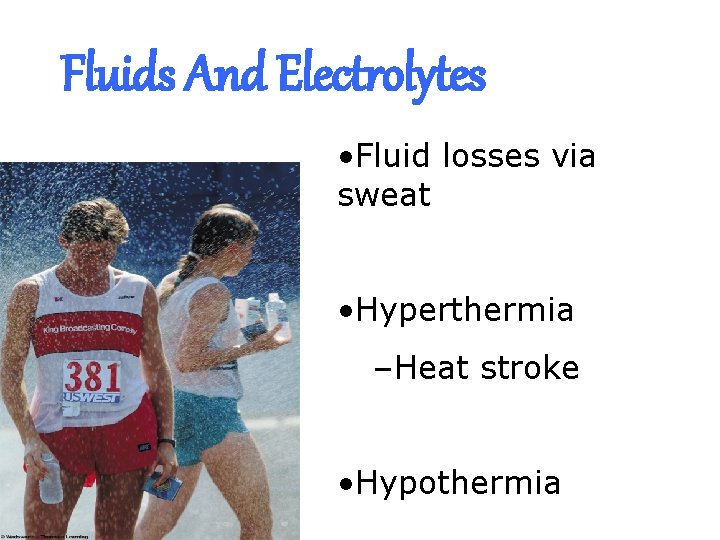
Fluids And Electrolytes • Fluid losses via sweat • Hyperthermia –Heat stroke • Hypothermia
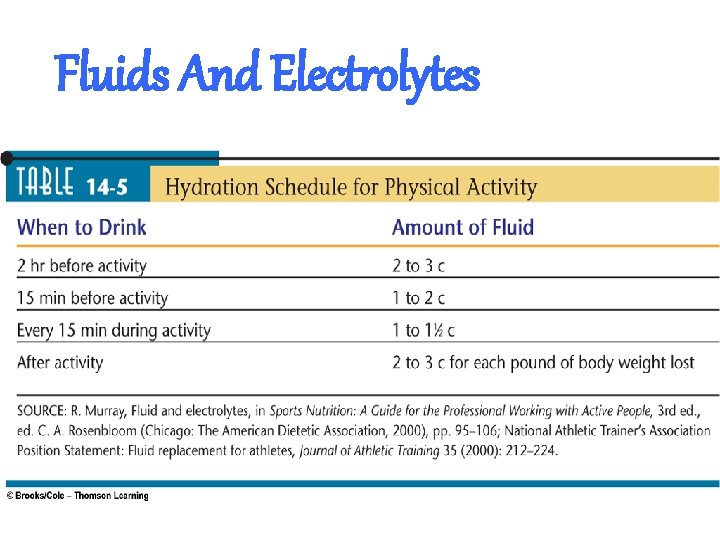
Fluids And Electrolytes
Fluids And Electrolytes • Electrolyte losses and replacement • Hyponatremia • Poor beverage choices –Caffeine –Alcohol
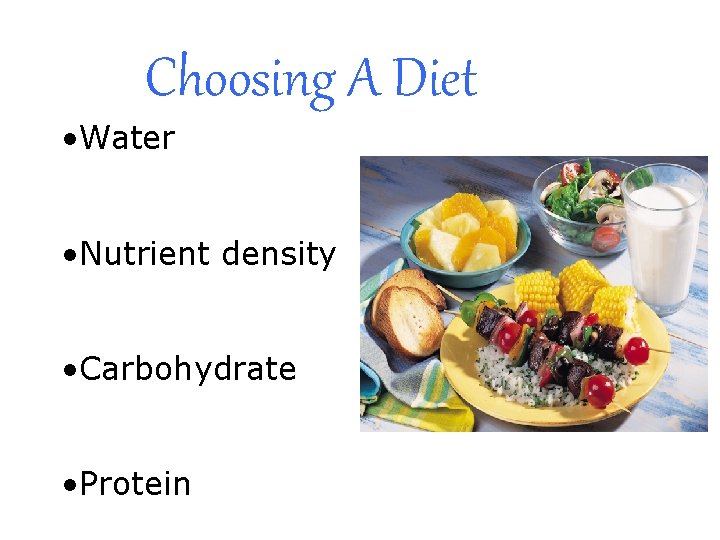
Choosing A Diet • Water • Nutrient density • Carbohydrate • Protein
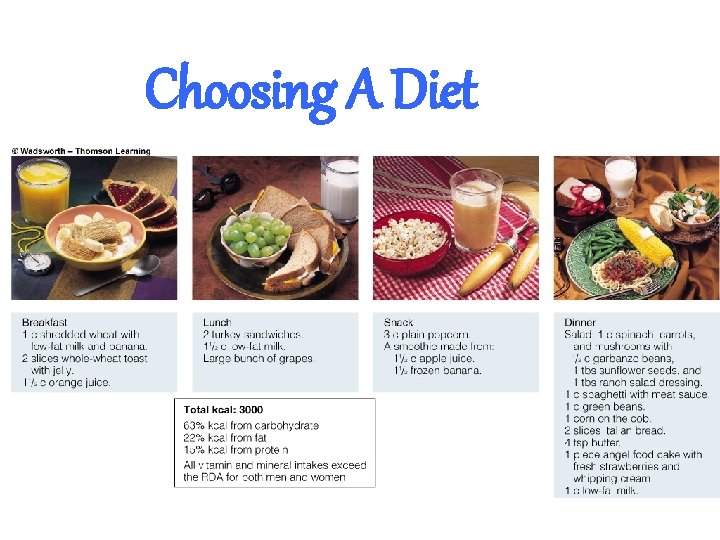
Choosing A Diet
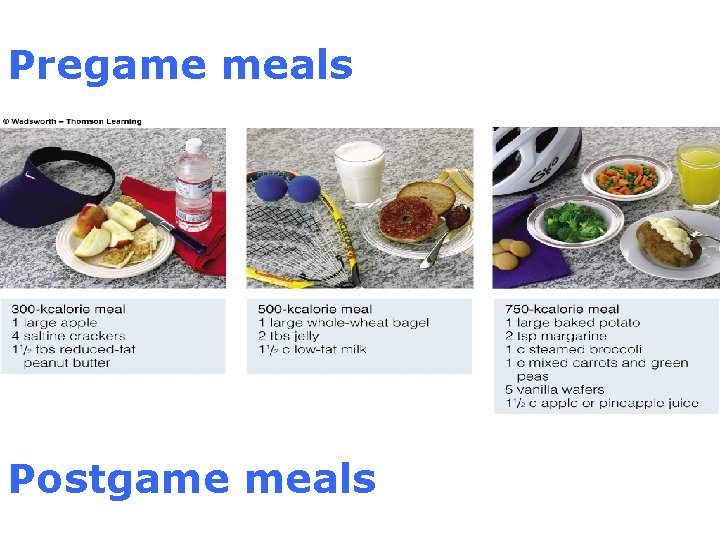
Pregame meals Postgame meals
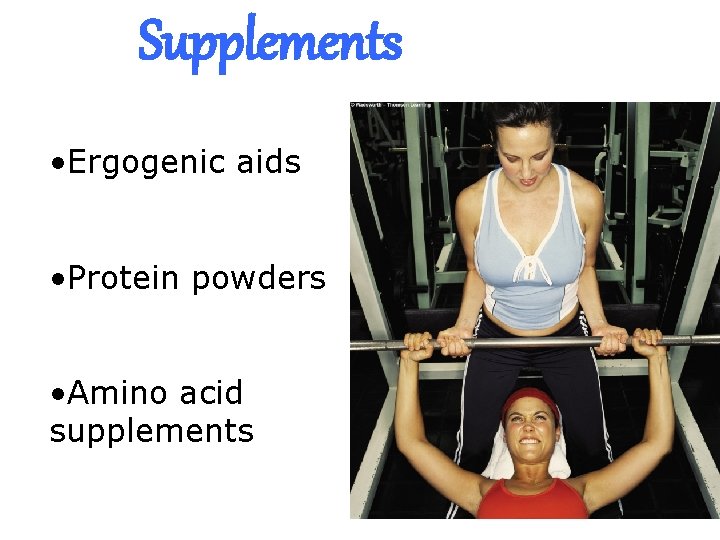
Supplements • Ergogenic aids • Protein powders • Amino acid supplements
Supplements • Carnitine • Chromium picolinate • Complete nutrition supplements
Supplements • Creatine • Caffeine • Oxygenated water
Supplements • DHEA androstenedione • Human growth hormone = h. GH
What About…

- Slides: 35