
FITNESS IS A LIFESTYLE fitness is a lifestyle























- Slides: 104
FITNESS IS A LIFESTYLE
fitness is a lifestyle BELL RINGER #1 Page 18 -19 “Physical Education: Strong Bodies, Strong Brains” -Read the Article -Answer the Questions on the Back of the Article
The Need For Fitness Cardiovascular Risk Factors: Heart disease is the leading cause of death in the United States. The U. S. is ranked among the top 3 in the world for overweight/fat individuals. There are over 1 million heart attacks each year.
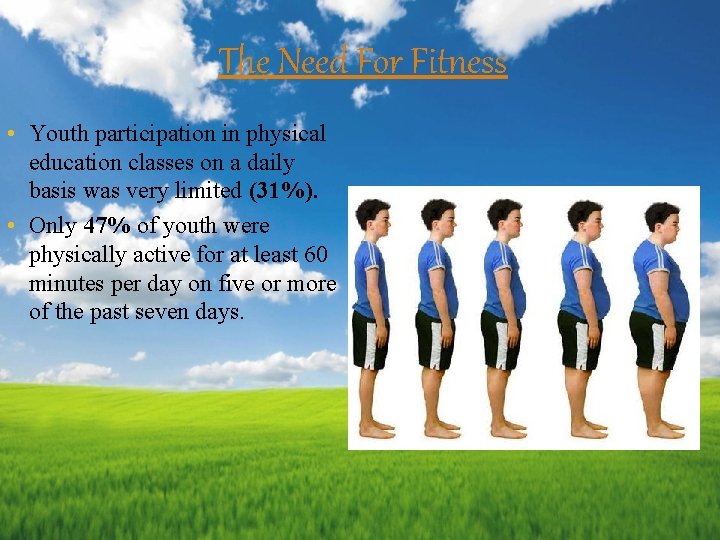
The Need For Fitness • Youth participation in physical education classes on a daily basis was very limited (31%). • Only 47% of youth were physically active for at least 60 minutes per day on five or more of the past seven days.
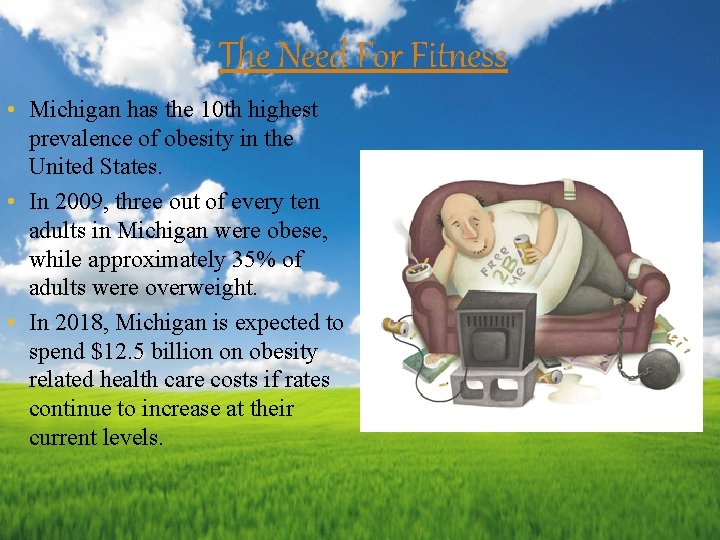
The Need For Fitness • Michigan has the 10 th highest prevalence of obesity in the United States. • In 2009, three out of every ten adults in Michigan were obese, while approximately 35% of adults were overweight. • In 2018, Michigan is expected to spend $12. 5 billion on obesity related health care costs if rates continue to increase at their current levels.
Unhealthy Behaviors Bad habits such as: Physical Inactivity Video games, TV, Computers & Technology. Fatty & Sugary Foods. Enormous Food portions.
Unhealthy Behaviors Turn us into a out of shape, lazy, over fat, unhealthy individual. Which can lead to: heart disease, heart attacks & type II diabetes.
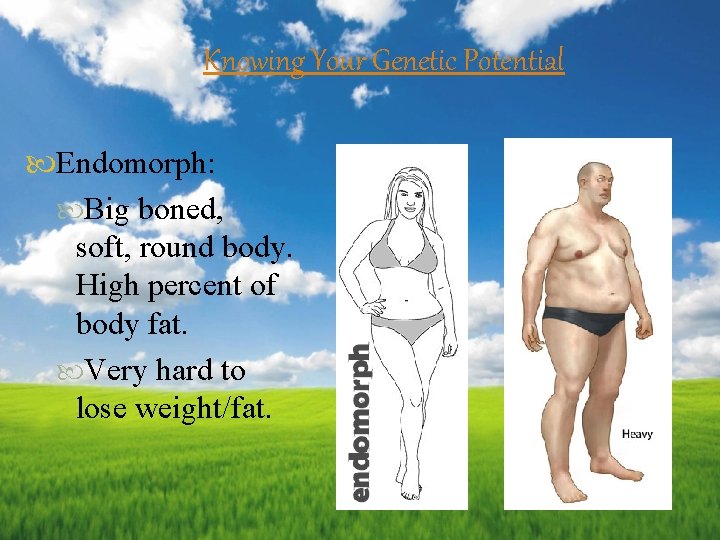
Knowing Your Genetic Potential Endomorph: Big boned, soft, round body. High percent of body fat. Very hard to lose weight/fat.
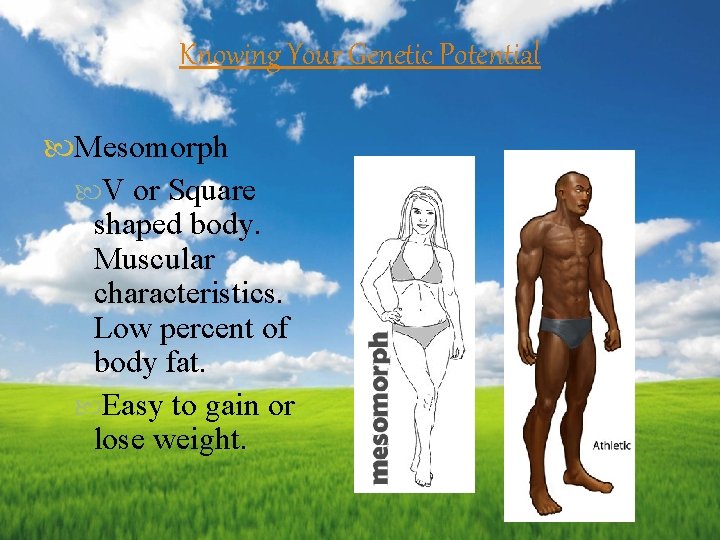
Knowing Your Genetic Potential Mesomorph V or Square shaped body. Muscular characteristics. Low percent of body fat. Easy to gain or lose weight.
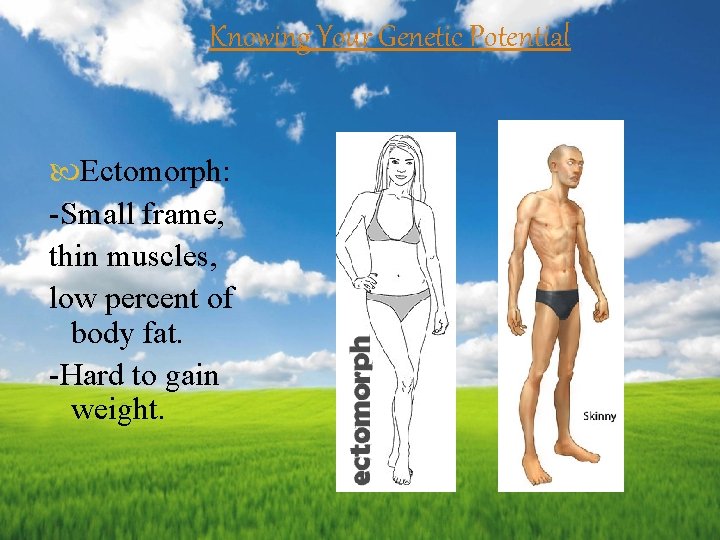
Knowing Your Genetic Potential Ectomorph: -Small frame, thin muscles, low percent of body fat. -Hard to gain weight.
Making A Change We know that all of these unhealthy habits and negative effects are reversible with a lifestyle change. We must keep in mind though, that most people cannot change overnight. You must make a plan to gradually change & set realistic goals while having support to help motivate you.
Goals For Fitness SMART Goal: Specific Measurable Attainable Realistic Time Bound Good Fitness Goal: It is my goal to lose 10 lbs (current weight 235, goal weight 225) of body fat in 60 days. I will measure this by weighing in and having my body fat % taken every week. Bad Fitness Goal: I want to lose weight.
Goals For Fitness SMART Goal: Specific Measurable Attainable Realistic Time Bound Good Fitness Goal: It is my goal to increase my 1 Rep Max on the bench press from 175 lbs to 225 lbs. My time frame will be from January to June to achieve this. I will test my 1 Rep Max each month of training. Bad Fitness Goal: I want to get a stronger bench press.
Goals For Fitness SMART Goal: Specific Measurable Attainable Realistic Time Bound Good Fitness Goal: It is my goal to complete the 1. 5 mile run in 10 minutes or less. My time frame will be from April to June and I will test my 1. 5 mile run every 2 weeks. Bad Fitness Goal: I want to run faster.
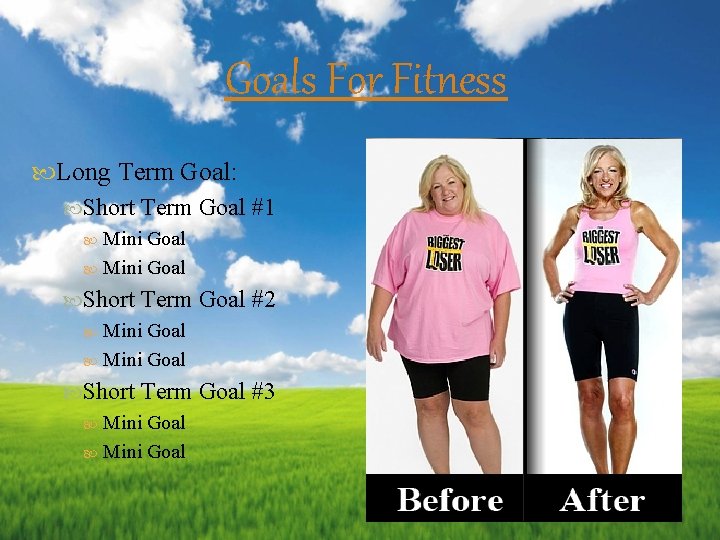
Goals For Fitness Long Term Goal: Short Term Goal #1 Mini Goal Short Term Goal #2 Mini Goal Short Term Goal #3 Mini Goal
Applying What You Know Ectomorph’s must make sure that they increase their calorie intake as well as include a strength training routine to see an increase in muscle mass and body weight. Endomorph’s must make sure they watch their calorie intake as well as get plenty of Aerobic Exercise & always incorporate a strength training routine.
Daily Review 1. What is the leading cause of death in the U. S. ? -Heart Disease 2. What factors contribute to this? -Fatty/Sugary Processed Foods, Technology, Food Portions 3. What are the 3 body types -Endomorph, Mesomorph, & Ectomorph 4. Describe these three body types.
Response video “Childhood Obesity. Story of Breanna Bond”
BELL RINGER #2 Page 20 -21 “Exercise Can Help Reduce Stress” -Read the Article -Answer the Questions on the Back of the Article
Overcoming Barriers What do you think your barriers are?
Lack of Time Identify time for physical activity. Multitask: Incorporate physical activity with daily tasks. *What are some multitasking activities that involve physical activity?
Lack of Encouragement Explain interest to family and friends. Tell them of your desire, and ask for support. Invite friends and family to exercise with you. Plan social activities involving exercise.
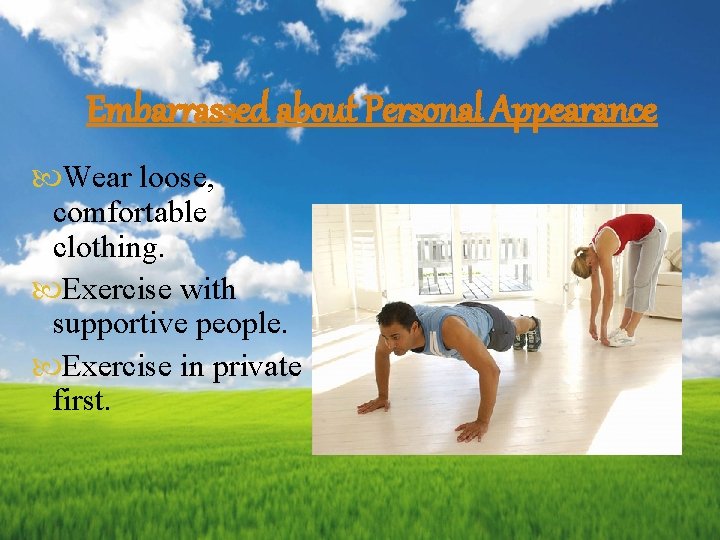
Embarrassed about Personal Appearance Wear loose, comfortable clothing. Exercise with supportive people. Exercise in private first.
Lack of Energy Schedule activity during energetic times in the day or week. Give exercise a chance. Exercise can give you more energy.
Not Enjoyable Invite someone to exercise with you. Join a class or group. Find fun activities like…
Lack of Self-Motivation Schedule activity Make an “Appointment” Find a job that requires physical work.
Fear of Injury Find an activity you feel confident and safe doing. Minimal skill. Join a supervised gym or class. Protective gear and equipment.
Lack of Confidence No new skill. Find someone to teach you new skills. Take a class to teach you new skills. Find outside resources research it. Read Magazines, Internet Exploring
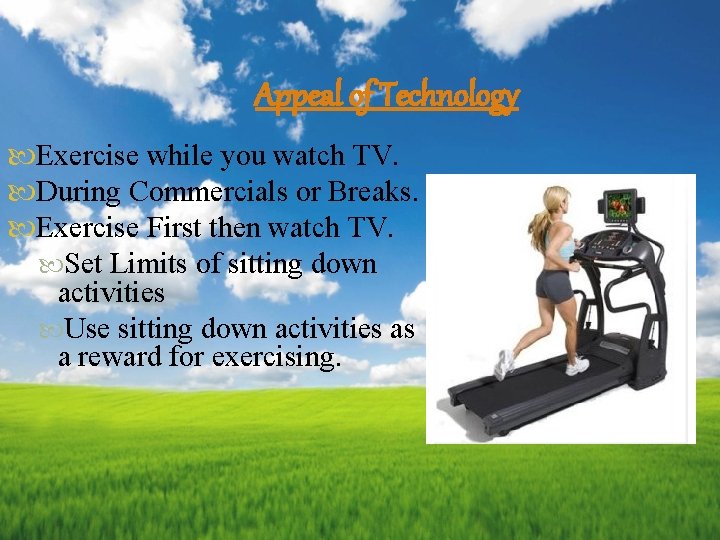
Appeal of Technology Exercise while you watch TV. During Commercials or Breaks. Exercise First then watch TV. Set Limits of sitting down activities Use sitting down activities as a reward for exercising.
DAILY REVIEW 1. The best way to change your body is to make a plan for _____ change and set _______ goals. -Gradual/Realistic 2. What is the #1 barrier to exercise/activity? -Lack of Time 3. How do you overcome this? 4. What are some other barriers to fitness?
Barriers Survey Complete the survey (page 36 -37) Indicate which ones are Barriers that you need to overcome. (Any Barrier with a score of 5 or above is one you need to focus on). Finally, write a 1 -2 sentence response for each Barrier stating a plan to overcome it.
RESPONSE VIDEO “Exercise is Medicine: Aerobic Exercise”
BELL RINGER #3 Page 22 -23 “Three Things Every Exercise Program Should Have” -Read the Article -Answer the Questions on the Back of the Article
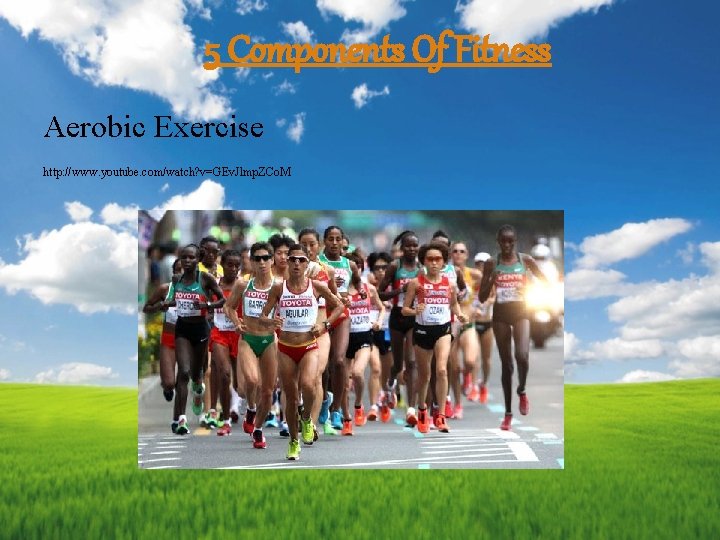
5 Components Of Fitness Aerobic Exercise http: //www. youtube. com/watch? v=GEv. Jlmp. ZCo. M
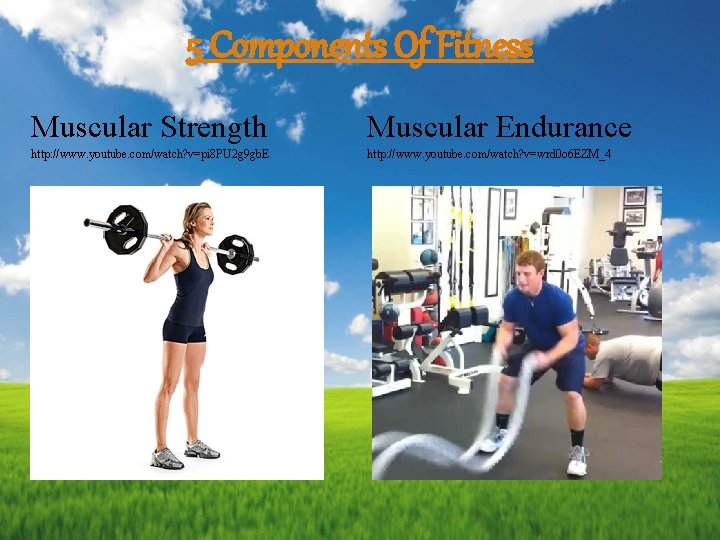
5 Components Of Fitness Muscular Strength Muscular Endurance http: //www. youtube. com/watch? v=pi 8 PU 2 g 9 gb. E http: //www. youtube. com/watch? v=wrd 0 o 6 EZM_4
5 Components Of Fitness Flexibility http: //www. youtube. com/watch? v=1 E-g. N 5 g. D 5 pk
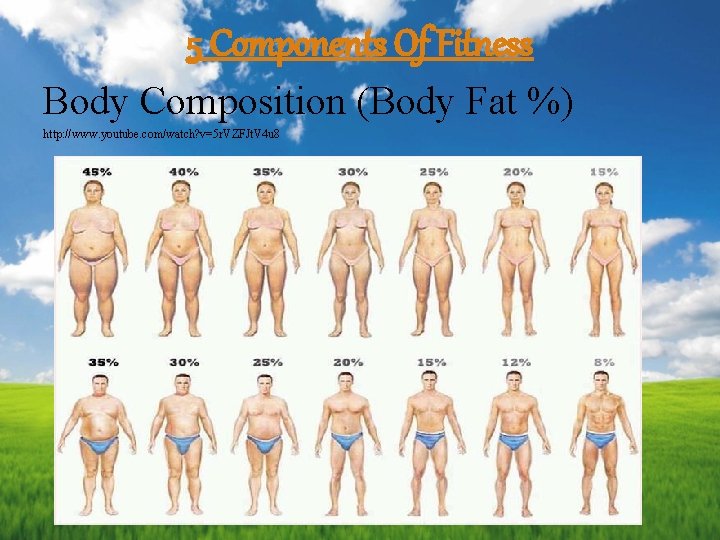
5 Components Of Fitness Body Composition (Body Fat %) http: //www. youtube. com/watch? v=5 r. VZFJt. V 4 u 8
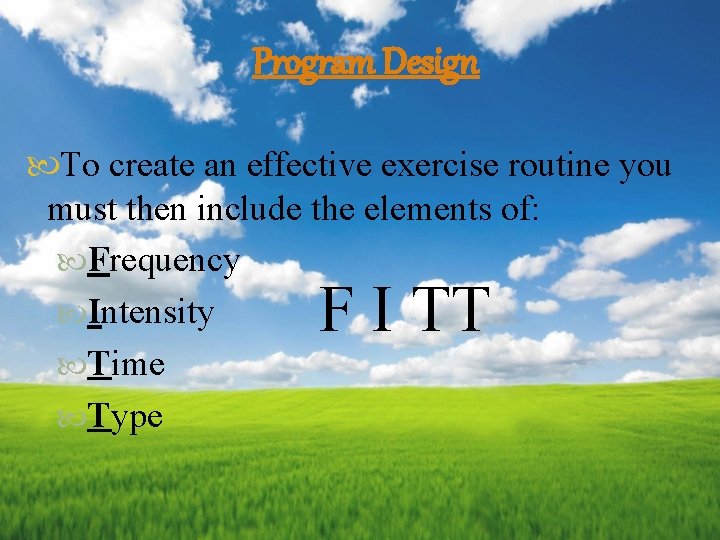
Program Design To create an effective exercise routine you must then include the elements of: Frequency Intensity Time Type F I TT
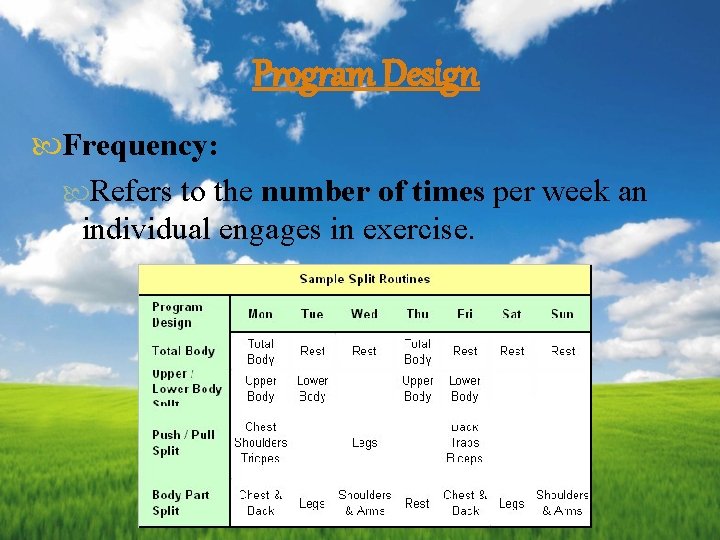
Program Design Frequency: Refers to the number of times per week an individual engages in exercise.
Program Design Exercise must be performed on a regular basis to be beneficial and effective. That means you cannot just workout once and expect results…… CONSISTENCY is the key to fitness!
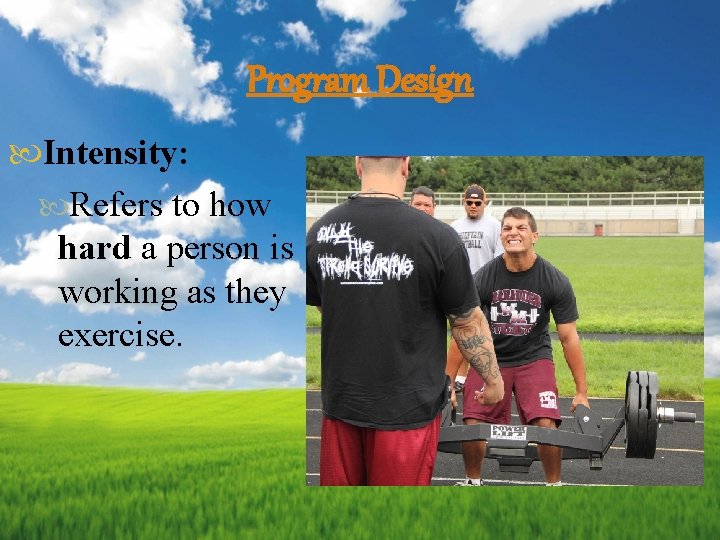
Program Design Intensity: Refers to how hard a person is working as they exercise.
Program Design Aerobic Exercise Intensity: Heart Rate, Distance, Speed Strength Training Intensity: Weight, Reps, Sets, Failure, Tempo Flexibility: Count & Range of Motion of Stretch
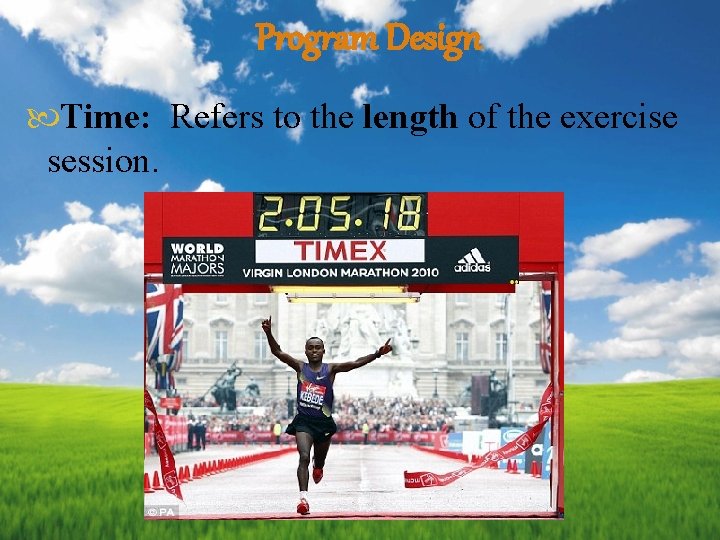
Program Design Time: Refers to the length of the exercise session.
DAILY REVIEW 1. What are the 5 components of fitness? -Aerobic/Anaerobic, Muscular Strength, Endurance, Flexibility, & Body Comp 2. What does each letter of the F I T acronym stand for? -Frequency-Intensity-Time 3. What are the 3 body types? -Endomorph-Mesomorph-Ectomorph 4. When looking to make a change in your body, you must set _____ goals -Realistic
Response Video “Cross Fit”
BELL RINGER #4 Page 24 -25 “Warm Up to Workout” -Read the Article -Answer the Questions on the Back of the Article
Basic Training Principles The Principle of Warm-up: A. Increases Body Temperature B. Increasing Blood Flow & Lubrication to the joint. C. Prepares muscles, tendons, and ligaments for stressful activity.
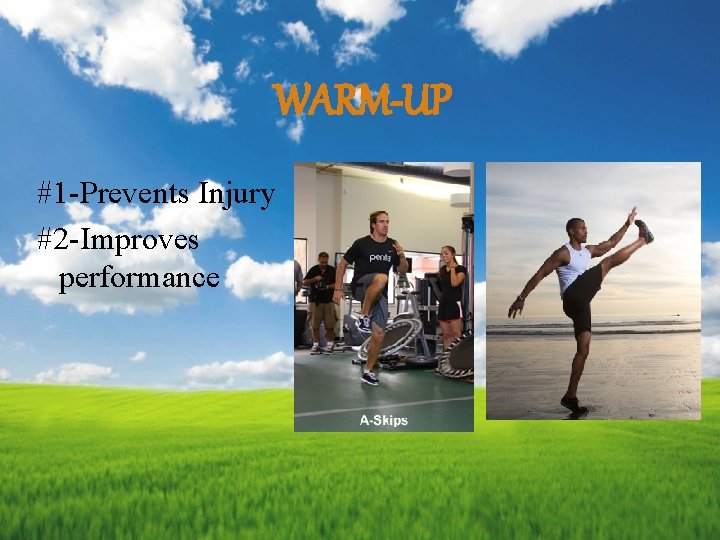
WARM-UP #1 -Prevents Injury #2 -Improves performance
Basic Training Principles Warm-up consists of low intensity, total body movements for 3 -5 minutes. (Stretching is not Warming Up!!!) Rubber Band Example When preparing for strength training, an individual should perform 1 -2 warm-up sets (at 50% 1 RM) at the beginning of their first exercise. It is not necessary to perform warm-up sets from that point forward.
Basic Training Principles The Principle of Cool-down: Cool-down is essential for those activities that are strenuous and long. Cool-down can enhance recovery by helping circulate lactic acid (waste products) into the blood system. Stretching is a good Cool Down, it also helps to improve flexibility.
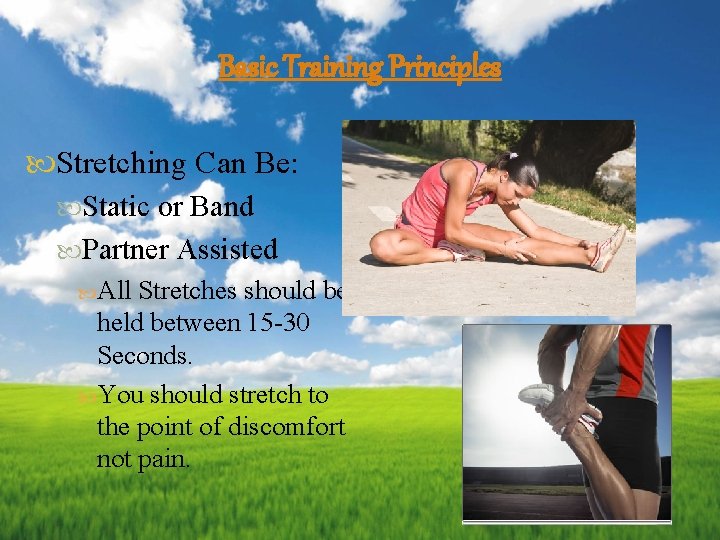
Basic Training Principles Stretching Can Be: Static or Band Partner Assisted All Stretches should be held between 15 -30 Seconds. You should stretch to the point of discomfort not pain.
Daily Review 1. 2. 3. 4. 5. 6. When static stretching you should hold the stretch for ___ seconds. -15 to 30 seconds The purpose of the warm-up is to: -improve performance & prevent injury What returns the body to its normal state and helps prevent soreness? -cool-down An individual with a V-shape & low % bodyfat is a/an -Mesomorph How hard you work out is called: -Intensity You should hold a stretch to point not pain: -Discomfort
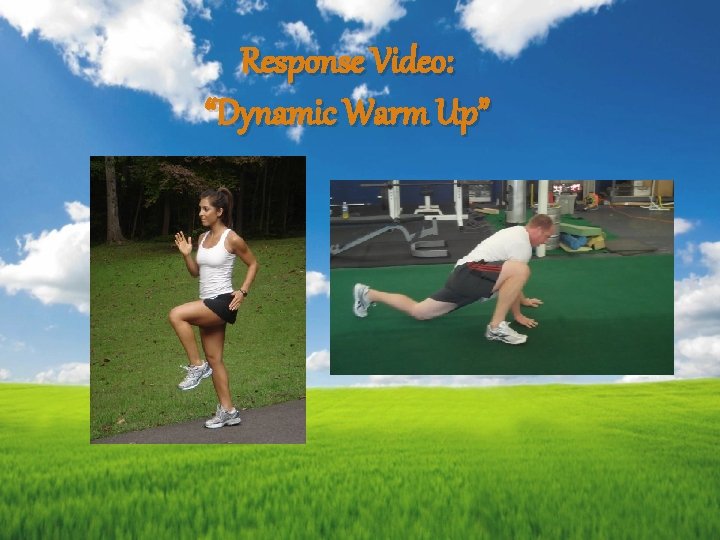
Response Video: “Dynamic Warm Up”
BELL RINGER #5 Page 26 -27 “High Intensity Interval Training” -Read the Article -Answer the Questions on the Back of the Article
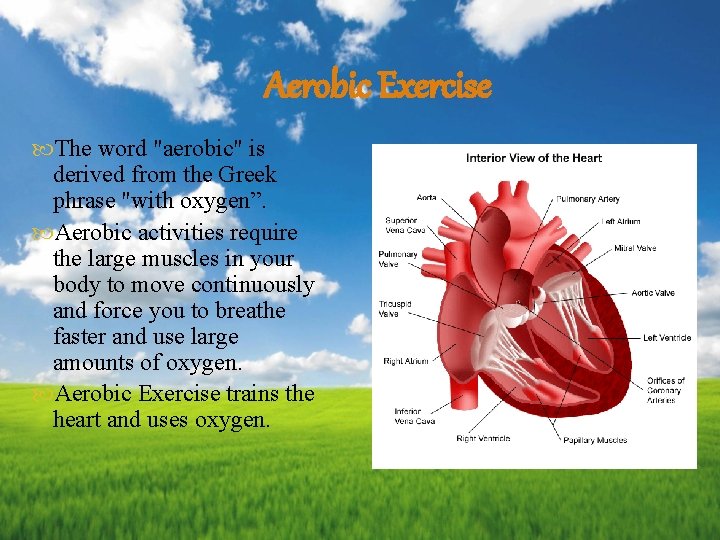
Aerobic Exercise The word "aerobic" is derived from the Greek phrase "with oxygen”. Aerobic activities require the large muscles in your body to move continuously and force you to breathe faster and use large amounts of oxygen. Aerobic Exercise trains the heart and uses oxygen.
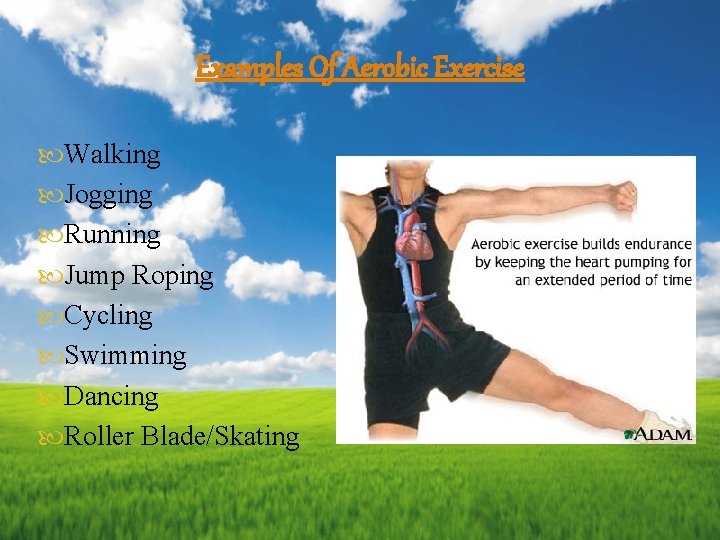
Examples Of Aerobic Exercise Walking Jogging Running Jump Roping Cycling Swimming Dancing Roller Blade/Skating
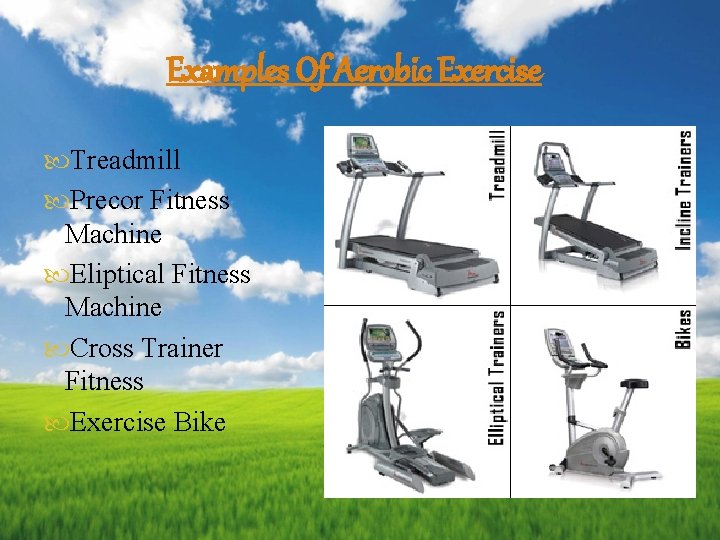
Examples Of Aerobic Exercise Treadmill Precor Fitness Machine Eliptical Fitness Machine Cross Trainer Fitness Exercise Bike
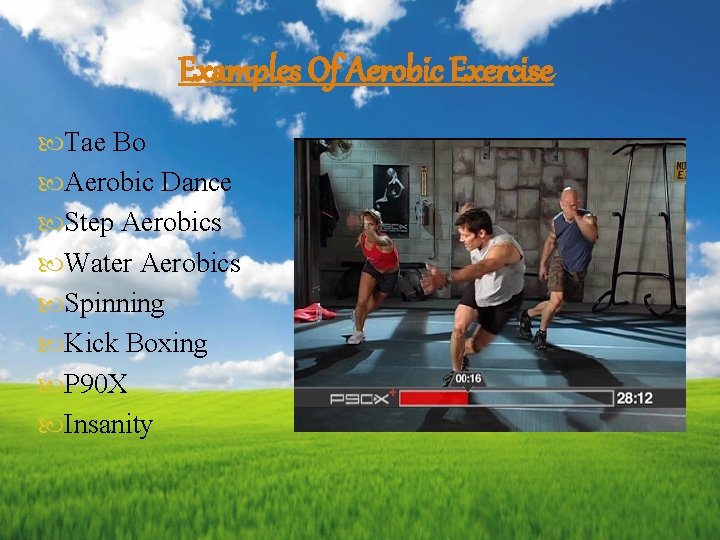
Examples Of Aerobic Exercise Tae Bo Aerobic Dance Step Aerobics Water Aerobics Spinning Kick Boxing P 90 X Insanity
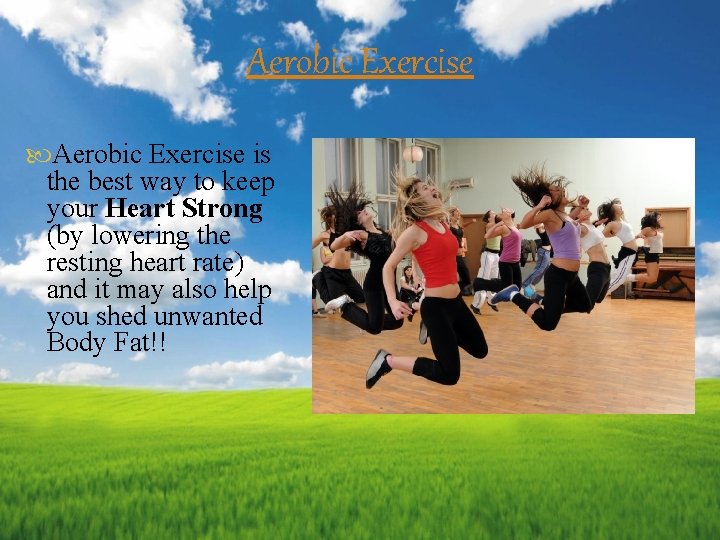
Aerobic Exercise is the best way to keep your Heart Strong (by lowering the resting heart rate) and it may also help you shed unwanted Body Fat!!
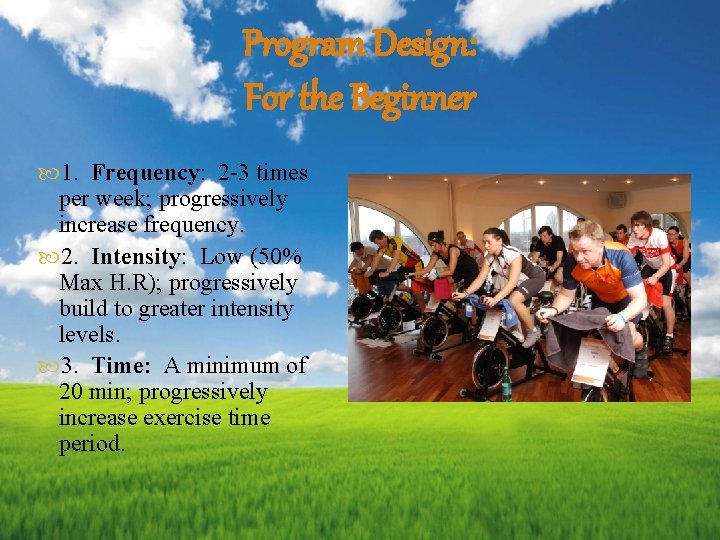
Program Design: For the Beginner 1. Frequency: 2 -3 times per week; progressively increase frequency. 2. Intensity: Low (50% Max H. R); progressively build to greater intensity levels. 3. Time: A minimum of 20 min; progressively increase exercise time period.
Program Design: For the Advanced 1. Frequency: 4 -5 times per week. 2. Intensity: High (65 -85% Max Heart Rate) 3. Time: 45 minutes or more.
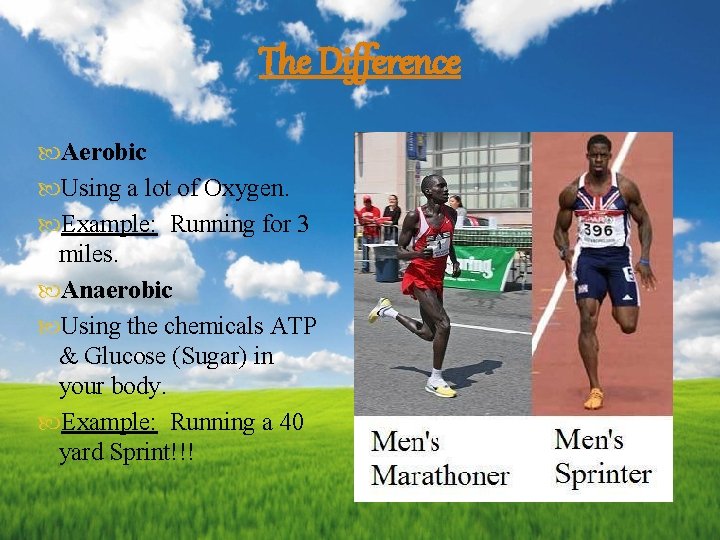
The Difference Aerobic Using a lot of Oxygen. Example: Running for 3 miles. Anaerobic Using the chemicals ATP & Glucose (Sugar) in your body. Example: Running a 40 yard Sprint!!!
TARGET HEART RATE LAB Page 38 -39 -Finding your Training Heart Rate
FITNESS QUIZ #1
BELL RINGER #6 Page 28 -29 “Strength Training” -Read the Article -Answer the Questions on the Back of the Article
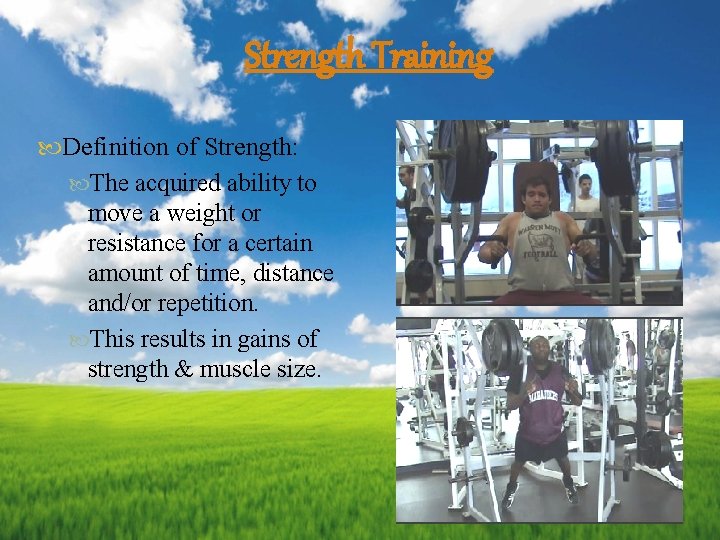
Strength Training Definition of Strength: The acquired ability to move a weight or resistance for a certain amount of time, distance and/or repetition. This results in gains of strength & muscle size.
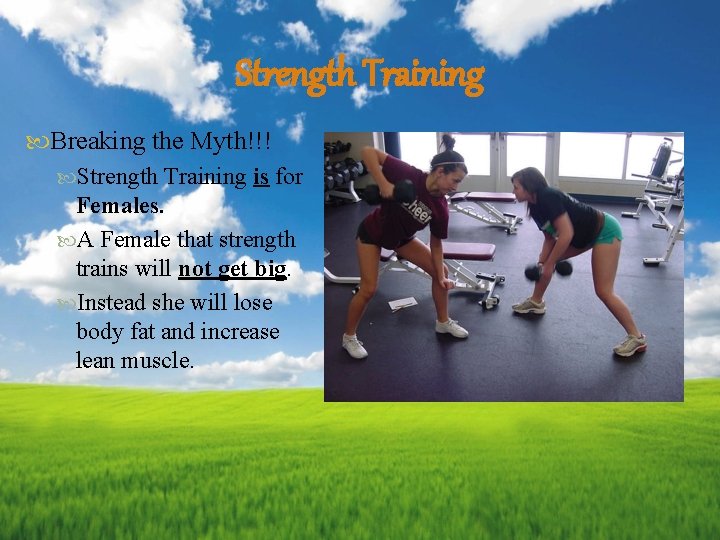
Strength Training Breaking the Myth!!! Strength Training is for Females. A Female that strength trains will not get big. Instead she will lose body fat and increase lean muscle.
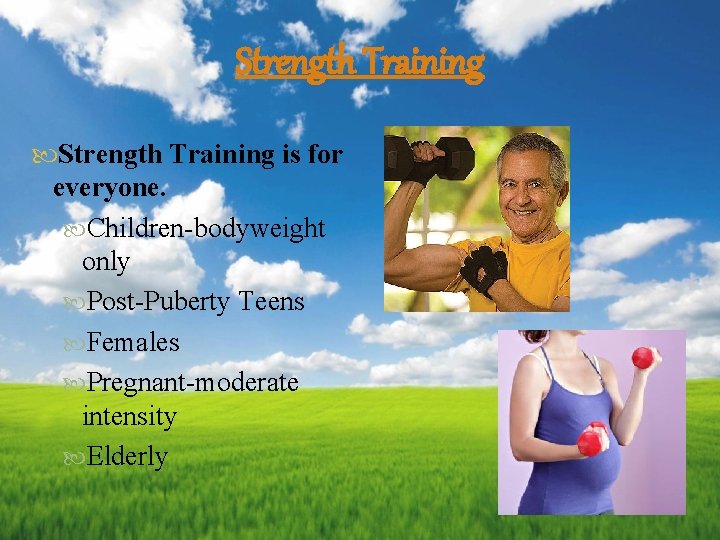
Strength Training is for everyone. Children-bodyweight only Post-Puberty Teens Females Pregnant-moderate intensity Elderly
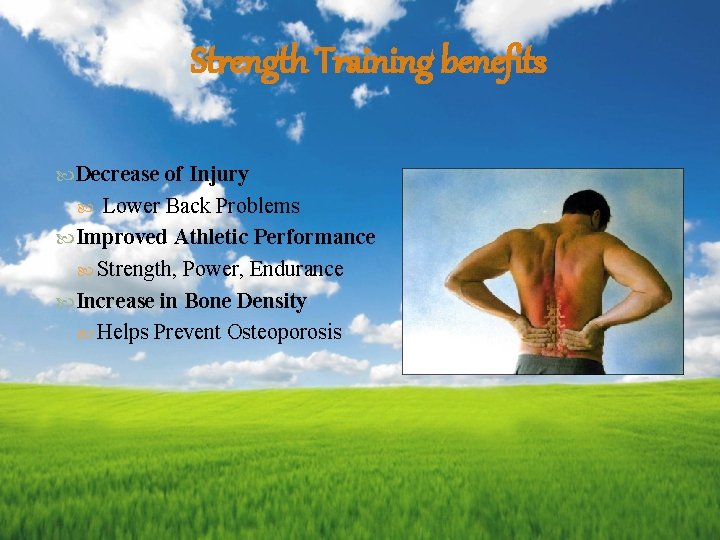
Strength Training benefits Decrease of Injury Lower Back Problems Improved Athletic Performance Strength, Power, Endurance Increase in Bone Density Helps Prevent Osteoporosis
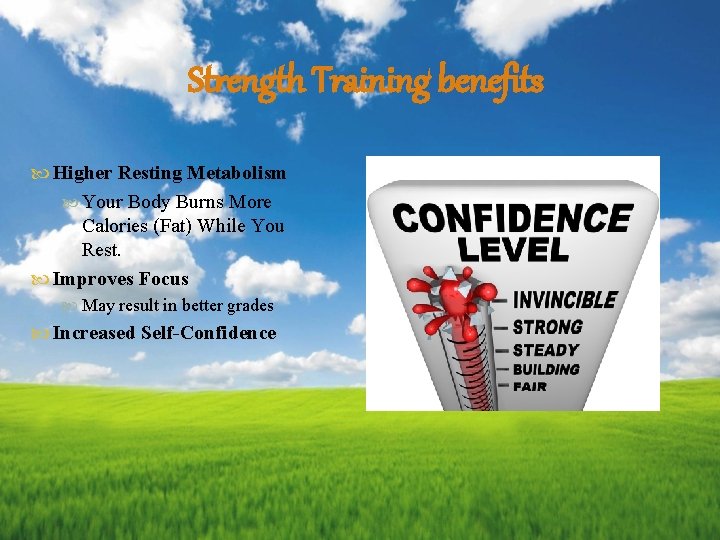
Strength Training benefits Higher Resting Metabolism Your Body Burns More Calories (Fat) While You Rest. Improves Focus May result in better grades Increased Self-Confidence
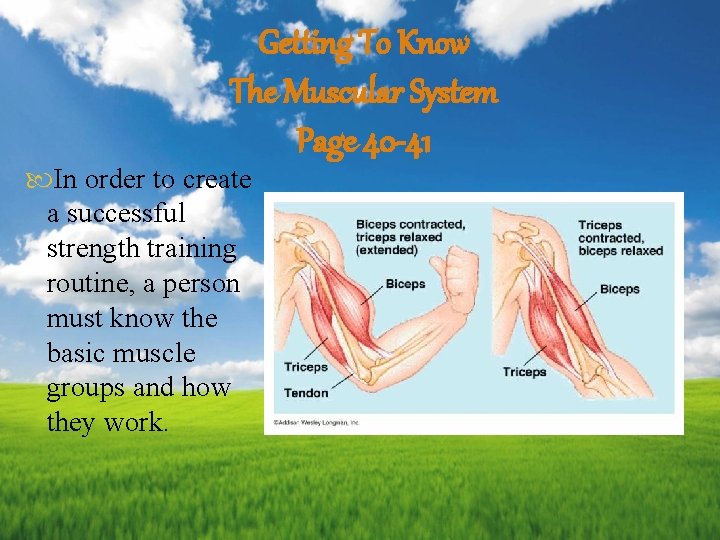
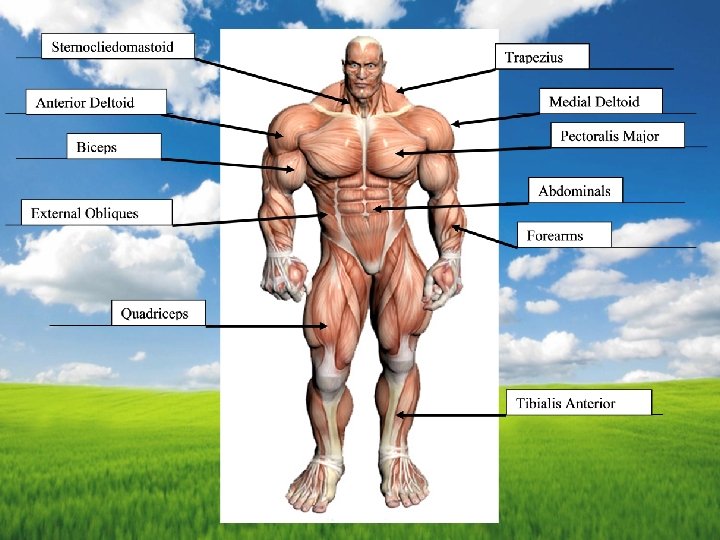
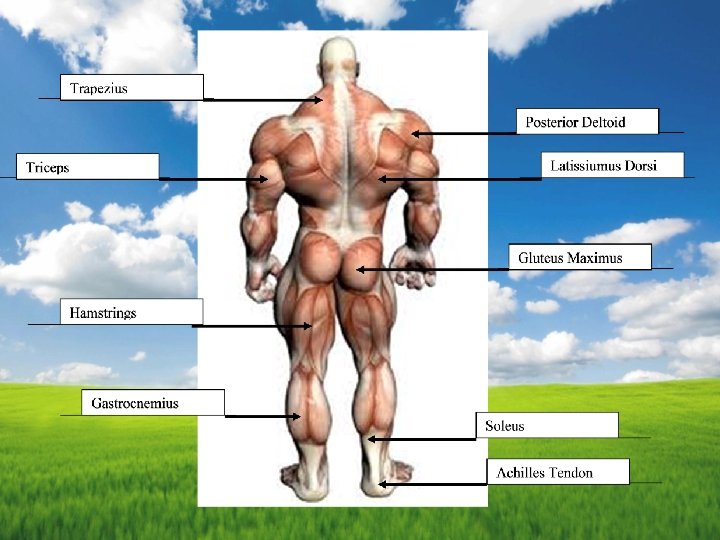
Getting To Know The Muscular System Page 40 -41 In order to create a successful strength training routine, a person must know the basic muscle groups and how they work.
BELL RINGER #7 Page 30 -31 “Muscle Soreness” -Read the Article -Answer the Questions on the Back of the Article
Types of Muscle Contractions Isotonic- Contraction of the muscle with movement of the joints. Example- Squat Isometric- Contraction of the muscle without movement of the joints. Example- Wall Sit
Knowing The Difference Muscular Endurance Muscular Strength A person will increase their strength their ability to repeat a to push or pull a muscle contraction for a resistance as well as long period of time. increase their muscle Rep Range: Repetitions size. Above 12. Rep Range: 6 -12 reps
What is a Repetition? A Repetition is Pushing and/or Pulling a resistance. 1 Positive Phase + 1 Negative Phase= 1 Repetition. Positive Phase- the muscle that is being trained shortens. (Concentric) or the weight is being lifted. Negative Phase- the muscle that is being trained lengthens. (Eccentric) or the weight is being lowered. Demonstration
DAILY REVIEW What is the difference between isotonic and isometric contractions? What is the difference between muscular strength and muscular endurance? What is the difference between anaerobic and aerobic? Describe the perfect repetition. What are the 5 components of fitness? Explain the F I T principle of program design.
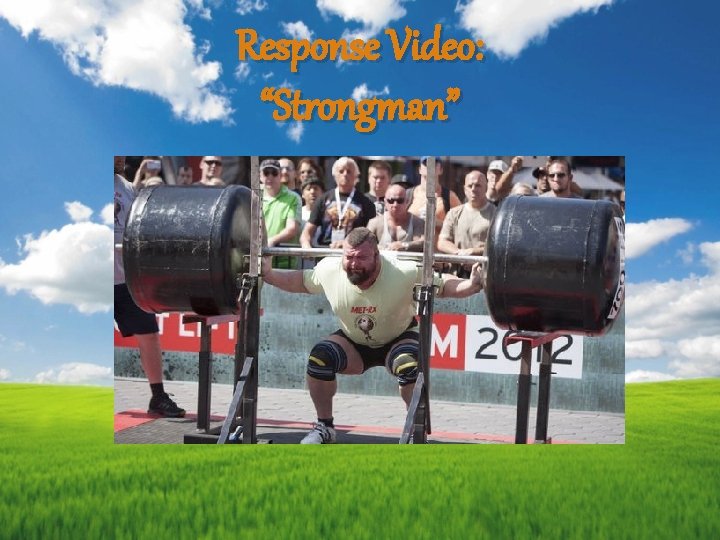
Response Video: “Strongman”
BELL RINGER #8 Page 32 -33 “Periodized Training & Why It’s Important” -Read the Article -Answer the Questions on the Back of the Article
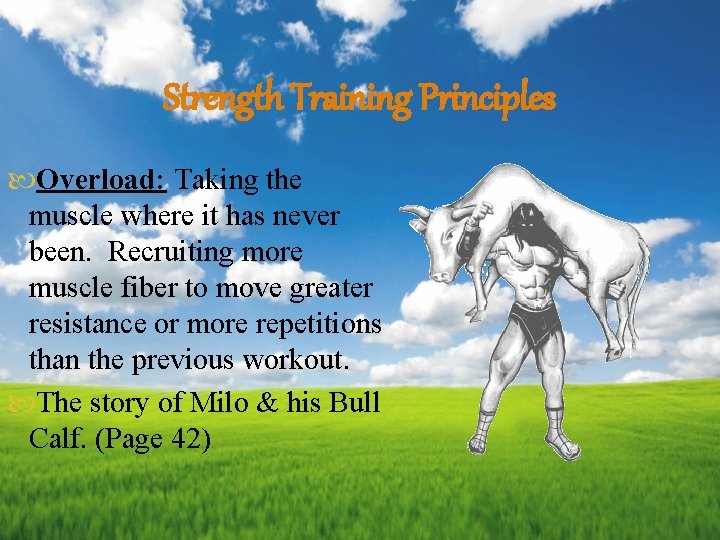
Strength Training Principles Overload: Taking the muscle where it has never been. Recruiting more muscle fiber to move greater resistance or more repetitions than the previous workout. The story of Milo & his Bull Calf. (Page 42)
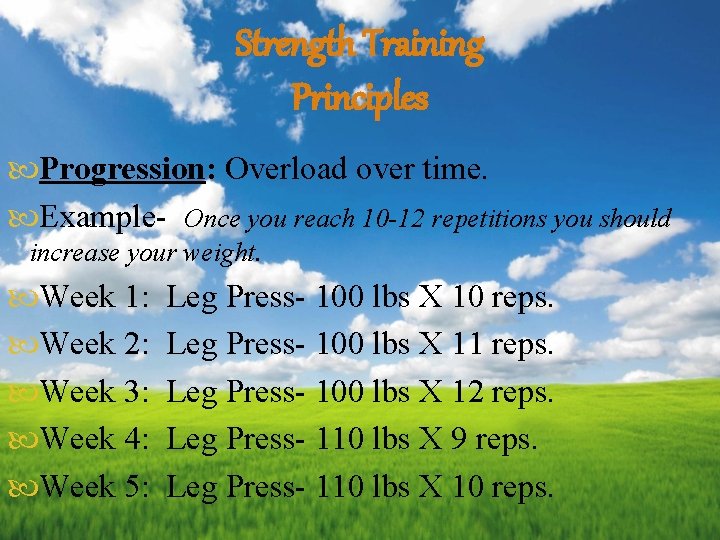
Strength Training Principles Progression: Overload over time. Example- Once you reach 10 -12 repetitions you should increase your weight. Week 1: Week 2: Week 3: Week 4: Week 5: Leg Press- 100 lbs X 10 reps. Leg Press- 100 lbs X 11 reps. Leg Press- 100 lbs X 12 reps. Leg Press- 110 lbs X 9 reps. Leg Press- 110 lbs X 10 reps.
Strength Training Principles Adaptation: The body will become accustomed to your program (it will do anything you train it to do!) Once it is accustomed, it stops growing. You must “shock” or vary your program every 4 to 6 weeks.
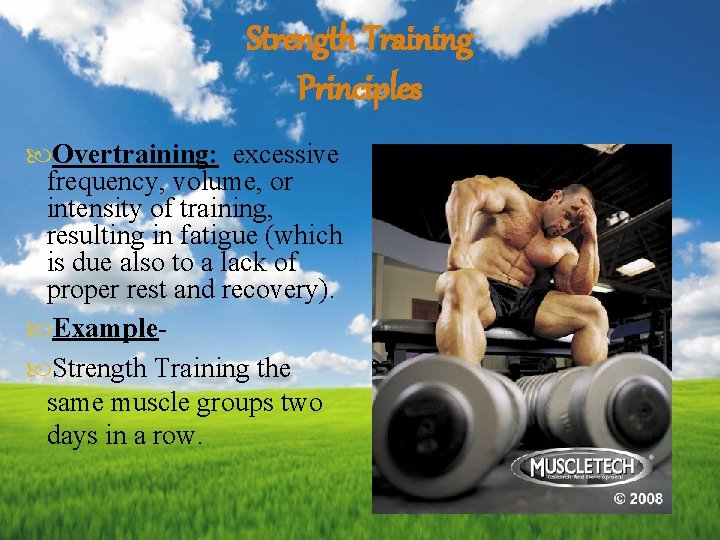
Strength Training Principles Overtraining: excessive frequency, volume, or intensity of training, resulting in fatigue (which is due also to a lack of proper rest and recovery). Example Strength Training the same muscle groups two days in a row.
Strength Training Principles Overtraining Signs and symptoms include: Failure to adapt or make improvements Increased number of injuries Increased resting heart rate Muscle soreness beyond 48 hours Apathy- very unmotivated and fatigued. Loss of appetite Loss of strength
Strength Training Principles To Prevent Overtraining: Wait at least 48 hours before training the same muscle group again. Make sure you get enough rest and recovery (at least 7 -8 hours of sleep each night) Make sure you are getting plenty of nutrients from the food you eat. Make sure you drink enough water (64 -96 oz)
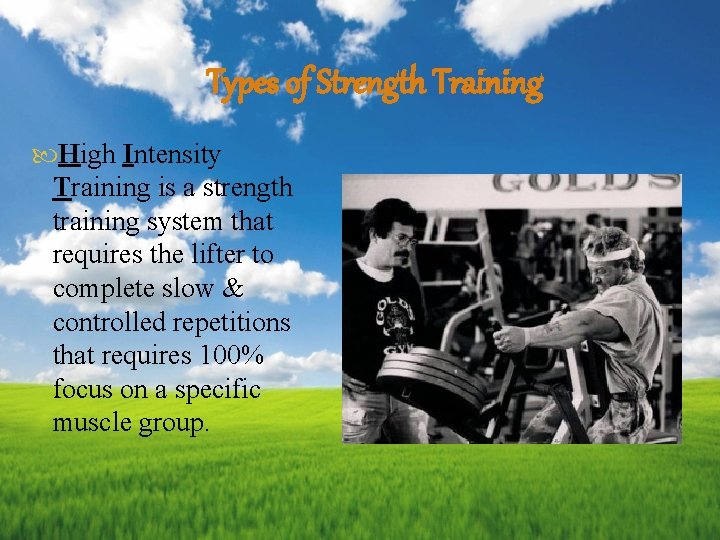
Types of Strength Training High Intensity Training is a strength training system that requires the lifter to complete slow & controlled repetitions that requires 100% focus on a specific muscle group.
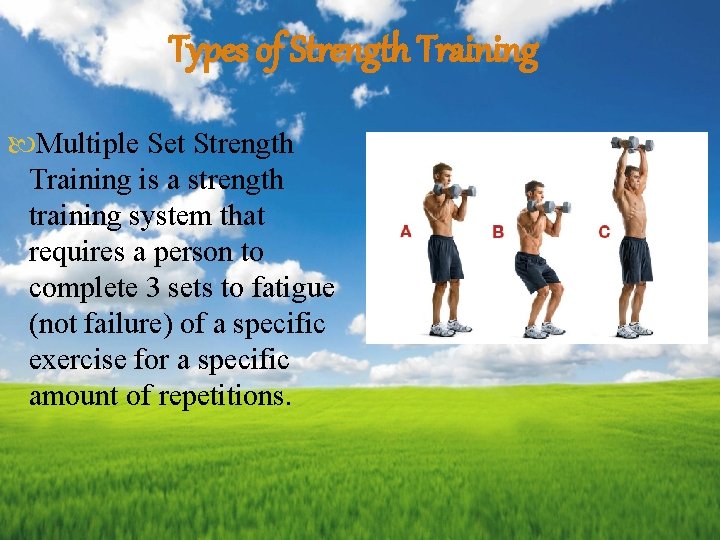
Types of Strength Training Multiple Set Strength Training is a strength training system that requires a person to complete 3 sets to fatigue (not failure) of a specific exercise for a specific amount of repetitions.
Types of Strength Training Momentary Muscular Failure (MMF) The point at which the targeted muscle or muscles fail on the positive phase, while performing controlled repetitions. Video Example
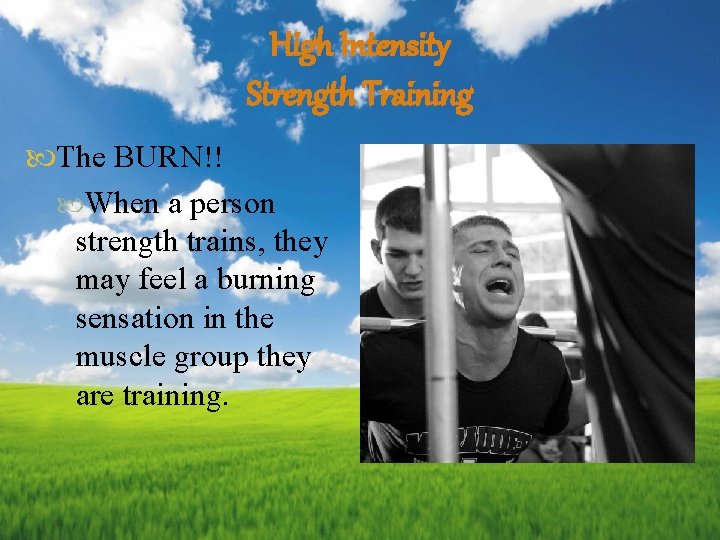
High Intensity Strength Training The BURN!! When a person strength trains, they may feel a burning sensation in the muscle group they are training.
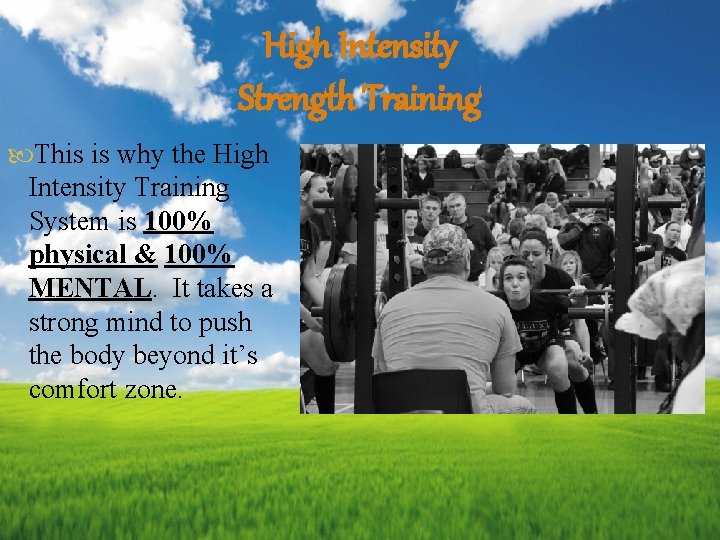
High Intensity Strength Training This is why the High Intensity Training System is 100% physical & 100% MENTAL. It takes a strong mind to push the body beyond it’s comfort zone.
Response Video: “High intensity training”
MUSCLE ANATOMY QUIZ
BELL RINGER #9 Page 34 -35 “Trimming off the Fat” -Read the Article -Answer the Questions on the Back of the Article
Strength Training Balance It is important to remember when planning a Strength Training Workout you balance the body’s muscles by creating a push/pull routine. If only one side of the body is trained: Muscle imbalances will occur. Strong Chest but very weak back, this will lead to: Injuries!!!!
Balancing Your Muscle Groups Upper Body: -Chest-Bench, Incline, Push-Up -Back- Row, Pull-Up, Chin, Pulldown -Shoulders- Shoulder, Military, Lateral Raise -Biceps- Curls -Triceps- Dips, Pressdowns -Neck & Trapezius- Shrugs -Abdominals: upper/lower abs, obliques. -Bridges, Rotations
Balancing Your Muscle Groups Lower Body: -Quadriceps & Hamstrings & Gluteus Maximu - Squats, Deadlifts, Leg Press, Lunges -Hamstrings- Leg Curl, RDL’s -Calves & Tibials Anterior- Raises -Hip Flexors & Hip Extensors -Hip Abductors & Hip Adductors
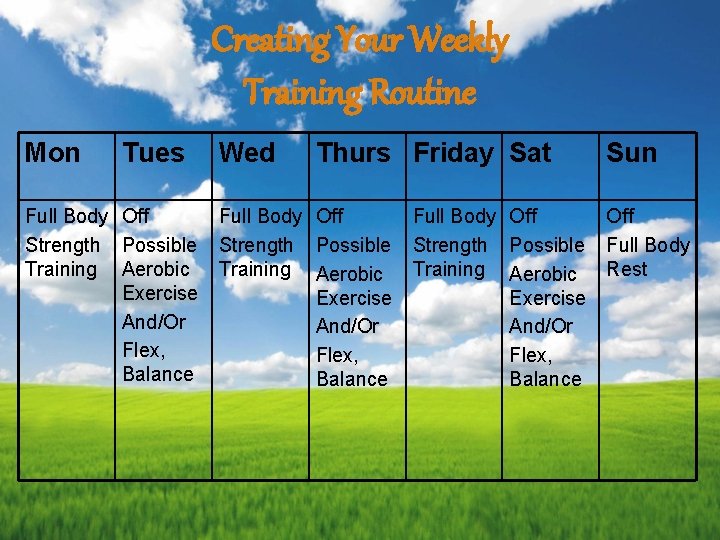
Creating Your Weekly Training Routine Mon Tues Full Body Off Strength Possible Training Aerobic Exercise And/Or Flex, Balance Wed Thurs Friday Sat Full Body Off Strength Possible Training Aerobic Exercise And/Or Flex, Balance Sun Off Full Body Rest
DAILY REVIEW Define the following strength training principles: -Overload -Progression -Adaptation -Overtraining What are some symptoms of overtraining? What is High Intensity Training (HIT)? What is Momentary Muscular Failure (MMF)? How do we organize a strength training program to prevent muscular imbalances?
FITNESS QUIZ #2
WEIGHT ROOM LAB Bring something to write with and write on. You will be taking notes to create your own strength training workout card.
FITNESS UNIT STUDY GUIDE Page 43 -47
FITNESS TEST