
Fit for Purpose A review of governance and


- Slides: 14
Fit for Purpose A review of governance and management structures at the University of Hong Kong John Niland (Convenor), Neil Rudenstine and Andrew Li Review Panel on University Governance and Management February 7, 2003 1
Background • • • Periodic reviews – evolution of structures Sutherland Report Resources under stress and have to be focused Role differentiation Review of governance HKU review initiated by Council 2
Context • Globalisation of higher education • Rapidly changing landscape – demand, competition, technology • HKU’s Vision and Mission • International university of worldclass standing 3
Methodology • • • Consultations Written submissions Meetings and interviews Critical analysis of literature Survey of international best practices Panel’s own expertise 4
Concepts • Fitness for purpose • Academic freedom | Institutional autonomy • Principles of transparency, efficiency, responsiveness, devolution, probity, trusteeship • Steering strategies and setting priorities • Checks and balances 5
Council • • • Supreme governing body Trustees – no representatives or office-holders Role and responsibilities Size and composition Membership provisions Students’ participation Hearing of appeals and grievances Council committees Review of Council’s effectiveness 6
Senate • • • Principal academic authority Academic leadership, quality assurance Role and responsibilities Size and composition Chair professors – open forums Faculty Boards 7
Court • • • Communities served by the University Annual report from Vice-Chancellor Auditors and audited accounts Statutes Electing Council members and extending terms of appointment • Networking functions and opportunities • Enabling Court members to learn more about the University 8
Senior Management • Vice-Chancellor, Deputy Vice-Chancellor • Pro-Vice-Chancellors • Academic managers with professional performance • Full time, merit-based appointments, international search, five-year terms • Senior Management Team as executive 9
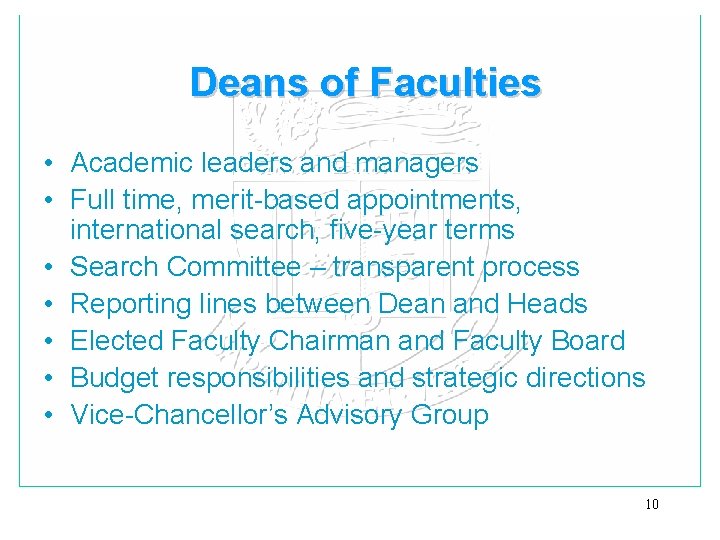
Deans of Faculties • Academic leaders and managers • Full time, merit-based appointments, international search, five-year terms • Search Committee – transparent process • Reporting lines between Dean and Heads • Elected Faculty Chairman and Faculty Board • Budget responsibilities and strategic directions • Vice-Chancellor’s Advisory Group 10
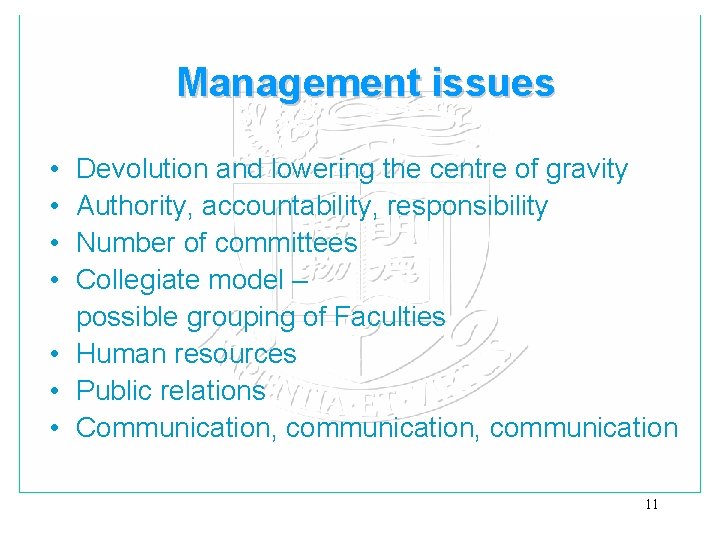
Management issues • • Devolution and lowering the centre of gravity Authority, accountability, responsibility Number of committees Collegiate model – possible grouping of Faculties • Human resources • Public relations • Communication, communication 11
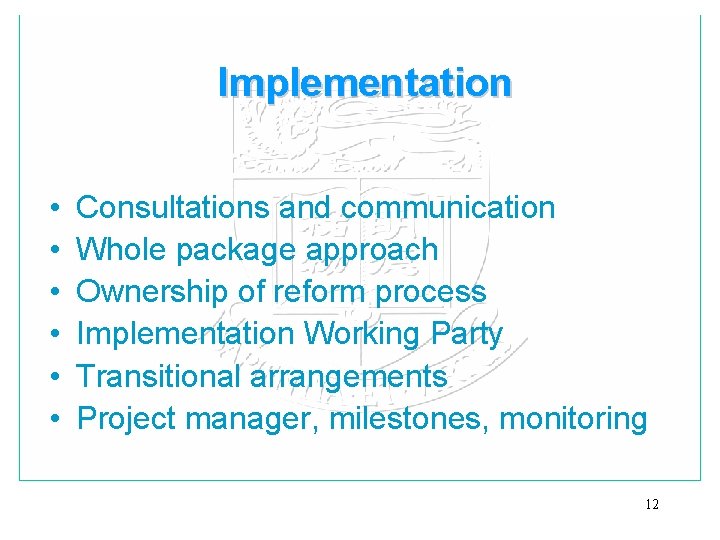
Implementation • • • Consultations and communication Whole package approach Ownership of reform process Implementation Working Party Transitional arrangements Project manager, milestones, monitoring 12
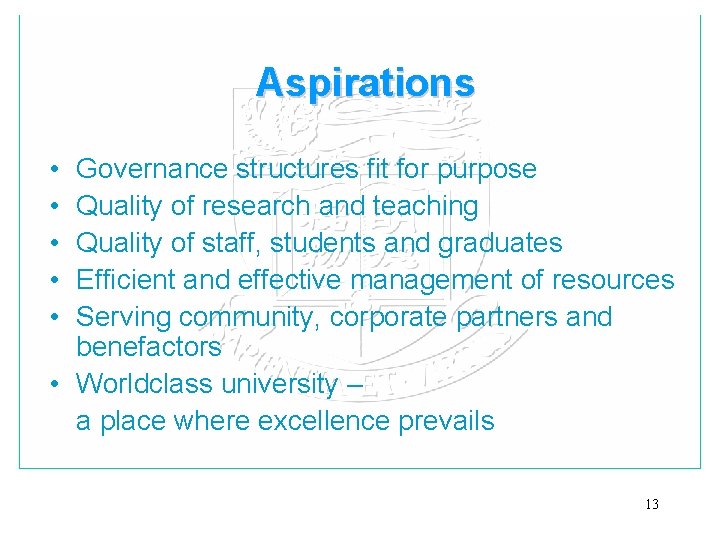
Aspirations • • • Governance structures fit for purpose Quality of research and teaching Quality of staff, students and graduates Efficient and effective management of resources Serving community, corporate partners and benefactors • Worldclass university – a place where excellence prevails 13
End of Presentation Thank you Comments Questions Discussion 14