
Fission vs Fusion Warm Up What do you

- Slides: 30
Fission vs. Fusion
Warm - Up • What do you know, or think you know, about nuclear fission and fusion?
Objectives • Today I will be able to: – Distinguish between different types of radiation with respect to their penetration power. – Complete a Venn Diagram to compare and contrast nuclear fission and fusion. – Review atom concepts to prepare for an exam
Homework • Study for Exam on Thursday – 83 points total – 33 questions • 28 Multiple choice (2 points each) covering topics on review sheet • 1 chart where you fill in protons, electrons, neutrons and mass number for elements (15 points) • 4 alpha and beta decay equations (3 points each)
Agenda • • • Warm – up Nuclear Chemistry Notes Fission vs. Fusion Venn Diagram Sources of Radiation Reading Atom Exam Review Exit Ticket
Nuclear Fission and Fusion Notes
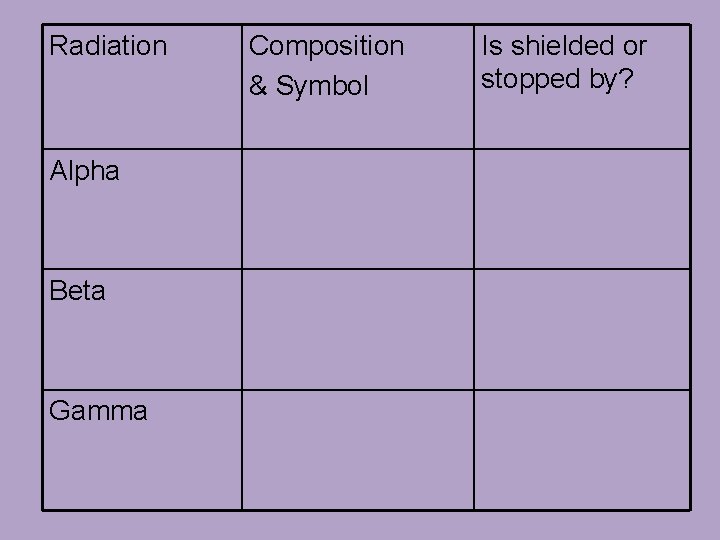
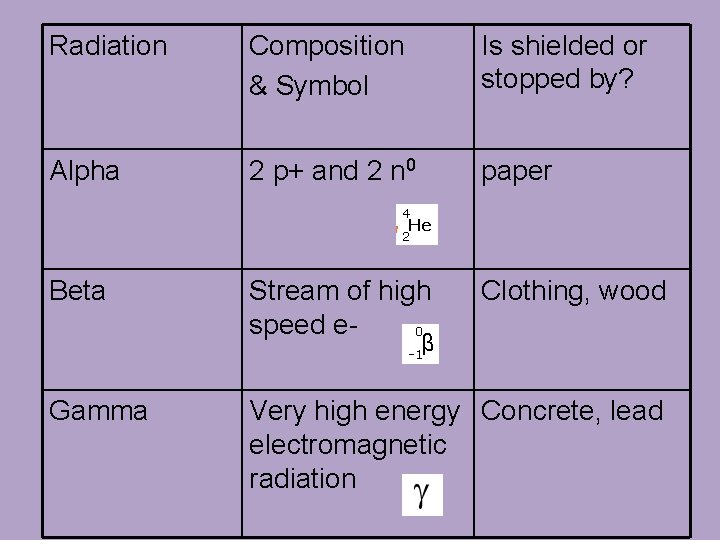
Radiation Alpha Beta Gamma Composition & Symbol Is shielded or stopped by?
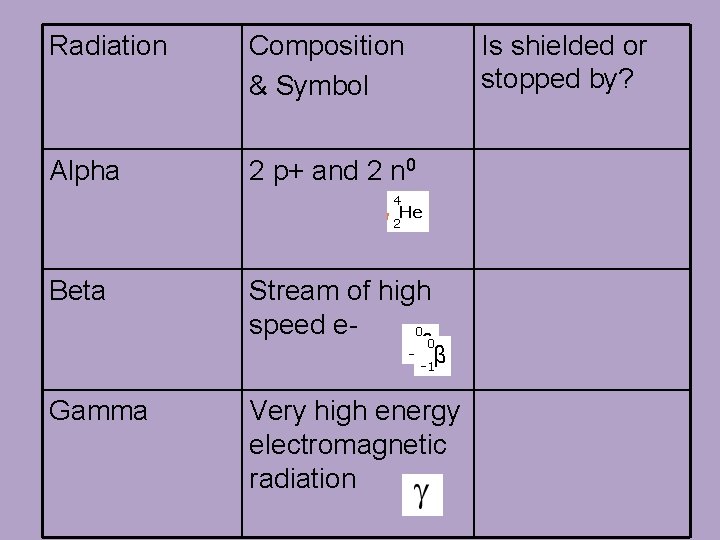
Radiation Composition & Symbol Alpha 2 p+ and 2 n 0 Beta Stream of high speed e- Gamma Very high energy electromagnetic radiation Is shielded or stopped by?
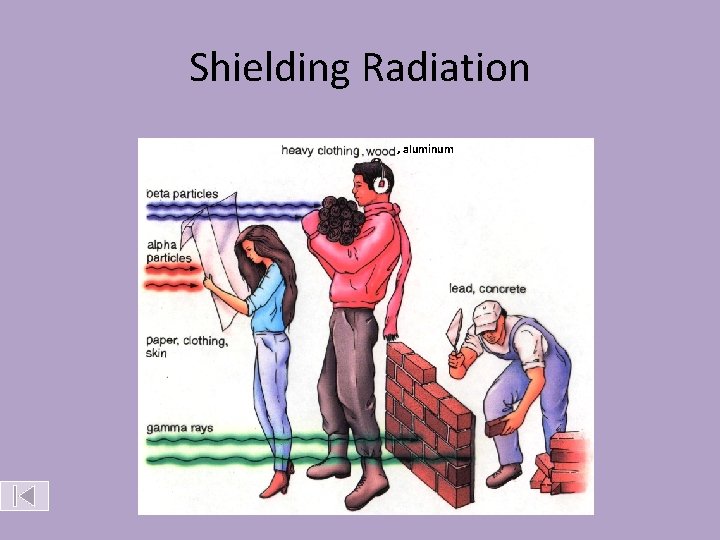
Shielding Radiation , aluminum
Radiation Composition & Symbol Is shielded or stopped by? Alpha 2 p+ and 2 n 0 paper Beta Stream of high speed e- Clothing, wood Gamma Very high energy Concrete, lead electromagnetic radiation
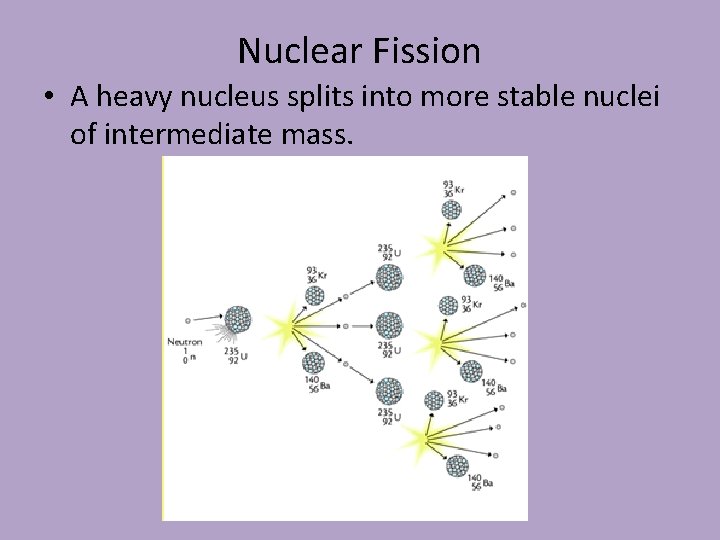
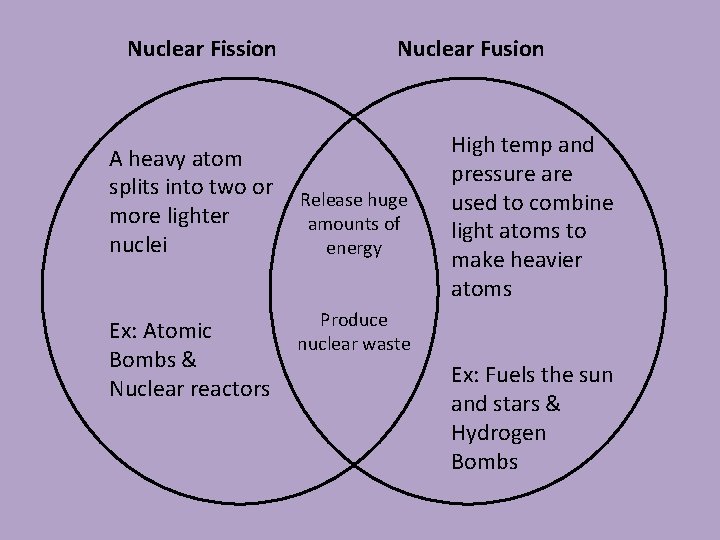
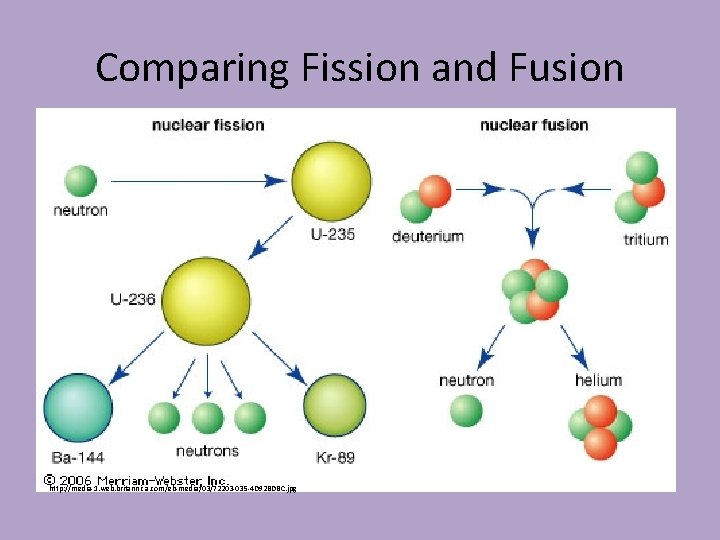
Nuclear Fission • A heavy nucleus splits into more stable nuclei of intermediate mass.
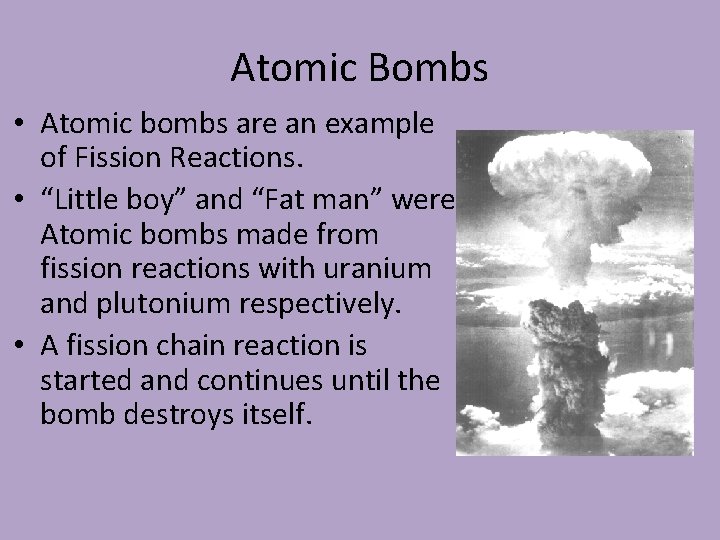
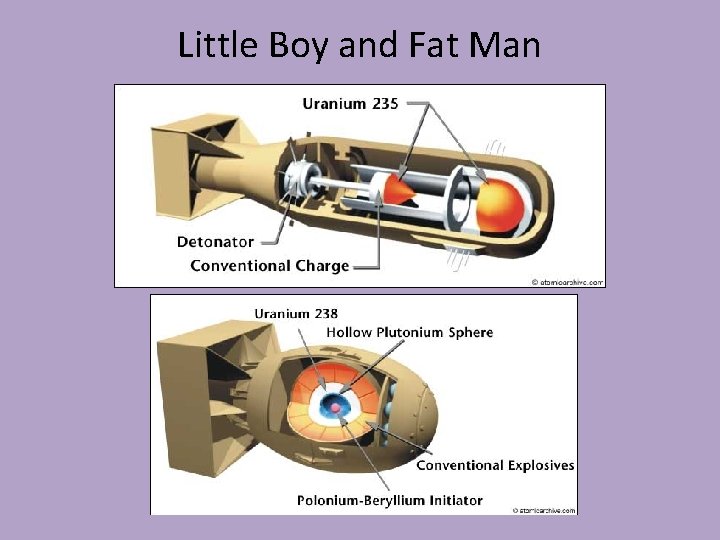
Atomic Bombs • Atomic bombs are an example of Fission Reactions. • “Little boy” and “Fat man” were Atomic bombs made from fission reactions with uranium and plutonium respectively. • A fission chain reaction is started and continues until the bomb destroys itself.
Little Boy and Fat Man
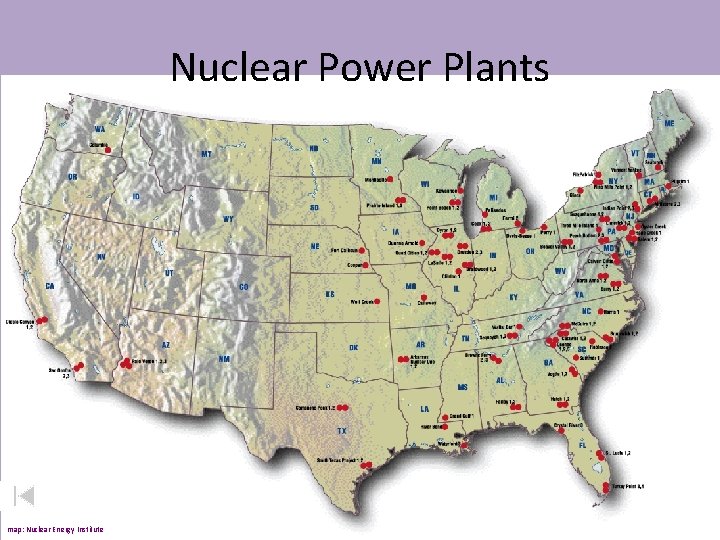
Nuclear Power Plants map: Nuclear Energy Institute
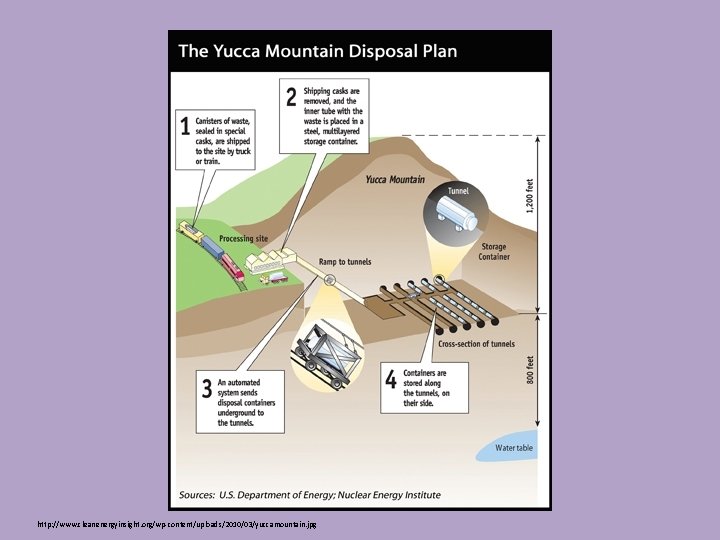
Nuclear Power Plants • Uranium-235 undergoes nuclear fission and releases thermal (heat) energy. • This turns water to steam which spins turbines. • The turbines produce electrical energy. • Nuclear waste is fuel rods with unreacted uranium and radioactive products of fission. Right now this waste is buried in waste management facilities, like Yucca Mountain.
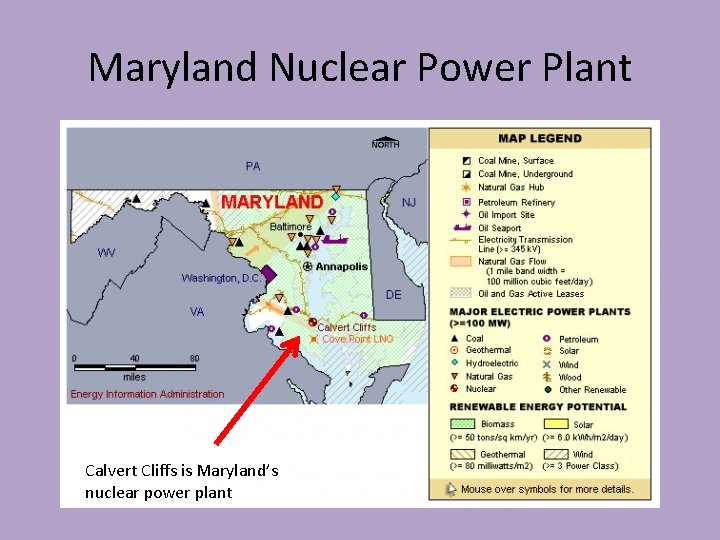
Maryland Nuclear Power Plant Calvert Cliffs is Maryland’s nuclear power plant
http: //www. cleanenergyinsight. org/wp-content/uploads/2010/03/yuccamountain. jpg
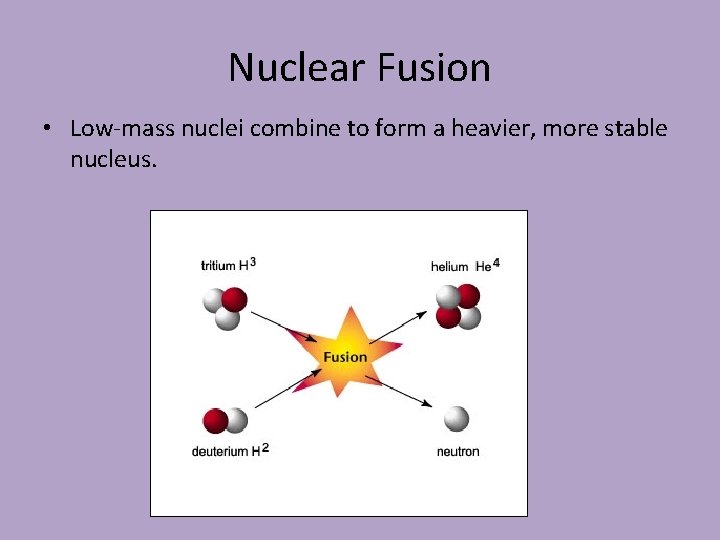
Nuclear Fusion • Low-mass nuclei combine to form a heavier, more stable nucleus.
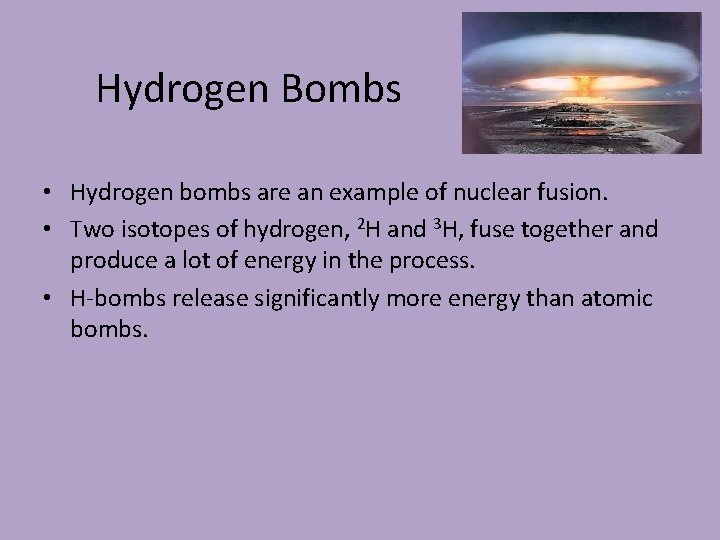
Hydrogen Bombs • Hydrogen bombs are an example of nuclear fusion. • Two isotopes of hydrogen, 2 H and 3 H, fuse together and produce a lot of energy in the process. • H-bombs release significantly more energy than atomic bombs.
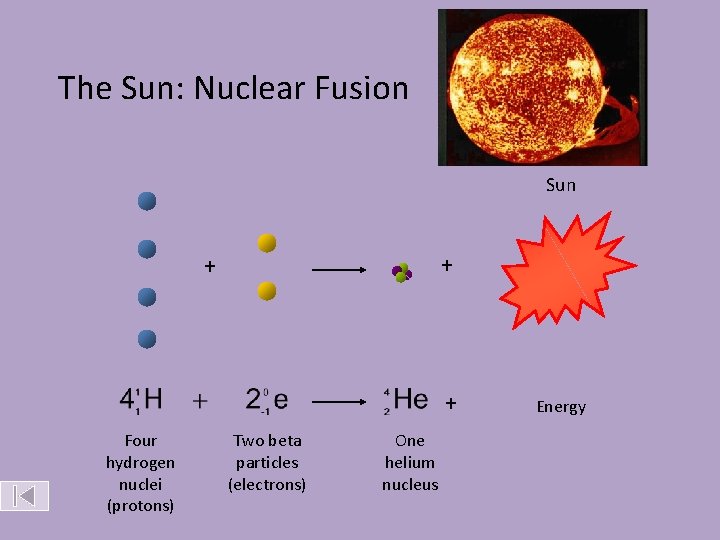
The Sun: Nuclear Fusion Sun + + + Four hydrogen nuclei (protons) Two beta particles (electrons) One helium nucleus Energy
Nuclear Fission Nuclear Fusion
Nuclear Fission A heavy atom splits into two or more lighter nuclei Ex: Atomic Bombs & Nuclear reactors Nuclear Fusion Release huge amounts of energy High temp and pressure are used to combine light atoms to make heavier atoms Produce nuclear waste Ex: Fuels the sun and stars & Hydrogen Bombs
Comparing Fission and Fusion http: //media-1. web. britannica. com/eb-media/03/72203 -035 -4 D 92 BDBC. jpg
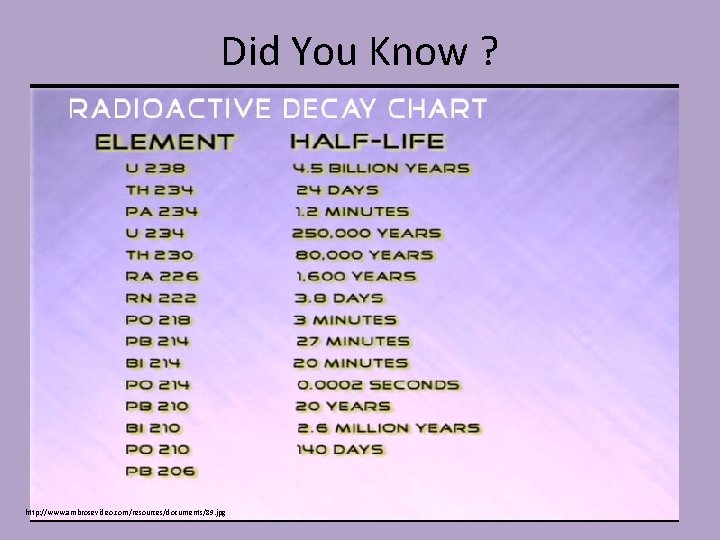
Did You Know ? http: //www. ambrosevideo. com/resources/documents/89. jpg
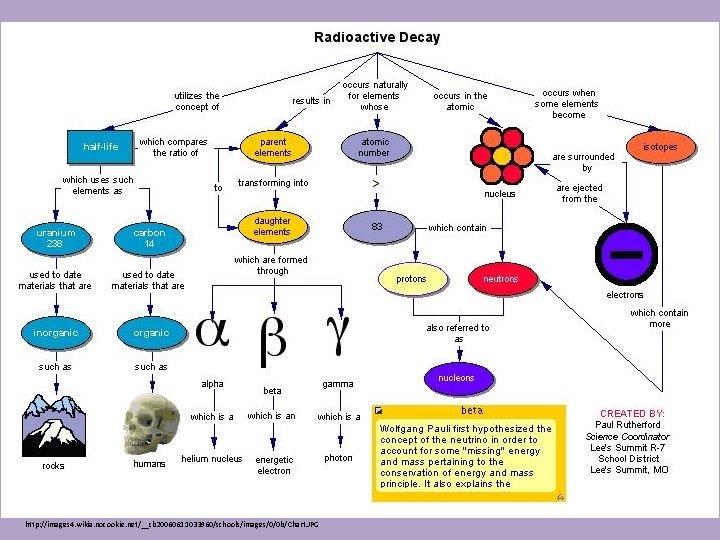
The Next Slide • The next slide shows a great flow diagram that links a lot of radioactive decay concepts.
http: //images 4. wikia. nocookie. net/__cb 20060611033960/schools/images/0/0 b/Chart. JPG
Sources of Radiation Packet
Sources of Radiation Questions • Read through the packet • Select 3 sources of radiation. • Write down where they come from and why we are concerned about them.
Exit Ticket • The piece of the exam that I would like to spend the most time reviewing is: – Atomic Theory – The scientists – Radioactivity
Exit Ticket