
Fission and Fusion Graphic www labinitio com Energy

Fission and Fusion Graphic: www. lab-initio. com
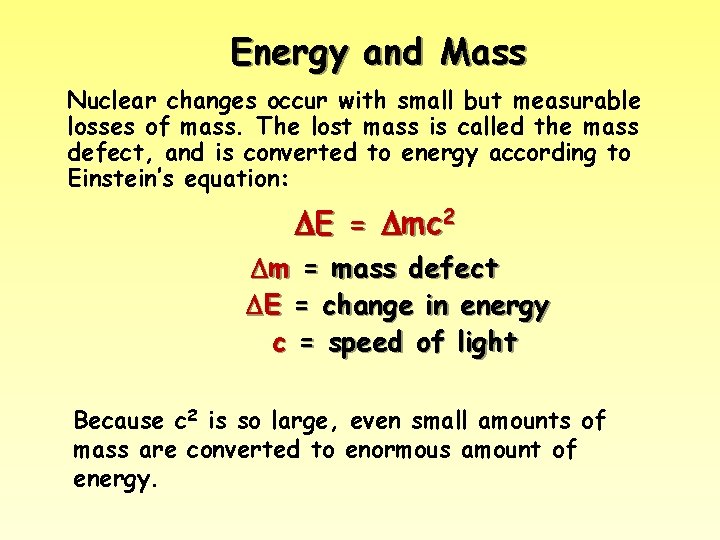
Energy and Mass Nuclear changes occur with small but measurable losses of mass. The lost mass is called the mass defect, and is converted to energy according to Einstein’s equation: DE = Dmc 2 Dm = mass defect DE = change in energy c = speed of light Because c 2 is so large, even small amounts of mass are converted to enormous amount of energy.
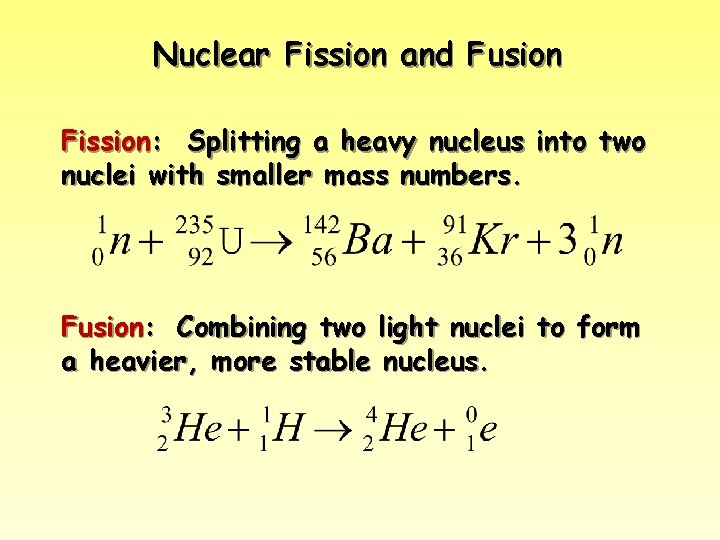
Nuclear Fission and Fusion Fission: Splitting a heavy nucleus into two nuclei with smaller mass numbers. Fusion: Combining two light nuclei to form a heavier, more stable nucleus.
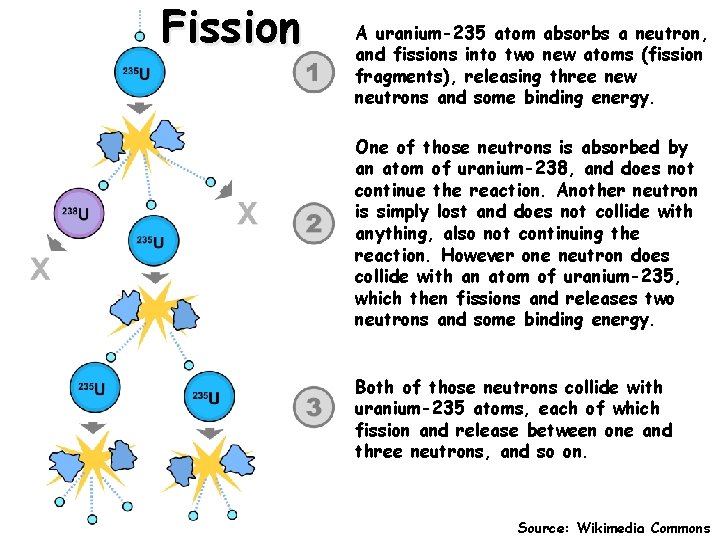
Fission A uranium-235 atom absorbs a neutron, and fissions into two new atoms (fission fragments), releasing three new neutrons and some binding energy. One of those neutrons is absorbed by an atom of uranium-238, and does not continue the reaction. Another neutron is simply lost and does not collide with anything, also not continuing the reaction. However one neutron does collide with an atom of uranium-235, which then fissions and releases two neutrons and some binding energy. Both of those neutrons collide with uranium-235 atoms, each of which fission and release between one and three neutrons, and so on. Source: Wikimedia Commons

Fission Processes A self-sustaining fission process is called a chain reaction.
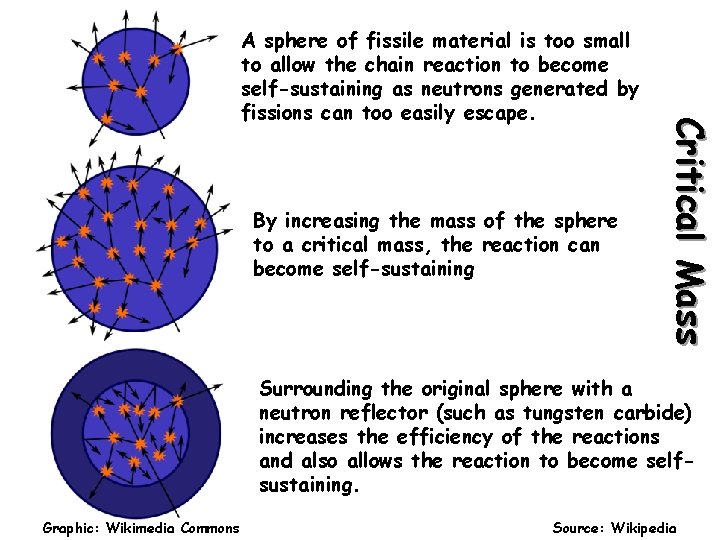
By increasing the mass of the sphere to a critical mass, the reaction can become self-sustaining Critical Mass A sphere of fissile material is too small to allow the chain reaction to become self-sustaining as neutrons generated by fissions can too easily escape. Surrounding the original sphere with a neutron reflector (such as tungsten carbide) increases the efficiency of the reactions and also allows the reaction to become selfsustaining. Graphic: Wikimedia Commons Source: Wikipedia

Fission Bomb Design Little Boy Fat Man
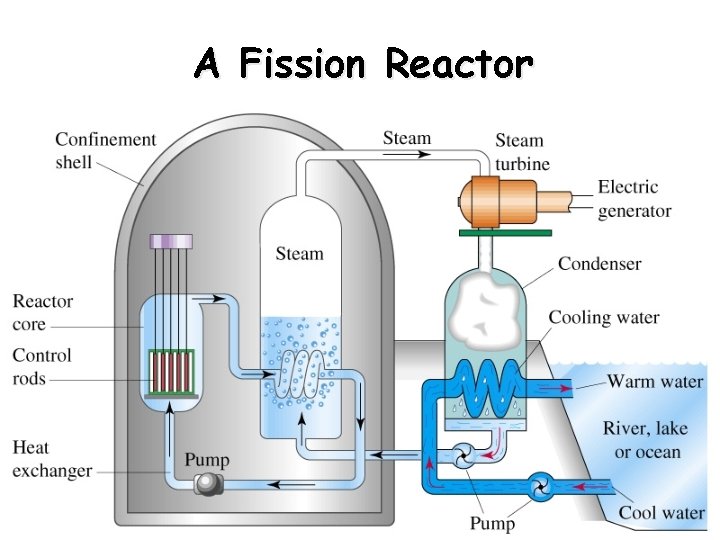
A Fission Reactor
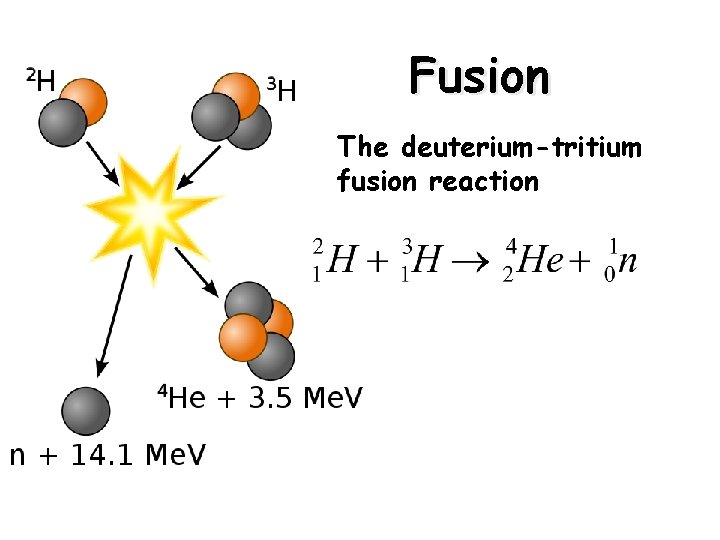
Fusion The deuterium-tritium fusion reaction
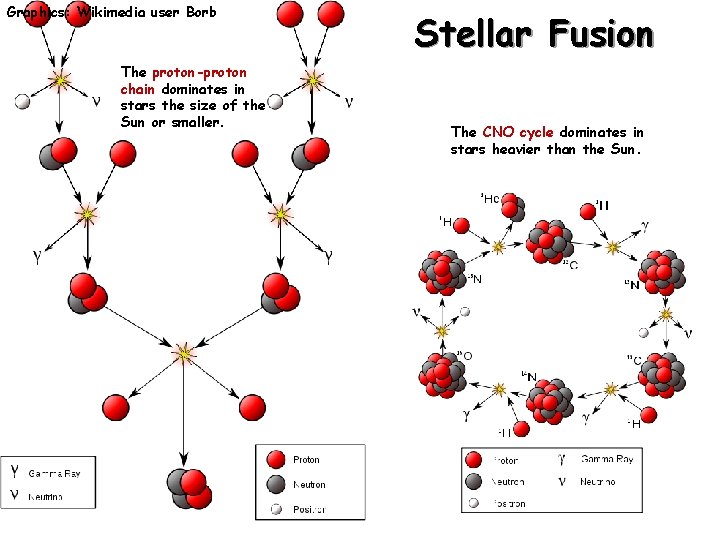
Graphics: Wikimedia user Borb The proton-proton chain dominates in stars the size of the Sun or smaller. Stellar Fusion The CNO cycle dominates in stars heavier than the Sun.
- Slides: 10