
Fisher Tropsch Process Constandinos Mitsingas Content Overall Process
- Slides: 14
Fisher Tropsch Process Constandinos Mitsingas
Content � Overall Process � Syngas Production � Fischer Tropsch Process � Fischer Tropsch Reactors � Chemical Reaction Catalysts � Products � Benefits � Disadvantages � Current Research Areas
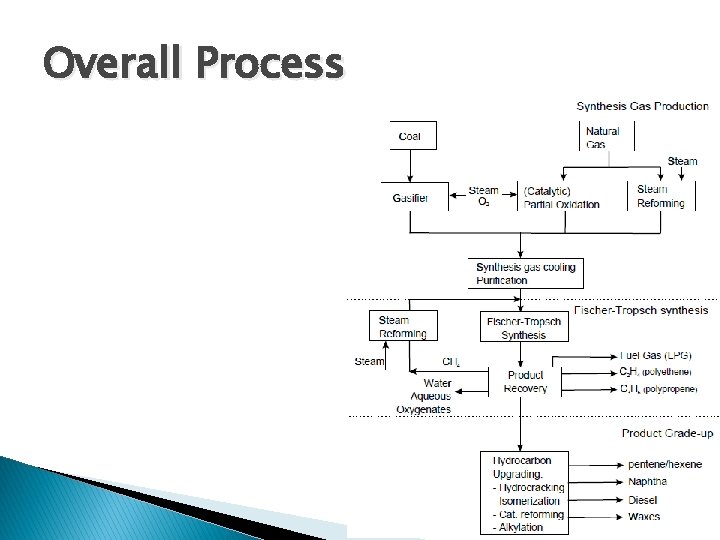
Overall Process
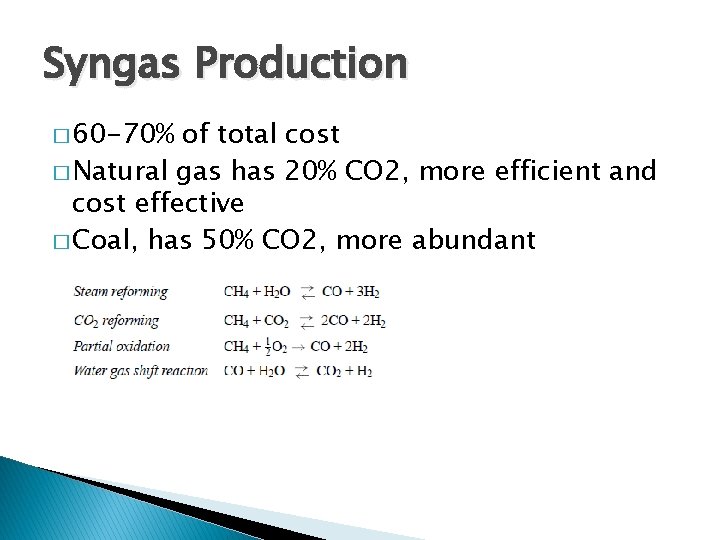
Syngas Production � 60 -70% of total cost � Natural gas has 20% CO 2, more efficient and cost effective � Coal, has 50% CO 2, more abundant
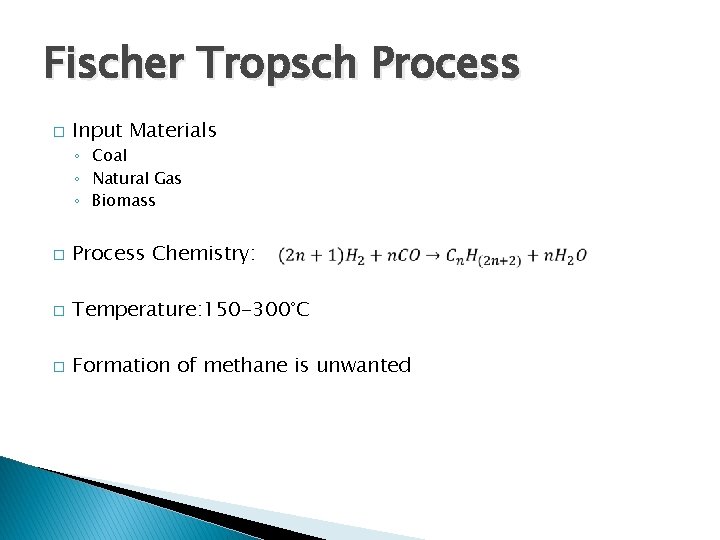
Fischer Tropsch Process � Input Materials ◦ Coal ◦ Natural Gas ◦ Biomass � Process Chemistry: � Temperature: 150 -300°C � Formation of methane is unwanted
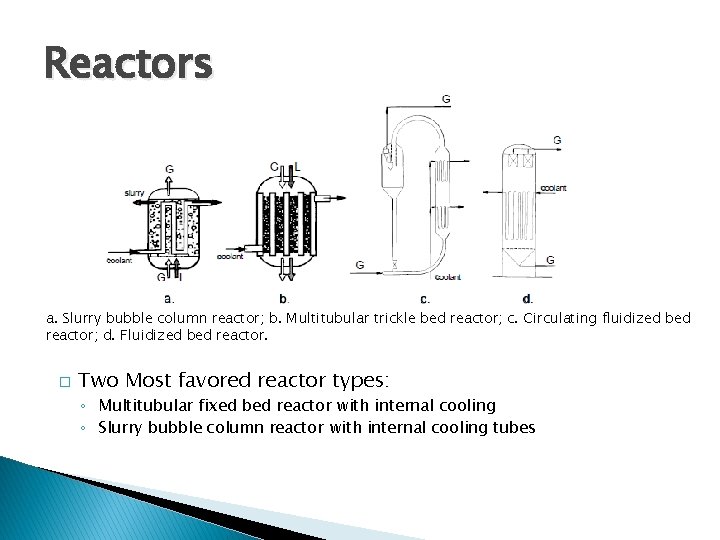
Reactors a. Slurry bubble column reactor; b. Multitubular trickle bed reactor; c. Circulating fluidized bed reactor; d. Fluidized bed reactor. � Two Most favored reactor types: ◦ Multitubular fixed bed reactor with internal cooling ◦ Slurry bubble column reactor with internal cooling tubes
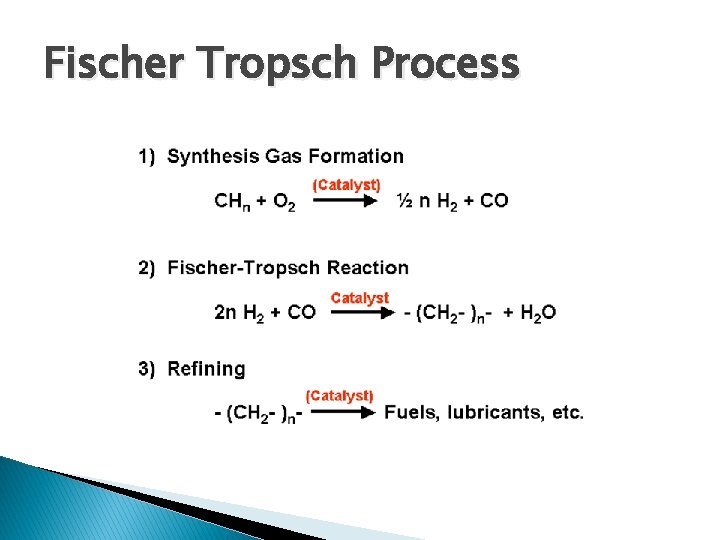
Fischer Tropsch Process
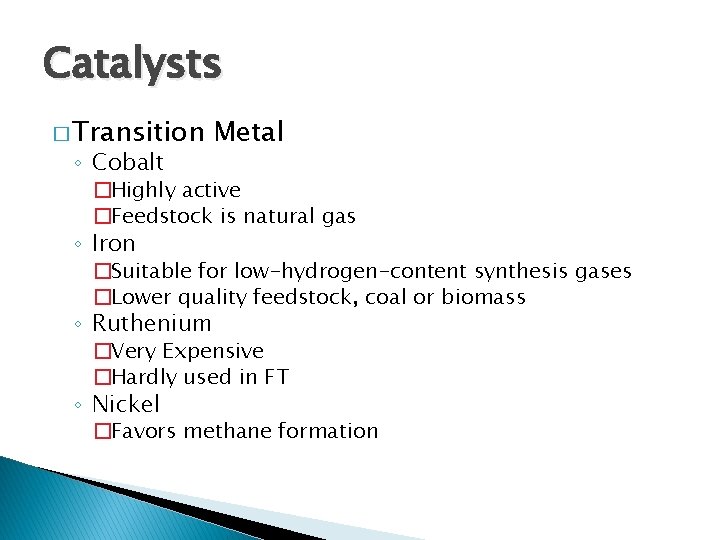
Catalysts � Transition ◦ Cobalt Metal �Highly active �Feedstock is natural gas ◦ Iron �Suitable for low-hydrogen-content synthesis gases �Lower quality feedstock, coal or biomass ◦ Ruthenium �Very Expensive �Hardly used in FT ◦ Nickel �Favors methane formation
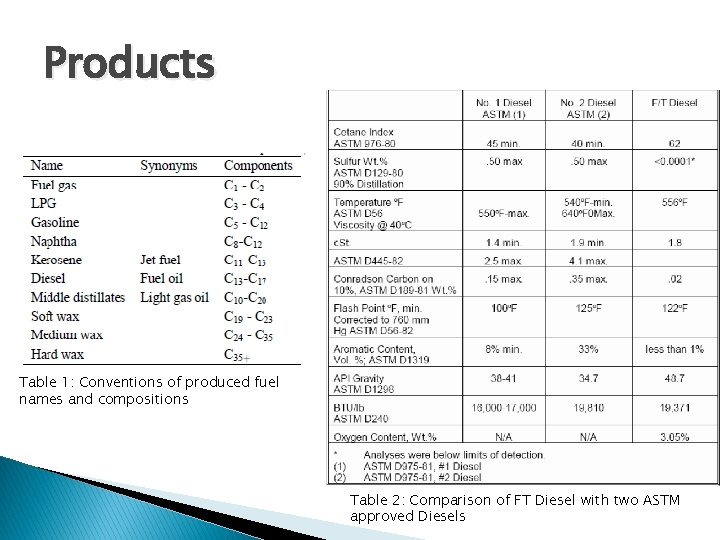
Products Table 1: Conventions of produced fuel names and compositions Table 2: Comparison of FT Diesel with two ASTM approved Diesels
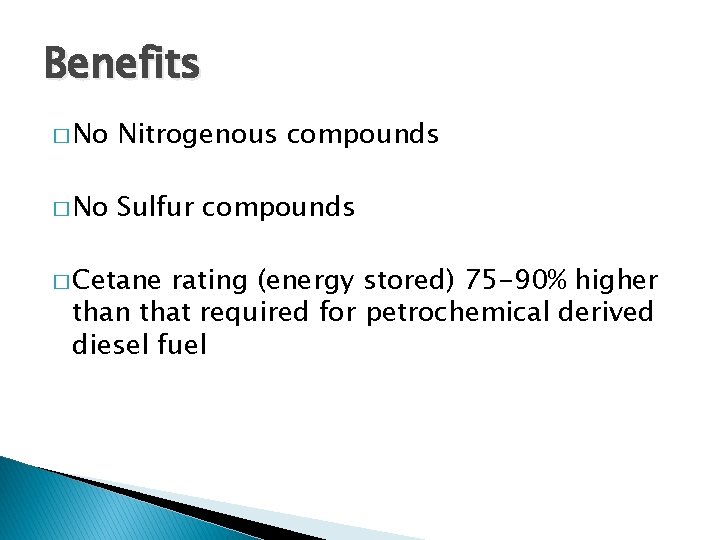
Benefits � No Nitrogenous compounds � No Sulfur compounds � Cetane rating (energy stored) 75 -90% higher than that required for petrochemical derived diesel fuel
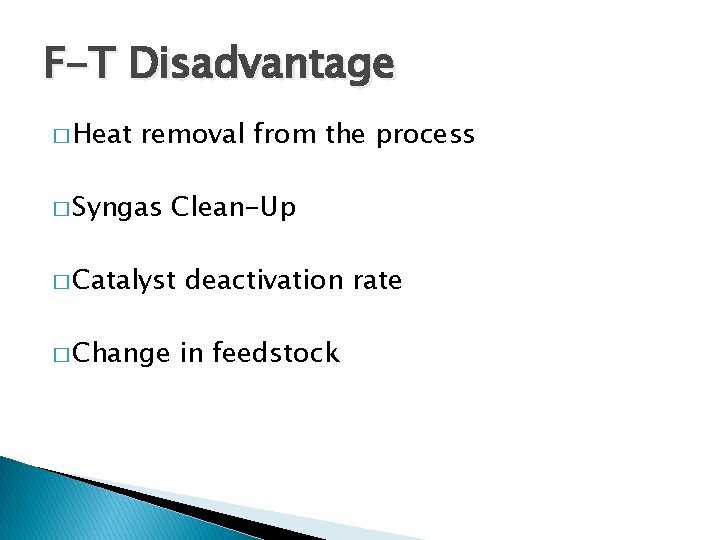
F-T Disadvantage � Heat removal from the process � Syngas Clean-Up � Catalyst deactivation rate � Change in feedstock
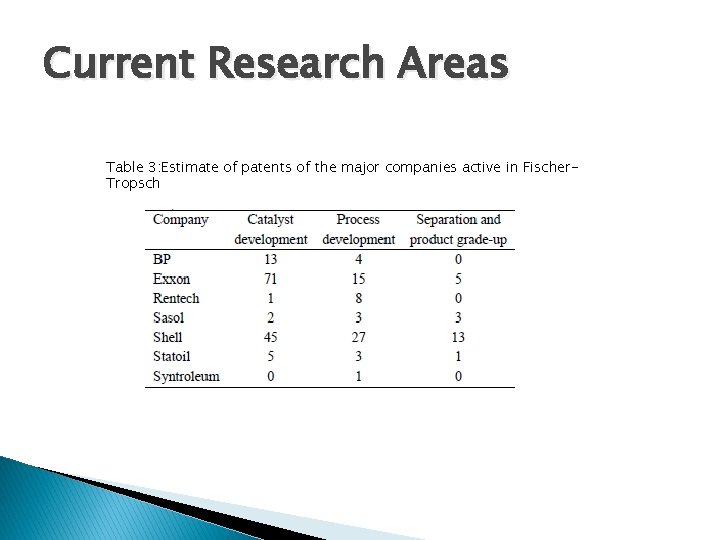
Current Research Areas Table 3: Estimate of patents of the major companies active in Fischer. Tropsch
References � "Fischer–Tropsch Process. " Wikipedia, the Free Encyclopedia. � � Web. 29 Nov. 2010. <http: //en. wikipedia. org/wiki/Fischer– Tropsch_process>. Boerrigter, H. , and A. Van Der Drift. "LARGE-SCALE PRODUCTION of FISCHER-TROPSCH DIESEL FROM BIOMASS. " (2004). ECN. Web. "Alternative Fuels and Advanced Vehicles Data Center: What Is Fischer-Tropsch Diesel? " EERE: Alternative Fuels and Advanced Vehicles Data Center Program Home Page. Web. 29 Nov. 2010. <http: //www. afdc. energy. gov/afdc/fuels/emerging_diesel_w hat_is. html>.
Questions ?