
Fish The Devonian Period The Age of Fish








- Slides: 65
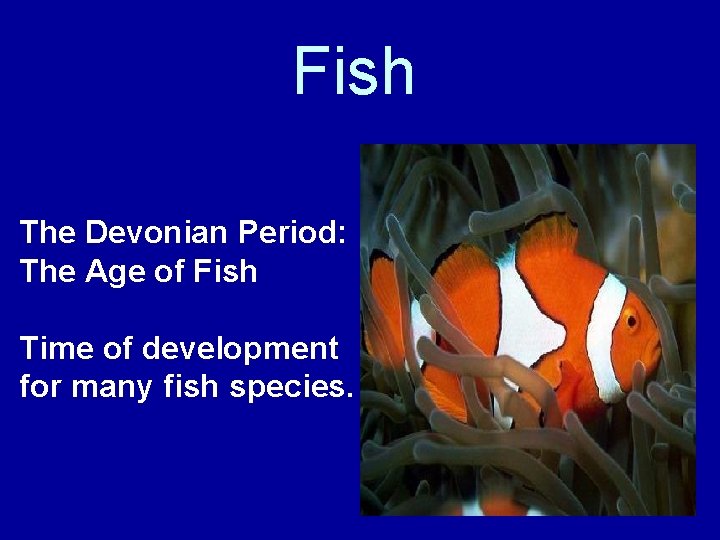
Fish The Devonian Period: The Age of Fish Time of development for many fish species.
Classification • Kingdom- Animalia • Phylum- Chordata • Sub Phylum- Vertebrata • Classes- Agnatha, Chondrichthyes, Osteichthyes
Let’s go to the Video! Fish are all different.
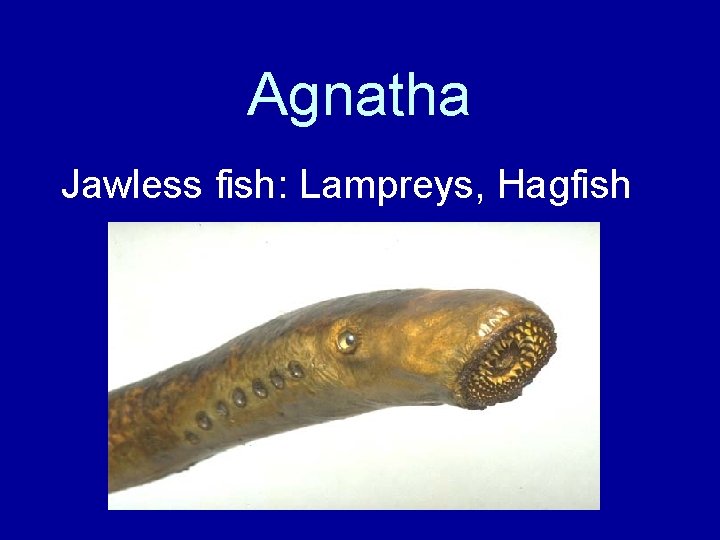
Agnatha Jawless fish: Lampreys, Hagfish
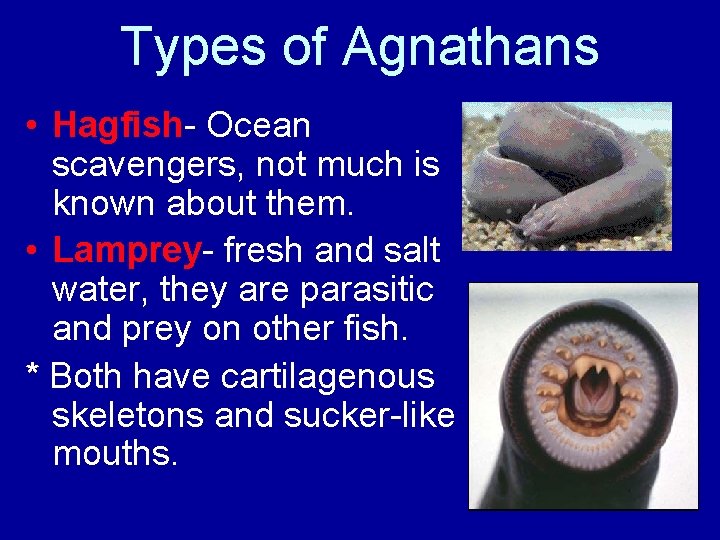
Types of Agnathans • Hagfish- Ocean scavengers, not much is known about them. • Lamprey- fresh and salt water, they are parasitic and prey on other fish. * Both have cartilagenous skeletons and sucker-like mouths.
A Hagfish
The Sea Lamprey
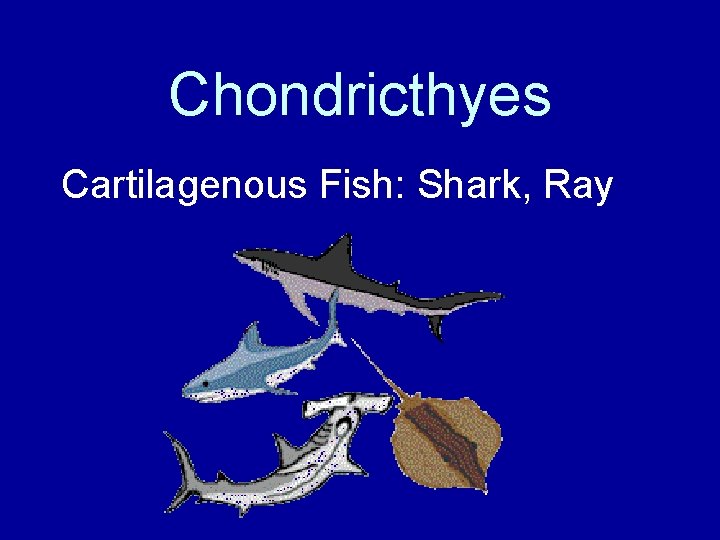
Chondricthyes Cartilagenous Fish: Shark, Ray
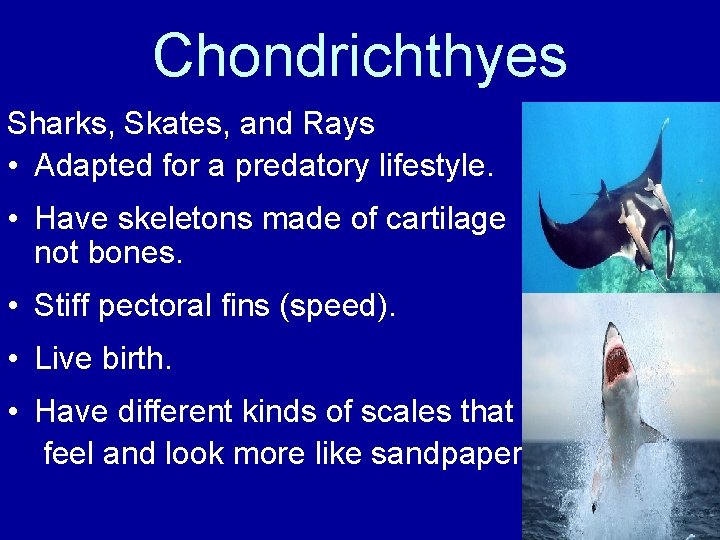
Chondrichthyes Sharks, Skates, and Rays • Adapted for a predatory lifestyle. • Have skeletons made of cartilage not bones. • Stiff pectoral fins (speed). • Live birth. • Have different kinds of scales that feel and look more like sandpaper.
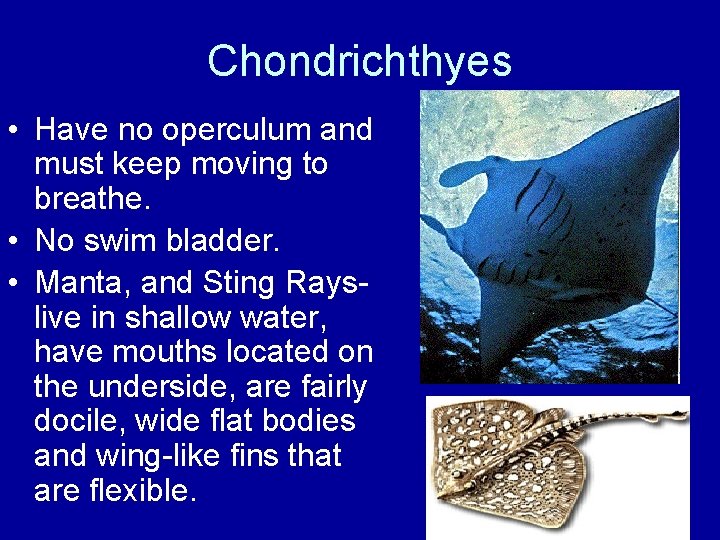
Chondrichthyes • Have no operculum and must keep moving to breathe. • No swim bladder. • Manta, and Sting Rayslive in shallow water, have mouths located on the underside, are fairly docile, wide flat bodies and wing-like fins that are flexible.
Shaaaaaaark!!!!!
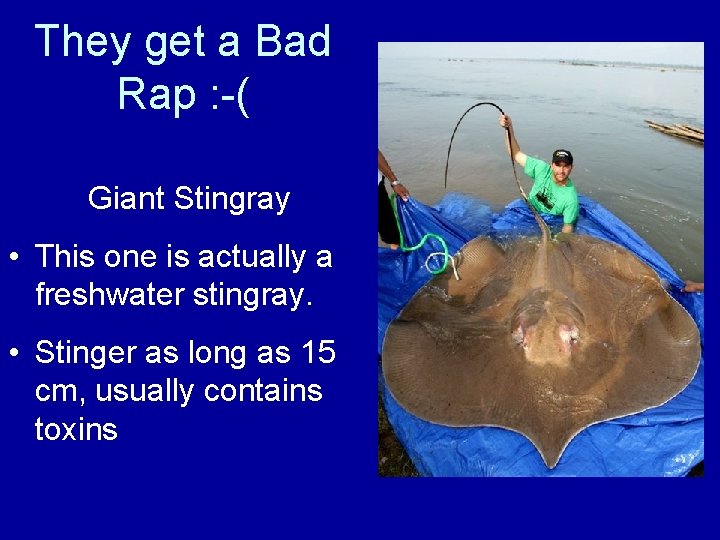
They get a Bad Rap : -( Giant Stingray • This one is actually a freshwater stingray. • Stinger as long as 15 cm, usually contains toxins
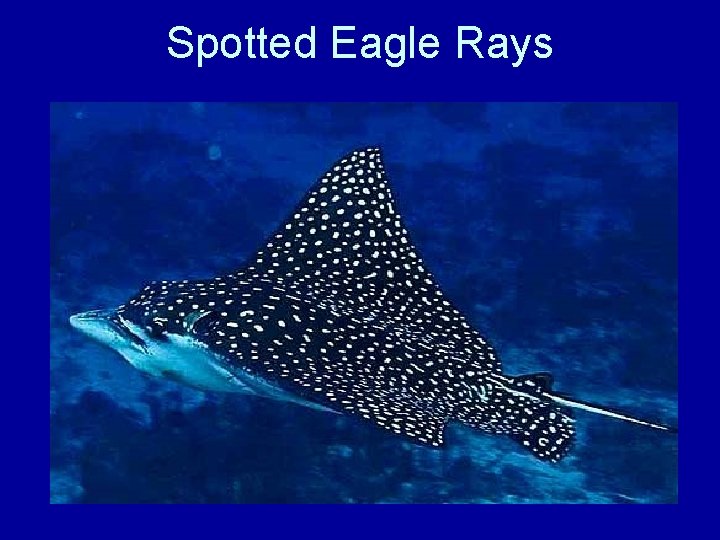
Spotted Eagle Rays
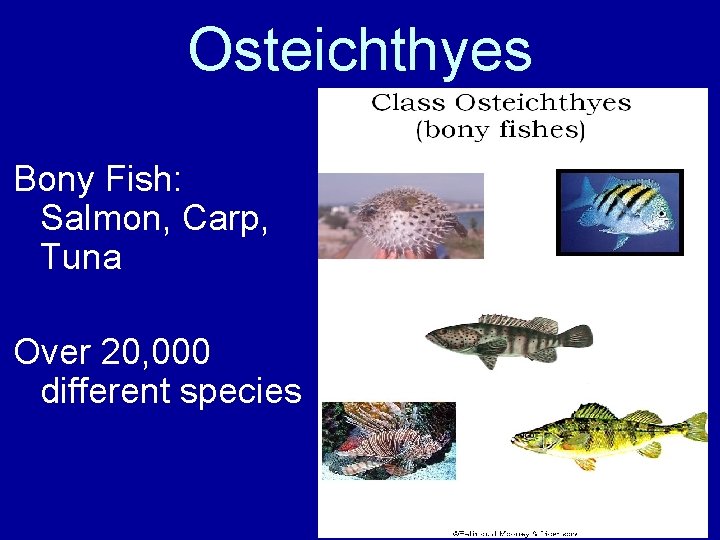
Osteichthyes Bony Fish: Salmon, Carp, Tuna Over 20, 000 different species
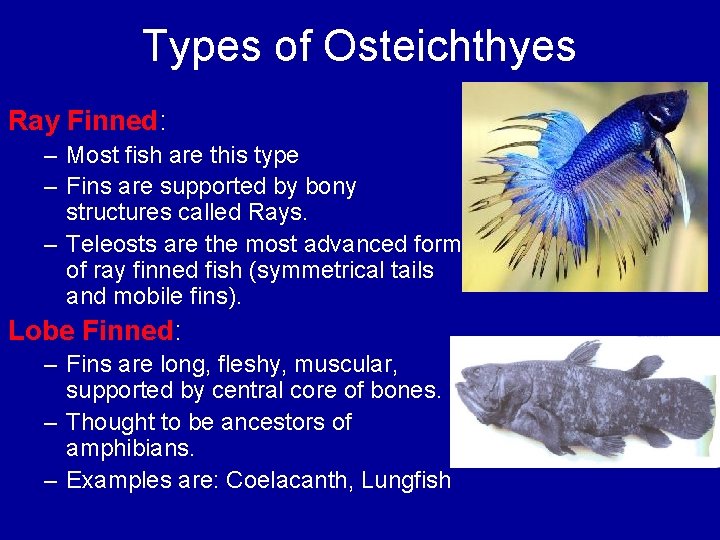
Types of Osteichthyes Ray Finned: – Most fish are this type – Fins are supported by bony structures called Rays. – Teleosts are the most advanced form of ray finned fish (symmetrical tails and mobile fins). Lobe Finned: – Fins are long, fleshy, muscular, supported by central core of bones. – Thought to be ancestors of amphibians. – Examples are: Coelacanth, Lungfish
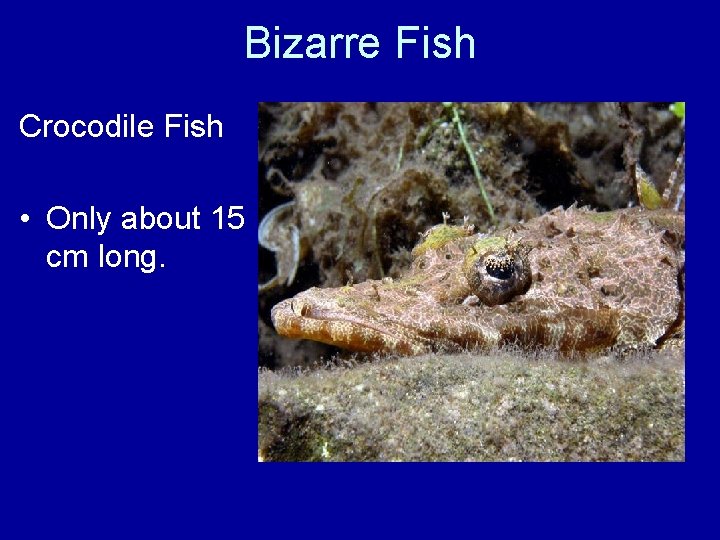
Bizarre Fish Crocodile Fish • Only about 15 cm long.
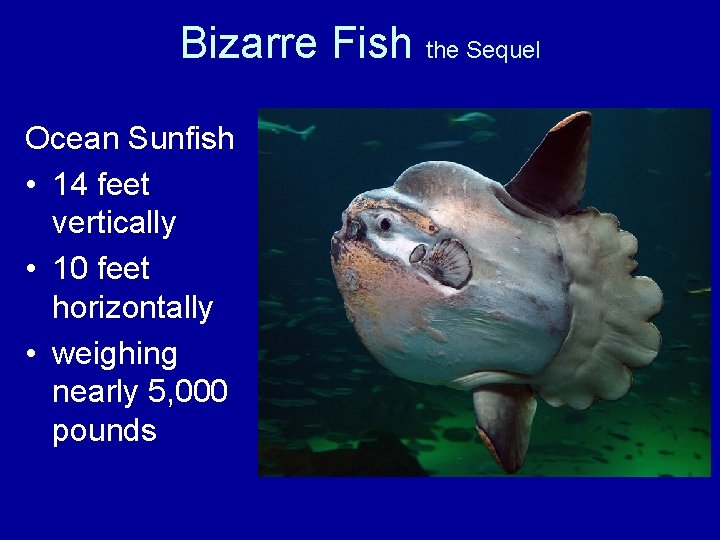
Bizarre Fish the Sequel Ocean Sunfish • 14 feet vertically • 10 feet horizontally • weighing nearly 5, 000 pounds
• • • Basic Fish Characteristics Gills Backbone (vertebrae) Paired Fins Single Loop Circulation Two chambered heart
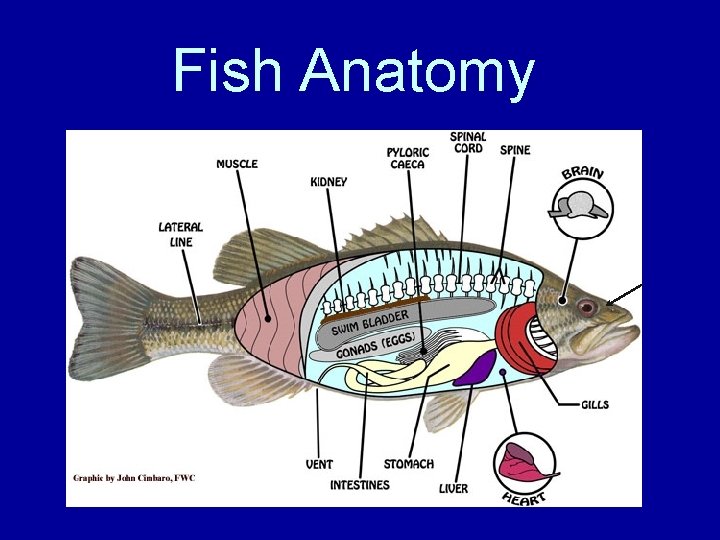
Fish Anatomy
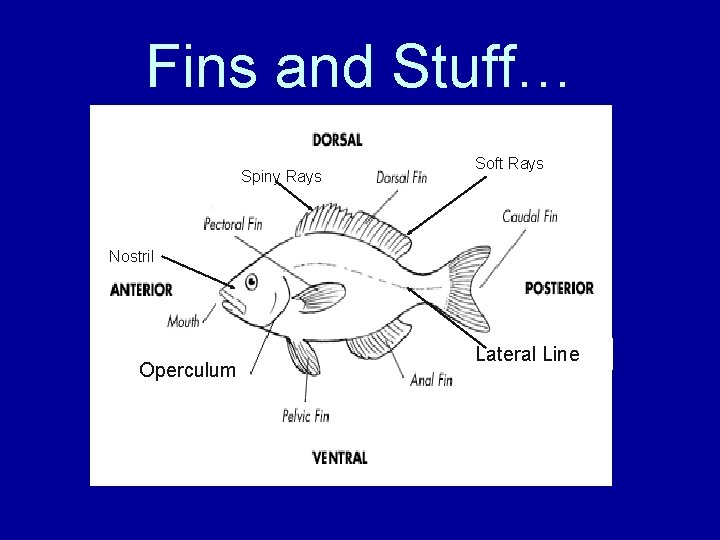
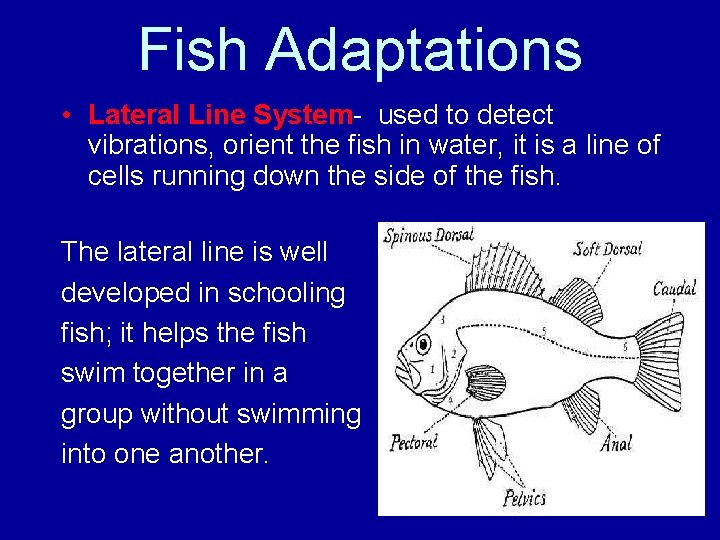
Fins and Stuff… Spiny Rays Soft Rays Nostril Operculum Lateral Line
Purpose of Fins • Caudal – Make you go real fast!!! • Pelvic and Pectoral - When you need to hit the breaks or change directions.
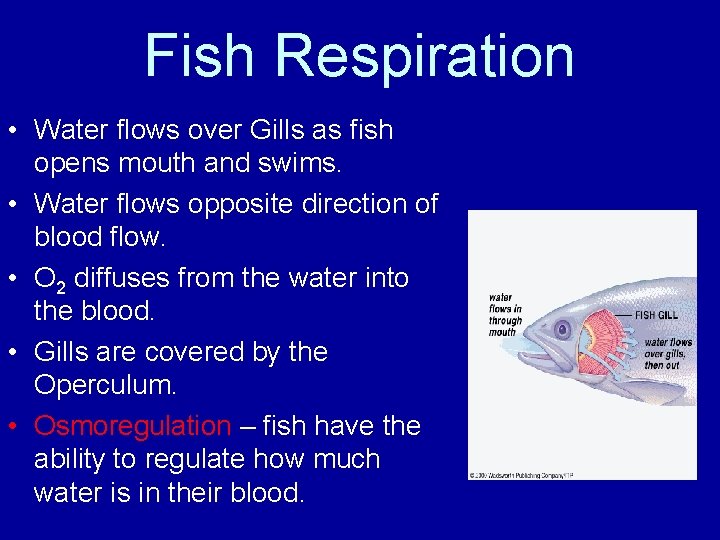
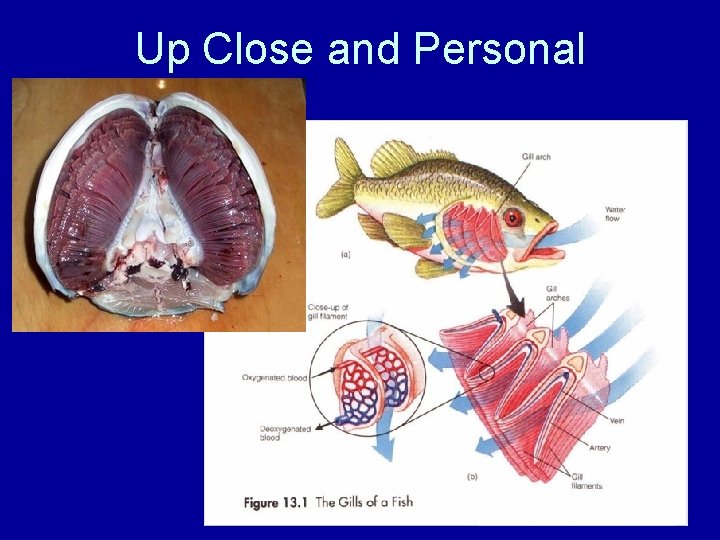
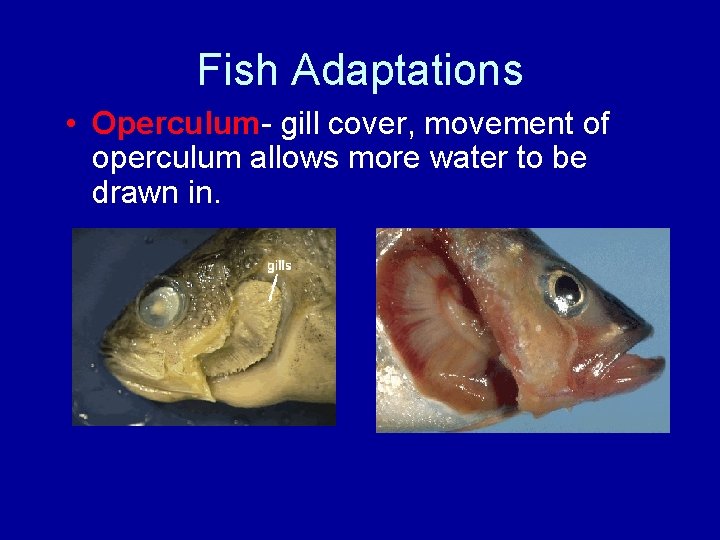
Fish Respiration • Water flows over Gills as fish opens mouth and swims. • Water flows opposite direction of blood flow. • O 2 diffuses from the water into the blood. • Gills are covered by the Operculum. • Osmoregulation – fish have the ability to regulate how much water is in their blood.
Up Close and Personal
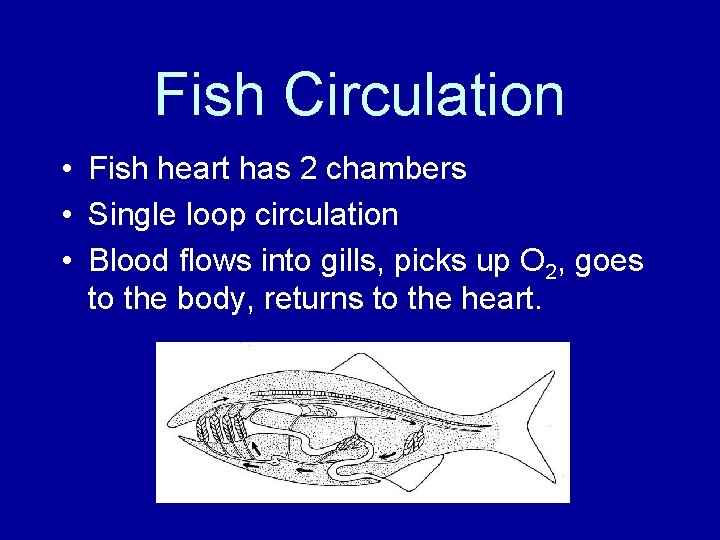
Fish Circulation • Fish heart has 2 chambers • Single loop circulation • Blood flows into gills, picks up O 2, goes to the body, returns to the heart.
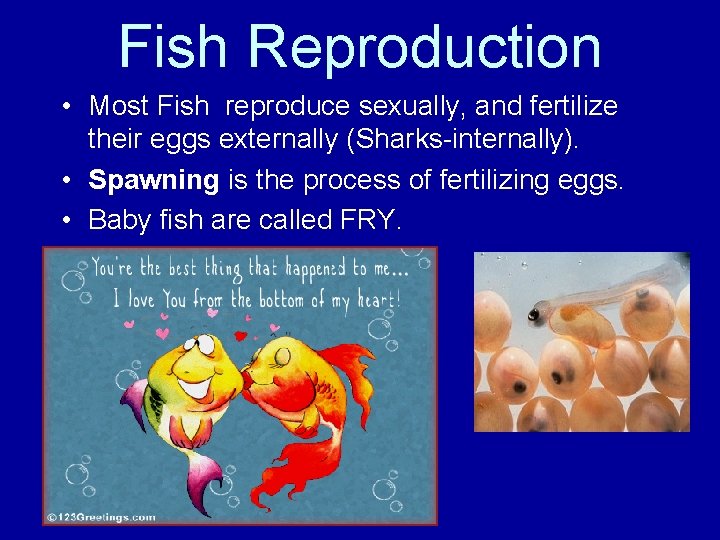
Fish Reproduction • Most Fish reproduce sexually, and fertilize their eggs externally (Sharks-internally). • Spawning is the process of fertilizing eggs. • Baby fish are called FRY.
Reproduction in the Sea
Reproduction Methods • Oviporous: lay eggs • Ovoviviparous – internal incubation of eggs and live birth (Still in egg) • Viviparous – young born fully formed attached to female and nourished by placenta
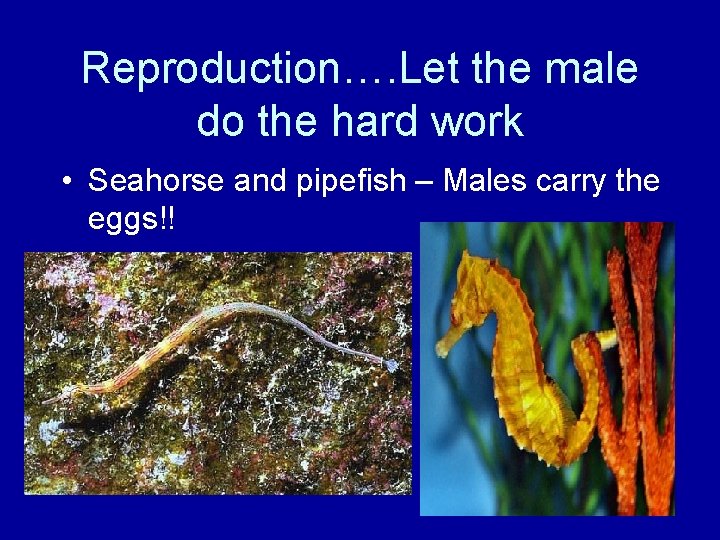
Reproduction…. Let the male do the hard work • Seahorse and pipefish – Males carry the eggs!!
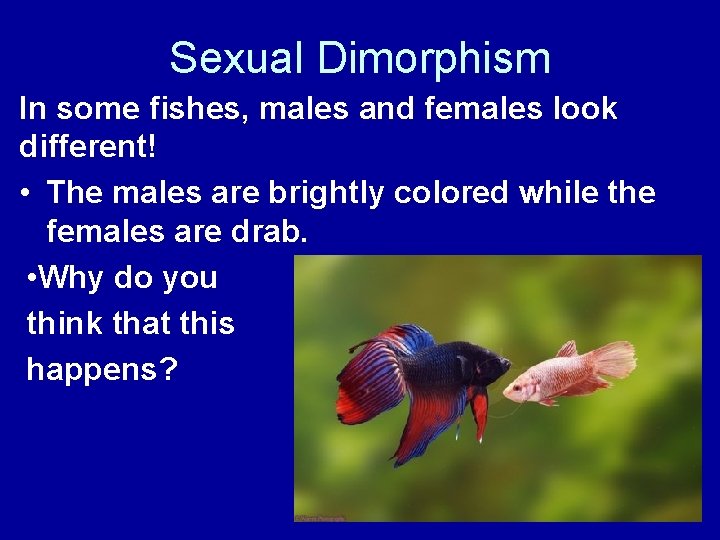
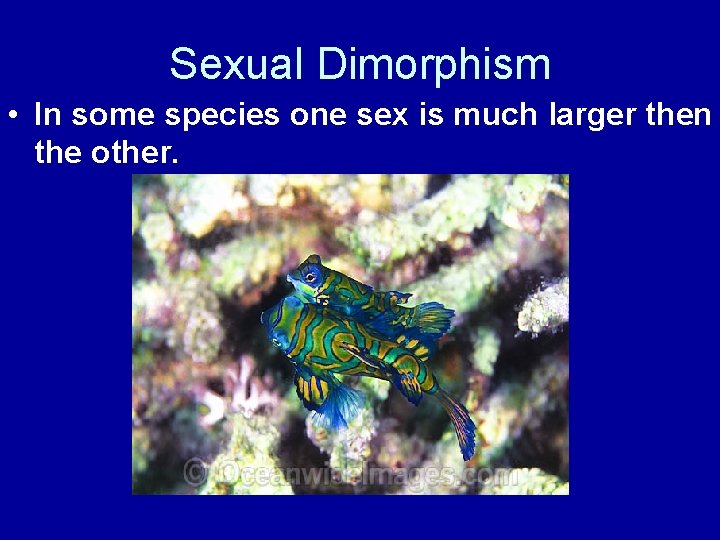
Sexual Dimorphism In some fishes, males and females look different! • The males are brightly colored while the females are drab. • Why do you think that this happens?
Sexual Dimorphism • In some species one sex is much larger then the other.
Sex Reversal • Why do they change sex? Age Lack of Food Male to Female Ratio in the population
Fish Adaptations • Lateral Line System- used to detect vibrations, orient the fish in water, it is a line of cells running down the side of the fish. The lateral line is well developed in schooling fish; it helps the fish swim together in a group without swimming into one another.
Fish Adaptations • Operculum- gill cover, movement of operculum allows more water to be drawn in.
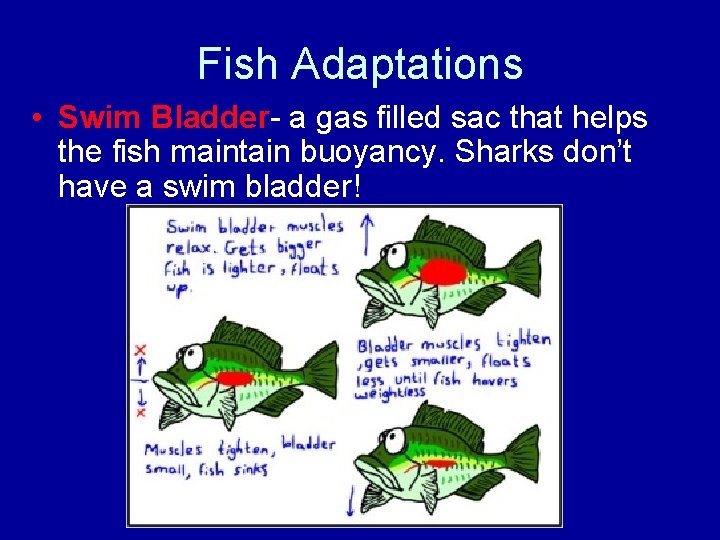
Fish Adaptations • Swim Bladder- a gas filled sac that helps the fish maintain buoyancy. Sharks don’t have a swim bladder!
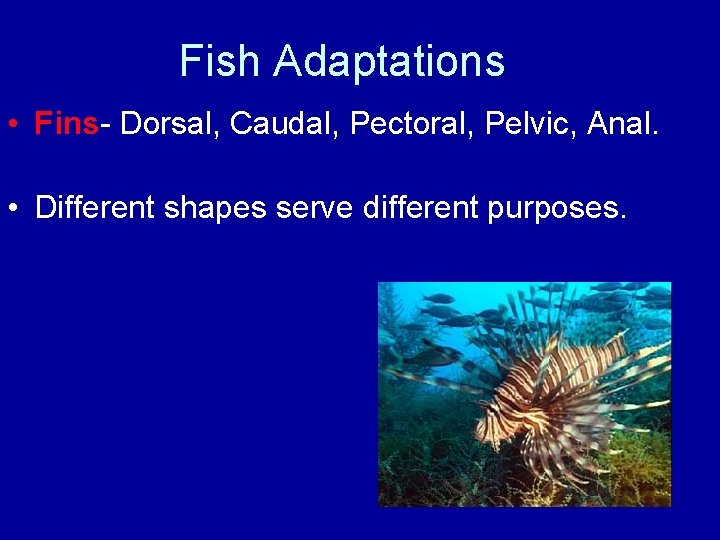
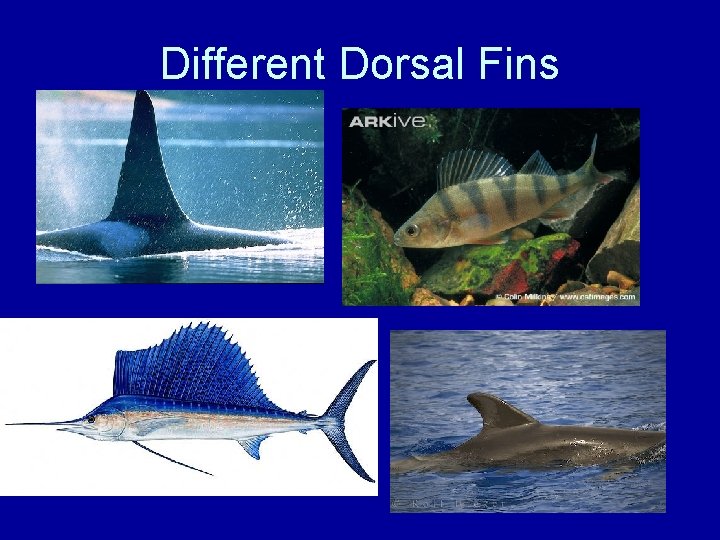
Fish Adaptations • Fins- Dorsal, Caudal, Pectoral, Pelvic, Anal. • Different shapes serve different purposes.
Different Dorsal Fins
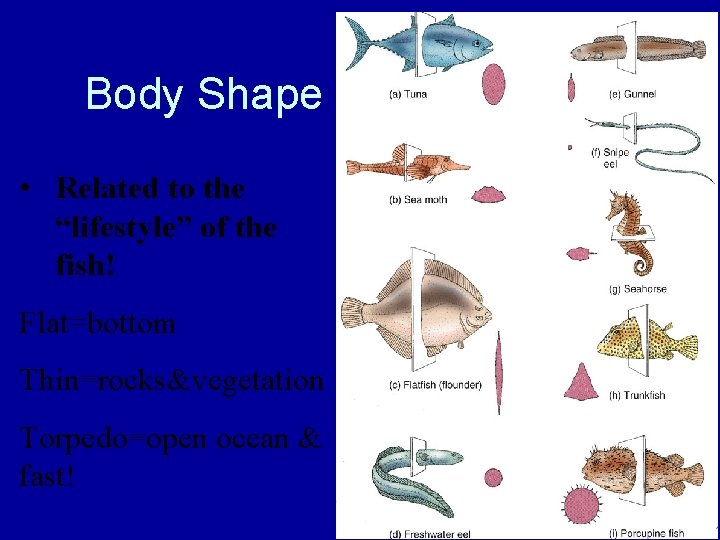
Body Shape • Related to the “lifestyle” of the fish! Flat=bottom Thin=rocks&vegetation Torpedo=open ocean & fast!
A few adaptations!!!!
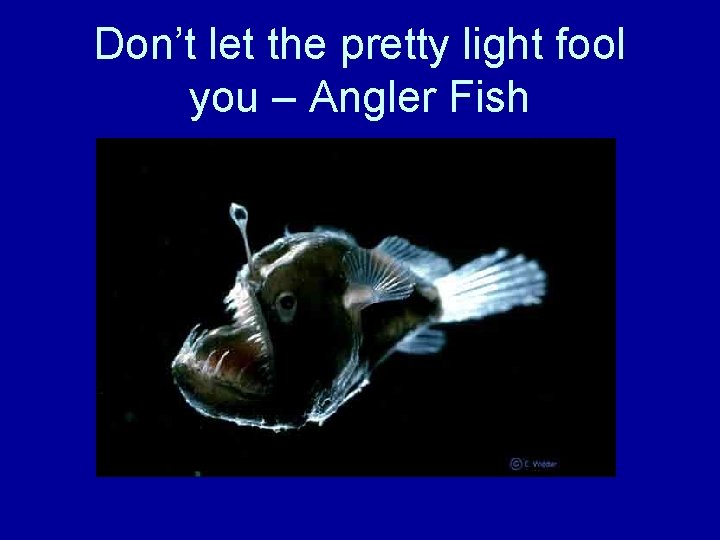
Don’t let the pretty light fool you – Angler Fish
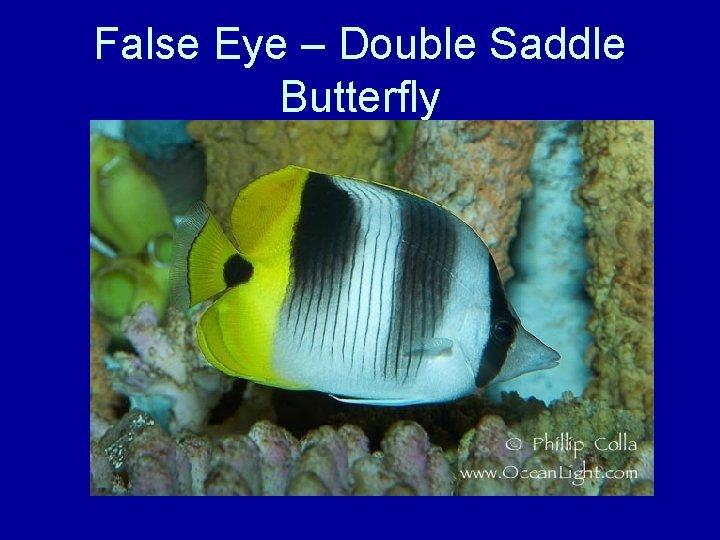
False Eye – Double Saddle Butterfly
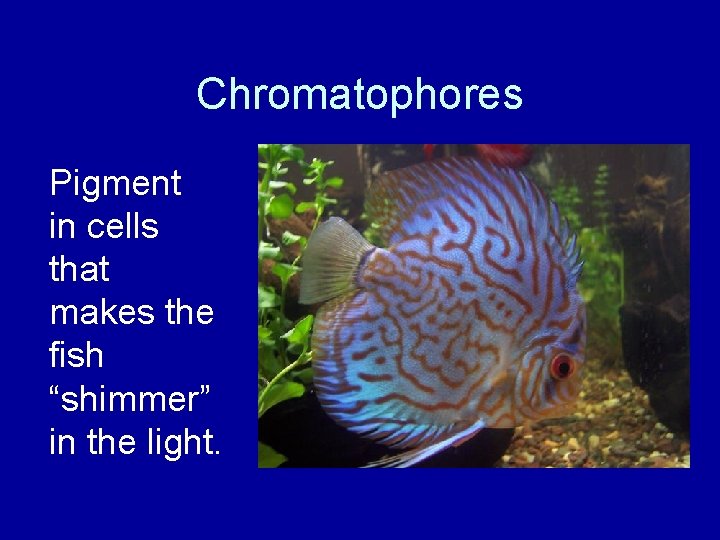
Chromatophores Pigment in cells that makes the fish “shimmer” in the light.
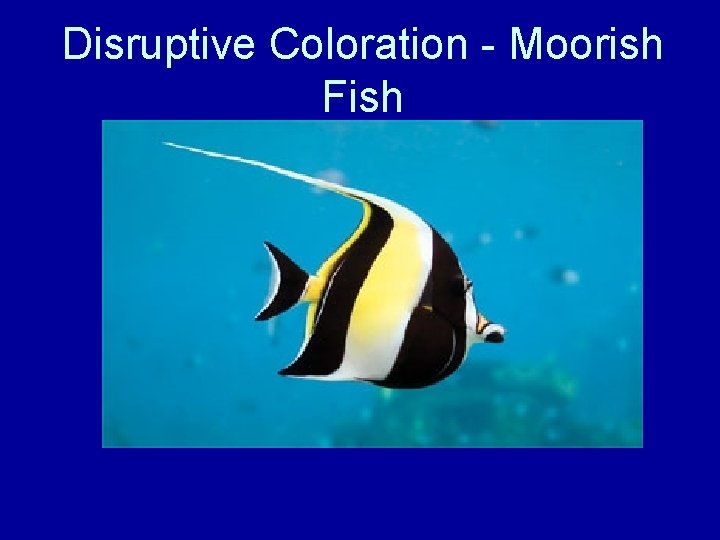
Disruptive Coloration - Moorish Fish
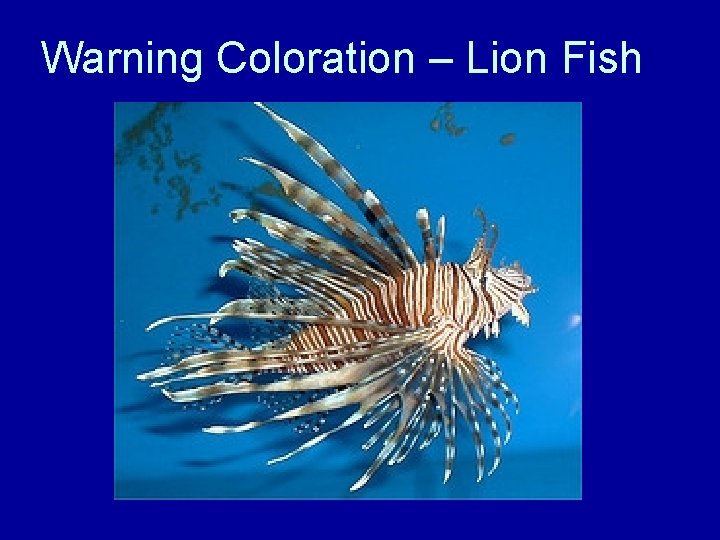
Warning Coloration – Lion Fish
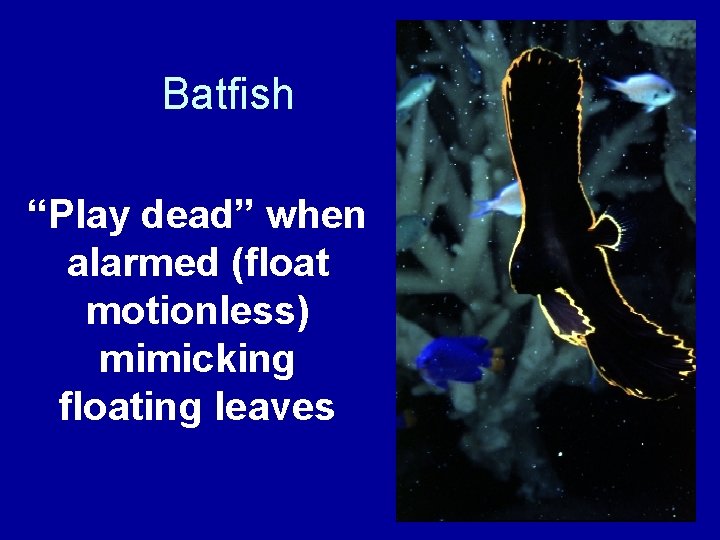
Batfish “Play dead” when alarmed (float motionless) mimicking floating leaves
One Last Word on Fish…. All About Fish
You might want to write this down…. FISH YOU NEED TO KNOW
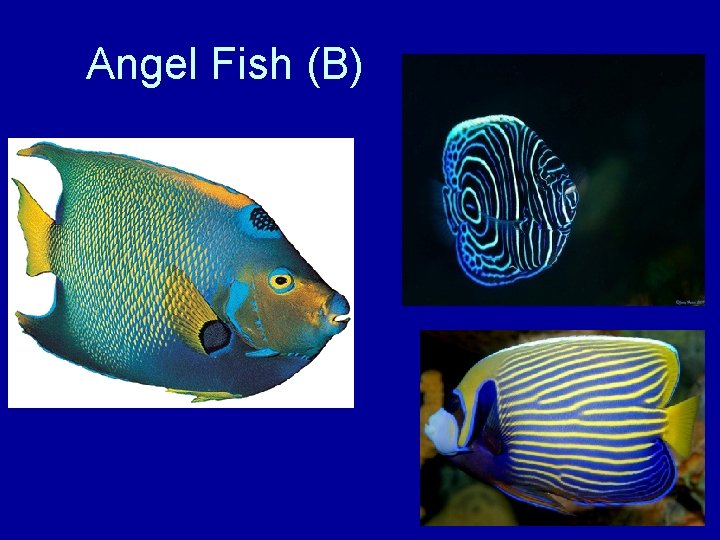
Angel Fish (B)
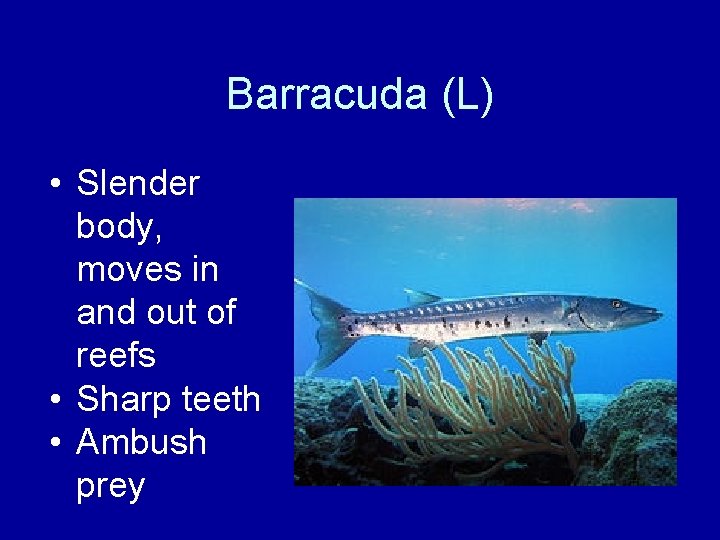
Barracuda (L) • Slender body, moves in and out of reefs • Sharp teeth • Ambush prey
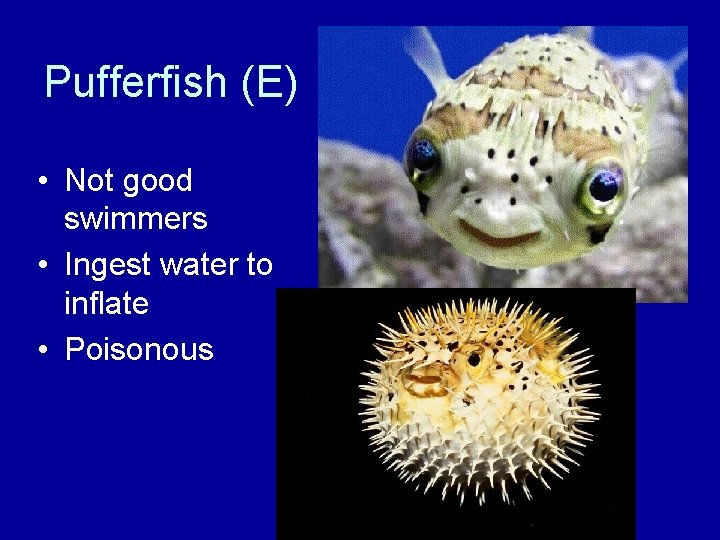
Pufferfish (E) • Not good swimmers • Ingest water to inflate • Poisonous
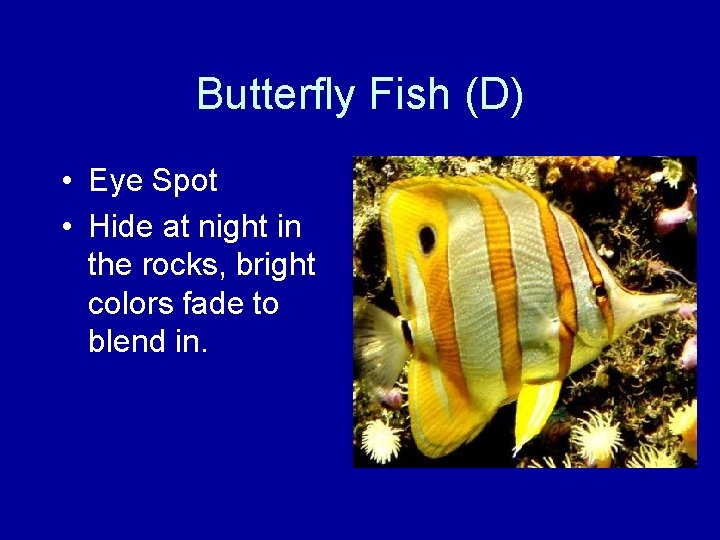
Butterfly Fish (D) • Eye Spot • Hide at night in the rocks, bright colors fade to blend in.
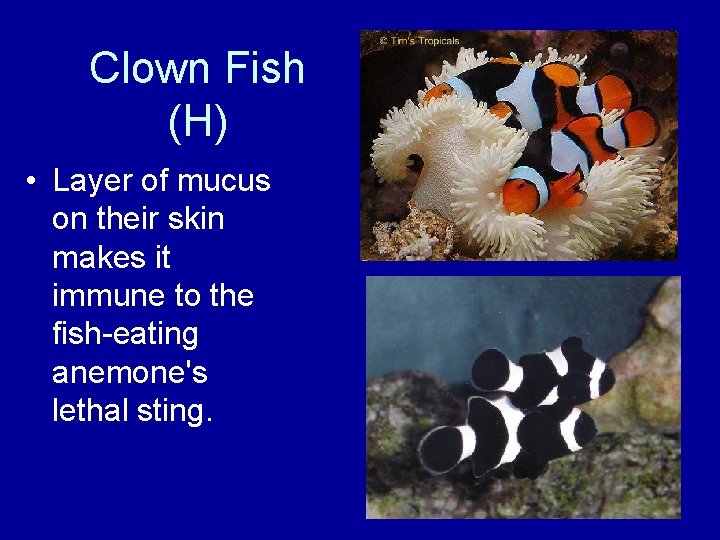
Clown Fish (H) • Layer of mucus on their skin makes it immune to the fish-eating anemone's lethal sting.
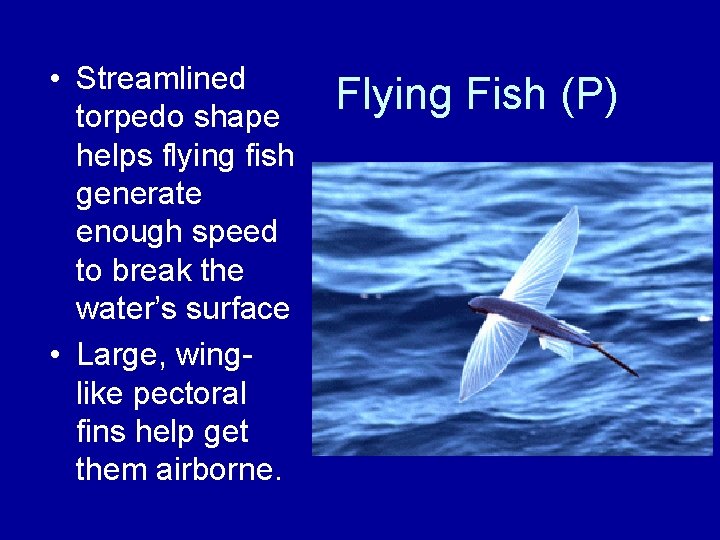
• Streamlined torpedo shape helps flying fish generate enough speed to break the water’s surface • Large, winglike pectoral fins help get them airborne. Flying Fish (P)
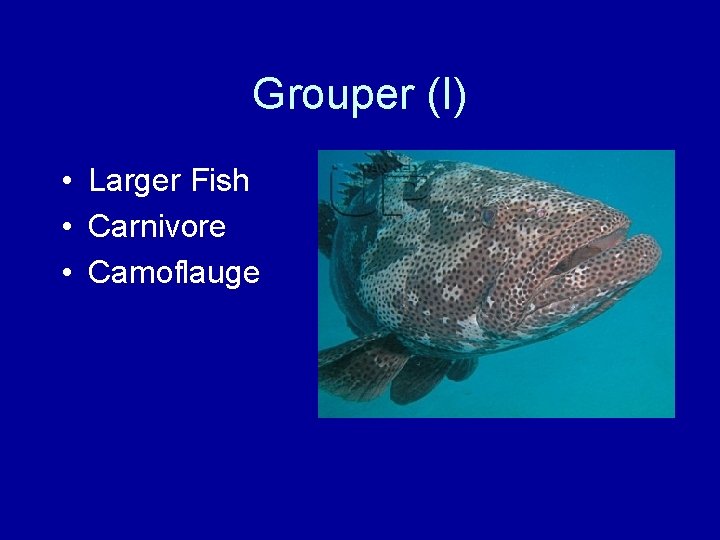
Grouper (I) • Larger Fish • Carnivore • Camoflauge
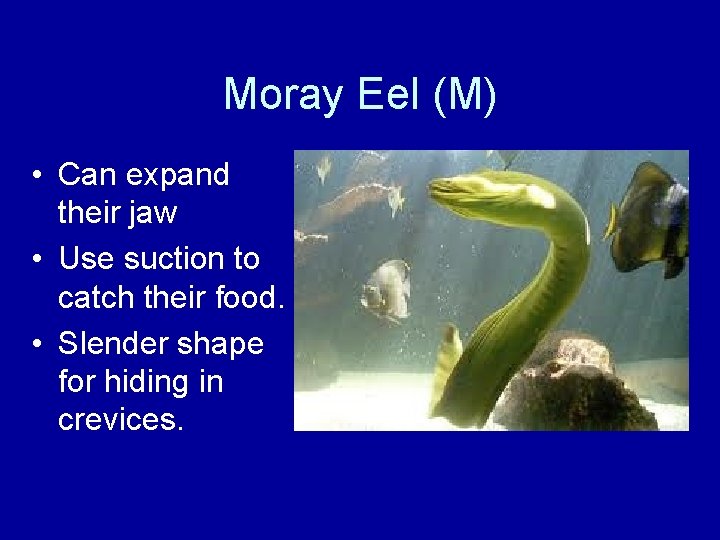
Moray Eel (M) • Can expand their jaw • Use suction to catch their food. • Slender shape for hiding in crevices.
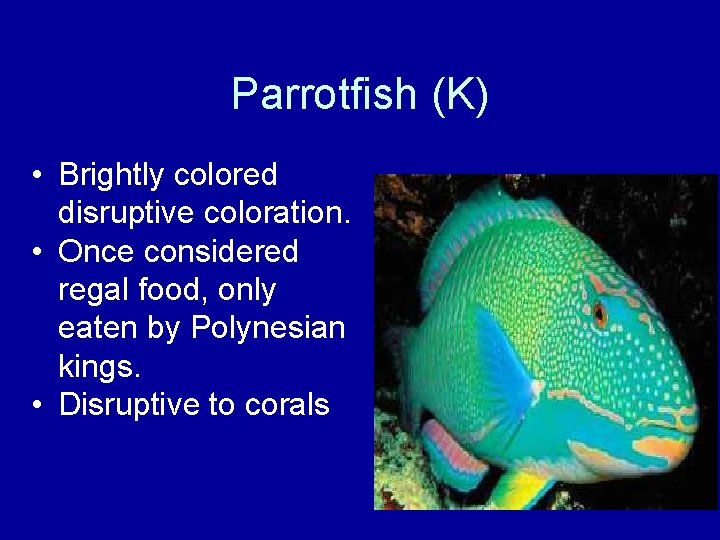
Parrotfish (K) • Brightly colored disruptive coloration. • Once considered regal food, only eaten by Polynesian kings. • Disruptive to corals
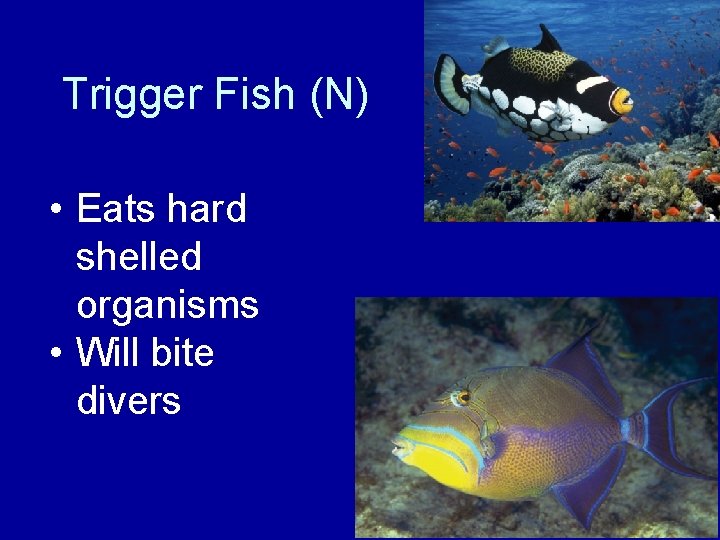
Trigger Fish (N) • Eats hard shelled organisms • Will bite divers
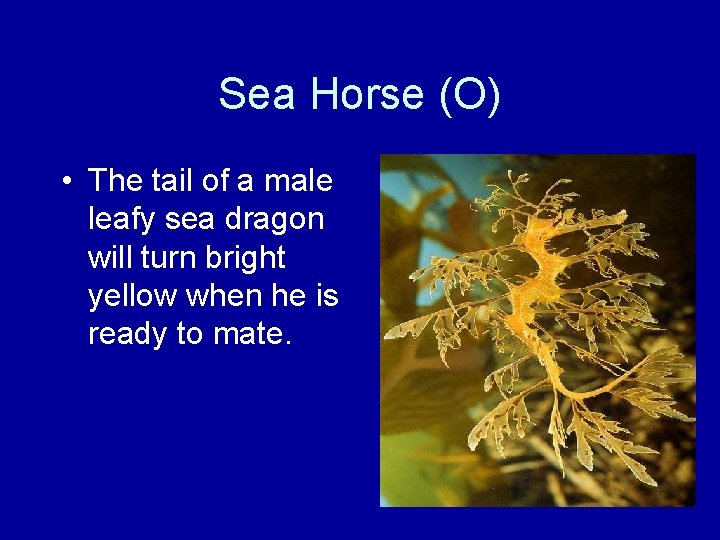
Sea Horse (O) • The tail of a male leafy sea dragon will turn bright yellow when he is ready to mate.
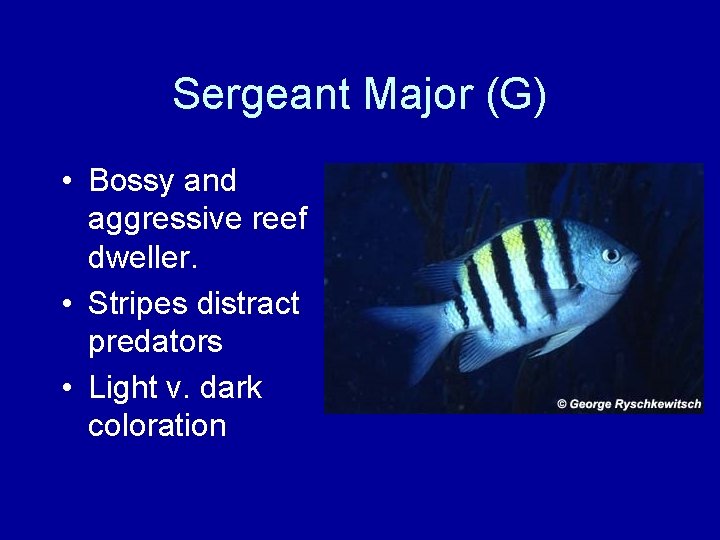
Sergeant Major (G) • Bossy and aggressive reef dweller. • Stripes distract predators • Light v. dark coloration
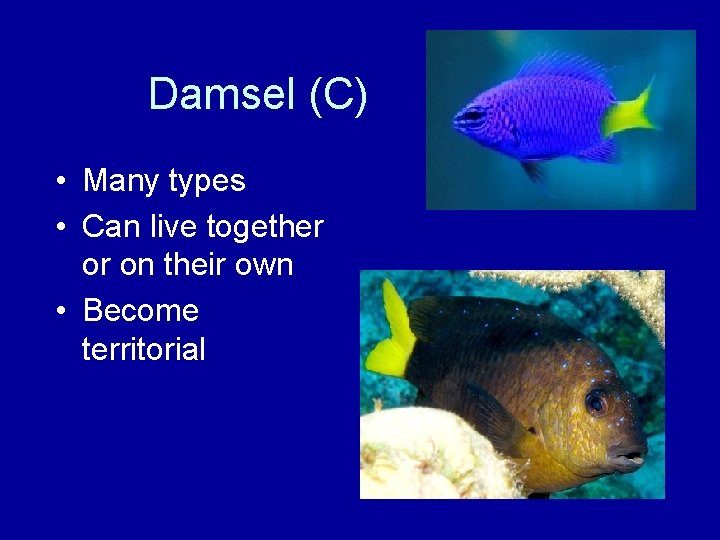
Damsel (C) • Many types • Can live together or on their own • Become territorial
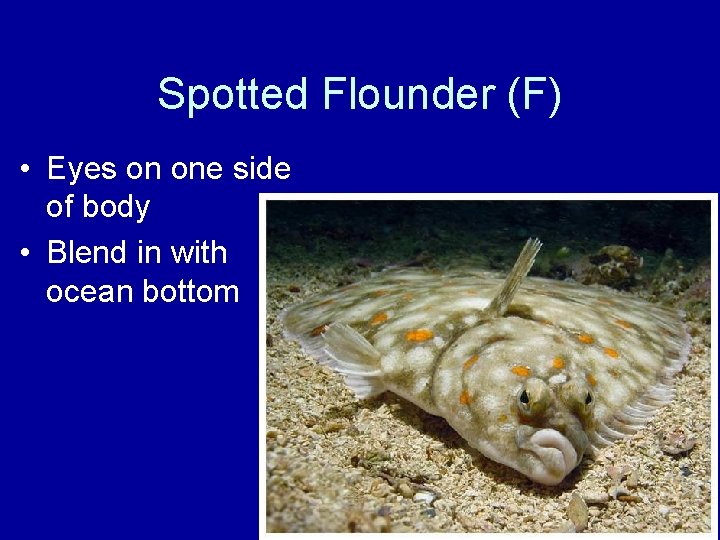
Spotted Flounder (F) • Eyes on one side of body • Blend in with ocean bottom
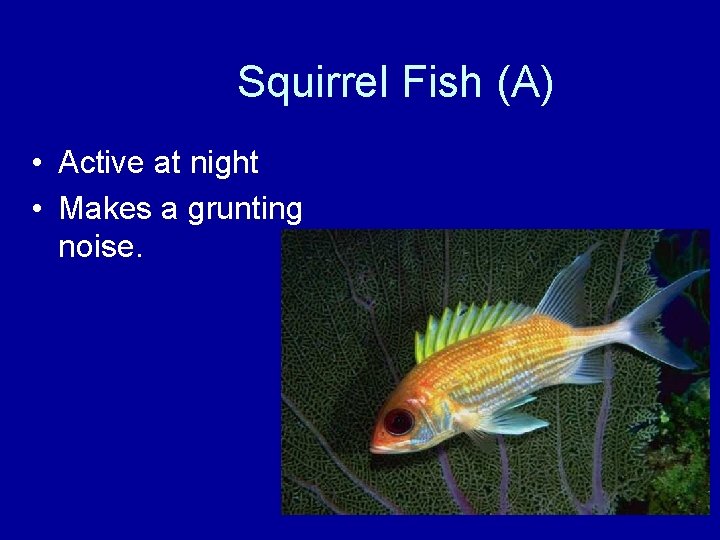
Squirrel Fish (A) • Active at night • Makes a grunting noise.
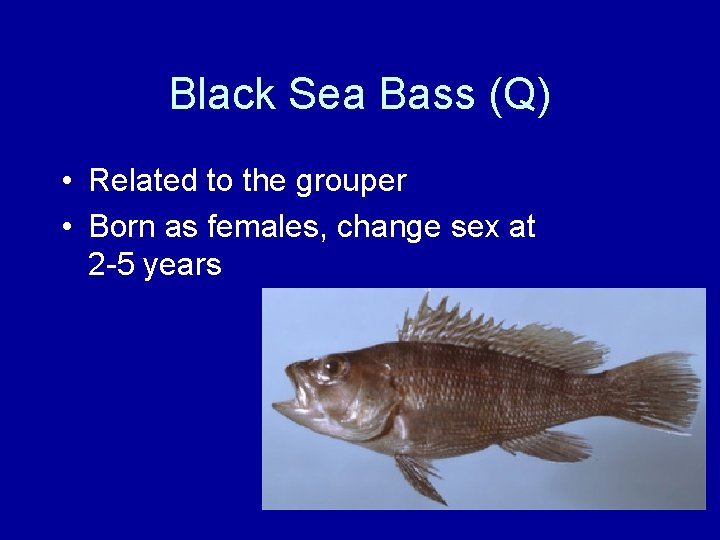
Black Sea Bass (Q) • Related to the grouper • Born as females, change sex at 2 -5 years
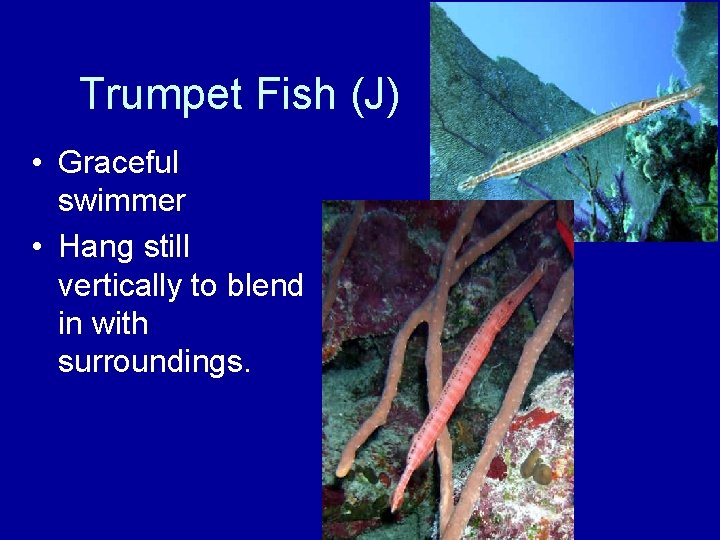
Trumpet Fish (J) • Graceful swimmer • Hang still vertically to blend in with surroundings.
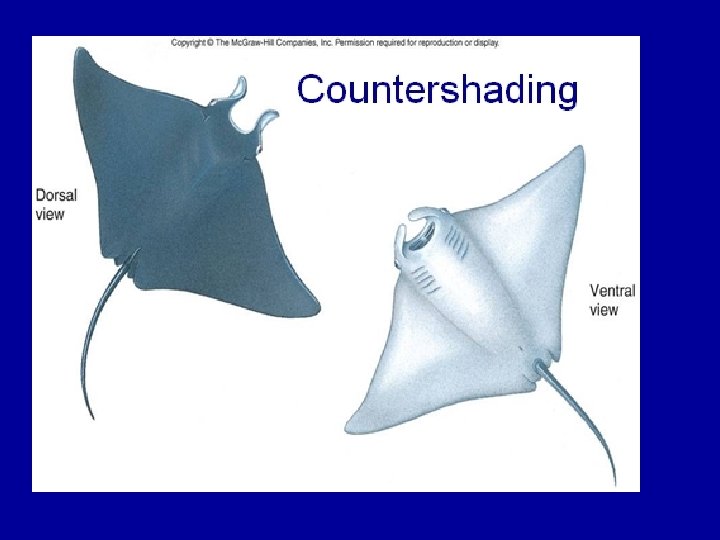
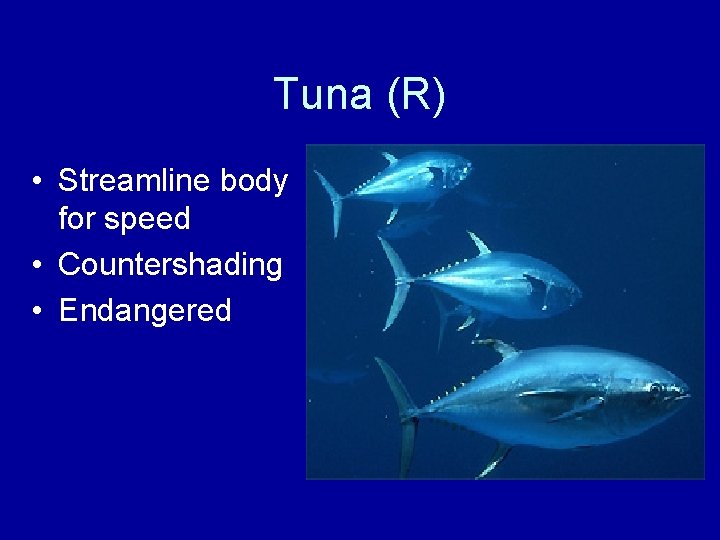
Tuna (R) • Streamline body for speed • Countershading • Endangered