
Fish Notes Sharks Class Chondrichthyes skeleton made of
- Slides: 7
Fish Notes Sharks
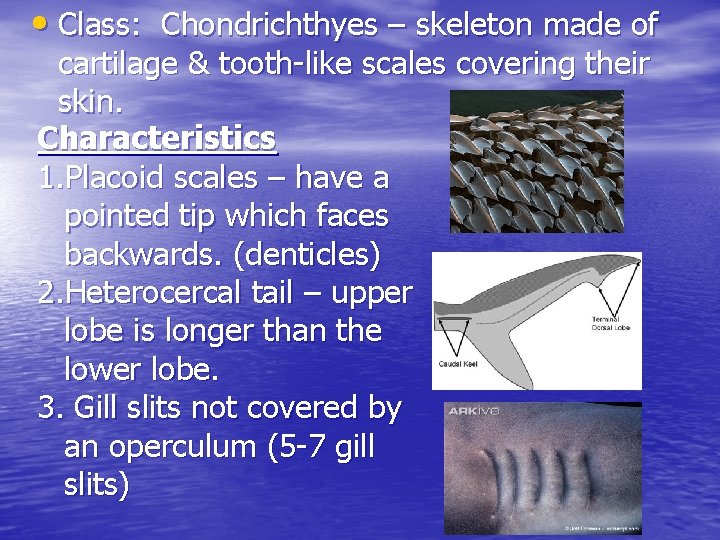
• Class: Chondrichthyes – skeleton made of cartilage & tooth-like scales covering their skin. Characteristics 1. Placoid scales – have a pointed tip which faces backwards. (denticles) 2. Heterocercal tail – upper lobe is longer than the lower lobe. 3. Gill slits not covered by an operculum (5 -7 gill slits)
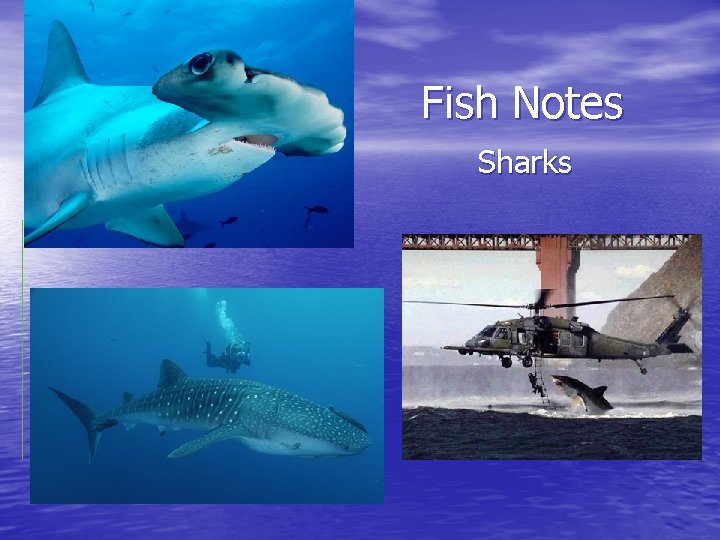
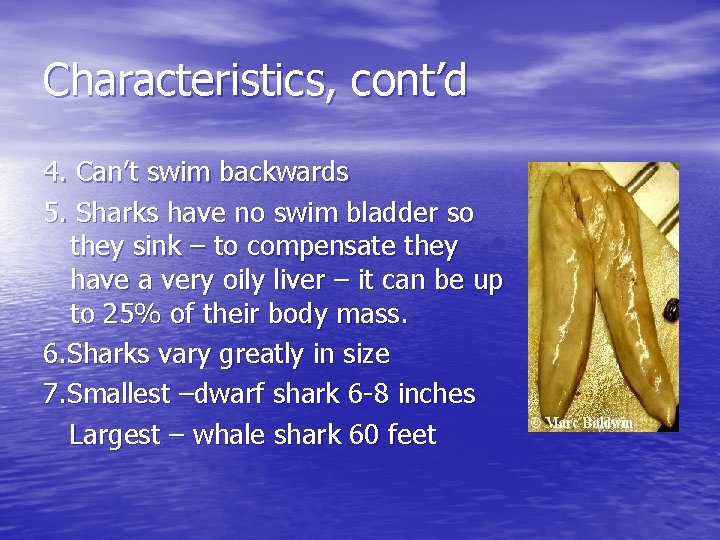
Characteristics, cont’d 4. Can’t swim backwards 5. Sharks have no swim bladder so they sink – to compensate they have a very oily liver – it can be up to 25% of their body mass. 6. Sharks vary greatly in size 7. Smallest –dwarf shark 6 -8 inches Largest – whale shark 60 feet
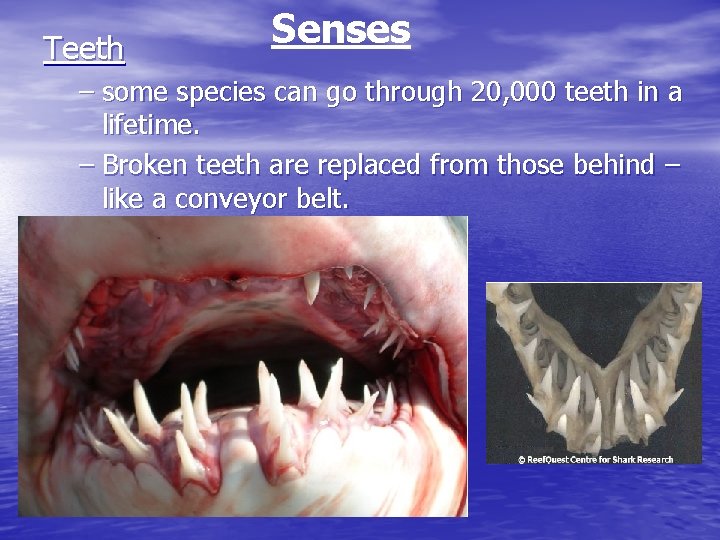
Teeth Senses – some species can go through 20, 000 teeth in a lifetime. – Broken teeth are replaced from those behind – like a conveyor belt.
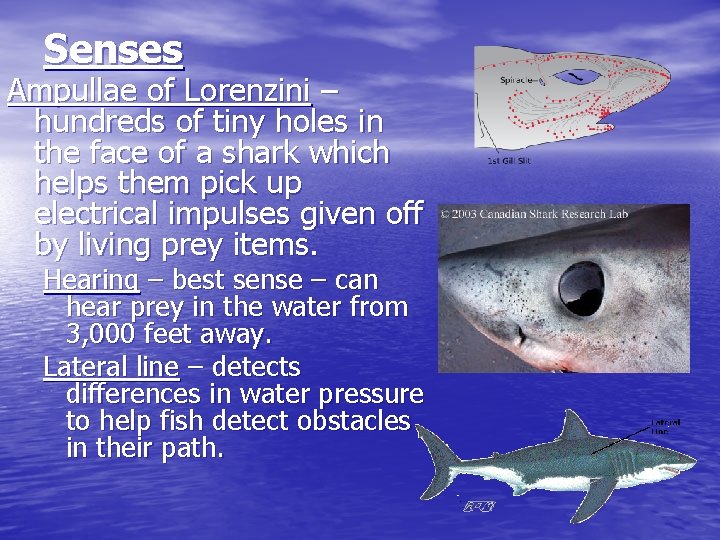
Senses Ampullae of Lorenzini – hundreds of tiny holes in the face of a shark which helps them pick up electrical impulses given off by living prey items. Hearing – best sense – can hear prey in the water from 3, 000 feet away. Lateral line – detects differences in water pressure to help fish detect obstacles in their path.
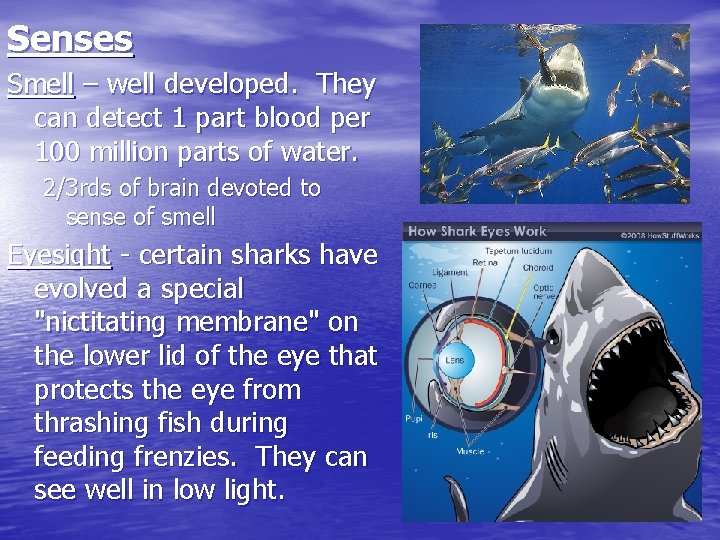
Senses Smell – well developed. They can detect 1 part blood per 100 million parts of water. 2/3 rds of brain devoted to sense of smell Eyesight - certain sharks have evolved a special "nictitating membrane" on the lower lid of the eye that protects the eye from thrashing fish during feeding frenzies. They can see well in low light.
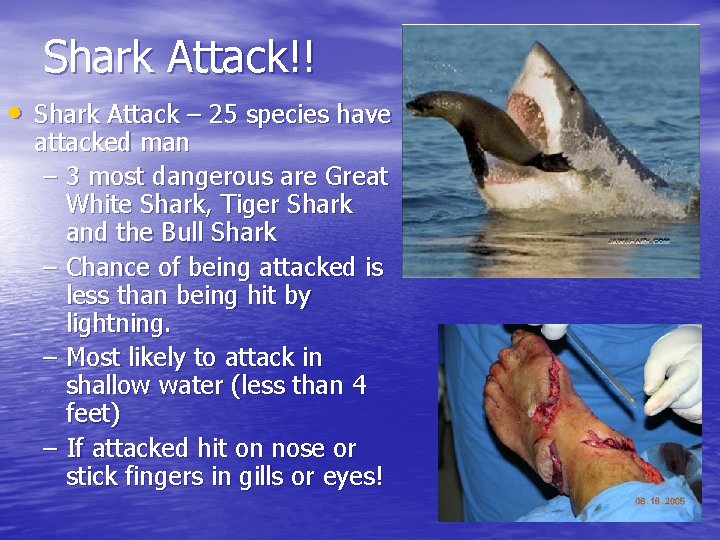
Shark Attack!! • Shark Attack – 25 species have attacked man – 3 most dangerous are Great White Shark, Tiger Shark and the Bull Shark – Chance of being attacked is less than being hit by lightning. – Most likely to attack in shallow water (less than 4 feet) – If attacked hit on nose or stick fingers in gills or eyes!