
Fish Notes Part 2 Feeding patterns buoyancy temperature
Fish Notes Part 2 Feeding patterns, buoyancy, temperature, circulatory, respiration and excretion
Feeding Patterns • Mouth’s design tells how fish gets food! • Predators – Have specialized teeth for grasping/chewing prey – razor sharp teeth to remove bite size chunks • Ex. shark, bluefish, piranha – Needle sharp teeth used for grabbing/holding • Ex. barracuda, moray eel – Some allow prey to come together • Ex. grouper, angelfish – Some go after it
• Nibblers/grazers – Predatory fish that take small bites of food – Ex. sheepshead, triggerfish, parrotfish • Strainers – Filter small particles of food drifting in water – Open their large funnel like mouths and take in large amounts of water – Food is filtered out by specialized gill rakers as flows past gills – Ex. basking sharks, whale sharks and menhaden
• Suckers – round mouth, large lips, small rasping teethsome have no teeth (sturgeons) – create a vacuum with mouth and suck food with considerable amounts of mud – Often equipped w/ barbels (whiskers) to detect food on the bottom – Ex. sturgeon, catfish and some carp
• Parasitic – Feed on other living creatures – Lamprey/hagfish have rasp like tongues that scrape a hole in side of other fish – Lamprey sucks contents out while clinging to outside – Hagfish burrows in and eats from within

Digestive System • One way (much like human’s!) • Pharynx esophagus stomach intestines anus • Esophagus may expand to accommodate anything the fish can get into its mouth • Stomach shape varies • Stomach variations: – May contain grinders – May take in air/allow the fish to blow up – May be absent all together • Carnivores have a short, straight intestine • Herbivores have a long, coiled intestine
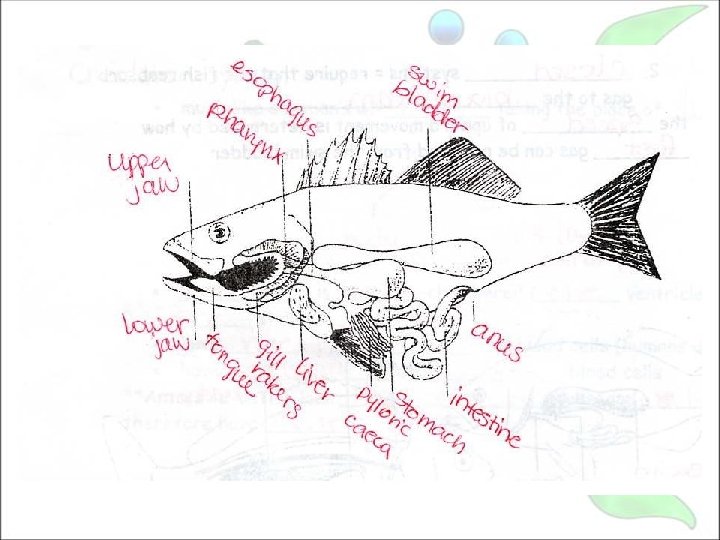
Buoyancy Control • Swim bladder enable fish to move up/down in the water column by changing the fish’s overall density • May be filled by: – can gulp air from atmosphere – release gas from the blood through gas glands • Can maintain neutral buoyancy – neither sinks nor floats – just hangs there
***Sharks, skates and rays don’t have a swim bladder so they must keep moving or sink to the bottom – they do have a large liver with oil that helps keep them afloat • Descension – causes gas in swim bladder to become more dense – fish must add gas to stay afloat • Ascension – opposite of descension, fish must reabsorb gas to keep from floating to the surface
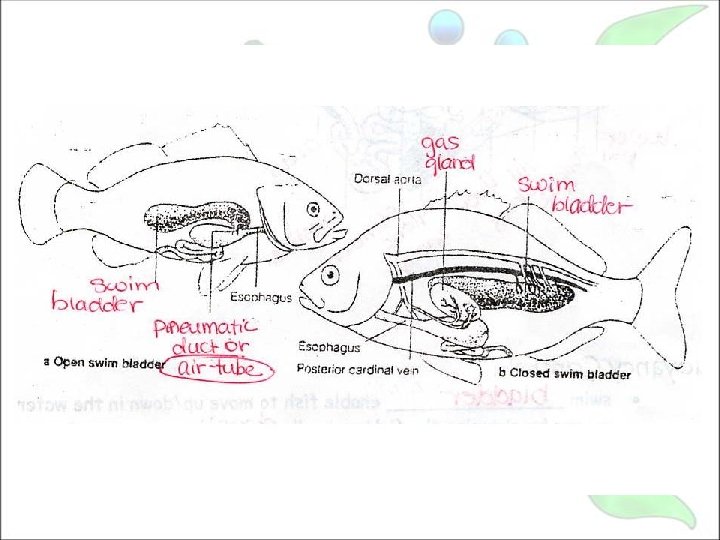
• 2 types of systems – Open system – have a tube that leads to the digestive tract – Closed system – require that the fish reabsorb gas to the bloodstream • The speed of upward movement is determined by how fast gas can be removed from the swim bladder.
Temperature • Fish are ectothermic so the temperature affects their metabolic rate • An increase in temp. = an increase in metabolic rate • A decrease in temp. = a decrease in metabolic rate • Many predatory fish have a countercurrent system for conserving heat which allows their muscles to stay warm ex. great white shark, tuna, dolphinfish (mahi)
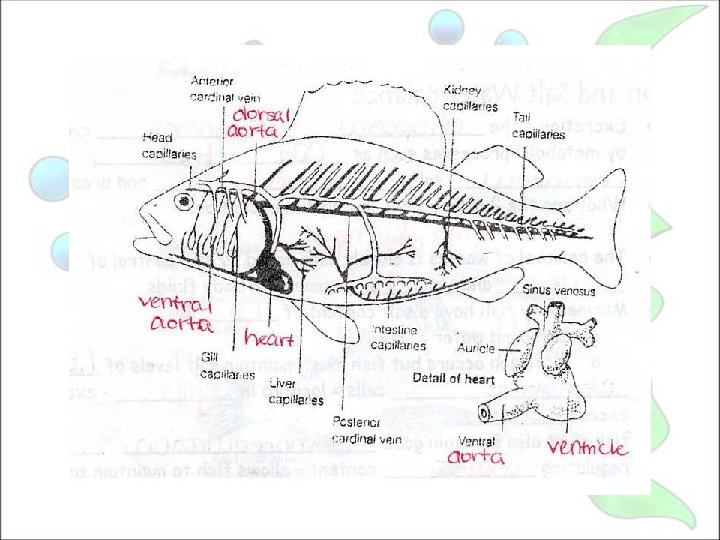
Circulatory System • Much like human’s w/ gills taking the place of lungs • Heart is 2 chambered (yours is 4) – one ventricle and one atrium • have nucleated RBCs (humans do not) • Do have plasma and WBC like humans • Antarctic icefish lack hemoglobin and RBCs and therefore have clear blood!!!!
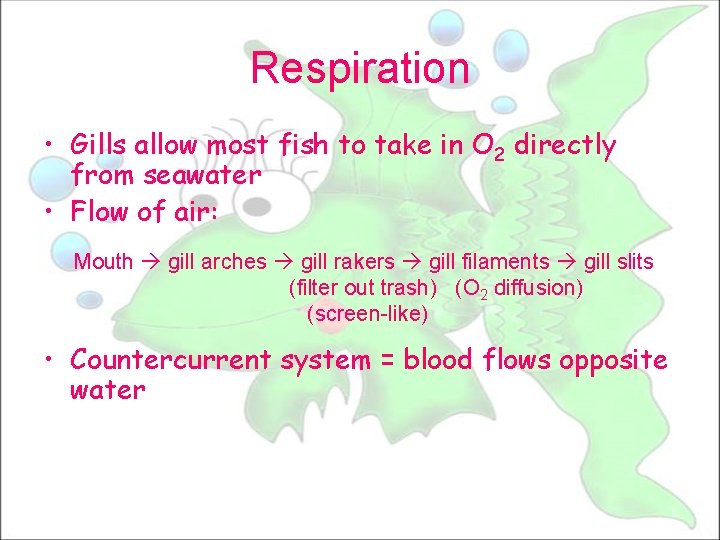
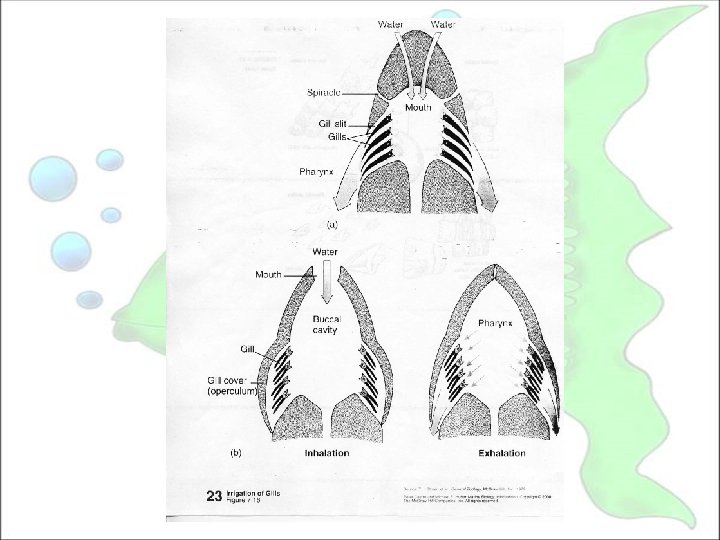
Respiration • Gills allow most fish to take in O 2 directly from seawater • Flow of air: Mouth gill arches gill rakers gill filaments gill slits (filter out trash) (O 2 diffusion) (screen-like) • Countercurrent system = blood flows opposite water
• Operculum – Covers and protects gill chamber – Bony fish possess this – cartilagenous do not • Some fish may take in air by swimming to the surface and gulping it where it may take several hours to diffuse across gills • Lungfish have air-holding sacs
• How do fish work all this? – Tuna – needs lots of O 2 – have 4 gills each with gill arches (each is a double row of gill filaments) – Most sharks swim continuously forcing water through their mouth and over the gills – water leaves by gill slits can drown when caught in traps because they can’t force water in
Excretion and Salt Water Balance • Excretion = the disposal of wastes created by metabolic processes such as CO 2, H 2 O, mineral salts, ammonia and urea • What are the 2 main organs involved in excretion – Gills and kidneys • The removal of wastes is closely associated with the control of water and salt amounts in body fluids
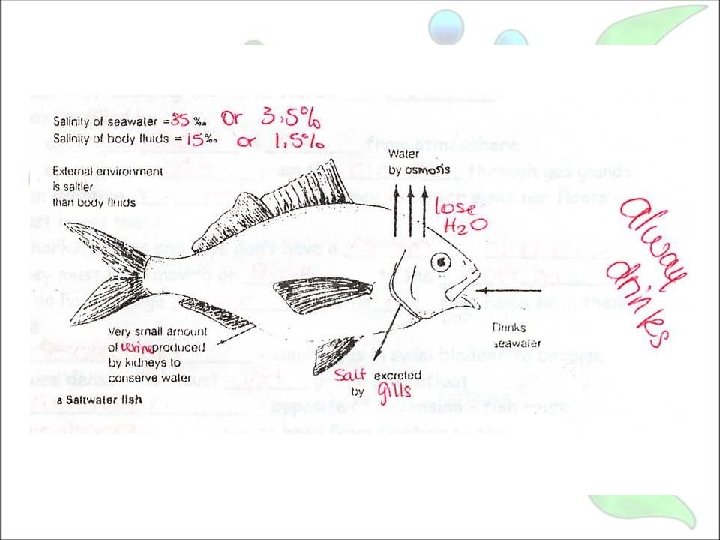
• Marine bony fish have a salt content of 1. 5% – Surrounding water = 3. 5% – Diffusion occurs but fish must maintain salt levels of 1. 5% • Chloride cells – located in gills – excrete excess salt
• Fish must also maintain good osmoregulation – regulating water content – allows fish to maintain salt and water content during extreme sailnity changes • Remember: Salt water fish drink large amounts of water to keep their bodies from dehydrating through osmosis and excess salts are removed by chloride cells
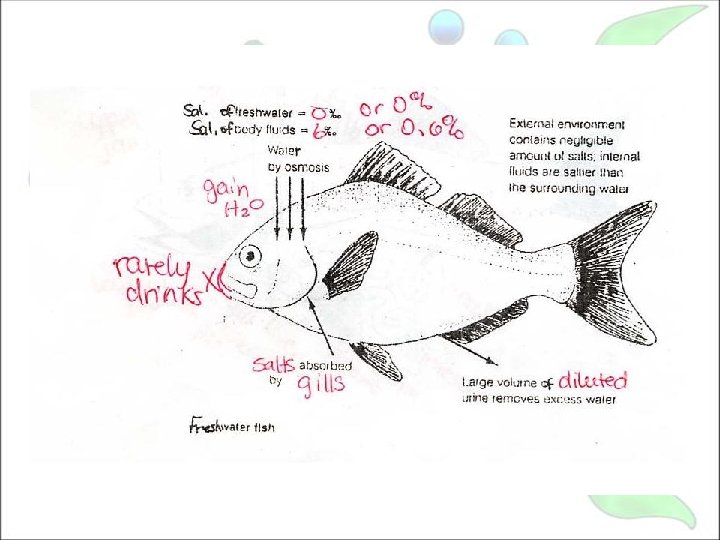
• Fresh water fish drink very little, release a lot or urine because water is coming in through osmosis – constantly needing to get rid of water
- Slides: 24