
Fish Medicine BIOLOGY At 31 500 species fish
Fish Medicine
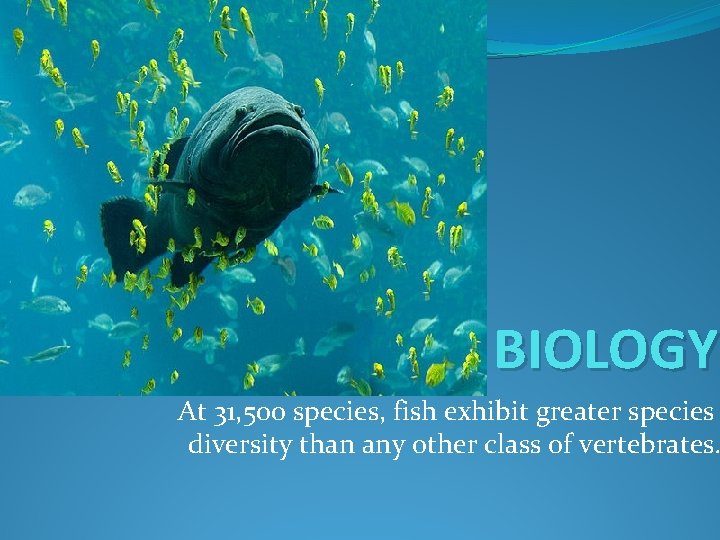
BIOLOGY At 31, 500 species, fish exhibit greater species diversity than any other class of vertebrates.
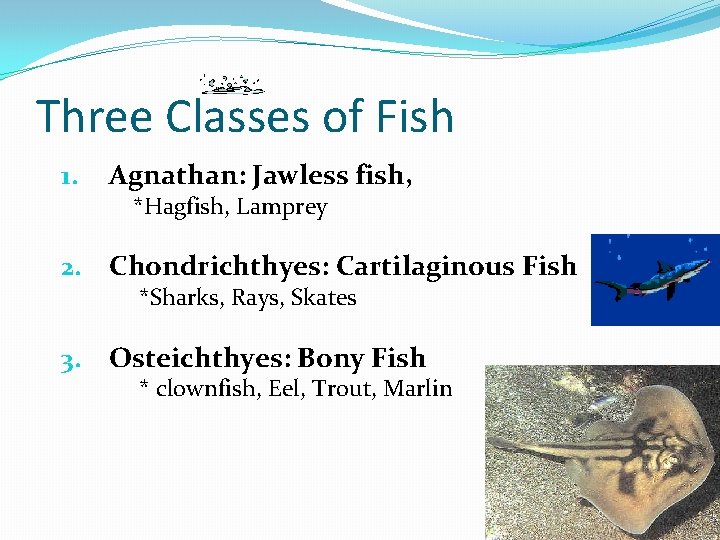
Three Classes of Fish 1. Agnathan: Jawless fish, 2. Chondrichthyes: Cartilaginous Fish 3. Osteichthyes: Bony Fish *Hagfish, Lamprey *Sharks, Rays, Skates * clownfish, Eel, Trout, Marlin
Osteichthyes: Bony Fish Kingdom: Animalia Phylum: Chordate Subphylum: Vertebrate Class: Osteichthyes �Fish are aquatic vertebrates that are typically Ectotherms (cold-blooded) �Covered with scales �Has a gill cover called an OPERCULUM �Minimal Protective Mucus, nonselective defense against bacteria �Multiple sets of paired fins and unpaired fins
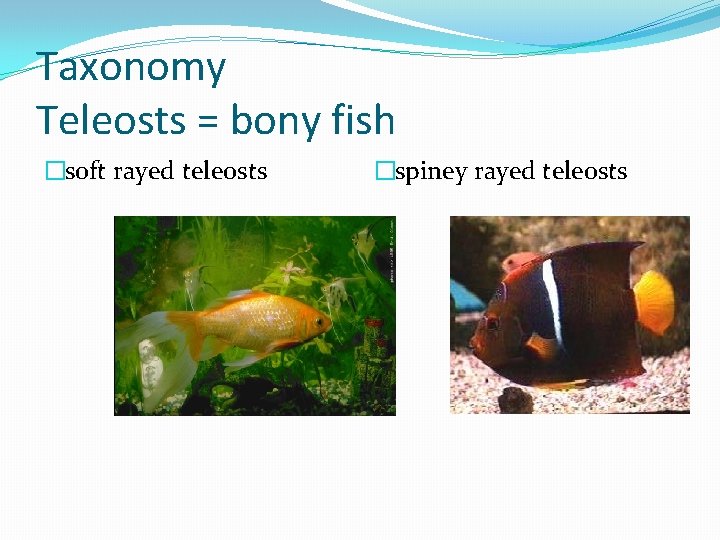
Taxonomy Teleosts = bony fish �soft rayed teleosts �spiney rayed teleosts
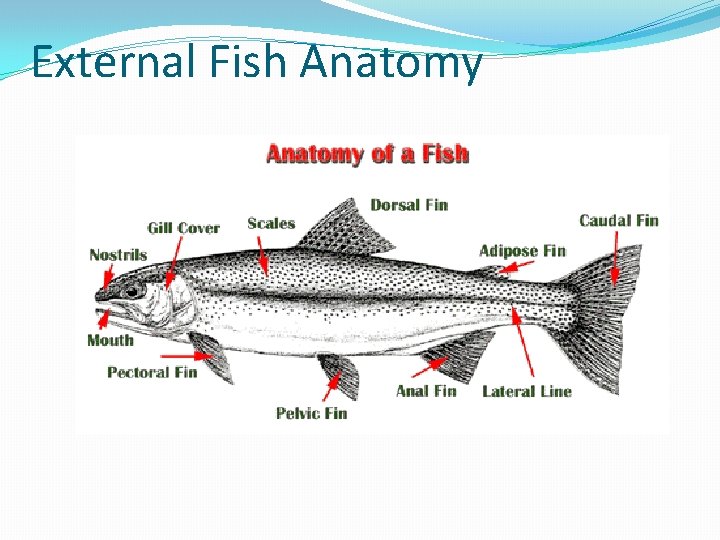
External Fish Anatomy
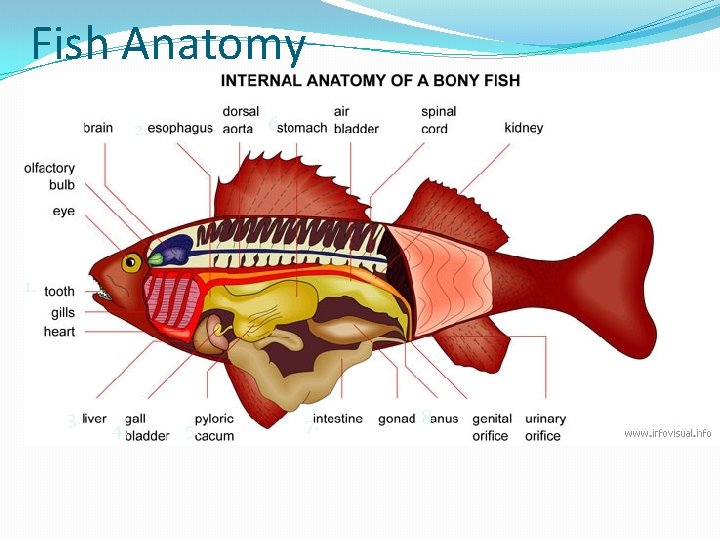
Fish Anatomy 6 2. 1. 3. 4. 5. 7. 8.
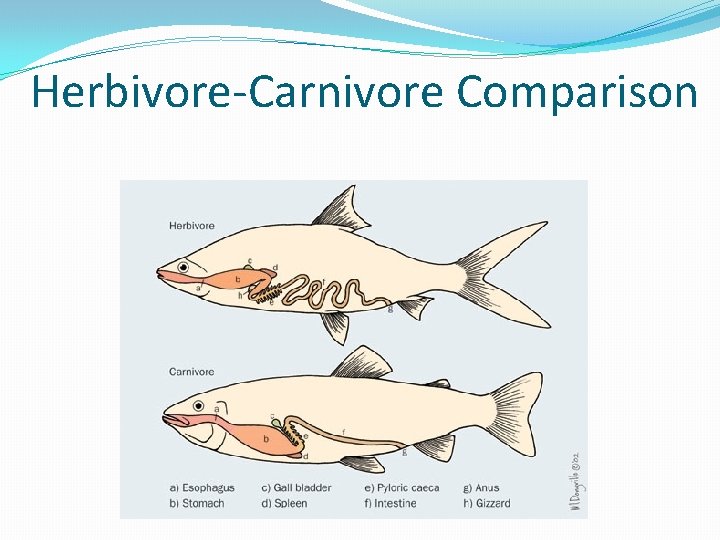
Herbivore-Carnivore Comparison
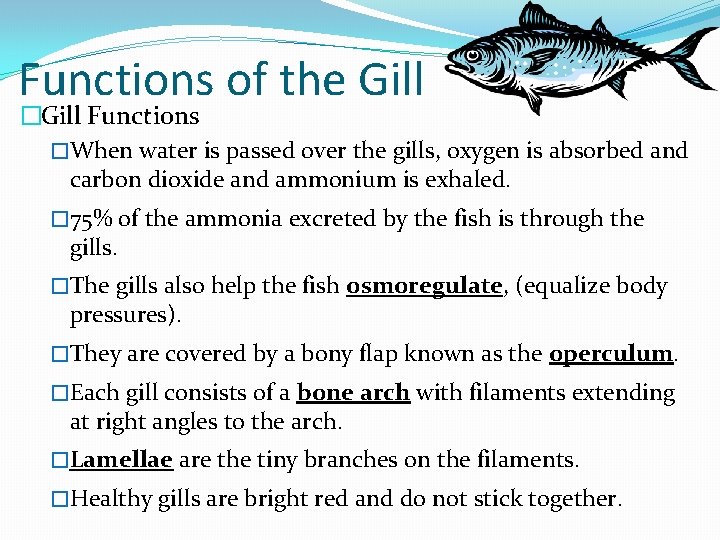
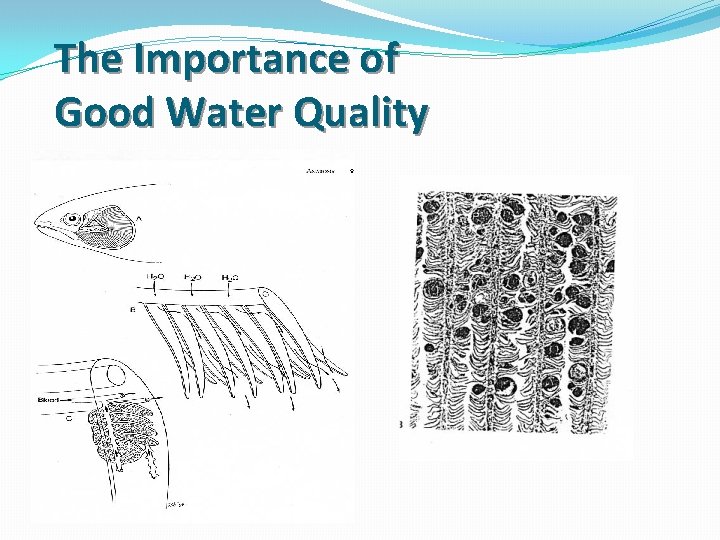
Functions of the Gill �Gill Functions �When water is passed over the gills, oxygen is absorbed and carbon dioxide and ammonium is exhaled. � 75% of the ammonia excreted by the fish is through the gills. �The gills also help the fish osmoregulate, (equalize body pressures). �They are covered by a bony flap known as the operculum. �Each gill consists of a bone arch with filaments extending at right angles to the arch. �Lamellae are the tiny branches on the filaments. �Healthy gills are bright red and do not stick together.

Fish Gill Anatomy
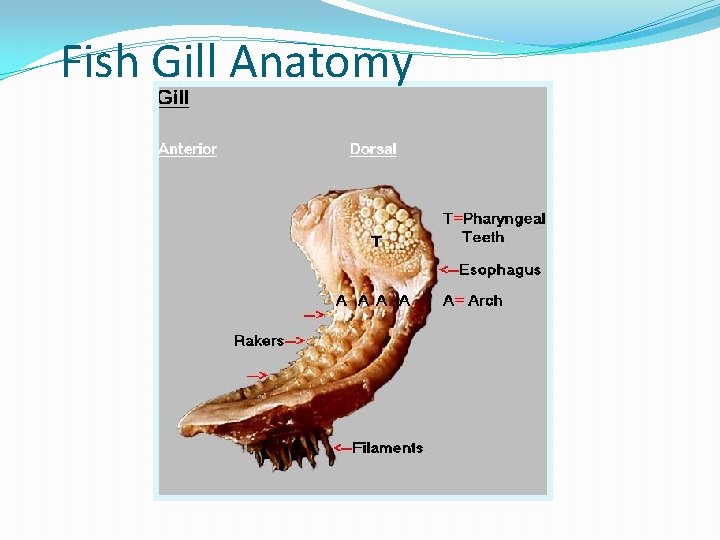
Fish Gill Anatomy

Fish Gill Anatomy Gill Filaments Lamellae
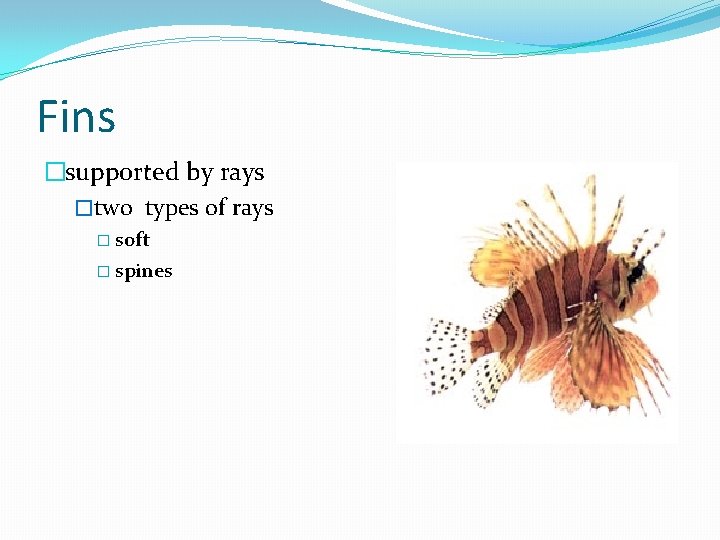
Fins �supported by rays �two types of rays � soft � spines
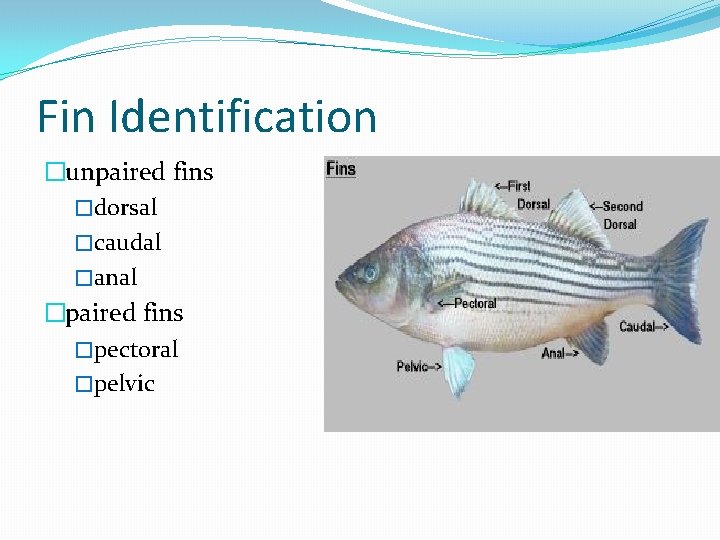
Fin Identification �unpaired fins �dorsal �caudal �anal �paired fins �pectoral �pelvic
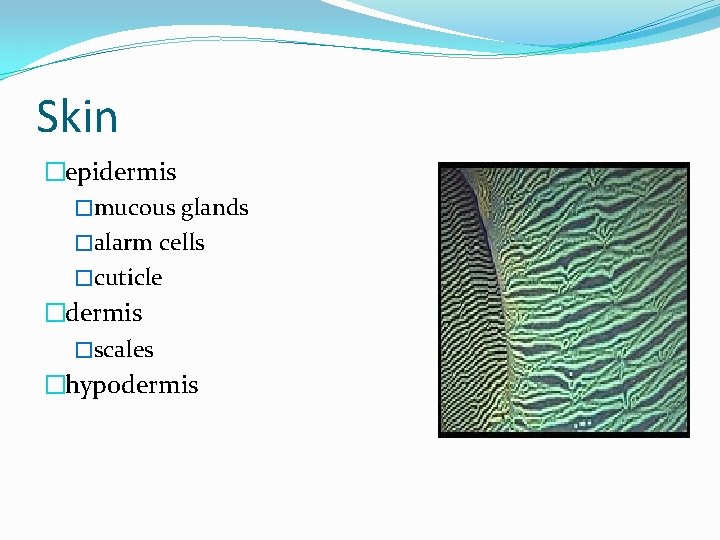
Skin �epidermis �mucous glands �alarm cells �cuticle �dermis �scales �hypodermis
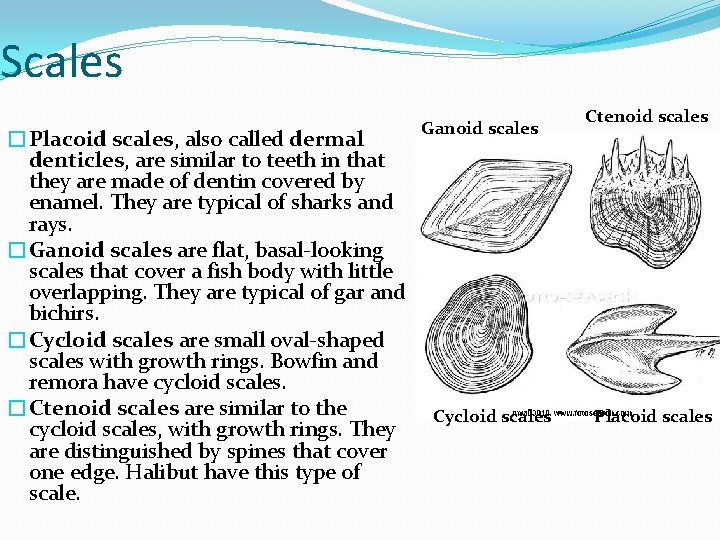
Scales �Placoid scales, also called dermal denticles, are similar to teeth in that they are made of dentin covered by enamel. They are typical of sharks and rays. �Ganoid scales are flat, basal-looking scales that cover a fish body with little overlapping. They are typical of gar and bichirs. �Cycloid scales are small oval-shaped scales with growth rings. Bowfin and remora have cycloid scales. �Ctenoid scales are similar to the cycloid scales, with growth rings. They are distinguished by spines that cover one edge. Halibut have this type of scale. Ganoid scales Cycloid scales Ctenoid scales Placoid scales
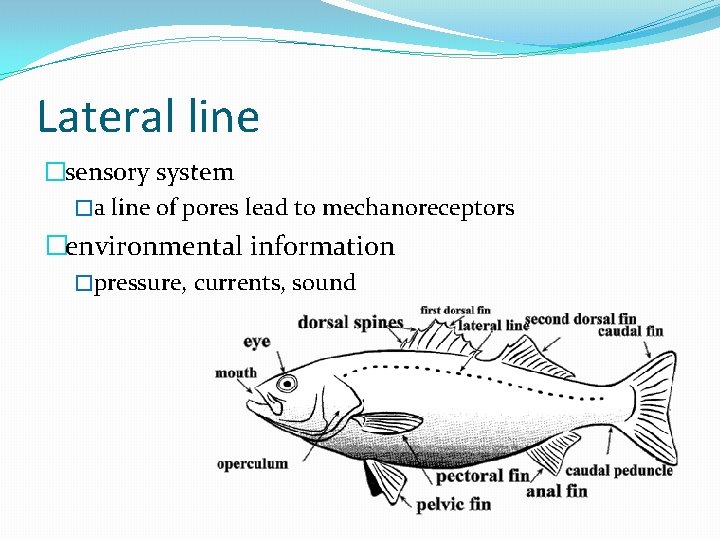
Lateral line �sensory system �a line of pores lead to mechanoreceptors �environmental information �pressure, currents, sound
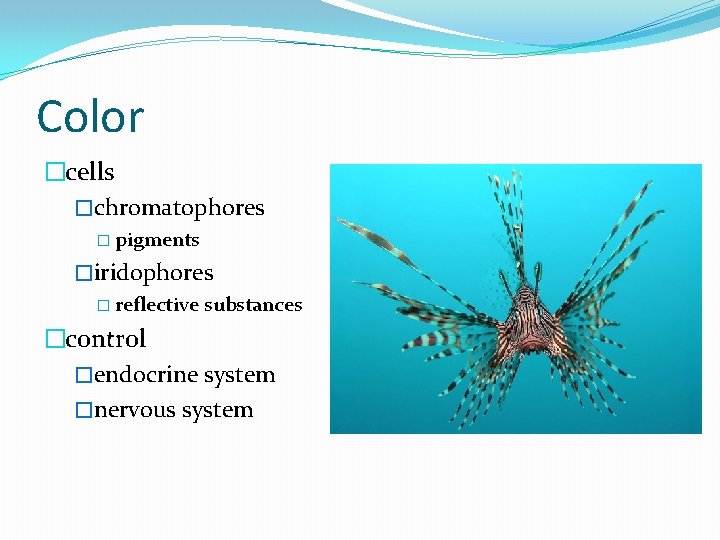
Color �cells �chromatophores � pigments �iridophores � reflective substances �control �endocrine system �nervous system
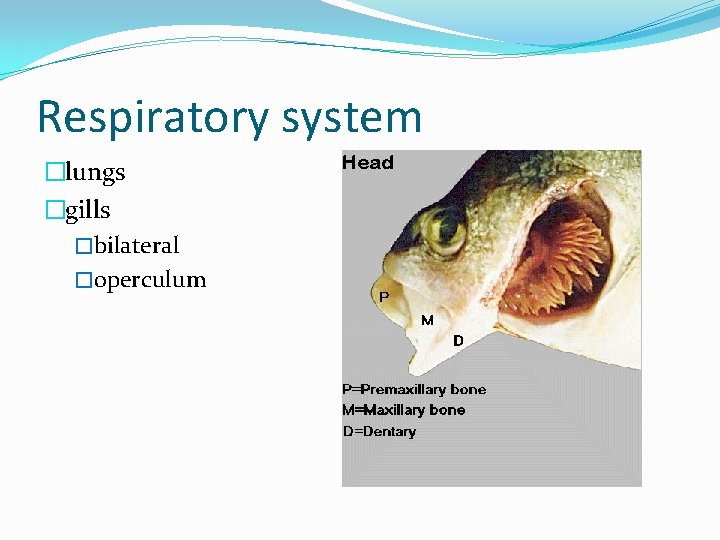
Respiratory system �lungs �gills �bilateral �operculum
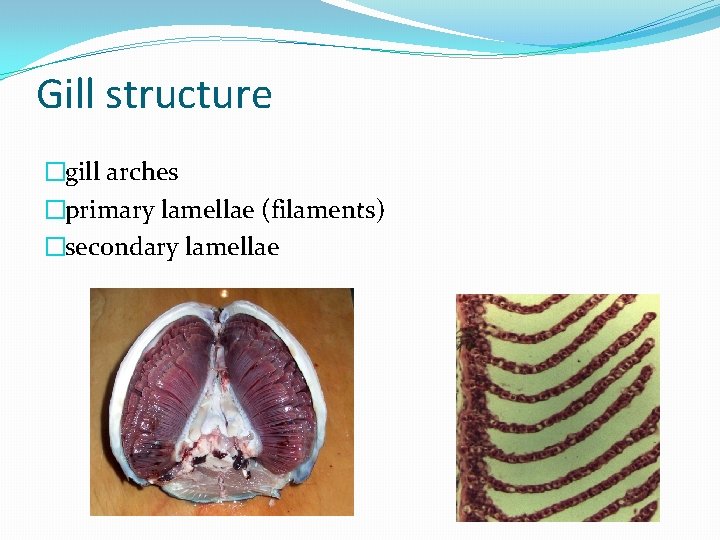
Gill structure �gill arches �primary lamellae (filaments) �secondary lamellae
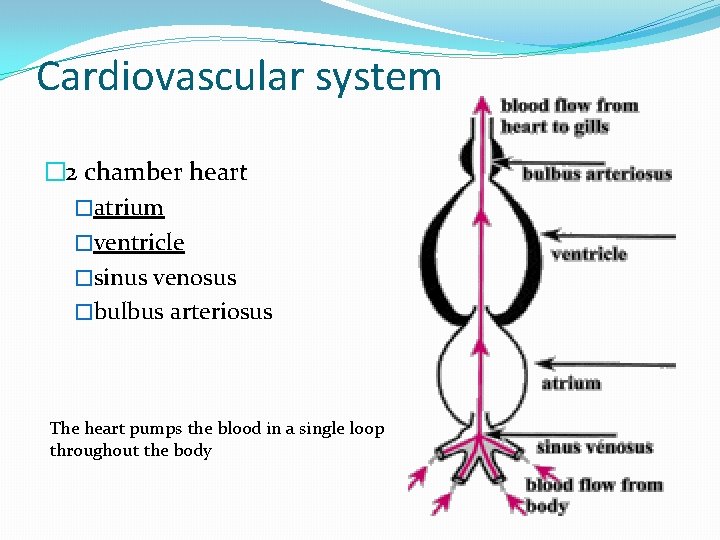
Cardiovascular system � 2 chamber heart �atrium �ventricle �sinus venosus �bulbus arteriosus The heart pumps the blood in a single loop throughout the body
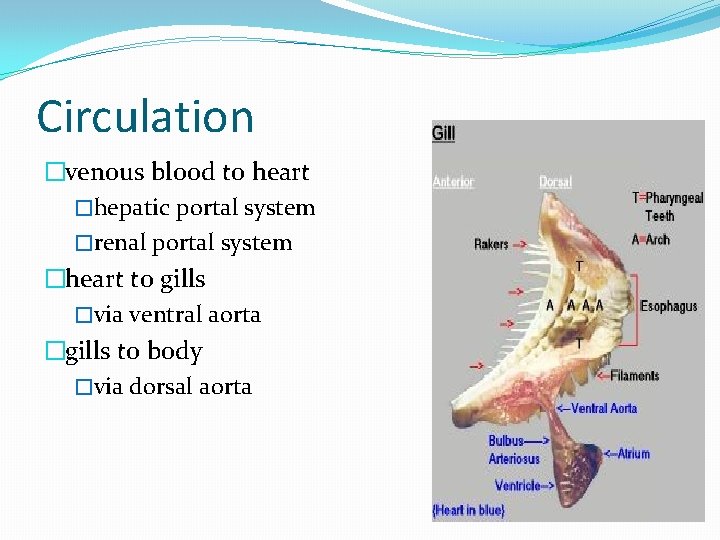
Circulation �venous blood to heart �hepatic portal system �renal portal system �heart to gills �via ventral aorta �gills to body �via dorsal aorta
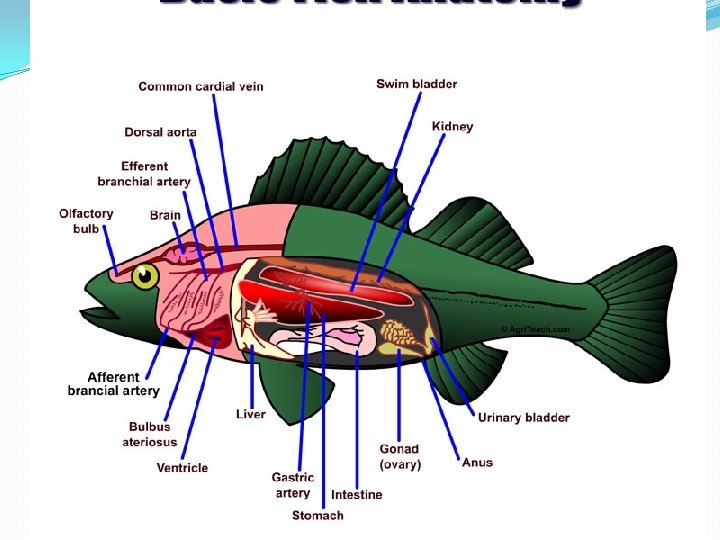
Fish Anatomy
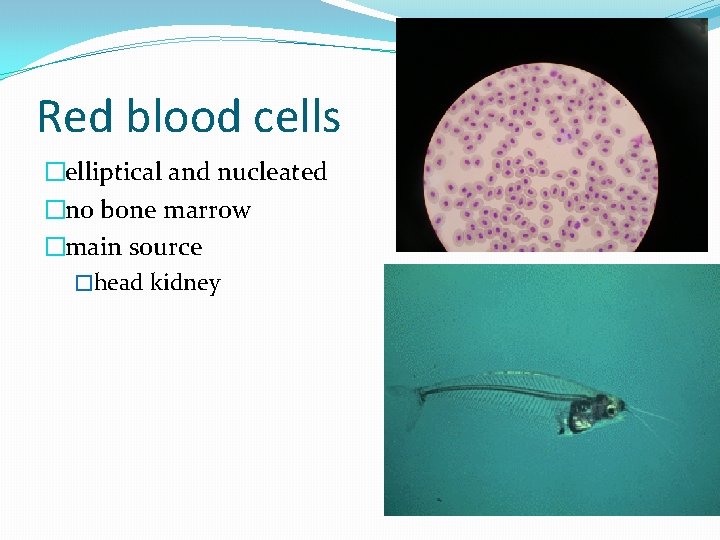
Red blood cells �elliptical and nucleated �no bone marrow �main source �head kidney
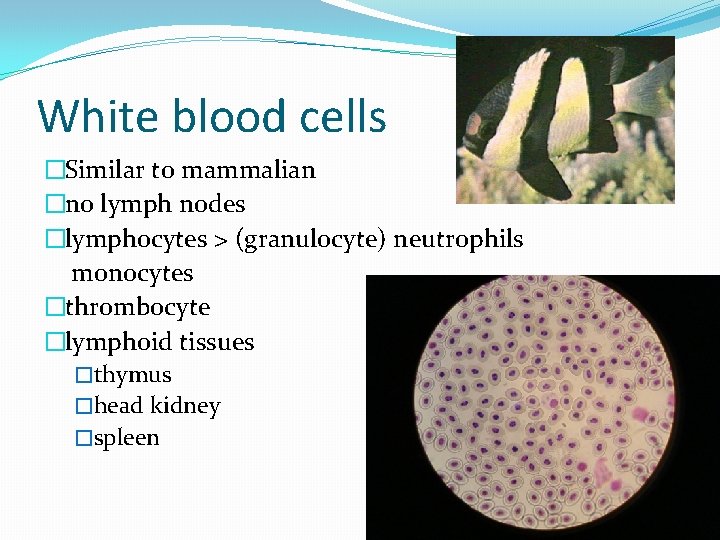
White blood cells �Similar to mammalian �no lymph nodes �lymphocytes > (granulocyte) neutrophils monocytes �thrombocyte �lymphoid tissues �thymus �head kidney �spleen
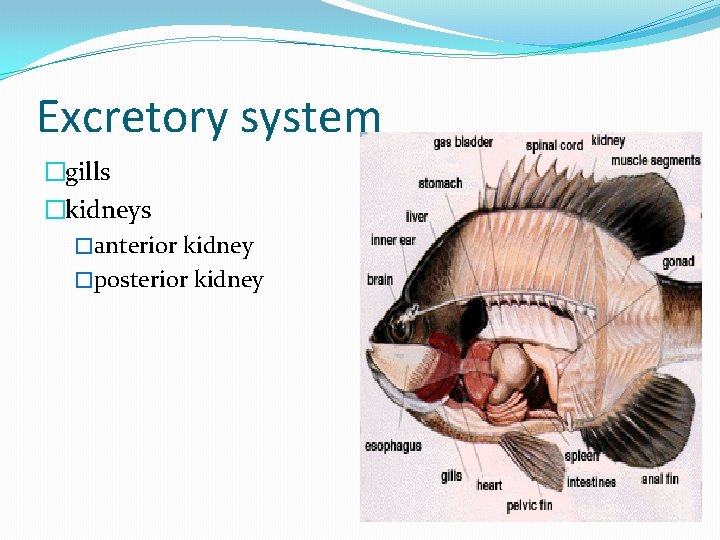
Excretory system �gills �kidneys �anterior kidney �posterior kidney
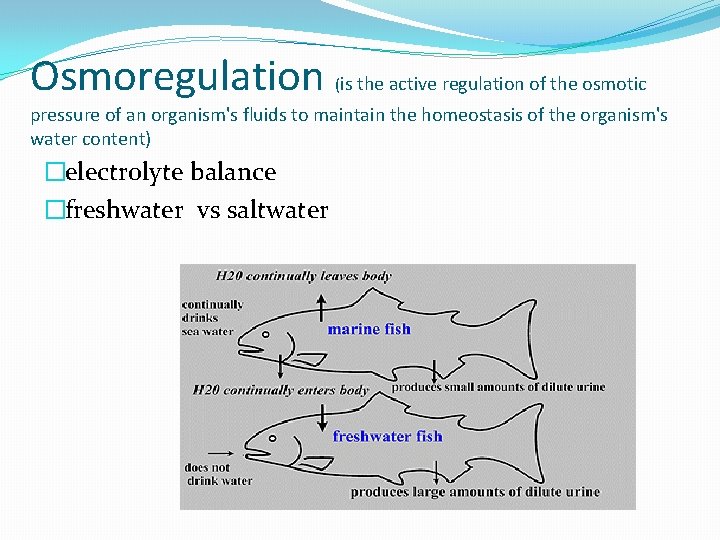
Osmoregulation (is the active regulation of the osmotic pressure of an organism's fluids to maintain the homeostasis of the organism's water content) �electrolyte balance �freshwater vs saltwater
Osmoregulation �freshwater fish �water diffuses in �ions diffuse out �drink little �lots of dilute urine �actively reabsorb ions kidneys � gills � �saltwater fish �water diffuses out �ions diffuse in �drink a lot �concentrated urine �actively excrete ions kidneys � gills � gut �
Swim bladder �Two types �physoclistic � capillary network �physostomatous � pneumatic duct �functions �buoyancy �sound, pressure detection
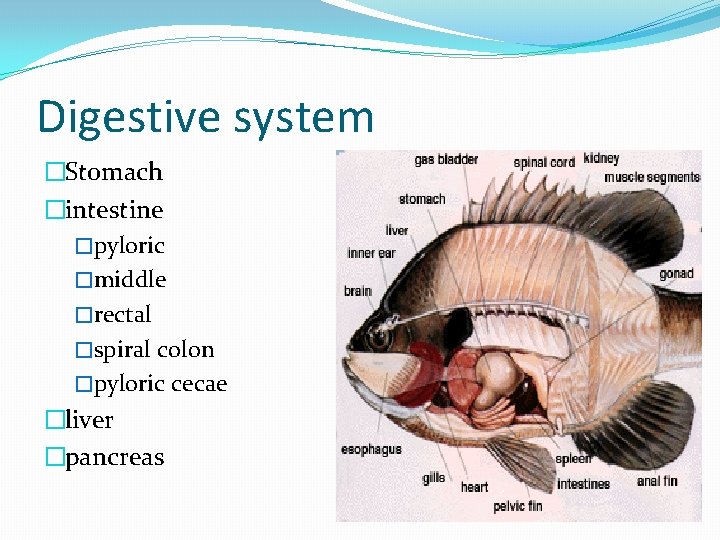
Digestive system �Stomach �intestine �pyloric �middle �rectal �spiral colon �pyloric cecae �liver �pancreas
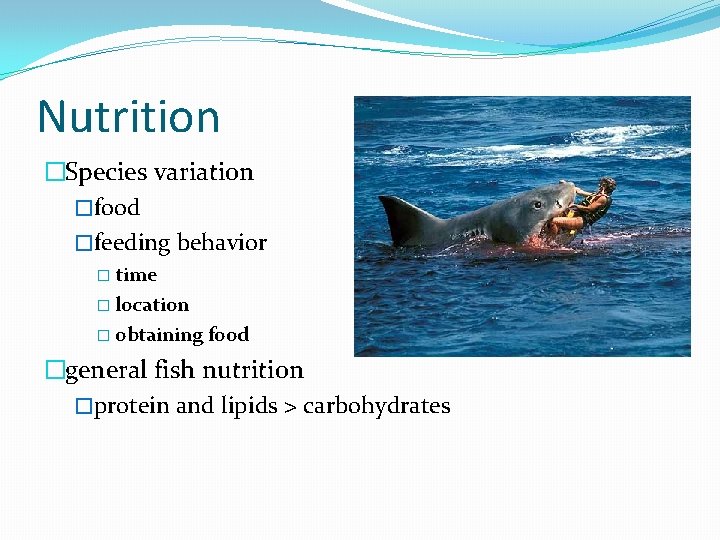
Nutrition �Species variation �food �feeding behavior � time � location � obtaining food �general fish nutrition �protein and lipids > carbohydrates
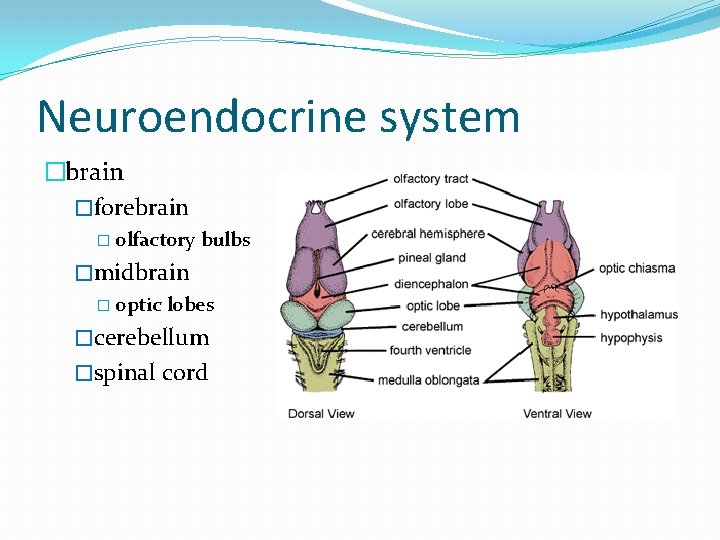
Neuroendocrine system �brain �forebrain � olfactory bulbs �midbrain � optic lobes �cerebellum �spinal cord
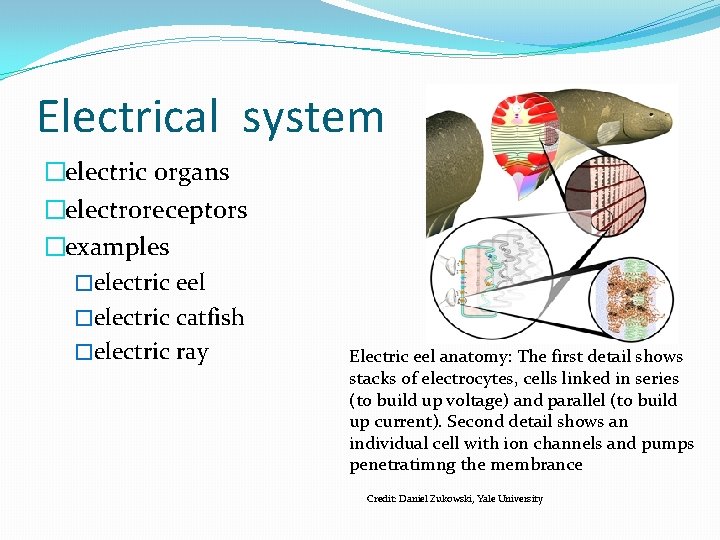
Electrical system �electric organs �electroreceptors �examples �electric eel �electric catfish �electric ray Electric eel anatomy: The first detail shows stacks of electrocytes, cells linked in series (to build up voltage) and parallel (to build up current). Second detail shows an individual cell with ion channels and pumps penetratimng the membrance Credit: Daniel Zukowski, Yale University
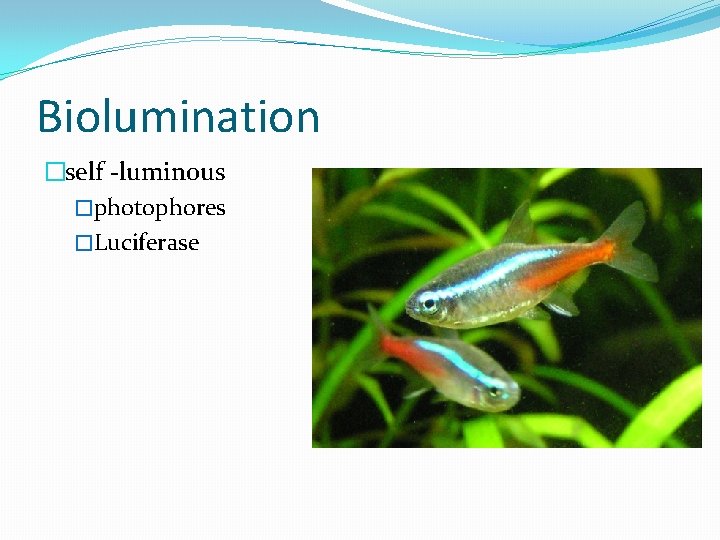
Biolumination �self -luminous �photophores �Luciferase
Breeding �females and males �hermaphrodites
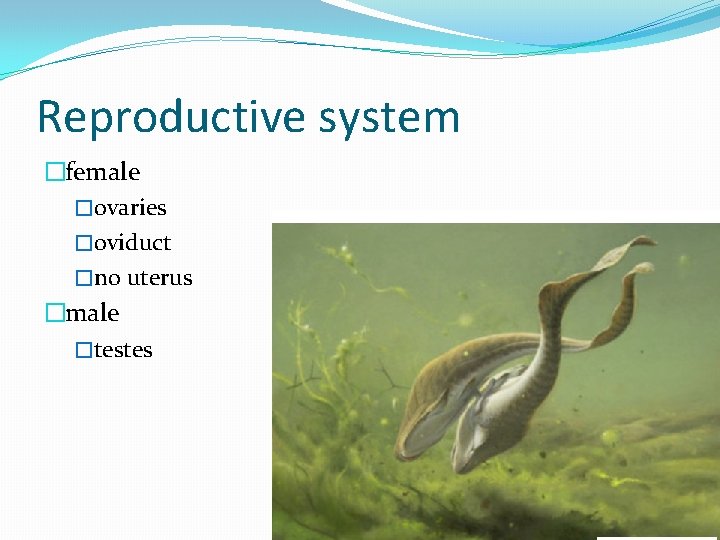
Reproductive system �female �ovaries �oviduct �no uterus �male �testes
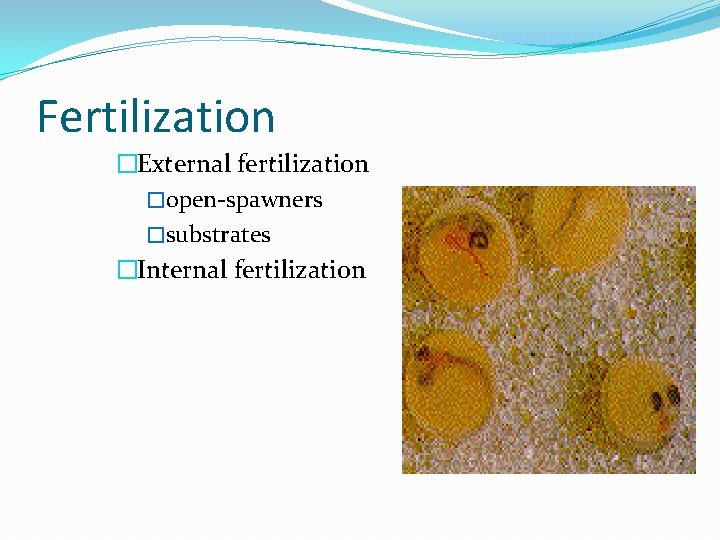
Fertilization �External fertilization �open-spawners �substrates �Internal fertilization
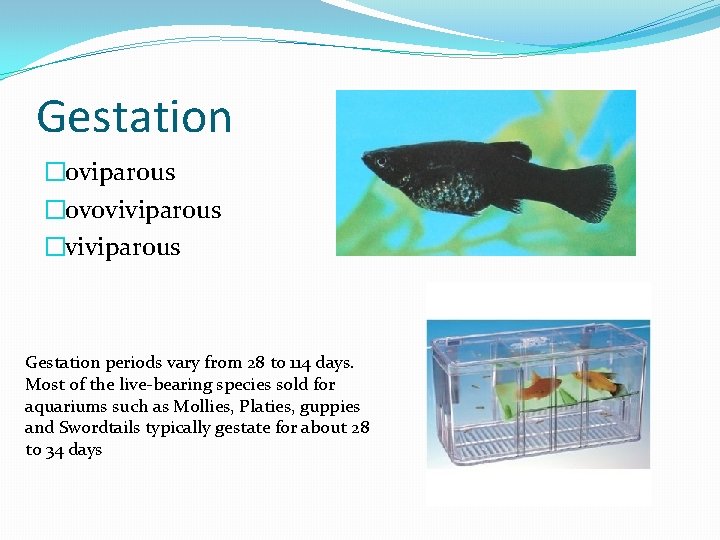
Gestation �oviparous �ovoviviparous �viviparous Gestation periods vary from 28 to 114 days. Most of the live-bearing species sold for aquariums such as Mollies, Platies, guppies and Swordtails typically gestate for about 28 to 34 days
WATER QUALITY And Husbandry
Husbandry Practices �Briefly describe housing, feeding, etc. (refer to specific laboratory standard operating procedures) �Exhibits �Disposition of alive and dead animals
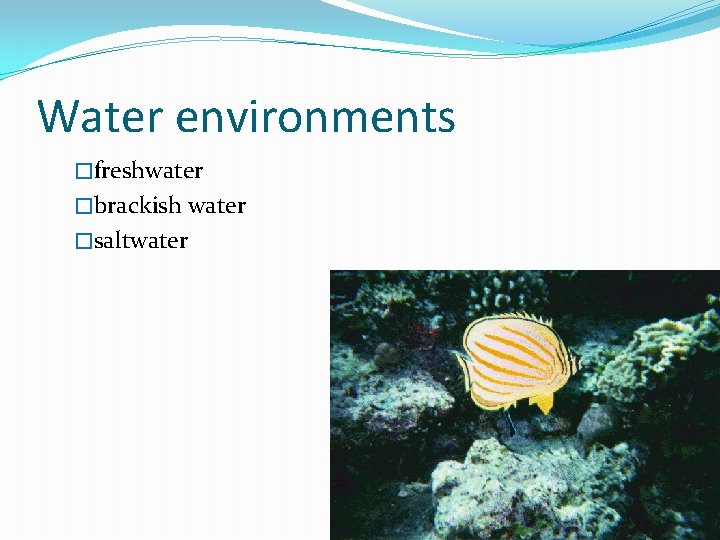
Water environments �freshwater �brackish water �saltwater
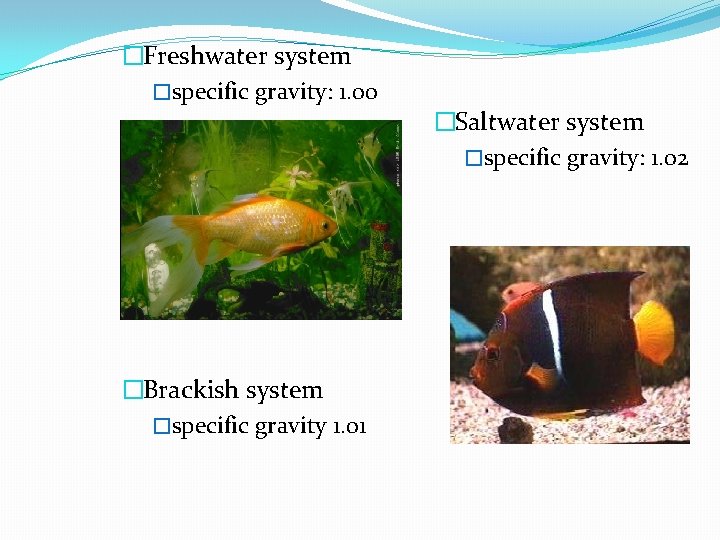
�Freshwater system �specific gravity: 1. 00 �Brackish system �specific gravity 1. 01 �Saltwater system �specific gravity: 1. 02
Bioload (is the nitrogen processing demand placed upon the material, chemical and biological filters by uneaten food, decomposing inhabitants, accumulated organics and waste produced by livestock, foods and plant matter in the aquarium filtration system) �Nonaerated freshwater � 1 inch fish/ gallon �aerated freshwater � 3 inches fish/ gallon �saltwater � 0. 5 inches fish/ gallon �excluding tail fin
Ammonia �Nitrogenous �fish waste product �toxic
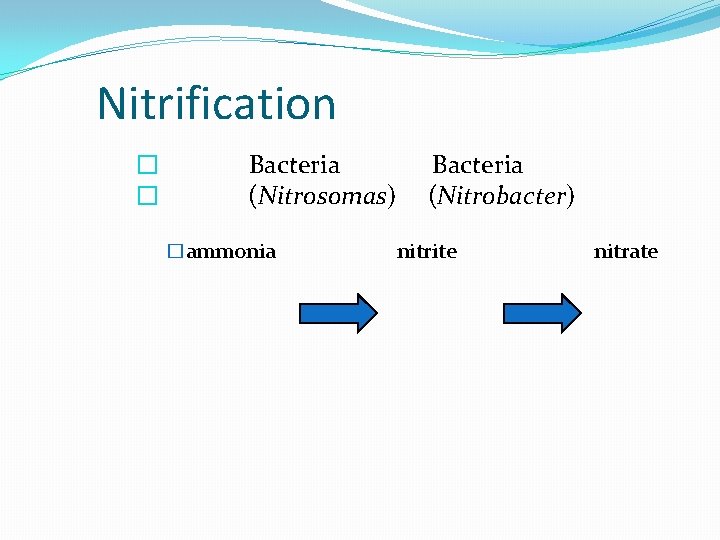
Nitrification � � Bacteria (Nitrosomas) �ammonia Bacteria (Nitrobacter) nitrite nitrate
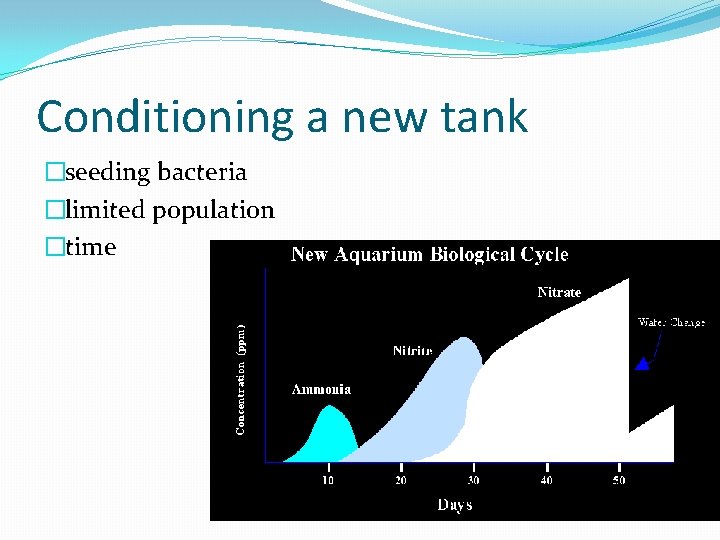
Conditioning a new tank �seeding bacteria �limited population �time
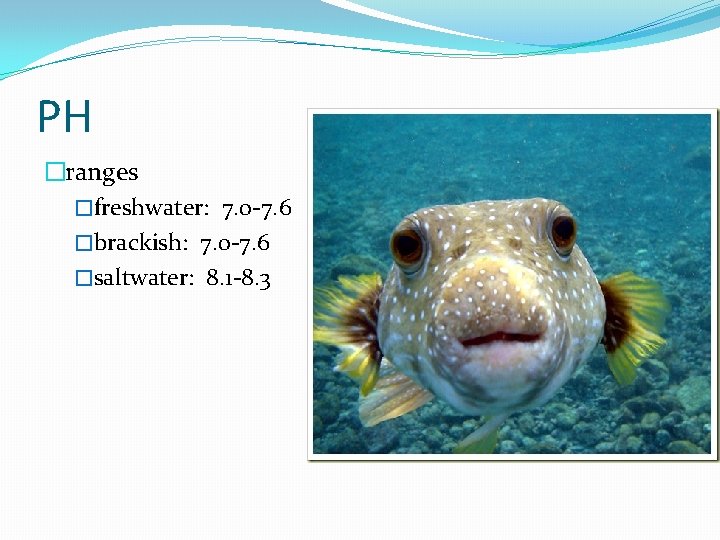
PH �ranges �freshwater: 7. 0 -7. 6 �brackish: 7. 0 -7. 6 �saltwater: 8. 1 -8. 3
Decreased PH �effects �inhibits Nitrosomas and Nitrobacter �direct health problems for fish �control �check bioload �remove waste �calcium rich substrate �sodium bicarbonate � temporary
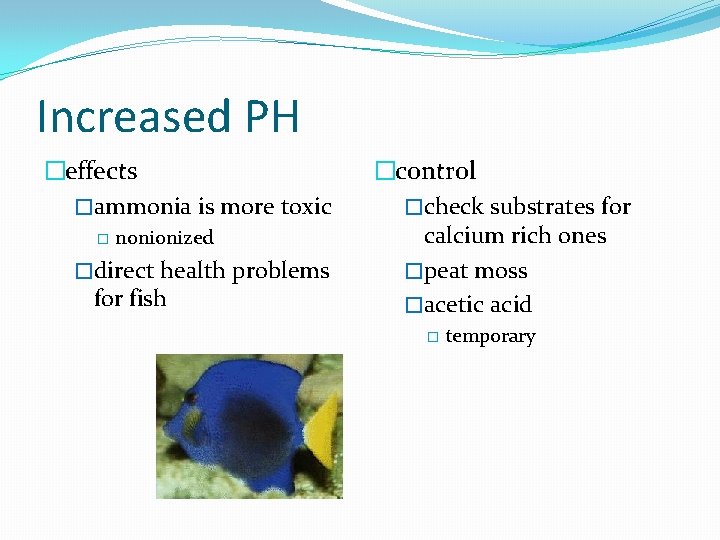
Increased PH �effects �ammonia is more toxic � nonionized �direct health problems for fish �control �check substrates for calcium rich ones �peat moss �acetic acid � temporary
Oxygen �water: 0. 7% dissolved oxygen �oxygen solubility decreases as: �temperature increases �salinity increases �low oxygen effects: �respiratory distress in fish �inhibits Nitrosomas and Nitrobacter
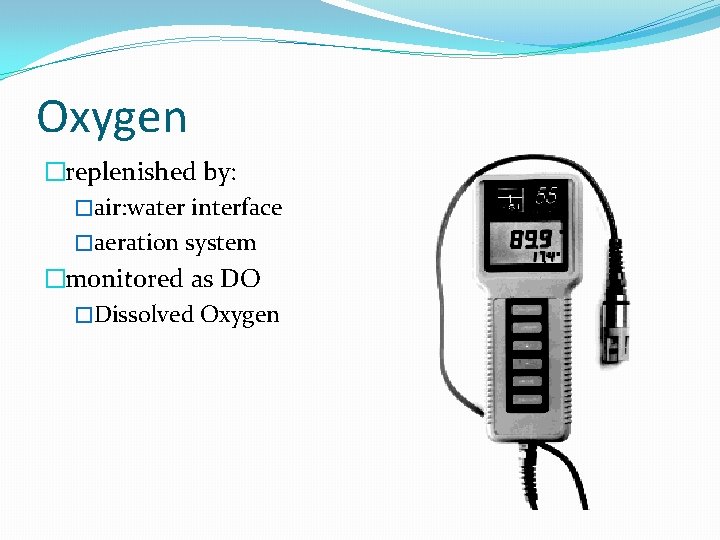
Oxygen �replenished by: �air: water interface �aeration system �monitored as DO �Dissolved Oxygen
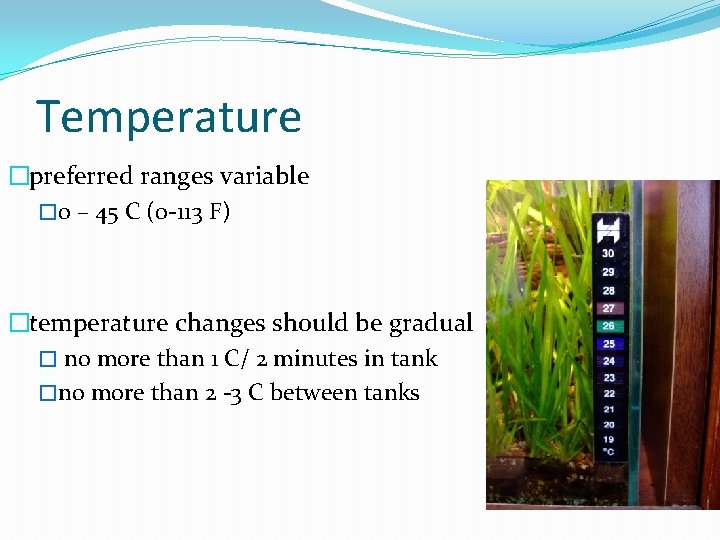
Temperature �preferred ranges variable � 0 – 45 C (0 -113 F) �temperature changes should be gradual � no more than 1 C/ 2 minutes in tank �no more than 2 -3 C between tanks
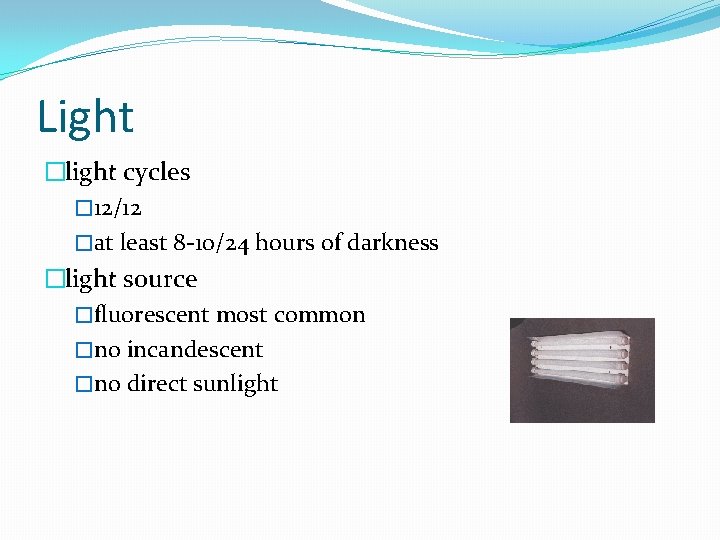
Light �light cycles � 12/12 �at least 8 -10/24 hours of darkness �light source �fluorescent most common �no incandescent �no direct sunlight
Chlorine/ Chloramines �toxic/ lethal to fish �removal �aeration and time �sodium thiosulfate �carbon filter
Heavy metals �toxic/lethal to fish �sources �metal pipes �metal tank frames �metal decoration �saltwater �extremely corrosive to metals
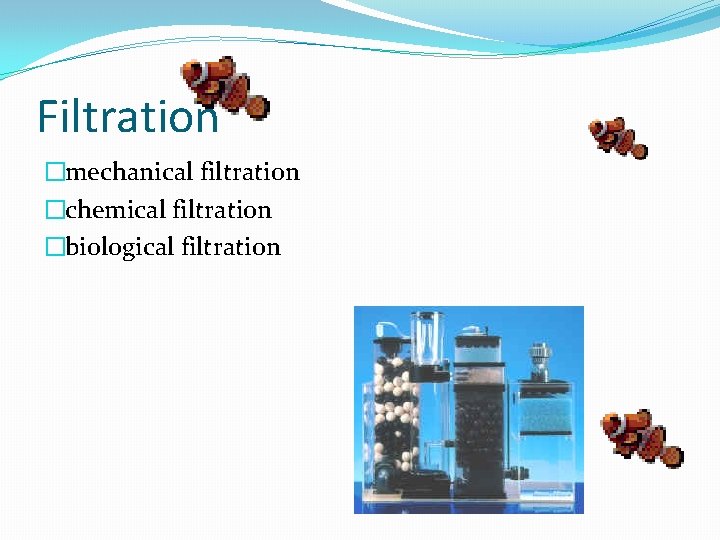
Filtration �mechanical filtration �chemical filtration �biological filtration
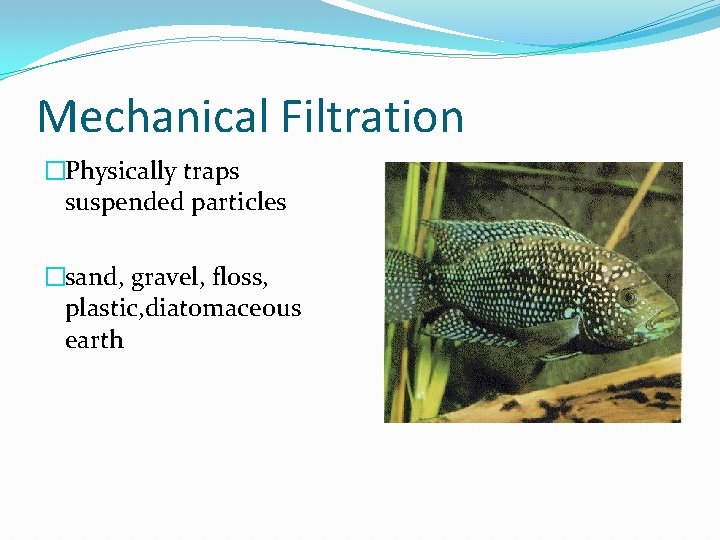
Mechanical Filtration �Physically traps suspended particles �sand, gravel, floss, plastic, diatomaceous earth
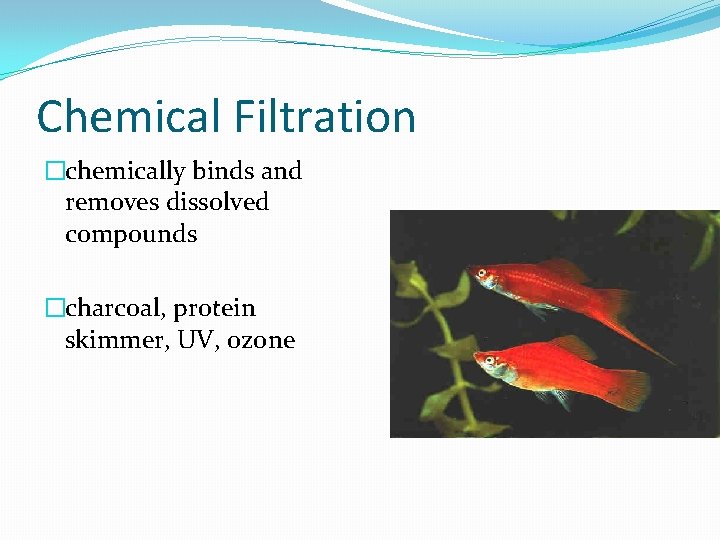
Chemical Filtration �chemically binds and removes dissolved compounds �charcoal, protein skimmer, UV, ozone
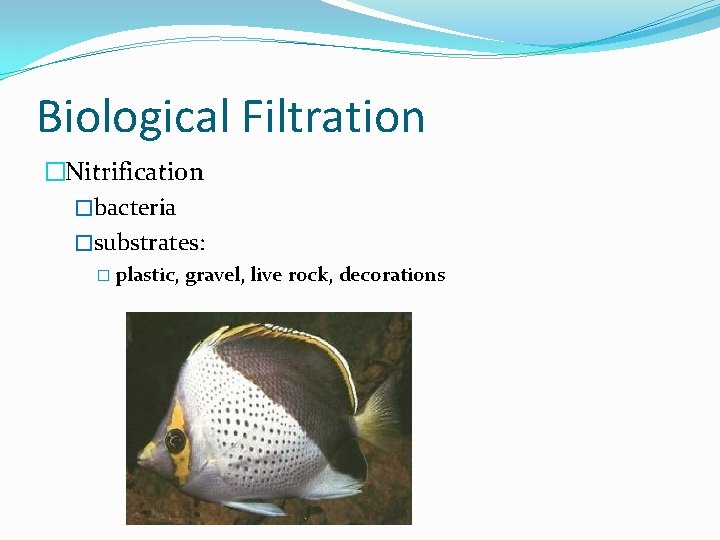
Biological Filtration �Nitrification �bacteria �substrates: � plastic, gravel, live rock, decorations
The Importance of Good Water Quality
Causes of Stress �water quality (O 2, ammonia, nitrite, p. H, other contaminants) �transportation �netting & handling �temperature �salinity �water hardness �poor nutrition �inappropriate housing conditions �noise �lighting �vibrations �stocking density
Stress Response � Sympathetic nervous system activation � cortisol � HR, RR � serum osmolality � glucose �Immunosuppression ( disease resistance) � growth rate � reproduction rate �delayed “capture” mortality
Common Pathogens and Parasites �Pathogens Aeromonas salmonicida · Columnaris· Enteric redmouth · Fin rot · Fish dropsy · Flavobacterium · Hematopoietic necrosis· Heterosigma akashiwo · Hole in the head · Hypodermal and hematopoietic necrosis · Infectious pancreatic necrosis· Koi herpes virus · Novirhabdovirus · Pfiesteria piscicida · Photobacterium damselae ssp piscicida · Salmon anemia · Streptococcus iniae · Taura syndrome · White spot · Yellowhead �Parasites Abergasilus · Amoebic gill disease · Carp lice · Ceratomyxa shasta · Dactylogyrus vastator · Diphyllobothrium · Flukes · Glugea · Gyrodactylus salaris · Henneguya zschokkei · Ich (freshwater) · Ich (marine) · Kudoa thyrsites · Myxobolus cerebralis · Nanophyetus salmincola · Salmon lice · Saprolegnia · Schistocephalus solidus · Sea louse · Sphaerothecum destruens · Swim bladder disease · Tetracapsuloides bryosalmonae
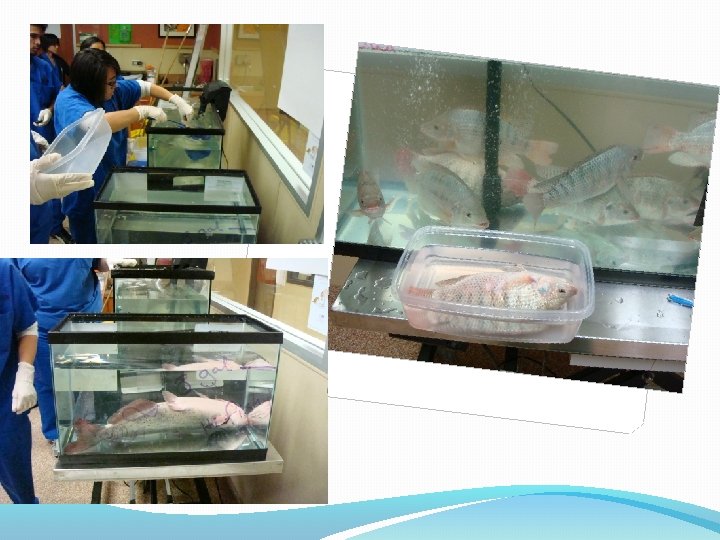
Anesthesia �Consider for painful/stressful procedures and preeuthanasia �Ice water (transport) - be careful �Chemical - MS-222, Benzocaine �Dose is species specific
MS-222 �tricaine methanesulfate, ethyl-manimobenzoate methansulfate, Finquel® �CNS depressant �water soluble but acidic (add buffer) �admin. via bath or recirculating system �for anesthesia 50 -100 mg/L recommended (sedation vs surgical) �dose may be species specific - test before experiment
MS-222 con’t �induction w/in 3 minutes �recovery w/in 10 -15 minutes after removal �is residual +/- could affect chemical analysis of tissue �no known hazards but wear gloves!
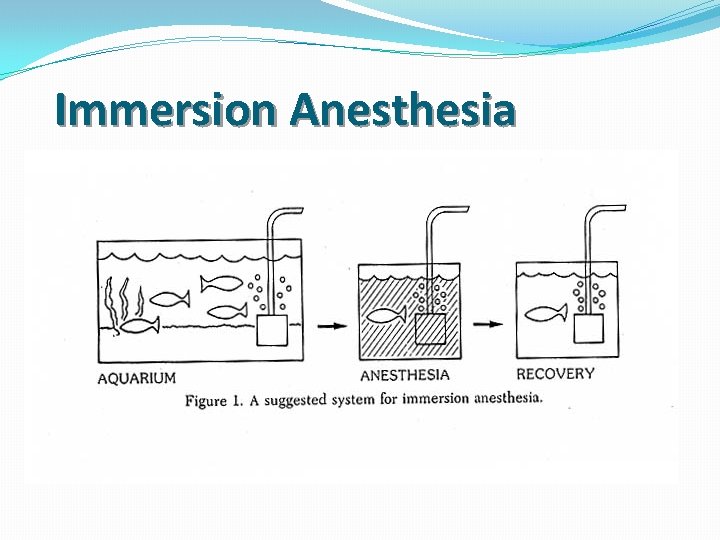
Immersion Anesthesia
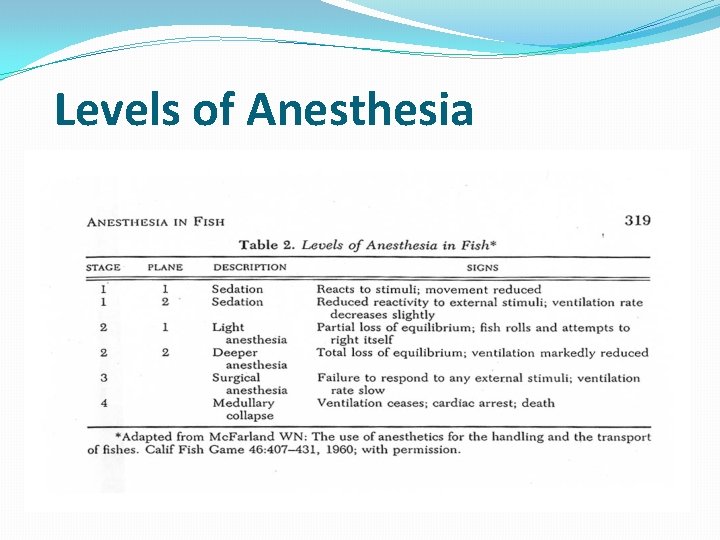
Levels of Anesthesia
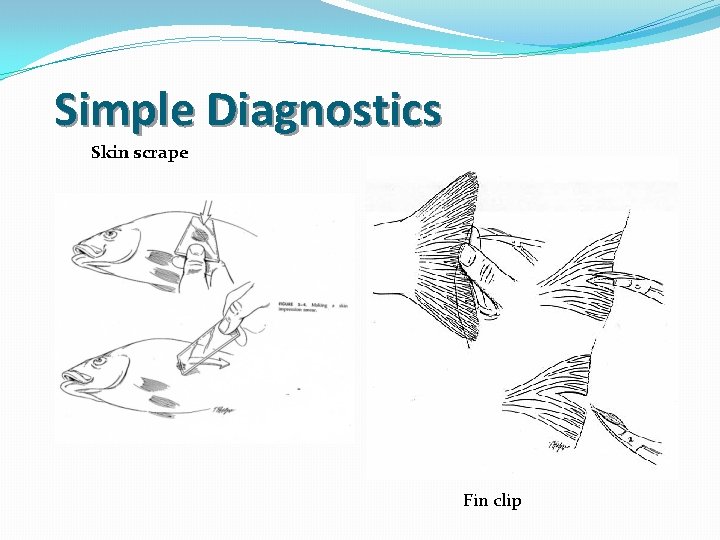
Simple Diagnostics Skin scrape Fin clip
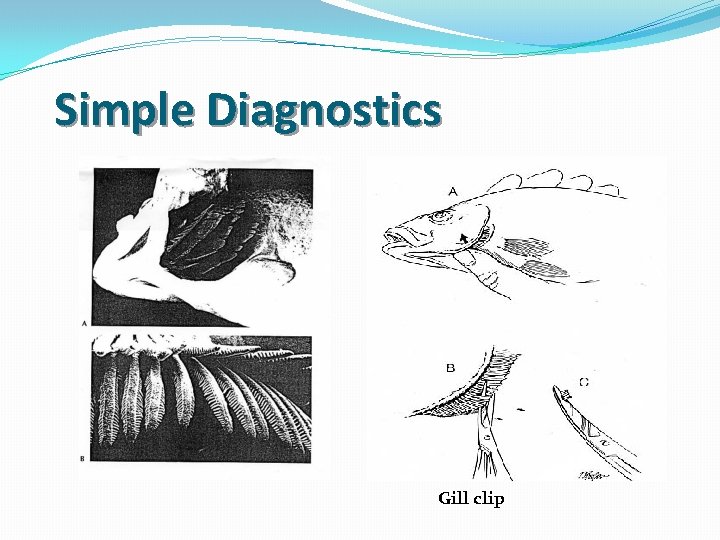
Simple Diagnostics Gill clip
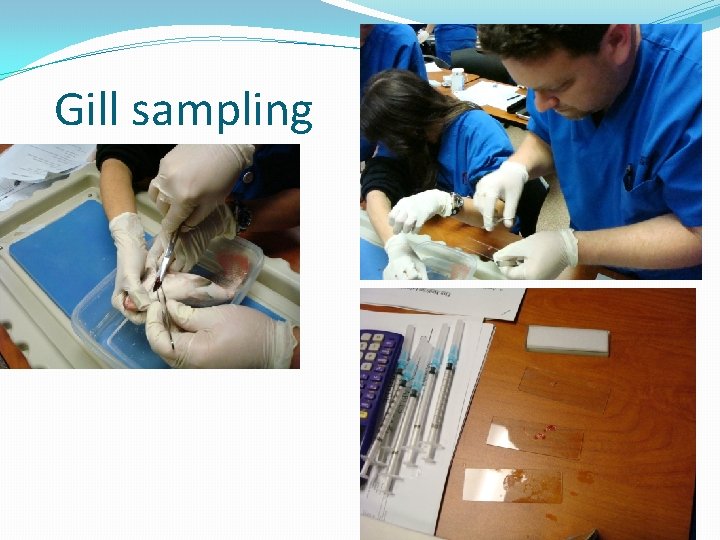
Gill sampling
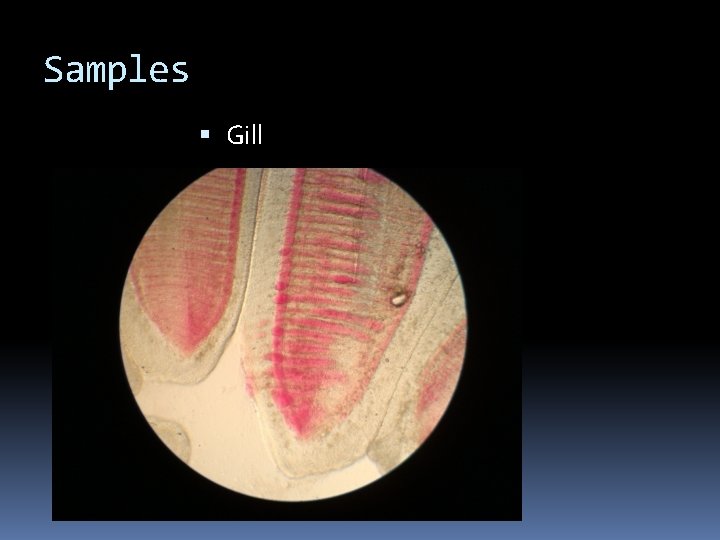
Samples Gill

samples Scale Fin
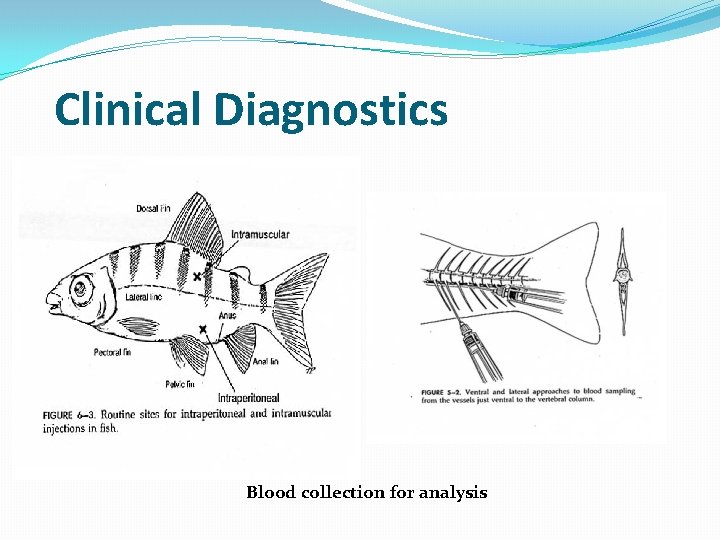
Clinical Diagnostics Blood collection for analysis
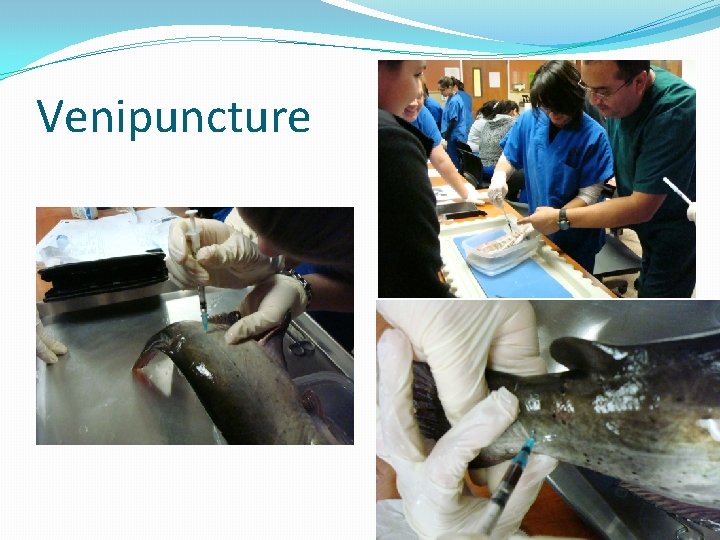
Venipuncture
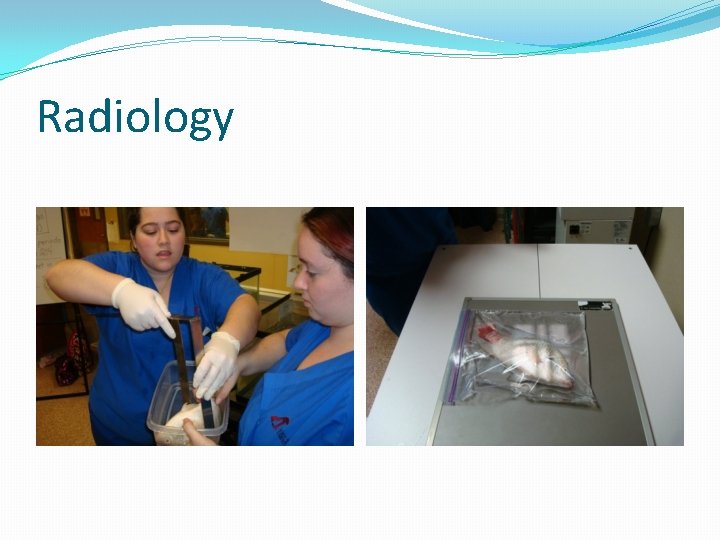
Radiology
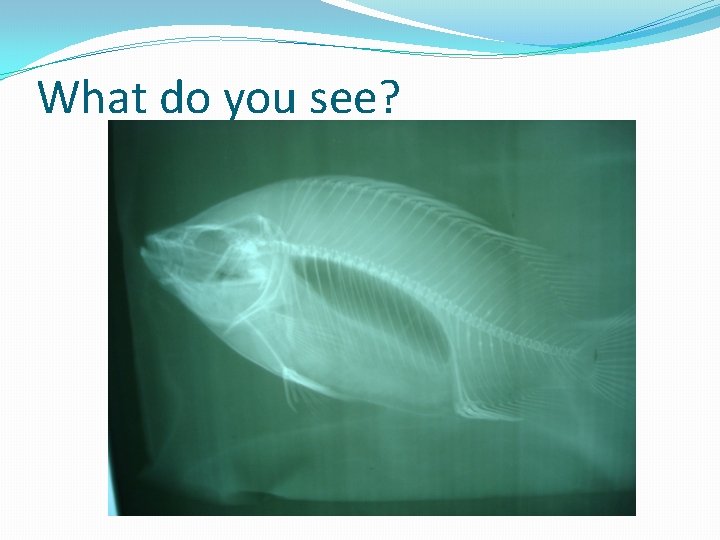
What do you see?
Euthanasia �+/- pre-sedation with MS-222 �decapitation �pithing �chemical (MS-222) �requires experience!!! �avoid direct insertion into fixative (alcohol or formalin)
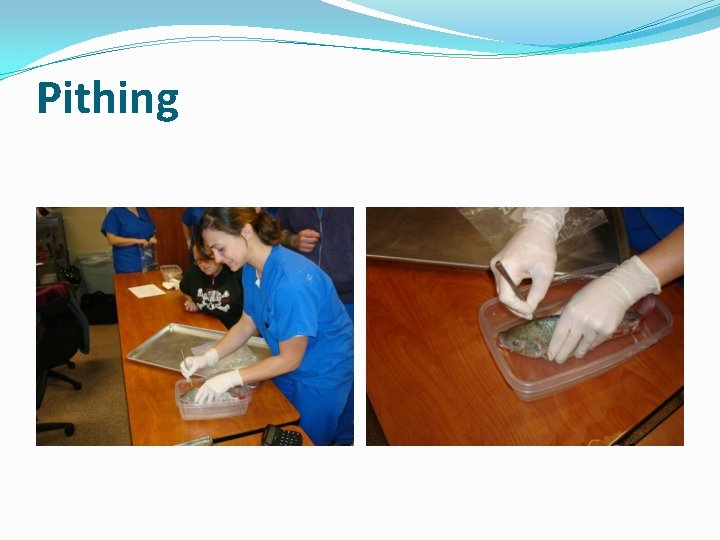
Pithing
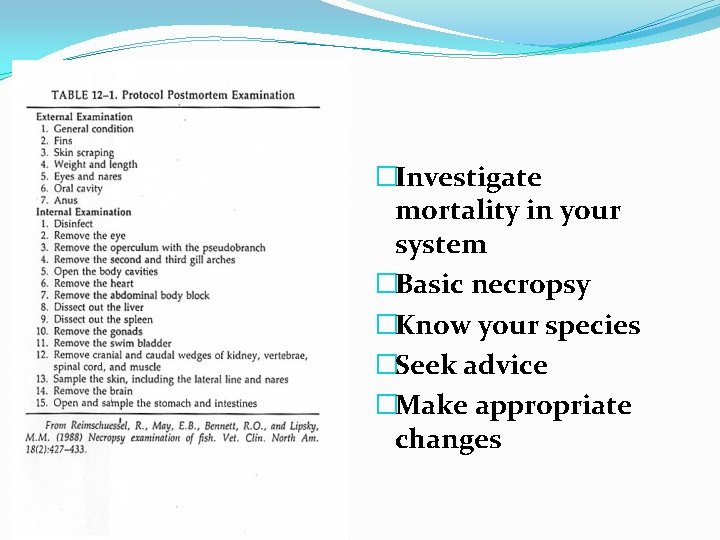
�Investigate mortality in your system �Basic necropsy �Know your species �Seek advice �Make appropriate changes
Environmental Safety �infectious agents �chemical hazards (include MS-222) �biohazards
ZOONOSIS �Zoonosis = disease that can be transmitted from animals to humans (or other animals) �Anthroponosis = disease that can be transmitted from humans to animals �High Risk immunosupressed (AIDs, other debilitating disease) � pregnant � age � �Exposure (infected water, fish tissue, fish excrement) dermal contact via skin abrasion, fissure � ingestion �
Zoonotic Diseases �Potential for disease organisms to spread between species (fish human) �Bacteria - from handling (mycobacterium, streptococcus, erysipelothrix, vibrio, norcardia, aeromonas, edwardsiella) from ingestion (staphylcoccus, clostridium, vibrio, aeromonas, elerichia, salmonella, edwardsiella) �Parasites - primarily from ingestion (nematodes, cestodes, trematodes, protozoa). �Toxins - primarily from ingestion (ciguatera, scombroid, dinoflagellates toxins)

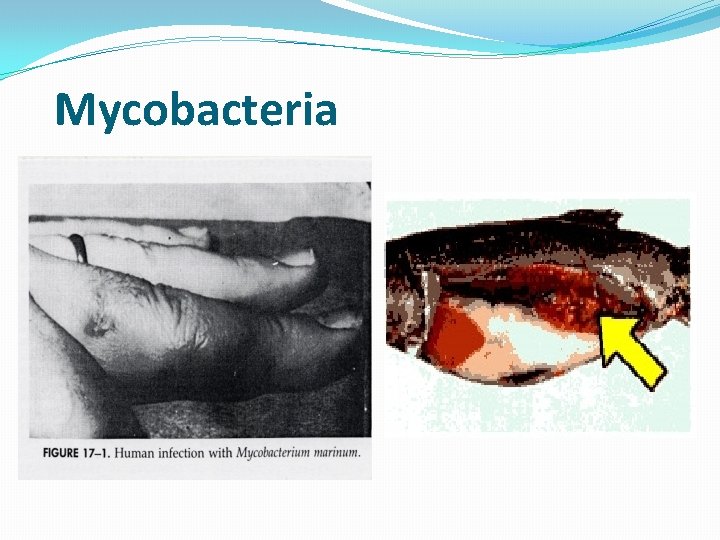
Mycobacteria
PREVENTION �Fish � Know health of your fish � Proper husbandry/aquaculture � Minimum - wear gloves when handling �All Wildlife � Know the hazards � Take all necessary “known”precautions � DO YOUR HOMEWORK!!!
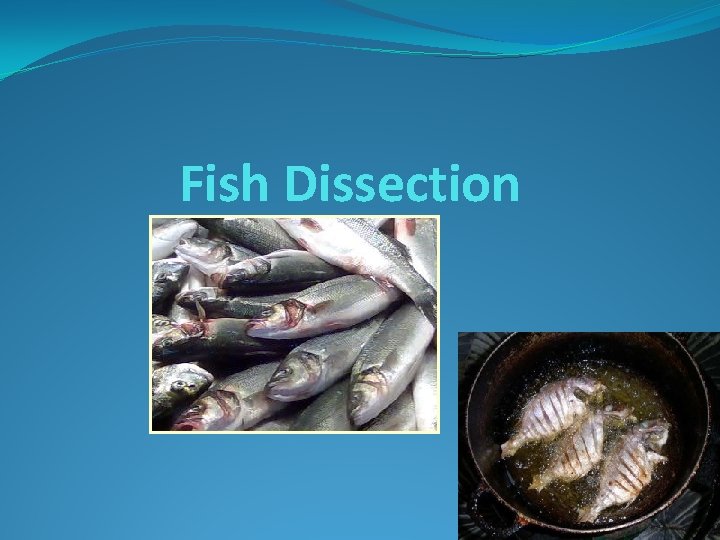
Fish Dissection
Preparation & Examination �Locate major external anatomical parts: � Dorsal Fin � Posterior Dorsal � Pectoral Fins � Pelvic Fins � Anal Fins � Caudal Fin � Gill Covers (operculum) � Lateral line - sensory organ of fish �Remove several scales �Prepare a dry-mount of a scale. �Observe it under a microscope �What function do you think scales serve?
Dissection �Remove operculum with scissors � Observe gill anatomy � � Rakers - white, comb-like arches Filaments - Red fingerlike projections �With a scalpel, remove a section of the lateral line � What function does this organ serve? � Do you notice a concentration of nerve endings? �Begin the main incision � Open the abdomen (below the gill) carefully with a scalpel � Cut with a scissors: remove a oval-shaped piece of skin (only skin) running from underneath the gills, to the anus, up to the lateral line, along the lateral line, to the gill, down to where you started the incision. Remove flap of skin (see diagram on next slide)
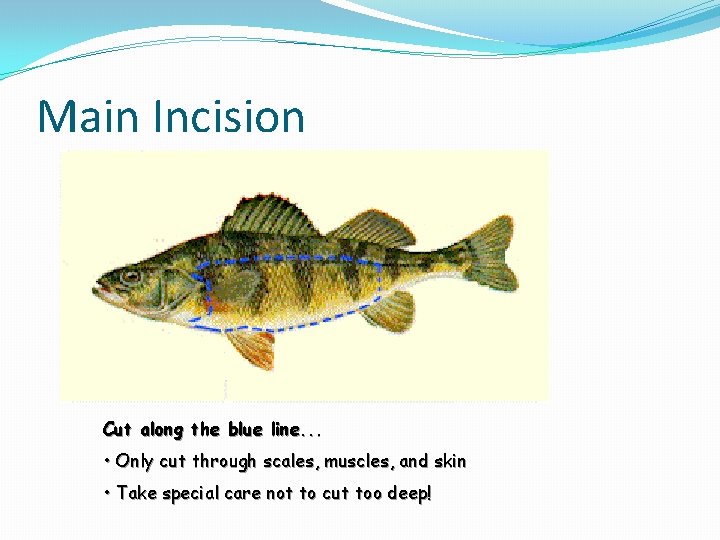
Main Incision Cut along the blue line. . . • Only cut through scales, muscles, and skin • Take special care not to cut too deep!
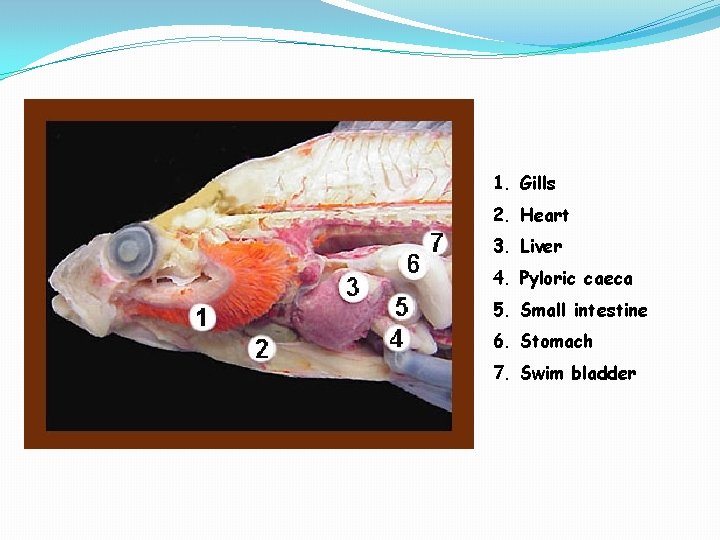
Anterior View 1. Gills 2. Heart 3. Liver 4. Pyloric caeca 5. Small intestine 6. Stomach 7. Swim bladder
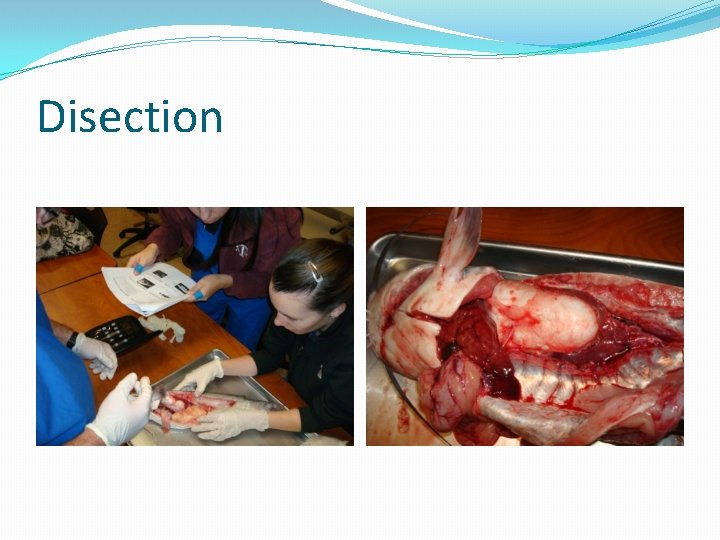
Disection
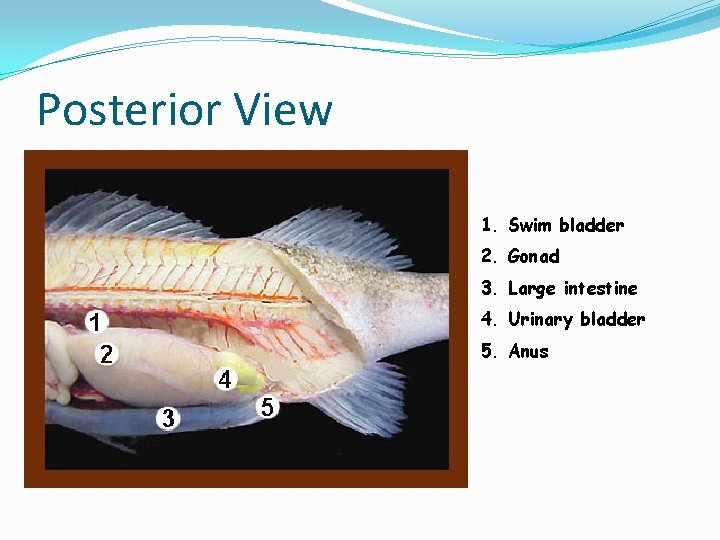
Posterior View 1. Swim bladder 2. Gonad 3. Large intestine 4. Urinary bladder 5. Anus
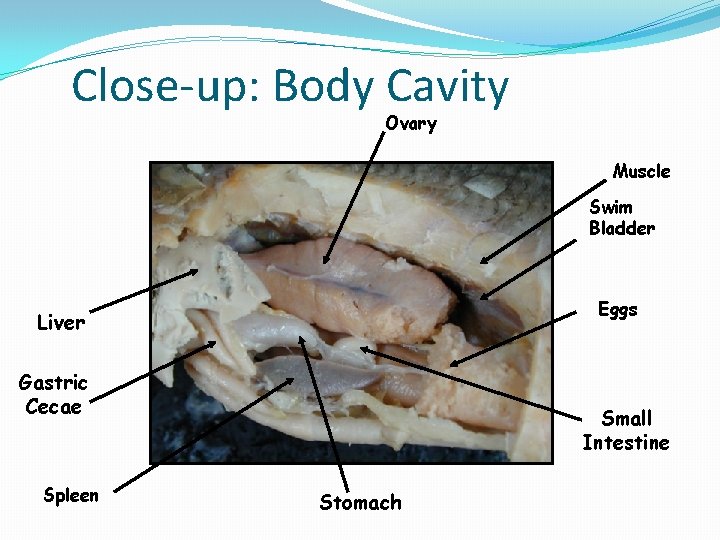
Close-up: Body Cavity Ovary Muscle Swim Bladder Eggs Liver Gastric Cecae Spleen Small Intestine Stomach
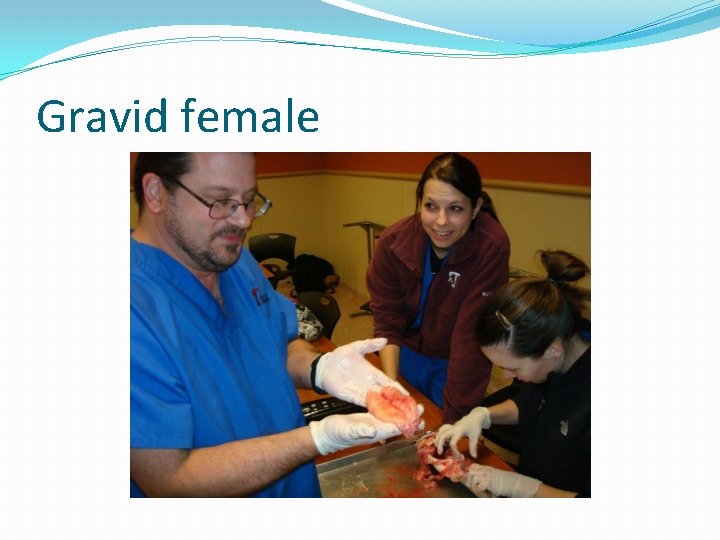
Gravid female
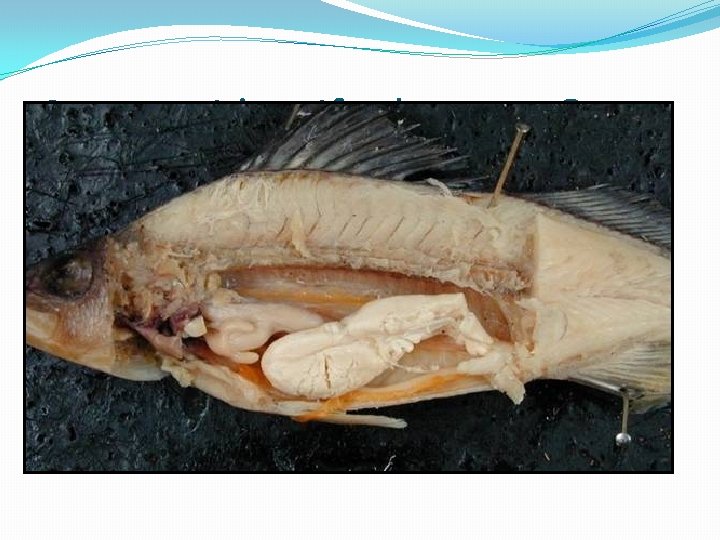
Can you identify the parts?
I found him
References �Can Fish Suffer? : perspectives on sentience, pain, fear and stress; K. P. Chandroo et al. /Applied Animal Behaviour Science 86 (2004) 225 -250 �Fish Cognition and Behavior; Culum Brown et al. ; Blackwell Publishing (2006) ISBN: 9781405134293 �Fish Medicine; Michael Stoskopf, W. B. Saunders Company; 1 st edition (January 15, 1993) ISBN: 0721626297
- Slides: 99