
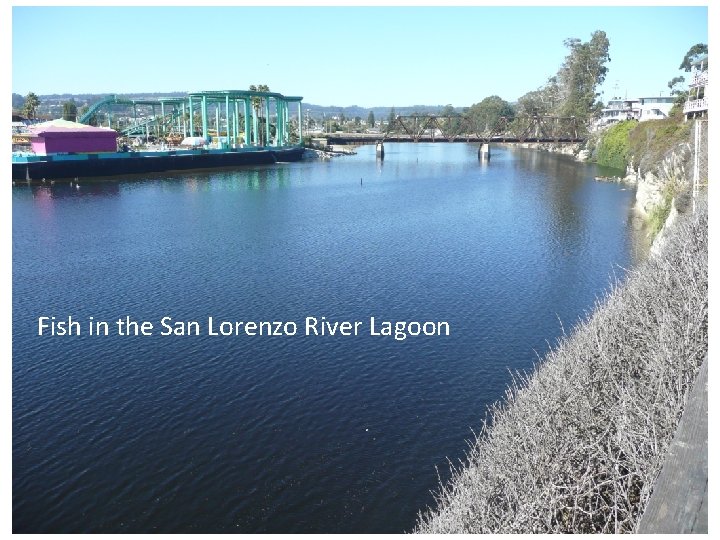
Fish in the San Lorenzo River Lagoon 1

- Slides: 40
Fish in the San Lorenzo River Lagoon 1
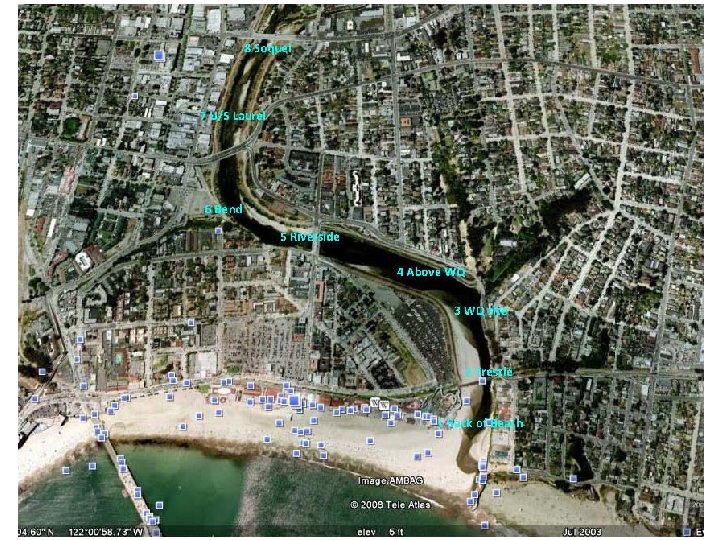
2
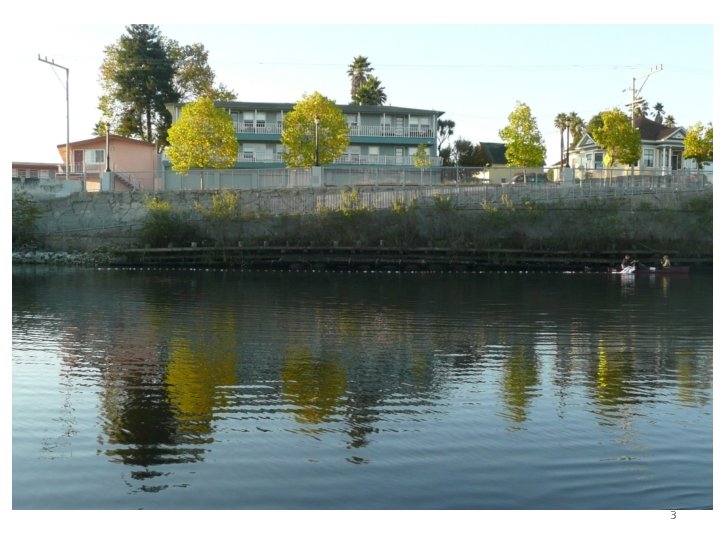
3
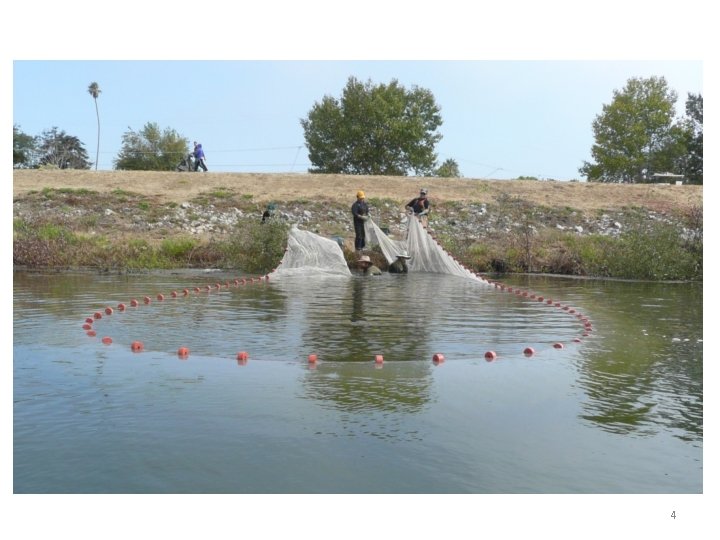
4
5
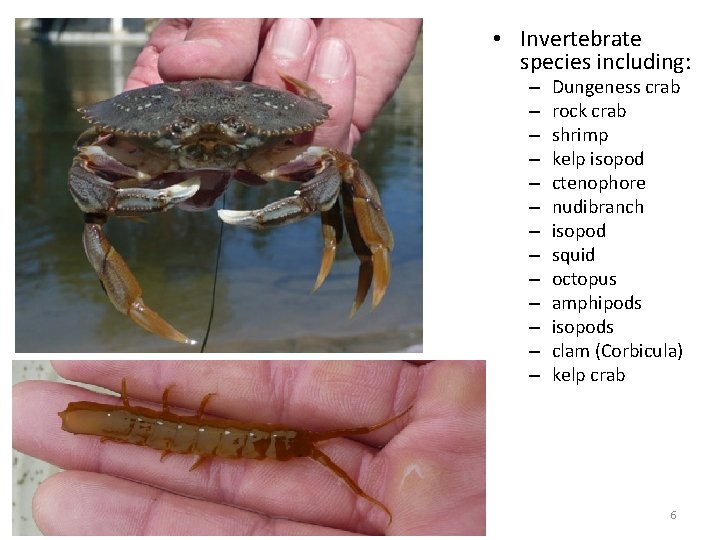
• Invertebrate species including: – – – – Dungeness crab rock crab shrimp kelp isopod ctenophore nudibranch isopod squid octopus amphipods isopods clam (Corbicula) kelp crab 6
Patterns of Use Marine Transients Estuary Dependent Estuary/Marine Migratory-Anadromous 7
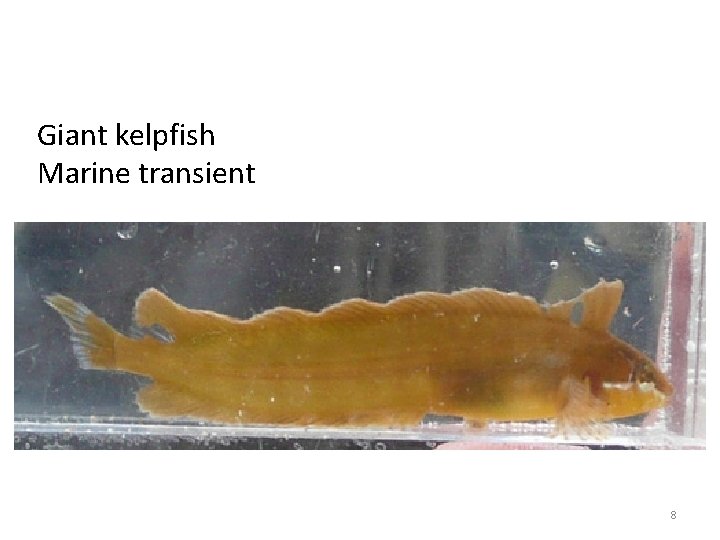
Giant kelpfish Marine transient 8
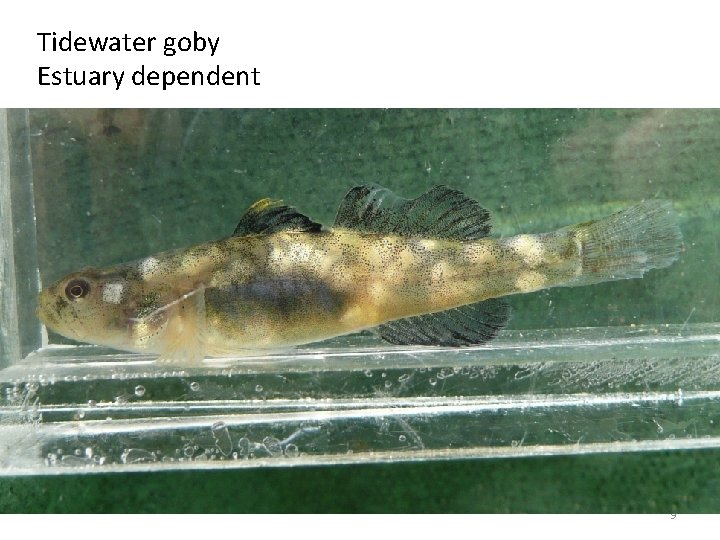
Tidewater goby Estuary dependent 9
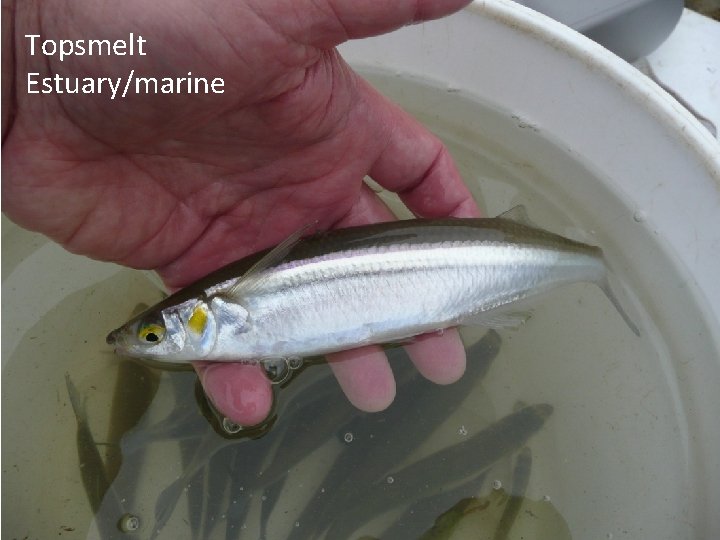
Topsmelt Estuary/marine 10
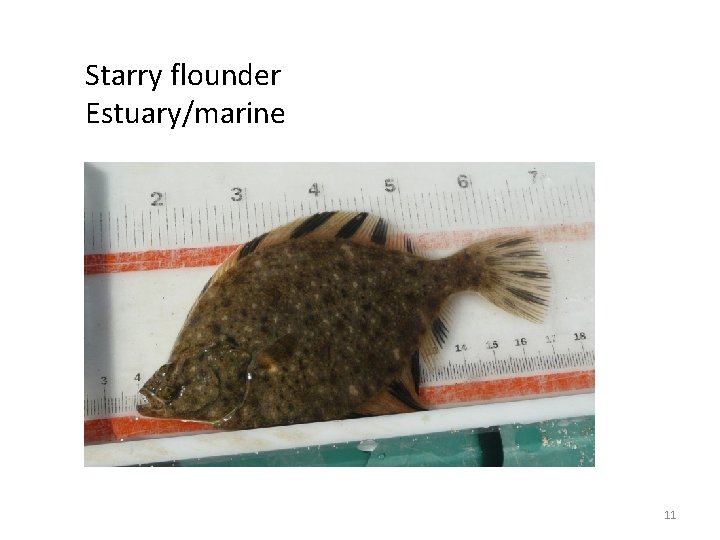
Starry flounder Estuary/marine 11
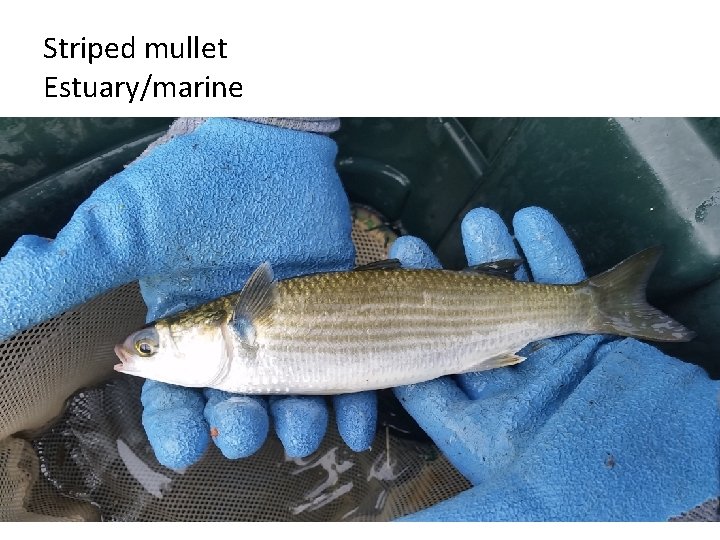
Striped mullet Estuary/marine 12
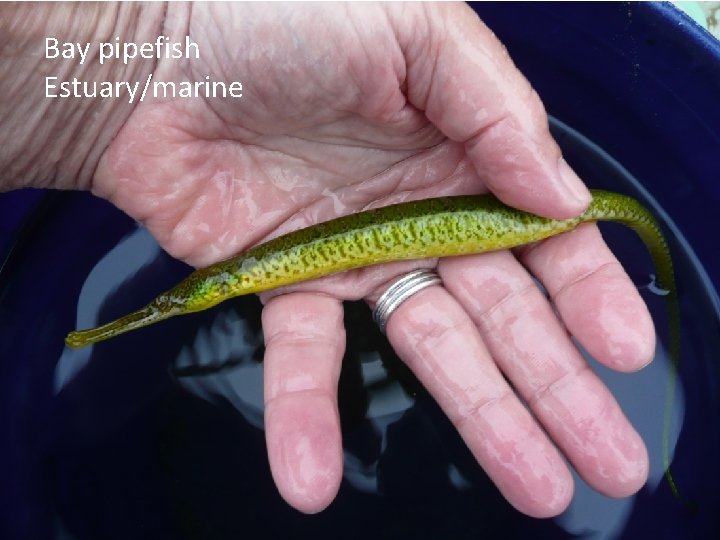
Bay pipefish Estuary/marine 13
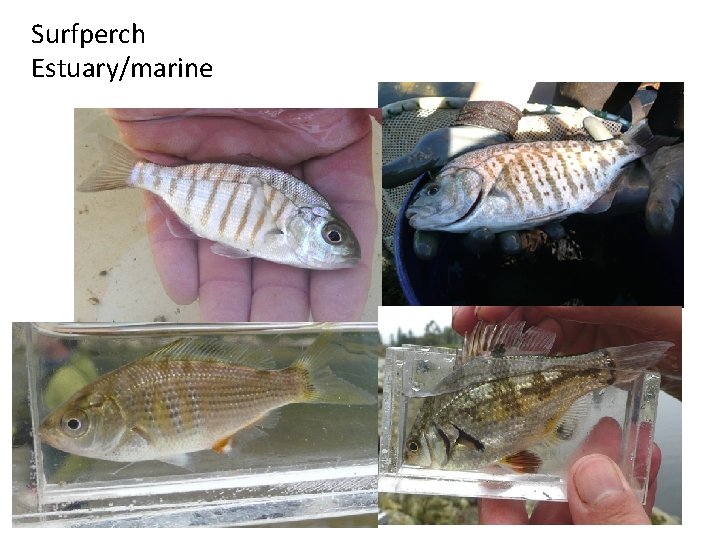
Surfperch Estuary/marine 14
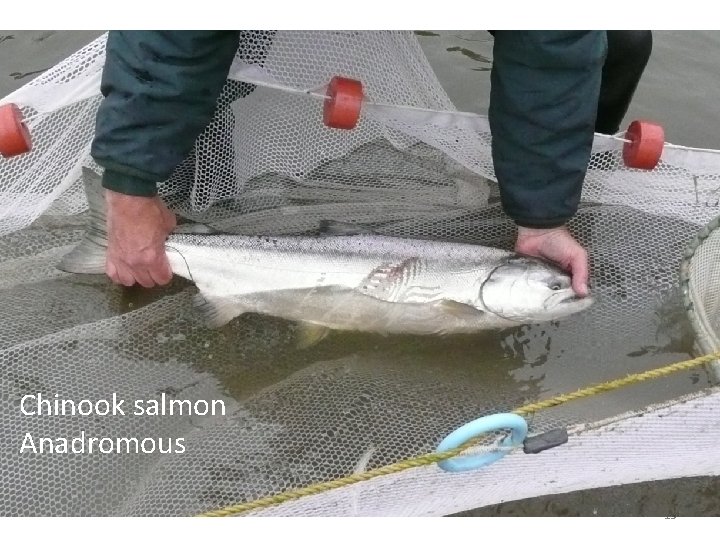
Chinook salmon Anadromous 15
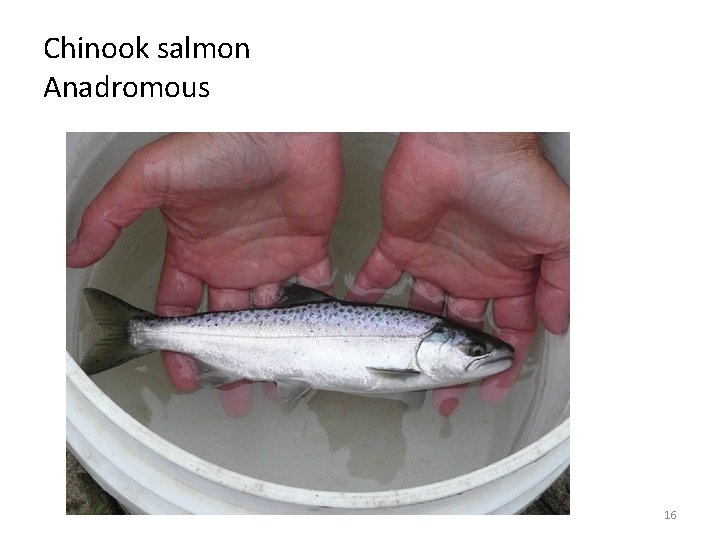
Chinook salmon Anadromous 16
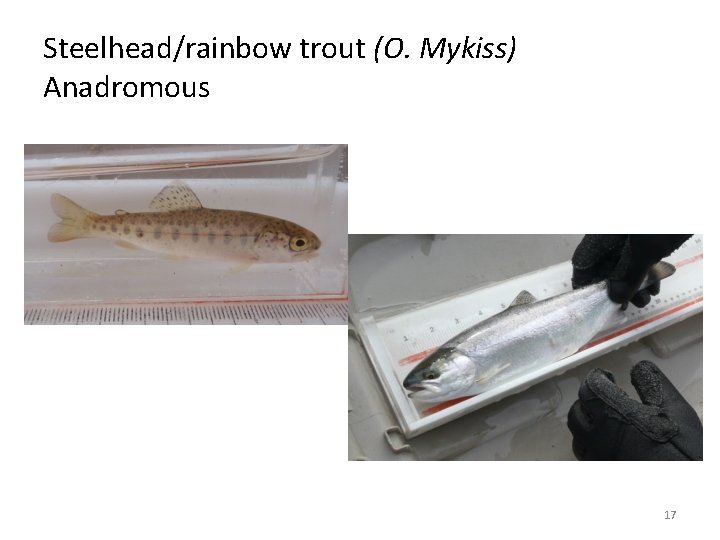
Steelhead/rainbow trout (O. Mykiss) Anadromous 17
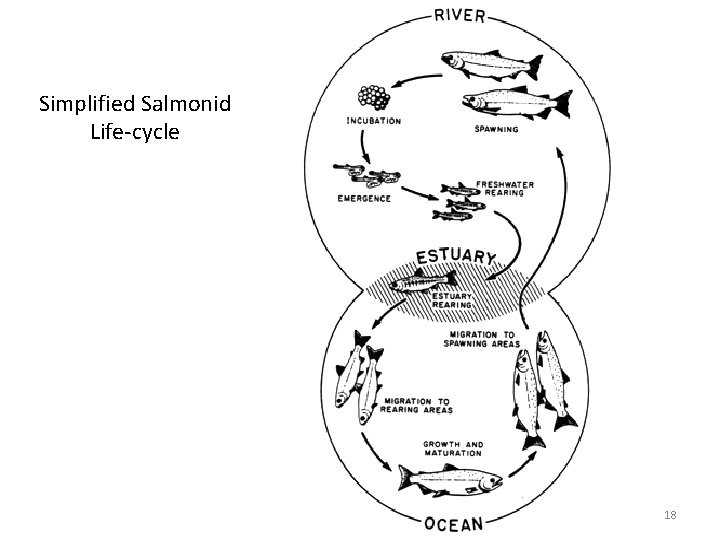
Simplified Salmonid Life-cycle 18
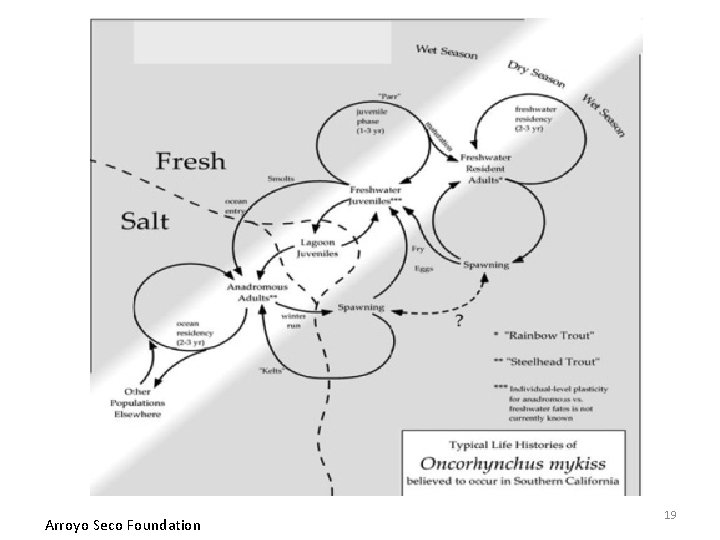
Arroyo Seco Foundation 19
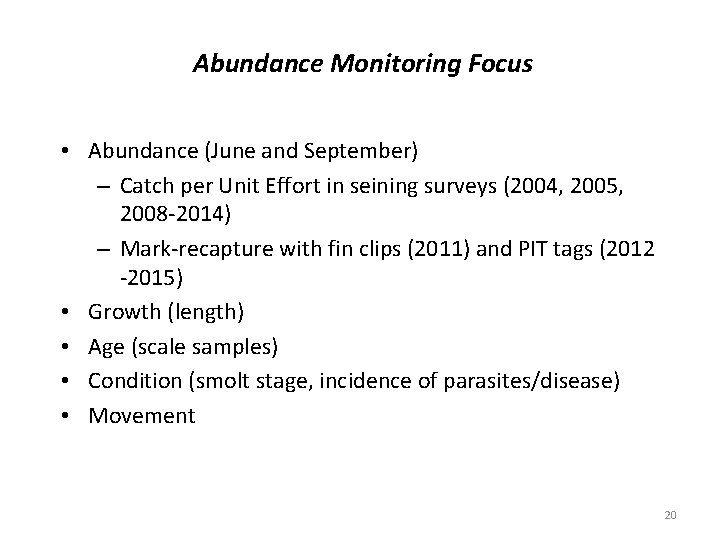
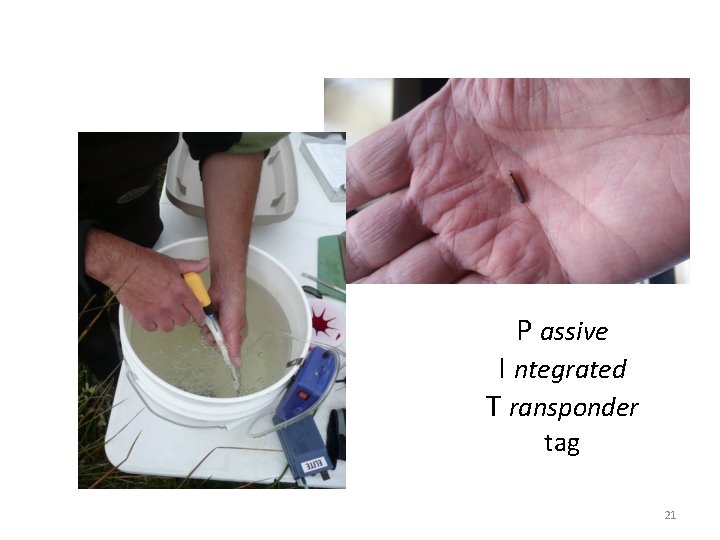
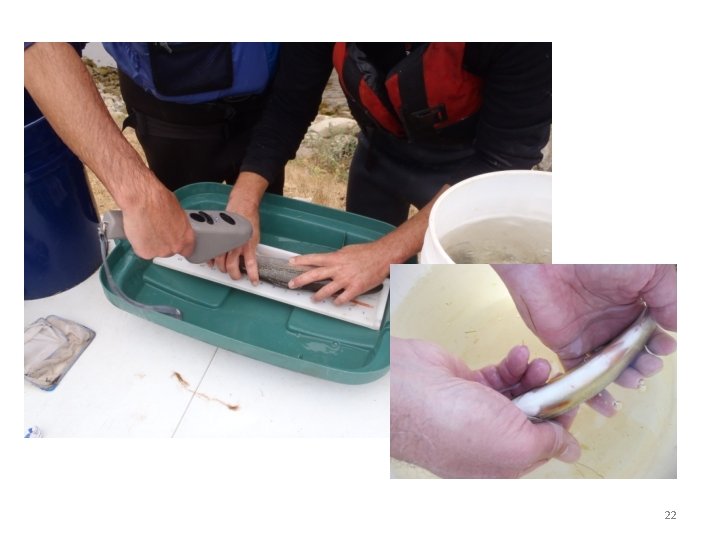
Abundance Monitoring Focus • Abundance (June and September) – Catch per Unit Effort in seining surveys (2004, 2005, 2008 -2014) – Mark-recapture with fin clips (2011) and PIT tags (2012 -2015) • Growth (length) • Age (scale samples) • Condition (smolt stage, incidence of parasites/disease) • Movement 20
P assive I ntegrated T ransponder tag 21
22
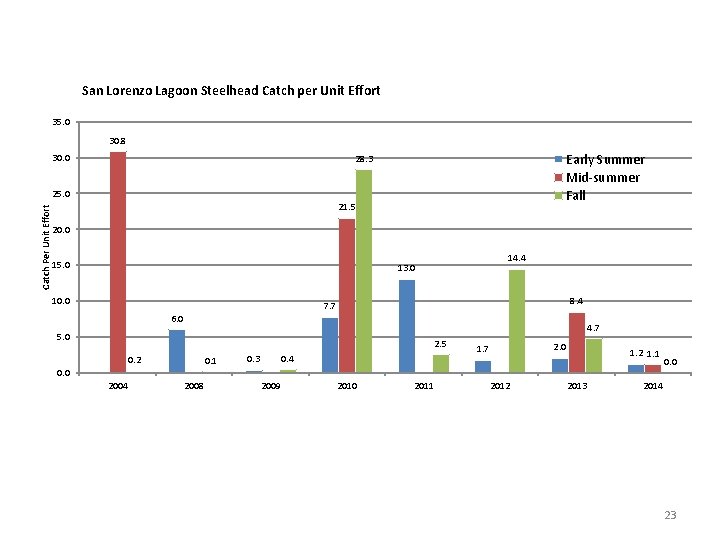
San Lorenzo Lagoon Steelhead Catch per Unit Effort 35. 0 30. 8 30. 0 Early Summer Mid-summer Fall 28. 3 Catch Per Unit Effort 25. 0 21. 5 20. 0 15. 0 14. 4 13. 0 10. 0 8. 4 7. 7 6. 0 4. 7 5. 0 2. 5 0. 2 0. 1 0. 4 0. 3 2. 0 1. 7 1. 2 1. 1 0. 0 2004 2008 2009 2010 2011 2012 2013 0. 0 2014 23
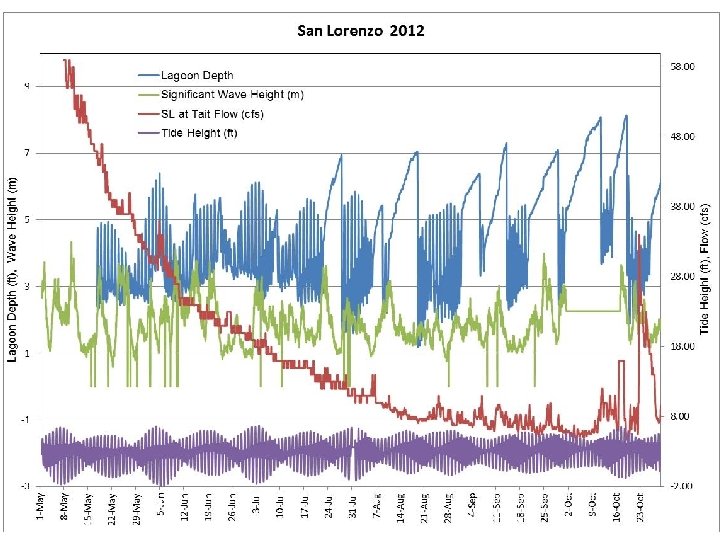
2012 24
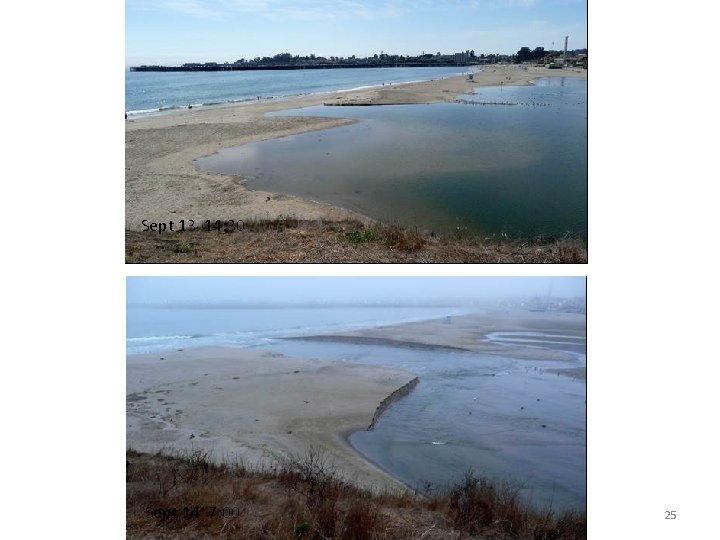
Sept 13 14: 30 Sept 14 7: 00 25
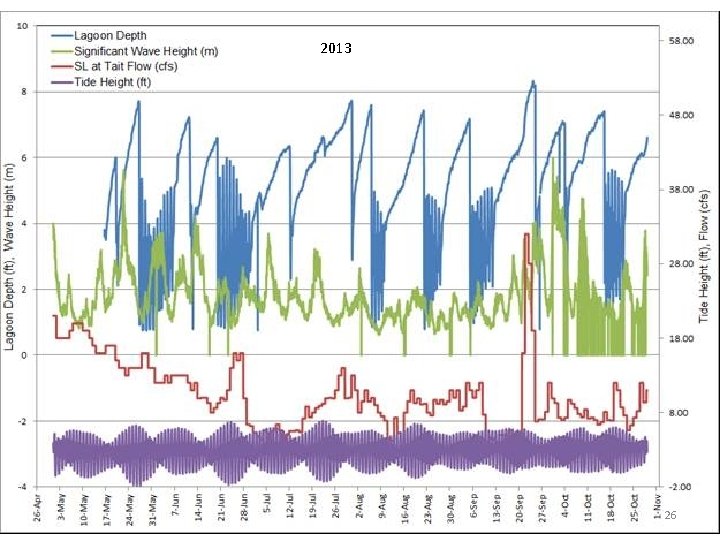
2013 26
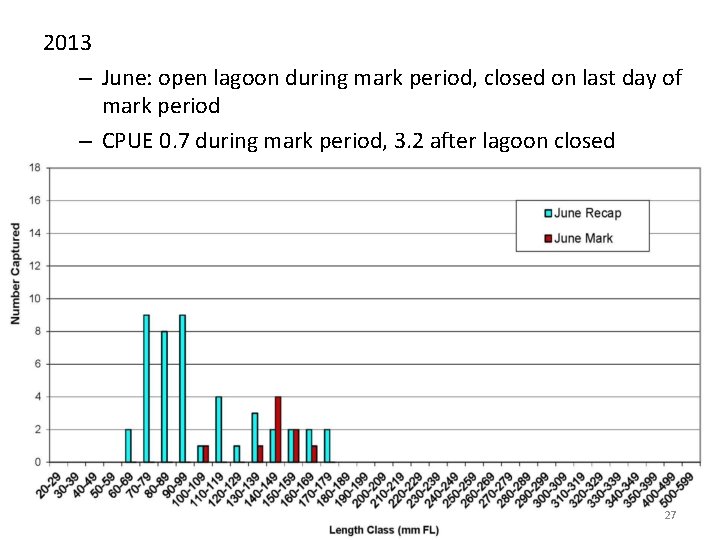
2013 – June: open lagoon during mark period, closed on last day of mark period – CPUE 0. 7 during mark period, 3. 2 after lagoon closed 27
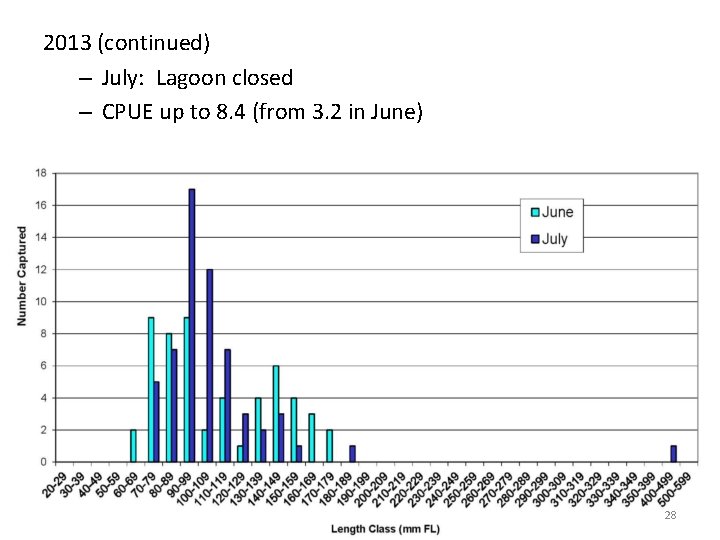
2013 (continued) – July: Lagoon closed – CPUE up to 8. 4 (from 3. 2 in June) 28
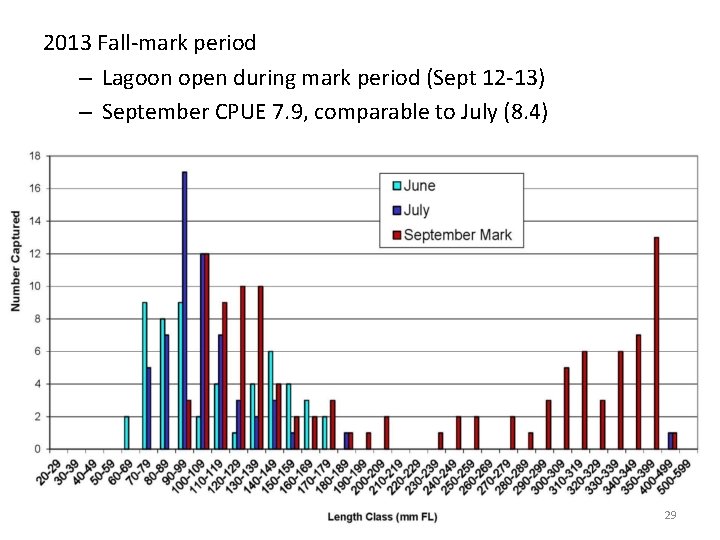
2013 Fall-mark period – Lagoon open during mark period (Sept 12 -13) – September CPUE 7. 9, comparable to July (8. 4) 29
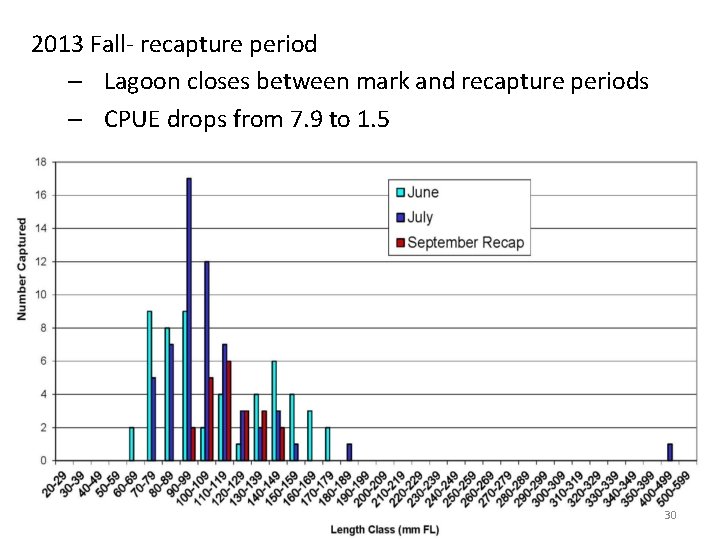
2013 Fall- recapture period – Lagoon closes between mark and recapture periods – CPUE drops from 7. 9 to 1. 5 30
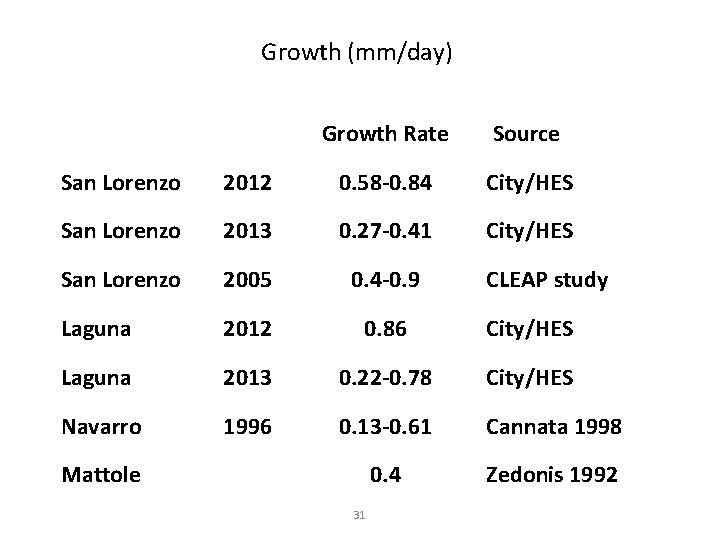
Growth (mm/day) Growth Rate Source San Lorenzo 2012 0. 58 -0. 84 City/HES San Lorenzo 2013 0. 27 -0. 41 City/HES San Lorenzo 2005 0. 4 -0. 9 Laguna 2012 0. 86 City/HES Laguna 2013 0. 22 -0. 78 City/HES Navarro 1996 0. 13 -0. 61 Cannata 1998 0. 4 Zedonis 1992 Mattole 31 CLEAP study
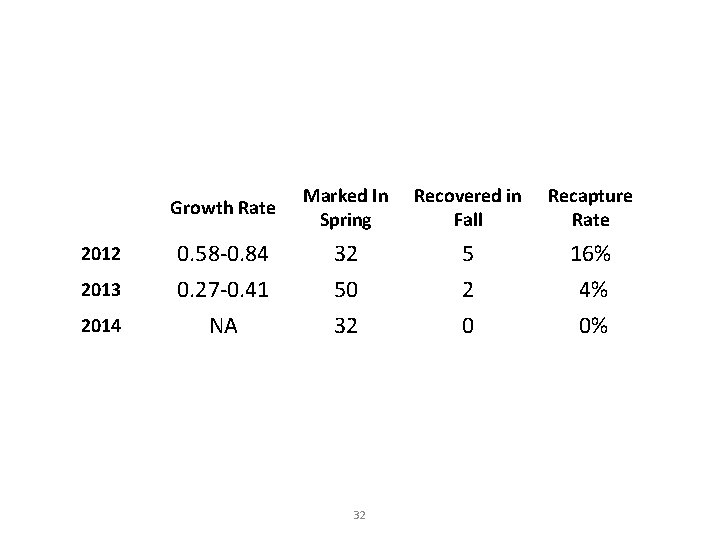
2012 2013 2014 Growth Rate Marked In Spring Recovered in Fall Recapture Rate 0. 58 -0. 84 0. 27 -0. 41 NA 32 50 32 5 2 0 16% 4% 0% 32
Conclusions • The lagoon is a complex ecosystem used by many aquatic species, including steelhead 33
Conclusions • The lagoon is a complex ecosystem used by many aquatic species, including steelhead • Steelhead use of the lagoon is variable and complex 34
Conclusions • The lagoon is a complex ecosystem used by many aquatic species, including steelhead • Steelhead use of the lagoon is variable and complex • There is movement of many species, possibly including steelhead, between the lagoon and the ocean during periods when the lagoon is open 35
Conclusions • The lagoon is a complex ecosystem used by many aquatic species, including steelhead • Steelhead use of the lagoon is variable and complex • There is movement of many species, possibly including steelhead, between the lagoon and the ocean during periods when the lagoon is open • Abundance of juvenile steelhead is relatively low for the size of the lagoon 36
Conclusions • The lagoon is a complex ecosystem used by many aquatic species, including steelhead • Steelhead use of the lagoon is variable and complex • There is movement of many species, possibly including steelhead, between the lagoon and the ocean during periods when the lagoon is open • Abundance of juvenile steelhead is relatively low for the size of the lagoon • Abundance of all species, including steelhead, is highly variable from year to year and month to month 37
Conclusions • The lagoon is a complex ecosystem used by many aquatic species, including steelhead • Steelhead use of the lagoon is variable and complex • There is movement of many species, possibly including steelhead, between the lagoon and the ocean during periods when the lagoon is open • Abundance of juvenile steelhead is relatively low for the size of the lagoon • Abundance of all species, including steelhead, is highly variable from year to year and month to month • Steelhead use the lagoon under both open and closed conditions 38
Conclusions • The lagoon is a complex ecosystem used by many aquatic species, including steelhead • Steelhead use of the lagoon is variable and complex • There is movement of many species, possibly including steelhead, between the lagoon and the ocean during periods when the lagoon is open • Abundance of juvenile steelhead is relatively low for the size of the lagoon • Abundance of all species, including steelhead, is highly variable from year to year and month to month • Steelhead use the lagoon under both open and closed conditions • Highest abundance of steelhead has been in years with higher flows when the lagoon is open for larger amounts of time or breaches frequently, lowest abundance has been in years with lower flows and extended closure. 39
Contributors: Zeke Bean Suzy Boyd Ryan Yarbrough Ryan Bassett Randy Holloway Noriko Kawamoto Michelle Leicester Melissa Farinha Laird Henkel Kristina Finstad Kristin Kittleson Kelleen Harter Judie Cole Jon Jankovitz Jeremy Farr Jessica Missaghian Jeff Hagar Environmental Science jmhagar@sbcglobal. net 510 -333 -9410 Greg Pepping Doug Sommerville Corinne Gray Chris Sulots Chris Coburn Chris Berry Billy Norman 40