
FISH FARMING AQUACULTURE raising aquatic animalsplants for food

- Slides: 21
FISH FARMING
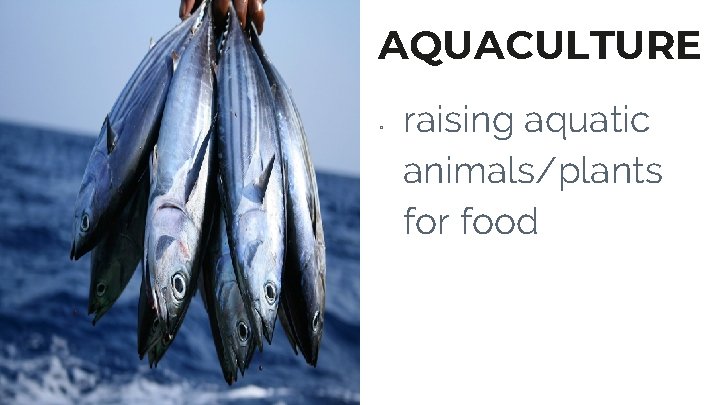
AQUACULTURE ▫ raising aquatic animals/plants for food
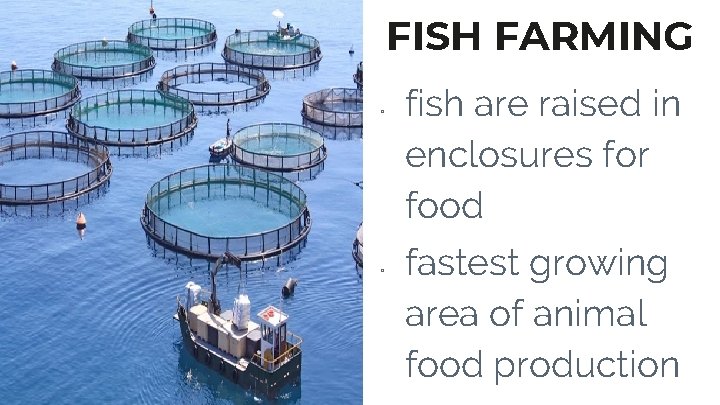
FISH FARMING ▫ ▫ fish are raised in enclosures for food fastest growing area of animal food production
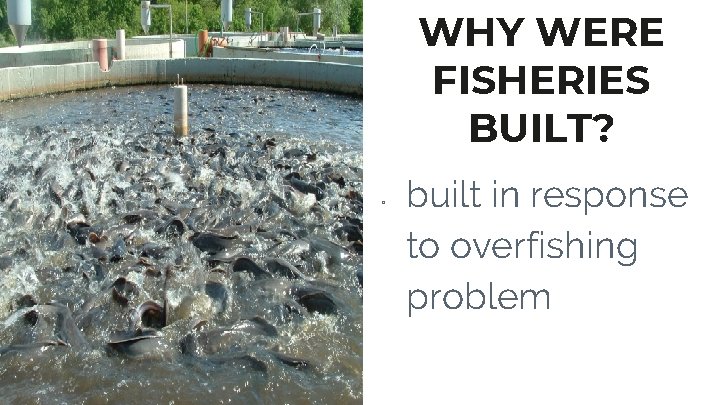
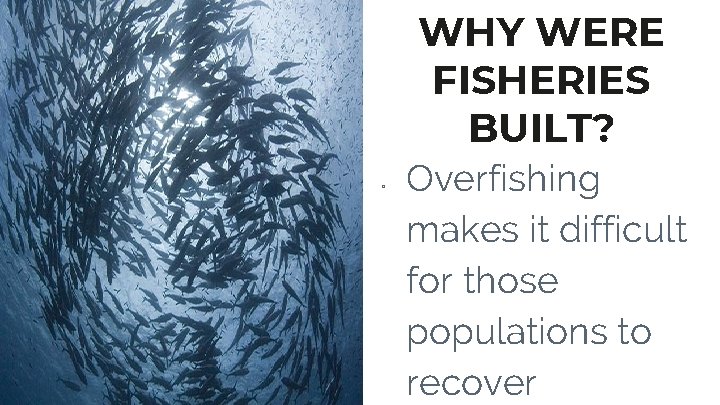
WHY WERE FISHERIES BUILT? ▫ built in response to overfishing problem
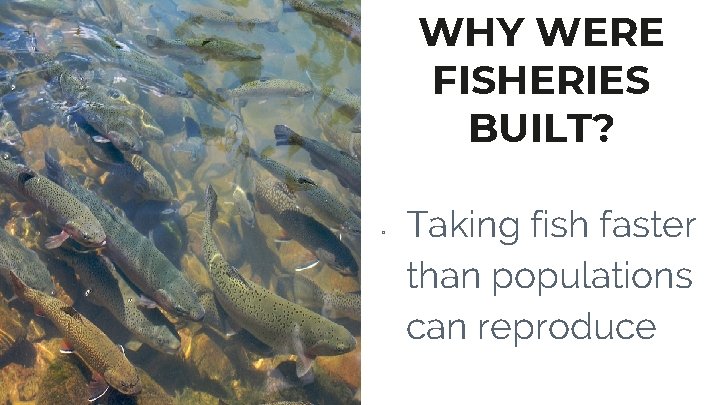
WHY WERE FISHERIES BUILT? ▫ Taking fish faster than populations can reproduce
WHY WERE FISHERIES BUILT? ▫ Overfishing makes it difficult for those populations to recover
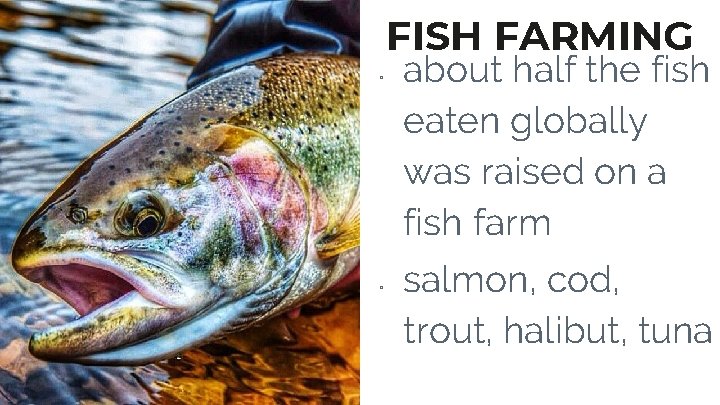
FISH FARMING ▫ ▫ about half the fish eaten globally was raised on a fish farm salmon, cod, trout, halibut, tuna
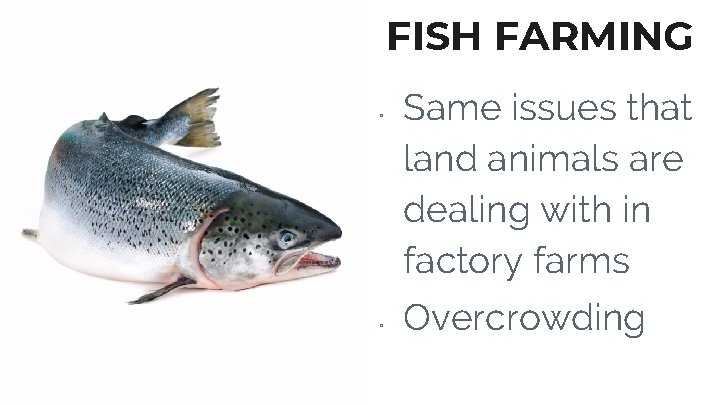
FISH FARMING ▫ ▫ Same issues that land animals are dealing with in factory farms Overcrowding
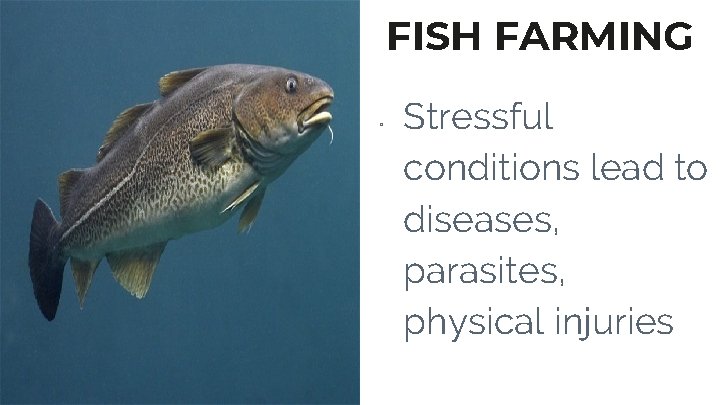
FISH FARMING ▫ Stressful conditions lead to diseases, parasites, physical injuries
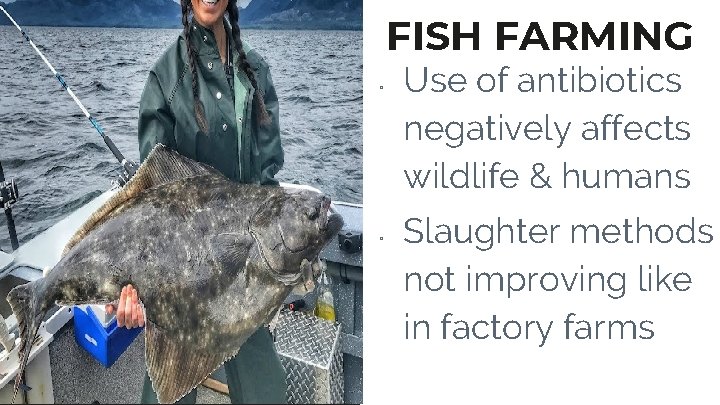
FISH FARMING ▫ ▫ Use of antibiotics negatively affects wildlife & humans Slaughter methods not improving like in factory farms
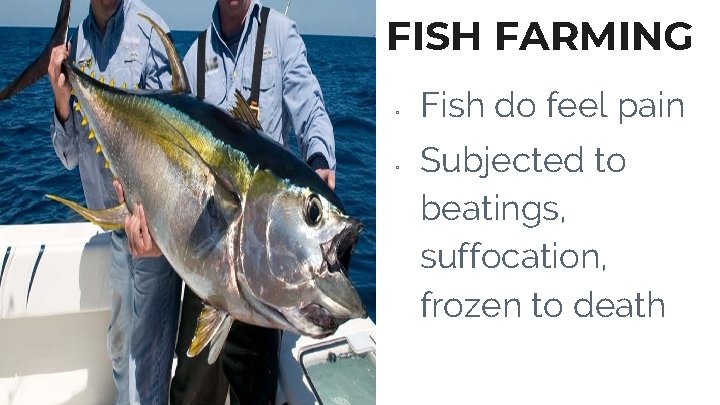
FISH FARMING ▫ ▫ Fish do feel pain Subjected to beatings, suffocation, frozen to death
FISH FARMING ▫ No current laws ensuring humane treatment of fish
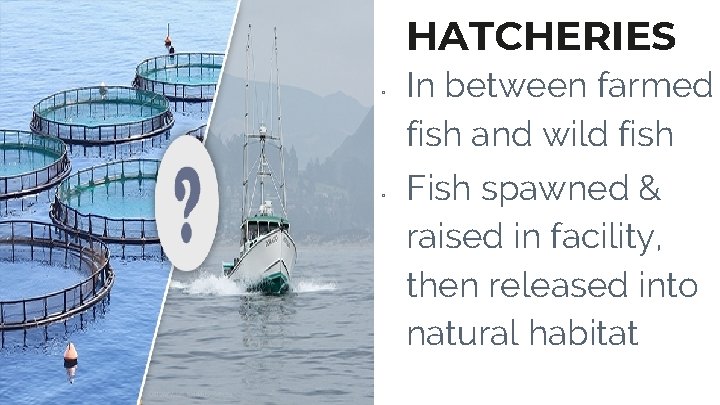
HATCHERIES ▫ ▫ In between farmed fish and wild fish Fish spawned & raised in facility, then released into natural habitat
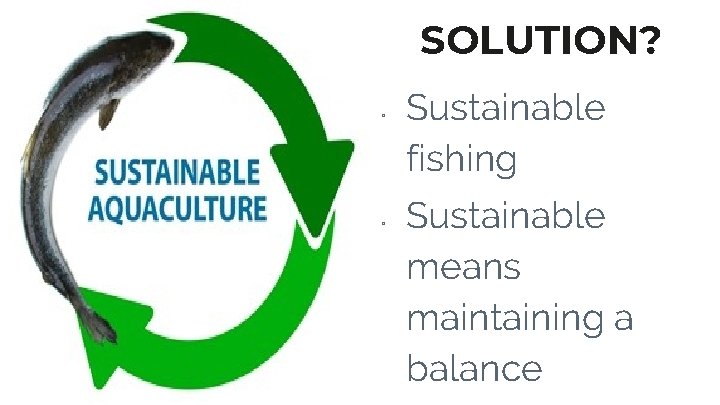
SOLUTION? ▫ ▫ Sustainable fishing Sustainable means maintaining a balance
SUSTAINABLE FISHING ▫ Guarantees there will be populations of ocean and freshwater wildlife for the future
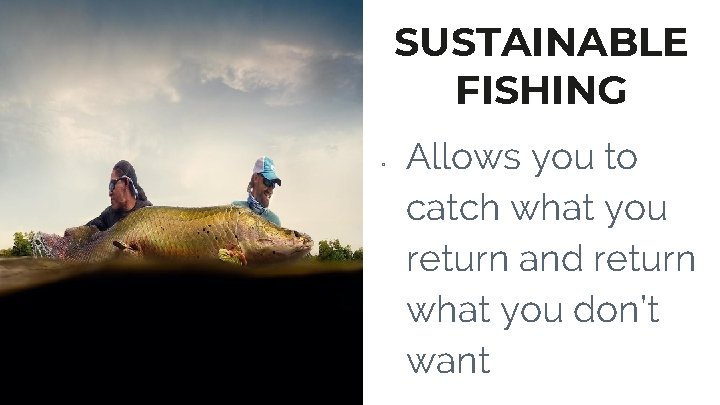
SUSTAINABLE FISHING ▫ Allows you to catch what you return and return what you don’t want
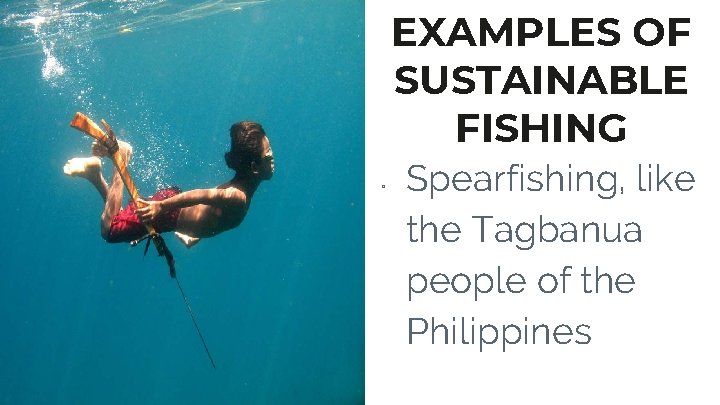
EXAMPLES OF SUSTAINABLE FISHING ▫ Spearfishing, like the Tagbanua people of the Philippines
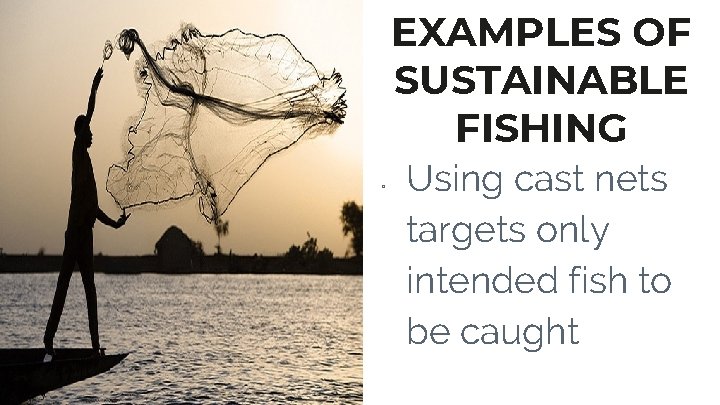
EXAMPLES OF SUSTAINABLE FISHING ▫ Using cast nets targets only intended fish to be caught
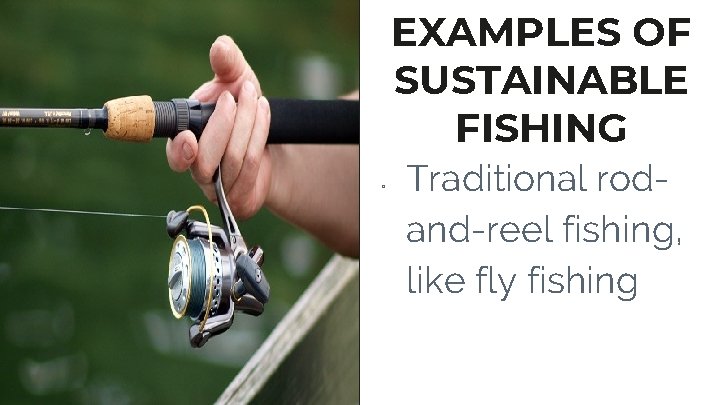
EXAMPLES OF SUSTAINABLE FISHING ▫ Traditional rodand-reel fishing, like fly fishing
HOW CAN I HELP? ▫ Do your part by buying sustainable seafood
▫ Buying sustainable seafood encourages fisherman to keep handling fish humanely & to keep good fishing practices