
FischerGenetic Genealogy Fischer Family Reunion July 27 to
- Slides: 21
Fischer/Genetic Genealogy Fischer Family Reunion July 27 to July 29, 2012 Lebanon, CT Presented by Craig Fischer Questions to cfischer@bellsouth. net
Genetic Genealogy • What is it? – – Exploration of our ancestral origins Identify relationships between individuals Can reveal information about your health Can be used forensic/legal purposes • What it isn’t – Results do not include a family tree – Can’t directly determine the degree of relationship – Can relate to only a small % of your full genome
Genetic Genealogy • How is it done? – Commercially available (e. g. www. ftdna. com) – Vigorous cheek swab to collect cells – Insert swab into preservative vial – Send to lab – Lab performs sophisticated, standardized testing of the cellular genetic material – Results provided and compared to extensive database of other individual test results
Genetic Genealogy • Results – DNA sequence (genetic fingerprint) unique to the individual compromised of adenine, cytosine, guanine, and thymine nucleotides – Categories of patterns are called Haplogroups – One or multiple chromosomes are examined – Let’s focus on Chromosome 23 Y-DNA: • The Y-chromosome is passed from father to son • This will limit our analysis only to the male Fischers
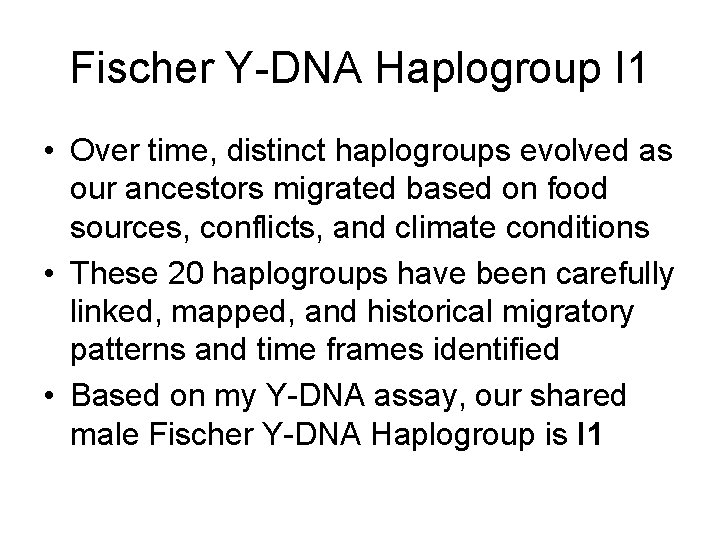
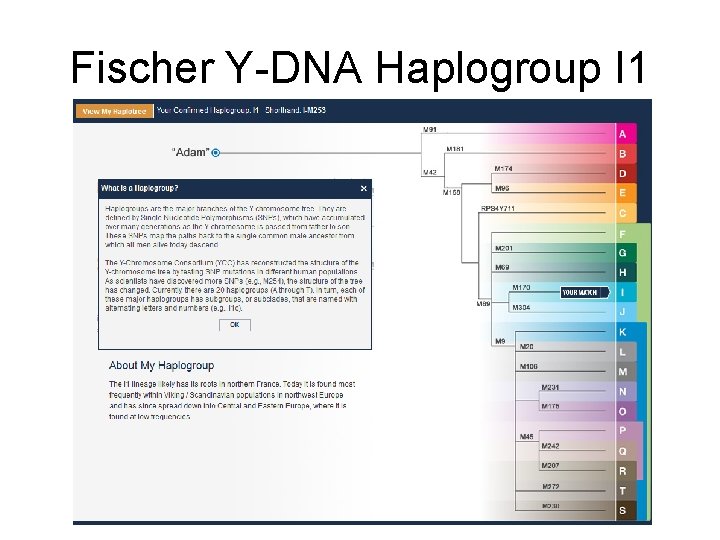
Fischer Y-DNA Haplogroup I 1 • Over time, distinct haplogroups evolved as our ancestors migrated based on food sources, conflicts, and climate conditions • These 20 haplogroups have been carefully linked, mapped, and historical migratory patterns and time frames identified • Based on my Y-DNA assay, our shared male Fischer Y-DNA Haplogroup is I 1
Fischer Y-DNA Haplogroup I 1
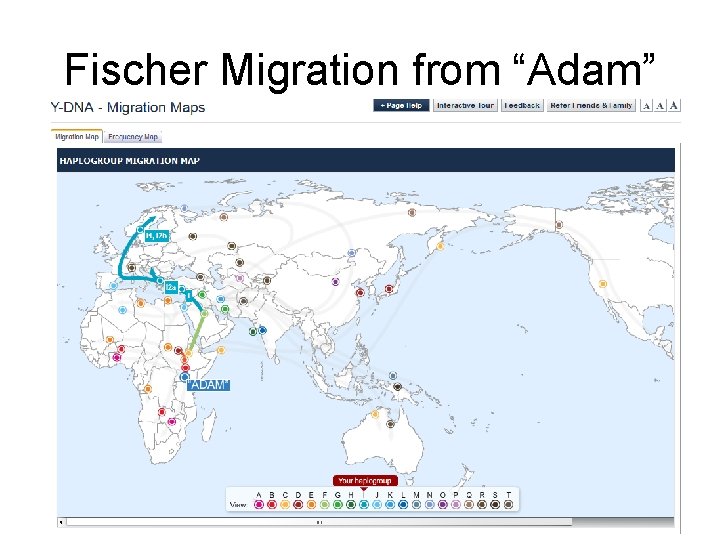
Fischer Migration from “Adam”
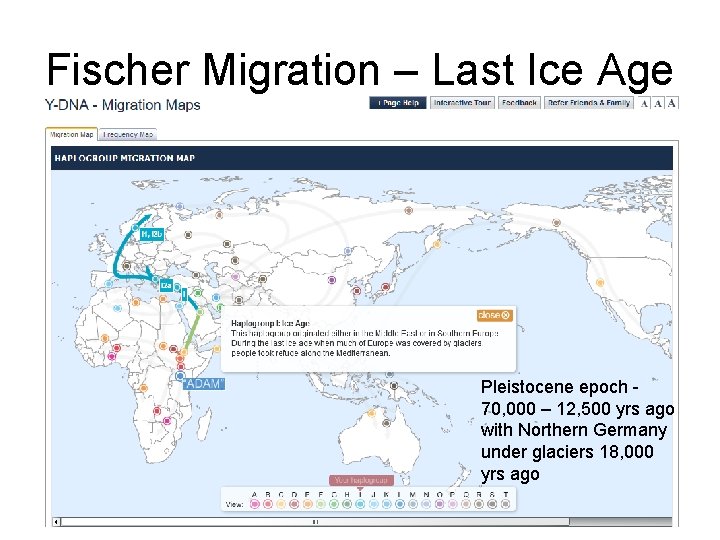
Fischer Migration – Last Ice Age Pleistocene epoch 70, 000 – 12, 500 yrs ago with Northern Germany under glaciers 18, 000 yrs ago
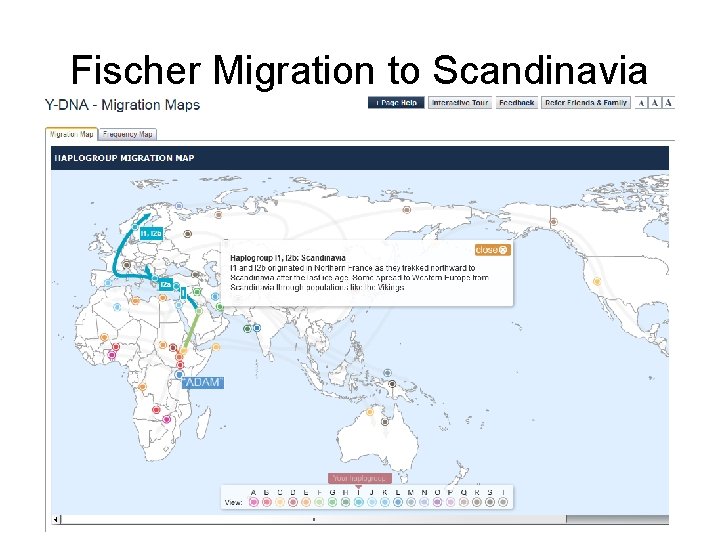
Fischer Migration to Scandinavia
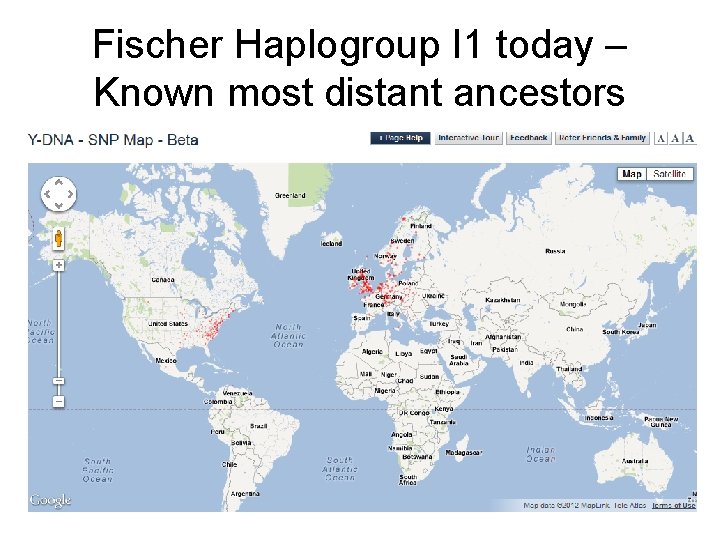
Fischer Haplogroup I 1 today – Known most distant ancestors
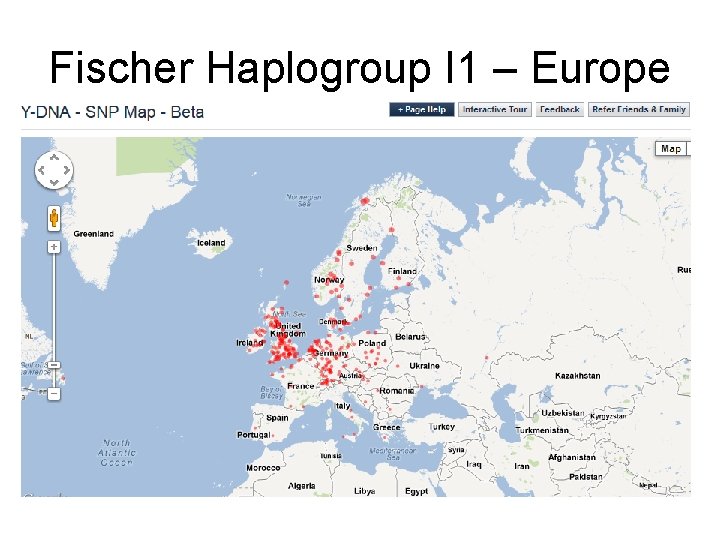
Fischer Haplogroup I 1 – Europe
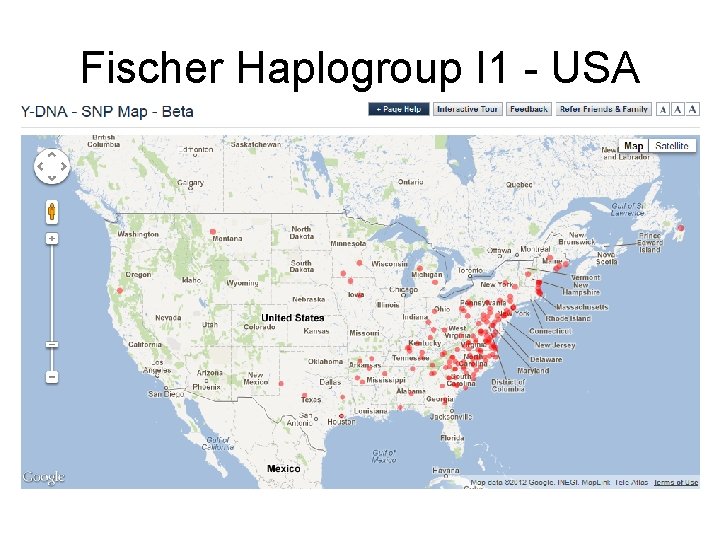
Fischer Haplogroup I 1 - USA
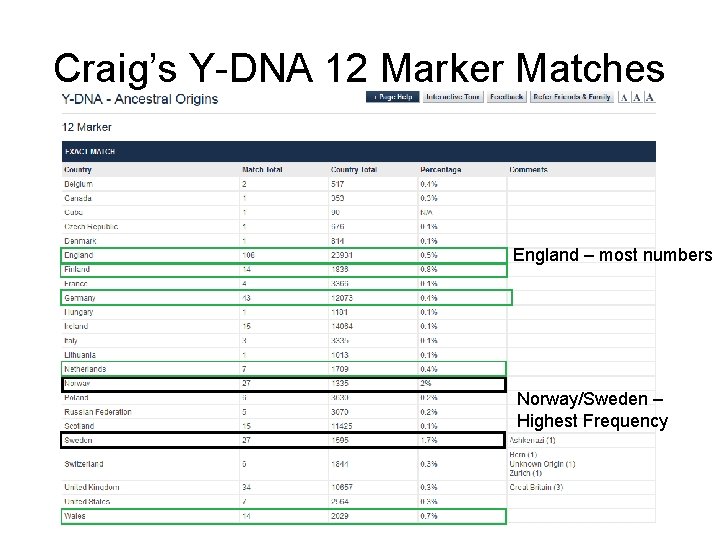
Craig’s Y-DNA 12 Marker Matches England – most numbers Norway/Sweden – Highest Frequency
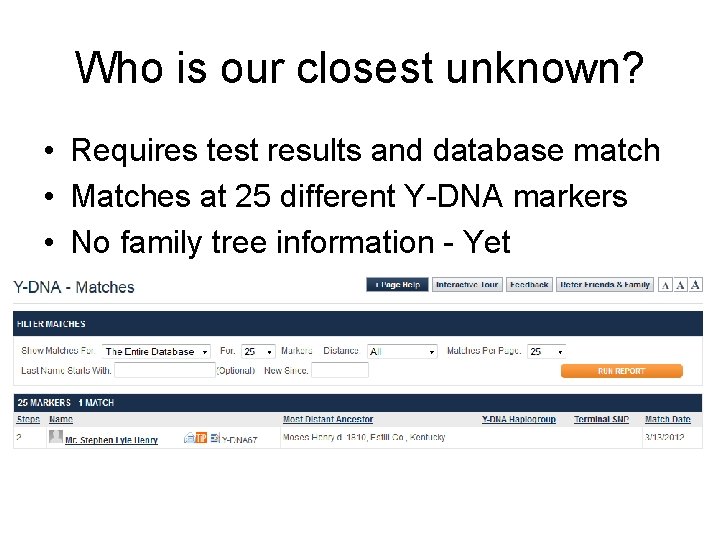
Who is our closest unknown? • Requires test results and database match • Matches at 25 different Y-DNA markers • No family tree information - Yet
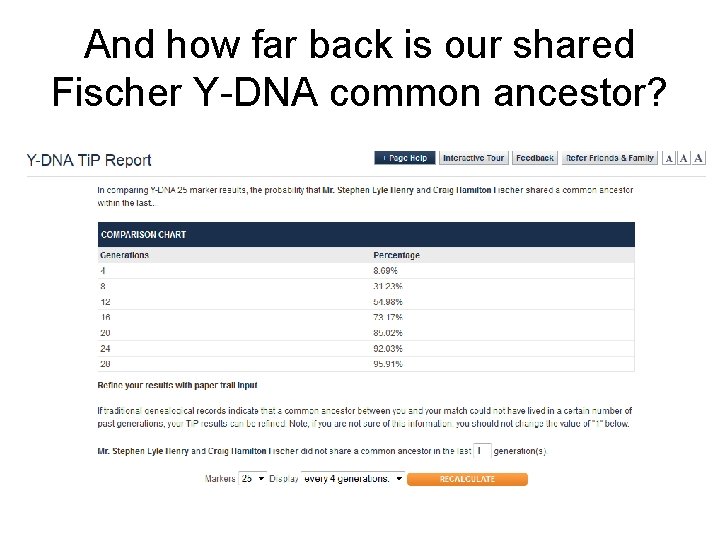
And how far back is our shared Fischer Y-DNA common ancestor?
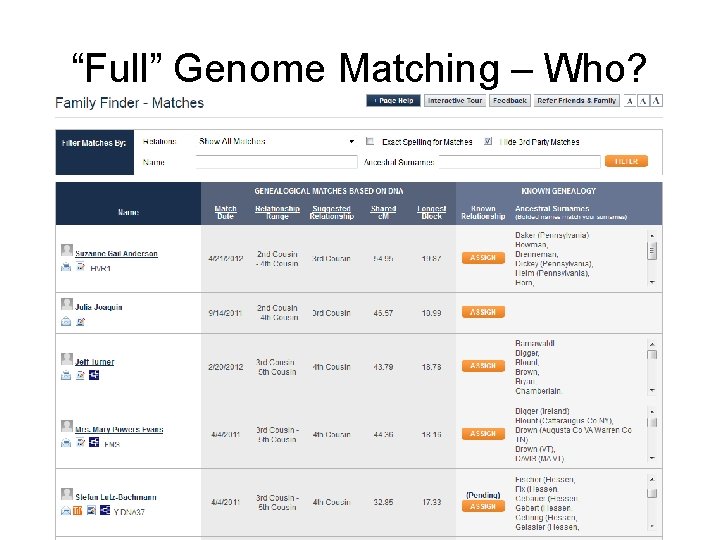
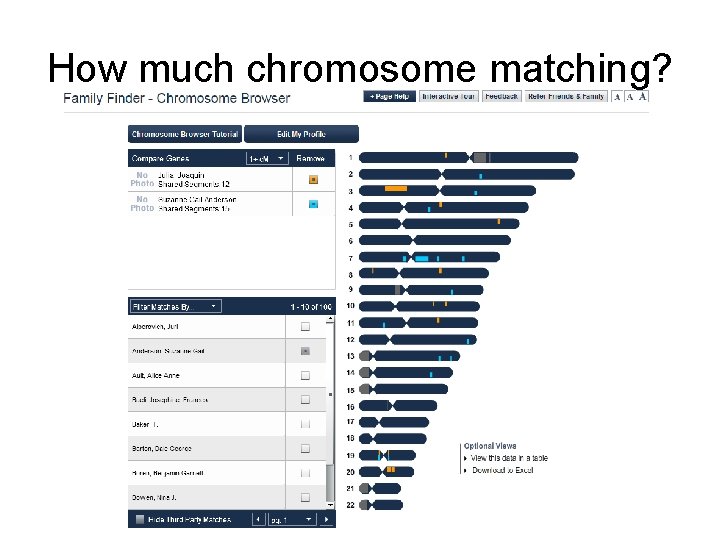
“Full” Genome Matching – “Family Finder” method at www. ftdna. com • Predictive database modeling of the frequency of common chromosomal segments to project/ID relationships • Applicable to males and females • Uses the entire genome except for sexlinked chromosome 23 (no m. T- or Y-DNA) • Categorizes as “Immediate”, “Close”, “Distant”, or “Speculative” Relatives
“Full” Genome Matching – Who?
How much chromosome matching?
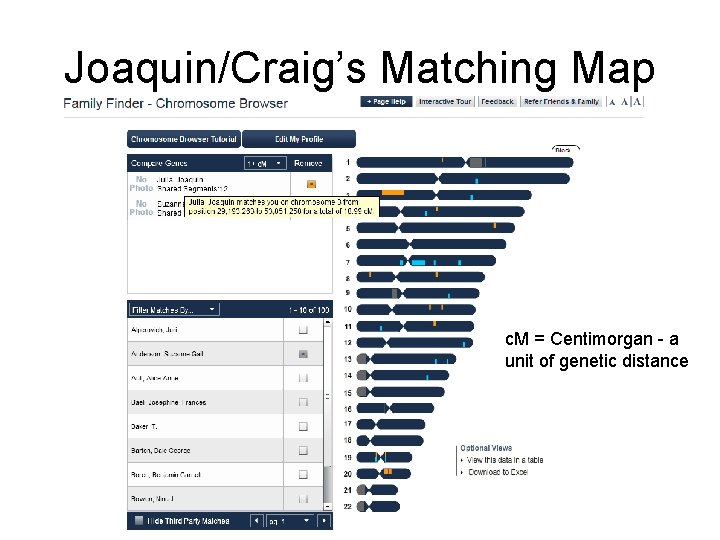
Joaquin/Craig’s Matching Map c. M = Centimorgan - a unit of genetic distance
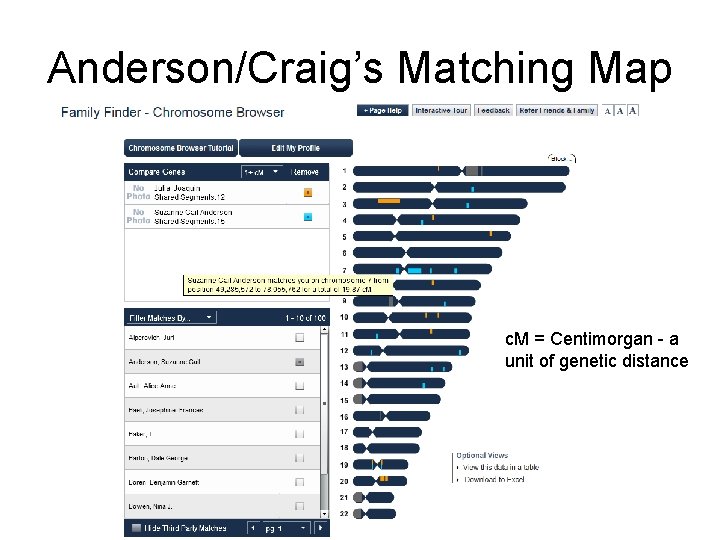
Anderson/Craig’s Matching Map c. M = Centimorgan - a unit of genetic distance
Summary • Genetic genealogy (genetic fingerprinting) is a supplemental tool to traditional “family tree” mapping from the recent/limited written records • Provides clues as to where to look • Extends well beyond the written record back to human origins (“Adam”) • Has other uses – Disease mapping – prospective and retrospective – Legal/forensic applications – Helps identify unknown relatives