
Firth of Clyde Fish Farm Impacts Gareth Bourhill
Firth of Clyde Fish Farm Impacts Gareth Bourhill, L. L. A. I. A Secretary and Volunteer Water Bailiff
• The Loch Lomond Catchment is not a DSFB • The LLAIA Since 1860* has managed the fishing's on behalf of the Riparian Owners • The LLAIA in the 1980’s started purchasing fishing's and we are now the largest Riparian owner on the R Endrick • The Committee of the LLAIA since 1860 are all Volunteers. • Our Bailiffs (unlike DSFB’s) are Appointed Direct by the Scottish Minister’s • Our Bailiffs are full time Employee’s of the L. L. A. I. A • Full Members currently Number Approx 520 • Associate Members currently Number Approx 500 • Day, weekly permits we typical sell Approx 3000 per year • Twenty retailers across Central Scotland • Fishery Improvements • Sponsored Fishery Science Masters student at Glasgow University in 2020 £ 26 k • Scientific Research Investment (L. L. F. T) • Smolt Tracking Project 2015
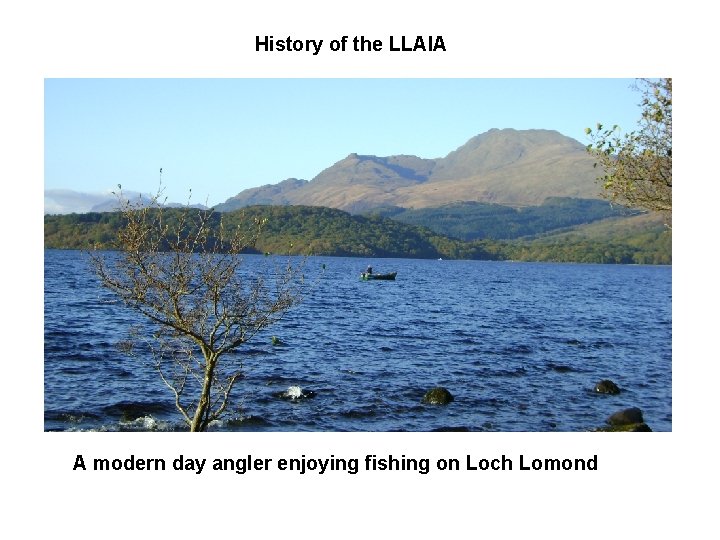
History of the LLAIA A modern day angler enjoying fishing on Loch Lomond
• In 1880 angling in the Loch had reached its lowest ever ebb caused mainly by a lethal combination of extensive pollution, organised poaching and commercial netting on the River Leven. • 1870 the average tally of fish brought into Luss alone each season by rod and line, was 1, 800 to 2, 000 sea trout and 180 to 200 salmon. • 1880 fishing had deteriorated terribly and there was no more than 2 salmon a season being brought into Luss! • Spring of 1882 an agreement was struck between the trustees of the late Sir James Colquhoun and Mr Alfred Brown who was the secretary of the Association at that time. • The plan was for the shocking problems on the River Leven to get sorted out by the hard work of the angling association, and therefore the by product of this would be that the Loch Lomond fishing would naturally recover and reap the rewards.
• The obligations of the Association were to protect the fishing’s of the River Leven by employing “ two competent watchers” who must reside in the landlords “Fishing Lodge at Dalquhurn” which they must keep in good repair. • This precarious new arrangement stumbled along for about 6 years until circa 1888. • 1894 a new agreement had been reached with the Colquhoun Trustees. This agreement was in desperate need for public support and was to be discussed in a public arena. • These public meetings were held in Glasgow in November 1894 and June 1895. In essence, these meetings were the origins of the present LLAIA.
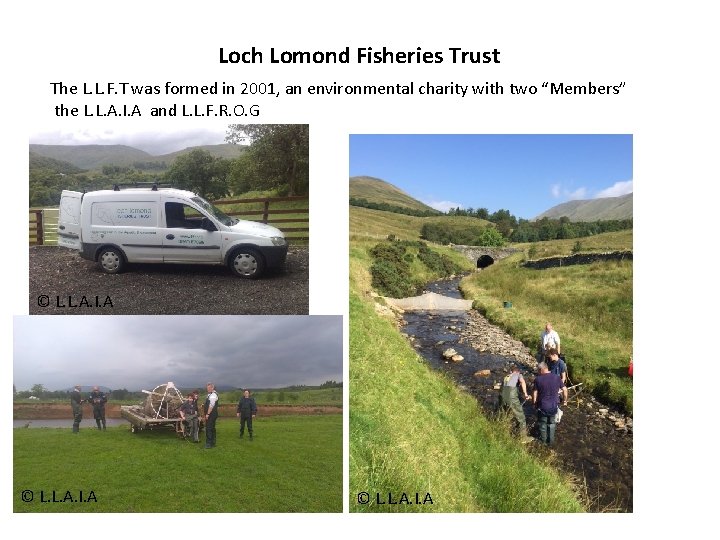
Loch Lomond Fisheries Trust The L. L. F. T was formed in 2001, an environmental charity with two “Members” the L. L. A. I. A and L. L. F. R. O. G © L. L. A. I. A
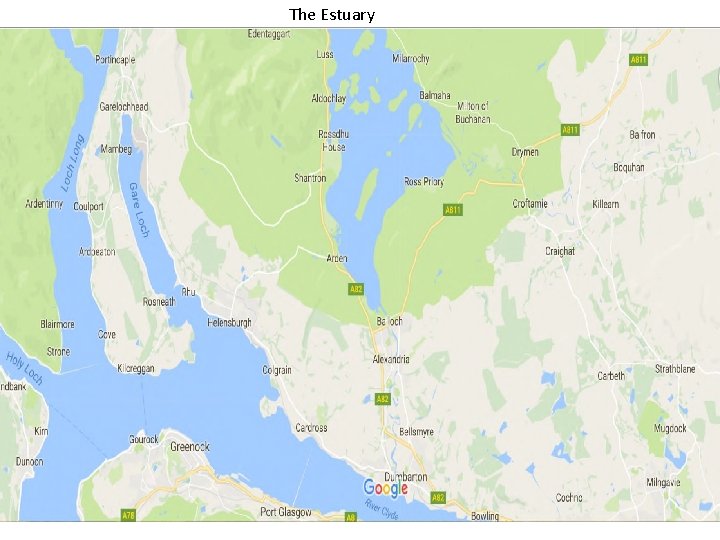
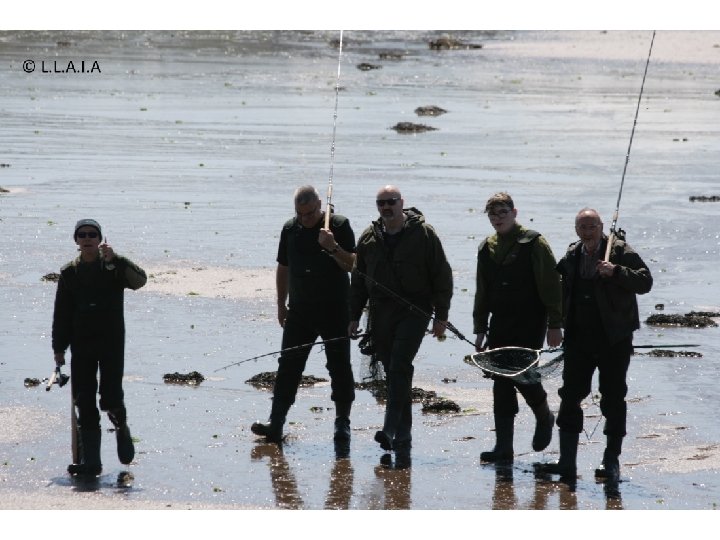
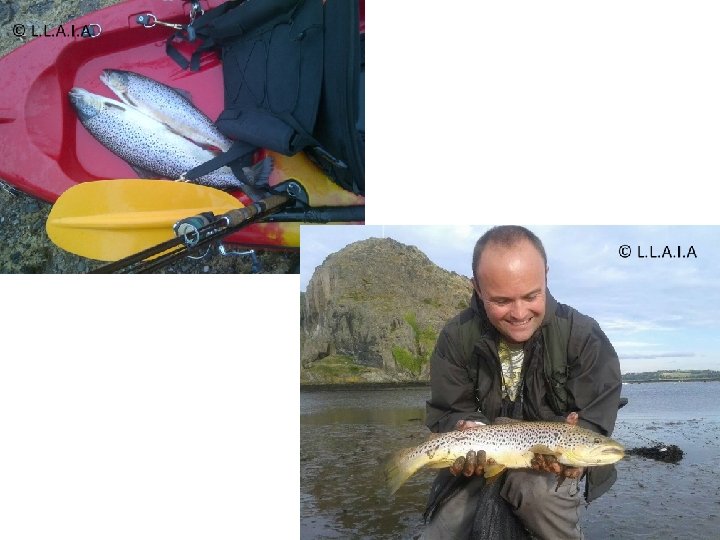
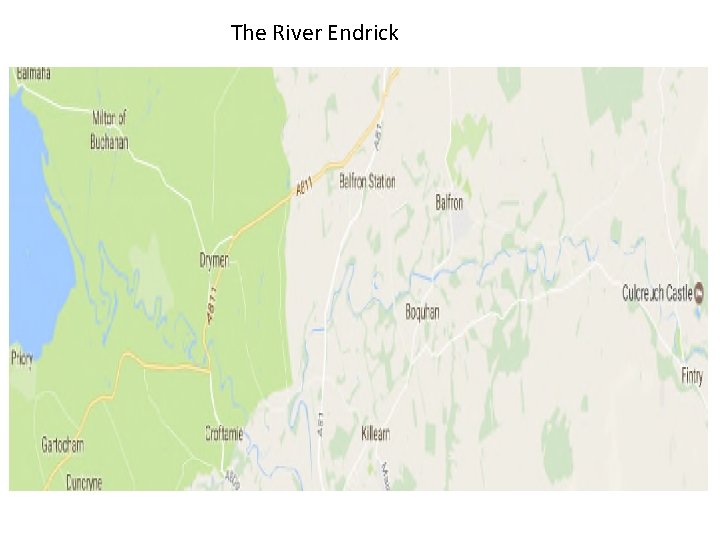
The Estuary
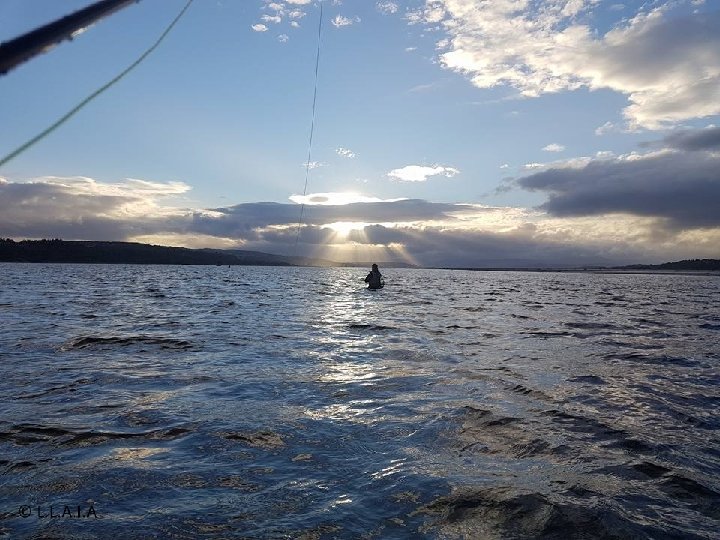
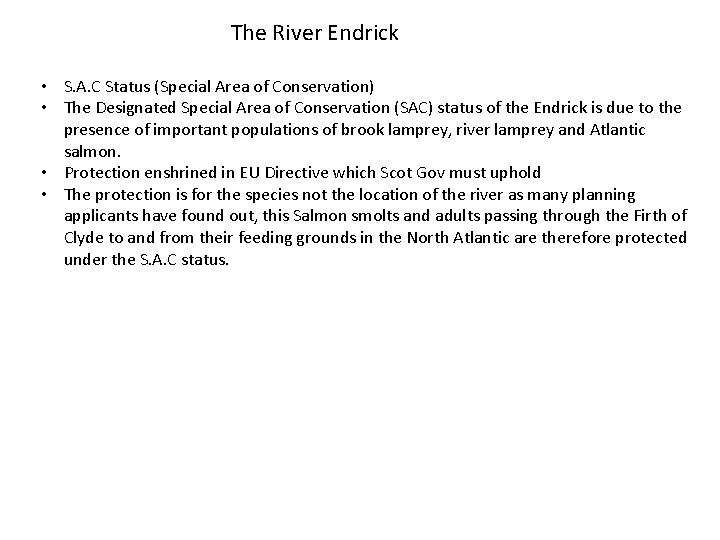
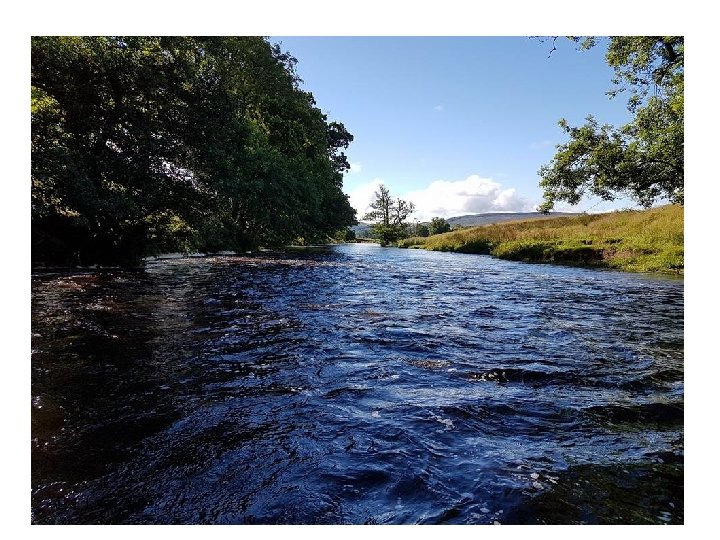
The River Endrick
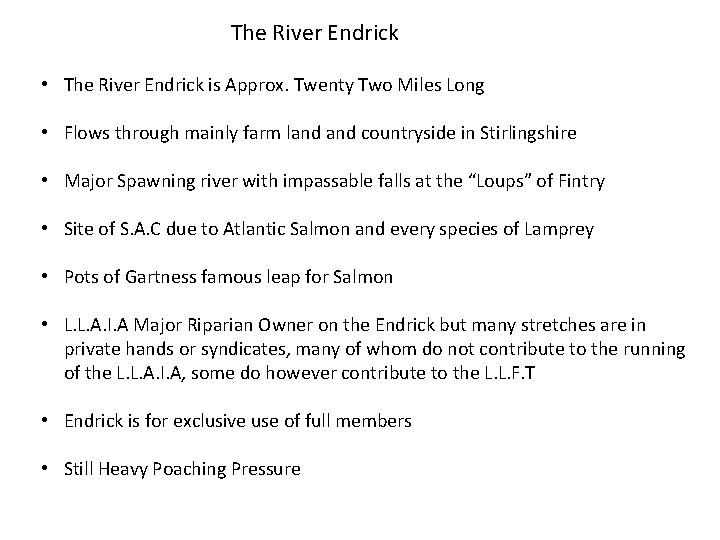
The River Endrick • The River Endrick is Approx. Twenty Two Miles Long • Flows through mainly farm land countryside in Stirlingshire • Major Spawning river with impassable falls at the “Loups” of Fintry • Site of S. A. C due to Atlantic Salmon and every species of Lamprey • Pots of Gartness famous leap for Salmon • L. L. A. I. A Major Riparian Owner on the Endrick but many stretches are in private hands or syndicates, many of whom do not contribute to the running of the L. L. A. I. A, some do however contribute to the L. L. F. T • Endrick is for exclusive use of full members • Still Heavy Poaching Pressure
The River Endrick • S. A. C Status (Special Area of Conservation) • The Designated Special Area of Conservation (SAC) status of the Endrick is due to the presence of important populations of brook lamprey, river lamprey and Atlantic salmon. • Protection enshrined in EU Directive which Scot Gov must uphold • The protection is for the species not the location of the river as many planning applicants have found out, this Salmon smolts and adults passing through the Firth of Clyde to and from their feeding grounds in the North Atlantic are therefore protected under the S. A. C status.
Acoustic tracking of Atlantic salmon smolt migration in the Lomond system Hannele Honkanen University of Glasgow email: h. honkanen. 1. @research. gla. ac. uk Supervisors: Prof. Colin Adams (Uni of Glasgow) & Dr. Paddy Boylan (Loughs Agency)
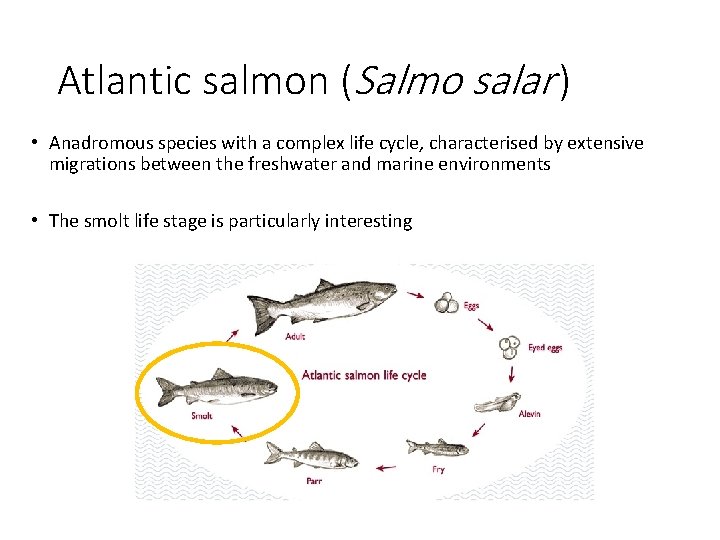
Atlantic salmon (Salmo salar ) • Anadromous species with a complex life cycle, characterised by extensive migrations between the freshwater and marine environments • The smolt life stage is particularly interesting
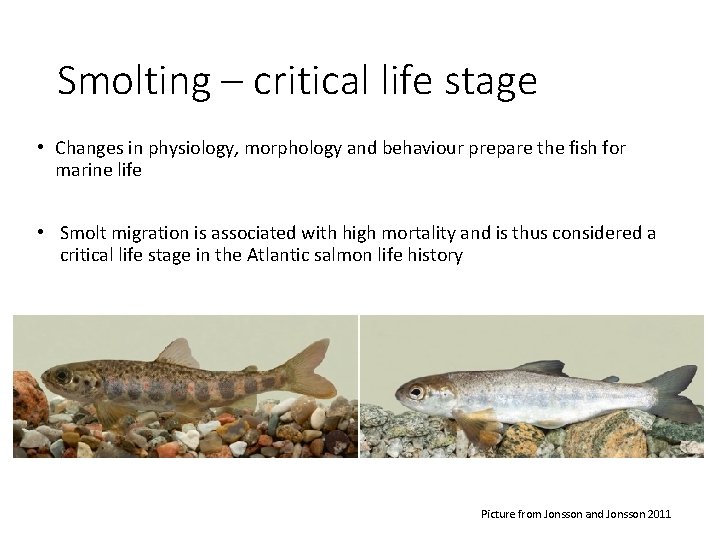
Smolting – critical life stage • Changes in physiology, morphology and behaviour prepare the fish for marine life • Smolt migration is associated with high mortality and is thus considered a critical life stage in the Atlantic salmon life history Picture from Jonsson and Jonsson 2011
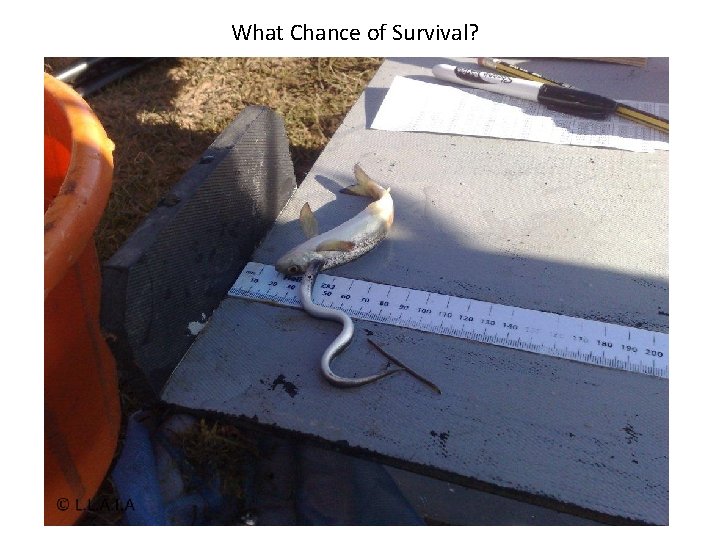
What Chance of Survival?
Aims We were hoping to get more information on… • Behaviour during migration through a large lake, Loch Lomond • Mortality and speed of migration – overall and between different sections (Endrick, Loch Lomond, Leven, Clyde estuary)
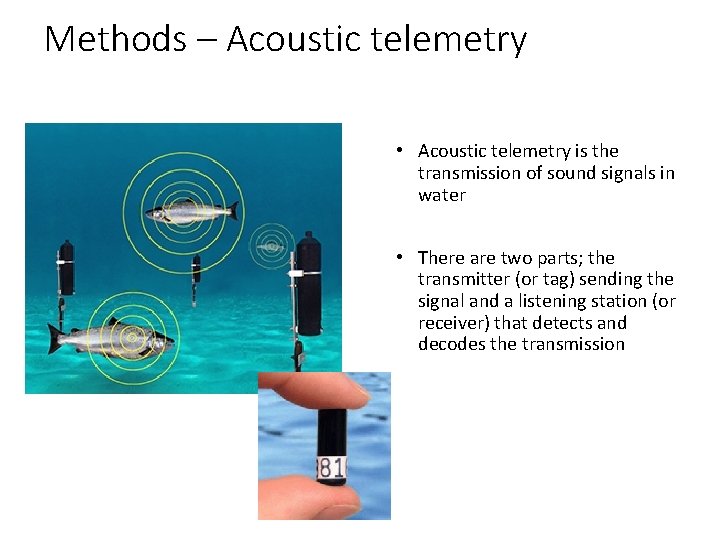
Methods – Acoustic telemetry • Acoustic telemetry is the transmission of sound signals in water • There are two parts; the transmitter (or tag) sending the signal and a listening station (or receiver) that detects and decodes the transmission
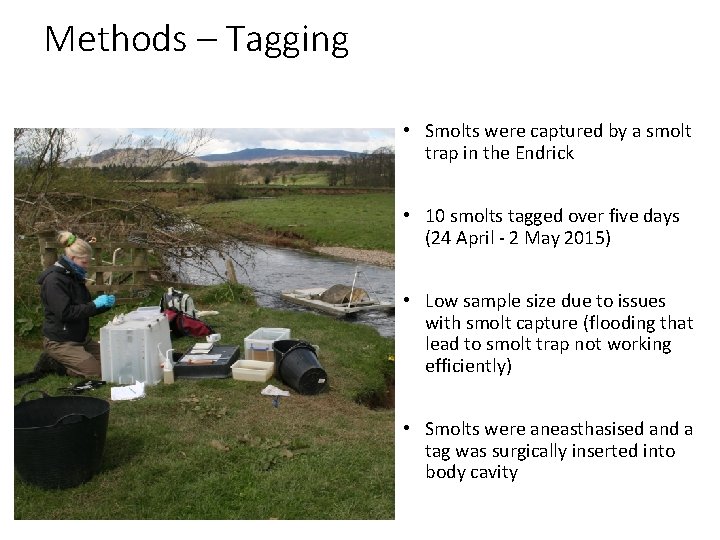
Methods – Tagging • Smolts were captured by a smolt trap in the Endrick • 10 smolts tagged over five days (24 April - 2 May 2015) • Low sample size due to issues with smolt capture (flooding that lead to smolt trap not working efficiently) • Smolts were aneasthasised and a tag was surgically inserted into body cavity
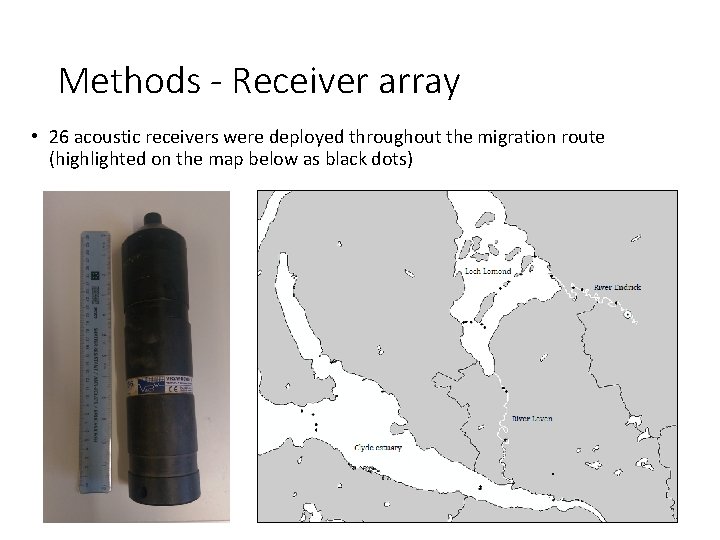
Methods - Receiver array • 26 acoustic receivers were deployed throughout the migration route (highlighted on the map below as black dots) .
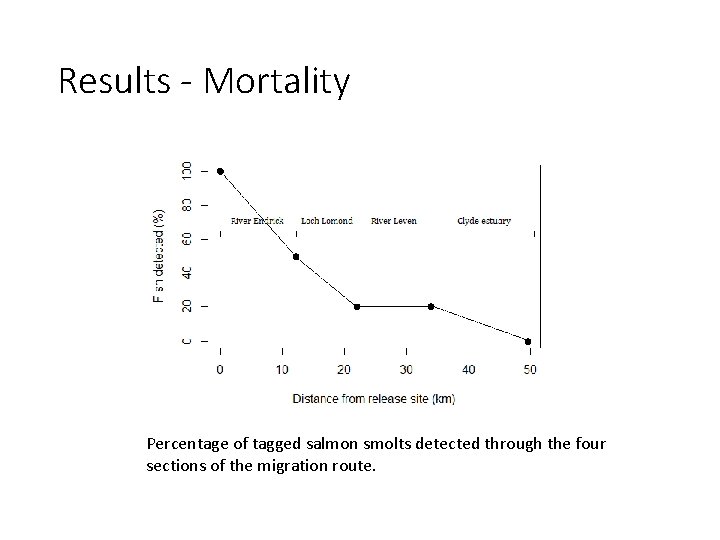
Results - Mortality Percentage of tagged salmon smolts detected through the four sections of the migration route.
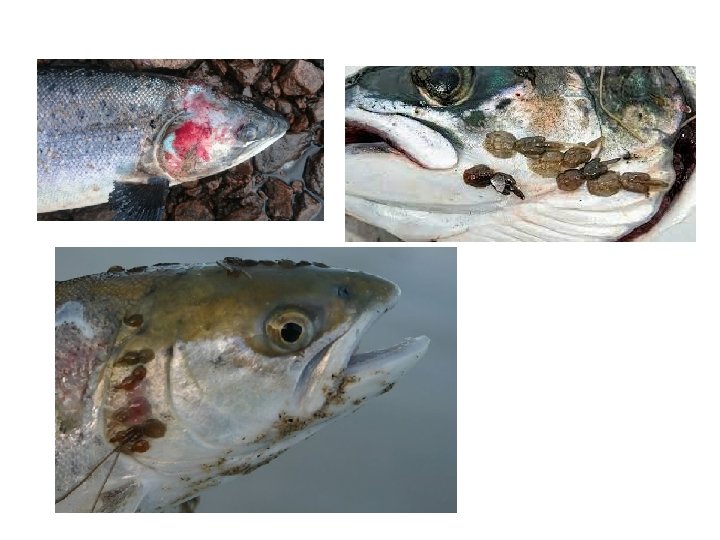
The problems regarding Fish Farms 1) Transfer of disease from farm fish to wild fish 2) Chemical treatments and effluent affecting natural environment flaura and fauna which sea trout feed on and migrating Salmon smolts and adults migrate through 3) Sea Lice increases dramatically, although sea lice exist naturally and migrating smolts and returning adults will normally pick up a few, this is easily dealt with by wild fish as the lice die when the adult fish enter freshwater on the return migration however, it has been established lice blooms can be so great around fish farms the returning adults and juvenile fish basically get eaten alive. Mortality due to salmon lice primarily occurs in young fish after they enter the sea from fresh water (11 mobile lice per fish is lethal level for a 15 g wild salmon), but severely infested sea trout can also die from salmon lice later in life.
Dr Tom Scanlon BEng Ph. D CEng MIMech. E • Dr Scanlon is a member of the LLAIA and also the hydrodynamicist who carried out the sea lice modelling work in a article published in the Glasgow Herald in January 2020, the modelling videos can be found at • https: //vimeo. com/496948354 • • https: //vimeo. com/496947920 • If these farms are allowed to progress all migrating smolts and returning adults and the Sea Trout from all Firth of Clyde fisheries not just the Endrick SAC protected fish will have to swim through basically a ”Barrier” of lice
Fish Escapes • This is not a rare event, far from it, and we wish the planning committees to consider the following data which has been taken direct from Marine Scotland figures at: • http: //aquaculture. scotland. gov. uk/data/fish_escapes. aspx • That in 2020 alone Mowi have lost some 122, 518 farm Salmon from just two farms! Both of which are recorded as containment failings of their equipment. As such the current technical standards for the equipment used in the salmon farming industry are obviously not fit for purpose and in particular cannot deal with and remain intact during the regular weather events that occur on the West Coast of Scotland Firth of Clyde area. • • We could go back to the conception of Salmon farming in Scotland data of loss of fish is horrific, but just concentrating in the years since January 2000 a total of 2, 881, 500 Atlantic Salmon have been declared by Scottish farmers as released into Scottish waters. • The Loch Lomond catchment recorded the largest catches of farm Salmon from the 2020 North Carradale escape.
Thank You for listening!
- Slides: 28