
First Year Pediatric Fellows Science Course Ethical Issues
- Slides: 46
First Year Pediatric Fellows Science Course Ethical Issues in Research Involving Children Alan R. Fleischman, M. D. Professor of Pediatrics Professor of Epidemiology and Population Health Senior Associate, Center for Bioethics Albert Einstein College of Medicine Children’s Hospital at Montefiore April 3, 2019
Ethical Issues in Research Involving Children What is RESEARCH?
Federal Policy for the Protection of Human Subjects (§ 45 CFR 46) • Definition of Research – systematic investigation (including research development, testing and evaluation) – designed to develop or contribute to generalizable knowledge
Ethical Issues in Research Involving Children How does RESEARCH differ from CLINICAL PRACTICE?
Ethical Issues in Research Involving Children • Clinical Practice -Intervention to maximize interests of an individual patient • Research -Protocol to test a hypothesis and contribute to generalizable knowledge; -Places current subjects (patients) at risk or discomfort or inconvenience for the sake of other patients in the future
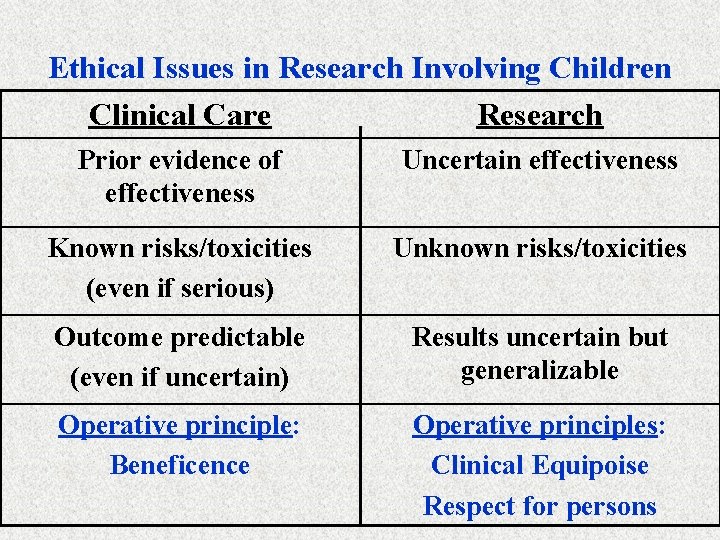
Ethical Issues in Research Involving Children Clinical Care Research Prior evidence of effectiveness Uncertain effectiveness Known risks/toxicities (even if serious) Unknown risks/toxicities Outcome predictable (even if uncertain) Results uncertain but generalizable Operative principle: Beneficence Operative principles: Clinical Equipoise Respect for persons
Ethical Issues in Research Involving Children Clinical Equipoise in Research* • When there are two acceptable approaches to treat a disorder, but there is genuine uncertainty due to insufficient evidence to determine which approach is most efficacious and least toxic… • Competent, reasonable clinicians might choose one treatment over the other, but they respect other competent clinicians who prefer the second treatment-This constitutes “clinical equipoise. ” • Performing a randomized clinical trial to test whether one treatment is better than another in terms of efficacy, toxicity, and cost is generally needed to sort out which treatment is best. *Freedman B, Equipoise and the Ethics of Clinical Research N Engl J Med 1987; 317: 141 -145.
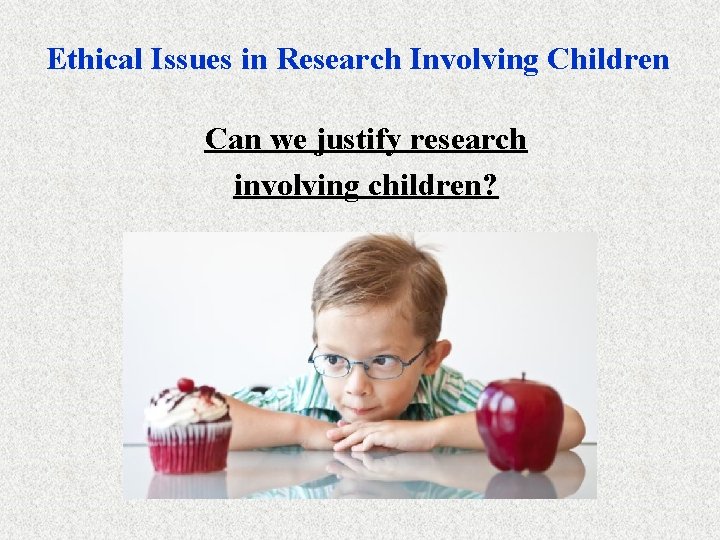
Ethical Issues in Research Involving Children Can we justify research involving children?
Children are Unique • Diseases • Development • Growth • Metabolism • Toxicity
Ethical Issues in Research Involving Children Is it ethical to do research involving children? • Are we willing to place a child at any risk or discomfort today for the sake of other children who might benefit in the future? • If so, how do we protect the children to assure they are not placed at undue risk?
Ethical Issues in Research Involving Children A century of research “abuses” involving children Pre World War II • Spinal taps on healthy children to define normal values • Xrays and Flouroscopy to define normal stomach emptying time • Restraint of infants in “metabolic beds” to collect stool and urine for analysis for metabolic balance studies The Nazi Experiments • Twin studies of infection, cross transfusion, transplantation… Post World War II • Willowbrook – Natural history of infectious hepatitis • Andrew Wakefield -- Measles Vaccine and Autism • Kennedy Krieger -- Lead Exposure. Study • CHEERS Study – Natural history of infant pesticide exposure • Jesse Gelsinger -- Gene Transfer Study
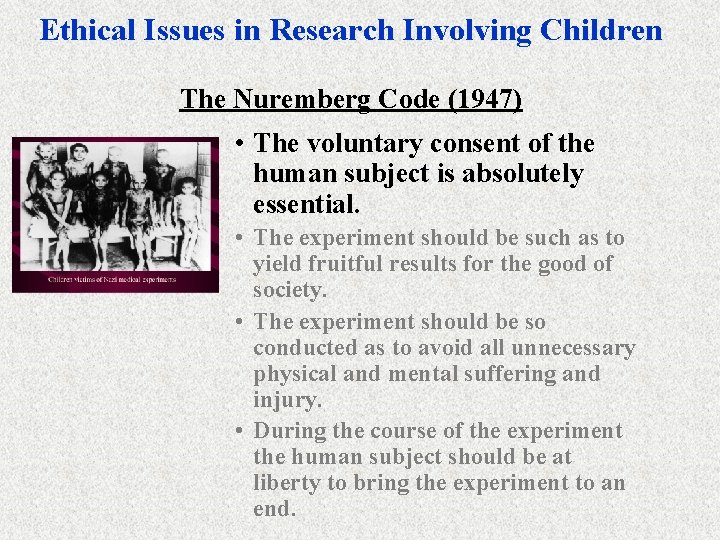
Ethical Issues in Research Involving Children The Nuremberg Code (1947) • The voluntary consent of the human subject is absolutely essential. • The experiment should be such as to yield fruitful results for the good of society. • The experiment should be so conducted as to avoid all unnecessary physical and mental suffering and injury. • During the course of the experiment the human subject should be at liberty to bring the experiment to an end.
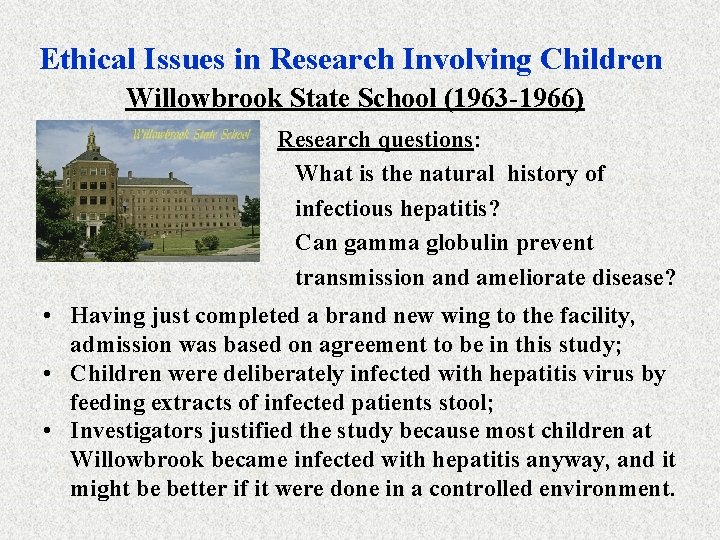
Ethical Issues in Research Involving Children Willowbrook State School (1963 -1966) Research questions: What is the natural history of infectious hepatitis? Can gamma globulin prevent transmission and ameliorate disease? • Having just completed a brand new wing to the facility, admission was based on agreement to be in this study; • Children were deliberately infected with hepatitis virus by feeding extracts of infected patients stool; • Investigators justified the study because most children at Willowbrook became infected with hepatitis anyway, and it might be better if it were done in a controlled environment.
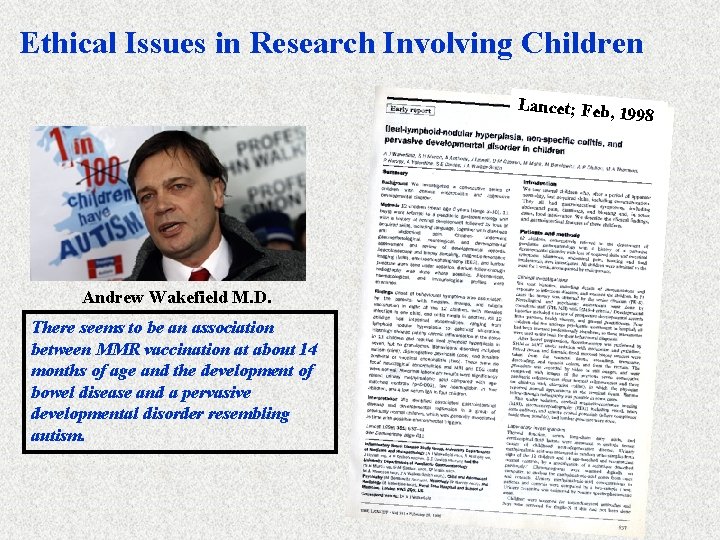
Ethical Issues in Research Involving Children Lancet; Feb, 1 998 Andrew Wakefield M. D. There seems to be an association between MMR vaccination at about 14 months of age and the development of bowel disease and a pervasive developmental disorder resembling autism.
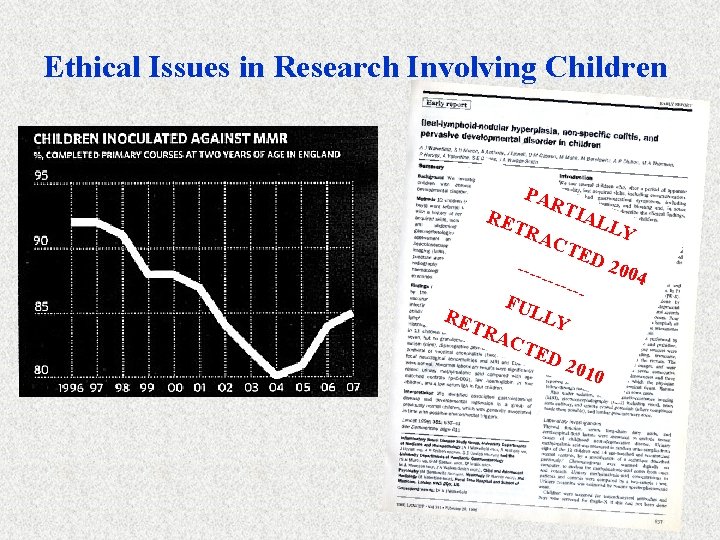
Ethical Issues in Research Involving Children RE PAR TR TED ----- FUL TR LLY AC ----RE TIA - LY AC TED 201 0 200 4
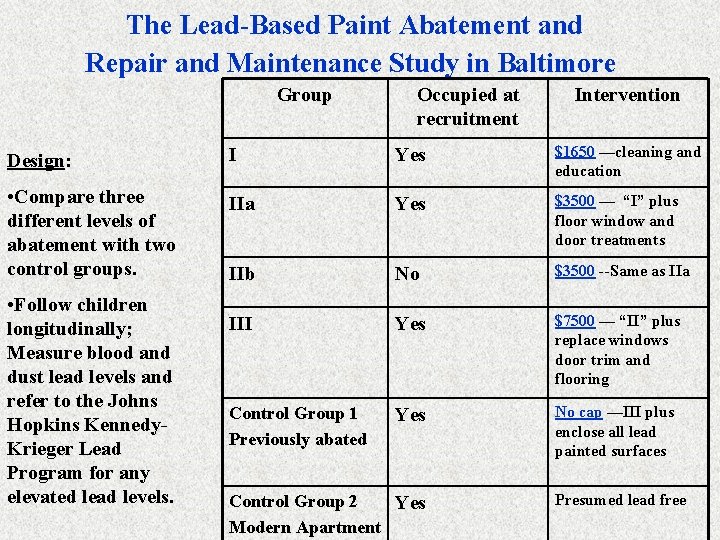
The Lead-Based Paint Abatement and Repair and Maintenance Study in Baltimore Background: • In the 1990’s, 95% of children living in low-income housing in Baltimore were at risk for toxic levels of lead exposure • 40 -50% of children in low-income areas had elevated blood lead levels • Lead abatement of an individual apartment may cost up to $10, 000. • Owners are likely to abandon buildings rather than do abatements. Research question: Can partial (less costly) lead abatement of affected apartments sufficiently prevent young children from exposure to toxic levels of lead?
The Lead-Based Paint Abatement and Repair and Maintenance Study in Baltimore Group Occupied at recruitment Intervention Design: I Yes $1650 —cleaning and education • Compare three different levels of abatement with two control groups. IIa Yes $3500 — “I” plus floor window and door treatments IIb No $3500 --Same as IIa III Yes $7500 — “II” plus replace windows door trim and flooring Control Group 1 Previously abated Yes No cap —III plus enclose all lead painted surfaces • Follow children longitudinally; Measure blood and dust lead levels and refer to the Johns Hopkins Kennedy. Krieger Lead Program for any elevated lead levels. Control Group 2 Yes Modern Apartment Presumed lead free
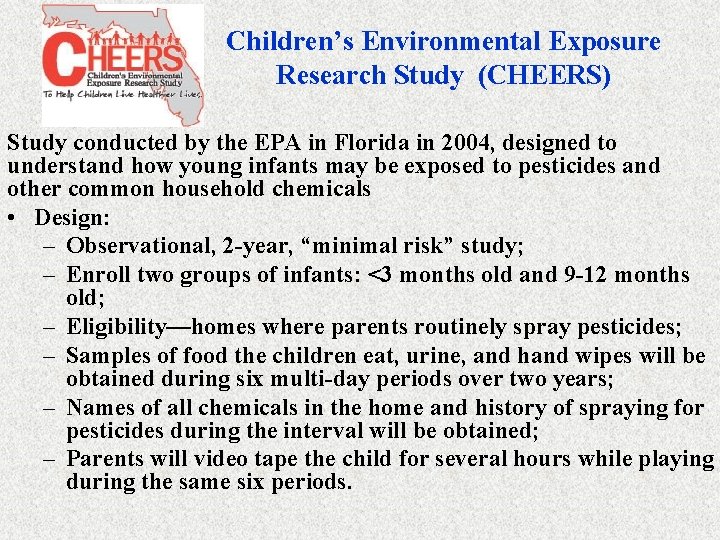
Children’s Environmental Exposure Research Study (CHEERS) Study conducted by the EPA in Florida in 2004, designed to understand how young infants may be exposed to pesticides and other common household chemicals • Design: – Observational, 2 -year, “minimal risk” study; – Enroll two groups of infants: <3 months old and 9 -12 months old; – Eligibility—homes where parents routinely spray pesticides; – Samples of food the children eat, urine, and hand wipes will be obtained during six multi-day periods over two years; – Names of all chemicals in the home and history of spraying for pesticides during the interval will be obtained; – Parents will video tape the child for several hours while playing during the same six periods.
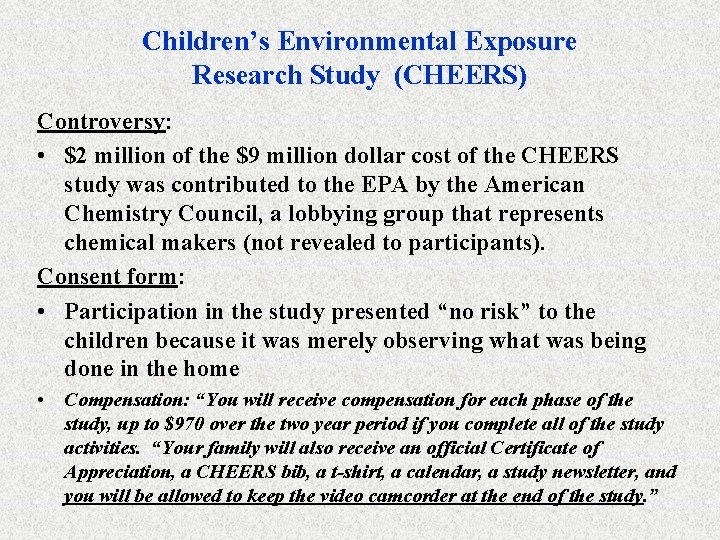
Children’s Environmental Exposure Research Study (CHEERS) Controversy: • $2 million of the $9 million dollar cost of the CHEERS study was contributed to the EPA by the American Chemistry Council, a lobbying group that represents chemical makers (not revealed to participants). Consent form: • Participation in the study presented “no risk” to the children because it was merely observing what was being done in the home • Compensation: “You will receive compensation for each phase of the study, up to $970 over the two year period if you complete all of the study activities. “Your family will also receive an official Certificate of Appreciation, a CHEERS bib, a t-shirt, a calendar, a study newsletter, and you will be allowed to keep the video camcorder at the end of the study. ”
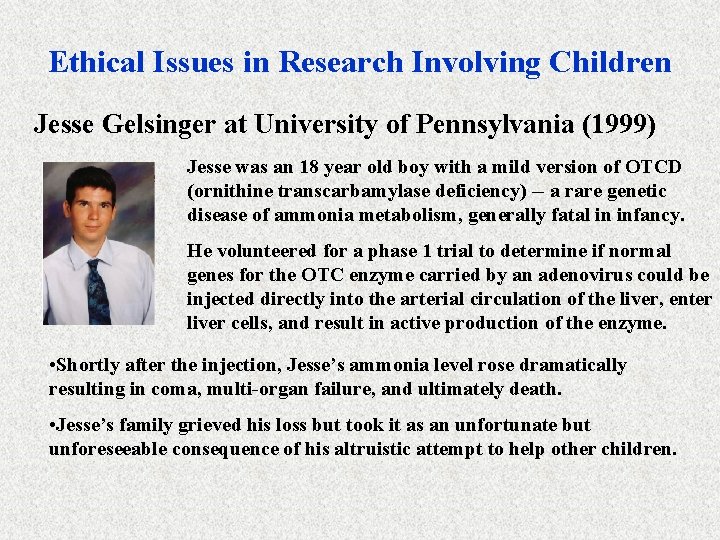
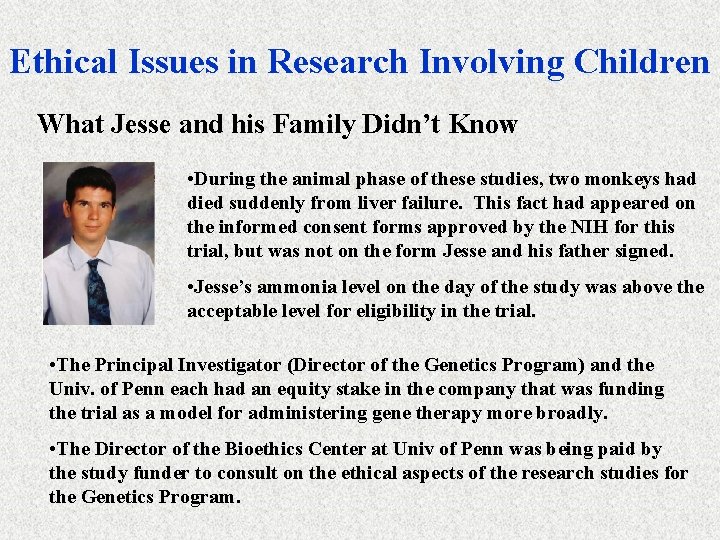
Ethical Issues in Research Involving Children Jesse Gelsinger at University of Pennsylvania (1999) Jesse was an 18 year old boy with a mild version of OTCD (ornithine transcarbamylase deficiency) -- a rare genetic disease of ammonia metabolism, generally fatal in infancy. He volunteered for a phase 1 trial to determine if normal genes for the OTC enzyme carried by an adenovirus could be injected directly into the arterial circulation of the liver, enter liver cells, and result in active production of the enzyme. • Shortly after the injection, Jesse’s ammonia level rose dramatically resulting in coma, multi-organ failure, and ultimately death. • Jesse’s family grieved his loss but took it as an unfortunate but unforeseeable consequence of his altruistic attempt to help other children.
Ethical Issues in Research Involving Children What Jesse and his Family Didn’t Know • During the animal phase of these studies, two monkeys had died suddenly from liver failure. This fact had appeared on the informed consent forms approved by the NIH for this trial, but was not on the form Jesse and his father signed. • Jesse’s ammonia level on the day of the study was above the acceptable level for eligibility in the trial. • The Principal Investigator (Director of the Genetics Program) and the Univ. of Penn each had an equity stake in the company that was funding the trial as a model for administering gene therapy more broadly. • The Director of the Bioethics Center at Univ of Penn was being paid by the study funder to consult on the ethical aspects of the research studies for the Genetics Program.
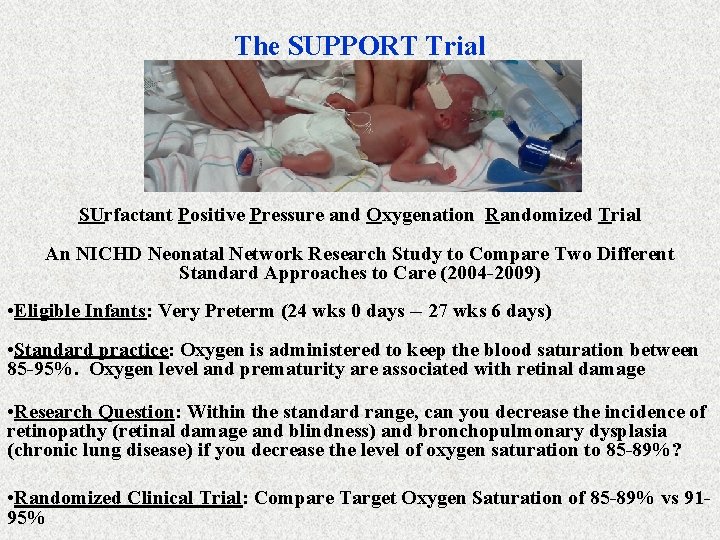
The SUPPORT Trial SUrfactant Positive Pressure and Oxygenation Randomized Trial An NICHD Neonatal Network Research Study to Compare Two Different Standard Approaches to Care (2004 -2009) • Eligible Infants: Very Preterm (24 wks 0 days -- 27 wks 6 days) • Standard practice: Oxygen is administered to keep the blood saturation between 85 -95%. Oxygen level and prematurity are associated with retinal damage • Research Question: Within the standard range, can you decrease the incidence of retinopathy (retinal damage and blindness) and bronchopulmonary dysplasia (chronic lung disease) if you decrease the level of oxygen saturation to 85 -89%? • Randomized Clinical Trial: Compare Target Oxygen Saturation of 85 -89% vs 9195%
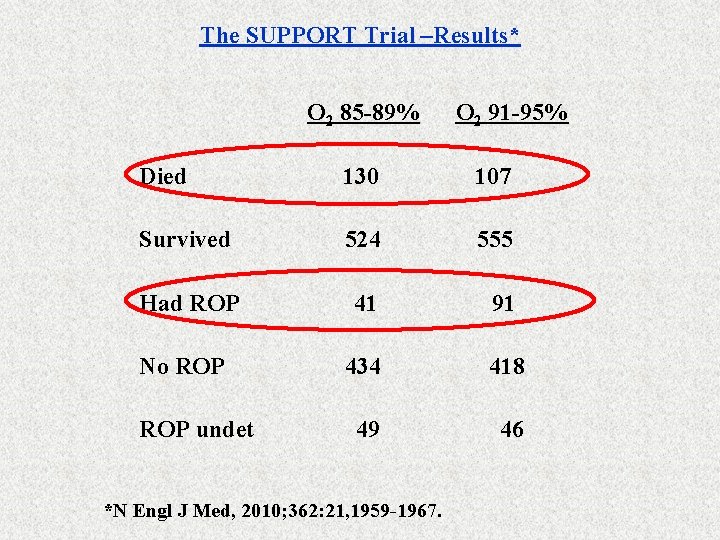
The SUPPORT Trial –Results* O 2 85 -89% O 2 91 -95% Died 130 107 Survived 524 555 Had ROP 41 91 434 418 49 46 No ROP undet *N Engl J Med, 2010; 362: 21, 1959 -1967.
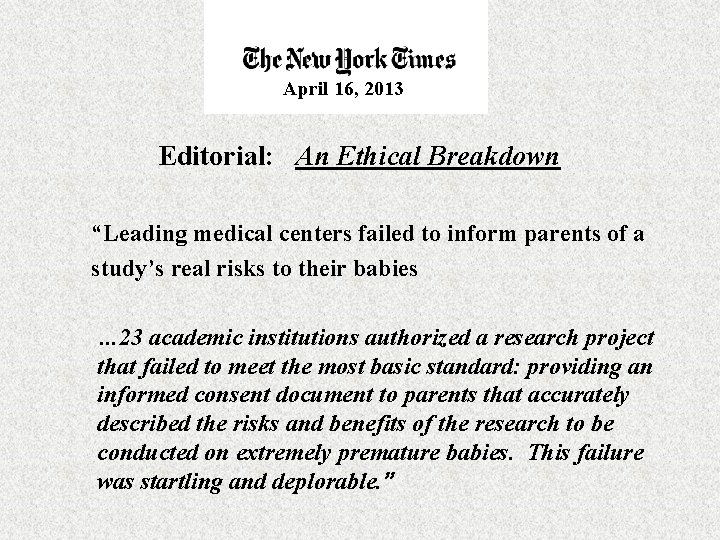
April 16, 2013 Editorial: An Ethical Breakdown “Leading medical centers failed to inform parents of a study’s real risks to their babies … 23 academic institutions authorized a research project that failed to meet the most basic standard: providing an informed consent document to parents that accurately described the risks and benefits of the research to be conducted on extremely premature babies. This failure was startling and deplorable. ”
Ethical Issues in Research Involving Children Henry K. Beecher, M. D. (NEJM, 1966) • 22 examples of published clinical research (many involved children) • Many of the patients or parents never had the risks explained • Hundreds never knew they were subjects of research
Ethical Issues in Research Involving Children Is it ethical to do research involving children? • Paul Ramsey—Protestant theologian: only if the research furthers the medical interests of the child • Richard Mc. Cormick—Catholic theologian: parents may consent even if there is no therapeutic benefit
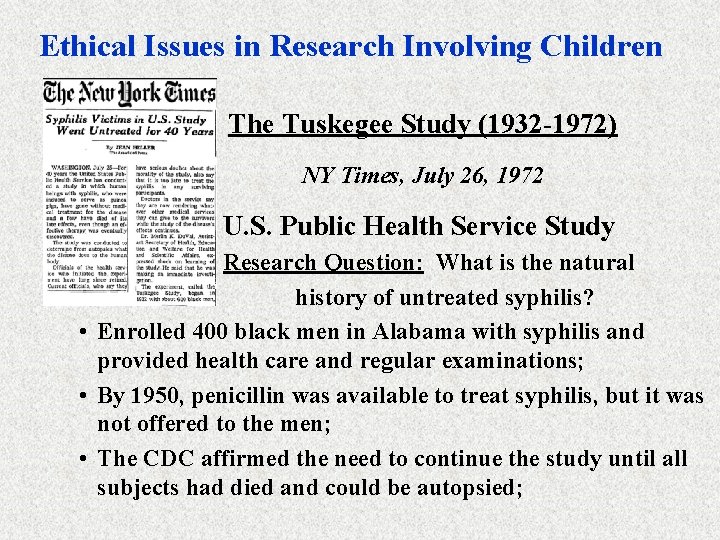
Ethical Issues in Research Involving Children The Tuskegee Study (1932 -1972) NY Times, July 26, 1972 U. S. Public Health Service Study Research Question: What is the natural history of untreated syphilis? • Enrolled 400 black men in Alabama with syphilis and provided health care and regular examinations; • By 1950, penicillin was available to treat syphilis, but it was not offered to the men; • The CDC affirmed the need to continue the study until all subjects had died and could be autopsied;
Ethical Issues in Research Involving Children National Commission for the Protection of Human Subjects of Biomedical and Behavioral Research (1974 -1978) • The Belmont Report • Research Involving Children • Institutional Review Boards • Research Involving those Institutionalized as Mentally Infirm
Ethical Issues in Research Involving Children Belmont Report (1978) Ethical Principles and Guidelines for the Protection of Human Subjects of Research • Beneficence • Respect for Persons • Justice
Ethical Issues in Research Involving Children Belmont Report (1978) Ethical Principles and Guidelines for the Protection of Human Subjects of Research • Beneficence: “effective ways of treating childhood diseases and fostering healthy development are benefits that serve to justify research involving children” “research also makes it possible to avoid the harm that may result from the application of previously accepted routine practices…that may turn out to be dangerous”
Ethical Issues in Research Involving Children Belmont Report (1978) Ethical Principles and Guidelines for the Protection of Human Subjects of Research • Respect for Persons: Individuals with capacity… treated as autonomous Persons with diminished autonomy… entitled to protection
Ethical Issues in Research Involving Children Belmont Report (1978) Ethical Principles and Guidelines for the Protection of Human Subjects of Research • Justice: “Historically the burdens of serving as research subjects fell largely upon poor ward patients, while the benefits of improved medical care flowed primarily to private patients. ”
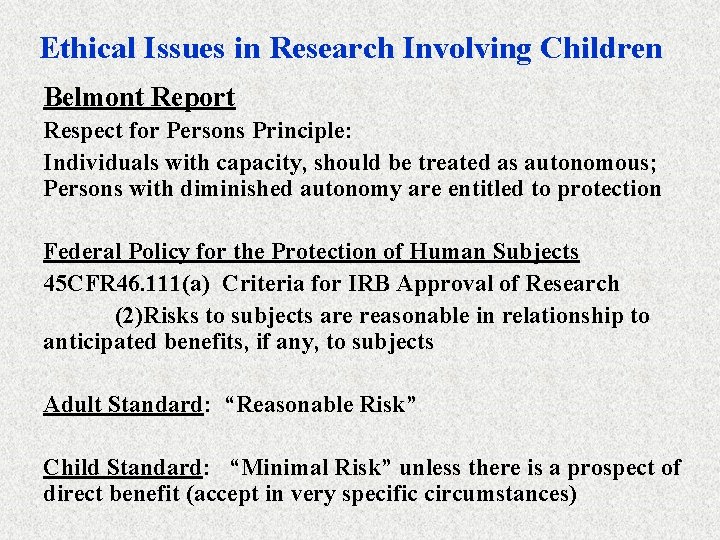
Ethical Issues in Research Involving Children Belmont Report Respect for Persons Principle: Individuals with capacity, should be treated as autonomous; Persons with diminished autonomy are entitled to protection Federal Policy for the Protection of Human Subjects 45 CFR 46. 111(a) Criteria for IRB Approval of Research (2)Risks to subjects are reasonable in relationship to anticipated benefits, if any, to subjects Adult Standard: “Reasonable Risk” Child Standard: “Minimal Risk” unless there is a prospect of direct benefit (accept in very specific circumstances)
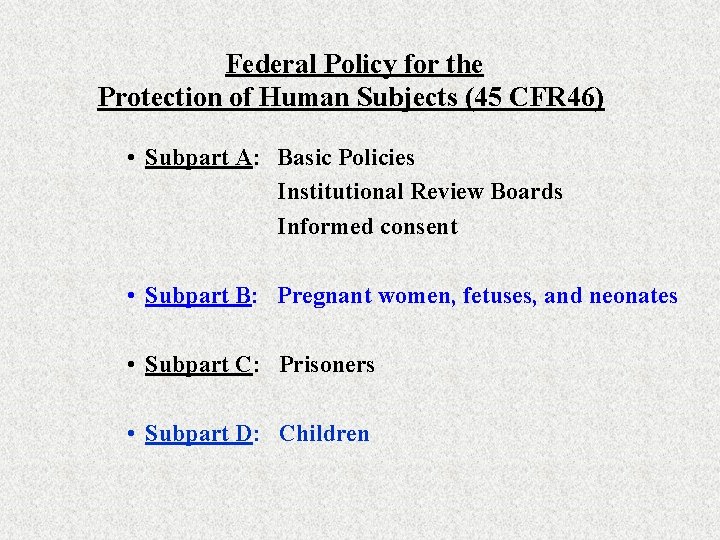
Federal Policy for the Protection of Human Subjects (45 CFR 46) • Subpart A: Basic Policies Institutional Review Boards Informed consent • Subpart B: Pregnant women, fetuses, and neonates • Subpart C: Prisoners • Subpart D: Children
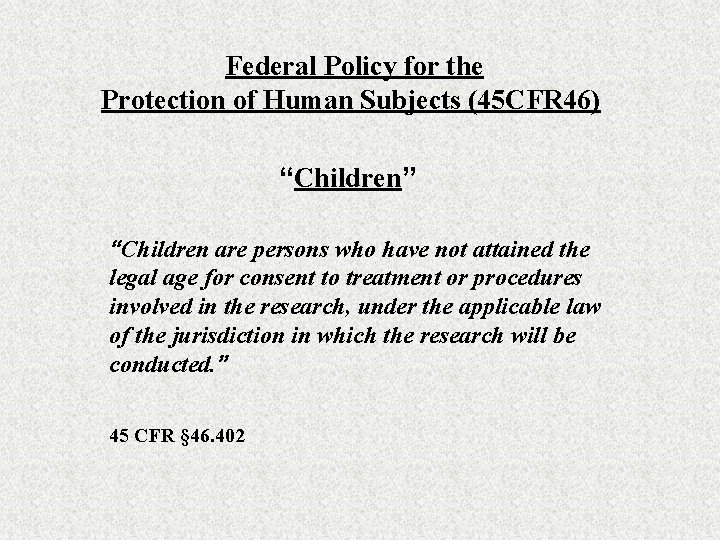
Federal Policy for the Protection of Human Subjects (45 CFR 46) “Children” “Children are persons who have not attained the legal age for consent to treatment or procedures involved in the research, under the applicable law of the jurisdiction in which the research will be conducted. ” 45 CFR § 46. 402
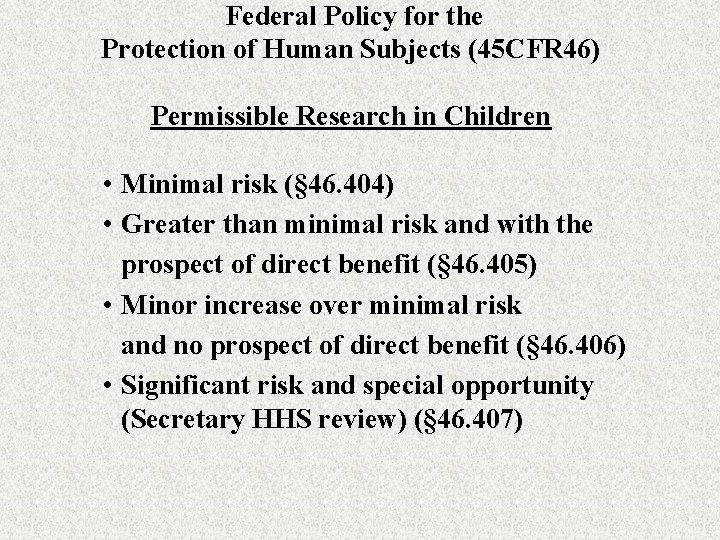
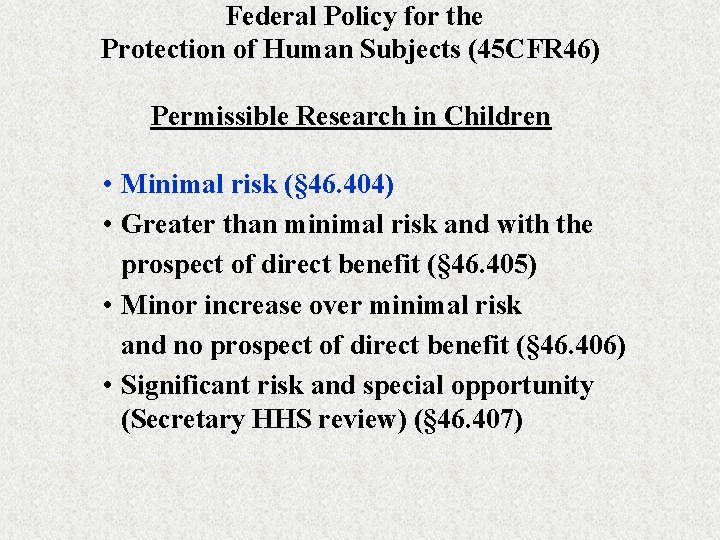
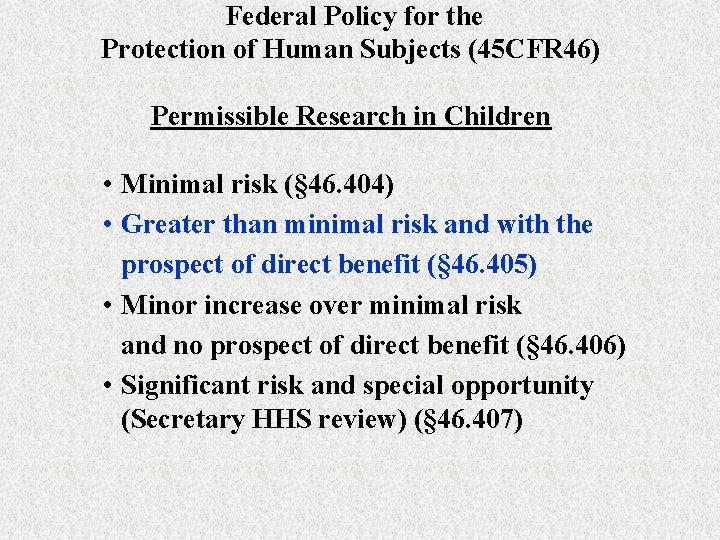
Federal Policy for the Protection of Human Subjects (45 CFR 46) Permissible Research in Children • Minimal risk (§ 46. 404) • Greater than minimal risk and with the prospect of direct benefit (§ 46. 405) • Minor increase over minimal risk and no prospect of direct benefit (§ 46. 406) • Significant risk and special opportunity (Secretary HHS review) (§ 46. 407)
Federal Policy for the Protection of Human Subjects (45 CFR 46) Permissible Research in Children • Minimal risk (§ 46. 404) • Greater than minimal risk and with the prospect of direct benefit (§ 46. 405) • Minor increase over minimal risk and no prospect of direct benefit (§ 46. 406) • Significant risk and special opportunity (Secretary HHS review) (§ 46. 407)
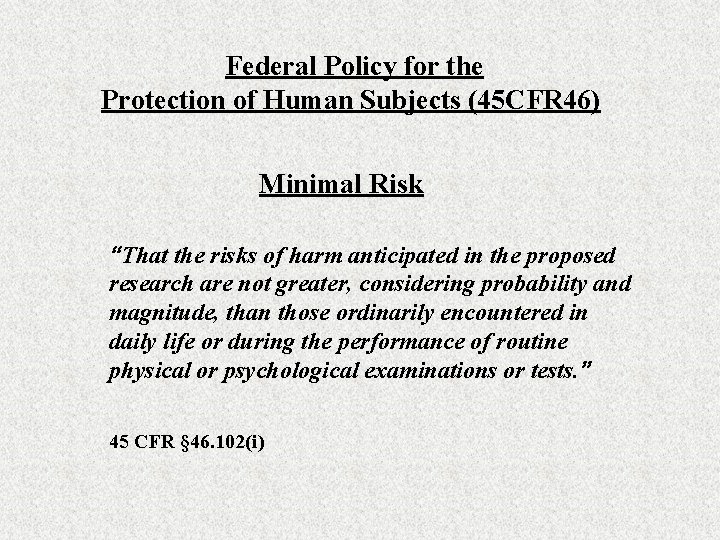
Federal Policy for the Protection of Human Subjects (45 CFR 46) Minimal Risk “That the risks of harm anticipated in the proposed research are not greater, considering probability and magnitude, than those ordinarily encountered in daily life or during the performance of routine physical or psychological examinations or tests. ” 45 CFR § 46. 102(i)
Federal Policy for the Protection of Human Subjects (45 CFR 46) Permissible Research in Children • Minimal risk (§ 46. 404) • Greater than minimal risk and with the prospect of direct benefit (§ 46. 405) • Minor increase over minimal risk and no prospect of direct benefit (§ 46. 406) • Significant risk and special opportunity (Secretary HHS review) (§ 46. 407)
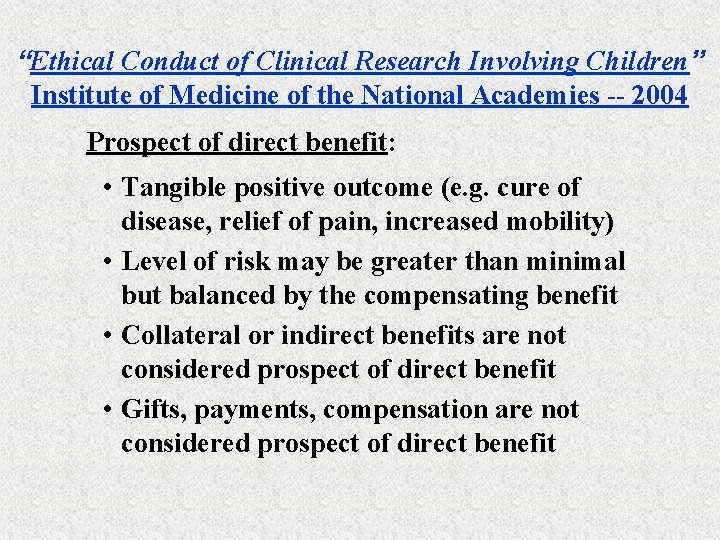
“Ethical Conduct of Clinical Research Involving Children” Institute of Medicine of the National Academies -- 2004 Prospect of direct benefit: • Tangible positive outcome (e. g. cure of disease, relief of pain, increased mobility) • Level of risk may be greater than minimal but balanced by the compensating benefit • Collateral or indirect benefits are not considered prospect of direct benefit • Gifts, payments, compensation are not considered prospect of direct benefit
Federal Policy for the Protection of Human Subjects (45 CFR 46) Permissible Research in Children • Minimal risk (§ 46. 404) • Greater than minimal risk and with the prospect of direct benefit (§ 46. 405) • Minor increase over minimal risk and no prospect of direct benefit (§ 46. 406) • Significant risk and special opportunity (Secretary HHS review) (§ 46. 407)
Federal Policy for the Protection of Human Subjects (45 CFR 46) § 46. 406: Greater than minimal risk with no prospect of direct benefit: (a) The risk represents a minor increase over minimal risk; (b) The intervention or procedure presents experiences to subjects that are reasonably commensurate with those inherent in their actual or expected medical, dental, psychological, social, or educational situations; (c) The intervention or procedure is likely to yield generalizable knowledge about the subjects' disorder or condition which is of vital importance for the understanding or amelioration of the subjects' disorder or condition; and (d) Adequate provisions are made for soliciting assent of the children and permission of their parents or guardians.
Federal Policy for the Protection of Human Subjects (45 CFR 46) Permissible Research in Children • Minimal risk (§ 46. 404) • Greater than minimal risk and with the prospect of direct benefit (§ 46. 405) • Minor increase over minimal risk and no prospect of direct benefit (§ 46. 406) • Significant risk and special opportunity (Secretary HHS review) (§ 46. 407)
Ethical Issues in Research Involving Children Three Levels of Protection: § Ethical Researchers § Peer Review § Division/Department § Institutional Review Board(s) § Informed Consent Process § Parental Permission § Child Assent
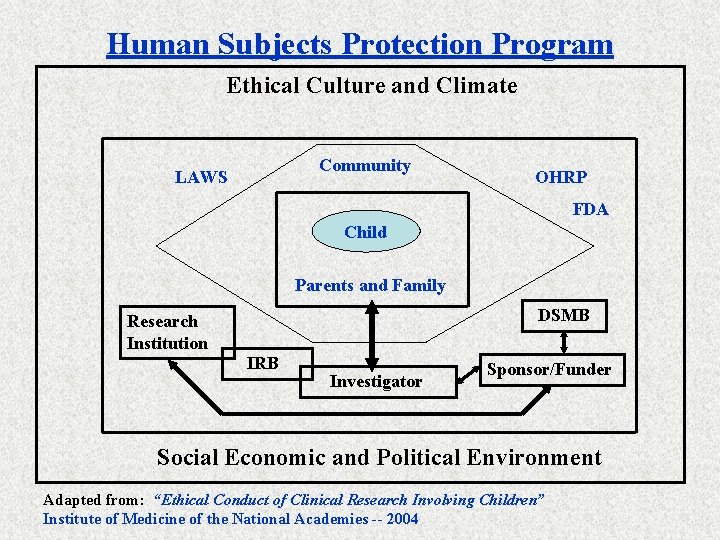
Human Subjects Protection Program Ethical Culture and Climate Community LAWS OHRP FDA Child Parents and Family DSMB Research Institution IRB Investigator Sponsor/Funder Social Economic and Political Environment Adapted from: “Ethical Conduct of Clinical Research Involving Children” Institute of Medicine of the National Academies -- 2004
Comments? ? ? Questions? ? ?