
FIRST SENTENCETOPIC SENTENCE Your topic sentence should reference
- Slides: 9
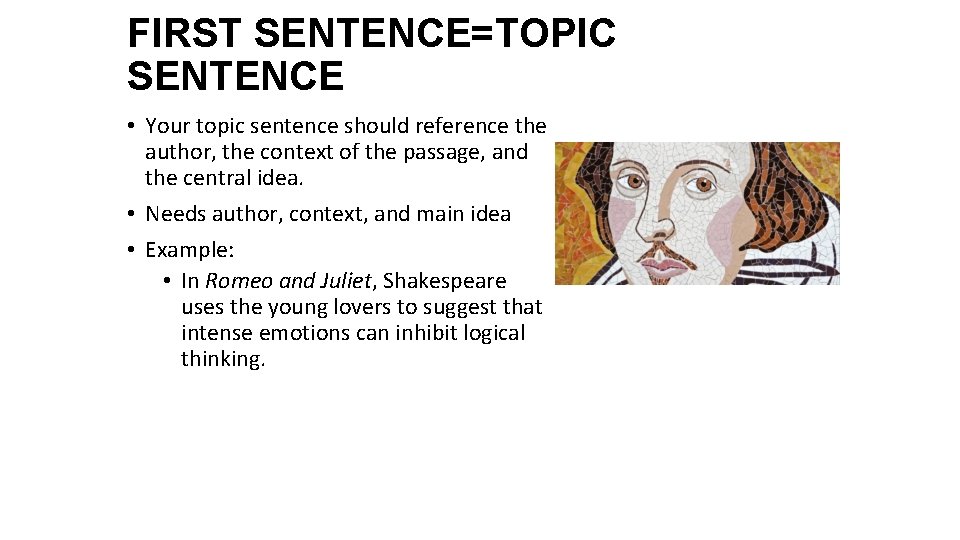
FIRST SENTENCE=TOPIC SENTENCE • Your topic sentence should reference the author, the context of the passage, and the central idea. • Needs author, context, and main idea • Example: • In Romeo and Juliet, Shakespeare uses the young lovers to suggest that intense emotions can inhibit logical thinking.
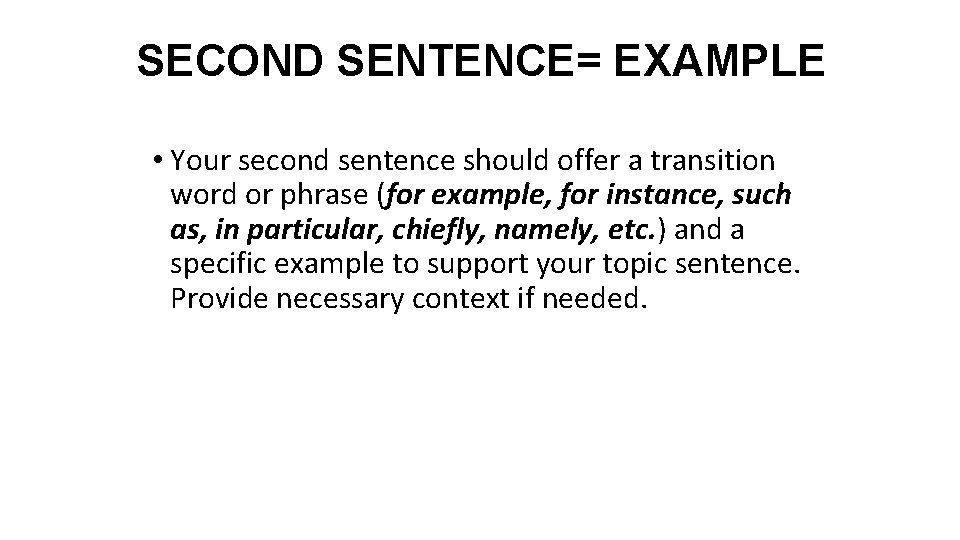
SECOND SENTENCE= EXAMPLE • Your second sentence should offer a transition word or phrase (for example, for instance, such as, in particular, chiefly, namely, etc. ) and a specific example to support your topic sentence. Provide necessary context if needed.
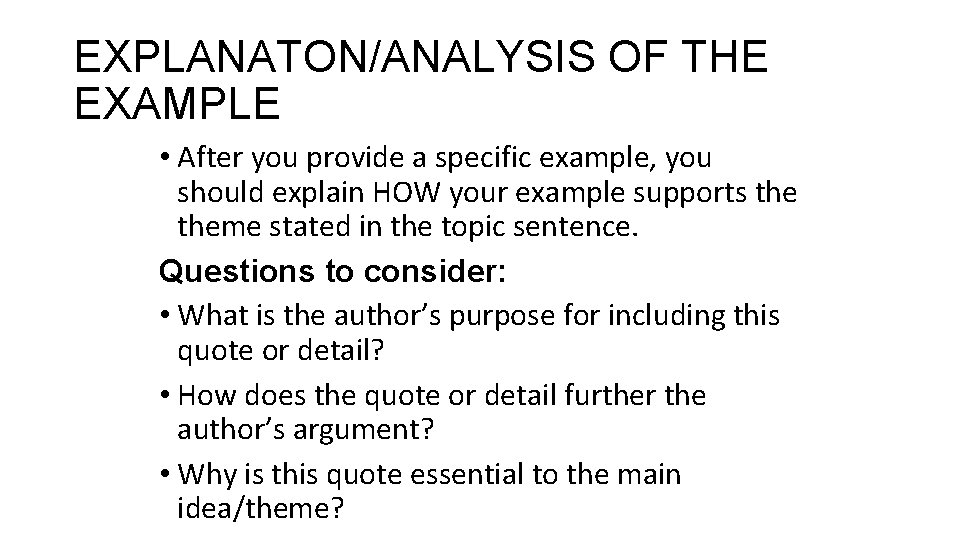
EXPLANATON/ANALYSIS OF THE EXAMPLE • After you provide a specific example, you should explain HOW your example supports theme stated in the topic sentence. Questions to consider: • What is the author’s purpose for including this quote or detail? • How does the quote or detail further the author’s argument? • Why is this quote essential to the main idea/theme?
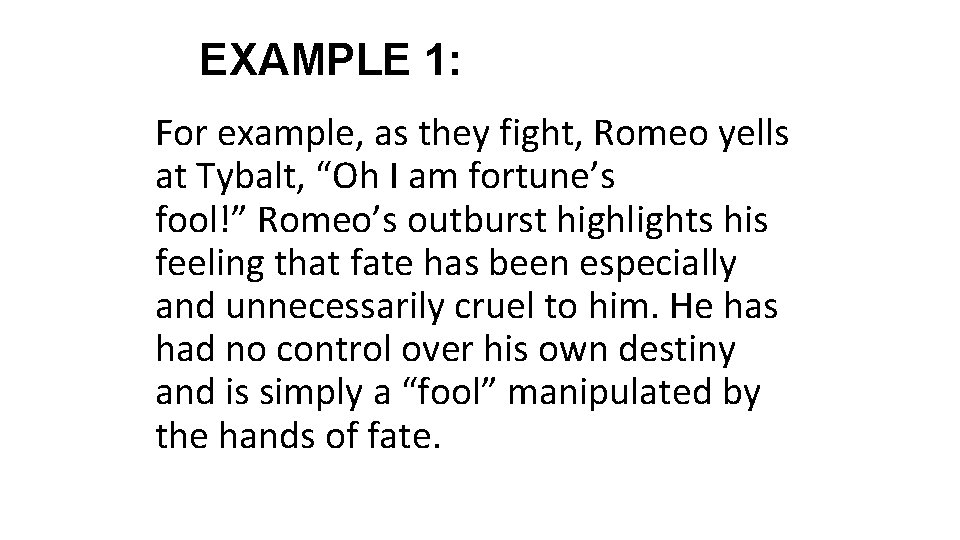
EXAMPLE 1: For example, as they fight, Romeo yells at Tybalt, “Oh I am fortune’s fool!” Romeo’s outburst highlights his feeling that fate has been especially and unnecessarily cruel to him. He has had no control over his own destiny and is simply a “fool” manipulated by the hands of fate.
EXAMPLE 1: For example, as they fight, Romeo yells at Tybalt, “Oh I am fortune’s fool!” Romeo’s outburst highlights his feeling that fate has been especially and unnecessarily cruel to him. He has had no control over his own destiny and is simply a “fool” manipulated by the hands of fate.
EXAMPLE 2: Telling Romeo to forget about Rosaline, Benvolio argues that “one fire burns out another’s burning; / One pain is less’ned by another’s anguish” (I. ii. 46 -47) suggesting that Benvolio knows Romeo is playing a game. If falling in love is easy, Benvolio seems to be saying, then so is falling out of love.
EXAMPLE 2: Telling Romeo to forget about Rosaline, Benvolio argues that “one fire burns out another’s burning; / One pain is less’ned by another’s anguish” (I. ii. 46 -47). This statement suggests that Benvolio knows Romeo is playing a game. If falling in love is easy, Benvolio seems to be saying, then so is falling out of love.
THEN, REPEAT WITH ADDITONAL EXAMPLES AND ANALYSIS
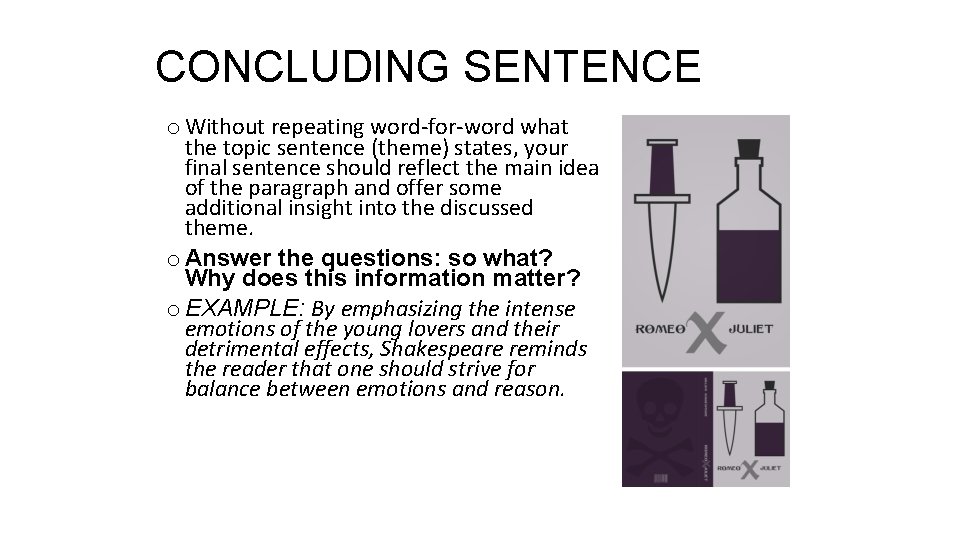
CONCLUDING SENTENCE o Without repeating word-for-word what the topic sentence (theme) states, your final sentence should reflect the main idea of the paragraph and offer some additional insight into the discussed theme. o Answer the questions: so what? Why does this information matter? o EXAMPLE: By emphasizing the intense emotions of the young lovers and their detrimental effects, Shakespeare reminds the reader that one should strive for balance between emotions and reason.